The Measure No One Wanted to Name

Chapter One
Before the sun touched the low hills around Nazareth, Jesus was already awake.
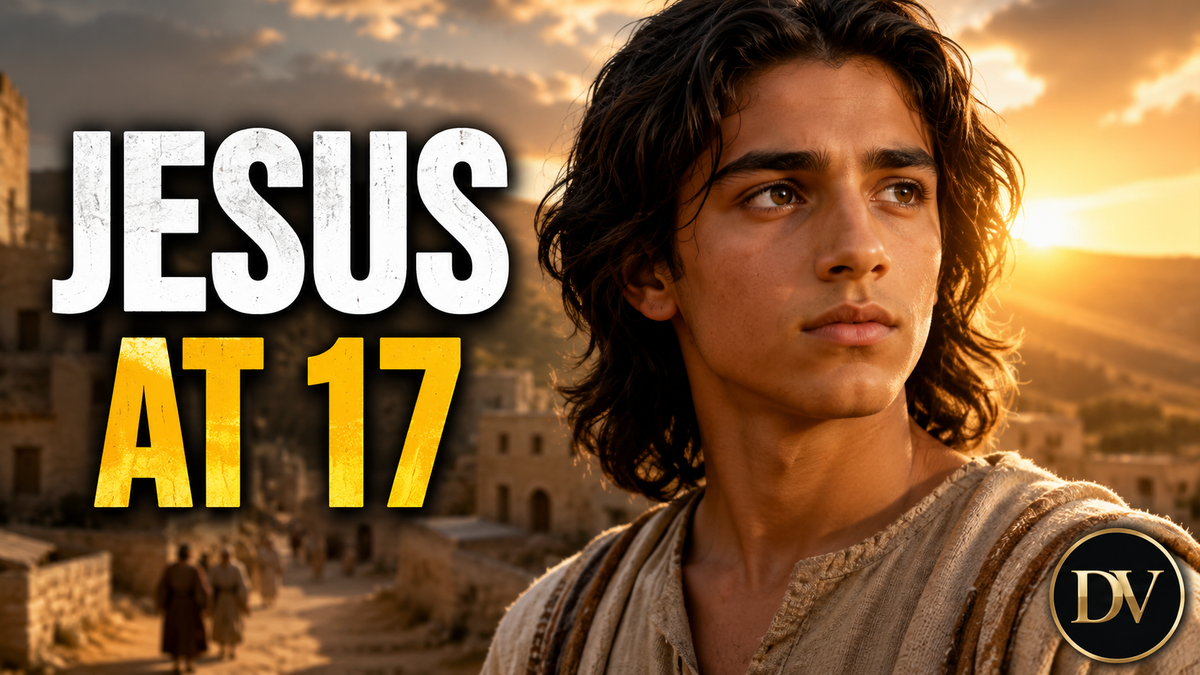
He knelt where the packed earth behind the house gave way to scrub grass and stone, where the village still held its breath before the work of the day began. The air was cool enough to make the hands remember night, and the first birds had not yet broken into their full morning noise. Jesus prayed without hurry, His face turned toward the Father with a stillness that did not belong to sleep or youth or fear. No one standing at a distance would have known that this quiet seventeen-year-old would one day be searched for in stories, paintings, questions, arguments, and songs, or that some heart far away might come looking for the Jesus of Nazareth age 17 story because it needed to believe that holiness had once grown up in ordinary dust.
The village below Him was beginning to stir. A door beam groaned. A woman poured water into a clay basin. Somewhere a child coughed and was hushed by a mother who had already been awake longer than she wanted to admit. Smoke rose thinly from a roofline and drifted into the pale morning. Jesus remained in prayer, and the silence around Him seemed less like emptiness than attention. It was the kind of silence that would have felt familiar to anyone who had ever tried to understand the quiet years before Jesus stepped into public ministry, when nothing looked famous yet and heaven was already near.
Down the slope, in a narrow lane between two small houses, Jonah son of Nahum stood with both hands wrapped around a wooden measuring bowl and wished he had never learned how much grain could be hidden by the way a man pressed his thumb along the rim.
He was not a thief by trade. That was what he told himself as he stood in the doorway of his family’s storage room, watching his mother sleep in the corner beside his younger brother. He was a son. He was nearly a man. He was the one left to keep the household from collapsing after his father’s lungs had failed during the winter rains. When people said his father had been honest, they said it kindly, as though honesty were a beautiful cloth buried with the dead and not a weight left on the living. Jonah had heard the old men say Nahum never cheated a measure, never softened a debt with false words, never took advantage of widows, travelers, or fools. They said it with admiration. Jonah heard it as a warning.
The measure in his hands belonged to Abner, the grain broker who stored sacks for half the village and loaned seed at terms that changed depending on how desperate a family looked. Jonah had carried the bowl home the night before under Abner’s instruction. He was to use it before dawn, fill two sacks from the grain owed to Tirzah the widow, and bring them to the press house before the lane filled with witnesses. Abner had not asked Jonah whether he understood. He had only placed one thick hand on the boy’s shoulder and said that a household without a father should be careful not to offend the men who knew how to collect.
Jonah had hated the way his own body had gone quiet beneath that hand. His father had once corrected Abner in public over a measure of barley, and the story had become part of the village’s small treasury of righteousness. People remembered Nahum’s courage. They did not remember the months afterward when lenders began arriving before meals, when work was suddenly given to other men, when Jonah’s mother started cutting every loaf thinner than the one before. Jonah remembered. He remembered the sound of his mother telling his father that truth was costly, and his father answering, with blood already wearing down his breath, that falsehood was costlier. At the time Jonah had admired him. After the burial, admiration had become more difficult.
He dipped the bowl into Tirzah’s grain and pressed his thumb where Abner had shown him. Not much. A foolish person would think theft had to be large to matter. A frightened person knew better. Fear preferred small sins because they could be explained. One missing handful was not cruelty. Two low measures were not betrayal. A little pressure on the rim was not a lie if the men with power had already decided what the truth would cost.
His younger brother, Malachi, stirred on the mat and opened one eye. He was nine years old and thin in the way children became thin when mothers gave them the larger piece and pretended not to be hungry. “Jonah?” he whispered.
Jonah froze with the bowl in the grain.
“What are you doing?”
“Go back to sleep.”
“Is that ours?”
Jonah looked down at the sack beside him. The morning light was not strong enough to accuse him, but it was strong enough to show the difference between a full measure and the one he had made. He wanted to say something gentle. He wanted to be the kind of brother who could turn danger into safety with a calm voice. Instead he heard himself speak sharply. “I said sleep.”
Malachi’s face closed. He rolled back toward the wall, but Jonah could tell from the shape of his shoulders that he was awake. That was the first cost of the morning, and it came before Abner had touched a single grain. Jonah had made his little brother smaller.
He tied the sacks, lifted them one at a time, and stepped into the lane. The village had brightened. Nazareth was not yet loud, but it was no longer sleeping. Women moved toward the shared oven. A man led a donkey past a stone wall with two baskets slung over its back. Boys younger than Jonah ran barefoot toward the terraces, still free enough to waste strength on speed. The smell of damp earth rose from the places where last night’s coolness clung to shaded stones.
At the bend near the olive press, Tirzah was waiting.
Jonah stopped so suddenly that the rope bit into his palm. He had expected Abner’s servant. He had expected the work to be hidden beneath the usual noise of men arranging trade before the day became too hot. He had not expected the widow herself, wrapped in a faded blue shawl, with one hand resting on the head of her little daughter.
Tirzah’s face was tired but not weak. That made it worse. Weakness would have let him pretend she did not understand the world. Tiredness meant she understood it too well and had come anyway.
“Jonah,” she said, and there was relief in her voice. “Your mother said you might be carrying early. I hoped I would find you before Abner sealed the count.”
His throat tightened. “He told me to bring these to the press house.”
“I know what he told you.” Tirzah glanced toward the sacks and then toward his face. “Your father once stood where you are standing and would not let a low measure pass.”
Jonah hated her for saying it. He hated the kindness in her voice more than he would have hated accusation. Accusation could be resisted. Kindness asked him to remember himself.
“My father is dead,” he said.
Tirzah’s daughter looked up at him, startled by the hardness of it. Tirzah did not flinch. She only nodded once, as if she had expected that answer and had no weapon ready except the truth. “Yes. And I am sorry. But the dead are not honored when the living become afraid of what they taught.”
The words struck him too close, so he moved around her. “I have work.”
“Jonah.”
He kept walking.
Near the press house, Jesus came down from the upper path carrying a yoke beam across one shoulder. He was not alone; two other young men walked behind Him, talking about a cracked roof support in a house near the well. Jesus listened to them with the patient attention of someone who did not need to fill every space with His own voice. When He saw Jonah, He slowed.
Jonah did not want Him to slow.
There were boys in Nazareth who made a person feel watched because they were hunting for weakness. Jesus made a person feel seen in a way that was harder to bear, because nothing in His eyes seemed eager to shame and nothing in them could be fooled. He was seventeen, only a little older than Jonah, yet there was a weight in His presence that Jonah had never known how to explain. It did not push. It did not perform. It simply stood there, steady enough that a man’s excuses grew restless.
“Peace to you, Jonah,” Jesus said.
Jonah shifted the rope higher in his hand. “Peace.”
Jesus looked at the sacks, then at the red mark where the rope had cut Jonah’s palm. “That is heavy for one man.”
“I can carry it.”
“I did not ask whether you could.”
The other young men continued toward the press house, but Jesus remained. Jonah felt anger rise in him, sudden and useful. Anger gave him something to stand behind. “Everyone carries what he has to carry.”
Jesus was quiet for a moment. The morning widened around them. A goat bleated somewhere behind Tirzah’s house. A woman laughed near the oven, unaware that Jonah’s whole life felt as if it were being held at the thin place between one breath and the next.
Then Jesus said, “Not everything placed on a man’s back belongs there.”
Jonah looked away. “You speak like someone whose house is not in debt.”
Jesus did not answer defensively. That unsettled Jonah more than any correction would have. He had wanted resistance so he could turn this into a quarrel and walk away feeling justified. Jesus only stepped closer, set the yoke beam down beside the wall, and reached for one of the sacks.
Jonah pulled it back. “I said I can carry it.”
“I heard you.”
“Then let me.”
“I will not take it from you,” Jesus said. “But I will walk beside you if you choose to keep carrying it.”
The sentence was simple, but Jonah felt something inside him recoil from it. He did not want company. Company made the hidden thing visible. A man could bend a measure in secret and call it survival. He could not do it as easily with someone holy walking beside him in the open lane.
Tirzah had not followed, but Jonah could feel the place where she stood behind him. He could feel Malachi awake in the dark room, learning from his brother’s fear. He could feel Abner waiting with his thick hand and his clean excuses. He could feel his father’s name pressing on him like a garment that no longer fit.
“Why do you care?” Jonah asked.
Jesus looked toward the press house, where men were gathering, then back at Jonah. “Because your heart is being asked to pay a debt your hands did not make.”
Jonah swallowed. For one dangerous moment, the whole morning seemed to open before him as it truly was. Not as Abner had named it. Not as fear had arranged it. Not as hunger had excused it. He saw the low measure, the widow’s grain, his brother’s face, his father’s memory, and his own longing to become hard enough that none of it hurt. The truth did not arrive like thunder. It arrived like light entering a room he had tried to keep closed.
Then Abner’s voice came from the press house doorway.
“Jonah,” he called. “Bring the sacks.”
The spell of stillness broke. Men turned to look. Tirzah lowered her eyes. Jonah’s hand tightened around the rope until the cut in his palm opened again.
Jesus did not step in front of him. He did not expose him before the village. He did not rescue him from the decision. He only stood beside the road with the morning sun touching His face, quiet and present, as if mercy itself had come near enough to be refused.
Jonah lifted the sacks and walked toward Abner.
Chapter Two
The press house smelled of crushed olives, dust, old rope, and men who had learned to speak softly when they were doing something they did not want named.
Jonah stepped through the doorway with the sacks pulling hard against his shoulders. The room was dim after the morning light, and for a few breaths he could see only shapes: the beam press, the stone weights, the stacked jars, Abner standing near the counting table with two other men beside him. One was Reuel, who kept tallies for the harvest storehouse and always carried a reed pen tucked behind his ear like a badge of intelligence. The other was Haggai, a broad-shouldered laborer who did not look at Jonah so much as past him, as if the boy were part of the equipment.
Abner smiled without warmth. “You took long enough.”
“Tirzah was in the lane,” Jonah said before he could stop himself.
The smile faded a little. “Widows are often in lanes. That is not news.”
“She asked about the count.”
“She will hear the count when it is given.”
Jonah lowered the sacks to the floor. His palms burned from the rope, and the opened cut in his right hand had left a thin smear of blood along the knot. Reuel saw it and looked away quickly, as if a boy bleeding over another woman’s grain made the arithmetic untidy.
Abner crouched beside the first sack, loosened the tie, and pushed his fingers into the barley. He was not inspecting the grain. He trusted Jonah had done what he was told. The gesture was for the men in the room, a little theater of fairness performed before the people who already knew the ending.
“Two sacks,” Abner said. “Less than promised, but the season was thin.”
Reuel dipped his reed pen. “Less than promised,” he repeated.
Jonah stared at the table. He could feel Jesus somewhere behind him outside, though he had not turned to see whether He remained near the doorway. That made the room feel smaller. It was not that Jesus had accused him. It was worse than that. He had spoken as though Jonah was still free.
Abner stood and wiped his hands. “Tell Tirzah the count will stand. Tell her I have been generous to wait this long.”
Jonah looked up. “You want me to tell her?”
“Yes.”
“I brought the sacks.”
“And now you will bring the message.” Abner came closer, lowering his voice so the other men could pretend not to listen. “A boy who carries a thing should know what he is carrying.”
Jonah heard the warning under the words. If he refused now, Abner would not merely be angry. He would make a lesson out of him, maybe not in public at first, but in the places where debtors were squeezed and work disappeared. There were many ways to ruin a poor house without ever raising a fist. A delayed payment here. A rejected repair there. A rumor that Nahum’s oldest son was unreliable. Jonah had seen men like Abner make hunger look like consequence.
He nodded.
“Speak clearly,” Abner said. “And do not soften what is true.”
That word struck Jonah with such force that he almost laughed. True. Abner used it easily, as if truth belonged to whoever held the ledger. Jonah had thought fear was the thing bending him, but now he saw another layer beneath it. Abner had not only asked him to steal grain. He had asked him to participate in naming the theft honest.
Jonah turned and left the press house.
Jesus was outside, kneeling by the wall where the yoke beam rested. He was using a small knife to trim a rough edge, not because it had to be done at that moment, but with the calm of a man who did not waste waiting. He looked up as Jonah came out, and Jonah had the sharp impulse to speak first, to defend himself before any question could be asked.
“He wants me to tell her,” Jonah said.
Jesus rose. “What will you tell her?”
“The count.”
“Whose count?”
Jonah’s jaw tightened. “You know what this village is like. You know what men like Abner can do.”
“I know.”
“My mother cannot pay him. If I anger him, we lose work. Maybe our house. Maybe the little land we still hold. People speak about righteousness until a creditor stands at their door.”
Jesus listened without interrupting. His silence made Jonah angrier because it did not give him anything to strike. “My father had courage,” Jonah continued, the words coming faster now. “Everyone says so. He corrected the measure. He told the truth. And then men praised him while we went hungry. Is that what you want me to become? Another honest man whose family pays for his clean conscience?”
The knife rested in Jesus’ hand. His face did not harden. “You think your father’s honesty abandoned you.”
Jonah’s anger faltered. He had not said that, not even to himself. The thought had lived below words where it could not be judged. Hearing it spoken made him feel exposed and relieved at the same time, and he hated both feelings.
“I think he left us with stories instead of bread,” Jonah said.
For a moment the lane seemed to hold the sentence. A woman passing with a water jar slowed, then decided not to stop. From inside the press house, a man coughed. The world continued, but Jonah felt as if he had struck his father across the face.
Jesus stepped closer, not enough to trap him, only enough that Jonah could not pretend He had not heard. “Bread matters,” He said.
Jonah looked at Him, caught by the plainness of it.
“So does truth,” Jesus continued. “When fear separates them, a man begins to believe he must choose which part of his soul will starve.”
Jonah had no answer. He wished Jesus had made it easier to reject Him by speaking like the village teachers when they were most pleased with themselves. Instead He spoke into the exact place Jonah was trying not to look. Jonah did not want a lesson. He wanted a way through the day that did not destroy someone.
“Tirzah is waiting,” Jesus said.
“I know.”
“I will not speak for you.”
“I did not ask you to.”
“No.” Jesus placed the knife against the yoke beam and lifted the wood to His shoulder. “But you may decide whether you want me near when you speak.”
Jonah looked toward the bend in the lane. Tirzah still stood there with her daughter, though the child had now sat on a flat stone and was drawing lines in dust with a twig. The sight made Jonah tired in a place sleep could not reach.
“Why?” he asked.
Jesus adjusted the weight on His shoulder. “Because truth is harder to carry when a man believes he is carrying it alone.”
Jonah did not say yes. He did not say no. He began walking, and Jesus walked a few paces behind him.
Tirzah rose when she saw them. Her eyes moved from Jonah’s face to Jesus, then back again. She knew before Jonah spoke. He could tell. People who had been disappointed often learned how to read the shape of coming harm.
“The count stands,” Jonah said.
The little girl stopped moving her twig.
Tirzah took a breath. “How much did he say?”
“Less than promised.”
“That is not a number.”
Jonah swallowed. “Two sacks short by Abner’s measure.”
“By Abner’s measure,” she repeated.
He could not meet her eyes. “He says the season was thin.”
“The season was thin for everyone.”
“I know.”
“No, Jonah,” she said, and now the tiredness in her voice gave way to something steadier. “You know more than that.”
Her daughter looked between them, confused and frightened by adult words that carried more weight than she could understand. Jonah thought of Malachi, awake against the wall, learning what fear sounded like when it wore his brother’s voice.
Jesus remained behind him, silent.
Tirzah stepped closer. “Did your hands measure this?”
Jonah’s throat closed. There it was. Not Abner. Not the ledger. Not the village’s long habit of bowing before men who could punish them. His hands. His choice. The question came with terrible mercy because it did not let him disappear into the crowd of everyone else’s wrongdoing.
He wanted to say no. He wanted to say Abner made him. He wanted to say hunger had measured it, debt had measured it, his father’s absence had measured it, the world had measured it. All of that would have been partly true. None of it would have been the truth.
“I carried what he gave me,” Jonah said.
Tirzah’s face changed. Not with surprise. With grief. “That was not my question.”
He felt heat rise in his cheeks. “What do you want from me?”
“I want you not to become him.”
The words landed harder than accusation. Jonah glanced back at Jesus, but Jesus did not rescue him from the moment. His expression held compassion, yet there was no softness in it that would let Jonah call his lie harmless.
“I have to go,” Jonah said.
Tirzah nodded slowly. “Then go.”
He turned away too quickly and nearly collided with Malachi, who had come barefoot into the lane without anyone noticing. The boy stood a few steps away, his tunic crooked at the shoulder, his hair flattened from sleep, his eyes fixed on Jonah with a look that made the whole morning worse.
“Mother sent me,” Malachi said. “She wanted to know if Abner paid.”
Jonah stared at him. “Go home.”
“Did you measure her grain?”
Tirzah put a hand to her mouth. Her daughter leaned against her side. Jesus watched Malachi with the deep attention He had given Jonah earlier, as if the youngest person in the lane mattered as much as the men with ledgers.
“Go home,” Jonah repeated, but the force had gone out of his voice.
Malachi’s eyes filled, though he fought it. “Father said we do not take from widows.”
Jonah flinched. He had heard many people speak his father’s name that morning, but Malachi’s voice carried the memory differently. Not as village honor. Not as a weapon. As a child trying to keep hold of the one thing death had not yet taken.
Abner appeared in the press house doorway. “Is there a gathering now?” he called, loud enough for others to hear. “Jonah, do not stand in the road talking grain into more grain.”
Several men laughed because Abner expected them to. The sound moved through the lane like something dirty carried by wind.
Jonah looked from Abner to Tirzah, from Tirzah to Malachi, from Malachi to Jesus. He knew the truth more clearly than he had before, and that clarity did not make obedience easier. It made the cost visible. He could feel the split inside him: one path toward survival by shrinking, another toward danger by standing upright. He had imagined that seeing the truth would give him strength. Instead it gave him responsibility.
Jesus came near enough that only Jonah could hear Him. “A false measure does not only lessen the grain,” He said. “It teaches the heart to accept a smaller life.”
Jonah drew a shaken breath. The words did not condemn him the way he expected. They named the prison. He looked at Abner again and suddenly saw him not only as a powerful man, but as a man who had spent years making himself small around money, control, reputation, and fear. Abner’s house was larger than Jonah’s. His jars were fuller. His voice carried farther. Yet something in him had narrowed until he needed a hungry boy to lie for him.
That realization did not free Jonah at once, but it changed the shape of the fear. Abner was still dangerous. Debt was still real. Hunger did not vanish because a holy word had been spoken in the road. But Jonah felt, for the first time that morning, that obedience was not merely losing something. It might also be the only way to keep from losing himself.
He turned toward Tirzah, but his voice failed before he could speak.
Abner stepped into the lane, his sandals striking the ground with deliberate weight. “Enough,” he said. “The count has been made.”
Jonah looked down at his blood-marked palm and saw the line where the rope had cut him. He thought of the thumb pressed along the measuring bowl, the missing grain, Malachi’s face, his mother’s hunger, his father’s grave, Tirzah’s child in the dust. His next words rose to his mouth, then stopped behind his teeth because he could not yet make himself pay what truth would cost.
“I am sorry,” he whispered, but he said it so quietly that only Jesus heard.
Jesus did not answer as if the whisper were enough. He simply stood with him in the moment after it, patient and unhurried, while Jonah discovered that remorse could open the door but would not walk through it for him.
Chapter Three
Jonah did not speak again in the lane.
Abner’s presence had turned the air hard, and every face nearby seemed to choose a direction. Some looked at the ground. Some watched Tirzah as though her disappointment were the disturbance rather than the theft beneath it. Others shifted with the practiced unease of people who had seen unfairness before and learned to protect themselves by calling it the way of the world. Jonah felt all of them without looking directly at any of them. He could feel the village deciding whether this moment would become a story or be buried as one more unpleasant thing everyone knew and no one named.
Abner came close enough that Jonah could smell the oil on his beard. “Go home,” he said quietly. “Your work is done for the morning.”
Jonah looked at him. “You said I was to help stack the jars.”
“I said your work is done.” Abner’s eyes moved toward Malachi, then toward Tirzah, then returned to Jonah with a warning so plain it barely needed words. “A wise son knows when to be grateful.”
Malachi stepped nearer to Jonah, but Jonah moved slightly in front of him before he could think about it. The small motion surprised him. He had spent the morning shrinking from responsibility, yet his body still knew how to protect his brother from a man like Abner. That made the guilt sharper. He could stand between Malachi and Abner’s stare, but he had not stood between Tirzah and a false measure.
Jesus saw the movement. Jonah noticed Him seeing it. There was no praise in His face, no quick comfort, only recognition. It unsettled Jonah that Jesus could notice something good without letting the wrong disappear beneath it.
“Come,” Jonah told Malachi.
Malachi did not move. His eyes stayed on Abner. “Give her the grain back.”
The lane became still.
Abner’s mouth tightened. A few men near the press house shifted as if they wished the child had not spoken where adults could hear him. Tirzah pulled her daughter close. Jonah felt panic rise so quickly that he gripped Malachi’s shoulder harder than he meant to.
“Enough,” Jonah whispered.
Malachi winced but did not look away from Abner. “It is hers.”
Abner bent slightly, bringing his face lower, though not low enough to seem kind. “Children should not speak about counts they do not understand.”
“My father understood.”
Jonah’s grip loosened. He had never heard Malachi say those words with such force. The boy’s chin trembled, but he did not retreat. He looked small in the lane, barefoot and half awake, with dust clinging to his toes, yet some part of him stood where Jonah had failed to stand. The sight hurt. It also made Jonah afraid, because courage in a child could be punished by men who did not know how to be ashamed.
Abner straightened. “Take him home.”
Jonah pulled Malachi away before the boy could answer. He did not look at Tirzah. He did not look at Jesus. He only turned down the lane toward the house, dragging his brother beside him until the press house fell behind them and the morning noise returned in pieces. A rooster called. A woman scolded a child for spilling water. Somewhere a tool struck stone. Ordinary life resumed with cruel ease.
When they reached the corner by the fig tree, Malachi jerked his arm free. “You hurt me.”
Jonah looked down at the red marks his fingers had left on the boy’s shoulder. Shame moved through him so quickly that anger came after it, trying to cover the place. “You could have made everything worse.”
“It is worse.”
“You do not understand what he can do.”
“I understand you did what he wanted.”
Jonah raised his hand before he knew he was doing it. Malachi flinched. The gesture stopped in the air between them, and for one terrible moment Jonah saw his brother not as a child arguing in the road, but as someone expecting pain from him. He lowered his hand slowly, sickened by himself.
Malachi’s eyes filled again. “Father never raised his hand like that.”
Jonah turned away because the sentence struck too deeply. “Father is not here.”
“No,” Malachi said. “But you are.”
That was worse than all the talk of honesty, worse than Tirzah’s question, worse than Jesus’ quiet words by the wall. You are. Not Father. Not Abner. Not the dead. Not the powerful. Jonah was here, alive, responsible, choosing, shaping the world his brother would inherit. He had been trying to survive the absence of his father by blaming that absence for every compromise. Malachi had just told him that someone still remained.
They walked home without speaking.
Their mother, Dinah, was sitting upright when they entered. She had wrapped a shawl around her shoulders, though the room was warming. Her illness was not dramatic enough to draw help from neighbors, only persistent enough to make each day harder than it should have been. The skin beneath her eyes looked bruised by sleeplessness. A small bowl of watered grain sat untouched beside her.
“Did Abner pay?” she asked.
Jonah set the measuring bowl near the doorway. He had forgotten he was still carrying it, tucked beneath one arm like a thing that belonged to him. Seeing it in the house made him feel as if he had brought a snake inside.
“No,” he said.
Dinah closed her eyes briefly. “Did he delay again?”
Malachi answered before Jonah could. “Jonah measured Tirzah’s grain low.”
The room changed.
Dinah looked at Jonah, and he wished she had shouted. He could have defended himself against shouting. He could have explained debt, Abner, pressure, the threat behind the work. Her silence was harder because it seemed to pass through every excuse and arrive at the boy she had raised.
“Is that true?” she asked.
Jonah stared at the floor. “Abner told me to.”
“I asked if it is true.”
He hated the way every honest person in his life asked questions that left no room to hide. “Yes.”
Dinah’s hand went to her mouth, then dropped into her lap. She looked older than she had before he left that morning. Not because the news surprised her. Because something she had been trying to keep whole had cracked.
Malachi stood near the wall, breathing hard through his nose.
Jonah waited for his mother to speak of his father. Everyone else had. He braced himself for the old wound to be opened again. But Dinah did not use Nahum’s name as a blade. She looked toward the storage room instead, toward the thinning sacks and the bare shelf where jars had once stood.
“When your father was dying,” she said, “he worried about leaving you with too much weight.”
Jonah’s anger stirred, weaker than before but still there. “Then he should have made peace with men who could help us.”
Dinah looked back at him. “Is that what you think peace is?”
“I think bread matters.”
“Yes,” she said. Her voice was tired, but not uncertain. “Bread matters. Debt matters. The roof matters. Your brother’s sandals matter. My strength matters. I know all of that better than you think.”
“Then why are you looking at me as if I have destroyed everything?”
“Because poverty can empty a house,” Dinah said, “but deceit can teach the people inside it to stop trusting one another.”
Jonah looked away.
She leaned forward with effort. “I can live with thin bread. I have lived with it. I can live with patched cloth and a creditor’s shadow at the door. I do not want to live in a house where Malachi learns that fear has the right to rename sin.”
Malachi wiped his face with the back of his hand. Jonah wished his brother would leave. He wished his mother would stop speaking gently. He wished Abner would walk in and become the visible enemy so Jonah would not have to look at the enemy forming within himself.
A knock came at the doorframe.
Jonah turned. Jesus stood outside, the yoke beam no longer on His shoulder. He had set it somewhere out of sight, and in His hands He carried a small bundle of tools wrapped in cloth. He did not step in uninvited.
“Peace to this house,” He said.
Dinah straightened as much as she could. “Peace to You, Jesus. Forgive the state of the room.”
“There is nothing here that requires forgiveness.”
Jonah felt the sentence enter the house differently than ordinary courtesy. His mother’s eyes softened, and for a moment the room itself seemed less ashamed of its poverty.
Jesus looked toward the roof beam over the storage room. “Joseph said the support above your back wall had begun to split. He asked me to see whether it could be braced before the next rain.”
Dinah glanced at Jonah, and he understood at once. His mother had not asked Joseph. She had not wanted to add one more debt. Someone else had noticed. Maybe Mary. Maybe Jesus Himself. The thought made him uncomfortable. Need felt safer when hidden. Once seen, it became part of the truth.
“You are kind,” Dinah said. “But we cannot pay today.”
Jesus stepped inside only after her words gave Him permission. “Then today is not the day for payment.”
Jonah almost spoke. He wanted to say they did not take charity. He wanted to defend the last scraps of pride left in the room. But pride had begun to taste strange after the morning, less like dignity and more like another way fear protected itself.
Jesus unwrapped the tools and examined the beam. Malachi watched Him with open curiosity, still sniffling. Dinah remained seated, her hands folded tightly. Jonah stood near the measuring bowl, feeling the pull of it as if it had weight even on the floor.
After a while Jesus said, “Jonah, will you hold the brace?”
Jonah hesitated. “Me?”
“Yes.”
“You know what I did.”
Jesus looked down from the beam. “I know.”
The answer was neither denial nor dismissal. Jonah felt the full discomfort of being known and still asked to help. He picked up the brace, a smooth piece of wood cut to fit beneath the weakening beam, and stood where Jesus directed him. Their shoulders nearly touched. Jesus worked with steady hands, placing the brace carefully, testing the pressure, shaving a narrow edge, then setting it again. The work required attention. Jonah had to hold the wood firmly while Jesus fastened it into place.
For a few minutes no one spoke. The house filled with the sound of tools against wood. Tap. Pause. Scrape. Press. Tap again. The rhythm steadied Jonah despite himself. He watched Jesus work and felt, against his will, the difference between force and authority. Abner entered a room and made people smaller. Jesus entered and made the truth larger, but somehow the people inside it did not disappear.
When the brace was set, Jesus stepped back. “It will hold,” He said. “But the cracked part should not be trusted alone.”
Jonah looked at the beam. “So it is still weak.”
“Yes.”
“Then why say it will hold?”
“Because weakness is not the same as uselessness when it is supported rightly.”
Dinah lowered her eyes. Malachi was quiet. Jonah knew Jesus had spoken of the beam. He also knew He had not spoken only of the beam.
Jesus gathered the shavings from the floor with His hand and carried them outside. Jonah followed without meaning to. The morning had grown warmer, and the lane beyond their house was now bright with full day. A group of children ran past, one of them laughing with a piece of bread in his hand. Jonah watched the bread until the child disappeared.
“I almost struck him,” Jonah said.
Jesus did not ask whom he meant. “I saw his fear when you returned.”
Jonah shut his eyes. “I am becoming someone I hate.”
“You are seeing someone you must not continue becoming.”
The difference between those sentences felt small at first, then enormous. Jonah looked at Him. “How do I stop? Abner still holds the debt. Tirzah still lost grain. My mother still needs food. Seeing the truth has not changed any of that.”
“No,” Jesus said. “Truth does not pretend the cost is gone.”
“Then what does it do?”
Jesus looked toward the lane that led back to the press house. “It shows you which cost belongs to obedience and which cost belongs to fear.”
Jonah rubbed his injured palm. The cut had darkened, dirt clinging to the edge. “If I tell the truth now, Abner will say I am lying to cover my own theft.”
“Perhaps.”
“He will make me the thief.”
“You helped him steal.”
The words were quiet, but they struck cleanly. Jonah could not turn them aside. He had wanted Jesus to help him separate himself from Abner entirely, to tell him that fear erased guilt. Jesus would not. Mercy did not lie for him.
Jonah nodded once, almost to himself. “So I am trapped.”
Jesus’ eyes held him. “No. You are accountable.”
That word did not feel like chains, though it should have. It felt like the first solid stone beneath his feet after sinking in mud. Trapped meant he could do nothing. Accountable meant the next step still mattered.
From inside the house, Malachi’s small voice rose as he asked their mother whether the beam would truly hold. Dinah answered that it would, thanks be to God. Jonah heard the relief in her voice, and the relief hurt because it had come through help they had not earned, at the same time he had helped take from someone weaker than himself.
He looked toward Tirzah’s house, partly hidden beyond the turn in the lane. “I do not know if I have courage.”
Jesus followed his gaze. “Courage is not something a man finds by staring at himself.”
“Where does he find it?”
“In the next act of faithfulness.”
Jonah let out a breath that shook at the end. He was not ready to face Abner. He was not ready to confess before the men at the press house. He was not ready for the debt to tighten or for work to vanish or for his mother to suffer because he chose truth too late. But he was beginning to understand that readiness was not the door obedience waited for.
Jesus picked up His tools. “The day is not finished.”
Jonah looked at the measuring bowl still visible inside the house, sitting near the doorway where he had left it. Its wooden rim caught the light. The mark where his thumb had pressed seemed plain now, though no one else would have noticed.
“No,” Jonah said, barely above a whisper. “It is not.”
Chapter Four
Jonah waited until Jesus had gone back toward Joseph’s workshop before he picked up Abner’s measuring bowl.
He did not lift it quickly. His hand hovered over the rim as though the wood might burn him, and in a way it already had. The bowl was ordinary to anyone else, worn smooth by use, darkened at the bottom from years of grain dust and oil from many hands. There was no mark carved into it that announced corruption. Nothing about it looked wicked. That disturbed Jonah more than if it had been misshapen and ugly. The measure that had helped him lie looked respectable.
Malachi watched from beside the repaired beam, his arms wrapped around his own ribs. Dinah had fallen quiet again, though Jonah could tell she was not resting. Her eyes followed him with the care of a mother who wanted to hope but had learned not to lean too much weight on sudden changes in a son who was still frightened.
Jonah tucked the bowl beneath his arm and reached for the small grain sack near the wall.
Dinah sat forward. “What are you doing?”
“I am taking some to Tirzah.”
“How much?”
He looked into the sack. It was not enough. That was the first honest thing about it. He had wanted the gesture to feel brave, but the little grain left in their house made courage complicated. He could give Tirzah what he had taken, but not without making his mother and brother feel the emptiness by evening. He could keep it and call himself responsible, but the word would turn to ash in his mouth.
“I do not know,” he said.
Malachi moved closer. “Take my portion.”
Jonah looked at him sharply. “No.”
“You said it was not enough.”
“I said no.”
The boy’s face tightened, not with fear this time but with a stubbornness that resembled their father so strongly Jonah had to look away. Dinah saw it too. A grief passed across her face, quiet and tender, as if the dead had stepped near the doorway for a moment and then gone.
“Jonah,” she said, “do not try to repair deceit with another burden you hide from us. If you take grain, name what you take.”
That stopped him. Even restitution, he realized, could become another private arrangement, another way to manage truth instead of surrendering to it. He wanted to make things right without letting anyone feel the full cost. He wanted the world to praise honesty while no one lost supper. The desire was not evil, but beneath it he felt the same old fear trying to stay in charge.
He opened the sack and measured out a portion into a smaller cloth. His hands trembled when he tied it.
“This will leave us thin,” he said.
Dinah nodded. “Then we will know why we are thin.”
The sentence did not accuse him. It did something harder. It allowed the cost to be real without allowing it to become an excuse. Jonah picked up the cloth bundle and the bowl, then stepped toward the door.
Malachi followed.
“No,” Jonah said. “Stay with Mother.”
“I am going.”
“You are not.”
“I saw it too.”
Jonah almost snapped at him, but the raised hand from earlier returned to his mind. He lowered his voice. “This is mine to carry.”
Malachi looked at the bowl. “Then carry it where I can see.”
Dinah gave a faint breath that might have been sorrow or approval. Jonah did not have strength to argue with both of them, so he left the house with Malachi walking a few steps behind him.
The road to Tirzah’s house seemed longer than it had that morning. Every familiar detail had become more awake. The uneven stones near the well. The broken edge of a neighbor’s wall. The smell of bread baking in a house that was not his. A man tying bundles of brushwood paused when Jonah passed, his eyes dropping to Abner’s bowl. Jonah felt the glance like a hand on his back. He wanted to hide the bowl beneath his tunic, but Malachi was watching, and that kept him honest in the smallest, most humiliating way.
They found Tirzah in her courtyard with her daughter, Liora, kneeling beside a shallow basket. The girl was sorting lentils, picking out small stones with careful fingers. Tirzah was mending a torn strap on a sandal, though her eyes looked as if they had not been able to settle on the work for long. When Jonah entered the gate, she stopped sewing.
Malachi stayed near the entrance.
Jonah held out the cloth bundle. “This is for you.”
Tirzah looked at it but did not take it. “What is it?”
“Grain.”
“I can see that.”
“It is from our house.”
Her eyes lifted to his. “Why?”
He had imagined this part while walking, but the imagined words had been cleaner than the real ones. In his mind he had sounded humble without sounding guilty, brave without sounding afraid. Now, standing before the woman he had wronged, with her daughter listening and his brother behind him, he could not make the truth graceful.
“I pressed the measure,” he said.
Liora’s hands stopped in the lentils.
Tirzah did not move. “Say it plainly.”
Jonah’s face burned. “Abner told me how to hold the bowl so it would measure less. I did it. Your sacks were short because of my hands.”
Malachi shifted behind him, but did not speak.
Tirzah’s mouth trembled once before she steadied it. She looked not at the grain Jonah offered, but at the bowl beneath his arm. “And this replaces what was taken?”
“No.”
“Then what is it?”
“All I can bring now.”
Tirzah set the sandal down. “Jonah, I will not despise what your household gives from need. But do not confuse a small return with the whole truth.”
The words were not cruel. That made them harder. Jonah looked at Liora, whose fingers still rested in the lentils. She was younger than Malachi, maybe six or seven, with watchful eyes that seemed too used to measuring adults. He wondered how many children in Nazareth were learning the weight of false measures before they learned the fullness of justice.
“I am sorry,” Jonah said.
Tirzah nodded slowly. “I believe you are.”
He waited for that to heal something. It did not. The courtyard remained the same. The missing grain remained missing. Tirzah still had to face Abner’s count. Liora still sat before a basket with too little in it. Jonah’s apology stood in the middle of the courtyard like a jar too small for the thirst around it.
Tirzah finally took the bundle and placed it beside the door. “Your father once told me that a measure reveals more than grain,” she said. “At the time I thought he was speaking about trade. Later I understood he was speaking about the one who holds it.”
Jonah looked down at the bowl. “Everyone keeps speaking of my father.”
“Because you are not only fighting Abner,” she said. “You are fighting what grief has made you believe about the good your father left behind.”
That struck him with a force he did not expect. He had thought the morning was about grain, fear, hunger, and debt. Those things were real, but Tirzah had reached beneath them. Jonah had not merely resented his father’s courage. He had begun to believe goodness was beautiful only when someone else could afford it. He had begun to believe righteousness was a luxury for houses with full jars. He had begun to believe his father’s integrity had been a kind of failure because it did not keep death from entering their home.
Liora picked a stone from the lentils and set it aside. The tiny sound of stone against clay made Jonah look at her. A child sorting what did not belong from what could feed a family. That was all. Yet the image settled in him. Some things were small enough to hide in the hand and still dangerous enough to break a tooth.
Jesus appeared at the open gate.
Jonah did not know how long He had been there. He carried no tools now. His hands were empty. He looked at Tirzah, then at Jonah, then at the bowl. Nothing in His expression suggested surprise. It was as if He had been walking toward this courtyard from the moment Jonah first pressed his thumb into the grain.
Tirzah stood. “Peace to You, Jesus.”
“Peace to you,” He said.
Jonah felt the old impulse to defend himself, but it was weaker now. “I told her.”
Jesus entered only when Tirzah nodded. “And what have you told Abner?”
Jonah’s stomach tightened. “Nothing.”
Tirzah looked away. Malachi stared at him. Even Liora seemed to understand that the courtyard had only held the first half of truth.
“I brought grain,” Jonah said, though he knew how small it sounded.
Jesus’ voice remained quiet. “You brought what your house could spare. That matters. But the lie is still standing in the place where it was spoken.”
Jonah turned the bowl in his hands. “If I go back, he will ruin us.”
“Perhaps he will try.”
“You keep saying perhaps as if perhaps will feed my family.”
Jesus stepped closer. “No. Perhaps does not feed a family. Fear does not feed the soul either, though it asks to be served at every meal.”
Jonah looked at Him, and for the first time that day the truth did not only accuse him; it revealed the bargain he had been making. He had treated fear like a provider. He had listened to it, obeyed it, protected it, defended it, and called it wisdom because it promised to keep the house alive. Yet each act of service to fear had taken something from that same house. It had taken his gentleness with Malachi. It had taken his mother’s trust. It had taken Tirzah’s grain. It had taken his father’s memory and bent it into bitterness. Fear had not saved them. It had only demanded offerings.
The realization made his knees feel weak.
“What if I cannot fix it?” he asked.
Jesus answered with a firmness that held mercy inside it. “You are not being asked to control every result. You are being asked to stop protecting the lie.”
Tirzah’s eyes filled then, though she did not weep. Malachi stood straighter at the gate. Jonah looked from one face to another and understood that the next act could not be hidden in a courtyard, could not be softened with a bundle of grain, could not be reduced to a private sorrow. The false measure had been used in the open business of the village. The truth would have to return there.
A sound came from the road outside: Abner’s voice, speaking with someone near the well. He was laughing, not loudly, but with the ease of a man who believed the day had already obeyed him. Jonah went cold.
Abner passed the gate with Reuel beside him, ledger tucked under one arm. He saw Jonah in Tirzah’s courtyard holding the bowl and stopped. The laughter left his face.
“What is this?” Abner asked.
No one answered.
His eyes moved to the cloth bundle by Tirzah’s door. Then to Malachi. Then to Jesus. Something like calculation sharpened his features.
“Jonah,” he said, “bring that bowl here.”
Jonah’s hands tightened around it.
Abner stepped into the gateway. “Now.”
The old fear rose with its familiar arguments. Mother. Debt. Work. Bread. Shelter. Shame. Punishment. It knew every doorway in him. But now another truth stood beside it, not louder, not frantic, simply steadier. The lie is still standing in the place where it was spoken.
Jonah looked at Jesus. Jesus did not nod, did not command, did not perform courage for him. He only looked back with the same holy patience Jonah had seen in the lane, the patience that believed obedience was possible without pretending it would be painless.
Jonah turned toward Abner.
“I will bring it,” he said, and his voice shook. “But not to you alone.”
Abner’s face darkened. “Careful.”
Jonah swallowed. “The count was false.”
The words entered the road like a dropped jar. Reuel stared at the ledger. Tirzah covered Liora’s ears too late, though the child had already heard. Malachi’s breath caught. Abner did not move at first, and Jonah understood that he had crossed into the cost before knowing its size.
“What did you say?” Abner asked.
Jonah felt the tremor in his body, but he did not take the words back. “The count was false. I pressed the measure because you told me to. Tirzah’s grain was taken.”
Abner came fully into the courtyard now. His voice lowered into something more dangerous than shouting. “You foolish boy.”
“Yes,” Jonah said, surprising himself. “I have been.”
For one moment, no one seemed to know what to do with an admission that did not defend itself.
Jesus stood near the wall, silent. Tirzah held her daughter. Malachi watched his brother as if seeing someone wounded and standing at the same time. Reuel looked toward the road, where two neighbors had slowed.
Abner saw them too. His jaw worked. “You will regret this.”
Jonah believed him. That was the terrible part. He had not stepped out of danger. He had stepped into it with his eyes open. Yet beneath the fear, beneath the shaking and the uncertainty and the knowledge that this was not finished, something in him had widened. The world had not become safe. He had simply stopped calling the cage shelter.
He looked down at the bowl in his hands, then back toward the press house.
“Then let the regret begin where the lie began,” Jonah said.
Chapter Five
The walk back to the press house did not feel like the walk Jonah had made before.
Earlier that morning, he had carried sacks through the village with his eyes lowered, hoping the road would stay empty and the lie would pass from his hands into Abner’s keeping. Now he carried only the measuring bowl, and it felt heavier than grain. Abner walked ahead of him with the stiff control of a man trying not to appear hurried. Reuel followed with the ledger pressed against his chest. Tirzah came behind Jonah with Liora close to her side, and Malachi walked beside his brother, not touching him, but near enough that Jonah could feel the boy’s presence like a small flame in the wind.
Jesus walked last.
That frightened Jonah more than if Jesus had taken the lead. If Jesus had stepped forward and commanded the road, Jonah might have hidden inside His strength. Instead Jesus remained near enough to be with him and far enough that Jonah could not pretend someone else was making the choice. The truth had begun in Jonah’s hands. It had to return through Jonah’s mouth.
People noticed.
A woman carrying water paused beside the well. Two men mending a harness stopped pulling the leather through their fingers. A boy who had been chasing a chicken slowed and forgot the chicken entirely. Nazareth was not a city where things could happen privately once they entered the road. Sound traveled through walls. Glances carried news faster than feet. By the time they reached the press house, several people had gathered without admitting that they had gathered.
Abner turned at the doorway. “This has gone far enough.”
Jonah stopped in the open space before the press. The sacks from Tirzah’s store still sat near the counting table. They looked innocent, tied and quiet, as though they had not been made part of anyone’s cowardice.
“You wanted the count made here,” Jonah said.
Abner’s face tightened. “I wanted work done here. Not childish theater.”
Tirzah stood near the wall, holding Liora’s hand. Her chin was lifted, but Jonah could see the strain around her eyes. She was not enjoying this. That mattered to him. The truth was not a weapon she had been eager to swing. It was bread. It was dignity. It was survival. It was the right not to be quietly robbed and then shamed for asking about it.
Reuel cleared his throat. “Perhaps we should settle this later.”
Jonah turned toward him. “You wrote the count.”
Reuel’s fingers moved on the ledger. “I wrote what was reported.”
“You did not ask why the sacks were short.”
“I am not the one who measures.”
“No,” Jonah said. “I was.”
The admission moved through the small crowd in a low murmur. Jonah felt his ears heat, but he did not look away. He had spent the morning trying to avoid shame and had found that shame grew in secrecy. Standing in it openly did not make it pleasant, but it changed its power. It could burn him now, but it could no longer steer him in the dark.
Abner stepped closer. “Listen to yourself. You confess to false measuring in front of witnesses and then expect them to believe you are accusing me?”
“I expect nothing,” Jonah said. “I am telling what I did.”
“And why would you do such a thing?”
Jonah’s mouth went dry. This was the narrow place. If he blamed Abner alone, the truth would be incomplete. If he blamed himself alone, Abner’s lie would remain sheltered. He looked down at the bowl and pressed his thumb where he had pressed it before, showing the slight tilt, the place where the grain could settle lower while appearing full from the front.
“Because you showed me this,” he said. “Because I was afraid of what you could do to my family. Because I believed fear had more authority than what was right.”
The crowd quieted at that. Jonah heard Malachi breathe beside him.
Abner laughed once, too sharply. “A frightened boy invents a story and calls it courage.”
Jesus was near the doorway now, not in the center, not drawing the eyes to Himself, yet His presence seemed to steady the air. He looked at the sacks, then at the bowl, then at Jonah. Jonah remembered what He had said in Tirzah’s courtyard: the lie is still standing in the place where it was spoken. He understood now that lies did not fall simply because truth was uttered once. They had to be faced while they tried to defend themselves.
Jonah set the bowl on the counting table. “Then measure again.”
Abner’s expression changed. It was small, but Jonah saw it. Reuel saw it too and looked down.
“With that bowl?” Abner asked.
“With that bowl,” Jonah said. “And then with another.”
An older stonemason near the wall stepped forward. He had done work with Jonah’s father years before, but he had kept his mouth shut since they arrived, arms crossed, eyes narrowed. He was not a ruler or judge, only a man whose back had bent under honest labor long enough that people listened when he spoke.
“I have a measure in my cart,” the stonemason said. “Used it this morning.”
Abner’s eyes flashed. “This is not your business.”
“It became the road’s business when a widow was counted short in the road,” the stonemason said.
That was all it took for movement to begin. Not a rebellion. Not a grand turning. Just one man refusing to look away, and then another shifting closer, and then the woman by the well sending her son to fetch the measure from the cart. Jonah felt the change with a kind of trembling disbelief. He had thought obedience meant standing alone forever. He had not understood that one costly truth could make room for other people to recover their own courage.
Abner saw it and grew more dangerous. “All of you should be careful,” he said. “Grain passes through my store because I know how to manage lean seasons. Remove trust from a man’s name and see how quickly order breaks.”
Jesus spoke then, the first time since they had come to the press house. His voice was quiet enough that no one could accuse Him of seizing the moment, but clear enough that the room seemed to lean toward it.
“Order built on a hidden wrong is only fear arranged neatly.”
No one answered. The words did not sound like argument. They sounded like something that had been true before any of them were born.
The boy returned with the stonemason’s measure. Jonah took it with both hands. He wanted someone else to perform the count now that the choice had been made, but he understood that part of repentance was not escaping the place where he had done harm. He untied the first sack and poured the grain carefully. His hands shook, and barley spilled over the edge. Malachi knelt without being asked and gathered the fallen kernels from the floor, placing them back into the basket one by one. Jonah saw him and nearly lost his composure.
“Slowly,” Jesus said.
Jonah breathed and began again.
The first sack came short. Not by much, but enough. Enough to feed Liora for days. Enough to matter. Enough to condemn every small excuse Jonah had used before sunrise.
Reuel wrote nothing.
“Write it,” Tirzah said.
Her voice was not loud, yet it carried through the press house with the strength of someone who had been quiet long enough. Reuel looked at Abner.
“Write it,” the stonemason repeated.
Reuel dipped his reed pen and marked the number.
They measured the second sack. Short again.
The murmuring grew. Abner’s face had gone dark red beneath his beard. “This proves the boy took grain before bringing it here.”
Jonah closed his eyes. He had known Abner would find that road. It was the obvious one. A frightened boy. A poor house. A desperate family. He could be made believable as a thief because part of him had been one.
“I brought grain back to Tirzah,” Jonah said. “From our house. Not enough.”
Abner seized on it. “You hear him? He admits grain was in his house.”
“Because I tried to make a small repair before telling the whole truth,” Jonah said. “That was wrong too. But I did not keep her grain for myself.”
“Why should anyone believe you?”
Jonah had no answer that would save him. He looked at Tirzah and saw the risk she now carried because of his confession. He looked at Malachi and saw a boy who needed more than a brother who could win arguments. He looked at his own injured palm and understood that truth did not always arrive with enough evidence to protect the person telling it from every accusation. Sometimes a man could only stop adding lies to the pile.
“They may not,” he said.
Abner smiled slightly, sensing victory.
Jonah lifted his head. “But I will still say what is true.”
The smile faded.
“I pressed the measure because you told me to. I brought the sacks here knowing they were short. I let Tirzah hear a false count. I frightened my brother. I dishonored my mother’s house. I spoke bitterly of my father because I thought his honesty had left us poor. I was wrong.” His voice broke, but he forced himself to continue. “If a penalty belongs to me, I will bear it. But her grain should be restored, and your measure should not be used again.”
The press house was silent.
Something changed in Tirzah’s face then. Not relief exactly. The missing grain was still missing, and Abner still had power. But Jonah saw her shoulders lower as if a burden had been shifted from invisibility into the open where others could finally see its shape.
The stonemason picked up Abner’s bowl and turned it in his hands. He pressed his thumb along the rim as Jonah had shown. His mouth tightened. “I have wondered about this measure before.”
Another man near the doorway nodded slowly. “My brother said the same after the last barley count.”
Abner swung toward him. “You said nothing then.”
The man looked ashamed. “No.”
That single word, spoken plainly, widened the truth without making anyone noble too quickly. Jonah understood that he was not the only one who had been afraid. He was simply the one whose fear had become visible today.
Reuel closed the ledger. “I will correct Tirzah’s count.”
Abner stared at him. “You will do no such thing.”
Reuel’s hand shook, but he held the ledger against his chest. “I wrote what was false. I will write what is true.”
For a moment Jonah thought Abner might strike him. The entire press house seemed to tighten. Malachi moved closer to Jonah. Tirzah pulled Liora back. The stonemason set the faulty bowl on the table with a hard, final sound.
Jesus stepped forward one pace. He did not raise His hand. He did not threaten. But Abner’s eyes moved to Him, and the anger in the room met something it could not master.
“Abner,” Jesus said, “a man may keep his storehouse and still lose himself.”
Abner’s face worked as though a dozen replies had risen and none could stand. The sentence had reached him in a place no public accusation had touched. For one brief instant Jonah saw not the grain broker, not the creditor, not the man who had frightened half the lane, but a soul cornered by its own hunger for control. Then Abner hardened again.
“You all enjoy righteousness while it costs you nothing,” he said.
Tirzah answered before anyone else could. “It has cost me plenty.”
Abner looked at her, and something in the crowd shifted firmly to her side. Not loudly. Not perfectly. But enough. He saw it. Everyone did.
The stonemason turned to Reuel. “Correct the count. I will stand witness.”
“So will I,” said the man at the doorway.
“And I,” said the woman from the well.
The words came unevenly, with fear still clinging to them, but they came. Jonah felt no triumph. Only a deep trembling sorrow over how long it had taken for one widow to be believed, and how close he had come to helping bury her beneath a number.
Abner pushed past them and left the press house without another word.
No one followed.
Reuel opened the ledger again. The stonemason measured what remained. The corrected count was marked. Arrangements were made from Abner’s own store, not because Abner offered them, but because enough witnesses now stood together to make concealment difficult. It was not justice made whole. It was not all debts repaired. It was one wrong dragged into daylight and forced to loosen its grip.
When the sacks were retied, Tirzah looked at Jonah. “You told the truth.”
“Late,” he said.
“Yes,” she answered. “Late matters. So does truth.”
He nodded, unable to speak.
Malachi slipped his small hand into Jonah’s injured one. The cut stung when their fingers touched, but Jonah did not pull away. He held his brother’s hand carefully, as if it were something entrusted to him again after nearly being lost.
Jesus watched them from near the doorway. His face was grave, but there was mercy in it. Jonah understood then that the morning had not been about proving himself brave. It had been about becoming honest enough to be repaired. A cracked beam could hold when rightly supported. A frightened heart could stand when it stopped defending the fear that bent it.
Outside, the sun had climbed high over Nazareth. The village looked the same, and it did not look the same at all.
Chapter Six
By evening, the repaired sacks had been carried to Tirzah’s house, and Nazareth had begun the difficult work of pretending it did not know how much had changed.
The village did not celebrate. No one sang in the road or gathered in triumph outside the press house. People had fields to tend, bread to bake, animals to water, children to call in before dark. The world did not stop because one wrong had been brought into the light. That was part of what made the day feel so real to Jonah. He had once imagined that truth, if spoken, would arrive like a storm and sweep everything clean. Instead it had come like a blade opening a wound that still had to be washed, bound, and lived with.
Abner did not return to the press house that afternoon. Men spoke of him in low voices, not with the boldness they had shown while standing together, but with the nervousness that came afterward, when courage had time to count the cost. Reuel corrected the ledger, but his hands shook while he did it. The stonemason remained until Tirzah’s grain was restored from Abner’s store, then left without making speeches. The woman from the well touched Tirzah’s arm once and went home. Everyone seemed to understand that a public wrong had been interrupted, not that all fear had vanished from Nazareth.
Jonah understood it too.
He walked beside Tirzah as far as her courtyard, carrying one of the restored sacks on his shoulder. Malachi carried a smaller bundle behind him, insisting on helping though the weight made his steps uneven. Jesus carried the other sack, not as a display, not as though the burden were symbolic, but simply because it needed to be carried. Liora walked close to her mother, looking back every few steps at the road behind them, as if she expected Abner to appear and take the grain again.
At Tirzah’s door, Jonah lowered the sack carefully. His shoulder throbbed from the weight, and his palm had begun bleeding again where the rope rubbed the earlier cut. Tirzah noticed but did not rush to tend it. He was grateful for that. He did not want the day softened too quickly.
Liora knelt by the sack and touched the tied mouth of it with two fingers. “Is it ours now?” she asked.
Tirzah looked at Jonah before answering. “It was ours before.”
The child frowned. “Then why did it have to come back?”
No adult in the courtyard answered at once. Jonah felt the question enter him and move through places no confession had yet reached. Children often asked the cleanest questions because they had not learned which truths adults avoided out of shame. Why did what belonged to her have to come back? Why had it been taken? Why had men let a number make hunger? Why had Jonah needed so many chances to say the thing Malachi had said in the lane at once?
Jesus crouched near Liora, His hands resting loosely on His knees. “Sometimes people hold what is not theirs because fear, greed, or pride tells them they need it. When it comes back, it does not make the taking good. But it tells the truth about what belonged where.”
Liora considered that with the solemn seriousness of a child sorting the world into what could be trusted and what could not. “Will they take it again?”
Tirzah’s face tightened.
Jesus did not give her an easy promise. “There may be other hard days,” He said. “But today, people saw. And sometimes when people see clearly, they become responsible for what they will do next.”
Jonah looked away. That was the weight the whole village now carried. Not merely the knowledge that Abner had used a false measure, but the knowledge that silence had protected him. The day had not only exposed Abner. It had exposed the road, the ledger, the watchers, the frightened compromises, the small permissions that allowed one man’s control to grow large.
Tirzah untied the first sack and poured some of the grain into a storage jar. The sound was simple and beautiful. Grain striking clay. Food entering a house where it belonged. Liora smiled for the first time all day, and the sight made Jonah’s throat tighten.
Tirzah turned to him. “You should go home to your mother.”
Jonah nodded but did not move. “I do not know what Abner will do.”
“Neither do I.”
“I am sorry that my fear became part of your trouble.”
She studied him for a moment. “Your fear did harm. Your truth helped stop it. You will have to remember both.”
“I will.”
“And Jonah,” she said, with a gentleness that made him look at her fully, “do not turn this day into pride either. Some men confess once and spend the rest of their lives admiring themselves for it.”
The warning surprised him, then steadied him. He almost smiled, though sadness held it back. “My mother would say the same.”
“Then listen to her.”
Malachi shifted the bundle in his arms. “He listened today.”
Tirzah looked down at him. “Yes. And tomorrow will ask him again.”
Jonah understood that this was mercy too. Not the kind that pretended one brave moment finished a life, but the kind that gave a man back the dignity of daily obedience. He had not become his father in one afternoon. He had not healed his house with one confession. He had not undone the months of resentment he had carried against a dead man who could no longer answer him. But something had turned. A false belief had been named, and once named, it could no longer rule in secret as easily as before.
On the walk home, Malachi stayed beside him without speaking. Jesus had gone ahead toward Joseph’s workshop, leaving the brothers to the road. The village was settling into evening. Smoke rose from cook fires. A donkey brayed near a low wall. A few people looked at Jonah as he passed, and their glances carried many things: curiosity, judgment, gratitude, discomfort, perhaps even fear of what Abner might do next. Jonah accepted them as part of the cost. He had spent the morning terrified of being seen. Now he knew that being seen was not always the worst thing. Sometimes the hidden life was the smaller one.
When they reached home, Dinah was standing in the doorway.
Jonah quickened his steps. “You should be sitting.”
She waved the concern away, though one hand gripped the frame. “I have been sitting long enough.”
Malachi ran to her first and began telling everything at once: the second measure, the stonemason, Reuel correcting the ledger, Abner leaving, Liora touching the sack, Jesus carrying grain as if it weighed nothing though Malachi admitted it had weighed a lot when he carried his bundle. Dinah listened, eyes moving from one son to the other. She did not interrupt. She let Malachi pour the day out in the tangled order of a child who had been frightened and proud and overwhelmed.
When he finally stopped to breathe, Jonah stood before her with his hands at his sides.
“I do not know what happens now,” he said.
Dinah looked at his bleeding palm. “Come inside.”
She washed the cut with water that stung, then wrapped it with a strip torn from an old cloth. Her hands were careful. Jonah watched her bend over the wound and remembered being small, remembered scraped knees, remembered his father laughing softly when Jonah tried not to cry, remembered a house that had been poor even then but not yet frightened in the same way. Grief rose, but it did not come with bitterness this time. It came as grief only, heavy and honest, and that felt cleaner.
“I said something cruel about Father,” Jonah said.
Dinah kept wrapping his hand. “Yes.”
“I thought his honesty left us hungry.”
She tied the cloth. “I know.”
He looked at her. “You knew?”
“A mother can hear what her children do not say. Not always, but often enough to be wounded by it.”
Jonah closed his eyes. “I am sorry.”
Dinah’s fingers rested over the bandage for a moment before she let go. “Your father’s honesty did not save us from sorrow. That is true. It did not keep his body strong. It did not fill every jar. It did not make unfair men gentle. I have had days when I wished righteousness came with more visible protection.”
Jonah opened his eyes.
“But your father did not leave us only stories,” she continued. “He left us a way to stand when fear begins offering us another name. Today you found part of that inheritance.”
Jonah breathed in slowly, and something inside him loosened. He had been measuring his father’s life by what it failed to prevent. Death. Debt. Hunger. Vulnerability. But perhaps that had been another false measure. Perhaps a man’s goodness could not be judged only by the troubles that remained after him. Perhaps faithfulness left behind a shape others could step into when their own knees shook.
Malachi leaned against the wall, listening. “Will Abner come?”
“Maybe,” Dinah said.
Jonah looked toward the door. “If he does, I will answer.”
His mother gave him a tired, knowing look. “Not with a raised hand.”
Shame flickered, but it did not crush him. “No. Not with that.”
Malachi came closer. For a moment neither brother moved. Then Jonah knelt, bringing himself to the boy’s height. “I frightened you today.”
Malachi nodded, eyes guarded again.
“I was wrong. Not only with the grain. With you.”
The boy looked at the bandage. “I thought you might hit me.”
“I know.” Jonah swallowed. “I do not want you to fear my hands.”
Malachi’s mouth trembled. “Then do not make them like his.”
Jonah knew he meant Abner. The words entered him deeply, not as condemnation alone, but as a calling. Hands could press a false measure. Hands could drag a brother through a lane. Hands could return grain. Hands could hold a brace beneath a cracked beam. Hands could be retrained.
“I will need God’s help,” Jonah said.
Malachi nodded as if that seemed obvious. Then he stepped forward and put his arms around Jonah’s neck. Jonah held him gently, his bandaged hand open against the boy’s back, careful and humbled by the trust of being allowed to touch what he had almost harmed.
That evening, they ate thin bread and a little grain. No miracle filled the jars. No messenger arrived with money. No sudden prosperity erased the debt. The house remained poor, the roof remained patched, Dinah remained tired, and the future remained uncertain. But the meal did not taste like secrecy. Malachi spoke more than he had in weeks. Dinah laughed once, softly, when he imitated Reuel’s frightened grip on the ledger, then covered her mouth as if laughter still surprised her. Jonah listened, feeling the painful tenderness of a home not fixed, but breathing.
After the meal, he took Abner’s bowl from the corner where he had set it. He did not want it in the house overnight. Malachi watched as Jonah carried it outside, crossed to the pile of unusable wood near the wall, and split the rim with a stone. He did not do it dramatically. There was no crowd, no speech, no rush of satisfaction. The wood cracked after several strikes, and when it did, Jonah felt no victory over Abner. He felt sorrow for every measure he had allowed fear to bend inside him.
Jesus found him there as the sky deepened.
Jonah looked up from the broken pieces. “Should I have returned it?”
Jesus came near and looked at the ruined bowl. “What did you intend?”
“That it not be used again.”
“Then remember that the breaking of a false measure is easier than the breaking of the fear that made it useful.”
Jonah nodded. He had expected as much by now. Jesus never made truth smaller so a man could feel finished.
“I thought obedience would feel cleaner,” Jonah said.
“It often begins with sorrow.”
“And then?”
Jesus looked toward the first stars appearing above Nazareth. “Then sorrow, given to God, can become a door a man no longer has to run from.”
They stood together in the cooling air. Jonah wanted to ask many things. What Abner would do. Whether his house would survive the season. Whether his father knew. Whether he would be strong tomorrow or fail again in some smaller, quieter way. The questions were real, but for once he did not need all of them answered before taking the next breath.
“Will You pray for us?” he asked.
Jesus looked at him with a tenderness that felt older than the hills. “Yes.”
Later, when Dinah and Malachi had gone inside and the village had settled under the night, Jesus returned to the quiet place above the house where He had prayed before dawn. Nazareth lay below Him in darkness and small lamplight, its walls holding hunger and laughter, fear and repentance, debts unpaid and mercy begun. The press house was still. Tirzah’s grain rested in its jar. Jonah slept lightly beside his brother, his bandaged hand open on the mat. Dinah rested beneath the braced beam, weak but no longer alone inside the day’s silence.
Jesus knelt on the earth.
He prayed for Jonah, that the boy would learn to measure life by the Father’s truth and not by fear’s demands. He prayed for Malachi, that courage would grow in him without becoming hardness. He prayed for Dinah, that her weary faith would be strengthened in the hidden places where mothers carried more than anyone saw. He prayed for Tirzah and Liora, that restored grain would become more than food, that it would become a witness that God had seen what others tried not to see. He prayed for Reuel, the stonemason, the woman at the well, and all who had found their voices late but not too late. He prayed even for Abner, whose storehouse was full and whose soul had become poor.
The night wind moved softly over the stones.
Jesus remained there in quiet prayer, holy and unseen by most of the village, while heaven listened over Nazareth and mercy kept watch where the day had finally told the truth.
Your friend,
Douglas Vandergraph
Watch Douglas Vandergraph inspiring faith-based videos on YouTube
https://www.youtube.com/@douglasvandergraph
Support the Christian encouragement library through GoFundMe:
https://www.gofundme.com/f/help-douglas-vandergraph-build-a-christian-encouragement-lib
Support the ministry by buying Douglas a coffee
https://www.buymeacoffee.com/douglasvandergraph