The Widow Was Not a Fundraising Lesson

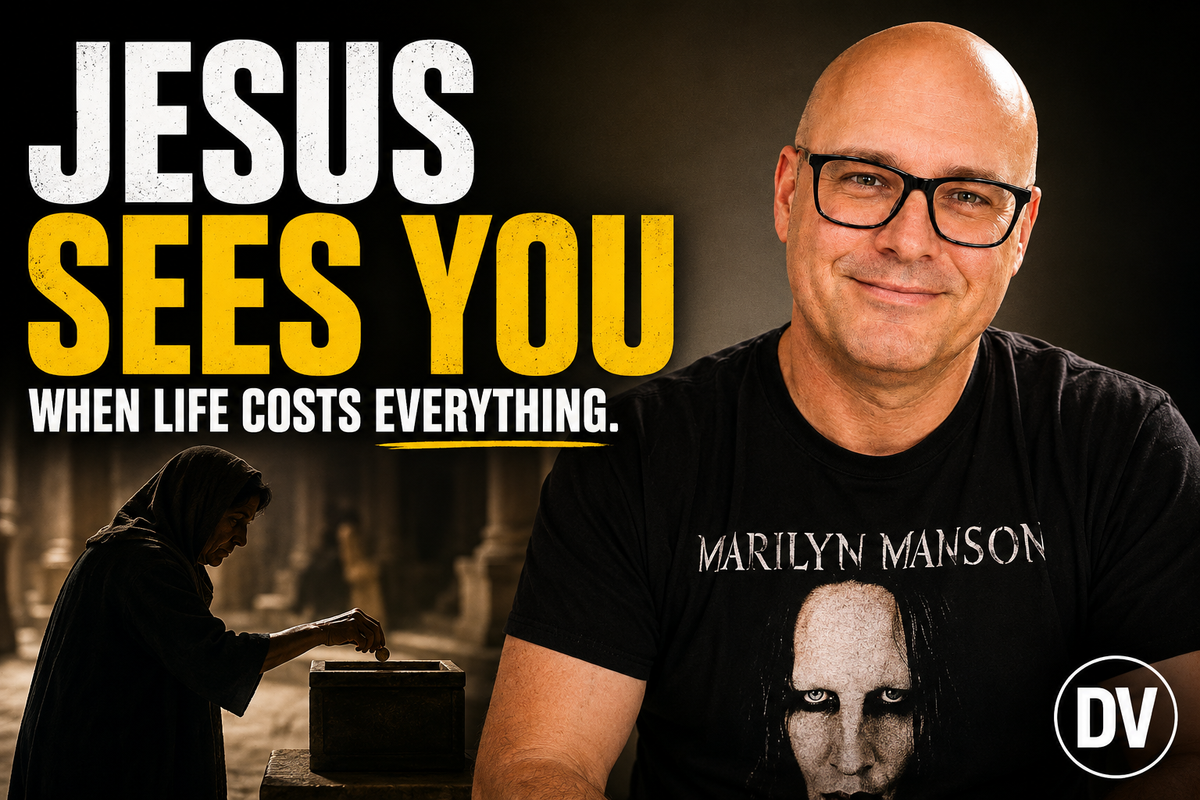
Chapter 1: The Question We Were Afraid to Ask
A person can sit in a church seat with ten dollars left in the bank and still feel pressure to smile like everything is fine. They can hear songs about trust, hear words about faith, watch other people give from places that look full, and quietly wonder how they are going to buy gas, groceries, medicine, or lunch for a child the next day. That is why the story of the poor widow and her two coins cannot be handled carelessly. In the video about why Jesus did not stop the widow, the uncomfortable question is not whether she had faith, because she clearly did. The harder question is why Jesus let the moment happen at all.
That question matters because the story has been used too many times as a simple message about giving more. A poor widow puts two small coins into the temple treasury, Jesus says she gave more than everyone else, and people often rush straight to admiration. But if we slow down, the scene becomes heavier. She was not giving from comfort. She was not giving from extra. She was giving what Jesus Himself said was everything she had to live on. That is why this article belongs beside the deeper article on Jesus seeing the cost behind two coins, because the point is not only what she gave. The point is what everyone else failed to see.
We have to be honest enough to ask the question that makes the story feel less safe. Why did Jesus not stop her? If He knew those were her last two coins, why did He not reach out and say, “Keep those, you need them”? God did not need her money. The temple did not need her two coins. And Jesus had already been exposing the corruption, pride, and emptiness of religious leaders who loved public honor while failing vulnerable people. So when this poor widow walked forward and gave everything she had left, Jesus saw more than a touching act of devotion. He saw a woman standing inside a system that had learned how to receive from the poor without being brokenhearted over the poor.
Picture the room. The temple treasury is not quiet in the way we imagine sacred places should be quiet. People are moving. Coins are being dropped. Rich people are giving large amounts, and large gifts have a way of drawing attention. They sound important. They look important. They can be counted, recorded, praised, and remembered. Then a widow comes forward with almost nothing. No one has to move aside for her. No one has to announce her. No one looks at her and thinks, “Here comes someone important.” She comes with two small coins, and in the economy of the temple, they barely matter. In the eyes of Jesus, they carry her whole life.
That is the first perspective shift this story gives us. Jesus did not see the two coins the way everyone else saw them. The crowd could measure the amount, but Jesus measured the cost. That difference changes everything. People are impressed by what looks large from the outside. Jesus is moved by what it took from the inside. A gift from abundance can be generous, but a gift from survival carries a different kind of weight. The rich gave what they could spare and still go home secure. She gave what stood between her and tomorrow. Her offering was small only to people who did not understand her life.
This is why we cannot let the story become a tool for pressure. Jesus was not creating a slogan for religious fundraising. He was not saying, “Find the poorest person in the room and take what she has left.” That would contradict the heart of God throughout Scripture. God repeatedly commands His people to care for widows, orphans, strangers, and the poor. The widow in this story should have been protected by the spiritual community around her, not reduced to a moment people admire while leaving her hungry. Her faith may have been beautiful, but the fact that she was in that position should have made someone uncomfortable.
That is what I think Jesus wanted His disciples to feel. He did not stop the widow by grabbing her hand, but He did stop the disciples from walking past her. He stopped their attention. He stopped their assumptions. He stopped them from being impressed by noise, numbers, and religious appearance. He called them close and said, in effect, “Look at her.” Not, “Look at how much the temple gained.” Not, “Look at how useful her poverty is to this institution.” Look at her. Look at the person. Look at the cost. Look at what the system is receiving without seeing. Look at what faith looks like when it is wrapped in vulnerability.
There is a world of difference between honoring someone’s sacrifice and using someone’s sacrifice. Jesus honored her. The system received from her. Those are not the same thing. This is where the story should make us examine ourselves. It is easy to admire a tired mother who keeps showing up for her children, but admiration does not put food on the table or give her rest. It is easy to call someone strong when they keep working through pain, but calling them strong is not the same as helping carry what is crushing them. It is easy to praise someone’s faith when they keep praying with almost nothing left, but real love asks whether they are alone, whether they are safe, whether they need help, whether their “two coins” are all they have left.
That is why this story is not only about giving. It is about seeing. Jesus saw a person everyone else could have reduced to a number. He saw a life behind the offering. He saw the fear that may have followed her home. He saw the empty cupboard, the uncertain morning, the quiet walk back through streets where nobody knew she had just given everything. The Bible does not tell us what happened to her after that. It does not tell us whether someone helped her. It does not tell us whether the disciples found her, fed her, or made sure she was cared for. That silence should bother us because it refuses to make the ending easy.
Maybe that is part of the lesson. We want every Bible story wrapped up in a way that removes responsibility from us. We want to hear that she gave her last two coins and immediately someone handed her a basket of bread. We want the miracle at the end because it lets us admire the scene without asking what we owe the widows around us. But the text leaves us with Jesus making His disciples look. That means the story does not simply end with what she gave. It continues in what His followers are supposed to become.
If Jesus makes you see someone, you are not allowed to pretend you did not see them. That is a serious truth. Sometimes God answers a suffering person’s prayer by opening the eyes of someone nearby. Sometimes the miracle is not lightning from heaven. Sometimes the miracle is a disciple finally noticing what Jesus is pointing at. A neighbor checks in. A friend sends groceries. A stranger pays attention. A church stops treating need like an interruption and starts treating it like the exact place Jesus told them to look.
This matters because many people are living on two coins in ways that are not always financial. Someone may be down to two coins of patience after years of caring for an aging parent. Someone may be down to two coins of courage after a diagnosis they have not told everyone about. Someone may be down to two coins of hope after a marriage has become heavy and quiet. Someone may be down to two coins of strength after working all week, trying to stay faithful, trying to stay kind, trying to keep believing that God has not forgotten them. From the outside, their life may not look dramatic. They may still answer messages, show up to work, make dinner, and say they are okay. But Jesus sees the cost.
That is the comfort in this story, and it is also the warning. If you are the widow, Jesus sees you. He sees what it costs you to keep going. He sees what others dismiss because it looks small. He sees the prayer you whispered in the car before walking into the building. He sees the effort it took to be gentle when you were tired. He sees the little faith you brought Him when it felt like almost nothing was left. But if you are one of the disciples standing nearby, Jesus is also asking you to look differently. Do not just admire sacrifice. Do not just praise faith. Do not just call people inspiring while leaving them alone in the very pressure that made their sacrifice so costly.
The widow was not a fundraising lesson. She was a person Jesus refused to let His disciples miss. That is where this story begins to turn us. It calls us away from a faith that only counts offerings and toward a faith that sees people. It calls us away from using religious language to excuse neglect and toward the kind of love that notices when someone has given everything they had just to make it through the day. The question is not only why Jesus did not stop her. The question is whether we will stop long enough to see the people He is pointing at now.
Chapter 2: When Admiration Is Not Enough
A woman can stand in a grocery store aisle with a small basket and do math in her head until the numbers hurt. She puts one thing back, keeps another, checks the price again, and hopes nobody notices how long she is staring at the shelf. To someone walking past, it looks like an ordinary shopping trip. To her, it may be the difference between food tonight and gas tomorrow. That is why the widow’s two coins matter beyond the walls of the temple. Small things are not small when they are all a person has left.
This is where the story presses on us in a way that is hard to avoid. Jesus saw the widow give everything, but He did not turn her into a spectacle. He did not interrupt her in front of the crowd. He did not embarrass her by announcing her poverty to everyone nearby. He did not take over her decision as though she had no dignity. That matters because sometimes people use compassion as another form of control. They see someone hurting and immediately make the person’s pain public, decide what should happen, or speak about them as if they are not standing there. Jesus was different. He saw her fully without stripping her of dignity.
That helps answer part of the hard question, but it does not remove the tension. Jesus could have stopped her, but He did not. He allowed her act of faith to remain hers. He let her give what she came to give. He did not treat her like a symbol first. He treated her like a person. Her worship was not seized from her. Her choice was not mocked. Her devotion was not corrected by someone who knew more than she did. Even when Jesus used the moment to teach His disciples, He did not speak of her as if her heart was foolish. He honored the cost.
But honoring the cost is not the same as ignoring the need. That is where many people get this story wrong. They honor the widow by talking about her sacrifice, but then they forget that she still had to walk away with nothing. They praise her faith, but they do not let her hunger trouble them. They admire her devotion, but they do not ask why a woman with no visible protection was down to her last two coins in the first place. Admiration becomes a shield that keeps us from responsibility. We can call someone inspiring and never have to ask whether love is calling us to act.
This happens all the time. A father works two jobs, never complains, misses sleep, and still shows up for his family. People say, “He is a good man.” That may be true, but maybe he also needs someone to notice the exhaustion behind his eyes. A grandmother raises children she did not expect to raise, stretches a fixed income, prays over bills, and keeps the house together. People call her strong. Maybe she is strong, but strength does not mean she should be left alone. A teenager keeps smiling through family chaos and everybody praises the good attitude. Maybe that teenager needs someone safe to ask, “How are you really doing?”
Jesus did not call His disciples over so they could learn to praise suffering from a comfortable distance. He called them over so their eyes would change. There is a kind of looking that keeps people far away, and there is a kind of seeing that brings us near. The crowd looked at the treasury. Jesus saw the widow. The crowd noticed public giving. Jesus noticed hidden cost. The crowd moved on. Jesus made His disciples stop.
That is a major shift. The question is not simply, “Do I recognize faith when I see it?” The deeper question is, “Do I respond to people the way Jesus responds after He makes me see them?” Once Jesus points to the widow, neutrality is gone. The disciples cannot pretend they do not know. They have been trained in that moment to notice the person who was almost missed. From then on, if they build communities that collect from people but do not care for people, they have betrayed the lesson.
That may sound strong, but it needs to be strong. Jesus was preparing men who would soon become leaders. They would preach, gather people, teach, organize, serve, and help shape the early life of the church. Before they could be trusted with people, they needed to learn how easily people can be missed. They needed to learn that spiritual leadership is not proven by how much attention you receive from the strong. It is proven by how faithfully you notice the weak. It is proven by whether you can see the woman with two coins when everyone else is watching the rich.
This is why the widow’s story is not only a comfort to the weary. It is a correction to the comfortable. It asks what we do with the people we notice. It asks whether our faith makes us more attentive or more impressed with ourselves. It asks whether our religious language has trained us to care or trained us to explain away discomfort. It asks whether we have mistaken public activity for the presence of God while the people God loves are being overlooked right in front of us.
A man can sit beside someone at work every day and never know that his coworker is one missed paycheck from losing an apartment. A woman can sit in a church row near another woman for months and never know that she is caring for a sick parent every night after work. A family can post smiling photos while quietly deciding which bill can wait. People rarely wear signs that say, “I am down to my last two coins.” They just get quieter. They pull back. They say they are fine. They learn how to survive without making others uncomfortable.
Jesus sees the things people hide in order to keep their dignity. That is one reason His seeing is so healing. He does not need someone to perform their pain loudly before He takes it seriously. He does not need suffering to become dramatic before it becomes worthy of attention. He notices the small offering, the tired face, the trembling trust, the woman whose whole life is being poured into two coins. He sees the hidden cost without demanding that the person explain it to the room.
If we follow Jesus, we have to learn that kind of sight. Not nosy sight. Not controlling sight. Not the kind of attention that turns people’s struggles into gossip or makes ourselves feel noble. The sight of Jesus is careful, humble, and loving. It does not say, “Let me use your pain to prove how compassionate I am.” It says, “You matter, and I will not reduce you to what you give, what you produce, or how well you hold yourself together.”
That is where practical faith begins. Sometimes love looks like a quiet grocery card in an envelope. Sometimes it looks like paying attention when someone says, “I am just tired,” and you can tell the tiredness is not ordinary. Sometimes it looks like making a phone call, bringing a meal, offering a ride, helping with a bill, watching the kids for an afternoon, or simply sitting long enough for someone to stop pretending. The point is not to become someone else’s savior. Jesus is the Savior. The point is to stop using that truth as an excuse to stay uninvolved.
There is a strange way people can spiritualize distance. They say, “God will take care of them,” and sometimes that is faith. But sometimes it is avoidance dressed up in religious language. God may want to take care of them through the people He has placed nearby. God may be moving you to notice because He intends love to take on hands, feet, time, attention, and sacrifice. Jesus pointed the widow out to the disciples. He did not point her out to make them sentimental. He pointed her out to form them.
That formation matters because disciples are not just people who believe correct things about Jesus. Disciples are people learning to see like Jesus. A person can quote Scripture and still miss the widow. A person can talk about faith and still walk past suffering. A person can admire generosity and still never become generous with attention, compassion, or help. The widow’s story cuts through all of that. It asks whether our faith is changing the way we notice people.
The harder part is that the person down to two coins is not always easy to recognize. Sometimes they are the dependable one. Sometimes they are the one who always helps others. Sometimes they are the one who never asks. Sometimes they are the one everyone assumes is fine because they are still functioning. That may be why Jesus had to call His disciples over. They were not naturally looking there. Their eyes had to be redirected. So do ours.
A church, a family, a workplace, or a friendship can become a treasury scene. People give, serve, show up, smile, contribute, and keep going, while the people around them only notice what they receive from them. Jesus interrupts that way of living. He asks us to look at the giver, not just the gift. He asks us to see the human being behind the usefulness. He asks us to stop measuring people by what they add to our lives and start caring about what life is costing them.
That is a hard shift, but it is a holy one. It changes the way you listen. It changes the way you thank people. It changes the way you lead. It changes the way you parent, work, serve, and pray. You begin to notice when someone is giving from overflow and when someone is giving from survival. You begin to treat quiet faith with tenderness. You stop assuming that because someone is still standing, they are not tired. You stop making heroes out of people while refusing to help them heal.
Maybe that is part of why Jesus did not stop the widow. He did not take away her act of faith, but He also did not allow His disciples to remain blind. He let her gift reveal the difference between heaven’s sight and human sight. Heaven saw the whole woman. Human religion saw the offering. Jesus was teaching His followers to stop confusing the two.
And that is the place where the story starts asking something of us. When Jesus points someone out, will we only be moved for a moment, or will we become different people? Will we keep using admiration as a safe distance from responsibility, or will we let compassion become concrete? Will we praise the widow and then walk away, or will we finally understand that the God who sees her may be asking us to see her too?
Chapter 3: God Does Not Need the Coins
A man can sit at the kitchen table late at night with a bill in front of him and a Bible beside him, and feel torn in a way he does not know how to explain. He wants to trust God. He wants to be generous. He wants to live with open hands. But the numbers on the page are real. The due date is real. The empty space between what came in and what has to go out is real. So when people talk about giving as if money is only a spiritual symbol and not also food, heat, rent, medicine, and gas, something in him tightens.
That is why we have to say this plainly. God does not need the coins. God did not need the widow’s coins, and God does not need ours as if heaven is short on money. The Creator of the world is not waiting on a poor woman’s last two coins to keep His work alive. God is not desperate. God is not underfunded. God is not pacing the floor of heaven hoping vulnerable people will give enough to make Him strong. If we start there, the widow’s story becomes healthier. It stops being a pressure story and becomes a seeing story.
This matters because people have been hurt by careless teaching around money. Some have been told that real faith means giving what they need to survive, and if they struggle afterward, they must not have believed enough. Some have watched religious leaders live comfortably while ordinary people were praised for sacrificing beyond what was wise. Some have sat in services where emotion was stirred, fear was used, and giving was treated like proof that a person truly loved God. That kind of pressure does not reflect the heart of Jesus. It may use Bible language, but it misses the face of the widow.
When Jesus saw her, He did not say, “This is how the temple should be funded.” He did not say, “Go find more widows and tell them to do the same.” He did not turn her poverty into a method. He called attention to her because the disciples needed to learn the difference between amount and cost, and they needed to see what happens when religious life becomes detached from mercy. If the only thing we take from the widow’s story is that poor people should give more, then we have missed the warning and kept only the part that benefits institutions.
The harder truth is that the temple treasury did not need her two coins, but the disciples needed her witness. Not because she was useful, but because her life revealed what their eyes were not yet trained to see. The rich gifts were easy to notice. Large offerings always are. They carry sound, weight, and social power. The widow’s gift was easy to miss because it did not change the temple budget. But it changed the lesson. Jesus took the smallest visible offering in the room and used it to expose the largest spiritual problem in the room: people had learned how to value gifts without valuing the giver.
That danger is not ancient. It is everywhere. A company can celebrate an employee who gives everything to the job while quietly ignoring the damage being done to his health, marriage, and peace. A family can rely on one dependable person until that person has nothing left, then praise them for being selfless. A church can applaud volunteers who never say no while never asking whether those people are tired, lonely, or barely holding themselves together. A friendship can become one person always listening, always helping, always carrying, while everyone assumes they are fine because they have always been strong.
That is how people become invisible while still being useful. They are seen for what they provide, but not for what it costs them. Jesus does not see that way. He does not reduce a person to their contribution. He does not confuse the gift with the life behind it. He does not look at the widow and say, “Only two coins?” He looks at her and says, “She gave more.” Not more in market value. More in cost. More in trust. More in personal weight. More in the part of life no one else could count.
The perspective shift is simple but serious: God does not need what leaves you empty, but He does see what it costs you to trust Him when you already feel empty. Those are not the same thing. God is not hungry for your last dollar. He is looking for your heart, and He is also commanding His people to care for your life. The widow’s trust was real. The failure around her was also real. We do not honor the story by pretending one cancels out the other.
This is where mature faith becomes careful. It does not mock sacrifice. It does not make light of generosity. It does not tell people to close their hearts and live only for themselves. There is a real beauty in giving to God. There is a real freedom in refusing to let money become an idol. There is a real joy in saying, “Lord, everything I have belongs to You.” But mature faith also refuses to use devotion as a cover for neglect. It refuses to call exploitation holy just because religious language is attached to it.
A single mother may give her child the last piece of fruit and call it nothing, but Jesus sees it. A man may send a small amount to help someone else while wondering how he will stretch his own week, and Jesus sees it. A caregiver may spend the final bit of patience they have on someone who cannot thank them properly, and Jesus sees it. These gifts may not look grand. No one may post about them. No one may clap. But heaven knows the cost. The point is not that these people should be drained further. The point is that they should not be missed.
That is why the question, “Why didn’t Jesus stop her?” leads us into something deeper than a quick answer. Maybe He did not stop her because He would not dishonor her sincere act of worship. Maybe He did not stop her because He was allowing her devotion to stand as her own choice. Maybe He did not stop her because the lesson was not about controlling the widow, but about confronting the blindness of everyone watching. Jesus often allowed moments to reveal more than words alone could reveal. In that treasury, He let the room tell the truth about itself.
The truth was painful. A widow gave everything, and the system continued. The wealthy gave loudly, and people noticed. The vulnerable gave quietly, and only Jesus truly saw. That is the kind of moment that separates appearance from reality. It shows us who is impressed by power and who is attentive to pain. It shows us who can count coins and who can see hearts. It shows us whether we have the eyes of the crowd or the eyes of Christ.
We should be careful here, because this does not mean every person who receives an offering is corrupt, and it does not mean every institution is evil. That would be too easy and too careless. The point is not to become cynical. The point is to become discerning. Jesus was not against worship, generosity, temple devotion, or the giving of the heart to God. He was against religious life that looked impressive while failing the people God specifically told His people to protect. He was against a spiritual culture where leaders loved honor while widows were devoured.
There is a difference between a community that receives gifts and a community that cares for givers. There is a difference between encouraging generosity and pressuring the vulnerable. There is a difference between honoring faith and exploiting faith. The line may not always be loud, but Jesus sees it clearly. He knows when a gift is being received with gratitude and stewardship, and He knows when it is being taken without love. He knows when sacrifice is beautiful, and He knows when people are being crushed under language that sounds holy but does not carry mercy.
That should make us more careful with one another. When someone is giving from a place of survival, they do not need careless applause. They need tenderness. They need wisdom. They need people who understand that faith is not proven by pretending needs do not exist. Sometimes the most spiritual thing you can say to a hurting person is not, “Give more.” Sometimes it is, “You matter too.” Sometimes it is, “Let me help.” Sometimes it is, “God sees your faith, and you do not have to collapse for your faith to be real.”
A father trying to lead his family through financial pressure does not need shame piled on top of fear. A widow living alone does not need to be treated like her poverty is a spiritual opportunity for someone else’s message. A young adult trying to follow Jesus while working a low-wage job does not need to be made to feel less faithful because they cannot give what someone else gives. They need a faith community that teaches trust, practices generosity, and also protects people from being spiritually manipulated when they are vulnerable.
That is the kind of reframing this story gives us. The widow’s two coins were not important because God needed the money. They were important because Jesus saw the heart, the cost, and the failure around her all at once. He could honor her without approving the system that failed her. He could praise her faith without giving religious people permission to use her. He could let her act of worship stand while calling His followers to become the kind of people who would never let widows disappear into the machinery of religion.
So when we read this story, we should not walk away asking only, “Am I willing to give?” That question matters, but it is not enough. We should also ask, “Am I willing to see?” Am I willing to notice the person behind the sacrifice? Am I willing to care when someone’s strength is costing them more than I realized? Am I willing to stop measuring faith by size, sound, and appearance? Am I willing to reject a version of religion that praises vulnerable people for giving everything and then leaves them alone?
God does not need the coins. He wants the heart. And if He has our hearts, then we will care about the widow after the offering box closes. We will care whether she eats. We will care whether she is safe. We will care whether our admiration becomes love with hands and feet. The treasury scene is not finished until the followers of Jesus learn to see the way Jesus sees.
Chapter 4: Help That Does Not Steal Dignity
A person can need help and still dread being helped in the wrong way. They may be behind on rent, short on groceries, worn down by caregiving, or quietly terrified about a medical bill, but the fear is not only the problem itself. Sometimes the fear is what will happen if people find out. Will they become a story? Will their name be whispered? Will someone treat them like a project instead of a person? Will help come with control, advice, judgment, or a look that makes them wish they had stayed silent?
That is one reason this story has to be handled with care. When we ask why Jesus did not stop the widow, we have to remember that stopping her publicly may have protected her coins but wounded her dignity. Imagine Jesus reaching out in front of everyone and saying, “Do not give that. You are too poor.” Even if the words were technically compassionate, the moment could have turned her poverty into a public display. The woman who came quietly with two coins might have become the center of attention in the most painful way. Jesus saw her fully, but He did not expose her carelessly.
That teaches us something important about love. Real compassion does not use a person’s need as an excuse to take over their life. It does not rush in loudly, make decisions, and then call itself kindness. It does not turn someone’s private struggle into public proof of our goodness. The mercy of Jesus is not careless. It notices deeply, but it does not humiliate. It comes close, but it does not crush. It helps, but it still honors the person.
That kind of help is harder than it sounds. Many people want to be useful, but not everyone knows how to be gentle. Some people see need and immediately become the commander of the situation. They want to fix, organize, correct, instruct, and direct. They may mean well, but the hurting person feels smaller by the end of it. Other people avoid helping at all because they are afraid of getting involved. Between control and avoidance, Jesus shows us a better way. He teaches us to see clearly, move humbly, and care without making the person feel owned.
Think about a man who has always been the dependable one in his family. He fixes cars, answers calls, helps with moves, lends money when he can, and keeps his own struggles quiet. One day his hours are cut at work. He is not lazy. He is not irresponsible. He is simply stretched beyond what he can carry. The hardest thing for him may not be the missing money. It may be the thought of admitting he needs help. If someone steps in with a lecture, he may never ask again. If someone helps in a way that preserves his dignity, he may finally breathe.
That is the kind of care the people of Jesus must learn. Not showy care. Not care that needs credit. Not care that makes the helper the hero. Quiet care. Respectful care. Care that sees the person, not just the problem. Care that asks before assuming. Care that protects someone’s name as carefully as it protects their need. Care that understands a human being can be vulnerable without being helpless, poor without being foolish, tired without being weak, and in need without being less worthy of honor.
This perspective changes how we read the widow’s scene. Jesus did not interrupt her worship, but He did interrupt His disciples’ blindness. He did not shame her, but He did challenge them. He did not make her poverty a public spectacle, but He made her faith impossible for His followers to ignore. There is wisdom in that. He directed attention without stripping dignity. He taught the disciples without turning the widow into a lesson for exploitation. He honored her sacrifice while forcing His future leaders to see what kind of world they must never create.
That matters because some people have been damaged by help that did not feel like love. They were given assistance, but it came wrapped in suspicion. They were told they should be grateful, but they were also made to feel watched. Their struggle became a topic. Their need became a label. Their weakness became the first thing people remembered about them. That is not the way of Jesus. Jesus knew how to see people in their need while still calling them by their dignity.
When Jesus saw the widow, He did not reduce her to poverty. He did not call her careless. He did not mock her gift. He did not say, “This poor woman does not know what she is doing.” He said she gave more. That statement does not make poverty good, and it does not make the system around her innocent. It means Jesus saw her heart clearly enough to honor what everyone else would have overlooked. He could tell the truth about her sacrifice without making her less human.
That balance is part of spiritual maturity. Immature religion often swings between two errors. It either romanticizes suffering or ignores it. It either says, “Look how beautiful it is that she gave everything,” without caring whether she survives, or it says, “Someone should have stopped her,” without honoring the faith and agency she brought into the room. Jesus does neither. He refuses to flatten her. She is not merely a victim. She is not merely an example. She is a real woman with faith, vulnerability, courage, and need all present at the same time.
People are often like that. They do not fit into one clean category. The tired mother may be exhausted and faithful. The struggling man may be afraid and responsible. The widow may be vulnerable and courageous. The young person battling discouragement may be fragile and brave. Love has to be honest enough to see the whole person. If we only see weakness, we may control them. If we only see strength, we may abandon them. Jesus sees both, and His followers must learn to see both too.
That is where the story becomes practical. When we notice someone living on two coins, our first response should not be to turn them into a speech, a post, an example, or a quick emotional moment. Our first response should be reverence. There is holy ground around a person’s hidden cost. When someone lets you see even a little of what they are carrying, you are being trusted with something sacred. Handle it gently. Do not rush to explain their life. Do not make yourself the expert on their pain. Do not help in a way that makes them feel poorer than they already feel.
Sometimes the most loving help begins with a question spoken quietly. “Would this help?” “Can I bring dinner?” “Can I sit with you for a while?” “Can I take one thing off your plate this week?” “Would it be okay if I helped with that bill?” There is a way to offer support that does not corner a person. There is a way to give without making someone feel bought. There is a way to step in without stepping on the dignity of the one you are trying to love.
That kind of care reflects the heart of Jesus. He did not need to control the widow in order to honor her. He did not need to embarrass her in order to expose the problem. He did not need to take away her choice in order to teach His disciples. He let her act stand, but He made sure it was seen rightly. The same moment that revealed her faith also revealed the failure of a religious culture that had forgotten the human being behind the offering.
If we are honest, this challenges both the giver and the watcher. For the person giving from emptiness, it says your small act matters to Jesus. You are not invisible because your gift looks small. You are not forgotten because your strength is low. You are not less faithful because you are tired. But for the person watching, it says do not admire what you are unwilling to help carry. Do not praise someone’s courage while leaving them alone. Do not call their sacrifice beautiful and then use that beauty as a reason to do nothing.
The kingdom of God is not built by draining people and applauding them for bleeding quietly. It is built by love that sees, honors, protects, and restores. It is built by people who understand that generosity is not only what we place into an offering box. Generosity is also the way we give attention, mercy, privacy, time, patience, and practical help. Sometimes the gift God wants from us is not money at all. Sometimes it is the willingness to notice someone we would rather not be responsible for seeing.
That is a hard kind of discipleship because it interrupts our comfort. Once we see the widow, we cannot unsee her. Once we realize someone is giving from survival, we cannot keep treating their sacrifice like an inspiring decoration. Jesus trains our eyes so He can train our hearts. He shows us the person behind the moment, and then He waits to see whether love will become more than a feeling.
The widow walked into the treasury with two coins, but the disciples walked away with a responsibility. They had seen how heaven measures cost. They had seen how easily a vulnerable person can be missed in a religious crowd. They had seen that Jesus pays attention to what the world counts as small. If they were going to carry His name, they would have to carry His sight too.
Chapter 5: The People We Are Finally Able to See
Someone can be sitting across from you at breakfast and still be hidden. The coffee is poured, the toast is on the plate, the phone is face down on the table, and the morning looks normal from the outside. But inside, that person may already be carrying the whole day before it begins. They may be wondering how to pay for something, how to answer a message, how to handle a conversation, how to keep pretending they are not tired. You can be close enough to pass them the butter and still miss the weight they brought into the room.
That is why the widow’s story cannot remain trapped in the temple. If it stays only as a Bible scene from long ago, we will admire it and move on. But Jesus did not point her out so His followers could become better at admiring moments. He pointed her out so they would become different kinds of people. He wanted them to leave that treasury with new eyes. He wanted them to understand that the kingdom of God begins wherever a person is finally seen as a person, not as a number, role, offering, function, or burden.
This is the deeper movement of the story. At first, we ask why Jesus did not stop the widow. That is a fair question. It is honest. It respects the real pressure in the scene. But after sitting with the story, another question starts to rise. What did Jesus stop? He did not stop her hand. He did not interrupt her worship. He did not publicly remove her dignity. But He did stop His disciples. He stopped their attention from going in the wrong direction. He stopped their eyes from staying impressed with wealth, sound, size, and religious display. He stopped them long enough to say, “Do not miss her.”
That may be one of the most needed teachings in the world right now. Do not miss her. Do not miss him. Do not miss the person who is still showing up with almost nothing left. Do not miss the quiet one. Do not miss the dependable one. Do not miss the person who gives so much that everyone assumes giving is easy for them. Do not miss the person whose faith looks small only because you do not know what it costs.
A person may give two coins of patience every day in a home where no one thanks them. A person may give two coins of courage when they walk into a hospital room and try to stay calm for the person lying in the bed. A person may give two coins of honesty when they finally say, “I am not okay,” after years of acting fine. A person may give two coins of faith when they pray again after feeling disappointed by silence. These moments may never be noticed by crowds, but Jesus sees them with complete clarity.
The hard part is that seeing like Jesus will change what we can ignore. Before Jesus pointed out the widow, the disciples might have walked out of the temple talking about the impressive gifts. After Jesus pointed her out, they had to carry a different memory. They had to carry the image of a woman with two coins. They had to carry the discomfort of knowing that the smallest offering in the room may have been the greatest. They had to carry the warning that religious life can become busy, public, and respected while failing to care for the person God sees.
That is what happens when Jesus opens our eyes. We start noticing things we used to walk past. We notice the cashier who looks exhausted but still speaks kindly. We notice the friend who always asks about us but never says much about themselves. We notice the elderly neighbor whose trash cans stay by the curb a little longer because the walk has become harder. We notice the child who gets quiet when adults argue. We notice the person at church who serves every week but always leaves alone. We notice that faith is not just what happens on platforms, stages, pulpits, and public places. Faith is also hidden in kitchens, hospital chairs, long drives, unpaid bills, tired prayers, and the decision to keep loving when life has taken almost everything else.
This kind of sight is not dramatic, but it is holy. It does not always announce itself. It may simply make you slower to judge. It may make you more careful with your words. It may make you less impressed by the loudest person in the room and more attentive to the one trying not to fall apart. It may make you ask better questions. It may make you stop using the word “strong” as a way to avoid helping. It may make you understand that the person who never complains may not be fine; they may just be practiced at surviving quietly.
The widow’s story also changes how we see ourselves. Some people reading this are not the disciples watching from the side. They are the widow. They know what it feels like to give from almost nothing. They know what it feels like when a small act of obedience costs more than anyone realizes. They know what it feels like to keep trusting God while wondering about tomorrow. They know what it feels like to bring two coins of faith and hope nobody makes their pain a spectacle.
If that is you, this story does not say that your poverty is good, your pressure is unimportant, or your need should be ignored. It says Jesus sees you in the middle of it. He sees the cost behind what others may count as small. He sees the courage it takes to keep your heart open. He sees the private strain behind your public composure. He sees the part of your life nobody has asked about. You are not invisible because you are not impressive to the crowd. You are not forgotten because your offering does not make noise.
But the story also invites you to be honest with Jesus about your need. The widow’s faith matters, but so does her life. Your trust in God does not require you to pretend you are not hungry, tired, afraid, or stretched thin. Faith is not denial. Faith is bringing the truth into the presence of God. If you are down to two coins, you do not have to dress it up. You can say, “Lord, this is what I have. This is where I am. This is what I fear. This is what I need.” The same Jesus who saw her sees you without needing you to perform strength.
For those of us standing nearby, the call is just as direct. Do not wait for suffering to become loud before you take it seriously. Do not wait until someone breaks before you believe they were under pressure. Do not wait until the widow has nothing left before you decide she matters. Love that arrives only after collapse is still love, but there is a deeper mercy in noticing earlier. There is a Christlike tenderness in seeing the signs before someone has to shout.
That may be one of the most practical ways to live this story. Pay attention earlier. Listen longer. Look beyond what someone gives you and ask what it may be costing them. When someone keeps showing up, do not assume they are full. When someone keeps serving, do not assume they are rested. When someone keeps encouraging others, do not assume they are encouraged. When someone keeps smiling, do not assume there is no sadness behind it. Jesus saw beneath the surface, and He is teaching us to do the same.
The great danger of religious life is not only hypocrisy. It is numbness. It is becoming so familiar with holy words that we stop seeing holy responsibility. It is singing about love while missing the person beside us. It is speaking about faith while ignoring the cost someone is carrying. It is building something in God’s name while forgetting the people made in God’s image. Jesus will not let His disciples live that way if they are willing to be corrected.
That is why the widow’s two coins still speak. They tell the weary person, “Jesus sees the whole cost.” They tell the comfortable person, “Look again.” They tell leaders, “Do not build on the backs of the vulnerable.” They tell communities, “Protect the people God sees.” They tell all of us, “Do not turn sacrifice into a story you admire but never respond to.” The moment is small in money but enormous in meaning because it reveals the heart of Jesus and the kind of people He wants to form.
So maybe the final question is not only, “Why did Jesus not stop her?” Maybe the final question is, “What is Jesus stopping in us?” Is He stopping our rush? Is He stopping our shallow measuring? Is He stopping our habit of calling people strong so we do not have to help? Is He stopping our admiration before it becomes an excuse? Is He stopping our eyes on the loudest gifts and turning them toward the quiet cost carried by someone almost everyone else missed?
The widow walked into the treasury with two coins. She may have thought almost no one noticed. The people around her may have kept moving. The temple may have received her offering and gone on with its day. But Jesus saw her, and because He saw her, He made His followers see her too. That is not a small thing. That is a doorway into the heart of God.
If we follow Jesus, we cannot be content to count what people give. We must learn to care about what it costs them. We cannot praise sacrifice and ignore suffering. We cannot admire faith and abandon the faithful. We cannot build religious lives that sound holy but fail to protect the people Jesus points toward. The widow was not a fundraising lesson. She was a daughter seen by Christ, and every unseen person around us carries that same sacred worth.
So bring Jesus your two coins if that is all you have left. Bring Him your tired faith, your small strength, your quiet prayer, your honest need. He sees the cost. And when He points someone else out to you, do not look away. Let His eyes become your eyes. Let His mercy become your movement. Let His love become something practical, careful, and real.
The world saw a widow give almost nothing.
Jesus saw a woman give everything.
And the people who follow Him should never see the world the same way again.
Your friend,
Douglas Vandergraph
Watch Douglas Vandergraph inspiring faith-based videos on YouTube:
https://www.youtube.com/@douglasvandergraph
Support the Christian encouragement library through GoFundMe:
https://www.gofundme.com/f/help-douglas-vandergraph-build-a-christian-encouragement-lib
Support the daily work by buying Douglas a coffee:
https://www.buymeacoffee.com/douglasvandergraph