The Mercy of Not Seeing Clearly Yet

Chapter 1: The Day Clarity Did Not Arrive All at Once
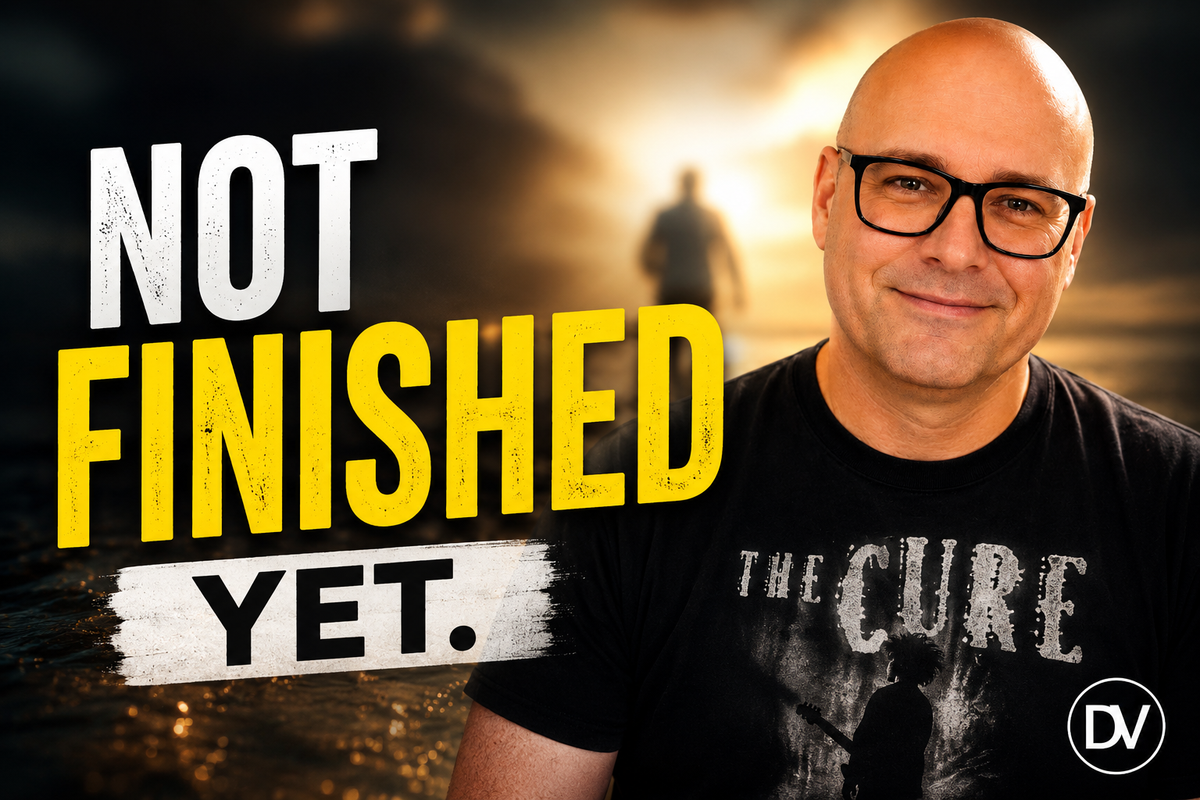
There are mornings when a person opens their eyes and knows they are better than they used to be, but they are still not whole. The room is quiet, the phone is charging beside the bed, the day has not started making demands yet, and for a few seconds there is enough stillness to tell the truth. They are not in the darkness they once lived in. They are not as angry as they used to be. They are not as hopeless, not as numb, not as careless with their own heart. But they are also not clear. That is why the Jesus healing in stages video message matters for people who feel caught between change and completion, and why the Christian encouragement article about trusting Jesus when life still looks blurry belongs beside this piece for anyone learning how to keep walking before everything makes sense.
Most of us know that in-between place better than we admit. A person can leave an old habit behind and still feel the pull of it on a stressful day. A parent can become more patient and still lose their temper in the kitchen after a long week. A believer can start praying again and still feel awkward, distracted, or unsure what to say. A husband or wife can want peace in a relationship and still carry old defenses into a new conversation. A person can be genuinely changing and still feel embarrassed because the change does not look finished yet.
That is the place where one unusual story about Jesus becomes deeply personal. In Mark 8, a blind man is brought to Jesus in Bethsaida, and people beg Jesus to touch him. If we have read the Gospels before, we may think we already know what is about to happen. Jesus has healed people with a word. He has restored bodies, cleansed skin, cast out demons, raised the dead, opened ears, and given sight. So when a blind man is placed before Him, we expect the miracle to move in a straight line. Jesus touches him, the man sees, and everyone goes home amazed.
But this story does not move in a straight line. Jesus takes the blind man by the hand and leads him outside the village. That is the first surprise. Before there is restored sight, there is personal guidance. Before the man can see where he is going, he has to trust the hand that is leading him. He does not receive an explanation first. He does not get a map. He does not get the comfort of the crowd staying close enough to interpret every step. He has the hand of Jesus, and for that moment, the hand of Jesus is enough.
That detail should not be rushed. We often want Jesus to heal us while leaving every surrounding voice in place. We want clarity without separation, restoration without quiet, transformation without being led away from the noise that helped shape our confusion. But sometimes Jesus begins by taking a person aside. Not because He is hiding them in shame, but because healing is too holy to become entertainment for people who only came to watch.
There are parts of us that cannot heal well in the crowd. A man trying to recover from years of pretending may need space where he is not performing for anyone. A woman who has been strong for everyone else may need to stop explaining herself long enough to let Jesus deal with her heart honestly. Someone who has been known by failure, sickness, fear, grief, or old choices may need to be led away from the labels people keep placing on them. The village may know what you were, but Jesus knows what He is restoring.
Then Jesus does something that feels strange to modern ears. He puts saliva on the man’s eyes, lays His hands on him, and asks, “Do you see anything?” That question is not there because Jesus lacks information. Jesus knows what is happening. He knows the man’s eyes, his story, his need, and the exact work taking place in him. Yet He asks the man to speak honestly from the middle of the process.
The man answers with one of the most truthful sentences in Scripture: “I see people; they look like trees walking around.” He is no longer blind, but he is not seeing clearly. He has received a touch from Jesus, but the work is not complete yet. He can tell that something has changed, yet he cannot trust what he sees. There is movement, but not clarity. There is light, but not full understanding. There is progress, but not the kind of progress that lets him pretend he is finished.
That is where many people live spiritually, emotionally, and even practically. They see more than they used to see, but not everything clearly. They know God has touched their life, but they still have confusion. They can recognize some patterns they used to miss, but other things remain blurry. They have grown, but they still stumble. They have faith, but they still have questions. They have started healing, but there are days when old pain still changes the way the world looks.
This is where the story gives us a perspective shift we need badly. Partial healing is not proof that Jesus failed. Blurry vision is not proof that nothing happened. The middle of restoration is not the same thing as abandonment. Sometimes the first mercy is not perfect clarity. Sometimes the first mercy is being able to say, “I am not where I was.”
That may sound small until you have lived long enough to know what darkness can do to a person. It is no small thing to be less bitter than you used to be. It is no small thing to pray again after years of silence. It is no small thing to admit you need help instead of hiding behind pride. It is no small thing to stop calling damage normal. It is no small thing to begin seeing people again after pain trained you to see only threats, disappointments, or shadows.
But the story also does not ask us to settle for blur. Jesus does not leave the man saying, “At least you can see something.” He does not make partial vision the final testimony. He does not shame the man for needing another touch. He lays His hands on him again, and the man’s sight is restored. He sees everything clearly.
That second touch is full of mercy. It tells us Jesus is not embarrassed by a healing that has stages. He is not impatient with the person who can only tell the truth from the middle. He does not demand that the man lie about clarity he does not yet have. Jesus stays with him until the work is complete.
There is a beautiful honesty in this miracle that many of us need. We do not have to exaggerate our progress to honor Jesus. We do not have to act fully healed when we are still being restored. We do not have to say, “Everything is clear now,” if the truthful answer is, “I can see more than before, but I still need help.” Faith is not pretending the blur is gone. Faith is staying with Jesus long enough for Him to keep touching what still needs restoration.
The man could have lied. He could have said, “Yes, I see,” because Jesus had already touched him and because people often feel pressure to make the miracle sound complete before it is. He could have protected himself from embarrassment by pretending the trees looked like people and the people looked normal. But his honesty opened the door for the next touch.
That is a serious lesson for the rest of us. God can work with honesty. He can heal what we bring into the light. The dangerous thing is not being in process. The dangerous thing is pretending we are finished because we are ashamed of needing more grace.
A person may be tempted to hide their blurry places because church culture, family pressure, public image, or personal pride makes unfinished healing feel like failure. But Jesus never treated this man’s partial sight as failure. He treated it as the middle of a miracle. That means there is hope for everyone who is better, but not clear; free, but still learning; changed, but still tender; walking, but still needing the steady hand of Christ.
The story begins with a blind man being led by the hand, and maybe that is where many of us have to begin too. Not with perfect understanding. Not with the whole road explained. Not with everyone watching and approving. Just with enough trust to let Jesus lead us away from the noise and enough honesty to say what we really see when He asks.
Chapter 2: The Village That Keeps Calling You Blind
A person can sit in a break room at work and feel an old version of themselves being handed back to them by people who have never learned how to see them differently. Someone makes a joke about how they used to be. Someone brings up a mistake from years ago like it still belongs in the room. Someone uses the same nickname, the same tone, the same little reminder that says, “We know who you are.” The person may smile because it is easier than explaining how much they have been trying to change. But inside, something sinks, because there are places where your growth is never allowed to breathe.
That is one reason the beginning of this miracle matters. Jesus does not heal the blind man in the center of the village. He takes him by the hand and leads him outside Bethsaida. That detail is easy to miss because our attention goes straight to the healing itself. We want to know why the miracle happened in stages. We want to know why the man first saw people like trees walking around. But before the blurry sight, before the second touch, before the clear vision, Jesus moves the man away from the village.
There is mercy in that movement. The village may have been the place where the man was known only by his blindness. It may have been the place where people helped him, pitied him, talked around him, stepped over him, or reduced his whole life to one condition. We do not know every detail of his story, but we do know Jesus did not let the village become the stage for the man’s restoration. He took him outside of it.
Sometimes Jesus begins healing by changing the environment around your heart. Not always physically. Not always by moving you to a new town, a new job, or a new house. Sometimes He starts by pulling your attention away from the voices that keep naming you by what you used to be. Sometimes He leads you away from the crowd that knows your wound but does not know your future. Sometimes He takes you outside the noise before He gives you clarity, because you cannot always see clearly while standing among the people who benefit from your confusion.
That is a hard lesson because familiar places can feel safer even when they are not healthy. A person can stay in a group that keeps them small because at least the rules are known. A person can remain around people who mock their faith, drain their peace, or keep reminding them of old failures because loneliness feels worse than the pressure. A person can keep listening to the same angry voices online, the same cynical commentary, the same cruel comparisons, the same half-truths about God, people, and themselves, and wonder why their vision remains blurry.
The question is not only whether Jesus can heal. The question is whether we will let Him lead us. The blind man allowed Jesus to take his hand and guide him away from what was familiar. That may sound simple, but for a blind man, leaving familiar ground would have required trust. He had to walk without seeing where he was being taken. He had to move away from the known sounds of the village, away from the people who brought him, away from the place where he had learned how to survive in darkness. Healing required being led before he understood.
Many people want clarity before obedience. They want to know where this is going, how long it will take, who will approve, what will change, and whether they will feel better by Friday. But sometimes Jesus offers His hand before He offers the explanation. He asks us to follow before we can see the whole shape of what He is doing. That is uncomfortable for a person who has been hurt, because pain teaches us to mistrust movement. We think, “If I cannot see where this leads, I cannot go.” But the man in Mark 8 had to trust the One leading him before he received the sight he wanted.
This has a practical side that we should not spiritualize away. If you are trying to heal, grow, or follow Jesus more deeply, you may need to look honestly at what keeps pulling you back into blindness. It may be a conversation pattern. It may be a habit of checking someone’s page because you want to know whether they are doing better than you. It may be the friend group that laughs at your progress. It may be the private entertainment that keeps stirring up the very thing you are asking God to calm. It may be the endless stream of noise you keep calling information, even though it leaves your soul more confused than before.
A man trying to become more patient cannot keep feeding himself outrage all day and then be shocked that anger comes easily at home. A woman trying to trust God with her future cannot spend every night comparing her life to curated images and then wonder why peace feels far away. A young person trying to rebuild faith cannot only surround themselves with voices that treat belief like foolishness and expect clarity to grow without resistance. A wounded heart needs more than a touch. It may also need a new atmosphere.
Jesus leading the man outside the village shows us that restoration is not only about what happens in the eyes. It is also about what happens around the eyes. What we keep looking at shapes what we are able to see. What we keep hearing shapes what we are able to believe. What we keep returning to shapes what we call normal. If the village taught this man how to live as blind, Jesus was now leading him into a place where he could begin to receive sight without the old script shouting over the miracle.
This does not mean we cut people off carelessly or act superior to those who knew us before change began. That is not the point. Love matters. Humility matters. Some relationships are worth repairing, and some communities can grow with us. But there are times when staying spiritually healthy requires honest distance from what keeps confusing us. Jesus Himself took the man by the hand and led him away. That means separation can be merciful when it protects what God is restoring.
The deeper question is whether we are willing to leave the village identity behind. Because sometimes the village is not only outside us. Sometimes it lives inside our own mind. We carry old labels long after other people stop saying them. We keep calling ourselves blind, broken, difficult, behind, unworthy, damaged, too late, too much, not enough. We repeat inward sentences that Jesus never gave us. We stand outside the village physically but still let its voice tell us who we are.
That is why being led by Jesus is not passive. The man had to take steps. He had to move with the hand that held him. In our lives, that may look like refusing to rehearse the old sentence again. It may look like changing what we listen to on the drive to work. It may look like setting a boundary without hatred. It may look like asking for help from someone wise. It may look like getting honest with God in the quiet instead of performing strength in public. It may look like turning down a familiar road because you know where it leads.
Jesus does not lead us away from the village to punish us. He leads us away because He sees what the village cannot see yet. The people there brought the man to Him, which was good, but Jesus still chose to complete the work outside their gaze. That should comfort anyone who is being changed quietly. Not every holy thing in your life has to happen in front of the people who watched you struggle. Not everyone gets a front-row seat to your restoration. Some of the most important work Jesus does in you may happen where only He can see it.
There is dignity in that. The man was not a public project. He was not a spectacle. He was a person. Jesus handled him personally, patiently, and away from the crowd. That tells us something about the heart of God. He is not interested in using your pain as material for other people’s curiosity. He is not rushing your process so it looks impressive to observers. He is willing to take your hand, lead you step by step, and restore you in the place where performance no longer has control.
So if you are in a season where Jesus seems to be leading you away from certain noise, do not assume nothing is happening. The leaving may be part of the healing. The quiet may be part of the mercy. The distance may be part of the clarity. You may not see everything yet, but you may already be walking with the only One who can give you sight.
The village may keep calling you blind, but Jesus is not finished naming what you are becoming.
Chapter 3: The Honesty That Receives the Second Touch
A person can sit in a doctor’s office after weeks of trying to be brave and finally admit they are not doing as well as everyone thinks. The room is clean, the paper on the exam table makes that thin crinkling sound, and the clipboard asks questions that feel too small for the weight inside the body. Pain level. Sleep. Appetite. Mood. The person has been telling family, coworkers, and friends, “I’m getting better,” because in some ways they are. But when someone safe finally asks the right question, the truth comes out more carefully: “I am better than I was, but I am not okay yet.”
That sentence takes courage. It is hard to tell the truth from the middle of healing. People understand sickness. They understand crisis. They understand the dramatic moment when everything breaks. They also understand the celebration when someone is fully restored. What many people do not know how to handle is the long, unfinished middle, where something real has begun but clarity has not fully arrived.
That is where the blind man in Mark 8 gives us a gift. When Jesus asks, “Do you see anything?” the man does not decorate his answer. He does not try to make the miracle sound more complete than it is. He does not say what he thinks people want him to say. He tells the truth. He says he sees people, but they look like trees walking around.
That answer is strange because it is both hopeful and incomplete. He can see something. That matters. The darkness has been interrupted. Light has entered. Shapes are moving. The world is no longer only blackness. But he cannot yet tell people from trees. He cannot yet trust what his eyes are giving him. His sight has begun, but his vision is still confused.
Many of us would have felt pressure to pretend right there. If Jesus had touched our eyes, we might feel embarrassed to admit things were still blurry. We might worry that honesty would sound ungrateful. We might think, “Who am I to say I need more when Jesus has already done something?” So we would smile, nod, and tell everyone we were fine while still seeing people like trees.
That happens all the time in real life. Someone comes back to faith after years of distance and feels pressure to sound certain before they actually feel steady. Someone begins healing from betrayal and feels pressure to say they have forgiven everything when their heart is still tender. Someone starts recovering from grief and feels guilty because they laughed one day and cried the next. Someone becomes a little freer from fear and then feels ashamed when fear shows up again under stress.
The problem is not that healing takes time. The problem is that people often feel forced to lie about the stage they are in.
This is where Jesus is so different from the pressure around us. He asked the man what he saw. That means Jesus made room for an unfinished answer. He did not demand a performance. He did not require the man to protect the reputation of the miracle. He did not rush him into a testimony that sounded cleaner than the truth. Jesus gave him permission to speak honestly from the exact place where he was.
That should change how we think about spiritual growth. Honesty is not disrespectful to God. Honesty is often the doorway through which deeper healing comes. The blind man’s truthful answer did not stop the miracle. It opened the way for the second touch.
There is a lesson here that many Christians need to hear with gentleness and seriousness. Do not lie about clarity you do not have. Do not call confusion victory because you are afraid of disappointing people. Do not pretend the wound is fully healed if it still needs the hand of Jesus. Faith is not acting finished. Faith is trusting Jesus enough to tell Him the truth.
This matters because hidden blur can become dangerous. If a person drives at night and cannot see clearly, pretending does not make the road safer. If someone is leading a family, a business, a friendship, or a ministry while privately unable to see what is true, pretending can hurt people. Blurry vision needs mercy, but it also needs honesty. The loving thing is not to shame the person who cannot see clearly. The loving thing is to bring the blur to Jesus before it starts guiding decisions.
A father who is still healing from his own childhood may love his children deeply and still misread their behavior through old pain. A leader who was betrayed in the past may enter a new team and see threats where there are only questions. A woman who has been rejected may hear silence from a friend and assume abandonment before knowing the truth. A man who has failed before may look at a new opportunity and see only another way to fall. These are not small things. When vision is blurry, people can look like trees, and trees can look like people. We can misread what is in front of us because something in us still needs restoration.
That is why partial healing should make us humble. It should not make us hopeless, but it should make us careful. If Jesus has begun opening our eyes, we should be thankful. But we should also be honest about what still appears distorted. Growth is not only seeing more. Growth is admitting where we still do not see well.
There is mercy in Jesus asking the question. He could have touched the man again without asking anything. He could have completed the healing in silence. But He invites the man into the process. He allows him to name the blur. That naming matters. Sometimes we cannot receive help because we keep our confusion vague. We say, “I’m fine,” when the more truthful answer is, “I am afraid of trusting people.” We say, “I’m just tired,” when the deeper truth is, “I have been carrying resentment.” We say, “I’m over it,” when the honest sentence is, “I do not want this pain to control me, but it still affects how I see.”
Jesus can handle that sentence.
That may be the real comfort of this story. The Lord is not fragile. He is not offended by the truth of where we are. He does not need us to exaggerate healing so He looks powerful. His power is not threatened by our process. He is strong enough to meet us in the blur and patient enough to continue the work.
The man’s answer also protects us from comparing our healing to someone else’s. Some people receive quick clarity in certain areas. Others walk through a slower restoration. One person may forgive quickly. Another may need to return to Jesus again and again with the same pain. One person may be freed from a habit in a single turning point. Another may need daily surrender, support, accountability, and time. We should be careful not to turn someone else’s timeline into a weapon against our own soul.
Jesus dealt with this man personally. That is important. He did not heal him according to the expectations of the crowd. He did not seem embarrassed that the miracle had a middle. He did not compare him to the other blind people He had healed. He simply stayed with him.
Some people need to know that today. Jesus is not ashamed of your middle. He is not standing over you with irritation because you can see more than before but not as clearly as you wish. He is not finished with you because your progress has stages. The same Christ who began the work is still near enough to continue it.
So tell Him the truth. Tell Him where people still look like trees. Tell Him where fear still distorts your view. Tell Him where old pain still changes what you think you see. Tell Him where you are better, but not clear. Tell Him where you are thankful, but still needy. Tell Him where the first touch has brought light, but you still need the second touch to bring focus.
The man did not lose the miracle by being honest. He received the fullness of it. And maybe that is the invitation for us. Not to perform healing, not to rush clarity, not to hide confusion behind religious words, but to stand with Jesus outside the village and say the true thing. “Lord, I can see more than I used to. But I still need You to help me see clearly.”
Chapter 4: When People Still Look Like Trees
A person can walk into a family gathering after months of trying to grow and discover how quickly old pain can change the room. The food is on the counter, children are moving between chairs, someone is laughing too loudly in the next room, and everything looks normal from the outside. Then one sentence lands the wrong way. It may not even be meant cruelly. It may be a small comment, a tone, a look, a reminder of an old wound. Suddenly the person is not only hearing what was said. They are hearing every year that trained them to expect rejection. They are not only seeing the face in front of them. They are seeing a whole history through one moment.
That is what blurry vision does. It does not always mean we see nothing. Sometimes it means we see something real through something still unhealed. We see movement, but we misread meaning. We see people, but they look like trees. They appear taller than they are, colder than they are, more threatening than they are, or less human than they are. Our eyes are open, but the picture is distorted.
The blind man in Mark 8 gives language to this stage of restoration. He does not say, “I see darkness.” He does not say, “Nothing has changed.” He says, “I see people; they look like trees walking around.” That sentence is not only about eyesight. It is also a picture of what happens inside us when Jesus has begun restoring us, but the old ways of seeing have not yet been fully healed.
This matters because many people think healing means they will instantly see everyone and everything correctly. They expect that once they forgive, trust will feel easy. Once they come back to God, prayer will feel natural. Once they leave an old habit, desire will immediately become clean. Once they heal from betrayal, every new relationship will feel safe. Once they begin to grow, their reactions will automatically become wise.
But real healing often has a blurry middle. In that middle, we can misread people. We can misread God. We can misread ourselves. We can take a delay and call it rejection. We can take correction and call it attack. We can take silence and call it abandonment. We can take weakness and call it failure. We can take a hard season and call it proof that God is not near.
That is why the second touch matters so much. Jesus does not only want to give us sight. He wants to teach us to see truly. There is a difference between having enough light to notice shapes and having enough clarity to understand what is actually in front of us. A person can know Bible verses and still see God through the lens of fear. A person can be surrounded by people who love them and still see everyone as temporary. A person can receive grace and still see themselves as one mistake away from being thrown away.
This is where the story turns from miracle into mirror. If people still look like trees to me, I need to ask Jesus why. If every disagreement looks like betrayal, something in me may still need healing. If every closed door looks like God punishing me, something in my view of the Father may still be blurry. If every person who succeeds makes me feel smaller, envy may be distorting my sight. If every call to grow sounds like condemnation, shame may still be speaking louder than grace.
That kind of honesty is not easy. It is much simpler to blame everyone else for the way we see them. It is easier to say, “People are always the problem,” than to ask whether pain has trained our eyes to expect the worst. To be clear, some people really are unsafe. Some situations really do require distance, boundaries, and wisdom. Healing does not mean becoming naive. Jesus never calls us to pretend wolves are sheep. But He also does not want us living so wounded that we call every sheep a wolf because we have been bitten before.
A woman who was lied to in a past relationship may begin to see every question from someone new as manipulation. A man who grew up being criticized may hear normal feedback at work as proof that he is about to be rejected. Someone who spent years feeling invisible may interpret a slow text reply as evidence that they do not matter. These reactions are understandable, but they still need healing. Pain may explain the blur, but it should not be allowed to become our permanent vision.
This is not about blaming hurting people. It is about inviting hurting people into deeper freedom. Jesus does not shame the man for seeing people like trees. He does not say, “What is wrong with you?” He simply keeps working. That tells us the Lord is patient with distorted vision, but He does not want to leave us there. His mercy accepts the honest middle without making the middle our home.
There is a kind of spiritual maturity that begins when we stop trusting every first impression our pain gives us. We learn to pause before reacting. We learn to ask, “Is this what is happening, or is this what I am afraid is happening?” We learn to pray before we accuse. We learn to listen before we decide. We learn to let Jesus touch not only what we see, but how we interpret what we see.
That can change an ordinary day. You receive an email that feels cold, and instead of immediately assuming disrespect, you take a breath and ask for clarity. Your teenager answers with a tone, and instead of letting fear turn the moment into a war, you remember there may be stress under the surface. A friend cancels plans, and instead of deciding you are unwanted, you leave room for the possibility that they are tired too. This is not weakness. This is what happens when Jesus begins healing the eyes of the heart.
Blurry vision also affects how we see ourselves. Some people look in the mirror and do not see a person being restored. They see old failure walking around. They see the worst chapter of their life. They see the words someone once spoke over them. They see what shame keeps replaying. Jesus may have touched their life, but they still cannot see themselves as someone loved, called, forgiven, and being made new.
That is why we need the second touch. Not because the first one meant nothing, but because God’s restoration reaches deeper than surface improvement. He is not only changing behavior. He is renewing perception. He is teaching us to see people as people, ourselves as beloved, and God as Father. He is correcting the inner vision that pain, sin, fear, and disappointment have damaged.
The man in Mark 8 did not remain in the world of walking trees. Jesus touched him again, and he saw clearly. That is where hope enters. The blur may be real, but it is not final. The distortion may be strong, but it is not stronger than Christ. The old lens may be familiar, but it is not eternal. If Jesus has started opening your eyes, He can keep healing the way you see.
So when you notice distortion in yourself, do not run into shame. Run to Jesus. When you realize you may be misreading someone, ask for wisdom. When an old wound makes the present moment feel larger and darker than it is, bring that reaction to the Lord before it becomes a decision. When you see yourself through accusation instead of mercy, let Him speak again over your life.
The lesson is simple, but it reaches deep. Do not trust the blur as the final truth. Do not build your life around the first confused shape you see. Stay with Jesus long enough for clarity to come. Let Him heal not only your blindness, but your interpretation. Let Him restore the way you see people, God, yourself, and the road in front of you.
Because the goal of this miracle was never for the man to see walking trees. The goal was for him to see clearly. And Jesus was patient enough, present enough, and powerful enough to finish what He had begun.
Chapter 5: The Grace of Being Unfinished
A person can be sitting in church, standing during a song, mouthing words they genuinely believe, and still feel ashamed because their heart is not as steady as their voice. Around them, other people seem certain. Hands are raised. Faces look peaceful. The room feels full of confidence. But inside, they are thinking about the argument they had before they came, the fear they still have not overcome, the habit they thought would be gone by now, or the prayer they keep praying without a clean answer. They love Jesus, but they are tired of needing so much help.
That is where many people quietly suffer. Not because they have no faith, but because they think unfinished faith is fake faith. They assume that if Jesus were really working in them, they would be clearer by now, stronger by now, calmer by now, kinder by now, braver by now, healed by now. So instead of bringing the unfinished places to Him, they hide them behind better words.
The blind man in Mark 8 gives us a better way. He does not hide the middle. He stands before Jesus and tells the truth. He does not pretend the first touch has completed everything. He does not overstate his progress to sound spiritual. He does not call blur clarity. He says what he can honestly say. Something has changed, but not enough. Light has come, but focus has not. He is no longer blind, but he is not yet seeing as he should.
There is a great mercy in that scene because Jesus stays. He does not leave the man in the awkward place between miracle and completion. He does not seem irritated that the work has stages. He does not treat the man’s unfinished condition as an insult. He simply touches him again.
That second touch teaches us something about the nature of grace. Grace is not only God meeting us when we are completely lost. Grace is also God staying with us while we are partly restored. We often celebrate the rescue from darkness, and we should. But we also need to celebrate the patience of Jesus in the long middle, when a person is being remade slowly enough that they still have to wake up tomorrow and face what is not finished yet.
A mother trying to become gentler with her children may have real progress and still have a day when exhaustion wins. A man trying to rebuild integrity after years of compromise may make many good choices and still feel the old temptation when pressure rises. A person learning to trust after betrayal may open their heart a little and still pull back too quickly when fear speaks. This does not mean nothing has changed. It means restoration is touching places that were shaped over time, and those places sometimes need more than one moment of surrender.
That can be hard for people who want clean stories. We like beginnings and endings. We like before-and-after pictures. We like testimonies that fit neatly into a few sentences. “I was blind, Jesus touched me, now I see.” There is truth in that kind of testimony, but Mark 8 gives us another kind too. “I was blind, Jesus touched me, I saw poorly, and Jesus touched me again.” That testimony may not sound as simple, but for many people, it sounds more like real life.
There is no shame in needing Jesus again. That sentence may be the difference between hope and despair for someone. The Christian life is not one encounter with grace followed by a lifetime of pretending we never need it again. We need the Lord every day. We need His mercy when we rise, His wisdom when we speak, His correction when we drift, His patience when we are slow to learn, and His hand when we cannot see what is in front of us.
The danger is not being unfinished. The danger is becoming dishonest about being unfinished. A half-healed heart that tells the truth is safer than a proud heart that performs wholeness. The blind man was in a vulnerable place, but he was not pretending. That honesty positioned him for deeper restoration.
This matters in relationships. When people pretend they are finished, they stop growing. They stop apologizing. They stop listening. They start defending every reaction because admitting blur would require humility. A husband may say he is fine when resentment is still shaping his tone. A friend may say she forgave, but every conversation is still filtered through suspicion. A leader may claim confidence, but decisions are being driven by insecurity. Pretending does not protect people. It usually spreads confusion.
Being honest about unfinished healing does not mean making excuses for harmful behavior. It does not mean saying, “This is just where I am,” while refusing to grow. The blind man did not use blur as a permanent identity. He brought it to Jesus. That is the difference. Grace does not give us permission to stay blind in the places Christ is ready to heal. Grace gives us courage to admit what still needs His touch.
There is a quiet strength in saying, “I am not finished, but I am still with Jesus.” That sentence does not sound impressive to people who only value polish, but heaven understands it. It means you are not giving up. It means you are not lying. It means you are not confusing your current stage with your final story. It means you are allowing Jesus to keep working in the places you cannot fix by willpower.
Some readers may need to stop judging themselves by the pace they expected. Maybe you thought you would be over the grief by now. Maybe you thought prayer would feel easy again by this point. Maybe you thought the fear would be gone after one powerful moment with God. Maybe you thought forgiveness would remove every emotional bruise instantly. But healing is not always a straight road, and Jesus is not standing at the end of the road angry that you are not running faster.
He is with you in the process. He is close enough to ask what you see. He is kind enough to let you answer honestly. He is powerful enough to touch what is still blurry. He is patient enough to stay until sight becomes clear.
That should also change how we treat other people. If Jesus is patient with unfinished people, we should be careful about demanding instant completeness from those around us. We can hold people accountable without mocking their process. We can tell the truth without crushing the tender places where God is still working. We can encourage growth without acting as if slow healing is proof of spiritual failure.
A child learning responsibility will not become mature in one conversation. A spouse learning trust will not always respond perfectly after one apology. A friend rebuilding after failure may need time to become steady. A new believer may not know how to see everything clearly yet. If Jesus could stand with a man who saw people like trees, then we can learn to stand with people who are still learning how to see.
That does not mean we become careless with wisdom or boundaries. Some situations require distance, protection, or serious change. Patience is not the same as enabling harm. But in ordinary human growth, we need more of the mercy Jesus shows in this story. We need to stop throwing people away because they are still in the middle, especially when they are honestly reaching for the next touch of Christ.
The grace of being unfinished is not the grace of staying stuck. It is the grace of being held while Jesus continues the work. It is the grace of not having to lie about the blur. It is the grace of knowing that partial clarity can be real progress, even as deeper clarity is still needed. It is the grace of learning that Jesus does not abandon people between the first touch and the second.
So let the unfinished place become a place of prayer, not shame. Let it become a place of honesty, not hiding. Let it become a place where you keep turning your face toward Christ and saying, “Lord, I can see more than I could before, but I still need You.” That prayer may not impress people who want everything tied up neatly, but it is the kind of prayer Jesus can meet.
You are not disqualified because the work is not finished. You are not fake because you still need help. You are not abandoned because clarity has come slowly. If Jesus has taken you by the hand, led you away from the noise, and begun opening your eyes, then trust Him enough to stay in the process. The blur is not your final home. The second touch is still possible.
Chapter 6: The Decisions You Should Not Make While Everything Is Blurry
A person can stand in the kitchen with an unopened bill in one hand and a phone in the other, feeling the pressure of tomorrow before today has even ended. The refrigerator hums, the sink has dishes in it, and everyone else in the house seems to be moving through normal life while one mind is racing through worst-case scenarios. When fear has been staring at the numbers long enough, even ordinary choices can start to look distorted. A temporary shortage can look like permanent ruin. A hard season can look like a life sentence. A delay can look like God has forgotten.
That is one of the dangers of blurry vision. It does not only make life feel unclear. It can make us act from confusion as if confusion were truth. When the man in Mark 8 said he saw people like trees walking around, Jesus did not send him back into town and tell him to live from that level of sight. He did not say, “This is close enough. Go make important decisions now.” Jesus touched him again before sending him home.
There is wisdom in that. Some seasons are not the right seasons for final conclusions. If you are still seeing people like trees, it may not be time to decide what every person means, what every delay means, what every closed door means, or what your whole future means. It may be time to stay close to Jesus and let Him keep healing your sight.
Many people make lifelong decisions from temporary blur. They decide nobody can be trusted because one person betrayed them. They decide God is not good because one prayer has not been answered the way they hoped. They decide they are a failure because one chapter fell apart. They decide their calling is over because one attempt did not work. They decide love is not worth the risk because pain taught them to protect themselves before hope could speak.
Those decisions feel understandable in the moment, but blurry vision is a dangerous counselor. Pain may be real, but it is not always accurate. Fear may be loud, but it is not always truthful. Shame may feel convincing, but it is a liar with a familiar voice. A person can be hurting and still be seeing wrongly. That is why Jesus does not merely give comfort. He gives clarity.
This matters for anyone walking through uncertainty. There are times when wisdom requires action, and there are times when wisdom requires waiting until Jesus has corrected what fear is distorting. A person who is exhausted may think they need to quit everything, when what they may really need first is rest, counsel, prayer, and a clearer view. A person who feels rejected may want to burn a relationship to the ground, when what they may really need first is one honest conversation. A person who feels spiritually dry may assume God is absent, when what they may really need first is to return quietly to the hand of Christ and let Him restore what hurry has worn down.
This does not mean we avoid responsibility. It does not mean we never make hard choices. Sometimes leaving is right. Sometimes saying no is wise. Sometimes a door closing is mercy. Sometimes a relationship, habit, or environment really does need to change. But the question is whether we are acting from clear sight or reacting from blur.
A man under work pressure may read one tense email and decide everyone is against him. His chest tightens, his pride rises, and he starts typing a response that sounds strong but is really fear wearing a suit. If he sends it too quickly, he may create a wound that did not need to exist. But if he pauses, prays, walks outside for five minutes, and lets Jesus steady what is happening inside him, he may see the situation differently. The email may still need a firm answer, but firmness guided by clarity is different from reaction guided by fear.
That is part of spiritual maturity. Not every thought deserves immediate obedience. Not every emotion should become a decision. Not every first impression should be trusted. When Jesus is healing our vision, we learn to slow down before turning blur into direction.
The blind man’s honesty gave Jesus room to finish the work. That is what we need too. We need to be able to say, “Lord, I do not think I am seeing this clearly yet.” That prayer is not weakness. It may save a marriage from a careless sentence, a friendship from a false assumption, a calling from being abandoned too early, or a heart from building walls that Jesus never asked for.
There is a reason the man was outside the village during this process. Imagine if he had returned while people still looked like trees. He might have bumped into someone who loved him and been unable to recognize them clearly. He might have misread faces, misjudged movement, or walked through familiar streets with unfamiliar confusion. Jesus did not let the partial stage become the public operating place. He kept the man near until the work reached clarity.
Sometimes the kindest thing Jesus can do is slow us down before we run back into life with half-healed sight. We may want to rush back and prove we are fine. We may want everyone to know we are better. We may want to make announcements, settle scores, explain ourselves, fix everything, confront everyone, and rebuild the whole future in a day. But Jesus is patient enough to keep us in the quiet place until we can see more truly.
That can feel frustrating. Waiting rarely feels like mercy while it is happening. When a person wants answers, the slow work of God can feel like being held back. But not every delay is denial. Some delays are protection. Some unanswered questions are places where God is still healing the eyes that will have to carry the answer. Some waiting is not wasted time; it is where Jesus keeps us from walking into tomorrow with yesterday’s distortion still ruling us.
This is especially important when we are healing from deep disappointment. Disappointment has a way of becoming a lens. If a prayer was not answered the way we begged God to answer it, we may start reading every future silence as rejection. If people failed us when we needed them, we may start assuming help will always disappear. If our own failure embarrassed us, we may start seeing every new opportunity as a setup for shame. Without the second touch of Jesus, we may spend years calling our blurry interpretation wisdom.
But Jesus loves us too much to leave us with distorted sight. He wants us to see people as people, not as the shadows of those who hurt us. He wants us to see ourselves as loved and accountable, not worthless and doomed. He wants us to see God as Father, not as a distant judge waiting to abandon us. He wants us to see the future with sober hope, not panic pretending to be realism.
So if you are in the middle of the blur, be careful what you decide. Be careful what you name. Be careful what story you tell yourself about God, people, your future, and your own life. Bring the interpretation to Jesus before you build a life around it.
Ask Him for the second touch before you make the final conclusion.
Sit with Scripture before you obey fear. Talk to someone wise before you let pain write the whole story. Pray before you send the message. Rest before you resign from everything. Wait before you decide that one hard season is the final definition of who you are.
The man in Mark 8 did not stay blurry forever. But he also did not have to pretend the blur was clarity. He stayed with Jesus. He told the truth. He received the next touch. And only then did he see everything clearly.
That is a path of mercy for us too. Not rushed, not fake, not careless with the truth, but steady enough to stay near Christ until our eyes can carry what He is restoring.
Chapter 7: The Clear Sight That Sends You Home Differently
A person can walk out of a hard conversation and realize the room did not change, but something inside them did. The same hallway is there. The same light is on. The same phone is in their hand. The same problem may still be waiting for another day. But they are not seeing it the same way. The fear that made everything look final has loosened. The shame that made one mistake look like their whole identity has lost some of its grip. They may still have work to do, but they can breathe differently because clarity has returned.
That is where the story in Mark 8 finally leads us. Jesus touches the blind man again, and the man sees clearly. He does not see people like trees anymore. He does not have to guess what is in front of him. He does not have to live from partial shapes and confused movement. The work Jesus began in him reaches fullness, and the world that had been hidden, then blurry, becomes visible with truth.
But Jesus does not send him back into the village. That detail matters. After healing him, Jesus tells him not to go into the village. The man receives sight, and then Jesus gives him direction. That means restoration is not only about what you can now see. It is also about where you go next.
Some people want Jesus to heal them so they can return to the exact same patterns with clearer eyes. They want peace, but they want to keep feeding the fear. They want freedom, but they want to keep visiting the old cage. They want a new heart, but they want to stay loyal to the voices that made them small. They want God to fix the blur, but they do not want Him to change the route.
Jesus loves us too much for that.
The man was not told to go back into the village and let the old environment immediately surround the new miracle. He was sent a different way. That does not mean every person must leave every familiar place. It does mean that when Jesus restores sight, we have to take seriously what He tells us next. Clear vision must become obedient movement.
A person who has been healing from anger may need to stop calling constant outrage “being informed.” A person who has been healing from insecurity may need to stop living for applause from people who never fed their soul. A person who has been healing from shame may need to stop replaying the old sentence every night like it is Scripture. A person who has been healing from spiritual confusion may need to stop letting cynical voices become their daily teachers. If Jesus has opened your eyes, do not walk right back into what keeps making everything blurry.
This is where the miracle becomes a life. Sight is not only a gift to enjoy. It is a responsibility to steward. Once God helps you see something clearly, you cannot honestly pretend you do not know. Once you see the habit is hurting you, you cannot keep calling it harmless. Once you see the relationship pattern is shaping you in fear, you cannot keep calling it normal. Once you see that God has been more patient with you than you have been with other people, you cannot keep using truth as a weapon without mercy.
Clarity carries responsibility.
That may sound heavy, but it is actually hopeful. It means your healing has direction. Jesus is not restoring you so you can stand still forever analyzing what happened to you. He is restoring you so you can walk differently. He is giving you eyes that can recognize truth, avoid old traps, see people more clearly, and move forward without being ruled by the village that once defined you.
Think about someone who has spent years believing they are too far behind. They wake up, compare themselves to everyone else, measure their life against a timeline they never actually agreed to, and feel defeated before the day begins. Then Jesus begins opening their eyes. Slowly, they start seeing that their life is not worthless because it looks different. They start seeing that obedience today matters more than comparison with someone else’s chapter. They start seeing that God has not asked them to live another person’s assignment. That kind of clarity will change how they use a morning. It will change what they scroll past. It will change how they pray. It will change how they treat themselves when progress is slow.
Or think about someone who has been carrying regret. They replay one season again and again, as if punishment could rewrite the past. Then Jesus touches their sight, and they begin to see repentance differently. They see that guilt can point them toward change, but shame wants to bury them alive. They see that grace does not erase responsibility, but it does open a road forward. They see that their life is not over because one chapter was broken. That kind of clarity does not make them careless. It makes them honest enough to grow.
The second touch of Jesus brings the man into clear sight, but clear sight is not the same as a trouble-free life. The man still has to live. He still has to walk home. He still has to enter ordinary days. He still has to learn what life looks like with eyes that work. Healing does not remove the need for faith. In many ways, healing gives faith new ground to walk on.
That is important because some people think clarity will solve every struggle. If they could just understand why something happened, they think they would never hurt again. If they could just know the next step, they think fear would disappear. If they could just get past the blur, they think life would become easy. But clear sight does not mean there will never be pain, pressure, temptation, or uncertainty. Clear sight means you are no longer forced to interpret all of it through darkness.
That is a gift worth asking Jesus for. Not a life with no hard days, but eyes that can see Him in the hard days. Not a road with no difficult turns, but vision that can recognize His voice when He gives direction. Not a heart that never feels pain, but a heart that no longer lets pain become the only lens.
The man did not heal himself. That must remain clear. He did not think his way into sight. He did not improve his attitude until his eyes started working. He was touched by Jesus. He told the truth. He received another touch. Then he was sent forward with direction.
That is the shape of hope for us too. Let Jesus take your hand. Let Him lead you away from the noise. Tell Him the truth about what still looks blurry. Do not make final decisions from distorted sight. Receive the grace of being unfinished. And when He gives clarity, walk the road He gives you instead of returning to the village that kept naming you by your blindness.
The lesson of this strange miracle is not that Jesus was unable to heal instantly. He could have. The lesson is that Jesus is merciful in the process. He is willing to begin where we are, walk us away from what keeps us confused, ask us what we really see, touch us again when the first light is not enough, and send us forward with clearer eyes.
That means you do not have to despise the middle. You do not have to lie about the blur. You do not have to call partial progress failure. You do not have to give up because the first touch did not answer every question. The same Jesus who began the work is still near. The same hand that led you is still faithful. The same mercy that brought light can also bring focus.
If your life still looks blurry, stay with Jesus. If you can see more than before but not clearly yet, tell Him the truth. If old places keep calling you back into old blindness, listen for His direction. Do not quit in the middle of the miracle. Do not return to what He is leading you out of. Do not confuse unfinished healing with abandoned healing.
Jesus did not leave the man seeing people like trees. He stayed until the man saw clearly. And He is still patient enough, powerful enough, and close enough to finish what He has started in you.
Your friend,
Douglas Vandergraph
Watch Douglas Vandergraph inspiring faith-based videos on YouTube:
https://www.youtube.com/@douglasvandergraph
Support the Christian encouragement library through GoFundMe:
https://www.gofundme.com/f/help-douglas-vandergraph-build-a-christian-encouragement-lib
Support the daily work by buying Douglas a coffee:
https://www.buymeacoffee.com/douglasvandergraph