When the Wind Gets Louder Than the Voice You Trust

Chapter 1: The Moment the Storm Becomes the Whole Picture
You can sit at a kitchen table with the same cup of coffee, the same stack of bills, and the same quiet house, yet feel completely different depending on what your mind keeps circling. One morning, the unpaid balance looks like proof that everything is slipping. Another morning, it looks like a problem that still needs wisdom, patience, and one faithful next step. The numbers did not change overnight. Your way of seeing them did. That is the kind of shift I explore in this faith-based video about changing your perspective with Jesus, because sometimes the first answer we need is not a new circumstance but a clearer view.
I have learned that what we keep staring at starts to shape the meaning we give everything else. A delayed answer can begin to feel like abandonment. One person's rejection can make us question our value. A hard season at work can make us think our whole life is off course. That is why I also want you to keep this related reflection on trusting God when life looks different than you hoped close to this message. Faith does not ask us to deny what is happening. It teaches us not to let one painful part of the picture become the whole picture.
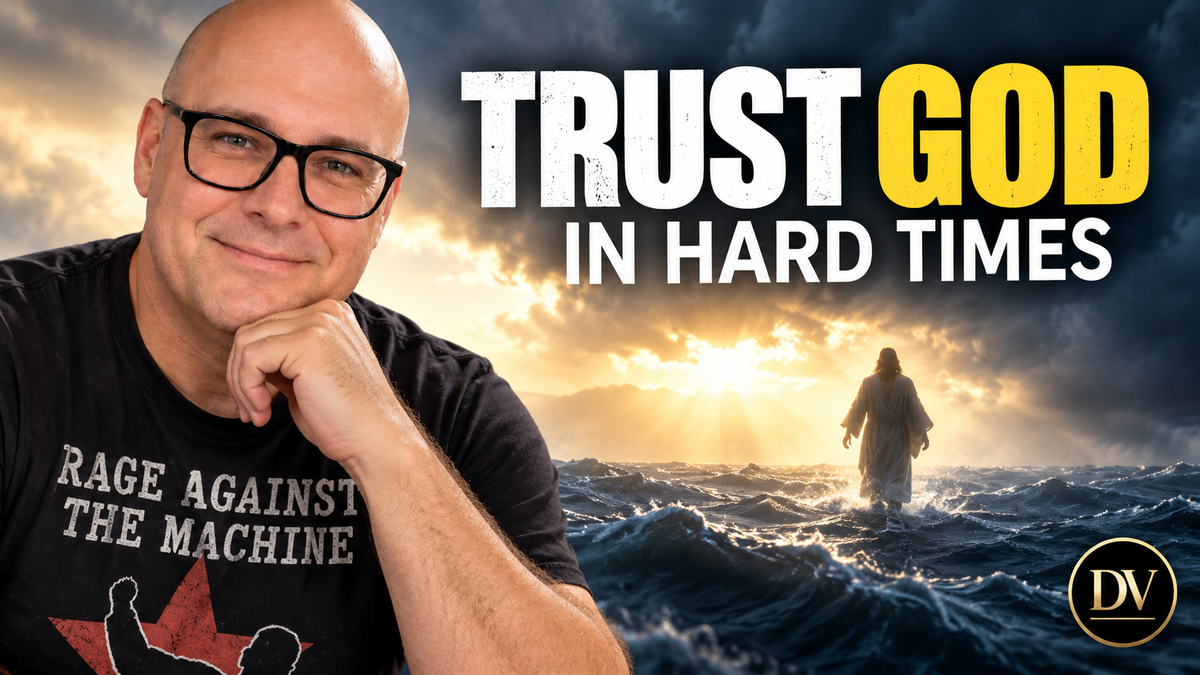
Peter learned that in a way none of us would forget. In Matthew 14, he stepped out of a boat because Jesus told him to come. The wind was already blowing. The water was already rough. The danger was not imaginary, and Peter was not foolish for noticing it. But while his attention was fixed on Jesus, he moved toward Him. When the storm became the center of his vision, fear took over and he began to sink.
That detail matters because we often assume peace will come when the storm finally stops. Jesus shows us something deeper. Sometimes the storm stays loud while your focus changes. Sometimes the problem remains unsolved while your heart becomes steadier. Sometimes faith looks less like getting a new situation and more like refusing to interpret your whole life through the worst thing happening in it.
You may know exactly what this feels like. You check your phone before bed and see that the message you hoped for still has not come. Within minutes, your mind starts building a story. They do not care. The relationship is over. You said too much. You did too little. Tomorrow is going to be worse. Nothing has actually been confirmed, but one unanswered message has become the lens through which you are now looking at everything.
That is where perspective can either serve you or trap you. The unanswered message is real. So is the temptation to build a future out of fear. Jesus does not teach us to ignore facts. He teaches us to bring those facts into the presence of something greater than fear.
Peter's mistake was not that he saw the wind. His mistake was allowing the wind to become more convincing than the One who called him out of the boat. We do the same thing when we let a setback tell us who we are, when we let one person's opinion become a verdict, or when we let a difficult month convince us that God has stopped leading us.
The shift begins when you ask a different question. Instead of asking, “What does this prove is wrong with my life?” ask, “What is still true about Jesus here?” He is still present. He is still worthy of trust. He is still able to guide the next step. He is still more reliable than the story fear is trying to write in your head.
That does not make every problem easy. It does something better. It keeps the problem from becoming your master.
The room may look the same. The bill may still need to be paid. The message may still be unanswered. The wind may still be pushing against the boat. But when Jesus becomes the center of the picture again, you are no longer looking at the same situation in the same way.
Chapter 2: When Fear Starts Naming the Future
There are days when the pressure is not dramatic at all. It is just Tuesday afternoon, your inbox is full, somebody at work wants an answer you do not have yet, and your mind quietly decides that one difficult day means you are failing. You drive home replaying the conversation, thinking about what you should have said, what your boss might think, and whether this problem is going to follow you into tomorrow. By the time you pull into the driveway, the situation has grown far beyond what actually happened.
Fear does that. It takes a fact and adds a prediction. It takes a hard moment and turns it into a permanent identity. It tells you, “This is how things are going to be now,” even when you do not know that. That is why changing your perspective is not positive thinking. It is refusing to let fear speak with more authority than Jesus.
Jesus often met people at the exact point where their conclusions had already become too small. When Jairus was told that his daughter had died, the message sounded final. There was no room left for hope in the report he received. Yet Jesus told him, “Do not be afraid; just believe.” Jesus was not asking Jairus to pretend death was not real. He was asking him not to let the worst news he had heard become greater than the One standing beside him.
That is a difficult kind of faith because we naturally want evidence before we trust. We want the email confirming the job. We want the test result saying everything is fine. We want the relationship repaired before we let ourselves hope again. We want the numbers in the bank account to improve before we believe we are going to be okay.
Jesus often works in the opposite order. He asks us to trust Him before the evidence changes.
Maybe you are carrying a health concern right now. You noticed something unusual, scheduled the appointment, and now your mind keeps jumping ahead. You are brushing your teeth in the morning and imagining conversations that have not happened. You are lying in bed at night making plans for outcomes nobody has given you. There may be a real issue that deserves attention, but fear has already moved three months into the future and started living there.
Come back to today.
Today, you can make the appointment. Today, you can ask the right questions. Today, you can pray. Today, you can take care of your body. Today, you can refuse to turn uncertainty into a sentence against your future.
Jesus taught His followers not to borrow tomorrow's trouble. That is not an invitation to be careless. It is an invitation to stop suffering twice: once in imagination and once, if necessary, in reality.
This is where perspective becomes practical. You do not have to force yourself to believe that everything will happen exactly the way you want. Christian faith is not confidence in your preferred outcome. It is confidence that Jesus will still be Jesus no matter what tomorrow brings.
That changes the weight of uncertainty.
You can say, “I do not know what happens next, but I know Who will be with me when it does.” You can admit that you are afraid without handing fear the pen and allowing it to write the rest of your story.
Peter looked at the wind and imagined what it could do to him. Jairus heard terrible news and could have treated it as the last word. In both moments, Jesus redirected attention back to Himself.
He still does that.
When your mind starts naming the future before you get there, bring it back. Not to denial. Not to fantasy. Back to Jesus. Back to what is actually true today. Back to the next faithful thing in front of you.
The future does not belong to your fear. It belongs to God.
Chapter 3: Learning to See What Jesus Sees
Sometimes the hardest shift happens in a quiet room after everyone else has gone to sleep. Maybe you spent the day being the dependable one. You answered the calls, handled the problem, helped the family member, and told everyone you were fine. Then the house gets quiet, and the weight finally catches up with you. You start thinking about how much you carry and how tired you are of trying to hold everything together.
That is often when perspective gets narrow. You stop seeing the whole life God has given you and start seeing only the burden in front of you. You stop seeing how far God has carried you and start measuring the distance still left to go.
Jesus has a way of widening the picture.
When the disciples looked at a hungry crowd, they saw a problem they could not solve. Jesus saw people who needed compassion. When others looked at the woman caught in sin, they saw a case to judge. Jesus saw a person standing in need of mercy and a different future. When the disciples looked at children as an interruption, Jesus saw people worth welcoming.
Again and again, Jesus looked beyond the most obvious thing in front of Him.
That does not mean He ignored pain. He wept. He became tired. He faced rejection. He knew what it was to be misunderstood. His perspective was not shallow optimism. It was rooted in the Father. He could see suffering without surrendering to hopelessness because He knew suffering was never the whole story.
Maybe the thing in front of you really is hard. You do not need to rename it or pretend it does not hurt. But you can ask Jesus to keep it from becoming the only thing you see.
Ask Him to show you what fear is hiding from you.
Maybe there is still something good in your life that pressure has made you overlook. Maybe there is a next step that seems too small to matter but is exactly where obedience begins. Maybe there is strength growing in you that you would never have developed in an easier season.
The situation may not change today, but you can stop treating uncertainty like certainty. You can stop treating delay like rejection. You can stop treating one closed door like the end of the road. You can stop letting the loudest problem in your life become the largest truth in your life.
Jesus is still there.
When you keep returning your attention to Him, you begin to see differently. The storm becomes something you are walking through instead of something that defines you. The waiting becomes a place where trust can grow. The disappointment becomes a place where you learn that your identity was never supposed to depend on one outcome.
You may still have questions when you finish reading this. Faith does not mean having every answer. Sometimes it simply means knowing where to look while you wait for them.
Look at Jesus. Let Him steady what fear has distorted. Let Him remind you that your life is larger than this moment. Let Him teach you to see possibility where you once saw only pressure and His presence where you once thought you were alone.
When your perspective changes in the presence of Jesus, the world in front of you may not immediately become easier.
But it will no longer look the same.
Your friend,
Douglas Vandergraph
Explore the complete Douglas Vandergraph Master Index:
https://douglasvandergraph.com/douglas-vandergraph-master-index/
Watch Douglas Vandergraph’s faith-based videos on YouTube:
https://www.youtube.com/@douglasvandergraph