When Protection Becomes Another Locked Door

Chapter 1: The Dinner Nobody Thought to Mention
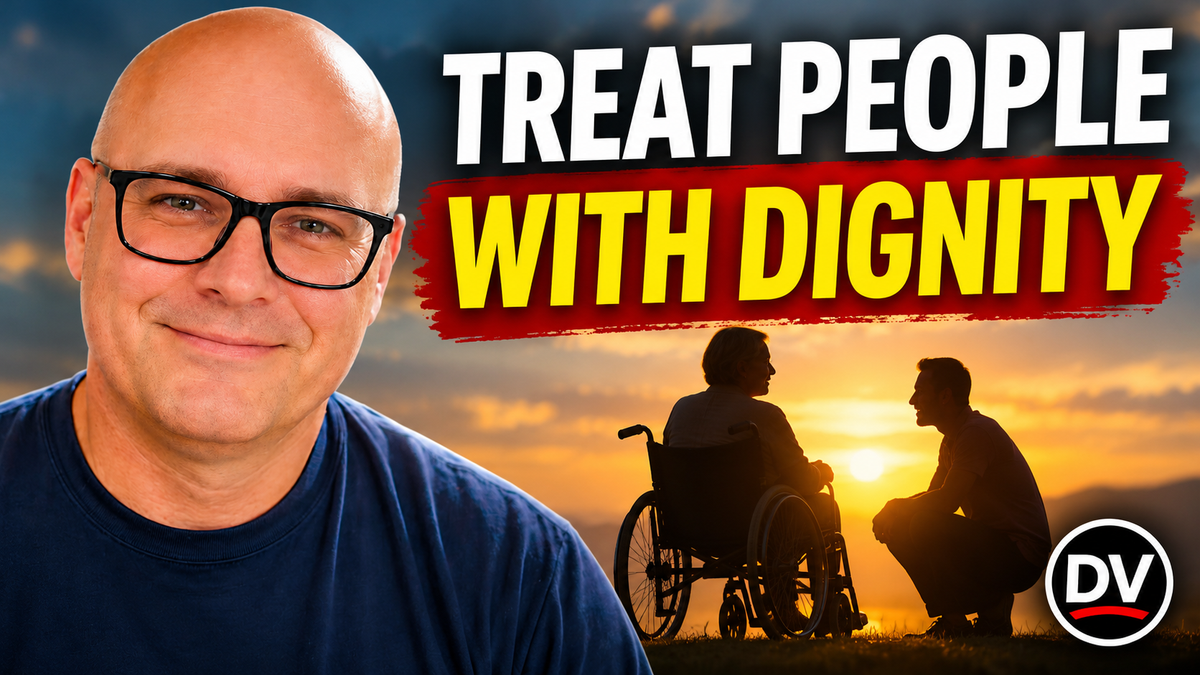
The group chat lit up on Thursday afternoon with pictures of a restaurant menu and jokes about who would arrive late. By Friday, six friends had a reservation. A seventh friend heard about dinner the following week, when somebody mentioned how much fun everyone had. He used a wheelchair, and the restaurant had steps at its entrance. His friends had decided not to invite him because they assumed the place would be difficult for him. They thought they were sparing him an uncomfortable evening. He heard something else: the people who cared about him had made a decision about his life without including him. This is the uncomfortable question behind how able-bodied people can treat disabled adults with respect, which I explore further in the accompanying YouTube conversation.
I've lived with the effects of a stroke since I was sixteen, and I know there is a difference between someone caring about my limitations and someone allowing those limitations to make every decision for me. The first can be a gift. The second can gradually shrink a person's world. What interests me most is not whether those friends meant well; they probably did. It is why their desire to protect someone became more important than his right to choose. That tension belongs alongside Christian encouragement about dignity and belonging, because our faith is tested in the ordinary decisions we make when someone isn't in the room.
When people discuss disability, they often picture an obvious moment of assistance: holding a door, offering an arm, carrying something heavy. But exclusion can arrive disguised as consideration. We don't ask someone to join us because the parking might be difficult. We don't mention a volunteer opportunity because the work looks tiring. We leave someone out of a family conversation because we think the subject would upset them. In each case, we may tell ourselves we are being thoughtful. The person affected never gets to tell us what thoughtfulness would actually look like.
A more respectful friend could have sent a simple message: “We're thinking about this restaurant, but I noticed the entrance has steps. Would you like us to find somewhere else?” That invitation does not pretend barriers aren't real. It puts the person back in the conversation. Maybe he suggests another place. Maybe he declines. Maybe he knows an accessible entrance the others missed. The outcome matters less than the fact that he is no longer being managed from a distance.
I believe this is a lesson Christians should be willing to examine in ourselves. We can sincerely love someone and still mistake our own comfort for their protection. Sometimes we choose for people because asking might complicate the plan. Real kindness may cost us a little convenience, and that is often where its meaning begins. Before we congratulate ourselves for protecting somebody, we might ask whether we have quietly taken away their chance to decide.
Chapter 2: The Risk We Take Away When We Decide for Someone
The meeting had barely begun when a manager announced who would lead the company's next important presentation. One employee had spent weeks developing the proposal, understood the numbers, and knew exactly how to answer the client's questions. But because he had difficulty speaking after a medical condition, the manager assigned the presentation to someone else. Later, she explained that she didn't want to put him under unnecessary pressure. He sat quietly for a moment before asking whether she had considered that the opportunity might have mattered to him.
I think that question reveals something important about the way we sometimes misunderstand compassion. We imagine that protecting someone means removing whatever might be difficult. But difficulty is not always something people want removed from their lives. Sometimes it is the very place where they hope to grow, contribute, or prove something to themselves. When we automatically shield people with disabilities from responsibility, we may also shield them from experiences that make adult life meaningful.
My stroke happened when I was sixteen. I have spent most of my life learning what my body can do, what requires adjustment, and which challenges are worth accepting. Those decisions belong to me. I have made mistakes, taken chances, and discovered abilities that might have remained hidden if everyone around me had insisted on keeping me comfortable. I don't need people to pretend that physical limitations have no consequences. I need them to understand that those consequences do not give someone else ownership of my choices.
There is a powerful moment in Mark 10 when Bartimaeus calls out to Jesus from the roadside. The people around him tell him to be quiet, but Jesus stops and asks what he wants. That question matters because the crowd had already decided how Bartimaeus should behave. His calling out had become inconvenient to them. Jesus responds differently. He allows the man to express his own desire and treats his answer as worthy of attention.
We should be careful not to confuse that encounter with a promise that every physical limitation will disappear through sufficient faith. The deeper lesson for this conversation is that Bartimaeus was heard before his circumstances changed. Jesus did not allow the crowd's expectations to determine whether the man's voice mattered.
Now imagine that manager returning to her employee and asking whether he wants to lead the presentation. Perhaps they could arrange additional time for questions or use technology that makes communication easier. The challenge would remain, but the decision would belong to the person whose life it affects.
That is the change I hope we begin making. Instead of measuring kindness by how much difficulty we remove from another person's path, we can consider whether our actions preserve their freedom to choose. Sometimes loving someone means offering support while accepting that their decision may involve risk, effort, and an outcome we cannot control.
Chapter 3: The Door That Belongs to Everyone
The volunteers had set out plates and folded napkins for a church supper when someone noticed that the side entrance was blocked by several heavy boxes. The main entrance had steps. A guest who needed the accessible doorway was expected to arrive soon, so one volunteer offered to meet him outside and help him through another way. Then an older woman looked at the boxes and asked why they were there at all. Within minutes, the doorway was clear. Nobody needed a special escort. The guest could come in with everyone else.
That small change points toward something larger than good manners. We often treat accessibility as a favor we perform for one person, when it should be part of how we prepare a place for all the people who belong there. When an entrance is usable, when a conversation includes the person affected, when plans account for different bodies, there is less need for somebody to ask permission to participate. We have removed an obstacle rather than making a show of overcoming it for them.
Jesus offered a challenge like this in Luke 14, when He told a host to invite people who were routinely left outside the social circle, including people with disabilities. His words were not instructions to collect gratitude from those invited. He was asking people to reconsider whom they welcomed and what they expected in return. That is a much deeper kind of hospitality. It changes the table instead of asking the guest to feel fortunate for finding a place at it.
I also want to acknowledge how much grace this work requires. Someone may offer help awkwardly because they have never thought about these questions. A person with a disability may be exhausted from explaining the same need again. Both experiences deserve an honest conversation. We can apologize without making excuses, receive correction without resentment, and tell the truth without assuming every mistake comes from cruelty. Understanding grows through relationships, not through pretending we already know everything.
I don't want people to stop noticing when I face a challenge. I want them to notice me beyond that challenge. If something is difficult, ask what would help. If I want to try it myself, respect that answer. And when a barrier keeps people out, look for a way to change the barrier rather than quietly deciding those people cannot join us.
The boxes in that church doorway could have stayed there. Someone could have made an exception for one guest and called the evening a success. Instead, a volunteer cleared the entrance, and the next person who needed it would benefit too. That is the difference between protecting someone from the world and helping make the world more welcoming.
I believe Jesus calls us toward the second. Love does not need to take control of another person's life to make a difference in it. Sometimes love simply clears the doorway, steps aside, and welcomes a neighbor who never should have been left outside.
Your friend,
Explore the complete Douglas Vandergraph Master Index:https://douglasvandergraph.com/douglas-vandergraph-master-index/
Watch Douglas Vandergraph’s faith-based videos on YouTube:https://www.youtube.com/@douglasvandergraph