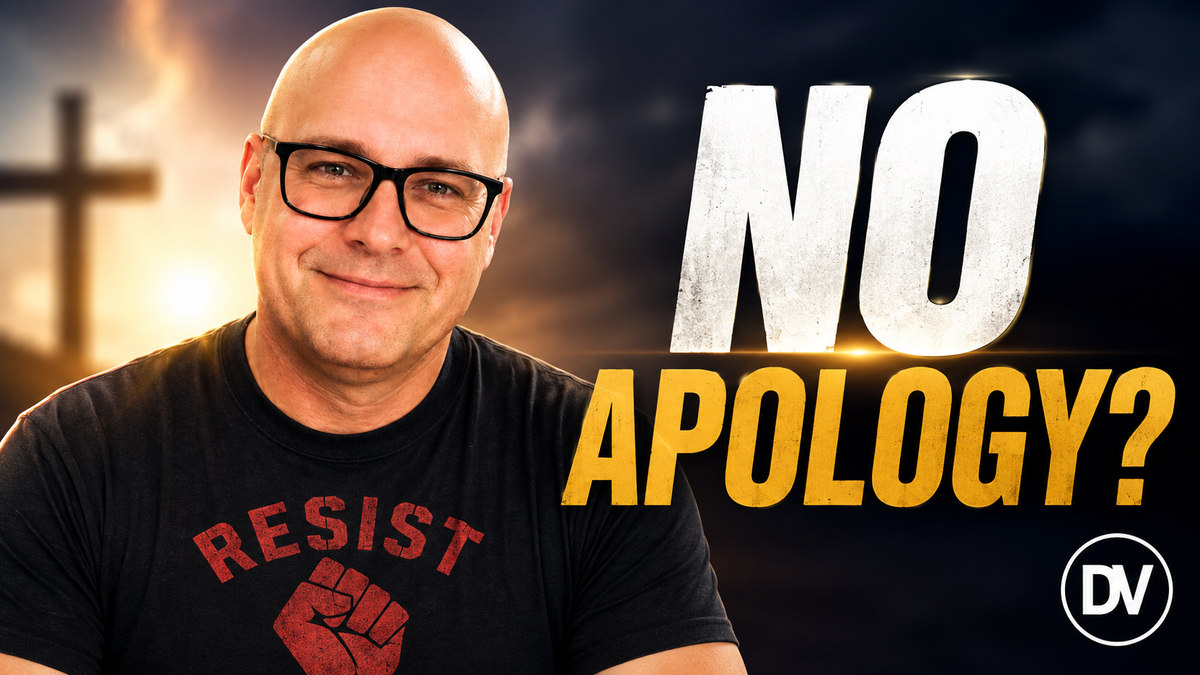
When the Apology Never Comes: The Freedom Jesus Offers Before They Change

Chapter 1: The Moment You Realize You May Never Hear “I’m Sorry”
The phone was still in her hand when she stopped scrolling and stared across the quiet kitchen. She had reread the message three times, not because it was confusing, but because it confirmed what she had been afraid to admit. The person who hurt her was not going to apologize. There was no ownership, no regret, no sign that they understood the damage. Just a casual reply that moved past the whole thing as if nothing serious had happened. If you have ever sat in a room like that, trying to understand how someone can wound you and then act normal, the Jesus-centered video on forgiving someone who never apologized speaks directly to that kind of moment.
The hardest part is not always the original hurt. Sometimes it is the shock of realizing that the person who caused it may never help you make sense of it. You may have expected a conversation, an admission, maybe even one sentence that said, “I know I hurt you.” Instead, you get silence, defensiveness, blame, or a version of the story that makes you question your own memory. That is where a related reflection on releasing resentment without losing wisdom belongs in this larger conversation, because forgiveness becomes much more complicated when there is no shared agreement about what happened.
A lot of people think forgiveness begins when the other person finally gets honest. That sounds reasonable because an apology feels like a door opening. It tells us the other person sees the wound. It gives language to what happened. It may even restore some dignity after a humiliating experience. But Jesus shows us something harder and, in the end, more freeing: your decision to release hatred does not have to wait for someone else to become self-aware.
That does not mean the apology is unimportant. It matters when someone takes responsibility. It matters when they repent. It matters when they repair what they can. If a coworker lies about you in a meeting and later admits it, that honesty can change what happens next. If a family member speaks cruelly to you and later owns it without excuses, trust may begin to rebuild. But the absence of an apology creates a different question. If they never change, do you have to remain emotionally tied to what they did?
Jesus faced people who were not sorry in the way we often wish an offender would be sorry. Some mocked Him while He suffered. Some accused Him falsely. Some walked away. Some treated His pain as entertainment. Yet He did not allow their lack of remorse to decide what would grow inside Him. His prayer from the cross did not declare the injustice harmless. It revealed that their sin would not be permitted to reproduce itself as hatred in Him.
That is a perspective shift worth sitting with. Forgiveness is not mainly about deciding that the other person deserves relief from consequences. It is about refusing to let their wrongdoing become the permanent landlord of your inner life.
Think about the drive home after a tense family gathering. You are gripping the steering wheel, replaying one sentence over and over. Everyone else is already talking about dinner plans, but your body is still carrying the moment. You imagine what you should have said. You imagine what they should say now. You imagine a future conversation where they finally understand. Hours pass. Then days. The person who hurt you may not be thinking about it at all, but the event keeps taking up space inside you.
That is where unforgiveness can become confusing. It can feel like holding on proves that what happened mattered. Letting go can feel too much like surrendering the case. We may fear that if we stop being angry, we are saying the wrong was acceptable. But those are not the same thing. You can name an action as wrong and still refuse to carry revenge. You can protect yourself and still refuse to become consumed by contempt. You can remember accurately without rehearsing the wound every morning.
Jesus never taught people to confuse forgiveness with access. He loved deeply, but He was not careless about trust. There were moments when He withdrew. There were moments when He confronted. There were moments when He refused to answer people who were acting in bad faith. That matters because some people have been taught that Christian forgiveness means reopening the door every time someone hurts them. It does not.
Maybe the first step is smaller than you thought. Maybe forgiveness begins when you stop saying, “I will be free when they apologize,” and start saying, “Their apology may help, but my future cannot depend on it.”
That is not emotional denial. It is a transfer of authority.
The person who hurt you may have influenced a chapter of your life, but they do not automatically get control of the next one. They may never give you the words you deserved. They may never understand what they did. They may even continue telling themselves a story in which they did nothing wrong. But you are still allowed to become peaceful. You are still allowed to become wise. You are still allowed to heal without pretending.
Sometimes the most honest prayer is not, “God, make me feel forgiving.” Sometimes it is, “Jesus, help me stop waiting for this person to become different before I become free.”
That prayer does not erase the past. It changes who gets to decide the future.
Chapter 2: Forgiveness Is Not the Same as Reopening the Door
At 6:20 on a Monday morning, a man sat in his car outside the office with the engine running and his coffee cooling in the cup holder. He was not afraid of the workday. He was afraid of one person inside the building. Months earlier, that person had undermined him, twisted a conversation, and damaged his reputation. No apology ever came. Now he was trying to decide what forgiveness was supposed to look like. Did it mean acting as though nothing happened? Did it mean trusting the same person again? Did it mean becoming available for another round of harm simply because he wanted to follow Jesus?
That is where many people get trapped. They believe forgiveness requires the restoration of the same relationship in the same form. But forgiveness and reconciliation are not the same act. Forgiveness can begin in one heart. Reconciliation requires honesty from both sides. Trust requires evidence over time. Access is a separate decision altogether.
Jesus helps us see the difference. He was openhearted without being naive. He loved people without pretending every person was safe. He could show mercy and still confront hypocrisy. He could offer grace and still walk away from a hostile crowd. He could care deeply without placing Himself under the control of people who wanted to use, manipulate, or destroy Him.
That matters because some wounds get worse when Christians are told that boundaries are unloving. A woman may forgive a relative who repeatedly humiliates her, yet still decide not to discuss private parts of her life with that person anymore. A father may forgive an adult child for years of dishonesty while refusing to hand over money that keeps feeding destructive choices. A friend may release bitterness toward someone who betrayed confidence and still recognize that the friendship cannot return to what it was before.
None of those choices cancel forgiveness.
Sometimes they are what wisdom looks like after forgiveness begins.
The deeper shift is this: forgiveness is not permission for the offender to continue the same pattern. It is permission for you to stop building your identity around the injury. It means the wound can become part of your history without becoming the center of your personality.
That is harder than it sounds because anger can become a form of protection. If you stay angry, you feel alert. You feel less likely to be fooled again. You feel as though you are keeping the case open so the truth will not disappear. But anger is a poor long-term guard. It may warn you that something matters, but if you keep it on duty forever, it starts exhausting everything else in you.
You can replace permanent anger with discernment.
Discernment remembers.
Discernment notices patterns.
Discernment asks better questions.
Discernment does not need to keep your heart burning in order to keep your eyes open.
This is one of the places where Jesus changes the way we think about strength. Strength is not proving that you no longer care. It is not becoming cold enough that nobody can reach you. It is not rehearsing what happened until you can win every imaginary argument. Real strength can look like telling the truth without revenge, setting a boundary without cruelty, and releasing a person to God without reopening the door they keep damaging.
There may also be grief involved. You may not only be forgiving what someone did. You may be grieving what the relationship could have been. That is especially painful with parents, siblings, close friends, spouses, mentors, or people you once trusted deeply. The loss is not just the event. It is the future you thought you were going to have with them.
A woman can sit across from an empty chair at Thanksgiving and understand that forgiveness did not restore what dishonesty destroyed. A son can love his father and still know that years of criticism changed what conversations are possible. A former friend can be remembered with gratitude for the good years while also being kept at a distance because the pattern never changed.
Faith does not require us to call every broken relationship repaired.
Sometimes peace arrives when we stop demanding that healing look like restoration.
That is an important difference.
You may be able to forgive someone and never receive an apology. You may be able to pray for them and still keep your distance. You may be able to wish them well and still refuse to return to the same cycle. You may be able to remember them without hatred and still understand that trust is no longer available.
The question is not, “Have I made everything exactly the way it was before?”
The better question is, “Is this wound still deciding who I am becoming?”
If the answer is yes, bring that honestly to Jesus. Not with polished language. Not with the prayer you think a good Christian should pray. Tell Him what is still there. Tell Him you are angry. Tell Him you miss what was lost. Tell Him you wanted justice, acknowledgment, or even one honest sentence from the person who hurt you.
Then ask for something deeper than forgetting.
Ask for freedom.
Ask for the ability to remember without reliving.
Ask for wisdom without bitterness.
Ask for boundaries without hatred.
Ask for a heart that is still capable of love without becoming careless.
That kind of forgiveness may take time. You may make the decision once and then discover that the emotional work keeps returning. A song reminds you. A date comes around. A name appears on your phone. A new situation touches the old wound. Forgiveness may need to be chosen again, not because the first choice was fake, but because healing often happens in layers.
The goal is not to become a person who can no longer be hurt. The goal is to become a person whose hurt does not get the final word.
Jesus did not ask us to deny reality. He showed us how to move through reality without surrendering our souls to it.
So if the apology never comes, your life does not have to remain unfinished. You can let God hold the part you cannot repair. You can stop rehearsing the conversation that may never happen. You can make wise decisions about access and trust. You can grieve what was lost without worshiping the loss.
And one day you may notice something quiet but important. You thought about the person and your stomach did not tighten. You heard their name and did not need to defend yourself. You remembered the story and it felt like something that happened to you, not something still happening inside you.
That is not forgetting.
That is freedom.
Your friend,
Explore the complete Douglas Vandergraph Master Index:
https://douglasvandergraph.com/douglas-vandergraph-master-index/
Watch Douglas Vandergraph’s faith-based videos on YouTube: