What If Revelation Is Not Trying to Make You More Certain?

Chapter 1: The Question Behind All the Questions
A man sits on the couch after midnight with three browser tabs open. One person says a prophecy is being fulfilled right now. Another has a chart explaining exactly what happens next. A third insists everyone else has misunderstood Revelation. He started watching because he wanted clarity, but an hour later he feels more unsettled than when he began. That is the moment behind this video exploring our 500,000-word journey through the Book of Revelation: what if the book was never meant to make Christians obsessed with knowing everything that comes next?
That question changes the way Revelation feels. Most of us naturally want certainty when life becomes unstable. We want to know whether the economy will recover, whether the conflict overseas will grow, whether our family will be safe, whether our job will still exist next year, and whether frightening events mean something larger is beginning. This Christian reflection on staying faithful when the future feels uncertain belongs beside that struggle because Revelation may be answering a different question than the one fear keeps asking.
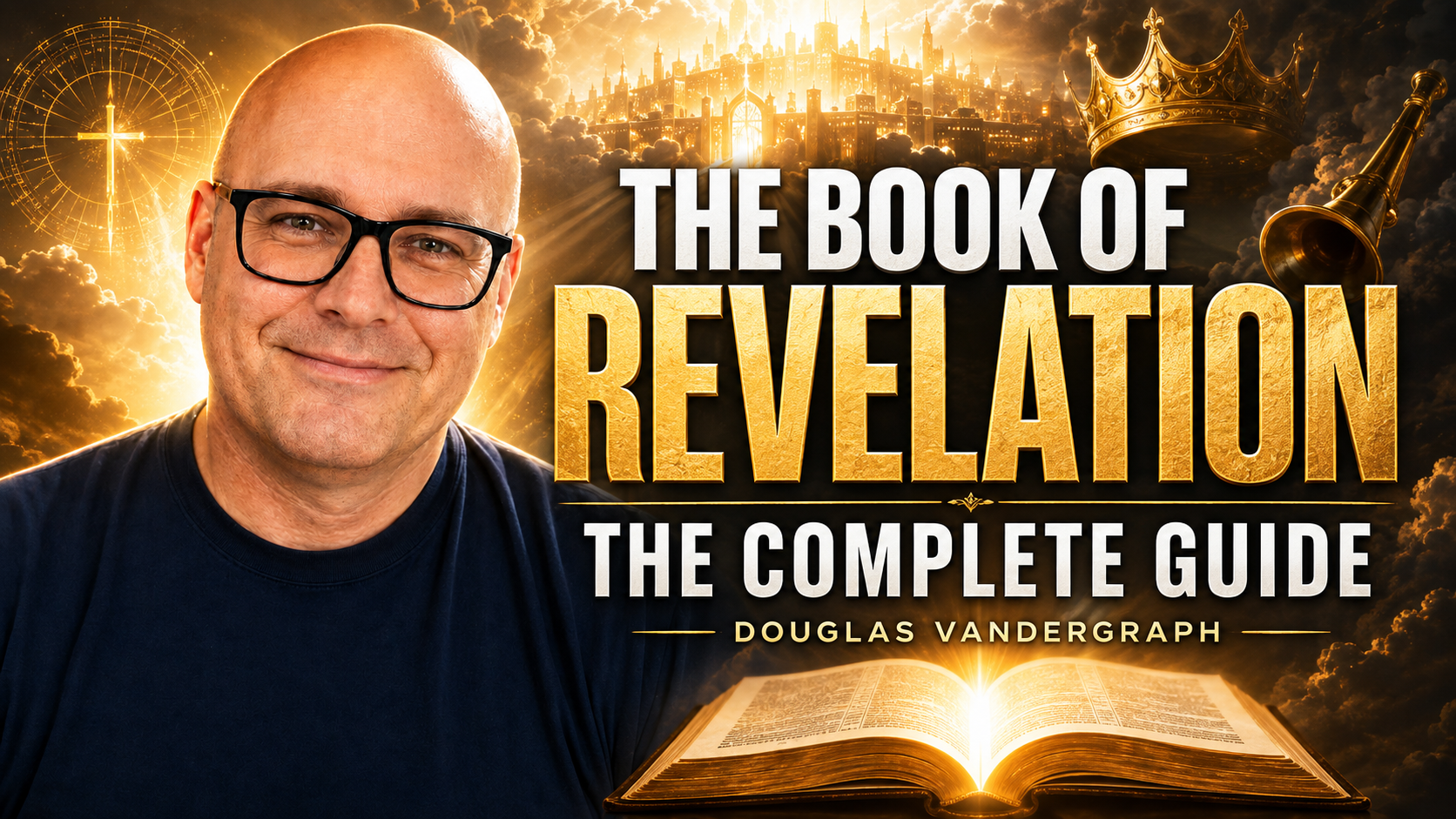
Today we published a 500,000-word exploration of Revelation, with the complete work organized through The Book of Revelation: The Complete 108-Chapter Guide. The project looks closely at the symbols, churches, warnings, judgments, promises, and often-overlooked details of the book. But beneath all of that study is a realization that kept becoming harder to ignore: Revelation may be less interested in satisfying our desire to control the future than in exposing what happens to our faith when we cannot control it.
That is a very different book.
Imagine receiving news at work that leadership is considering major changes. Nobody knows who will be affected. Rumors begin before lunch. People start protecting themselves, blaming others, and quietly positioning for whatever comes next. You could spend the entire day trying to predict the outcome and still go home knowing almost nothing.
But you can know who you will be while you wait.
That is where Revelation becomes sharper than speculation. The book repeatedly confronts allegiance. Who receives your trust? What are you willing to compromise when pressure increases? Which voices become powerful enough to shape your behavior? What happens to your character when fear offers you an easier path?
Those questions are not reserved for the end of history.
They show up in offices, marriages, bank accounts, hospital rooms, family arguments, and quiet decisions nobody else notices. Revelation becomes immediate when we stop treating it only as a schedule of future events and begin allowing it to examine the loyalties of the person reading it.
Maybe the great surprise is that Revelation does not first need to tell you exactly what tomorrow holds.
It needs to show you who is worthy of your trust when tomorrow remains hidden.
Chapter 2: The Pressure to Know What God Has Not Told You
A woman is standing in the grocery store with a half-filled cart when her phone buzzes. A friend has sent another video claiming that a current event proves the end is unfolding exactly as predicted. She watches thirty seconds, feels her stomach tighten, and suddenly the ordinary aisle around her feels strangely fragile. The milk, the bread, the people pushing carts past her—everything seems temporary in a way that does not produce faith. It produces panic.
That reaction is worth noticing.
There is a difference between being spiritually awake and being emotionally hijacked. Revelation calls believers to watchfulness, endurance, wisdom, and faithfulness. It does not call us to live in a constant state of alarm. If every headline can steal your peace, then your attention may be focused more on signs than on the One the signs are supposed to point toward.
This is one of the most important perspective shifts in the entire book.
The desire to know can quietly become a desire to control. We tell ourselves we are only trying to understand prophecy, but sometimes we are also trying to remove uncertainty from life. We want a sequence. We want dates. We want a map that prevents surprise. Yet faith has never been the absence of uncertainty. Faith is trust when certainty is unavailable.
That does not mean questions are wrong. Study matters. Context matters. Symbols matter. History matters. The 500,000-word Revelation work exists because careful reading matters deeply. But study should make us steadier, not easier to frighten.
The woman in the grocery store can finish shopping without pretending the world is safe. She can pray for people suffering in war. She can stay informed. She can prepare wisely for real responsibilities. But she does not have to let every alarming claim take possession of her imagination.
Revelation keeps returning us to the same stronger center: Jesus is not confused by history.
That means you do not have to treat uncertainty as an emergency. You can admit what you do not know. You can refuse false confidence. You can stay curious without becoming consumed. You can keep your eyes open without letting fear become your guide.
Sometimes spiritual maturity looks less like having the answer and more like refusing to invent one just because not knowing feels uncomfortable.
Chapter 3: The Freedom of Not Being in Charge of Tomorrow
A man sits at the kitchen table with an envelope he has already opened twice. The medical bill is larger than expected, his savings are thinner than he wants them to be, and the next paycheck is still several days away. He starts doing what fear often teaches us to do: mentally traveling months into the future, imagining every possible loss, and treating each imagined disaster as though it has already happened.
Revelation interrupts that kind of thinking in a surprising way.
The book does not hand the reader control over history. It keeps control where it belongs. God remains God. Jesus remains Lord. Human systems rise and fall. Evil makes noise, but it does not become eternal. Suffering can be severe, but it does not become sovereign.
That is not merely a statement about the end of the world. It is a way to live through an ordinary Wednesday.
The man with the bill still needs to make a plan. He may call the provider, arrange payments, cut an expense, or ask for help. Faith does not replace responsible action. What faith changes is the belief that he must somehow secure the entire future before he is allowed to have peace.
He does not.
Neither do you.
That may be one of Revelation's most freeing lessons. You are responsible for faithfulness, not omniscience. You are responsible for obedience, not prediction. You are responsible for the next truthful, loving, courageous step, not for controlling everything that might happen after it.
Once that settles in, Revelation begins to look different. The strange images still deserve study. The difficult passages still deserve patience. The disagreements among Christians do not disappear. But the book stops functioning like a threat hanging over the future and starts functioning like a call to remain anchored in Jesus while the future unfolds.
That is the perspective I hope this 500,000-word work gives readers. Not a false promise that every mystery has been solved, but a deeper confidence that mystery does not mean chaos and uncertainty does not mean abandonment.
You can close the laptop. You can turn off the prediction video. You can stop treating every new headline as though it has the right to rewrite your peace.
Tomorrow will still come with unanswered questions.
But you do not have to know everything about tomorrow to know who you belong to today.
Your friend,
Douglas Vandergraph
Explore the complete Douglas Vandergraph Master Index:
https://douglasvandergraph.com/douglas-vandergraph-master-index/
Watch Douglas Vandergraph’s faith-based videos on YouTube:
https://www.youtube.com/@douglasvandergraph