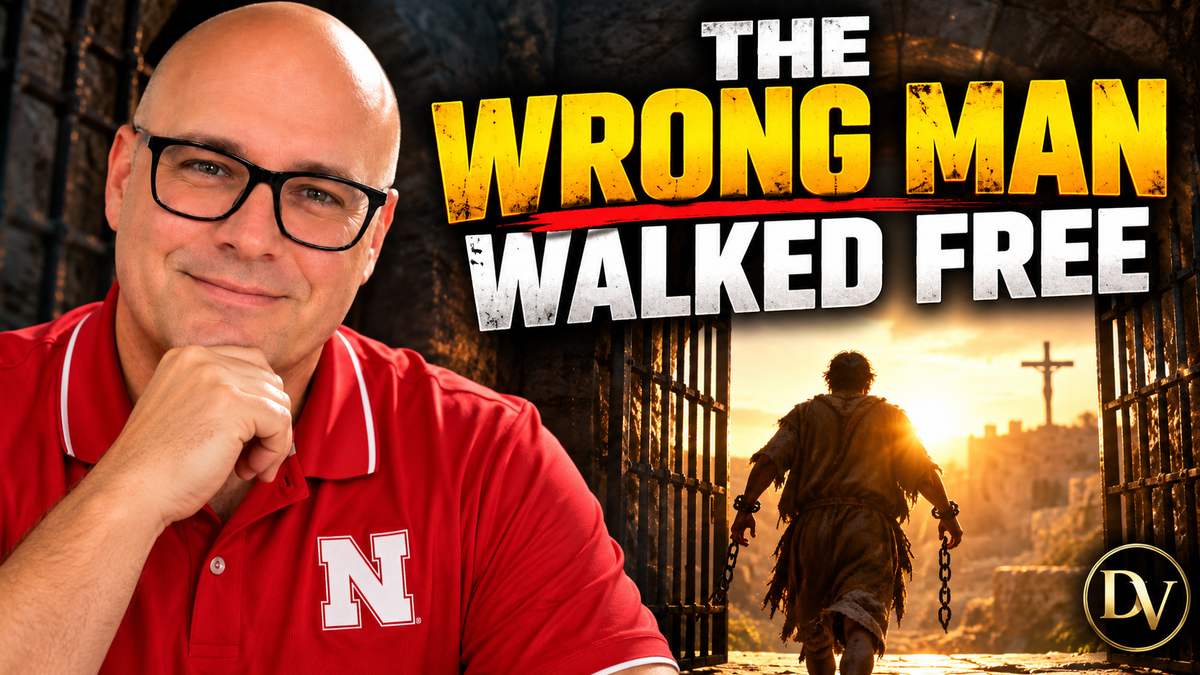
What If Barabbas Never Changed?

Chapter 1: The Gift Without a Guarantee
At the bus station, a woman watches a stranger try his bank card three times at the ticket machine. It keeps declining. He looks at the departure board, then at the few coins in his palm. She buys him a ticket. He says a quick thank-you and hurries toward the platform. Before the bus has even pulled away, an uncomfortable thought visits her: What if he wasn't telling the truth about needing help? What if he never appreciates what she did? The ticket is gone, and she will never get an answer.
That small uncertainty opens a surprising doorway into the mystery of Barabbas walking free while Jesus faced crucifixion. We tend to tell the story as though we know how it ought to end. A guilty man is released. Surely he must fall to his knees, change his ways, and spend the rest of his life honoring the One who suffered while he went free. It would be a moving ending. But the Gospels do not give it to us.
I think that silence matters, especially when we're wrestling with why mercy matters before anyone proves they have changed. We like a good outcome to justify a costly choice. When we forgive, we hope the other person becomes trustworthy. When we help, we hope the help is used well. When we take someone back into our lives, we hope the wound never opens again. None of those hopes is wrong. But what happens to our understanding of grace when there is no satisfying report afterward?
Mark 15 tells us that Barabbas was imprisoned with rebels involved in an uprising in which murder had been committed. The crowd called for his release, and Pilate handed Jesus over to be crucified. That is what Scripture tells us. It does not record Barabbas watching the cross, praying for forgiveness, or following Jesus after Easter. Those endings may be tempting to imagine, but we do not know whether any of them happened.
I think the power of this story does not depend on what Barabbas did next. Its most searching question is something else entirely: Can we recognize the astonishing mercy revealed through Jesus even when the person who walked free leaves the page without becoming the hero of a second story? If a gift only counts after the recipient proves worthy, it has become a transaction. The Gospel is asking us to imagine something more difficult and more generous.
Chapter 2: The Ledger We Want Heaven to Keep
On Thursday afternoon, a shop owner opens the drawer beneath her counter and finds an unpaid invoice from a customer she once trusted. When he lost his job, she waived the late fee and gave him extra time. Months later, she sees a photograph of him enjoying an expensive weekend away. Her first reaction is not even anger about the money. It is embarrassment. She wonders whether her kindness was simply something he learned to take advantage of.
That question can change how we treat people. We begin keeping mental receipts for every act of patience, waiting to see whether the person on the other side deserves what we offered. Sometimes we need those records for practical reasons. A business must pay its bills, and trust should be rebuilt through responsible behavior. But when we bring that same ledger into our understanding of God's love, we start imagining that mercy is something He offers only after the evidence is in.
Romans 5:8 says that Christ died for us while we were still sinners. The order matters. God's love did not wait for humanity to present a spotless record. Yet that does not make repentance unnecessary or turn every harmful choice into a harmless one. Jesus calls people to leave sin behind and follow Him. His mercy is the beginning of a transformed life, not a guarantee that we can continue unchanged without consequence.
Now return to the prisoner. If Barabbas never changed, would Jesus become less innocent? Would His willingness to suffer become less loving? Of course not. We cannot measure Christ's character by a future the Gospel writers never revealed. What Barabbas did with his freedom is a question Scripture leaves unanswered. What Jesus chose to do is the center of the account.
The shop owner can still request payment, establish firmer terms, and refuse another extension. Mercy does not require her to ignore reality. But she need not regret having once treated a struggling person with dignity. The outcome may change what she does next. It does not have to rewrite the value of the kindness she already showed.
Chapter 3: When the Person Waiting to Change Is You
At 9:15 on Sunday morning, a man stands beside his car in the church parking lot, looking at a folded bulletin left on the dashboard from last week. He had promised himself he would stop drinking in secret. On Friday he broke that promise. Now he watches families walking toward the entrance and wonders whether he should turn the key and drive away. He thinks he must become a different person before he has any right to go inside.
We may spend years questioning whether another person deserved our kindness, only to become merciless when the person who disappoints us is ourselves. Perhaps you've made the same apology twice or gone back to a habit you sincerely wanted to leave behind. You worry that asking Jesus for help again would make your faith sound dishonest. But the very moment you recognize your need is not a reason to hide from Him.
Consider the way Jesus met Zacchaeus in Luke 19. Before Zacchaeus announced what he would do to repair the harm he had caused, Jesus called him down from the tree and said He would stay at his house. Zacchaeus responded by promising to give to the poor and repay those he had cheated. The welcome came first; a changed direction followed. Jesus did not dismiss wrongdoing. His presence made an honest response possible.
We cannot borrow that ending for Barabbas. Scripture never says he repented. And being released from a Roman prison is not the same thing as receiving salvation through faith in Christ. But the unanswered question about Barabbas can help us notice how easily we demand a perfect outcome before recognizing the mercy that made a new beginning possible.
The man in the parking lot still needs help with his drinking. That may include telling someone he trusts, finding professional support, and taking responsibility for the ways his actions affect others. Yet turning toward Jesus today is not a reward reserved for the day those struggles disappear. He can walk through the church door as someone who needs grace, not as someone pretending he has already mastered his life.
Chapter 4: The Answer Missing from the Record
On a Monday morning, a woman sits in her parked car before going into work. Last month she made an expensive mistake, and her manager helped her correct it instead of firing her. Since then she has kept her head down, convinced that one more error will prove she never deserved the chance. Today she carries a proposal that could help the team, but she is afraid to offer it. She has been forgiven, yet she has not learned how to live like someone who has a future.
That is the uncomfortable gap in the Barabbas story. The Gospel writers tell us the prison gate opened. They do not tell us whether he walked toward a new life or returned to his old one. We cannot turn that silence into a conversion story, and we cannot make it evidence that he rejected God. We simply do not know.
But we do know Jesus. His death was not an accident made meaningful only by Barabbas's future. His willing obedience, sacrifice, and resurrection are at the heart of the Gospel. In Ephesians 2:8–10, Paul explains that we are saved by grace through faith, not by our works, and then teaches that we were created in Christ Jesus for good works. The order matters. A changed life is not the admission price for grace. It is what grace calls us into.
That woman can bring her proposal into the meeting. She can check her work carefully, seek advice, and take ownership if something goes wrong. Her manager's kindness does not promise that every future decision will be easy. It has given her room to act with courage rather than fear.
Perhaps the mystery isn't what Barabbas did next. That answer is beyond us. The question now is what you and I will do with the mercy Jesus offers. We can spend our lives demanding proof that grace works in somebody else, or we can turn toward Christ, receive His forgiveness, and allow that gift to change the next ordinary thing we do.
Your friend,
Douglas Vandergraph
Explore the complete Douglas Vandergraph Master Index: https://douglasvandergraph.com/douglas-vandergraph-master-index/
Watch Douglas Vandergraph’s faith-based videos on YouTube: https://www.youtube.com/@douglasvandergraph