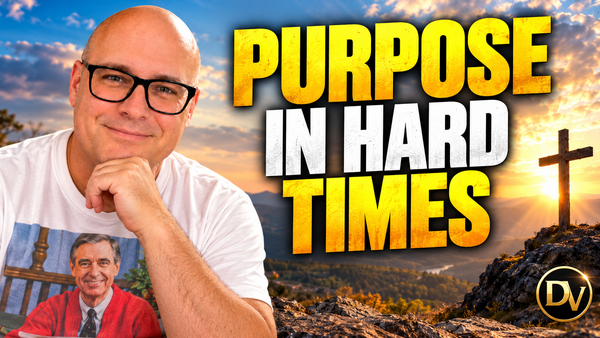
Stop Asking Tomorrow to Prove God Is Good


Chapter 1: The Question Beneath the Question
You are sitting in your car with the engine off because you are not quite ready to go inside. Maybe you just left a meeting, an appointment, or a conversation that gave you more questions than answers. The parking lot looks completely ordinary. Other people walk past carrying coffee, pushing carts, checking their phones, and continuing with their day. Meanwhile, your mind is already three months ahead, trying to predict what this moment will mean for everything that comes next. That is why Christian encouragement for trusting Jesus with an uncertain future matters so much. The hardest part of uncertainty is often not what has happened. It is what we begin imagining might happen because of it.
There is usually a deeper question underneath our fear about the future. We may not say it out loud, but somewhere inside we are thinking that if we could just know everything was going to work out, then we could finally relax and trust God. We want the job to come through, the relationship to stabilize, the medical news to be reassuring, the money to work out, and the people we love to be okay. We tell ourselves that once those things happen, peace will follow. Yet learning to see uncertainty through the character of Christ asks us to reverse that order. Instead of demanding that tomorrow prove God's goodness before we trust Him today, we begin with what Jesus has already shown us about who God is.
That reversal changes the way we approach almost everything. If your peace depends on tomorrow proving itself, you will always be vulnerable to the next unanswered question. One prayer gets answered, and eventually another concern appears. One problem is solved, and life brings another decision, another responsibility, another relationship, or another circumstance that cannot be controlled. Jesus never taught His followers to build their peace on having a perfectly predictable future. He taught them to build their lives on the Father, whose character does not change when circumstances do.
There is a moment in the Gospel of John that shows this beautifully. Jesus is surrounded by a huge crowd, and the people need something to eat. Jesus turns to Philip and asks where they can buy enough bread to feed everyone. John gives us an important detail about that conversation: Jesus already knew what He was going to do. He was not asking Philip because the size of the crowd had caught Him by surprise. He was not looking for someone else to solve a problem He could not handle. His question exposed the way Philip naturally viewed the situation.
Philip immediately began calculating. He looked at the size of the crowd, thought about how much food would be required, considered the cost, and concluded that even a large amount of money would not be enough. His answer was practical and reasonable. There was nothing foolish about understanding how large the need was. The limitation was that Philip could only calculate with what he could presently see, and that is often exactly what happens to us when tomorrow becomes uncertain.
We begin calculating too. We calculate how much money remains in the bank, how many weeks we could survive if something changed, how many applications we have submitted, how old we are, how long we have been waiting, how many conversations have failed, how many appointments we have already attended, and how many times we have prayed the same prayer. There is nothing wrong with understanding reality. Responsible people need to know what they are dealing with. The danger appears when our calculations become the entire story and we begin assuming that what we can currently measure also tells us everything God can still do.
Imagine walking out of a repair shop after learning that your car needs work that costs far more than you expected. You sit behind the steering wheel, pull out your phone, open your banking app, and start doing the math before you even leave the parking lot. You subtract the repair cost from what is available, remember another bill coming next week, and think about an expense you were already worried about. Those numbers matter, and ignoring them would not be faith. Yet watch how quickly the mind can move from an actual number to an emotional prediction. You begin by thinking that the repair is going to set you back. A few minutes later, you are thinking that you cannot afford another problem. Then you are telling yourself that everything always seems to happen at once. Before long, the conclusion becomes that you are never going to get ahead.
The repair estimate is a fact. The conclusion about your entire future is not. Fear took one true piece of information and built a much larger story around it. That happens all the time, and it is one reason the story of Jesus feeding the crowd matters beyond the miracle itself. Philip saw what was missing, while Andrew noticed that a boy nearby had five loaves and two fish. Even Andrew seemed to recognize how inadequate that amount looked beside such a large crowd. Yet the small amount available became exactly what Jesus used.
The lesson is not that every financial problem will disappear through a sudden miracle. It is that our calculations never represent the full range of what Christ can do in a situation. You may accurately understand the problem while still misunderstanding the possibilities. You may know what is missing without knowing what God can do with what remains. You may understand the size of the challenge without being able to see the provision, wisdom, relationship, opportunity, redirection, or strength that has not yet entered the picture.
Fear often takes something true and uses it to make an untrue claim about everything ahead. A relationship may genuinely be struggling, but fear adds that you will always be alone. A job may end, but fear says your best opportunities are behind you. A medical concern may be real, but fear writes the worst possible ending before the doctor has finished explaining what is happening. A mistake may cost you something, but fear claims that you have permanently ruined your life. Jesus does not ask us to deny facts. He asks us not to treat our first interpretation of those facts as though it carries the same authority as truth.
Before Jesus distributed the bread, He gave thanks. The crowd was still large. The visible supply was still small. The need had not disappeared. Yet gratitude came before the visible resolution. That is important because many of us reverse the order. We assume we will be grateful after the situation improves. We will trust after the answer arrives. We will praise God after everything finally makes sense. Jesus shows us another way of living. Gratitude does not have to be postponed until the circumstances cooperate because gratitude is not only a response to outcomes. It can also be a response to God's character and presence while the outcome remains unresolved.
You may still have the bill in your hand. You may still be waiting for the phone to ring. You may still be unsure whether the relationship can recover. You may still have more questions than answers after the appointment. Faith does not require you to call any of that good. It simply helps you recognize that the unresolved problem is not the only thing that is true. You may still have people who care about you, options you have not considered, wisdom available to you, strength enough for this day, and a Savior whose character has not changed because your circumstances became uncertain.
That last truth is the one fear most wants you to forget. Fear keeps asking what will happen if tomorrow goes badly. Faith asks something deeper: if tomorrow becomes difficult, will Jesus stop being faithful? The answer changes the entire conversation. If Christ remains faithful, then the future no longer has to prove itself before you are allowed to have hope today.
That does not mean becoming careless. You still make the budget, schedule the appointment, seek another medical opinion when one is needed, talk to the attorney when the circumstances require it, update the resume, prepare for the interview, have the difficult conversation, take your medication, and establish healthy boundaries with people who repeatedly hurt you. Christian trust is not a refusal to engage reality. It is the refusal to believe that reality is limited to whatever you are currently able to see and measure.
Sometimes the first thing Christ changes is not the circumstance but the way you carry it. He may help you notice an option you overlooked. He may give you courage to ask for help. He may expose a plan that was never as healthy as you believed it was. He may teach you to stop measuring your worth by a position you lost or another person's response. He may give you peace before He gives you an answer. Those changes matter because part of what makes tomorrow frightening is the fear that if something difficult happens, you will not be able to handle it.
That fear often becomes stronger after you have already been hurt once. If you have lost a job before, rumors of restructuring can make your body tense before anyone has said your position is actually in danger. If someone betrayed you, a delayed message can awaken suspicion that belongs partly to the past. If you have experienced a health crisis, an ordinary symptom can carry an emotional weight it never carried before. If you have lived through a period when there was not enough money, even a manageable expense can awaken memories of the time when you had no idea how you were going to make it.
Those reactions do not mean you are weak. They mean your past taught you to pay attention. The problem comes when yesterday's pain becomes the only lens through which you interpret tomorrow. Jesus is not asking you to pretend the past did not happen. He is inviting you to believe that the future does not have to repeat it simply because your mind recognizes similarities.
That kind of trust may have to be practiced several times during the same day. You notice your thoughts moving too far ahead, and instead of trying to fight every possibility one by one, you return to a few grounded questions. You ask yourself what you actually know right now and what you are merely assuming. You ask what is genuinely yours to do today. You consider whether you are asking the future to provide a kind of security that only Christ can ultimately give you. Those questions do not erase the difficulty, but they help separate the real problem from the additional suffering fear has built around it.
Consider a parent whose adult child is going through a difficult season. The parent sees warning signs and has legitimate reasons to be concerned. They have talked with the child, offered help, prayed, and tried to remain available. Eventually, however, every missed call begins to feel like evidence that something terrible has happened. Every short message is examined for hidden meaning. The parent's love is sincere, but fear has slowly turned concern into constant emotional alarm.
At some point, love has done what it can do for that day. Another call may not create control. Another hour of worry will not protect the child. The parent can remain available without living as though panic itself is a form of devotion. That can be extremely difficult because surrender sometimes feels irresponsible when you care deeply about someone. Yet surrender may be one of the most honest expressions of faith available to us. It says, “Jesus, I love this person, but I am not God. I cannot be everywhere. I cannot control another person's choices. I cannot guarantee what happens next. I will do what love requires of me, and I will trust You with what love cannot control.”
There is humility in that prayer, and there is also relief. The future was never asking you to become all-knowing. You were never meant to anticipate every event, prevent every painful possibility, or carry every person you love through sheer force of attention. Your responsibility is smaller than that, but it is also more meaningful. You are called to follow Christ today, tell the truth today, love people well today, make the wisest decision you can today, and trust that tomorrow does not need to sign a contract promising to be easy before you can live faithfully now.
This is also where the Christian understanding of blessing has to become deeper. An amazing future does not necessarily mean a future in which nothing painful or difficult ever happens. It can mean a future in which Christ remains present, your life continues to contain purpose, grace continues meeting you, and no circumstance gains the authority to separate you from the love of God. Some blessings may look exactly like what you prayed for. Others may appear as strength you did not know you possessed until the moment you needed it. Some may be opportunities, while others may be protection from opportunities that looked attractive but would have led you somewhere harmful.
Some blessings may involve restoration, while others may give you the wisdom to stop trying to restore something another person refuses to repair. Some will be obvious enough to celebrate immediately. Others may not look like blessings until years later, when you can finally see how one closed door redirected you toward something healthier. If you demand that tomorrow prove God's goodness by following the script you have already written, you may miss the goodness that arrives in a form you never thought to request.
Jesus fed the crowd, but the deeper lesson was not simply that everyone received something to eat. The disciples were being shown who stood in front of them. They were learning that shortage did not mean Christ had no answer, and the small amount in their hands did not define the size of what He could accomplish. The visible facts were real, but those facts were not the whole reality.
That is the shift you can carry into your own uncertain future. You do not have to look toward tomorrow and persuade yourself that everything will go perfectly. You can look toward Christ and remember that whatever tomorrow contains, you will not meet it without Him. That may not answer every question while you are still sitting in the parking lot. It may not reduce the repair bill, make the phone ring, change the medical result, or immediately transform the person you are worried about. What it can do is change the deeper question underneath all those concerns.
Instead of asking whether tomorrow can guarantee that you will be okay, you begin asking whether you can trust Jesus when tomorrow guarantees nothing. That is where a different kind of peace begins. It is not the peace of prediction or control. It is the peace of relationship. The future does not have to prove God is good before you trust Him. Christ has already shown you who God is.
Chapter 2: You Do Not Need a Safer Future to Have a Stronger Faith
Sunday evening can feel different when Monday is carrying something you do not want to face. Maybe your laptop is open on the dining room table, and there is a meeting on your calendar with a title vague enough to make you uneasy. You have heard rumors about changes at work. People are talking quietly about restructuring, budgets, and positions that may disappear. You know you cannot solve anything tonight, but that does not stop your mind from trying. You begin imagining what you would do if the job changed, whether you could replace the income, how long your savings would last, and what you would tell your family. Nothing has officially happened, yet your body is reacting as though the future has already delivered bad news.
This is one of the strangest things about uncertainty. We often believe we are afraid of a specific event, when what we are really afraid of is losing the sense of safety we built around our present life. We want the job to remain because it represents stability. We want the relationship to remain because it represents belonging. We want our health to remain because it represents independence. We want the plan to remain because it represents order. When any of those things become uncertain, the fear underneath them begins to surface. We realize how much peace we had attached to circumstances staying the same.
That realization can feel uncomfortable, but it can also become spiritually important. Jesus never promised His followers that the circumstances around them would remain stable. He offered something much stronger. He offered Himself as the steady center of lives that would sometimes be shaken. That is a very different promise because it means your future does not have to become perfectly safe before you can become spiritually secure.
Peter experienced something like this when Jesus came toward the disciples walking on the water. The disciples were already in a difficult situation. The wind was strong, the boat was being battered by waves, and then they saw a figure approaching across the water. At first, fear shaped their interpretation of what they saw. They assumed something frightening was coming toward them. Jesus identified Himself and told them not to be afraid. Peter then asked Jesus to tell him to come onto the water if it was really Him.
Jesus said, “Come.”
That invitation fascinates me because Jesus did not calm the weather first.
He could have made the water smooth, stopped the wind, and then invited Peter out of the boat. Instead, Peter had to decide whether Christ was trustworthy while the environment was still unstable. The conditions did not become safe before the step of faith was required.
That lesson reaches directly into the way we think about the future. We often want God to stabilize everything first. We want Him to show us the income, the answer, the medical outcome, the repaired relationship, the clear plan, and the exact direction. Then we imagine we will be ready to trust Him. But there are seasons when the invitation is simply to walk with Christ while some part of life remains unsettled.
Peter stepped out of the boat, and for a moment he did what should have been impossible. Then he began paying more attention to the wind and became afraid. The story is sometimes used to criticize Peter, but I think there is also something deeply human in it. Peter experienced both trust and fear in the same moment. He was courageous enough to leave the boat and human enough to become frightened once he realized where he was standing.
That may sound familiar.
You can pray in the morning and feel genuinely peaceful, then receive one unexpected message at lunch and feel your confidence disappear.
You can know that God has been faithful and still feel your stomach tighten when the doctor calls.
You can take the right step and still wonder whether you made a terrible mistake.
Faith and fear sometimes exist in the same person at the same time.
Jesus did not abandon Peter because fear returned. Peter cried out, and Jesus reached for him.
That part of the story may be even more important than the walking on water.
Peter's security was never ultimately in his ability to maintain perfect faith. His security was in the reach of Christ.
That is good news because many people quietly become afraid of their own fear. They think, “If I were stronger spiritually, this would not bother me so much.” Then they add shame to uncertainty. Now they are not only worried about the future; they are worried that their worry proves something is wrong with their relationship with God.
Jesus does not ask you to become emotionally invulnerable.
He asks you to keep reaching toward Him.
Sometimes faith is strong and confident. Other times it sounds more like Peter's cry for help. Both still turn toward Christ.
That changes the goal.
The goal is not to build a life in which nothing can make you nervous.
The goal is to build a life in which nervousness does not decide where you place your trust.
Think again about that Sunday night before the uncertain meeting. You can acknowledge that the situation matters. You may need the job. You may have people depending on you. You may genuinely have reasons to be concerned. Faith does not ask you to pretend the meeting is meaningless.
What faith can do is stop that one meeting from becoming the judge of your entire future.
If the job remains, Christ will be with you.
If the job changes, Christ will still be with you.
If you need to find something new, Christ will be present in that process too.
That does not mean every step will be easy. It means the outcome is not powerful enough to remove God from your life.
This is where a major shift can happen in the way you think about blessing.
We often imagine blessing as the preservation of what makes us comfortable. We feel blessed when the job stays secure, the money works out, the family remains healthy, and our plans continue without interruption. Those are real gifts, and we should be grateful for them.
But if blessing means only that nothing difficult changes, then we will eventually conclude that God stopped blessing us whenever life becomes painful.
Jesus gives us a deeper understanding.
Sometimes blessing is provision.
Sometimes blessing is endurance.
Sometimes blessing is receiving what you hoped for.
Sometimes it is discovering that you can survive losing something you thought you could never live without.
Sometimes blessing is a door opening.
Sometimes it is finally having the wisdom to stop pounding on a door that God is not asking you to enter.
Sometimes blessing is comfort.
Sometimes it is transformation.
That does not mean we call painful things good simply because God can work through them. Loss is still loss. Betrayal is still betrayal. Illness is still difficult. Financial strain still creates real pressure. Christian faith does not require us to rename pain.
It does, however, prevent pain from becoming the only interpreter of what God is doing.
There are people who look back on a season they never would have chosen and realize it changed them in ways comfort never did. They learned that they were more capable than they thought. They discovered which relationships were genuine. They became more compassionate because they finally understood what someone else had been carrying. They stopped building their identity around a title. They learned to receive help instead of always being the one who gave it.
That does not make the hard season pleasant.
It means the hard season was not empty.
Maybe you have already lived through something that proves this.
There was a time when you were convinced a certain outcome would destroy you. Perhaps a relationship ended, a plan collapsed, or an opportunity disappeared. At the time, you could not imagine what life would look like afterward.
Then afterward came.
You cried, adjusted, learned, made mistakes, tried again, and eventually discovered that life still contained meaning.
The future you feared became part of the past you survived.
That memory matters.
It does not mean every future difficulty will be easy. It means fear has a history of exaggerating its predictions.
Fear rarely says, “This might be painful, but with God's help you may grow through it.”
Fear says, “You will not survive this.”
It speaks in absolutes.
Jesus speaks differently.
He tells us that we will have trouble in this world and then tells us to take heart because He has overcome the world. That is not a promise of escape. It is a promise that trouble does not get the last word.
This is one reason Christian hope can remain strong even when circumstances are fragile.
Hope is not dependent on the absence of difficulty.
It is dependent on the presence and victory of Christ.
That changes how you prepare for the future.
You should still prepare practically. If work feels uncertain, update your resume. Review your finances. Strengthen relationships. Learn what you can. Make wise decisions before pressure forces them on you.
But while you prepare, notice the difference between preparation and panic.
Preparation asks, “What wise action can I take?”
Panic asks, “How can I guarantee that nothing bad happens?”
The first question can produce useful action.
The second will eventually exhaust you because no human being can answer it.
The future contains too many variables.
People make choices you cannot control.
Companies make decisions you do not influence.
Bodies change.
Economies move.
Unexpected opportunities appear.
Accidents happen.
People recover.
New relationships form.
Plans shift.
No amount of mental effort can make the future completely predictable.
When you accept that, something surprisingly freeing can happen.
You stop trying to achieve certainty and start developing readiness.
Those are not the same thing.
Certainty says, “I need to know what is coming.”
Readiness says, “Whatever comes, I want to meet it with Christ.”
Certainty focuses on information.
Readiness focuses on formation.
Certainty asks God for the map.
Readiness asks God to make you the kind of person who can walk the road faithfully.
That is a powerful spiritual shift because some of the most important preparation for your future has nothing to do with predicting events. It has to do with who you are becoming now.
If you are becoming more patient, you are preparing for a future that may require patience.
If you are becoming more courageous, you are preparing for a future that may require courage.
If you are learning to forgive, you are preparing for relationships you have not yet entered.
If you are becoming wiser with money, you are preparing for opportunities and pressures you cannot yet see.
If you are learning to pray honestly, you are developing a place to stand when life becomes confusing.
Growth today becomes strength tomorrow.
This may be one of God's greatest forms of future provision.
We usually think provision means giving us something external when we need it.
Sometimes provision is what God builds inside us before we know why we will need it.
Imagine someone who has spent years always saying yes because they are afraid of disappointing people. They take on extra work, answer every call, solve every family problem, and constantly adjust their own plans around everyone else. Over time, exhaustion forces them to confront the pattern. They begin learning boundaries, saying no without cruelty, and accepting that other people's disappointment does not automatically mean they have done something wrong.
At first, that growth may seem unrelated to the future.
Then a new responsibility appears.
Maybe they become a caregiver, move into leadership, or enter a season where many people need something from them. Suddenly the boundary they learned earlier becomes essential.
What looked like personal growth becomes future provision.
God often prepares us in ways we only understand later.
That is another reason you do not need to know exactly what tomorrow contains.
You may already be receiving preparation for it.
The lesson you are learning now may become the wisdom you need later.
The discipline you are building may support an opportunity that has not appeared yet.
The healing happening quietly inside you may keep you from repeating an old pattern in a relationship you have not yet entered.
The person you are becoming may be one of the greatest blessings God is preparing for your future.
That is easy to overlook because we tend to focus on what we hope God will give us rather than what He may be developing in us.
We ask, “What blessing is coming?”
Sometimes a better question is, “Who am I becoming before it arrives?”
Because not every blessing is easy to carry.
An opportunity may require maturity.
Influence may require humility.
Financial increase may require discipline.
A healthy relationship may require emotional honesty.
Leadership may require patience.
Restoration may require forgiveness.
If we want God to enlarge something in our lives, we should also be willing for Him to enlarge our character.
That is not punishment.
It may be preparation.
This perspective can change the way you view a season that currently feels slow.
Maybe nothing dramatic is happening.
Maybe you are simply going to work, coming home, paying bills, trying to care for the people around you, and wondering why life seems quieter than you expected.
Do not assume quiet means meaningless.
Jesus lived many years before the public ministry recorded in the Gospels. Those years were not filled with the public moments we associate with His later life. Yet they were still part of the story.
Not every meaningful season announces itself.
Some of the most important work God does in a person may happen when almost nobody else can see it.
If you are learning to become steadier, kinder, wiser, more truthful, more patient, and less controlled by fear, something significant is happening.
Your future is being shaped even before your circumstances change.
This is why you do not need a safer future in order to become more hopeful.
A safer future would certainly feel easier.
But a steadier heart may serve you better.
You cannot guarantee that the wind stops.
You can learn where to look when it starts blowing.
Peter began sinking when the storm became larger in his attention than the One who had called him onto the water.
Jesus reached for him.
That is the image worth carrying forward.
Not a future without wind.
Not a life without moments of fear.
A Savior close enough to reach you when your confidence weakens.
Maybe tomorrow's meeting will go differently than you hope.
Maybe the news will be better than you fear.
Maybe something entirely unexpected will happen.
You do not know yet.
But you can stop asking tonight to solve tomorrow.
You can prepare what needs preparing, say the prayer honestly, close the laptop, and let your body rest.
Tomorrow does not need to become safe before Jesus becomes trustworthy.
He already is.
Chapter 3: The Future Does Not Need to Be Easy to Be Good
The next morning, sunlight is coming through the blinds before you are ready to get up. For a few seconds, you do not remember the problem. Then your mind reconnects with it. The meeting is still coming. The decision is still unresolved. The relationship is still complicated. The financial pressure did not disappear overnight. Yet something can begin to change in the way you meet the day. Instead of immediately asking what might go wrong, you begin by remembering that whatever happens next will not happen outside the presence of Christ. That realization does not remove uncertainty, but it changes the place uncertainty occupies in your life.
Many of us have spent years quietly assuming that a good future is a future with fewer problems. We imagine that blessing means getting to a place where the bills are manageable, the family is settled, the health concerns are gone, the work is stable, and nothing important feels threatened. Those are understandable desires, and there is nothing wrong with praying for them. The problem begins when we make comfort the only evidence that God is being good to us. If we do that, every difficult season will feel like a contradiction of His goodness rather than a place where His goodness can still meet us.
Jesus did not define a blessed life as a protected life. He spoke openly about trouble, rejection, sacrifice, perseverance, and the cost of following Him. At the same time, He also spoke about peace, joy, abundant life, and the faithfulness of the Father. Those truths belong together. The Christian life does not promise that nothing painful will happen. It promises that pain will never be the only thing happening.
That distinction is important when you think about the future because fear tends to reduce the entire future to one possible difficulty. If you are worried about your health, the future becomes a medical question. If you are worried about money, the future becomes a financial question. If you are lonely, the future becomes a relationship question. The concern may be real, but your life is larger than that one concern. God is capable of doing meaningful work in many parts of your life at the same time.
Consider a person who receives news that an aging parent will need more help than expected. Suddenly, the future looks different. There are appointments to coordinate, schedules to rearrange, conversations with siblings, and practical decisions nobody wanted to make yet. The person may feel sadness about what is changing and fear about how much responsibility is coming. Those emotions are real. Yet this new season may also contain moments of closeness that would not have existed otherwise, conversations that matter, opportunities to serve with tenderness, and a deeper appreciation for time that once seemed ordinary.
Nobody has to call the difficult parts easy in order to recognize that meaningful things can still happen inside them. This is one of the most mature forms of hope. It does not say that everything painful is secretly pleasant. It says that pain does not get exclusive ownership of the chapter.
Jesus showed this most clearly in the way He approached the cross. He did not describe suffering as enjoyable. In Gethsemane, the weight of what was coming was unmistakable. Yet He also knew that suffering was not the final meaning of the story. Beyond the cross was resurrection, restoration, and a victory the disciples could not see while they were watching events unfold.
We need to be careful not to turn that into a simple formula where every difficulty immediately produces something visible and wonderful. Life is more complicated than that. Some losses remain painful for a long time. Some questions stay unanswered. Some relationships never return to what they were. But the resurrection still gives Christians a reason to refuse the idea that darkness is ever the final authority.
That changes the way we define an amazing future.
An amazing future does not have to mean a life in which you never struggle again. It can mean a life in which you become more grounded, more compassionate, more useful to others, more honest with God, and more aware of His presence. It can mean that the person you become through Christ is stronger than the version of you who once needed every circumstance to cooperate before you could have peace.
Maybe that sounds less dramatic than the kind of blessing people often talk about, but it is much more durable.
Money can change.
Jobs can change.
People can change.
Health can change.
Circumstances can change.
A faith rooted deeply in Christ can carry you through all of those changes.
There may still be visible blessings ahead too. You may receive the opportunity you have been praying for. The relationship may heal. The financial pressure may ease. The medical news may be good. The door may open in a way that makes you grateful you kept going. There is no reason to become cynical and assume that faith means expecting less from life.
Christian hope leaves room for goodness.
It simply refuses to dictate the exact form goodness must take.
That shift can protect you from a kind of disappointment that comes from trying to script God too closely. Sometimes we ask for a blessing and have already decided what the blessing must look like. If it arrives differently, we almost miss it.
A man praying for a better job may overlook the opportunity to learn a new skill because it does not immediately increase his income. A woman praying for deeper relationships may resist the invitation to join a small group because it feels outside her comfort zone. Someone asking God for peace may keep filling every quiet moment with noise and never notice that peace requires a different rhythm.
The blessing may already be moving toward you through a form you did not expect.
Jesus often worked that way. People came to Him with one understanding of what they needed, and He addressed something deeper. A person might come seeking healing and leave with restored dignity. Someone might come with a theological question and receive a challenge to the heart. A crowd might come for food and hear truth about what truly gives life.
Christ does not merely improve circumstances. He transforms people.
That matters because someday the circumstance you are praying about now will become part of your past. The job question will eventually have an answer. The relationship will move in one direction or another. The medical issue will be addressed. The financial season will change. Another issue may eventually take its place.
The deeper question is what kind of person you are becoming while life continues moving.
Are you learning to trust before the evidence arrives?
Are you learning to tell the difference between facts and fear?
Are you becoming less controlled by what other people think?
Are you learning how to rest without believing everything depends on you?
Are you discovering that your value survives disappointment?
Those changes can affect every future chapter.
Imagine someone who has spent years feeling responsible for everyone else's happiness. Whenever another person is upset, they immediately try to fix it. They say yes when they want to say no. They apologize for things that are not their fault simply to restore peace. Eventually, life forces them to confront how exhausted they have become. Through prayer, honest conversations, and perhaps wise counsel, they begin learning that loving people does not require surrendering every boundary.
At first, this may seem like a lesson about the present. Years later, however, it shapes the future. They become a healthier spouse, parent, friend, coworker, or leader because they no longer confuse love with constant self-erasure. Something God developed during a difficult season becomes a blessing in chapters that had not even begun when the lesson was learned.
That is one reason your current struggles may contain preparation you cannot identify yet.
You do not need to force a lesson out of every painful event. Sometimes the healthiest thing is simply to acknowledge that something hurts and allow yourself time to heal. But over time, you may discover that Christ used experiences you never wanted to develop qualities you later needed.
The future may be receiving something from the person you are becoming today.
That thought can make an ordinary day feel more meaningful.
Maybe today's important act is not dramatic. You decide not to send the angry message. You make the appointment you have been avoiding. You tell someone the truth kindly. You spend twenty minutes praying instead of twenty minutes imagining disaster. You turn down an obligation because your family needs you present. You forgive yourself for a mistake after taking responsibility for it.
These small choices shape the person who eventually walks into tomorrow.
That is how faith becomes practical.
It is not only believing that Christ will be there in the future. It is letting Him shape the way you live before the future arrives.
This is also why peace should not be confused with passivity. You can trust God deeply and still work hard. You can hope for provision and still make a careful budget. You can believe in healing and still follow medical advice. You can pray for a restored relationship and still establish boundaries. You can trust God with your career and still prepare for an interview.
Faith does not replace action.
It changes the spirit in which you act.
You move from panic to purpose.
Instead of saying, “I have to fix everything or I am finished,” you begin saying, “I will do what wisdom requires and trust Christ with what I cannot control.”
That is a much steadier way to live.
The future will always contain something beyond your control. Even when life becomes calm, another unknown eventually appears. If peace requires complete control, peace will always remain temporary.
But if peace grows from relationship with Christ, it can travel with you.
It can sit beside you in the waiting room.
It can go with you into the interview.
It can remain with you after the disappointing email.
It can meet you at the kitchen table when the numbers are tight.
It can stay with you while someone you love makes choices you wish you could change.
Peace becomes portable because Christ is present.
That may be one of the greatest blessings of following Jesus.
You do not have to wait until life becomes simple before you can live deeply.
You can have joy now.
You can be grateful now.
You can serve now.
You can love now.
You can build something meaningful now.
The future matters, but it does not get to consume the life God has already placed in front of you.
There may be a day years from now when you remember the fear you are carrying today. You may remember how impossible it seemed to imagine what came next. You may remember the night you could not sleep, the conversation you dreaded, or the uncertainty that filled your thoughts.
Then you may look around and realize how much life happened after that moment.
Some things may have turned out exactly as you hoped. Others may have gone in directions you never expected. You may have met people you did not know existed, walked through doors that were not visible yet, and developed strength that the person you were back then could not imagine possessing.
The future did not need to explain itself in advance for God to remain faithful through it.
That is the perspective fear cannot give you.
Fear looks forward and sees only what might be lost.
Faith remembers that there may also be things gained, learned, restored, discovered, and given.
Fear asks you to prepare emotionally for disaster.
Faith asks you to remain available to grace.
That does not mean expecting a perfect future.
It means refusing to assume the worst simply because you cannot see ahead.
Jesus taught people to trust the Father one day at a time. That wisdom remains powerful because today is the only place where you can actually live.
Tomorrow is still in God's hands.
Yesterday is already behind you.
Today is where you can choose faithfulness.
So make the call that needs to be made. Finish the work that belongs to you. Rest when your body needs rest. Ask forgiveness where you were wrong. Stop chasing someone's approval if the chase is costing you your peace. Take the next step without demanding that God show you the next ten.
Then allow tomorrow to arrive on its own schedule.
You do not need to know what every future chapter contains in order to believe the story can still be good.
You know who is walking with you.
That is enough to build hope on.
The future may include blessings that make you smile the moment they arrive. It may also include blessings you recognize only after time has passed. There may be open doors, restored relationships, unexpected opportunities, deeper friendships, new purpose, fresh understanding, and moments of joy you cannot picture from where you stand today.
There may also be challenges.
Christ will be present there too.
That is why you can stop asking tomorrow to prove that God is good.
The future does not have to guarantee comfort before you trust Him.
Jesus Christ has already given you the deeper reason for hope.
He has shown you that God's love is real, His grace is sufficient, His presence is faithful, and even the darkest chapter does not have to be the final one.
You can walk forward without knowing everything.
You can plan without worshiping the plan.
You can hope without demanding a guarantee.
You can carry expectation without pretending difficulty will never come.
And you can believe that whatever tomorrow holds, Christ will meet you there.
That is not a weaker hope than knowing the future.
It is stronger.
Your friend,
Douglas Vandergraph
Explore the complete Douglas Vandergraph Master Index:
https://douglasvandergraph.com/douglas-vandergraph-master-index/
Watch Douglas Vandergraph’s faith-based videos on YouTube