The Strength They Mistook for Surrender

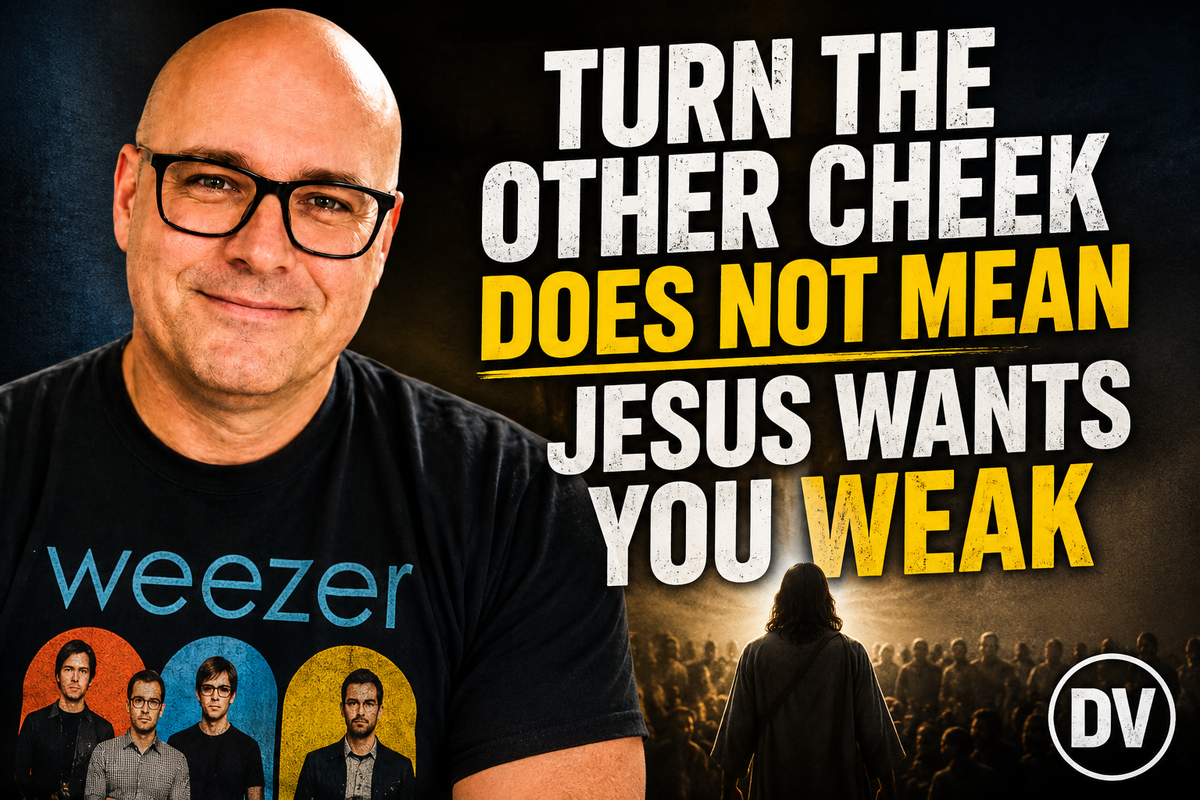
Chapter 1: When Restraint Looks Like Defeat
A man sits in his truck outside work with both hands locked around the steering wheel. Ten minutes earlier, his supervisor humiliated him in front of everyone. The words were sharp, the laughter was worse, and now his mind is replaying the scene with better answers, harder answers, answers that would make the other man regret ever speaking. He thinks about Jesus saying to turn the other cheek, and for a moment the words feel almost insulting. They sound like a command to take it, swallow it, and walk back inside as though dignity does not matter. That is why what Jesus really meant by turning the other cheek matters so much. A misunderstood verse can make faithful people feel ashamed of strength God never asked them to surrender.
The same confusion reaches far beyond one workplace. A woman hears the phrase after someone has repeatedly mistreated her. A teenager hears it after being bullied. A father hears it while trying to decide whether protecting his family makes him less Christlike. Christians have sometimes been taught that holiness means becoming easy to exploit, as though the goal of following Jesus were to become harmless to every cruel person in the room. But the courage Jesus showed when confronting injustice tells a very different story. Jesus did not teach people to hand their conscience, dignity, or responsibility over to those who abused power.
The mistake begins with a false choice. People assume there are only two ways to respond when someone wrongs you. You either strike back or you become weak. You either dominate or you submit. You either make the other person fear you or accept whatever they decide to do. Jesus refused that choice because He saw a kind of strength deeper than retaliation. He showed that a person can stand his ground without giving anger control, confront wrongdoing without becoming consumed by hatred, and refuse humiliation without copying the methods of the one doing the humiliating.
That is the shift this teaching requires. Turning the other cheek is not mainly about offering someone another target. It is about refusing to let another person choose your character for you.
Jesus spoke these words in a world where honor mattered deeply and humiliation was often used as a weapon. A slap could be more than an attempt to cause pain. It could be a public message that someone was beneath you. When Jesus spoke specifically about being struck on the right cheek, many readers have understood the image as a backhanded blow, the kind meant to degrade rather than begin an equal fight. The person delivering it was not merely saying, “I am angry.” He was saying, “Know your place.”
Now picture the response Jesus described. The person who has been struck does not collapse, beg, or launch into uncontrolled violence. He turns his face and remains standing. He does not agree with the insult. He does not accept the identity the attacker tried to force onto him. He faces the person who struck him without surrendering his soul to revenge.
That is not a picture of weakness. It is a picture of someone who cannot be easily controlled.
The attacker expects one of two reactions. Fear would confirm his power. Rage would also confirm his power because rage means he successfully reached inside the other person and took command. Jesus describes a third response: the victim stays present, keeps his dignity, and refuses to become what the attacker expects.
The strength in that moment is easy to miss because it is quiet. It does not shout. It does not need an audience to applaud. It does not prove itself by causing greater pain. Yet quiet strength can be more unsettling to a bully than a wild reaction. A bully knows how to handle panic. He knows how to use rage against the person who loses control. He is less prepared for someone who looks him in the eye and refuses both fear and hatred.
We can see this in Jesus Himself. During His interrogation, an officer struck Him. If “turn the other cheek” meant that a faithful person must never object, Jesus would have remained silent and invited another blow. He did not. He asked the man a direct question: if He had spoken wrongly, the man should identify the wrong; if He had spoken truthfully, why had he struck Him?
Jesus did not attack the officer. He also did not pretend the officer’s action was acceptable. He exposed the injustice with calm precision. He forced the man to face the fact that he had used violence where he had no answer.
That moment should change the way Christians hear this teaching. Jesus did not surrender truth for the sake of appearing peaceful. His peace had a backbone. He could remain controlled without becoming passive. He could refuse revenge while still demanding moral clarity.
There is a difference between peace and avoidance. Avoidance says, “I will act as though nothing happened because I am afraid of conflict.” The peace of Jesus says, “I know what happened, I will name it truthfully, and I will not allow it to make me lose possession of myself.”
That kind of strength is needed in ordinary life. Think about the man sitting in his truck after being humiliated at work. Turning the other cheek does not require him to walk back inside and laugh along. He may need to document what happened. He may need to speak privately with his supervisor, contact human resources, or decide that the environment has become unhealthy. He can say, “You will not speak to me that way again,” without threatening violence or spending the next six months trying to destroy the other man’s career.
His goal is not to make the supervisor suffer. His goal is to refuse further mistreatment without becoming cruel.
That distinction matters because revenge often disguises itself as strength. It tells us that we are taking back control, but revenge can keep a person emotionally tied to the one who hurt him. Every morning begins with the offense. Every conversation circles back to it. Every new success is measured against whether the enemy has noticed. The person may believe he is fighting for dignity while the offender still controls his thoughts, sleep, mood, and future.
Jesus offers freedom from that trap. He does not say the wrong did not matter. He says the wrong does not get to own what comes next.
This is also why the command cannot honestly be used to keep someone trapped in abuse. Telling a battered woman to turn the other cheek while sending her back into danger is not faithfulness to Jesus. It is a distortion of His words. Jesus sometimes withdrew when crowds wanted to kill Him. He told His disciples that when persecution came in one town, they could flee to another. He did not treat remaining within reach of violent people as proof of spiritual maturity.
A person can leave and still forgive. A person can report a crime and refuse hatred. A person can establish a boundary without seeking revenge. Forgiveness does not require giving an unsafe person repeated access. Mercy does not mean removing every consequence. Love does not stand quietly while children or vulnerable people are harmed.
A father who steps between his child and an attacker is not violating the way of Jesus. A teacher who reports abuse is not failing to turn the other cheek. A woman who locks the door, calls the police, and refuses to return to a dangerous home is not showing weak faith. The question is not whether evil should be resisted. The question is what spirit will govern the resistance.
Will the response be controlled by love for what is right, or by the desire to make another person feel pain? Will it protect life, or satisfy wounded pride? Will it seek truth, or create a new excuse for cruelty?
Jesus was never confused about those differences.
He entered the temple and overturned the tables of people who had corrupted a place of prayer. He publicly challenged religious leaders who placed heavy burdens on ordinary people while protecting their own status. He called hypocrisy by its name. He refused to soften truth merely because powerful men were offended by it.
Yet even then, Jesus was not acting from wounded ego. He did not confront corruption because someone had failed to admire Him. He confronted it because people were being harmed and God was being misrepresented. His anger served love. It was not a weapon for protecting pride.
This is where many modern ideas of strength fall apart. We often call a person strong when he cannot tolerate disrespect, when every insult must be answered, and when every challenge becomes a contest he must win. But a person who must respond to every provocation is not free. His enemies can steer him with a sentence. His pride has become a leash.
Jesus could not be steered that way.
People accused Him, mocked Him, tested Him, and tried to trap Him with words. Sometimes He answered. Sometimes He asked a question. Sometimes He walked away. Sometimes He stood silent. His response was not determined by pressure from the crowd. It was determined by obedience to His Father.
That is strength. It is the ability to choose the right response rather than merely produce the strongest reaction.
We see it most clearly in the garden where Jesus was arrested. Peter drew a sword and struck a servant. Peter probably thought he was finally proving his courage. He was ready to fight for Jesus. But Jesus stopped him. Then Jesus made it clear that He was not helpless. He said He could call on His Father and receive more than twelve legions of angels.
The soldiers did not overpower Jesus because they had more strength. Jesus restrained strength they could not begin to understand.
That changes the cross. Jesus was not dragged to death because He lacked courage. He walked toward a mission He had already chosen. He stood before religious authorities and political power without begging either one to approve of Him. He endured mockery without accepting the identity mockers tried to give Him. He carried suffering without allowing suffering to turn Him into someone ruled by hate.
The world saw a man refusing to fight and assumed it was watching defeat. The world had no category for a man who possessed power but would not use it to save Himself at the cost of His purpose.
That is the great misunderstanding behind “turn the other cheek.” We think strength is proven by what we can do to the person who hurt us. Jesus reveals that strength is often proven by what the person who hurt us cannot make us become.
He cannot make us dishonest. He cannot make us cruel. He cannot force hatred into the center of our lives. He cannot decide whether we remain faithful. He cannot take our dignity unless we accept his definition of us.
This does not make the Christian weak. It makes the Christian harder to control.
A person ruled by revenge can be manipulated. Insult him and he reacts. Shame him and he loses focus. Threaten his pride and he abandons wisdom. But a person rooted in Christ can pause. He can tell the truth. He can protect what is precious. He can walk away when leaving is wise and stand firm when standing is required. He does not need to prove his strength by becoming dangerous to everyone around him.
Jesus was dangerous to lies, exploitation, hypocrisy, and fear. He was gentle with people who had been crushed and unyielding with systems that crushed them. His mercy was not softness. His restraint was not surrender. His refusal to retaliate was not an inability to act.
It was power under the rule of love.
The man in the truck still has a decision to make before he walks back into work. He can spend the day planning humiliation in return, or he can decide that the other man will not dictate the condition of his soul. He can confront what happened. He can draw a boundary. He can seek accountability. He can protect his dignity without handing anger the keys to his life.
Turning the other cheek does not tell him to become smaller. It tells him to become stronger than the insult.
It tells him that another person may strike his pride, question his worth, or try to push him beneath them, but they do not have the authority to decide who he is. He belongs to God. His strength is not measured by how quickly he can wound someone back. It is measured by whether he can remain truthful, courageous, disciplined, and free when revenge is calling his name.
Jesus did not teach surrender to evil. He taught freedom from its control.
Chapter 2: The Strength That Does Not Need Permission
A woman stands at the kitchen sink after midnight, holding a dish she has already washed twice. The house is quiet, but her mind is not. Earlier that evening, a family member spoke to her with the same contempt he has used for years. She said nothing because she did not want another argument. Now she is wondering whether silence was patience or fear. She wants to follow Jesus, but she is tired of being told that love means absorbing every cruel word without resistance.
Many Christians know that confusion. They have been praised for keeping the peace when what they were really doing was disappearing. They have mistaken endurance for obedience and silence for holiness. They have stayed in conversations that damaged them, accepted behavior that should have been challenged, and called it turning the other cheek because they did not know what else faithfulness was supposed to look like.
The teaching of Jesus does not ask a person to erase himself so that someone else can remain comfortable. It does not require a woman to lose her voice, a man to surrender his conscience, or a child to believe mistreatment is normal. Jesus never treated human dignity as something that cruel people were free to take.
What He did was separate dignity from retaliation.
That distinction changes everything. Retaliation says, “I must hurt you because you hurt me.” Dignity says, “I know what you did, and I will not pretend it was right.” Retaliation needs the other person to suffer. Dignity needs the truth to be faced. Retaliation is controlled by the wound. Dignity is controlled by character.
The woman at the sink may decide that the next time the family member speaks to her that way, she will not shout back. She may simply say, “I love you, but this conversation ends when you speak to me with contempt.” Then she may leave the room. That is not cowardice. It is not revenge. It is a boundary spoken without hatred.
For some people, that kind of response feels harder than yelling. Anger gives immediate energy. It makes us feel powerful for a few minutes. Calm truth can feel exposed because it does not hide behind volume. It asks us to stand there as ourselves, without the shield of rage, and say what is true.
Jesus did that repeatedly. He did not need noise to prove authority. He could ask one question and leave an entire room unsettled. He could answer a trap with a sentence so clear that His opponents had no reply. He could refuse to perform for people who demanded signs. He could walk away from a crowd that wanted to control Him.
His strength did not depend on permission from the room.
That matters because much of what people call weakness is really the refusal to perform the kind of strength the world recognizes. The world recognizes fists, threats, public humiliation, and domination. It is slower to recognize self-command. Yet the person who cannot command himself will eventually be commanded by someone else’s insult.
This is why turning the other cheek is not a lesson in becoming passive. It is a lesson in becoming ungovernable by hatred.
Think about a father whose adult son speaks to him with constant disrespect. The father has spent years trying to keep the relationship alive. He pays bills, solves emergencies, and keeps answering calls that begin with demands. Every time he considers saying no, guilt rises in him. He remembers Jesus telling people to love their enemies and wonders whether love means continuing to rescue someone who refuses responsibility.
Love may require a harder answer.
It may sound like, “I will always be your father, and I will always love you, but I will not keep financing choices that are destroying you.” That sentence may produce anger. The son may accuse him of being cruel. But love is not measured by whether the other person approves of the boundary. Sometimes love stops helping in ways that are keeping another person trapped.
Jesus loved people deeply, but He did not allow every demand to direct Him. Crowds wanted more miracles. Religious leaders wanted Him to defend Himself on their terms. His own followers sometimes wanted Him to take a path He had not been given. Jesus listened, but He did not surrender His mission to their expectations.
He was available without being owned.
That is a powerful model for people who have confused goodness with endless access. Turning the other cheek does not mean every person gets unlimited entry into your time, home, mind, or future. It means you refuse revenge even when access must end.
There are moments when separation is the most truthful response. A friendship built on manipulation may need distance. A workplace may become so corrosive that leaving is wise. A family relationship may require limits that others do not understand. A person can make those decisions without hatred and without spending the rest of his life rehearsing accusations.
The challenge is that boundaries reveal what was hidden. As long as you keep absorbing the behavior, everyone can pretend the relationship is healthy. The moment you say, “This cannot continue,” the conflict becomes visible. People may blame you for the tension because you were the one who finally named it.
Jesus understood that kind of tension. He said that truth can divide households, not because division is the goal, but because truth exposes loyalties people would rather keep hidden. Peace built on denial is not the peace of Christ. It is only quiet maintained at the expense of someone’s soul.
Real peace does not avoid truth. It survives truth.
That is why a strong Christian response may look calm on the outside while carrying enormous courage underneath. A person may refuse to argue, but still file the report. He may forgive, but still testify. She may pray for someone, but still change the locks. They may wish no harm on the offender while refusing every attempt to restore the old pattern.
Some people will call that unforgiving because they believe forgiveness must restore immediate trust. It does not. Forgiveness releases the right to personal vengeance. Trust is rebuilt through truth, repentance, time, and changed behavior. Jesus told His followers to forgive, but He did not teach them to become foolish.
He Himself did not entrust Himself to everyone. He knew what was in people. He loved openly while discerning clearly. His heart remained free of hatred, but His eyes remained open.
That combination is often missing in modern Christian advice. People are told to keep a soft heart, but not warned to keep clear sight. They are encouraged to forgive, but not taught that wisdom may require distance. They are reminded to love, but not told that love sometimes confronts, limits, refuses, or leaves.
A soft heart without clear sight can be manipulated. Clear sight without a soft heart can become cold. Jesus held both.
He could look at a rich young ruler with love and still let the man walk away. He did not chase him down and lower the cost of discipleship. He could wash Judas’s feet and still tell the truth about betrayal. He could forgive those who crucified Him without pretending the crucifixion was righteous.
This is the strength Christians are called to learn. It is not the strength of being untouched. Jesus was touched by sorrow, betrayal, exhaustion, rejection, and grief. He wept. He felt anguish. He was not strong because nothing reached Him. He was strong because pain did not get the final word over His obedience.
That distinction is important for the person who thinks turning the other cheek means not feeling anything. You may feel angry. You may feel betrayed. You may need time to process what happened. You may have to tell someone exactly how deeply the situation harmed you. Strength does not require pretending the wound is small.
What strength requires is refusing to build your identity around the wound.
A man who was betrayed in business may spend years telling the story of what his partner did. At first, he is simply trying to make sense of it. Later, the story becomes the center of every conversation. He no longer introduces himself through what he believes, loves, or hopes to build. He introduces himself through the person who wronged him.
The betrayal happened once, but revenge keeps renewing the contract.
Turning the other cheek breaks that contract. It says, “What you did matters, but it will not become the main explanation for my life.” The offender may be part of the story, but he does not become the author.
That is where the teaching of Jesus becomes more than a rule about conflict. It becomes a way of protecting the future.
People often imagine revenge as taking power back, but revenge keeps the offender emotionally present. It carries him into new relationships, new workplaces, new prayers, and new mornings. It gives him a chair at the table long after he is gone.
Jesus offers another kind of freedom. He teaches a person to tell the truth, pursue what is right, and then refuse to keep drinking from the same bitterness every day. That freedom is not instant. It may require repeated prayer, wise counsel, counseling, legal action, or a long season of healing. But the direction remains clear: the person who hurt you does not get to decide the shape of your soul.
This is why justice and mercy are not enemies. Justice asks that wrong be named and addressed. Mercy refuses to delight in destruction. A strong Christian may seek consequences because consequences protect others and honor truth. Yet he can do so without making punishment his source of joy.
That is a difficult line to walk. We know when anger begins to enjoy the fall of another person. We know when accountability turns into humiliation. We know when a legitimate desire for truth quietly becomes a hunger to watch someone suffer.
Jesus calls His followers to remain awake at that line.
He never asked them to become blind to evil. He asked them not to become intimate with it. He did not say, “Do not resist what is wrong in any form.” He showed them how to resist without becoming possessed by the same spirit they opposed.
Consider the difference between stopping a violent man and hating him. Stopping him may require physical action, legal authority, or firm force. Hatred is something else. Hatred begins to desire his pain for its own sake. Protection focuses on the vulnerable. Revenge focuses on satisfying the wounded self.
The actions may appear similar from a distance, but the heart knows the difference.
A police officer restraining an attacker, a mother pulling her child away from danger, or a neighbor stepping into a threatening situation may all be acting in love. Love is not always soft in appearance. Sometimes love blocks a doorway. Sometimes love says no. Sometimes love stands between the weak and the person misusing strength.
Jesus Himself was not soft toward those who used religion to exploit people. His words could be severe because the damage was severe. Yet His goal was never personal superiority. He was not trying to win an argument so He could feel important. He was exposing what kept people from God.
This is one reason calling Jesus merely a rebel can miss something important. A rebel can be driven by ego, resentment, or the pleasure of opposing authority. Jesus was not against authority itself. He was under the authority of His Father, and that obedience made Him impossible for corrupt authority to control.
He was not rebellious because He disliked rules. He was unyielding because truth mattered more than approval.
That is stronger than rebellion.
A rebellious person can still be controlled by the system he hates because his identity depends on opposing it. Jesus did not build His identity around opposition. He knew who He was before the crowd praised Him and after the crowd turned against Him. He did not need enemies in order to feel strong.
That is the deeper freedom behind turning the other cheek. You no longer need the other person to behave well before you can live faithfully. You do not need an apology before you can begin healing. You do not need public agreement before you can set a boundary. You do not need to win every argument before you can keep your dignity.
Your life is no longer waiting for the offender’s permission to move forward.
The woman at the sink finally places the dish in the rack. The house is still quiet, but something in her has shifted. She does not need to plan a speech that will crush the family member who wounded her. She also does not need to keep disappearing. She can love without surrendering truth. She can forgive without reopening every door. She can be peaceful without becoming powerless.
That is the kind of strength Jesus lived. It does not need to prove itself through revenge. It does not need every person to understand. It does not need cruelty to feel courageous. It stands in truth, protects what matters, and keeps its heart free enough to obey God. The cheek turns, but the soul does not bow.
Chapter 3: The Freedom No Insult Can Take
A young man sits in a folding chair at the back of a church fellowship hall while two people across the room talk quietly and glance in his direction. He cannot hear every word, but he knows enough. A mistake he made months ago has become part of the way people describe him. He has apologized, changed what needed to change, and tried to move forward, yet the old story still follows him into rooms before he arrives. His first instinct is to walk over and force them to stop. His second is to leave and never come back. Between those two reactions sits a harder question: who gets to decide who he is now?
That question reaches the center of what Jesus meant by turning the other cheek. The command is not only about what happens in the moment of insult. It is about whether another person receives the authority to define your future. A slap can last a second, but the shame attached to it can remain for years if we keep carrying the attacker’s judgment as though it were the truth.
Jesus did not live under other people’s definitions. Some called Him a troublemaker. Some accused Him of being dangerous. Some said He was deceiving the people. Others treated Him as though He had no right to speak with authority because of where He came from. Even members of His own family struggled to understand Him. None of those voices were strong enough to tell Jesus who He was because He knew His identity before the arguments began.
That is one reason His restraint was so powerful. A person who does not know who he is must prove himself constantly. He needs to win the room, silence the critic, and punish the insult because his sense of worth feels exposed. Jesus did not need to defeat every accusation in order to remain secure. He answered when truth required an answer, and He stayed silent when answering would only feed a dishonest game. His silence before certain accusers was not emptiness. It was a refusal to give false questions the dignity of a sincere response.
There are moments when a Christian must speak, and there are moments when speaking only gives more life to foolishness. Knowing the difference requires a strength that goes beyond temper. It requires identity.
The young man in the fellowship hall may decide to walk across the room, but not to threaten anyone. He may say, “I know my past is easy to discuss, but I have taken responsibility for it. If you have a concern about me, speak to me directly.” He may discover that the conversation was not what he assumed. He may also learn that some people prefer the old version of him because it gives them a reason to feel superior. Either way, he does not have to surrender his future to whispers. He can face the room without needing to control every opinion in it.
That kind of freedom does not come from pretending reputation never matters. Reputation can affect work, family, ministry, and trust. Lies sometimes need to be corrected. False accusations may require evidence, witnesses, or legal help. Turning the other cheek does not mean allowing a lie to spread when truth can protect the innocent. It means the fight for truth does not become a fight for the right to hate.
This is where the example of Jesus becomes especially strong. He did not defend Himself from the cross by destroying everyone who mocked Him. He also did not agree with their judgment. Their signs, accusations, laughter, and violence did not become the final account of His life. The resurrection answered them without adopting their methods. The cross looked like humiliation, but humiliation did not own the ending.
People often think strength must be visible immediately. We want the insult answered before the room changes subjects. We want the liar exposed by sunset. We want the person who hurt us to see, understand, and regret it while we are still watching. When that does not happen, restraint can feel like losing. Jesus showed that truth does not always need to win on the schedule of the crowd.
Sometimes the strongest response develops slowly. A person keeps his integrity when no one rewards it. A mother raises her children differently from the way she was raised, ending a pattern nobody else was willing to name. A man refuses to repeat the cruelty of his father, even though anger feels natural to him. A woman rebuilds her life after betrayal without making bitterness the center of every new relationship. None of these victories may produce public applause, but they are victories over forces that once seemed permanent. Turning the other cheek becomes powerful when it reaches beyond the single offender and breaks the chain.
A harsh father humiliates his son. Years later, that son feels the same anger rising while speaking to his own child. He recognizes the tone because he has heard it before. In that moment, he can pass the wound forward or stop it. He may need to leave the room, breathe, pray, and return with an apology. Some people would call that softness because he did not dominate the child. Jesus would call it freedom because the father’s old cruelty has finally lost control of another generation.
This is spiritual resistance at the deepest level. The easiest thing in the world is to reproduce what wounded us. Hurt people often become skilled at delivering the same kind of hurt because pain teaches its own language. Jesus interrupts that lesson. He says we do not have to speak the language of the person who harmed us. We can learn another way.
That other way is not denial. The son may need to admit that his father’s treatment shaped him. He may need counseling, honest prayer, and years of practice before his reactions change. The command of Jesus does not erase the work of healing. It gives that work a direction. He is not trying to become someone who never remembers. He is becoming someone whose memories no longer issue commands.
Christian strength should never be measured only by how much pain a person can absorb. Some people have survived terrible situations, but survival alone does not mean they were treated rightly. A church should not praise someone for remaining silent under abuse when help should have been offered. A family should not protect its image by asking the wounded person to forgive quickly and say nothing.
Jesus brought hidden things into the light. He asked hard questions. He exposed what respectable people wanted covered. He did not preserve peace by making the wounded carry everyone else’s discomfort.
A congregation may face this when a trusted leader has harmed someone. There will be pressure to handle it quietly, protect the ministry, and avoid scandal. People may quote forgiveness before the truth has even been investigated. That is not turning the other cheek. That is placing the weight of the institution on the person already hurt. A faithful response tells the truth, protects the vulnerable, allows proper authorities to do their work, and refuses to treat consequences as persecution. Mercy may still matter, but mercy cannot be built on a lie.
Jesus was merciful because He was truthful, not because He was willing to overlook whatever powerful people preferred to hide. His strength becomes clearer when we stop imagining Him as a man who simply endured whatever happened. He chose His responses. He challenged some people, escaped others, remained silent before certain authorities, answered questions with questions, touched people no one else would touch, and overturned tables when worship had been turned into exploitation. He was never operating from fear.
Even at the cross, His restraint was chosen. He had already shown that He could walk through hostile crowds when His time had not come. He had shown that He could silence opponents with truth and command storms to be still. The One on the cross was not discovering that He lacked power. He was using power in a form the world could not understand. He was laying down His life rather than merely losing it.
That difference matters. Weakness has no choice. Sacrifice chooses a costly path for a greater purpose. Jesus did not submit to evil because evil deserved obedience. He submitted to the Father because love had a mission revenge could never complete.
Had Jesus answered violence with greater violence, His enemies would have understood Him. Empires understand force. Proud men understand domination. What they could not understand was a King who would defeat death by entering it, expose hatred by refusing to return it, and reveal strength through obedience. The resurrection did not turn a weak Jesus into a strong one. It revealed the strength that had been present all along.
That strength is available to ordinary people in ordinary rooms. A nurse may be insulted by a frightened family member and respond, “I understand that you are afraid, but you cannot speak to the staff that way.” She does not accept abuse, and she does not use her authority to humiliate them. A divorced father may receive an angry message designed to provoke him, wait until his temper settles, and answer only the part concerning the children. A business owner who discovers theft may report it and remove the employee from a position of trust without making personal destruction his goal. The circumstances differ, but the central act is the same: each person refuses to surrender self-command.
That refusal will sometimes be misunderstood. People addicted to conflict may accuse a calm person of weakness because they cannot provoke him. People who benefited from silence may call a boundary unloving. People who confuse forgiveness with access may say that distance is bitterness. Following Jesus does not guarantee that everyone will interpret strength correctly. Jesus Himself was misunderstood to the end.
The goal, then, cannot be to look strong in every person’s eyes. The goal is to become faithful enough that the need to look strong no longer controls us. A Christian may appear weak to someone who only recognizes domination, but that appearance does not change the truth.
Real strength can apologize without collapsing and forgive without denying what happened. It can confront wrongdoing without feeding hatred, protect someone without enjoying violence, and walk away without running from truth. It can remain present without surrendering dignity. None of this is easy, which is exactly why the teaching of Jesus demands courage.
This kind of strength is not developed during the slap alone. It is formed in smaller moments long before the crisis. It grows when a person learns to pause before answering a cruel text, tells the truth about his own motives, refuses to rehearse imaginary arguments for hours, and brings wounded pride honestly before God. Self-command is built through daily obedience.
Prayer matters because revenge feels reasonable when we are alone with our version of the story. In prayer, we stand before a God who sees the offender clearly and sees us clearly too. He does not excuse what happened, but He also does not let us turn our pain into permission for anything we want to do next.
Sometimes the most honest prayer is not polished. It may sound like, “God, I want to hurt this person back. I want them embarrassed. I want them afraid. I do not trust my own anger right now.” That prayer is not failure. It is the beginning of refusing to let anger become a private god. Jesus in Gethsemane did not hide the cost of obedience. He spoke openly about sorrow and asked whether the cup could pass. Strength did not require pretending the path was easy. It required bringing the full truth of the struggle to the Father and still choosing obedience.
Christians do not become strong by denying emotion. They become strong by refusing to make emotion the highest authority.
The young man at the church may still feel the weight of the whispers when he gets home. He may replay the room and wish he had said something different. Freedom does not mean every feeling disappears. It means those feelings no longer decide whether he returns next week, whether he keeps growing, or whether he believes God can use his life.
He is more than the worst thing he has done, and he is still responsible for what he has done. Grace does not remove responsibility, and responsibility does not cancel grace. Jesus holds both truths without confusion.
That is another reason turning the other cheek is so powerful. It keeps the offender from becoming the judge of our worth, but it also keeps us from becoming judges who believe our pain makes us morally perfect. We can name another person’s wrong while remaining honest about our own need for mercy. The person who knows he has been forgiven does not need to pretend the offender is innocent. He simply knows vengeance is too dangerous to become his identity.
Turning the other cheek is not a technique for winning an argument. It is a way of living under the authority of God instead of the authority of insult. It is the decision to let Jesus define strength.
That strength is not soft because it refuses hatred. Hatred is often the easier road. It asks less discipline, less prayer, less truth, and less courage. The way of Jesus is harder because it asks us to remain fully alive, fully honest, and fully responsible without becoming servants of revenge. It asks us to stand up without needing to crush someone else, to protect what is right without letting anger become our master, and to carry dignity that does not depend on another person’s respect.
Jesus was not weak when He turned toward those who struck Him. He was showing that their violence had reached His body but had not taken His obedience. Their mockery had reached His ears but had not rewritten His identity. Their hatred had surrounded Him but had not entered the throne of His heart.
The Christian who turns the other cheek is not saying, “Do anything you want to me.” That person is saying, “You do not get to decide what I become next.” The response may include a boundary, a report, a courtroom, a locked door, a difficult conversation, or a quiet departure. It may also include forgiveness that takes years to grow. What it will not include is surrendering the soul to the very evil being resisted.
Jesus did not call His followers to become weak enough for the world to control. He called them to become free enough that the world could not.
Your friend,
Douglas Vandergraph
Watch Douglas Vandergraph inspiring faith-based videos on YouTube:
https://www.youtube.com/@douglasvandergraph
Support the Christian encouragement library through GoFundMe:
https://www.gofundme.com/f/help-douglas-vandergraph-build-a-christian-encouragement-lib
Support the daily work by buying Douglas a coffee:
https://www.buymeacoffee.com/douglasvandergraph