Zero Is Not the End — It Is Where God Begins
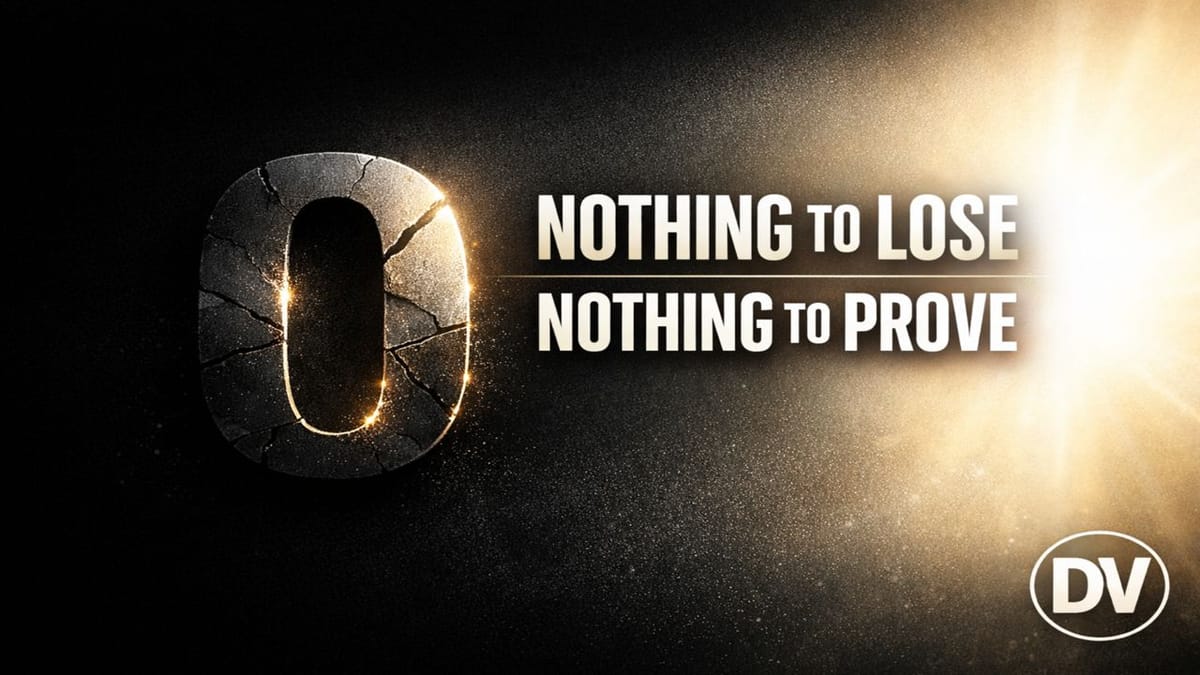
There are moments in life when everything familiar falls away, and you find yourself standing in a place you never planned to be. The dreams that once felt close now feel distant. The confidence you once carried has thinned. The identity you built through years of effort feels fragile. And in that moment, a single thought rises in your heart: I am starting from zero. For many people, that thought sounds like defeat. It sounds like loss. It sounds like the closing of doors. But when viewed through the eyes of faith, zero is not the end of the story. Zero is where God has always done His most meaningful work.
We are taught from an early age to fear being behind. We measure life with numbers and milestones, and we learn to judge ourselves by how far we believe we should be by now. We compare our progress to other people’s progress. We measure our worth by our achievements. We define our future by our past performance. And when those measures collapse, we assume something has gone wrong. But Scripture does not treat broken beginnings as disqualifications. It treats them as invitations.
To start from zero is not the same as being nothing. It is the moment you stop pretending to be something you are not. It is the moment you lay down the exhausting effort of maintaining appearances. It is the moment you stop negotiating with reality and finally accept where you truly stand. And in that honest place, God is able to speak in ways He never could when pride was still loud and fear still had the microphone.
There is a strange relief that comes with having nothing to lose. When you reach that point, the usual threats lose their power. You no longer fear being misunderstood because you have already been. You no longer fear failure because you have already experienced it. You no longer fear starting over because you are already there. And in that freedom, obedience becomes simpler. You do not obey God because you are certain of the outcome. You obey Him because there is no longer anything worth clinging to except His voice.
This is where faith changes shape. It is no longer an accessory to success. It is no longer a supplement to ambition. It becomes your foundation. Faith at zero is not decorative. It is functional. It is not spoken lightly. It is lived quietly. It is not built on confidence in yourself but on trust in God’s character. And trust grows best when self-reliance has finally been exhausted.
So much of human striving is rooted in the desire to prove something. We want to prove that we are worthy of love. We want to prove that our life has meaning. We want to prove that our mistakes did not define us. We want to prove that we are strong enough, good enough, capable enough. But faith calls us into a different posture. Faith does not ask us to prove our worth. Faith asks us to receive it.
From the beginning of Scripture, God has consistently chosen people who did not arrive with impressive resumes. Moses did not walk into his calling with boldness and clarity. He walked into it with hesitation and fear. David did not step into kingship from a throne. He stepped into it from a field. Gideon did not rise from confidence. He rose from hiding. Peter did not become a leader because he was steady. He became one because he was forgiven. Paul did not begin his ministry from purity. He began it from mercy. God’s pattern has always been the same: He does not build His kingdom on human strength; He builds it on surrendered hearts.
Zero is the place where surrender becomes real. It is easy to talk about trusting God when life is stable. It is easy to speak of faith when you feel secure. But when the ground beneath you has shifted and your plans have failed, faith becomes a decision instead of a decoration. You choose to trust not because circumstances are kind but because God is faithful. You choose to walk forward not because you see the whole road but because you know who is guiding you.
In this place, something else begins to happen. The noise of comparison grows quieter. You stop measuring your life against other people’s timelines. You stop chasing validation from people who cannot give it. You stop letting success define you and failure shame you. You begin to listen for God instead of applause. You begin to look for obedience instead of approval. And in that shift, your soul finds rest.
The world teaches us to construct identity from accomplishment. Faith teaches us to receive identity from God. When identity is built on accomplishment, it is fragile. It must be defended. It must be constantly reinforced. It must be protected from failure and loss. But when identity is rooted in God, it is steady. It does not rise and fall with circumstances. It does not collapse under criticism. It does not vanish when plans change. It stands because it is anchored in something eternal.
This is why the place of zero is so sacred. It removes false anchors. It strips away illusions of control. It reveals where your trust has truly been placed. And though that revelation can feel uncomfortable, it is also deeply healing. You cannot rebuild honestly until you see clearly. You cannot grow in faith while pretending you are strong. You cannot be guided by God while insisting on your own way.
When Jesus walked the earth, He did not model a life of self-protection. He modeled a life of surrender. He did not cling to status. He did not perform for validation. He did not use His power to avoid suffering. He trusted the Father even when obedience led to loss. And in doing so, He revealed a different kind of strength. Strength that does not need to dominate. Strength that does not need to impress. Strength that does not need to prove itself. Strength that rests in obedience.
This is the strength God forms in people who start from zero. It is not loud. It is not flashy. It is quiet and steady. It is the strength to keep walking when no one is watching. It is the strength to choose integrity when shortcuts would be easier. It is the strength to trust when certainty is absent. It is the strength to remain faithful when results are slow.
Many people reach this place after loss. The loss of a job. The loss of a relationship. The loss of health. The loss of direction. And they assume that something has gone terribly wrong. But often, what feels like loss is actually invitation. An invitation to release what was never meant to carry your identity. An invitation to let God rebuild what you could not sustain. An invitation to learn who you are apart from performance.
Starting from zero exposes the difference between motion and meaning. You can be busy and still be lost. You can be productive and still be empty. You can be successful and still be unsure of who you are. Zero removes the disguise of movement and asks the deeper question: who are you becoming? It shifts focus from what you have achieved to what God is shaping in you.
In this place, prayer changes. It becomes less about asking God to bless your plans and more about asking Him to reveal His will. It becomes less about control and more about trust. Less about outcomes and more about alignment. You stop demanding explanations and start seeking direction. You stop asking God to prove Himself and start allowing Him to lead you.
There is also humility here, not the kind that shames you, but the kind that frees you. You no longer need to defend your image. You no longer need to pretend to be unbroken. You no longer need to hide your dependence. You can say, honestly, I need God. And that confession is not weakness. It is wisdom.
God does not waste beginnings. He does not waste broken starts. He does not waste humbled hearts. He uses them. He builds through them. He shapes lives that can carry both purpose and compassion. People who have known zero often walk differently. They listen more carefully. They judge less harshly. They trust more deeply. They love more patiently. They understand that strength is not the absence of need but the presence of faith.
Zero also teaches patience. When you have little, you learn to value what grows slowly. You stop demanding immediate results. You start noticing small steps. Quiet progress. Subtle changes. You learn that God’s work is often invisible before it is visible. That roots grow before fruit appears. That healing happens before testimony emerges. That obedience prepares the way for purpose.
This is not a glamorous season. It will not earn applause. It will not look impressive. But it will be holy. It will shape your inner life. It will deepen your prayer. It will strengthen your discernment. It will clarify your values. It will quiet your fears. It will train your heart to hear God’s voice above the noise of the world.
And eventually, something beautiful begins to form. Not a return to the old you, but the birth of a truer one. A self that is less reactive and more rooted. A self that is less anxious and more assured. A self that is less driven by approval and more guided by faith. A self that walks forward without needing to prove anything.
When you reach this place, you understand something profound. You realize that nothing you lost could ever compare to what God is building. That no title could replace identity. That no recognition could replace peace. That no achievement could replace obedience. And that realization changes how you walk through the world.
You move more slowly. You speak more carefully. You choose more intentionally. You trust more completely. You are no longer racing to arrive somewhere. You are learning to walk with God where you are.
And that is where real life begins.
When you begin again from zero, your relationship with time changes. You stop rushing toward outcomes and start paying attention to formation. You realize that God is far more interested in who you are becoming than in how quickly you appear to succeed. This is difficult for a world trained to worship speed. We want instant answers, instant healing, instant results. But faith grows best in seasons where progress is quiet and depth is slow. Zero teaches you how to wait without quitting and how to walk without needing proof.
At zero, you also learn discernment. When your life is full, you can afford to ignore small warnings. You can dismiss gentle corrections. You can confuse motion with obedience. But when your life is stripped down, you become more attentive. You notice what drains you and what restores you. You recognize which voices bring clarity and which ones bring confusion. You become careful with your energy, your time, and your trust. God uses this attentiveness to reshape your inner compass.
It is here that motives are refined. When you no longer have something to defend, your reasons for doing things change. You stop serving to be seen and start serving because it is right. You stop creating to be noticed and start creating because you are called. You stop working for applause and start working from conviction. This is a holy shift. It moves your life from reaction to intention, from noise to meaning, from image to substance.
There is also grief in this place. Not only grief for what was lost, but grief for what might have been. The dreams that didn’t happen. The paths you didn’t take. The versions of yourself you imagined. Zero brings those things to the surface. It does not rush past them. It invites you to release them. This release is not denial. It is surrender. You do not pretend those losses did not matter. You place them into God’s hands and trust that nothing offered to Him is wasted.
God does something tender with surrendered grief. He transforms it into wisdom. He softens your spirit without weakening it. He teaches you compassion without making you bitter. People who have stood at zero often carry a different kind of authority. Not the authority of status, but the authority of understanding. They listen differently. They speak gently. They recognize pain in others because they have learned the language of it themselves.
This is why God often entrusts influence to people who have been emptied first. They are less likely to misuse it. They remember what it feels like to be unseen. They do not confuse position with identity. They know that everything they carry was given, not earned. This makes their leadership quieter but deeper, their words fewer but truer, their actions slower but steadier.
Zero also teaches obedience without guarantees. You follow God not because the path is obvious but because His voice is clear. You take steps that do not yet make sense to others. You choose faithfulness when no one is watching. You trust that God is arranging things beyond what you can see. This kind of obedience forms resilience. It prepares you to walk through future seasons without losing your center.
There is a subtle miracle that happens here. As you stop trying to prove yourself, you start noticing God proving Himself. You see provision arrive without your manipulation. You see guidance appear without your demand. You see strength rise where you thought only weakness lived. These are not dramatic moments. They are quiet confirmations. They do not announce themselves loudly. They simply appear and remind you that God has been with you all along.
At zero, prayer becomes simpler. You no longer pray to impress God. You pray because you need Him. Your words become fewer and your listening becomes deeper. You are not trying to control outcomes. You are asking for direction. You are not bargaining. You are surrendering. And this kind of prayer reshapes your inner life. It teaches you to depend rather than demand, to receive rather than resist.
There is also joy in this place, though it is different from the joy the world celebrates. It is not built on achievement. It is built on alignment. It is the quiet satisfaction of knowing you are walking where God is leading you. It is the peace of not having to pretend. It is the relief of not carrying expectations that were never meant for you. It is the freedom of being honest about your limits and hopeful about God’s strength.
Zero strips life down to essentials. It asks you what truly matters. It teaches you to recognize the difference between what looks valuable and what actually is. You discover that faith is more durable than success, that character lasts longer than recognition, and that peace outlives applause. These lessons do not come from abundance. They come from dependence.
In this season, God often redefines success. Instead of measuring life by how much you accumulate, you begin to measure it by how faithfully you walk. Instead of asking how far you have gone, you ask how closely you are following. Instead of chasing a finish line, you learn to value each step. This is not a smaller life. It is a deeper one.
There will be moments when you are tempted to rush out of zero. To rebuild quickly. To prove you are okay. To show the world that you are still capable. But faith invites patience. It invites trust in the process. It reminds you that what God builds slowly is harder to destroy. That roots matter more than speed. That depth matters more than display.
As God rebuilds, He does not restore the old structure. He forms something truer. He aligns your desires with His will. He simplifies your focus. He strengthens your inner life. You begin to care less about how things look and more about how they are. You stop asking what will make you admired and start asking what will make you faithful.
This is not the absence of ambition. It is the purification of it. You still move forward. You still create. You still build. But you do so without panic. Without desperation. Without the need to be seen. Your work becomes an offering rather than a performance. Your progress becomes an act of worship rather than a competition.
When you look back on this season one day, you will not remember it as empty. You will remember it as formative. You will see how God taught you to stand without props. To walk without guarantees. To trust without proof. You will see how He prepared you to carry more without losing yourself.
This is why zero is not the end. It is where God begins. It is the place where false strength falls away and real strength is born. It is the place where identity is no longer borrowed from achievement but received from God. It is the place where obedience becomes more important than outcome and faith becomes more important than fear.
If you are here now, do not despise this place. Do not rush it. Do not hide it. Stand honestly within it. Let God speak. Let Him shape. Let Him rebuild. Your life is not over. It is being reordered.
You do not have to prove anything.
You do not have to rush anywhere.
You do not have to pretend you are fine.
You only have to walk with God from where you are.
And from zero, that is more than enough.
Your friend,
Douglas Vandergraph
Watch Douglas Vandergraph’s inspiring faith-based videos on YouTube
Support the ministry by buying Douglas a coffee