When You Love Your Child and Still Wrestle With the War
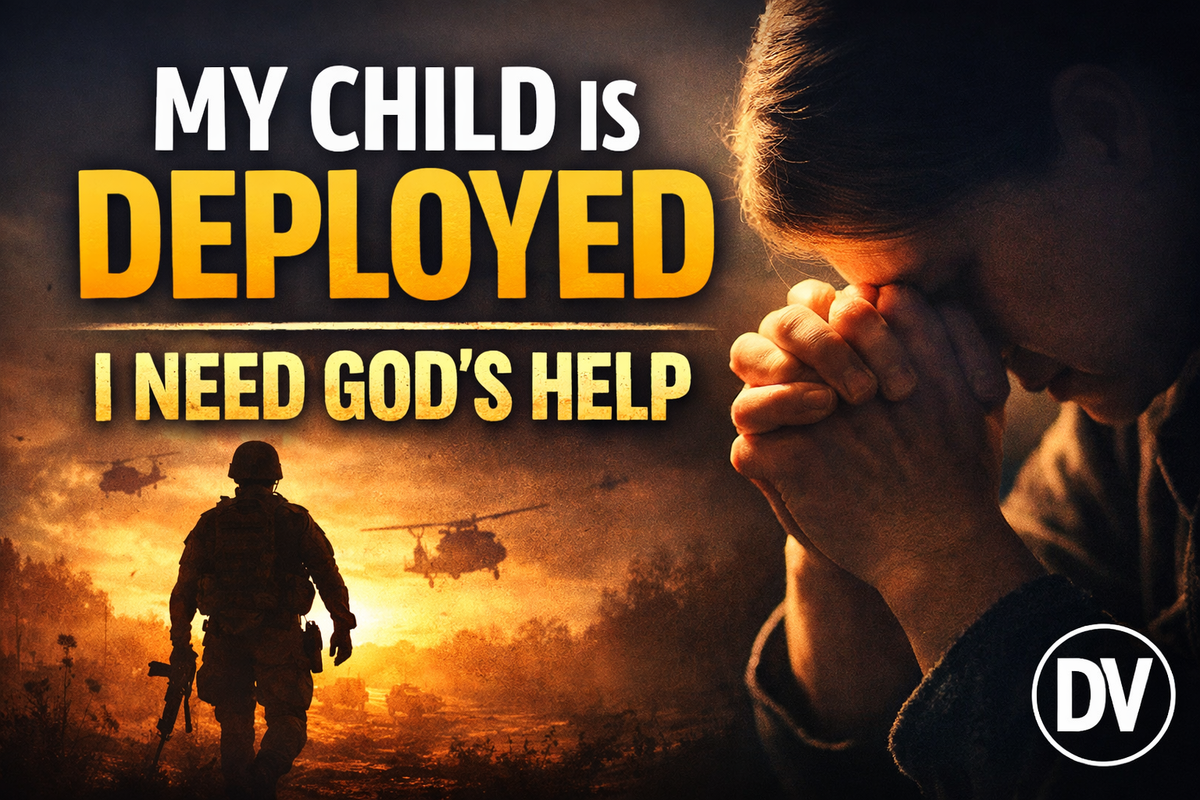
Some of the deepest pain a parent can feel begins the moment people start expecting them to become simpler than their love will allow. A son or daughter is deployed overseas. The distance becomes real. The danger becomes real. The silence between updates becomes real. And almost immediately, the world around that parent begins speaking in tones that feel too clean for what they are carrying. Speak with pride. Speak with certainty. Speak with full support. Speak in a way that does not leave room for tension. Speak in a way that makes everything sound settled. But the heart of a parent is rarely that mechanical. It knows too much. It remembers too much. It loves too personally to become an easy slogan. So the parent stands there, trying to hold onto their child with tenderness, while also feeling troubled by the broader effort their child has been sent into. That is where the inner conflict begins to burn. Not because the parent lacks loyalty. Not because they lack faith. But because they still possess a conscience that has not gone numb and a love that refuses to become propaganda.
That is the shift this article needs to make from the beginning. Your conflict is not first a problem to be erased. It may actually be proof that something valuable in you is still alive. In a world that trains people to pick a side faster than they learn how to grieve, a conflicted parent is often one of the last honest people in the room. Not because every conflicted feeling is automatically righteous, but because there is something deeply human about refusing to let enormous matters become emotionally lazy. You love your child. You may not fully trust the larger machinery around the situation. Those two realities can make the soul feel divided, but they do not mean the soul is broken. They may mean the soul has not surrendered its moral seriousness to public pressure.
This matters because many believers have been quietly taught a false equation. They have been taught that if they support the person they love, they must flatten every concern they feel about the system around that person. Or they have been taught that if their conscience remains unsettled, then their love must somehow be compromised. But neither equation is worthy of Christ. Jesus never required people to become morally dull in order to be loving. He never demanded that compassion be purchased through silence of conscience. He never treated the human heart as if it must amputate one truth in order to honor another. He moved through a world of empire, force, power, corruption, fear, and public manipulation without ever becoming confused about the value of the individual soul standing in front of Him. That matters for a parent right now. Your child is not reducible to the forces around them. Your child is not the same thing as the war. Your child is not the same thing as the policies, the officials, the speeches, the arguments, or the headlines. Your child is your child.
That sounds obvious until pain makes obvious things hard to hold onto. Once deployment enters the picture, everything starts bleeding into everything else. News becomes personal. Distance becomes spiritual. Time stretches strangely. Old family memories begin mixing with fresh anxiety. You are no longer processing an event only as a citizen, a voter, an observer, or even a believer. You are processing it as a parent. That changes the texture of every thought. A parent does not simply ask whether something is right in the abstract. A parent feels the personal cost of abstraction. A parent knows that decisions made far away can land in the body of someone they once carried, someone whose voice they know in a crowded room, someone whose childhood still lives somewhere inside the walls of the house. That makes simplistic language feel almost offensive. And maybe that is part of the reason you feel so torn. Your heart knows the difference between an idea and a person. Love always knows the difference.
The world, unfortunately, often does not. The world likes categories because categories make emotion easier to manage. Categories let people speak loudly without feeling deeply. Categories let people become more loyal to their position than to the actual flesh-and-blood people trapped inside the consequences of that position. Categories let a son become “troops.” Categories let a daughter become “service.” Categories let war become “strategy.” Categories let fear become “strength.” Categories let grief become “patriotism.” But a parent cannot fully live in categories, because a parent remembers names, faces, laughter, weakness, history, and human fragility. A parent knows the person inside the category. That is why your heart recoils at language that seems too polished for what is happening. It is not because you are weak. It is because real love is allergic to dehumanization.
This is where the deeper perspective shift begins. Your job is not to learn how to feel less. Your job is to refuse to let anyone else define the moral meaning of your love. That includes public voices. That includes political voices. That includes fearful voices. That includes even the harsh voice in your own head that keeps accusing you for not feeling simple enough emotions in a complex moment. There is nothing spiritually mature about becoming internally dishonest. If your conscience is unsettled, then bring that unsettled conscience before God. If your love for your child is fierce, then let it be fierce before God too. The goal is not emotional tidiness. The goal is truthfulness in the presence of Christ.
Truthfulness is one of the most underappreciated forms of holiness. Many people talk about holiness as if it means getting your feelings under control quickly enough to look strong. But biblical holiness has far more to do with bringing the real self into the light of God than with performing emotional neatness. David was holy enough to sing with joy and holy enough to cry out in confusion. The prophets were holy enough to speak with power and holy enough to groan under the weight of what they saw. Jesus Himself was holy enough to walk in perfect obedience and holy enough to sweat drops of blood under the pressure of what lay ahead. Holiness does not erase anguish. It refuses falsehood inside anguish. So if you find yourself praying, “Lord, I love my child and I do not know how to hold this contradiction,” you are not falling below the level of faith. You may be standing closer to real faith than you realize.
There is something else beneath this inner conflict that deserves to be named. Part of what hurts is not only the danger. It is the loss of simplicity. Before this moment, perhaps you could hold your love for your child and your beliefs about right and wrong in a way that felt more orderly. Now the two seem to be standing in the same room, and the room feels too small. That can make a believer feel almost ashamed, as though they should be able to produce a cleaner spiritual response than the one they actually have. But this is one of the places where adulthood in faith becomes real. Real faith is not built in moments where everything fits together neatly. Real faith is built in moments where you discover that you must live with God inside tensions you cannot master.
That is why the first thing you need is not a slogan. It is permission to stop trying to resolve your soul through force. A forced peace is not peace. A forced certainty is not faith. A forced emotional performance may impress other people, but it will leave the heart starving. The parent who tries to silence every disturbing thought immediately may look composed on the outside while becoming more fragmented on the inside. God is not asking you to bully yourself into calm. He is asking you to bring your unrest to Him and let Him hold it without your pretending it is already gone. There is tremendous relief in discovering that the Lord does not need your inner life to be pre-edited before He will meet you.
This is where many parents begin to realize that what they are trying to resolve is not one question but several. There is fear for the child. There is moral unease about the larger conflict. There is grief over distance. There is helplessness over what cannot be controlled. There is anger at how large decisions land on ordinary families. There is the strange guilt that rises when you do not know whether your support sounds strong enough. There is the ache of remembering earlier seasons of your child’s life and knowing you cannot gather them back into safety. These are not small emotions, and they do not become less powerful just because someone tells you to be proud and move on. The soul is carrying a layered burden. And when a burden is layered, healing begins by separating things that fear has tangled together.
For example, love and agreement are not the same thing. The heart often knows this, but panic forgets it. You can love your child without needing to sanctify every structure around them. In fact, one of the purest forms of love is the refusal to let larger powers steal the personhood of the one you cherish. If a parent starts believing they must approve of every surrounding force in order to support their child, then their love has already been conscripted into something smaller than itself. Love in Christ is never meant to be drafted by narratives that flatten the soul. Love remains free enough to bless the person even when it remains morally serious about the larger frame.
Likewise, conscience and rejection are not the same thing. Some parents quietly fear that because they are unsettled by the broader conflict, they are somehow rejecting the child who is inside it. But a troubled conscience is not the same as a withdrawn heart. It is possible to say, “I am not fully at peace with this war,” while also saying, “You are my child, I love you deeply, and you will not face this without my prayers.” That is not divided love. That is mature love. It is love that refuses to become simplistic in order to look stronger than it is. It is love that has chosen to remain human under pressure.
There is another false equation that needs to be broken. Fear is not devotion. Many parents carry enormous worry and then feel almost guilty at the thought of resting for a moment, laughing for a moment, or breathing without panic for a moment, as though constant inner torment is the price of proving how much they care. But fear has never been the same thing as faithfulness. Anxiety can feel active, but often it is only exhausting. It does not protect your child. It does not make your prayers more valid. It does not prove your love is deeper. It simply keeps the soul inflamed. The enemy loves that confusion because it persuades caring people that if they ever lay the burden down for even an hour, they have become less loyal. But God does not measure parental love by the intensity of your nervous system. He measures honesty, trust, tenderness, and abiding. He sees the parent who still comes to Him with trembling hands and calls that faith.
This is why the inner conflict cannot be healed by trying to think your way out of it alone. Thought has its place, but this burden exceeds logic. It reaches into memory, attachment, identity, imagination, and spiritual trust. It affects the way you pray, sleep, listen, and interpret silence. It affects the way headlines land in your chest. It affects the way you hear ordinary sounds in the house. Once a child is far away in danger, even small things become charged. The ordinary is no longer ordinary. That is why you must let the issue become relational again. Not merely political. Not merely intellectual. Relational. Take the whole thing to Jesus as it actually lives inside you. Not as a polished opinion piece. Not as a final statement. As a burden.
That means prayer may need to become much less formal than some people imagine. Maybe the prayer is simply, “Lord, I do not want fear to turn me into someone hard.” Maybe it is, “Father, keep me from confusing loud feelings with true guidance.” Maybe it is, “Jesus, protect my child and guard my soul from becoming bitter.” Maybe it is, “I do not understand this, but I know You are still God.” These are not weak prayers. These are prayers spoken by a person who has stopped trying to manage the impression they make in heaven. And those prayers often become the beginning of deeper steadiness.
Steadiness, by the way, is very different from emotional numbness. A numb heart may look stable, but it has usually gone offline in order to survive. Steadiness is something holier. Steadiness still feels. Steadiness still aches. Steadiness still knows what is at stake. But steadiness has found a deeper center than panic. The parent who becomes steady in God is not the parent who has ceased to care. It is the parent who has ceased to let fear do all the speaking. That kind of steadiness becomes a gift to the deployed child too, because what they most need from home is not a second battlefield of emotional chaos. They need a place of blessing. They need to hear love that does not wobble. They need the quiet reassurance that they are still seen as a person and not merely as a role.
This is where support begins to look different than many people assume. Support is not loudness. It is not compulsory optimism. It is not pretending all your questions disappeared. Support is remaining present in love. It is speaking in a way that communicates, “You are not alone.” It is protecting the line between your child and the larger structures surrounding them. It is refusing to make them carry the full weight of your unresolved interior conflict while still being honest with God and trusted believers about what you are carrying. Support is blessing without becoming false. It is one of the hardest spiritual tasks a parent can face, because it demands both tenderness and restraint. But that is exactly the sort of maturity Christ forms in a soul that keeps bringing itself to Him.
Part of the reason this is so exhausting is that deployment often strips parents of illusions they did not know they were leaning on. One illusion is control. Another is clarity. Another is the belief that love can keep bad things far enough away. Then suddenly the limits of parental reach become undeniable. You cannot stand next to your child. You cannot see what they see. You cannot intercept every threat. You cannot monitor every hour. You cannot guarantee a safe return by caring hard enough. That realization can feel unbearable at first. It can also become the doorway into deeper surrender. Not sentimental surrender. Not passive surrender. Honest surrender. The kind that says, “Lord, my child is beyond my reach, but not beyond Yours.”
That sentence, if it becomes real, begins to shift everything. It does not erase the fear. It does not answer every moral question. It does not turn the war into something clean. But it begins to relocate the burden. Instead of carrying the impossible weight as though you are the final protector, you begin to carry it as an intercessor before God. That is a completely different posture. One posture crushes the soul because it is secretly trying to be sovereign. The other posture keeps the soul open because it has admitted that sovereignty belongs to God alone. Many believers talk about trust until life forces them to see how much of their peace was really just proximity and perceived control. Deployment destroys that illusion quickly. But in destroying it, it may open a deeper form of faith than the parent has known before.
And yet even here, it is important to say this carefully. Deeper faith does not mean you become okay with everything. Some Christian language is so quick to rush people toward spiritual conclusions that it ends up sounding like moral sedation. That is not what this is. You do not need to call darkness light in order to trust God. You do not need to label every circumstance good in itself in order to believe that God can meet you in it. You do not need to stop being morally awake in order to become spiritually surrendered. In fact, true surrender often sharpens the conscience rather than dulling it, because once you stop panicking, you can finally listen more clearly. Surrender is not surrender to the war. It is surrender to God within the war’s shadow.
That difference is everything. Many people fear surrender because they think it means agreement. But Christian surrender is not agreement with every earthly circumstance. It is consent to remain under the care and rule of Christ when earthly circumstances are painful, complicated, or morally distressing. It is the refusal to let anything outside you define reality more than God does. It is the refusal to let the darkness dictate the shape of your soul. That means you can still say, “I do not know that I support this overall effort,” and at the same time say, “Lord Jesus, I trust You to keep me from being consumed by what I cannot resolve.” Those are not opposing statements. They belong together more naturally than most people realize.
The parent who learns this begins to see something important. The deepest threat is not only what may happen overseas. The deepest threat is also what prolonged fear and confusion can do to the interior life if left unattended. Pain can harden. Uncertainty can distort. Helplessness can become anger at God if the soul never brings its ache into the light. That is why this season must not only be survived outwardly. It must be stewarded inwardly. You have to watch what kind of person sorrow is turning you into. You have to notice when fear begins speaking with moral authority it does not deserve. You have to notice when the imagination starts feeding on darkness faster than prayer can interrupt it. These inner movements matter because what happens in the soul during a season like this can linger long after the season itself changes.
This is why Christ’s invitation remains so personal. He does not merely say, solve the contradiction. He says, come to Me. He does not merely say, become less burdened by commanding yourself into composure. He says, bring the burden. He does not merely say, show Me a cleaner version of your thoughts. He says, abide in Me. The Christian life is always deepest at the point where abstractions give way to relationship. And perhaps that is the perspective shift this topic most needs. The answer is not hidden inside choosing the perfect public posture. The answer is hidden inside staying relationally near to Jesus while the public world around you keeps demanding simplification.
When that nearness becomes real, even slightly, the parent starts to recover something precious. They begin to remember that their child is not first held by nations, strategies, or chains of command. Their child is first held by God. That reality does not erase danger, but it does expose the limits of every other claim. The Lord sees the child more clearly than the parent does. He loves the child more perfectly than the parent does. He understands the full landscape around the child, the inner state of the child, and the future before the child. And because He does, prayer stops being a desperate attempt to make Him notice. Prayer becomes participation in a love that was already there before the parent ever knelt down to speak.
What changes after that realization is not always visible in dramatic ways. The parent may still wake up with the same ache. The phone may still feel heavier than it used to. The house may still carry a strange quiet that was not there before. But the soul begins to loosen its grip on a terrible false responsibility. It begins to understand that loving deeply never required pretending to be the final guardian of the outcome. That false responsibility is one of the heaviest invisible loads a parent can carry. It whispers that if you worry enough, pray intensely enough, think hard enough, or stay vigilant enough, you might somehow bend reality toward safety. But hidden inside that torment is an impossible demand. It is the demand to be more than human. It is the demand to hold a life across distance as if parental love could become omnipresent through sheer desperation. Once that illusion begins to break, the heart often feels two things at once. It feels grief because it never wanted to admit its limits. It feels relief because deep down it knew it was dying under the pressure of trying to deny them.
That is one of the first great mercies in a season like this. Not that the danger disappears, but that the soul can stop pretending that fear is a form of control. Fear always sells itself as preparation. It tells you that if you mentally rehearse enough dark possibilities, you will somehow be less devastated if something happens. It tells you that emotional agony in advance is a responsible form of love. But all fear really does is colonize the present with a future you do not yet know. It steals the strength needed for today and spends it on imagined tomorrows. It forces the mind to live in scenes that have not arrived and may never arrive. And because the mind is vivid, the body begins to respond to what has not even happened as though it is already occurring. That is why so many caring parents feel tired in a way sleep does not fix. They are not only carrying today. They are dragging around dozens of possible futures at once. The body cannot live that way for long without beginning to fray.
This is where a parent needs a deeper kind of permission than most people ever talk about. You need permission to stop serving your fear as though it were the voice of wisdom. Not because nothing serious is happening. Something very serious is happening. But seriousness and fear are not the same thing. Wisdom is able to face reality without handing the soul over to panic. Wisdom can pray earnestly without becoming internally frantic. Wisdom can remain awake without remaining inflamed. Fear cannot do that. Fear only knows how to consume. It does not know how to shepherd. It does not know how to love. It does not know how to tell the truth without poisoning it. That is why a parent in this situation must learn to ask a new question. Not only, what am I afraid of, but also, what is fear trying to turn me into while I carry this.
That question matters because prolonged fear has a personality-shaping force. It can make a gentle person sharp. It can make a prayerful person restless. It can make a loving person controlling. It can make a morally serious person suspicious of everyone and everything. It can even twist devotion into superstition, where the believer starts feeling that if they miss one prayer or have one moment of peace or fail to stay emotionally intense enough, they have somehow endangered the child they love. But God never asked a parent to become superstitious in order to be faithful. He never asked you to live as though your distress level were the true measure of your love. He asked you to remain in Him. He asked you to pray. He asked you to trust. He asked you to let your heart stay open to Him instead of being devoured by terrors He did not author.
There is something liberating about realizing that the emotional grammar of war does not have to become the emotional grammar of your home. War speaks in hard categories. War reduces. War compresses. War trains people to sort value through strategy, necessity, force, and survival. But a Christian parent does not have to let that language become the ruler of their interior world. You do not have to let urgency turn you into someone who only knows how to brace. You do not have to let large systems train your soul to think like a machine. You do not have to become spiritually militarized in order to support the one you love. You can remain soft where Christ is soft. You can remain morally awake where Christ calls you to be awake. You can remain tender without apologizing for it. In fact, the tenderness you protect in this season may be one of the most holy things you offer back to God.
That tenderness is not weakness. It is resistance of the best kind. The world often admires hardness because hardness looks less breakable. Hardness sounds decisive. Hardness appears stable. But hardness has a hidden cost. It makes love less perceptive. It makes prayer less honest. It makes compassion less flexible. It makes the soul harder for God to move. Jesus was never hardened, even though He moved through the most brutal realities imaginable. He remained able to weep, able to notice, able to bless, able to stay present to human pain without reducing it to a problem to be managed. That kind of strength is what a parent actually needs. Not hardness. Not numbness. Not a polished version of toughness that impresses people and leaves the soul starving. What you need is a strength soft enough to remain human and rooted enough to remain steady.
This is especially important when you think about what your child may need from you. A deployed son or daughter does not need a parent who has converted all of their complexity into official slogans. They do not need to be turned into a symbol by the very people whose love should remain most personal. They need a voice from home that still sounds like home. They need to hear the kind of love that remembers who they are beneath everything they are now carrying. They need someone who speaks to the person and not only to the role. They need someone whose faith does not make them feel managed, but covered. Sometimes the strongest support a parent can offer is not certainty. It is recognition. It is the steady communication of, “You are still my child. You are still loved. You are still being held in prayer. You are still more than the circumstance surrounding you.”
That kind of support becomes even more powerful when it is freed from a hidden agenda. Some parents, in a moment like this, begin unconsciously trying to use their words to ease their own internal torment. Every conversation starts carrying extra pressure. They want reassurance. They want updates. They want to hear a tone in their child’s voice that calms what cannot really be calmed by one phone call. None of that is sinful. It is deeply understandable. But it helps to see the difference between drawing strength from your child and becoming a source of strength for your child. The first will happen at times, because parents are human. But the second is the calling. The second is what love matures toward. It asks, how can my words become shelter instead of extra weight. How can my presence become steadiness instead of one more demand on a person already carrying much more than I can see.
That does not mean becoming false. It means becoming prayerful before you speak. It means noticing when your emotions are asking the child to take care of you in ways they cannot. It means choosing timing wisely. It means leaving room for blessing instead of filling every silence with your fear. It means letting the Lord shepherd your tongue so that your love arrives clean. A parent who can do that is not emotionally detached. They are spiritually governed. There is a difference. Detachment closes down. Spiritual governance opens upward. It lets Christ take hold of the interior storm so that what reaches the child is steadier than the waves that were raging within.
This is one of the deeper reasons your private prayer life matters so much in this season. Prayer is not only about asking God to protect your child. It is also where the Lord protects your love from being distorted by fear. Prayer is where panic gets translated into dependence. Prayer is where guilt loses some of its power because the soul is no longer hiding. Prayer is where your conscience can remain alive without becoming acidic. A troubled conscience can go in two very different directions. It can become holy sorrow that stays tender before God, or it can become self-righteous agitation that gradually poisons everything around it. The difference is often made in prayer. When conscience is brought into the presence of Jesus, it gets purified. It becomes clearer, humbler, and more anchored in love. When conscience stays trapped in the echo chamber of the mind, it can become harsher and more self-involved than the person realizes.
That is why a parent in this place should not only ask, “Lord, protect my child.” They should also pray, “Lord, purify what this burden is doing inside me. Keep my heart from becoming proud of its pain. Keep my conscience from turning cold. Keep my fear from disguising itself as wisdom. Keep me close enough to You that I do not lose the shape of Your spirit while I walk through this.” Those prayers may sound unusual, but they matter because inner conflict is not automatically sanctifying. Suffering can deepen a person, but it can also deform a person if it is never surrendered. The ache itself does not make someone holy. What happens between that ache and God is what shapes the soul.
This is where many parents discover that the issue of agreement with the war is not really the place where peace will be found. Peace will not come because you finally make every moral and political angle line up in a way that satisfies the mind. Peace will come because you stop asking intellectual resolution to do a work only spiritual surrender can do. That does not make thought irrelevant. It simply places thought in its proper position. Thought can clarify. Thought can help a person name convictions honestly. Thought can keep you from living in slogans. But thought cannot carry grief. Thought cannot cradle fear at three in the morning. Thought cannot place a hand on the soul and say, “Be at rest in God.” Only communion can do that. Only the living presence of Christ can bring that kind of quiet into a house where the mind has been running too long.
That shift changes the way a parent interprets even their own confusion. Instead of seeing confusion only as a problem, you begin to see it as a signpost. It is showing you where you were never meant to live by your own understanding alone. It is exposing how quickly the soul reaches for certainty as a substitute for trust. It is revealing the hidden places where you thought a clean opinion would spare you from pain. But this kind of pain does not yield to opinions. It yields only to God. That is why a person can hold a strong position and still be inwardly shattered, or hold lingering questions and still be deeply anchored. The issue is not merely what conclusions you reach. It is whether your heart remains near the Lord while you carry what those conclusions cannot solve.
Staying near to the Lord may look quieter than many people imagine. It may not look like spiritual triumph. It may look like saying your child’s name in prayer several times a day because that name is where your heart keeps going anyway. It may look like reading one psalm again and again until its words begin to settle into your breathing. It may look like sitting in silence because your thoughts are too tired to perform. It may look like weeping without rushing to explain why. It may look like noticing when the news has taken too much from your nervous system and stepping back before fear gets another grip. It may look like blessing your child in absentia, almost like laying your hands on them in prayer from far away because love still reaches where the body cannot. These quiet acts are not minor. They are how a soul remains relational when pressure is trying to make it mechanical.
Another perspective shift worth making is this. You are not only trying to endure the possibility of loss. You are also grieving the loss of innocence about the world. There is a reason this kind of season feels like more than anxiety. It is because something in you knows you can never return fully to who you were before this happened. Once your child is in harm’s way, the world is not as abstract as it was. The headlines are not as distant. The words are not as weightless. That can make the parent feel older inside almost overnight. But spiritual maturity is not bitterness at the loss of innocence. Spiritual maturity is what happens when innocence gives way to deeper dependence instead of deeper cynicism. You do not want to come out of this merely more skeptical. You want to come out of it more truthful, more discerning, more tender, and more rooted in Christ than before.
That is why you must be careful not to let resentment become your secret refuge. Resentment feels strong because it has heat in it. It feels clarifying because it narrows the field and gives the soul a target. But resentment cannot actually hold you. It cannot comfort you. It cannot pray for your child. It cannot bless your home. It only burns. Sometimes a parent quietly moves from grief into resentment without even noticing it, because resentment feels easier than helplessness. Helplessness makes us feel exposed. Resentment makes us feel armored. But armor is not a home. And if resentment becomes the interior home, then eventually everyone who comes near you feels metal instead of mercy. Christ is offering something stronger than that. He is offering refuge, not armor. Refuge allows the soul to remain alive.
This is one of the clearest ways the Lord separates Himself from the logic of the world. The world says that pain must eventually harden into a posture of protection. Jesus says pain can become a place of deeper communion. The world says that if you do not become tougher, you will be crushed. Jesus says that if you abide in Him, grace can make you both soft and durable. The world says that power lies in becoming less affected. Jesus reveals a holiness that remains profoundly affected and yet never ruled by chaos. That is the path before you. Not the path of pretending that nothing has changed. Not the path of collapsing into every fear. The path of remaining fully human under God.
A parent walking that path may also begin to notice something beautiful and painful at the same time. The love they feel for their child becomes a lens through which they understand more of God than they did before. Not perfectly, because no human love is perfect. But truly. You start to grasp in fresh ways what it means for God to hold a beloved child in a dangerous world. You begin to feel the ache of protective love that does not erase freedom, history, suffering, or consequence. You begin to understand a little more why Scripture so often speaks of God in ways that are not merely legal or institutional, but deeply relational. He is not only ruler. He is Father. He is not only sovereign. He is near. He is not only wise over nations. He is attentive to people. In a season like this, theology stops being an arrangement of ideas and becomes an urgent question about who God really is when someone you love is not safely within reach.
And the answer, though discovered slowly, is that He is more attentive than fear says, more patient than shame says, and more present than distance says. Those truths do not arrive as slogans that erase pain. They arrive as realities the soul learns while leaning. That is why this season can become so spiritually decisive. Not because you chose it. Not because you would ever recommend it. But because it presses every shallow version of faith to the side. What remains is the question of whether Christ Himself is enough to meet you where thought, position, certainty, and strength all begin to fail. The parent who discovers that He is enough is not discovering an easy life. They are discovering a truer one.
And so the conflict inside you begins, little by little, to change shape. It may not disappear. But it no longer has to be interpreted as proof that something is wrong with your love. It becomes evidence that your love has depth, that your conscience still breathes, and that the world is not simple enough to fit into the categories other people may want to hand you. What changes is that the conflict is no longer driving the whole soul. It is being carried within a larger reality. That larger reality is Christ with you. Christ over your child. Christ in your home. Christ beneath the fear. Christ above the confusion. Christ holding what your mind cannot resolve. Once the soul knows that larger reality, inner conflict loses some of its power to define identity. You are no longer “the torn parent” as your deepest self. You are the beloved child of God carrying a burden before your Father.
That identity matters. If you forget it, then the burden becomes your name. If you remember it, then the burden becomes something you are carrying, but not the whole truth of who you are. This is why the Christian life never asks us merely to manage emotions. It asks us to remain rooted in Christ while emotions pass through the heart. Your fear is real, but it is not your ruler. Your grief is real, but it is not your final definition. Your questions are real, but they are not your master. God is still God. Christ is still Lord. Love is still holy. Prayer is still real. And your child, though far away, is still within the reach of the One whose reach has no limits at all.
If you sit quietly with that truth long enough, another one begins to rise beside it. You do not have to use the logic of the war to justify your love for your child. You do not have to borrow anyone else’s emotional script to prove your support is real. You do not have to force your conscience to sleep in order to be a faithful parent. What you are being asked to do is both harder and holier. You are being asked to love personally in the middle of something impersonal. You are being asked to remain human where large forces invite abstraction. You are being asked to carry moral seriousness without losing tenderness. You are being asked to stand before God with the truth instead of before the world with a performance. That is sacred work. It may not look impressive to people who only understand loud convictions. But heaven understands it.
So if tonight your heart still feels torn, then do not interpret that tear as disloyalty. Interpret it more honestly. It is the place where love and conscience are both still alive. Bring both to Jesus. Tell Him the truth about the child you love. Tell Him the truth about the war you do not fully trust. Tell Him the truth about the fear that keeps visiting your house. Tell Him the truth about your exhaustion. Tell Him the truth about your need for peace that is deeper than explanation. Then let Him do what only He can do. Let Him hold together what you cannot hold together by force. Let Him protect your love from becoming propaganda. Let Him protect your conscience from becoming bitterness. Let Him protect your child in ways no earthly power can guarantee. And let Him protect your home from becoming spiritually shaped by dread.
In the end, that may be the most important reframing of all. You are not being asked to choose between loving your child and keeping your soul awake before God. In Christ, you can do both. In Christ, support does not require self-betrayal. In Christ, conscience does not require emotional withdrawal. In Christ, tenderness is not weakness, prayer is not avoidance, and surrender is not agreement with darkness. It is trust in the One who remains light where you cannot see clearly. Hold to that. Return to that. Breathe there. Your heart does not have to become smaller to survive this season. By the grace of God, it can become deeper.
Your friend,
Douglas Vandergraph
Watch Douglas Vandergraph inspiring faith-based videos on YouTube: https://www.youtube.com/@douglasvandergraph
Support the ministry by buying Douglas a coffee: https://www.buymeacoffee.com/douglasvandergraph
Financial support to help keep this Ministry active daily can be mailed to:
Vandergraph
Po Box 271154
Fort Collins, Colorado 80527