When the Valley Teaches You to Forget You Were Born to Roar
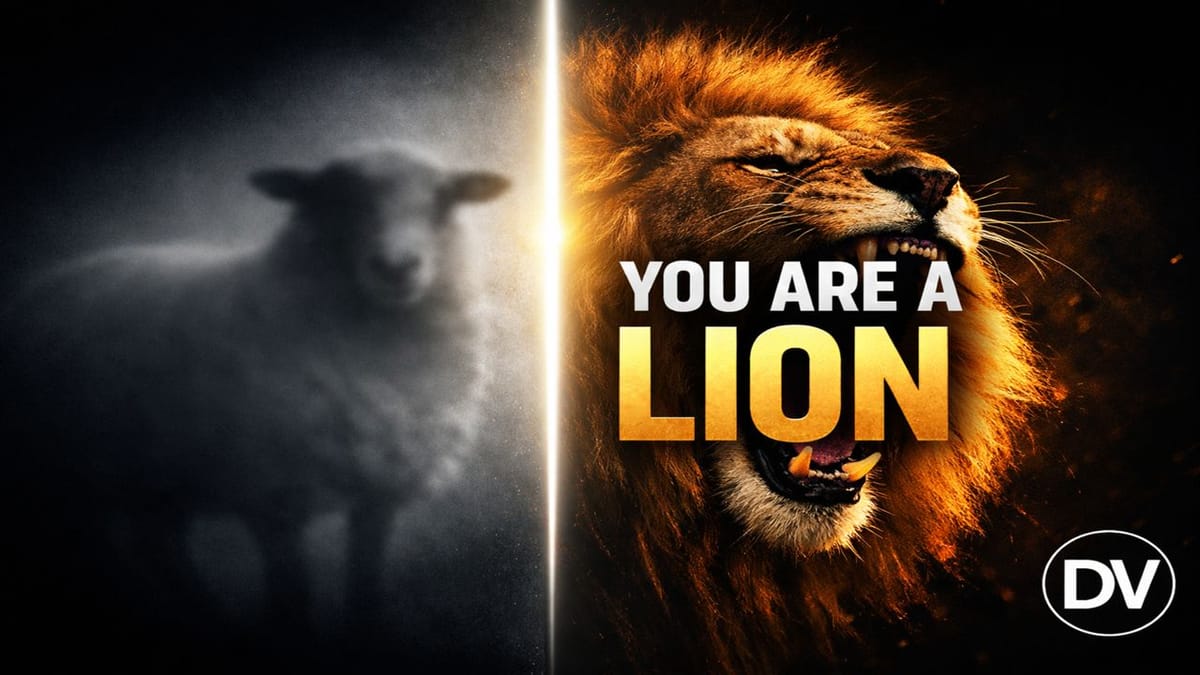
There is a story that sounds simple on the surface, but it has a way of finding its way into the deepest corners of the human soul. It is the story of a lion who, as a cub, was raised by sheep. He grew up in their fields, slept among them, moved as they moved, and ate what they ate. He learned their rhythms, their fears, their small habits of survival. He did not know what it meant to stalk, to roar, or to stand tall in his own strength. To him, life was about staying together, staying safe, and never drawing too much attention to himself. He was not unhappy. He was not abused. He was not in pain. He was comfortable. And sometimes comfort is the most dangerous teacher of all.
Because comfort teaches you that whatever you are doing must be what you were made to do. It convinces you that familiarity equals truth. It whispers that your current shape must be your original design. The lion did not wake up one day and decide to deny his nature. He simply never encountered it. His identity was not stolen; it was never revealed. And that is how many human lives are formed. We do not reject greatness; we are never introduced to it. We do not turn away from purpose; we are taught to be suspicious of it. We do not choose fear over faith; we are raised in fear and told it is wisdom.
The lion walked slowly because the sheep walked slowly. He grazed because the sheep grazed. He trembled when shadows passed because the sheep trembled. His muscles were powerful, but unused. His lungs were built for roaring, but silent. His eyes were made to see far, but trained to look down. Everything inside him was lion, but everything around him was sheep. And over time, the outside voice became louder than the inner truth. He did not say, “I am pretending to be a sheep.” He said, “I am a sheep.” Identity followed environment. Belief followed behavior. And the story might have ended there if truth had never wandered into the valley.
But one day, a real lion came through the field. The sheep scattered. The sheep-raised lion froze. Something in him recognized something he had never been taught. His heart began to race. His body trembled. Not because he was about to be attacked, but because something about the other lion felt familiar in a way he could not explain. The visitor looked at him and said, “Hello, lion.” The response was immediate and defensive. “I am not a lion. I am a sheep.” That sentence holds more weight than it seems. It is the language of learned limitation. It is the voice of a soul that has adapted to survival instead of awakening to purpose.
That sentence echoes in countless human lives. It sounds like humility, but it is often fear wearing a polite mask. It sounds like realism, but it is usually pain trying to stay unchallenged. “I am not strong.” “I am not gifted.” “I am not chosen.” “I am not capable.” “I am just average.” “I am just broken.” “I am just trying to get through.” Those words do not come from truth. They come from training. They come from years of watching others live cautiously and learning to call it wisdom. They come from a culture that rewards blending in and punishes standing up. They come from wounds that would rather settle than risk healing.
The real lion did not argue with him. He did not lecture him. He did not shout. He led him to the river. He showed him his reflection. And for the first time, the sheep-raised lion saw himself clearly. Not as the flock had shaped him. Not as fear had trained him. Not as habit had formed him. But as he truly was. The same eyes. The same strength. The same design. The mirror did not lie. It simply revealed. And in that moment, something inside him shifted. The truth did not enter him; it woke him. Power surged through his body. His chest expanded. His voice rose. He roared. The valley shook. The sheep trembled. And the lie collapsed.
This is not just an animal story. It is a spiritual diagnosis. It is a picture of what happens when identity is shaped by surroundings instead of by origin. It is what happens when fear becomes normal and limitation becomes familiar. It is what happens when calling is buried under caution. And the most dangerous part of it all is that nothing in the story suggests the lion was miserable. He was safe. He was included. He was not hunted. He was not threatened. He was simply asleep. That is what makes the parable so uncomfortable. It is not about suffering. It is about settling. It is not about rebellion. It is about resignation. It is not about evil. It is about smallness.
Many people grow up spiritually among sheep. They are surrounded by well-meaning voices that teach caution instead of courage. They are taught not to expect much, not to risk much, not to hope much. Faith becomes something quiet and private. God becomes someone to believe in but not to trust. Prayer becomes routine instead of relationship. Purpose becomes a word people admire but never pursue. And over time, the soul adjusts. It does not feel wrong to live small because it has never seen itself live large. It does not feel strange to be afraid because fear has been normalized. It does not feel tragic to hide gifts because humility has been misdefined.
The scriptures describe a very different picture of human identity. They speak of people made in the image of God. They speak of those called out of darkness into light. They speak of men and women filled with the Spirit of God, adopted into His family, entrusted with His work, empowered by His presence. They speak of courage, authority, and transformation. But information alone does not awaken identity. Revelation does. The sheep-raised lion always had the muscles. He just never used them. He always had the lungs. He just never filled them. He always had the voice. He just never trusted it. That is how many believers live. Faith sits in the heart while fear controls the feet. Truth rests in the mind while habit governs the life.
The lion’s roar was not a performance. It was not something he learned from the other lion. It was something that came out of him when he finally saw himself clearly. Identity produced action. Awareness produced movement. Truth produced sound. And the valley changed because one lion stopped pretending to be something he was never meant to be. The sheep trembled not because he attacked them, but because the atmosphere shifted. When a lion wakes up, the environment cannot remain the same. When a human soul awakens to its God-given identity, the familiar patterns begin to break. Relationships change. Priorities shift. Fear loses authority. Comfort loses its grip.
This is why awakening is frightening. It disrupts what was safe. It challenges what was normal. It exposes what was false. The sheep-raised lion did not lose his community because he roared, but he could no longer live by their rules. He did not become cruel, but he became different. He did not stop caring, but he stopped pretending. And this is where many people hesitate. They are not afraid of failure. They are afraid of change. They are not afraid of opposition. They are afraid of separation. They are not afraid of the work. They are afraid of what will happen when they stop blending in.
There is a quiet pressure in the world to remain manageable. To be impressive enough to admire but not bold enough to threaten. To be faithful enough to feel good but not obedient enough to stand out. To believe in God without expecting transformation. To call oneself chosen without walking in authority. The enemy does not need to destroy faith if he can convince people to live beneath it. He does not need to silence truth if he can keep it theoretical. He does not need to deny calling if he can bury it under comfort. A lion that never roars is no danger to fear. A believer that never acts is no threat to darkness.
The story reaches deeper when it is understood spiritually. The lion who came into the valley did not come to shame the sheep-raised lion. He came to reveal him. That is how God works. He does not expose to humiliate. He exposes to heal. He does not reveal to crush. He reveals to awaken. When God shows someone who they really are, it is not an invitation to pride. It is an invitation to alignment. It is not about becoming superior to others. It is about becoming honest with oneself. It is about stepping into what was always true instead of continuing what was only familiar.
Many people live with a quiet grief they cannot name. It is not sadness. It is not depression. It is a sense of unused potential. It is the feeling of something sleeping inside. It is the ache of a calling that has not yet found a voice. They fill their lives with activity, but something remains untouched. They stay busy, but they do not feel alive. They know God, but they do not feel aligned. This is the grief of the lion living as a sheep. It is not dramatic. It is subtle. It does not scream. It whispers. It sounds like boredom. It feels like restlessness. It looks like distraction.
The mirror in the river is not just a physical image. It represents the moment when truth interrupts habit. It is the moment when someone sees themselves through God’s eyes instead of the world’s. It is the moment when scripture becomes personal instead of poetic. It is the moment when calling stops being abstract and starts being unavoidable. It is the moment when a person realizes they are not defined by what they have been doing but by what they were designed to do. That moment is often quiet. It does not always look like a miracle. Sometimes it looks like conviction. Sometimes it looks like clarity. Sometimes it looks like discomfort. But it always looks like awakening.
The lion did not become something new that day. He remembered something old. He returned to something original. He aligned with something true. And that is what spiritual awakening really is. It is not about inventing a better version of oneself. It is about uncovering the one God already made. It is not about striving for greatness. It is about agreeing with truth. It is not about learning new behavior. It is about shedding false identity. The roar was not created; it was released. The strength was not given; it was recognized.
And when he roared, the valley changed. Not because he attacked anything, but because his presence became different. Fear could no longer dominate a space where identity stood awake. The sheep trembled not because they were threatened but because the familiar order was disturbed. When someone begins to live as they were truly made, the atmosphere around them shifts. Conversations change. Expectations rise. Light exposes shadow. Truth interrupts routine. This is why awakening often feels lonely at first. It is not because one is meant to be alone. It is because one is meant to lead.
This is where the parable touches the heart of faith. Scripture calls Jesus the Lion of the tribe of Judah. That is not a poetic title; it is an identity statement. It speaks of authority, victory, and kingship. And those who belong to Him are not sheep pretending to be lions. They are heirs learning how to live awake. They are children of God learning how to walk as such. They are citizens of heaven learning how to stand on earth. They are carriers of light learning how to stop hiding it.
The invitation of the story is not to roar for the sake of noise. It is to live for the sake of truth. Roaring in this sense is obedience. It is stepping forward when fear says stay back. It is trusting God when comfort says settle. It is speaking when silence would be easier. It is choosing faith when habit would be safer. It is not about becoming aggressive. It is about becoming authentic. It is not about dominating others. It is about no longer shrinking oneself.
Many people wait for permission to be who God already called them to be. They wait for confidence instead of acting in faith. They wait for certainty instead of trusting. They wait for approval instead of obedience. The sheep-raised lion did not wait for the sheep to agree with the mirror. He believed what he saw. And belief changed him. He did not consult the valley. He trusted the truth. That is what faith actually looks like. It is not loud belief. It is obedient alignment. It is not emotional excitement. It is settled direction.
There comes a moment in every life when the mirror appears. It may come through scripture. It may come through a conversation. It may come through failure. It may come through prayer. It may come through suffering. But when it comes, the question is not what it reveals. The question is what will be done with it. The lion could have walked away. He could have gone back to grazing. He could have said, “This is who I am now.” But he did not. He chose truth over comfort. And that choice changed everything.
This story is not a call to abandon humility. It is a call to abandon false humility. False humility says, “I am nothing.” True humility says, “I am what God made me.” False humility hides gifts. True humility offers them. False humility shrinks. True humility stands in alignment. False humility fears attention. True humility fears disobedience. The lion did not roar to be admired. He roared because silence was no longer honest.
When someone truly awakens, they do not become louder; they become clearer. They do not become arrogant; they become grounded. They do not become reckless; they become courageous. Their life begins to make sense. Their faith begins to move. Their prayers begin to carry weight. Their decisions begin to align. Not because they are special, but because they are awake. Not because they are perfect, but because they are truthful. Not because they are fearless, but because they are faithful.
The valley teaches smallness. God teaches calling. The flock teaches safety. God teaches purpose. The sheep teach blending in. God teaches standing out. And every life must eventually choose which teacher it will follow. The valley is comfortable, but it is not home. The flock is familiar, but it is not identity. The field is safe, but it is not destiny. The mirror reveals what the valley hides.
And so the question is not whether one is a lion or a sheep. The question is whether one is willing to look. Whether one is willing to see. Whether one is willing to believe what God says instead of what habit has taught. Whether one is willing to walk differently after truth has been revealed. The roar is not the beginning of identity. It is the sound of identity waking up.
This is not a story about becoming something greater than others. It is a story about becoming honest with oneself. It is not about superiority. It is about surrender. It is not about power for control. It is about power for calling. It is not about leaving people behind. It is about stepping forward in truth.
The lion did not stop caring about the sheep. He simply stopped pretending to be one of them. He did not reject the valley. He outgrew it. He did not abandon community. He redefined it. And that is what happens when someone finally lives in alignment with who they were created to be. They do not lose love. They gain clarity. They do not lose compassion. They gain courage. They do not lose faith. They finally use it.
The story leaves us standing at the river. The mirror is in front of us. The truth is visible. The only thing left undecided is response.
…The mirror is in front of us. The truth is visible. The only thing left undecided is response.
The sheep-raised lion could have looked away. He could have decided that the reflection was a trick of the water. He could have said that what he saw did not matter because what he had lived was easier. He could have returned to grazing and convinced himself that roaring was dangerous, that standing tall would only bring trouble, that difference was something to avoid. And this is where the story quietly meets every human life. Revelation always creates a crossroads. Once you see yourself differently, you cannot go back to being innocent of the truth. You can ignore it, but you cannot unsee it. You can suppress it, but it will not leave you alone. You can delay it, but it will wait for you.
This is why awakening is not always joyful at first. It is disorienting. It feels like standing between two worlds. One world is familiar and safe, built from habits, expectations, and routines. The other is unknown and demanding, built from calling, obedience, and faith. One world asks nothing of you except that you stay small. The other world asks everything of you except that you pretend. And the tension between those two worlds is where many people stall. They know who they are becoming, but they are still attached to who they have been.
The sheep-raised lion had to choose whether to believe the river or the field. The field had shaped him. The river showed him. The field taught him how to survive. The river showed him who he was. The field gave him belonging. The river gave him truth. And truth is heavier than belonging when belonging is built on a lie. Many people choose the field because the field does not challenge them. The field does not demand change. The field does not confront fear. The field does not call out strength. The field lets you remain who you are while quietly convincing you that this must be enough.
But something had already changed. The lion had heard his own voice. He had felt his own power. He had tasted alignment. Once that happens, smallness becomes painful. Grazing feels unnatural. Silence feels dishonest. Fear feels out of place. The old patterns begin to feel like clothing that no longer fits. This is not rebellion; it is growth. This is not pride; it is awakening. This is not restlessness; it is calling stirring inside a soul that finally knows it was meant for more.
The most dangerous moment in the story is not when the lion roars. It is when he sees his reflection. Because the roar only affects the valley. The reflection changes him. The roar shakes the sheep. The reflection reshapes the lion. And the reflection does not come from the lion himself. It comes from outside him. It comes from something clear and still. It comes from water. In spiritual terms, it comes from truth. It comes from God’s voice cutting through the noise of habit. It comes from scripture interrupting culture. It comes from prayer interrupting fear. It comes from revelation interrupting routine.
Many people confuse religious activity with spiritual identity. They pray, but they do not look. They read, but they do not reflect. They attend, but they do not awaken. They know the language of faith, but they do not live from the center of it. They speak about God, but they do not see themselves as He sees them. And until identity shifts, behavior will always return to habit. The sheep-raised lion could practice walking tall, but without seeing himself clearly, he would eventually shrink back down. Identity is the root. Action is the fruit.
This is why the enemy works so hard to distort mirrors. He does not need to erase God’s word if he can blur it. He does not need to deny calling if he can confuse it. He does not need to destroy identity if he can distract from it. A lion that never sees itself clearly will never question why it grazes. A believer that never sees themselves in Christ will never question why they live in fear. It will all seem reasonable. It will all feel justified. It will all appear normal. And that is how extraordinary design is reduced to ordinary survival.
The lion’s roar was not an act of aggression. It was an act of alignment. It was the sound of something finally working as it was made to work. And alignment always produces sound. It produces movement. It produces change. When a soul lines up with its God-given identity, something in life begins to shift. Prayer becomes less about begging and more about trusting. Decisions become less about safety and more about obedience. Relationships become less about approval and more about purpose. The inner world becomes less about fear and more about direction.
This is why awakening often brings discomfort. Not because something is wrong, but because something is finally right. Muscles that have not been used will ache when they wake up. Lungs that have never roared will struggle when they open. A soul that has been grazing will feel exposed when it stands tall. But discomfort is not a sign of error. It is often a sign of growth. It is the body learning a new posture. It is the spirit learning a new stance. It is the heart learning a new language.
The valley did not change its nature when the lion roared. It revealed it. The sheep trembled because they were sheep. The valley shook because it had never heard that sound before. The lion did not create chaos; he exposed contrast. And that is what happens when someone lives in truth. They do not need to criticize the old life. They simply live differently. And difference is loud in a world built on sameness. Courage is loud in a culture of caution. Faith is loud in a system of fear. Obedience is loud in a climate of compromise.
This is why awakening often feels lonely. Not because God leaves, but because familiar voices fade. Not because community is lost, but because alignment changes perspective. The sheep-raised lion did not lose his compassion. He lost his camouflage. He did not stop caring about the flock. He stopped pretending to be part of it. And that distinction matters. He did not reject where he came from. He outgrew what he had been taught. Growth is not betrayal. It is fulfillment.
The story does not tell us where the lion went after he roared. It does not describe his future in detail. It simply says he realized who he was and never lived the same way again. That is enough. The point is not the destination. The point is the decision. Identity is not about geography. It is about posture. It is not about location. It is about alignment. Wherever he went, he went as a lion. However he lived, he lived awake.
This is where the story presses into the present moment. Because everyone reading it is standing at some version of that river. Everyone has some reflection being offered to them. Everyone has some truth being revealed about who they are, what they carry, and what they are called to do. The only difference is how they respond. Some look and walk away. Some look and argue. Some look and delay. Some look and believe. The story does not force the lion to roar. It shows him who he is and leaves the choice with him.
That is how God works. He does not drag people into calling. He invites them into it. He does not coerce identity. He reveals it. He does not shout over fear. He speaks through truth. The mirror is offered, not imposed. And what is done with that mirror determines the next chapter of a life.
There is a quiet tragedy in living below one’s design. It does not look like failure. It looks like normality. It looks like getting by. It looks like blending in. It looks like avoiding risk. It looks like minimizing dreams. It looks like lowering expectations. It looks like spiritual language without spiritual movement. It looks like knowing God but never trusting Him fully. It looks like believing truth but never acting on it. It looks like a lion grazing in a field because everyone else is grazing too.
The world is full of people who are not broken but buried. Not wounded but sleeping. Not incapable but unawakened. They are not held back by lack of talent. They are held back by false identity. They are not limited by resources. They are limited by belief. They are not stopped by enemies. They are stopped by environment. They are not trapped by circumstances. They are trapped by what they have accepted as normal.
The river does not change the lion’s shape. It reveals it. God does not change who a person is when He calls them. He reveals who they have always been in Him. He does not create courage. He awakens it. He does not invent purpose. He uncovers it. He does not impose greatness. He exposes design. The roar does not come from effort. It comes from recognition.
This is why the call to faith is not a call to become impressive. It is a call to become honest. Honest about fear. Honest about calling. Honest about gifts. Honest about what has been buried under habit. Honest about what has been hidden under humility. Honest about what has been silenced by comfort. Faith is not pretending to be strong. It is agreeing with what God has already declared true.
The sheep-raised lion did not roar because he wanted to dominate. He roared because silence no longer fit him. And when silence no longer fits, voice must emerge. This does not mean every person must be loud. It means every person must be aligned. Roaring does not always sound like shouting. Sometimes it sounds like obedience. Sometimes it sounds like forgiveness. Sometimes it sounds like stepping forward when fear says retreat. Sometimes it sounds like trusting when doubt says wait. Sometimes it sounds like serving when pride says hide. Sometimes it sounds like speaking truth when comfort says be quiet.
The question is not whether a person has a roar. The question is whether they will allow it. The question is not whether God has designed something powerful. The question is whether it will be believed. The question is not whether identity exists. The question is whether it will be claimed.
The lion’s story does not end with conquest. It ends with clarity. It does not celebrate domination. It celebrates awakening. It does not glorify strength. It reveals truth. And truth is always the real turning point. Once truth is seen, life cannot remain the same. It may resist. It may delay. It may struggle. But it cannot return to innocence. The valley will never again feel like home to a lion who knows he is a lion.
This is not a call to abandon gentleness. It is a call to abandon false smallness. This is not a call to reject community. It is a call to redefine identity. This is not a call to arrogance. It is a call to alignment. This is not a call to noise. It is a call to obedience. The roar is simply the sound of truth finding expression.
Every life contains both a field and a river. The field is where habits are learned. The river is where truth is seen. The field shapes behavior. The river reveals being. The field offers safety. The river offers clarity. The field teaches how to survive. The river shows how to live. And eventually, every soul must decide which one will define it.
The sheep-raised lion did not stop being part of the valley. He simply stopped being defined by it. And that is the essence of spiritual maturity. Not withdrawal from the world, but freedom from its definitions. Not isolation from people, but independence from fear. Not rejection of the past, but transcendence of it. The lion did not erase his history. He reinterpreted it. He did not deny where he came from. He refused to let it decide where he was going.
The story leaves one final image: a lion standing upright in a valley that once taught him to crouch. A voice that once stayed silent now filling the air. A body that once grazed now standing alert. A soul that once believed a lie now living from truth. It is not dramatic. It is not violent. It is simply right. And that is what awakening looks like. It does not look like spectacle. It looks like alignment.
The invitation remains the same for every reader. Look into the mirror. Not the mirror of comparison. Not the mirror of fear. Not the mirror of culture. But the mirror of God’s word and calling. See what is there. Believe what is shown. And then live accordingly. The roar will come naturally when identity is accepted. The valley will change naturally when truth is lived. The life will shift naturally when alignment replaces habit.
The lion was never meant to be a sheep. He never was. He simply forgot. And forgetting is easier than awakening. Forgetting is safer than seeing. Forgetting allows comfort. Awakening demands courage. But only one leads to truth.
This is not about becoming something new. It is about returning to something original. It is not about striving upward. It is about standing upright. It is not about being more than others. It is about being fully what God intended. The lion did not become extraordinary. He became honest. And honesty is the doorway to purpose.
The river still flows. The mirror still waits. The truth still stands ready to be seen. And the only question left is whether one will continue grazing or finally stand and breathe deeply and let the sound of identity rise.
You were not designed for fear.
You were not formed for hiding.
You were not created for smallness.
You were not shaped for silence.
You were designed for alignment.
You were formed for purpose.
You were created for calling.
You were shaped for truth.
The valley may have taught you to crouch.
The flock may have taught you to graze.
Fear may have taught you to whisper.
But truth teaches you to stand.
Calling teaches you to move.
Identity teaches you to live.
And once a lion knows he is a lion, the field can never convince him otherwise again.
Watch Douglas Vandergraph’s inspiring faith-based videos on YouTube
https://www.youtube.com/@douglasvandergraph
Support the ministry by buying Douglas a coffee
https://www.buymeacoffee.com/douglasvandergraph
Your friend,
Douglas Vandergraph
#Faith #Purpose #SpiritualGrowth #ChristianEncouragement #IdentityInChrist #OvercomingFear #BiblicalMotivation #FaithJourney #ChristianLiving #GodsCalling #Hope #Transformation #TrustGod #ChristianInspiration