When the Fire Was Never the Point

When the Fire Was Never the Point
Chapter 1: The Question Fear Told Us Not to Ask
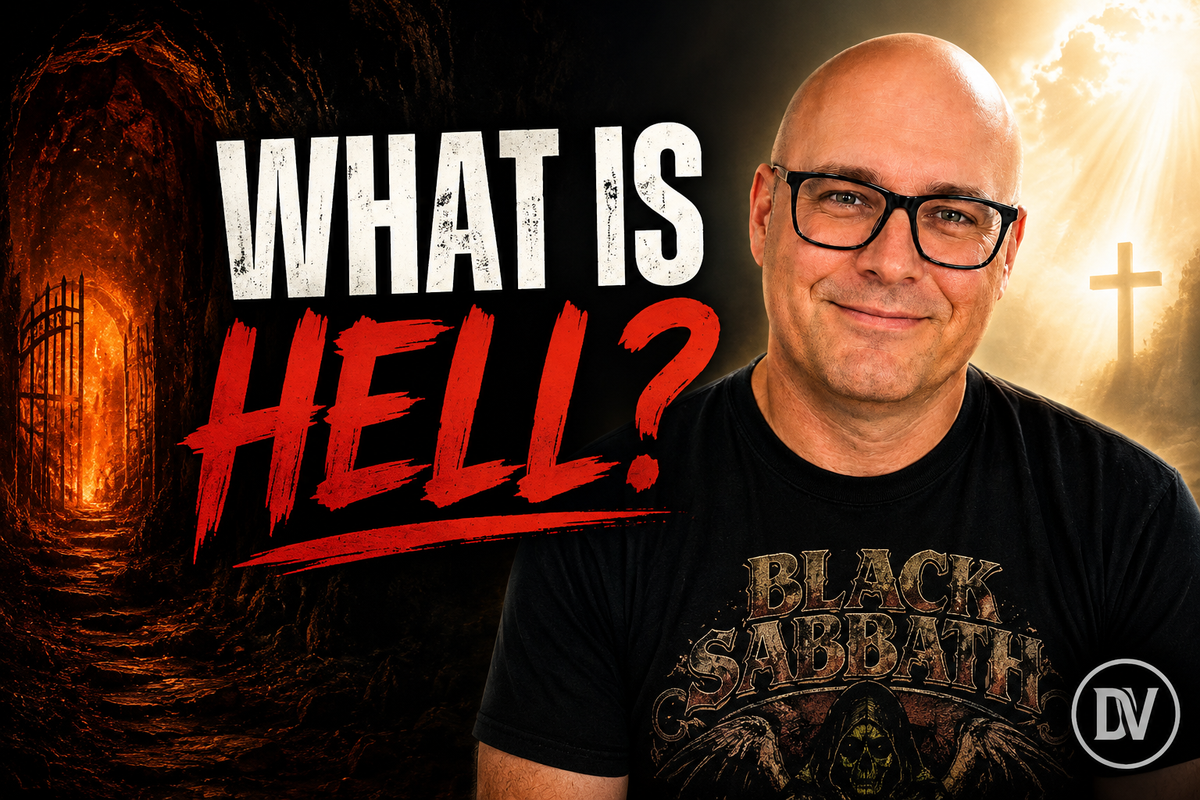
A person can sit in a church pew for years and still carry one question they were never brave enough to say out loud. Maybe it started when they were a child, staring at the floor while someone described hell in a way that made God sound terrifying. Maybe it returned later, in the middle of the night, after a funeral, after a failure, after watching someone they love drift far from faith. The question is not always rebellion. Sometimes it is pain trying to understand God honestly. This is why the associated talk about what hell actually is belongs beside this article, because many people are not trying to escape truth. They are trying to find out whether the version of truth they inherited actually looks like Jesus.
That question can follow a person into adulthood. It can sit quietly under worship songs, prayers, Bible reading, and family conversations. A mother can tuck her child into bed after hearing a frightening sermon and wonder how to explain the love of God without pretending the fear did not happen. A man can drive home from work with the radio off because he has been told God is love, yet the picture in his mind is of God keeping human beings alive forever only so they can suffer without end. That is why a deeper Christian encouragement article about fear and the character of God is part of the same spiritual pathway, because this is not only a debate about hell. It is a debate about what kind of Father Jesus came to reveal.
The common belief many people inherited says hell is a place of endless conscious torment, where the lost are preserved forever in pain. For some, this belief feels untouchable because they were told that questioning it means questioning Scripture itself. But that is where the debate needs to begin. Is the common view actually the same thing as the biblical view? Or have many people confused later religious imagination, fear-based preaching, medieval artwork, and inherited assumptions with what Jesus was truly warning about?
This conversation matters because it reaches deeper than a doctrine on a page. It touches the way people pray when they are alone. It touches whether they trust God with their children. It touches whether they see Jesus as Savior or as the gentle face of a hidden terror. A person may try to love God while secretly wondering if God’s final answer to human failure is endless suffering with no healing purpose and no end. That kind of fear does not always create holiness. Sometimes it creates distance. Sometimes it produces outward religion while the heart stays guarded.
The common argument usually sounds simple. God is holy. Sin is serious. People reject God. Therefore, endless conscious torment must be the just punishment for sin. At first, that sounds strong because each early part contains truth. God is holy. Sin is serious. People can reject God. None of that should be softened. Evil is real. Cruelty is real. Pride is real. Betrayal is real. The damage people do to one another is not imaginary. God would not be good if He looked at evil and shrugged. A God who never judges would not be loving. He would be indifferent.
But the conclusion does not automatically follow from the truth of those first statements. That is the part many people miss. To say God is holy does not prove that He sustains endless torture. To say sin is serious does not prove that the wicked must be kept alive forever in misery. To say judgment is real does not settle the nature of that judgment. The debate is not between people who take sin seriously and people who do not. The debate is between different understandings of what God’s final judgment actually does.
That difference is important. Many people have been trained to think there are only two choices. Either believe in eternal conscious torment exactly as it is commonly preached, or become someone who denies judgment altogether. That is not honest. A person can believe Jesus warned about hell and still ask what He meant. A person can believe rejecting God leads to terrible consequences and still question whether those consequences are endless conscious pain. A person can believe Scripture and still notice that Scripture often describes the end of sin with words like death, destruction, perishing, consuming, and being cut off.
One of the clearest statements in the New Testament says the wages of sin is death. That sentence should make us pause. It does not say the wages of sin is eternal life in torment. It says death. Now someone may respond, “But spiritual death can mean separation from God forever.” That is part of the debate, and it should be handled carefully. But we should not rush past the plain force of the word death. If someone is preserved forever in conscious suffering, that is still ongoing existence. It is terrible existence, ruined existence, miserable existence, but it is still existence. The common view often says the lost receive a kind of immortality in agony. Scripture repeatedly says sin leads to death.
That does not make judgment lighter. In some ways, it makes it more serious. Death is not a small word. Destruction is not a soft word. Perishing is not comforting. These are not gentle images. They are final images. They warn us that sin is not a harmless mistake. Sin destroys. Sin consumes. Sin ruins what God made for life. When Jesus warns people, He is not playing with language. He is calling them away from the road that ends in ruin.
But the common view often changes the center of the warning. It takes the language of destruction and turns it into endless preservation. It takes the image of fire and assumes the thing burned must never be consumed. It takes the seriousness of judgment and adds a picture of God maintaining pain forever. Then people are told this is the only way to honor Scripture. But is it?
When Jesus used images of fire, His words were meant to wake people up. Fire is serious. Fire exposes, purifies, consumes, and destroys. In ordinary life, when a house catches fire, no one stands outside debating whether fire is gentle. Fire is terrifying because it consumes what it touches. It leaves behind ashes. It changes everything. So when Jesus speaks of fire, the warning is not weak. But eternal fire does not automatically mean eternal conscious burning of the person or thing thrown into it. In Scripture, eternal fire can mean fire with eternal consequence. The result is permanent. The judgment is decisive. What is destroyed does not simply return the next morning.
This is where many people were never given permission to think carefully. They heard the phrase eternal fire and immediately pictured endless suffering because that is what they had been taught to imagine. But the Bible’s own language may be pointing toward something more like irreversible judgment than never-ending torture. The question is not whether God judges. The question is whether the fire exists to endlessly preserve evil in pain or to consume what stands against life.
That leads to a deeper issue. If the common view is true, evil is never finally gone. It is contained, but not ended. Rebellion never truly ceases. Hatred never finally disappears. Suffering remains alive forever in some corner of God’s creation. The screams never stop. The misery never reaches completion. In that picture, God wins in one sense, but evil continues forever as an eternal monument to loss.
Yet the New Testament gives us a vision of Christ destroying the works of the devil, death being destroyed, tears being wiped away, and God making all things new. That is not a small hope. That is not a thin victory. That is not God managing evil forever. That is God bringing evil to an end. So the debate becomes sharper: does the final victory of Jesus mean evil remains eternally conscious in torment, or does it mean evil is judged, exposed, consumed, and no more?
Someone may say, “But sin against an infinite God deserves infinite punishment.” That argument has been repeated so often that many people assume it is a Bible verse. It is not. It is a philosophical claim. It may sound logical in a classroom, but it deserves to be tested by the character of God revealed in Jesus. Does infinite holiness require endless conscious torment, or does infinite holiness require the complete and final defeat of all that destroys love? Those are not the same thing.
Think about a parent at the kitchen table with a teenager who has lied, stolen, and wounded the family’s trust. A good parent does not pretend the wrongdoing is small. A good parent does not say, “It does not matter.” But the goal of righteous discipline is not to keep the child in pain as long as possible. The goal is truth. The goal is correction where correction is possible. The goal is protection from further harm. The goal is the defeat of what is destructive. Human parents are flawed, tired, and inconsistent, yet even they know that endless punishment with no purpose is not justice. It is cruelty. Should we then claim that the Father revealed in Jesus is less morally beautiful than the best instincts He placed inside His own children?
That does not mean God’s judgment is tame. We should not turn this debate into sentimental denial. Standing before God with every lie stripped away would be more terrifying than any sermon illustration. Every excuse would fall. Every hidden motive would be seen. Every wound we caused and dismissed would be brought into the light. Every mercy we rejected would be known for what it was. The truth of God is not a soft pillow for pride. It is a consuming fire against everything false.
But the fire of God is not the same as the cruelty of man. That distinction matters because many people have been given a view of hell that looks less like holy judgment and more like human revenge stretched into eternity. Jesus does not reveal a Father who enjoys pain. Jesus reveals a Father who runs toward the prodigal, searches for the lost sheep, welcomes the broken, and still tells the truth about judgment. He reveals a God who is more holy than we imagined and better than we believed.
This is why the common belief deserves to be debated, not mocked, not dismissed, and not blindly accepted. There are sincere Christians who hold the traditional view because they are trying to honor Scripture. That matters. We should not treat them like enemies. But sincerity does not remove the need for examination. Many sincere people have inherited a picture of hell that was shaped by culture as much as Scripture. Many sincere people have defended a view because they were afraid that any question would make them unfaithful. But faith is not afraid to bring inherited beliefs into the light of Christ.
The center must be Jesus. Not tradition alone. Not fear alone. Not popular imagination. Not the loudest preacher. Jesus. If He is the image of the invisible God, then every doctrine must be brought to Him. If we have seen Him, we have seen the Father. That means any teaching about judgment must be measured against the One who wept over Jerusalem, forgave His murderers, touched lepers, welcomed sinners, rebuked religious cruelty, and gave Himself for His enemies.
Jesus warned about hell because He loved people, not because He was eager to terrify them. His warnings were not religious entertainment. They were rescue calls. He spoke severely because the danger was real. He called people to repentance because the road they were on led to ruin. He did not flatter sin. He did not pretend rebellion was harmless. But His severity came from love, not sadism. He warned like someone standing at the edge of a washed-out bridge in the rain, waving both arms at drivers who cannot see what is ahead.
That image changes the emotional center of the doctrine. If hell is preached as proof that God is willing to torture His enemies forever, the heart may shrink back from God even while the mouth says religious words. But if judgment is understood as God’s holy opposition to everything that kills His creation, then the warning becomes part of the good news. God is not inviting us into fear as a permanent home. He is calling us out of death and into life.
This is where the debate becomes personal. A person does not have to settle every theological question before coming to Jesus. A person does not have to master every Greek word, every historical argument, every church tradition, or every view of final judgment before they can pray. The invitation is not, “Understand everything perfectly and then come.” The invitation is, “Come to Me.” Come with your fear. Come with your questions. Come with the version of God that frightened you. Come and look again at Jesus.
There is freedom in realizing that questioning the common picture of hell is not the same as rejecting God. Sometimes it is the beginning of seeing God more clearly. Sometimes it is the moment a wounded person stops running from a monster God never was and starts moving toward the Father Jesus actually revealed. Sometimes the question that fear told you not to ask becomes the doorway back to trust.
Judgment is real. Sin is deadly. Evil will not be allowed to rule forever. But the final word over creation does not belong to fear. It belongs to Christ. The One who died and rose again is not weak in mercy or careless in justice. He is the Savior who tells the truth, defeats death, exposes darkness, and calls human beings home before the fire of judgment finds them still clinging to what was destroying them.
So the debate begins here, not with a denial of hell, but with a refusal to let fear define God more clearly than Jesus does. The common view may be common. It may be old. It may be familiar. But every familiar belief still has to answer one question: does this look like the Father revealed in the Son?
And if the answer is not clear, then we do not need to panic. We need to keep looking at Jesus until the fog begins to lift.
Chapter 2: When Fear Becomes the Teacher
After a funeral, people often speak carefully. They stand near folding tables with paper plates in their hands, trying to find words that do not sound too small for the loss in the room. Someone pours coffee they do not really want. Someone stares at old photographs. Someone says, “He is in a better place,” and someone else grows quiet because they are not sure what they are allowed to hope. The grief is already heavy enough, but then another fear enters the room. What if the person who died did not believe the right way, pray the right prayer, belong to the right church, or understand God before their final breath?
That is where the common view of hell becomes more than a doctrine. It becomes a weight people carry into grief. It can turn mourning into panic. It can make love feel dangerous because the more deeply you love someone, the more terrified you become that God might torment them forever. A person can lose a brother, a parent, a spouse, or a friend and then feel forced to imagine that person not only dead, but consciously suffering without end. In moments like that, the doctrine is no longer sitting on a shelf. It is standing in the room beside the casket.
This is one reason the debate matters so deeply. It is not only about what happens after death. It is about whether fear has been allowed to become the main teacher of Christian faith. Fear can sound powerful. Fear can create urgency. Fear can silence questions. Fear can make people conform outwardly. But fear is not always the same as truth. Fear can distort truth. Fear can take a real warning and turn it into a weapon. Fear can make people think they are defending God when they are actually defending a picture of God that Jesus came to correct.
The defenders of the common view often say, “If you soften hell, people will stop taking sin seriously.” That concern should not be brushed aside. There is a real danger in turning Christianity into a soft comfort message where nothing matters, repentance is unnecessary, and God is reduced to a kind idea. That is not the gospel. Jesus did not come into the world to tell people that everything was fine. He came to save people because everything was not fine. Sin was killing us. Death was ruling us. Darkness was blinding us. Evil was destroying what God loved.
But the question is whether endless conscious torment is the only way to take sin seriously. That assumption deserves to be challenged. A doctor does not need to exaggerate cancer to make cancer serious. A bridge inspector does not need to invent danger to warn people that a bridge is unsafe. A firefighter does not need to describe flames in false ways to convince someone to leave a burning building. Real danger does not need distortion. If sin truly leads to death, destruction, and separation from life, then that is already serious. If rejecting God means rejecting the only source of life, then that is already terrifying.
The problem is not that Christians have warned about judgment. Jesus warned about judgment. The problem is that warning can become separated from the heart of rescue. Once that happens, hell becomes a tool for control rather than a sober truth spoken in love. A person may be pressured into a religious decision, but pressure is not the same as surrender. A person may repeat words because they are scared, but fear alone does not create trust. A person may come to church because they are terrified of punishment, yet never truly come to know the Father’s goodness.
This is why the tone of Jesus matters. Jesus could speak with severity, but His severity was never empty rage. He warned people because He could see where the road ended. When He spoke to the proud, He exposed the danger of their pride. When He spoke to the comfortable, He unsettled their false peace. When He spoke to those using religion to crush others, He confronted them with terrifying force. But His warnings were not designed to make wounded people afraid of approaching God. They were designed to pull people away from death and into life.
Many people have heard hell preached in a way that makes Jesus seem like the mild part of God, while the Father remains the frightening part in the background. That division is dangerous. Jesus did not come to protect us from the Father’s heart. Jesus came to reveal the Father’s heart. He did not stand between us and a God who secretly wanted cruelty. He stood among us as God in the flesh, showing us what divine holiness looks like when it walks into human pain.
So when a teaching about hell makes the Father seem less loving than the Son, less patient than the Son, less forgiving than the Son, or less merciful than the Son, we should not ignore that tension. We should bring it into the light. We should ask whether our doctrine has been shaped by Jesus or by fear. That question is not an attack on Scripture. It is an act of faithfulness to the One Scripture reveals.
This does not mean every hard teaching disappears. Some people confuse the love of Jesus with softness because they have not looked closely enough at Him. Jesus was gentle with the broken, but He was not casual about evil. He forgave sinners, but He also told them to leave sin behind. He welcomed the lost, but He did not pretend being lost was harmless. He healed people, restored people, and fed people, but He also warned that a life built apart from God collapses. Grace is not denial. Mercy is not pretending. Love is not weakness.
That is why this debate has to stay honest on both sides. The common view is not wrong simply because it is emotionally hard. Some true things are hard. Judgment is hard. Repentance is hard. The cross is hard. The cost of discipleship is hard. A belief is not false just because it makes us uncomfortable. But a belief is also not true just because it is frightening. Fear can make something feel serious even when it has not been carefully examined.
There is a difference between holy fear and religious terror. Holy fear wakes the soul to reality. Religious terror traps the soul under dread. Holy fear says, “God is real, sin is deadly, life matters, and I must not treat grace lightly.” Religious terror says, “God might be cruel, love might not be safe, and I must keep performing so I am not destroyed.” Holy fear can lead to wisdom. Religious terror often leads to hiding.
A person can see this in ordinary life. Think about someone opening a letter from the bank at the end of a long week. The rent is due, the car needs repair, the refrigerator is almost empty, and now another notice arrives. Their hands tighten before they even read it. Fear fills in the blanks before truth has a chance to speak. The letter may contain a real problem that needs action, but fear may turn it into something larger, darker, and more hopeless than it is. Once fear takes over, a person cannot think clearly. They either freeze, panic, or avoid the letter altogether.
Many people respond to the doctrine of hell the same way. They cannot even open the subject without panic. They have been told that asking questions is dangerous, that doubt is rebellion, that compassion is weakness, and that any attempt to understand biblical language more deeply is just an excuse to avoid truth. So they freeze. They avoid. Or they quietly walk away from faith because they were never given room to wrestle honestly in the presence of God.
But the Bible is not afraid of honest wrestling. The Psalms are full of questions. Job argues from the ashes. The prophets cry out over injustice. Thomas needs to see the wounds. People who love God have always brought their confusion, sorrow, and fear before Him. Faith does not mean pretending every inherited explanation is settled. Faith means trusting God enough to seek truth without fear controlling the search.
When we bring that courage to the subject of hell, we find that Scripture uses more than one image. There is fire. There is darkness. There is destruction. There is exclusion. There is death. There is shame. There is judgment. There is loss. These images are severe, but they are not all identical. Fire and darkness are not the same picture. Destruction and ongoing torment are not the same idea. Death and immortal agony are not the same result. We should be careful before flattening every image into one popular doctrine.
The word translated as hell in many English Bibles can also hide important differences. Sometimes the biblical text speaks of Gehenna. Sometimes it speaks of Hades. Sometimes it speaks of Tartarus. These words do not all carry the same meaning or context. Gehenna, especially in the teaching of Jesus, carried a history of judgment, shame, corruption, and destruction. Hades often refers more broadly to the realm of the dead. When English translations use the same word for different terms, modern readers can assume the Bible is always talking about the exact same thing. That assumption may shape the imagination before the text has a chance to speak clearly.
This is not about trying to outsmart Scripture. It is about slowing down enough to hear it. When Jesus warned about Gehenna, He was not borrowing a cartoon from modern imagination. He was speaking into the world of His hearers with images they understood. The warning was real. The danger was real. But the popular picture many Christians carry today often includes layers that came later. A person can honor Jesus more deeply by asking what He meant in His context than by defending every inherited image as if it came directly from His mouth.
That matters because the way we picture judgment shapes the way we treat people. If hell is mainly used as a threat, Christians may begin to see unbelievers as projects to frighten rather than people to love. Conversations become arguments. Evangelism becomes pressure. The gospel becomes a transaction: accept this message or face endless torture. Some may respond, but many will hear only the terror and miss the beauty of Christ.
Jesus did not send His followers into the world with a message empty of warning, but He also did not send them with fear as the center. He sent them with good news. The kingdom of God had come near. Forgiveness was available. The lost could be found. The dead could live. The poor could receive hope. The guilty could be cleansed. The captive could be set free. That does not remove judgment. It places judgment inside the larger story of rescue.
When fear becomes the teacher, people may obey without love, serve without joy, and pray without trust. They may think of God as someone who must be satisfied rather than someone who has come to save. They may read Scripture with tense shoulders, always waiting for the hidden threat. They may try to witness to others, but the witness carries anxiety rather than peace. The message becomes heavy in the wrong way. Not weighty with holiness, but burdened with dread.
But when Jesus becomes the teacher, judgment is still serious, yet the heart begins to see it differently. Judgment becomes God’s refusal to let evil have the last word. Judgment becomes the exposure of lies that destroy the soul. Judgment becomes the ending of what cannot belong in the new creation. Judgment becomes holy love standing against everything that ruins love. That does not make it comfortable. It makes it coherent with the God revealed in Christ.
This shift does not produce laziness. It produces sobriety. If sin leads to death, then we should not play with it. If pride destroys, we should not make peace with it. If bitterness eats the heart, we should not feed it. If greed deforms the soul, we should not excuse it. If lust turns people into objects, we should not call it harmless. If cruelty separates us from love, we should not laugh it off. The danger is real because the destruction is real.
A person does not need the threat of endless conscious torment to know that sin is deadly. Anyone who has watched addiction steal a personality knows sin destroys. Anyone who has seen a family split under betrayal knows sin destroys. Anyone who has carried bitterness for years knows sin destroys. Anyone who has lied so long they no longer know how to tell the truth knows sin destroys. The gospel does not need exaggeration. Real life already proves that separation from God is death beginning before the grave.
This is where the message becomes motivational in a deeper way. If the common view has made someone afraid to approach God, the answer is not to pretend judgment is gone. The answer is to come to Jesus and let Him teach us what judgment is for. He is not calling people into a small religious life built on panic. He is calling them into life. He is not saying, “Be terrified enough to act saved.” He is saying, “Leave death behind and come alive in Me.”
That changes how a person wakes up in the morning. Faith is no longer only an escape from punishment. It becomes a movement toward life. The person who has been living in resentment can release it not merely because they are afraid of hell, but because resentment is already a kind of inner death. The person trapped in shame can come into the light not merely to avoid judgment, but because hiding is already destroying them. The person who has pushed God away can return not because fear finally won, but because grace has opened a door.
Fear may get a person’s attention, but love is what brings them home. The prodigal son did not return to a torture chamber. He returned to a father running down the road. That does not mean his rebellion was harmless. It had emptied him, humbled him, and brought him low. But the father’s response revealed the heart of the house. The goal was not endless humiliation. The goal was restoration, life, and joy.
If the final judgment of God is consistent with the Father Jesus revealed, then we should expect it to be holy, truthful, severe against evil, and free from cruelty. We should expect it to expose everything false. We should expect it to end what destroys. We should expect it to vindicate the wounded and confront the wicked. But we should not be quick to add endless conscious torment simply because fear has taught us to think that severity requires no end.
The common view deserves to be debated because the gospel deserves to be heard clearly. People do not need a smaller Jesus. They need the real Jesus. They need the One who warns with tears, judges with righteousness, saves with mercy, and defeats death completely. They need to know that God is not less loving than Christ, because Christ is the exact image of God. They need to know that the fire was never the point. The point was rescue from everything the fire must finally consume.
So when fear rises, we do not have to let it become our teacher. We can let it become the moment we turn back toward Jesus. We can ask better questions. We can read more carefully. We can refuse both shallow denial and cruel exaggeration. We can take judgment seriously without letting terror distort the Father. We can preach repentance without making God look monstrous. We can speak of hell with humility, not excitement. We can warn with love, not with the hunger to win an argument.
And maybe that is where many people need to begin. Not by settling every debate at once, but by refusing to let inherited fear sit higher than the revelation of Jesus Christ. The question is not whether we can make God easier to accept. The question is whether we will allow Jesus to show us the Father as He truly is.
Chapter 3: The Words We Filled With Pictures
A person can sit at the kitchen table with an open Bible, a cup of coffee going cold, and a small storm rising inside them over one word on the page. The word is hell. It appears in English, familiar and heavy, and immediately the mind fills with pictures before the reader has time to ask where those pictures came from. Flames rise. People scream. Devils laugh. God seems distant, offended, and impossible to approach. The reader may not even realize that the word on the page has already been loaded with centuries of imagination, translation choices, paintings, sermons, movies, jokes, and childhood fear.
That is how powerful a word can become. Sometimes we do not read the Bible first. We read our inherited pictures into the Bible. We see the word hell and assume every passage means the same thing, describes the same place, and teaches the same outcome. Then we defend the picture because we think we are defending Scripture. But there is a difference between defending the Bible and defending the images we have attached to it.
This is one of the strongest reasons the common view needs to be debated carefully. The debate cannot only be emotional. It cannot only be philosophical. It must become textual. What words are actually being used? What did those words mean? What pictures did they create in the minds of the first hearers? What have later readers added? If we are going to speak with confidence about eternal things, we should at least be humble enough to slow down with the words themselves.
In many English Bibles, different biblical words have been gathered under the single English word hell. That alone should make us cautious. Gehenna, Hades, Tartarus, and the lake of fire are not all introduced in Scripture as if they are interchangeable terms with identical meanings. They carry different backgrounds, different settings, and different purposes in the text. When they are all flattened into one English word, the modern reader can unknowingly blend them into one large image and assume the Bible is saying one simple thing everywhere.
Gehenna matters because Jesus used it in His warnings. It was not a word floating in empty religious space. It carried the memory of a real valley near Jerusalem associated with shame, judgment, and corruption. When Jesus warned about Gehenna, He was not inviting His hearers into a medieval painting. He was using a word already heavy with meaning in their world. The warning was severe, but the image was connected to ruin, uncleanness, and judgment, not to a cartoonish underground torture empire.
Hades carries a different kind of weight. It often refers to the realm of the dead, the grave, the shadowy place of death. When English readers see hell in passages that speak of Hades, they may automatically imagine the final place of punishment after judgment. But that may not be what the passage is doing. The Bible’s language of death, the grave, judgment, and final destruction is more textured than many people were taught. If we turn every mention into the same final torture chamber, we may be simplifying the text in a way that actually makes us less biblical, not more.
This does not remove the warning. It clarifies it. A warning can become sharper when it is understood correctly. Imagine a parent shouting to a child, “Do not touch that wire.” The danger is real. But if someone later tells the child that the wire contains a monster who wants to personally hate them forever, the original warning has been distorted. The wire is still dangerous. The parent was still right to warn. But the added picture may create confusion about the parent’s heart and the nature of the danger.
That is what has happened to many people with hell. Jesus warned them about real ruin, real judgment, real destruction, and real exclusion from life with God. Later imagination sometimes turned that warning into a picture of God sustaining endless agony as though pain itself were the goal. Once that picture took hold, many people could no longer hear the warning as rescue. They heard it as threat. They did not see a Savior blocking the road to destruction. They saw a Judge waiting to torture.
The common view often appeals to passages about “eternal punishment,” “unquenchable fire,” and “weeping and gnashing of teeth.” These phrases should never be brushed aside. They are serious. But serious does not mean simple. Eternal punishment does not automatically tell us the ongoing experience of the one punished. A punishment can be eternal in its result. A judgment can be irreversible. A sentence can be final. If a building is destroyed by fire, the destruction remains even after the flames have done their work.
Unquenchable fire is also often misunderstood. In ordinary speech, someone may think unquenchable means fire that never stops burning forever. But in biblical judgment language, unquenchable fire can mean fire that cannot be resisted or put out until it has fully consumed what it was sent to burn. No one can stop it. No one can reverse it. No one can bargain with it. The fire completes its work. That is terrifying enough without assuming the object of the fire remains alive forever in torment.
Weeping and gnashing of teeth points to anguish, rage, loss, and bitter realization. That image is deeply serious. No one should minimize it. But again, the question is whether anguish at judgment proves unending conscious agony. A person can face terrible loss, horror, regret, and ruin without that moment being extended eternally without end. The phrase tells us judgment is dreadful. It does not by itself settle every question about duration, nature, and final outcome.
The debate becomes clearer when we stop forcing every image to answer every question. Jesus can use one image to emphasize exclusion, another to emphasize destruction, another to emphasize shame, another to emphasize loss, and another to emphasize finality. The Bible often teaches through layered images, not through modern technical definitions. If we collapse all the images into one system too quickly, we may miss the force of each one.
Think about someone describing a broken relationship. They might say, “It felt like the door closed.” Then they might say, “It burned everything down.” Then they might say, “It was like being left in the dark.” No careful listener would say, “Which was it? A door, a fire, or darkness?” The person is using different pictures to communicate different parts of the pain. One image speaks of exclusion. One speaks of destruction. One speaks of confusion and loneliness. Scripture’s judgment language often works with that kind of layered force.
This matters because many people have turned biblical imagery into a rigid picture that Scripture itself may not be demanding. Then, once that rigid picture is built, every verse is forced to serve it. Fire must mean endless torment. Darkness must mean the same place as fire. Destruction must mean conscious preservation. Death must mean eternal life in misery. Perishing must mean never actually perishing. This creates strange pressure on the plain meaning of many words.
When the Bible says destruction, we should at least allow destruction to speak. When it says death, we should let death speak. When it says perish, we should let perish speak. That does not mean every question is settled instantly. But it does mean we should be careful about explaining away the very words Scripture uses because our inherited doctrine needs them to mean something else.
The common view often tries to answer this by saying, “Death does not mean the end of existence. It means separation.” There is truth in saying death involves separation. Physical death separates body and spirit. Spiritual death separates a person from fellowship with God. But if death only means conscious separation and never the loss of life, then the biblical contrast between life and death becomes harder to hear. Jesus offers eternal life. Sin brings death. The contrast seems direct. One road leads to life. The other leads away from life.
If the lost are kept alive forever in torment, then both the saved and the lost receive endless conscious existence, only in different conditions. That is not how many biblical warnings sound. The warnings often contrast life with death, salvation with destruction, being saved with perishing. The debate is not about whether the lost suffer loss. They do. The debate is whether Scripture teaches that their suffering is consciously preserved forever or whether the final judgment brings complete ruin.
This is not a small distinction. It changes the shape of the gospel in people’s minds. Under the common view, God grants immortality to all people, some in joy and some in agony. Under another biblical reading, immortality is the gift of God in Christ, while sin ends in death. Eternal life is not automatically possessed by everyone. It is received in Christ. That makes Jesus not merely the One who improves our eternal condition, but the One who gives life itself.
That perspective has deep motivational power. It tells the person who feels spiritually numb that Christ is not calling them into a religious category. He is calling them into life. It tells the person trapped in secret sin that they are not merely breaking rules. They are attaching themselves to death. It tells the weary believer that the promise of Jesus is not escape from a worse room in eternity, but union with the source of life now and forever.
A man sitting in his truck before work may understand this better than he realizes. He may not have theological language for it, but he knows what it feels like to be alive on the outside and dying inside. He has a job, a phone, a schedule, and people who depend on him, yet bitterness has been eating him for years. He smiles when he has to. He does what is expected. But something in him is shrinking. Sin is not waiting until after death to destroy him. It is already working. The gospel comes to him not only as rescue from future judgment, but as an invitation to stop agreeing with death today.
This is where the debate about hell becomes connected to daily discipleship. If hell is understood only as a future threat, people may miss the way death is already trying to claim them. Jesus came to save us from the whole kingdom of death, not merely from a final penalty. He came to break the power of sin, cleanse the conscience, restore the heart, reconcile us to the Father, and make us new. Hell is not an isolated doctrine hanging at the end of the story. It is connected to the question of what kind of life we are choosing now.
That does not mean everyone is already in hell or that final judgment is only a metaphor. It means the road matters. The direction matters. What we cling to matters. If a person insists on hatred, pride, falsehood, cruelty, and rejection of God, they are not simply choosing private preferences. They are choosing what cannot live in the kingdom of God. They are choosing what must finally be judged because God’s new creation cannot be built on lies.
The common view sometimes tries to protect the seriousness of that choice by making the consequence endlessly painful. But Scripture’s language of destruction may protect the seriousness in another way. It says that what refuses life cannot share in life. It says that what clings to death ends in death. It says God will not allow evil to be immortal. It says the kingdom will not forever contain an underground chamber where rebellion and misery continue without end.
That vision gives a stronger answer to evil than many people realize. Some accuse conditional immortality or final destruction of being too soft. But is it soft to say evil will be completely destroyed? Is it soft to say sin ends in death? Is it soft to say that rejecting the source of life leads to final ruin? Is it soft to say that God’s holiness consumes everything that cannot belong to love? That is not soft. That is severe. It is simply severe in a different way than the common view assumes.
The philosophical argument about infinite punishment also needs to be weighed here. People often say that because God is infinite, any sin against Him deserves infinite conscious torment. But Scripture’s own stated penalty for sin is death. The cross shows the seriousness of sin, but Jesus does not suffer eternally on the cross. He dies. He gives His life. He enters death and defeats it. If endless conscious torment were the required payment for sin, then the relationship between the cross and the common doctrine becomes more difficult than many admit.
This does not reduce the cross. It magnifies it. The Son of God enters our death, bears sin, submits to judgment, and rises victorious. He does not merely endure pain as an example. He conquers death from the inside. The resurrection declares that death does not get the last word over those who are in Christ. The cross and resurrection together reveal that the great enemy is not only suffering. It is sin and death. Jesus defeats both.
When the common view makes pain the central feature of judgment, it can unintentionally shift attention away from death as the enemy Christ came to destroy. The New Testament does not simply say Jesus came to save us from pain. It says He came to save us from sin and death. Pain matters, but death is the deep rupture. Death is the wages of sin. Death is the enemy to be destroyed. Death is not preserved forever as a theater of agony. Death is swallowed up in victory.
That phrase should ring louder in our theology. Death swallowed up in victory. Not death managed forever. Not death given its own eternal province. Not death kept alive as an everlasting spectacle. Swallowed up. Defeated. Ended. The Christian hope is not that God will maintain a divided creation forever, with joy in one realm and endless misery in another. The Christian hope is that God will make all things new.
Of course, someone may ask, “What about Revelation and the lake of fire?” That question deserves reverence. Revelation speaks in powerful symbolic images that should not be handled carelessly. The lake of fire is called the second death. That phrase matters. If the image were meant to communicate endless life in torment, calling it the second death is at least worth serious reflection. Again, the language of death stands in the middle of the warning.
Revelation also says death and Hades are thrown into the lake of fire. That means the realm of death itself is judged. Death is not simply a place where people go. Death becomes something God destroys. The final picture is not death reigning forever beside God’s kingdom. The final picture moves toward a new heaven and new earth where death is no more. That does not answer every question with mathematical neatness, but it gives the direction of hope.
The common imagination often moves in the opposite direction. It pictures death and suffering continuing forever somewhere, even after God makes all things new. That raises a serious question. Can all things be made new while endless conscious rebellion and misery continue forever? Some will answer yes, because the misery is separated from the redeemed. Others will struggle with that answer because Scripture’s final hope seems larger, cleaner, and more complete. It speaks of death no more, tears wiped away, and God dwelling with His people. It gives the sense of creation healed, not creation permanently divided between worship and screams.
We should approach these mysteries with humility. No human being understands the final judgment with perfect clarity. There are faithful believers who disagree. But humility does not mean refusing to think. It means thinking with reverence. It means admitting when a common view rests on assumptions. It means refusing to call every question rebellion. It means making room for Scripture to correct our imagination.
There is also a pastoral reason to take this seriously. A teenager may hear about hell and quietly decide that God must be cruel. They may not have the words to explain their objection. They may only know that the picture seems wrong. If no one helps them distinguish between Jesus’ real warnings and inherited exaggerations, they may walk away from Christ while thinking they are walking away from Christianity itself. But perhaps what they are rejecting is not the gospel. Perhaps they are rejecting a picture of God that the gospel itself challenges.
A father may sit across from that teenager at a diner, trying to answer questions he was once afraid to ask himself. He does not need to fake certainty. He does not need to crush the question. He can say, “Judgment is real. Sin is serious. But God looks like Jesus. We are going to start there.” That kind of answer does not solve everything in one conversation, but it keeps the door open. It teaches the heart that truth is not afraid of honest searching.
The church needs more of that courage. Not careless speculation. Not shallow universal comfort. Not a refusal to warn. Courage means we can say that the common picture of hell may be wrong, while still calling people to repentance with seriousness. Courage means we can acknowledge the strength of tradition without making tradition equal to Christ. Courage means we can let the biblical words speak, even when they unsettle the systems we inherited.
If Gehenna speaks of ruin, let it speak. If destruction speaks of destruction, let it speak. If death speaks of death, let it speak. If fire speaks of consuming judgment, let it speak. If Jesus warns with tears, let the tears remain in His voice. Do not remove the warning. Do not remove the love. Do not turn the Savior’s rescue call into a religious threat that makes the Father look unlike the Son.
The words matter because people matter. A doctrine is not only something written in a statement of faith. It becomes the picture a child carries of God. It becomes the fear a widow carries after a funeral. It becomes the hesitation in a skeptic’s voice. It becomes the pressure in a believer’s chest when they try to pray. If we are going to speak of eternal things, we should speak with more care than anger, more reverence than excitement, and more loyalty to Jesus than to inherited imagery.
The fire was never meant to become the center of Christian imagination. Christ is the center. Judgment is real because Christ is Lord. Sin is deadly because Christ is life. Evil will be destroyed because Christ is good. The warning matters because the invitation matters. Come out of death. Come out of falsehood. Come out of the road that ends in ruin. Come into life.
That is not a smaller gospel. That is the gospel with its center restored.
Chapter 4: Justice Without Cruelty
A woman can sit in her car outside a courthouse with both hands on the steering wheel, trying to breathe before she walks inside. Maybe she is there because someone lied about her, stole from her, harmed her family, or broke something in her life that could not be repaired with an apology. She does not want cheap comfort. She does not want someone to pat her shoulder and say, “Just move on.” She wants truth. She wants what happened to be named. She wants the wrong to matter. She wants justice to be real because if justice is not real, then love feels weak and the world feels unsafe.
That is one of the strongest arguments people make for the common view of hell. They say, “If there is no eternal conscious torment, then evil is not taken seriously enough.” They look at cruelty, abuse, murder, betrayal, greed, oppression, and the long history of human wickedness, and they cannot accept a God who simply waves it away. In that concern, they are right. A God who ignores evil would not be good. A God who tells victims that their pain does not matter would not be holy. A God who lets the wicked destroy and then shrugs would not be love. Real love does not make peace with evil.
But that is not the question. The question is whether justice requires endless conscious torment to be real. The question is whether God must preserve evil people forever in conscious pain in order to prove that evil mattered. The question is whether the only alternative to cruelty is indifference. Many people have been given those two choices: either God tortures forever, or God does not care about justice. But Jesus gives us a better way to think.
The God revealed in Jesus does not ignore evil, and He does not become evil in order to defeat it. That sentence matters. God does not overcome cruelty by becoming cruel. He does not answer hatred by becoming hatred. He does not reveal holiness by doing what would be monstrous if anyone else did it. God’s justice is higher than ours, cleaner than ours, wiser than ours, and more complete than ours. It is not less moral. It is not human vengeance with eternal power behind it. It is the setting right of all things by the One who knows the whole truth.
When people defend endless conscious torment, they often do it because they want to protect the seriousness of sin. That desire can be sincere. But sometimes the defense quietly changes the meaning of justice. Justice becomes measured by how long pain can be extended rather than by how completely evil is judged, exposed, ended, and overcome. The longer the torment, the more serious the justice appears. But is endless pain the measure of divine righteousness? Or is the complete defeat of evil the measure?
Think about that courthouse again. If someone is guilty of a terrible crime, justice demands truth, accountability, protection, and a righteous outcome. But imagine if a judge said, “Because this crime was serious, I will now keep the offender alive forever and ensure that they suffer every moment without any possibility of healing, repentance, restoration, completion, or end.” Even people who believe in punishment would recognize something strange in that. The seriousness of the crime would not automatically make endless torment righteous. Duration alone does not make judgment holy.
Someone might answer, “But God is infinite, so the offense is infinite.” That argument returns again because it carries emotional force. It seems to defend God’s greatness. But we should ask whether it actually reflects the way Scripture portrays judgment. In the Bible, God does not repeatedly explain judgment through the formula of infinite offense requiring infinite conscious punishment. Scripture speaks of reaping what one sows, being judged according to deeds, death as the wages of sin, destruction, perishing, and the final defeat of evil. These images do not sound like a simple equation where every sin receives the same infinite conscious agony because God is infinitely worthy.
The Bible’s picture of judgment is more morally textured than that. Jesus speaks of servants receiving different consequences according to what they knew and did. He speaks of accountability that takes light, response, stewardship, and hardness of heart seriously. That does not sound like a flat system where every lost person experiences the same endless conscious torment simply because every sin is against an infinite God. Judgment according to deeds suggests proportion, truth, and moral clarity. It suggests that God sees accurately, not that He applies a blunt infinite punishment formula to every case.
This is where the common view can become pastorally troubling. A frightened child, a cruel tyrant, a confused unbeliever, a hardened abuser, a wounded skeptic, and a person who never clearly understood the gospel can all be placed under the same endless conscious torment in the popular imagination. People may try to explain degrees of suffering in hell, but the central claim remains the same: no end, no healing, no completion, no final destruction of evil, only ongoing conscious misery forever. Many hearts hear that and feel a moral tension they are afraid to name.
We should not dismiss that tension too quickly. Sometimes conscience is not rebellion. Sometimes conscience is reacting because the image of God being presented does not resemble the One who told us to forgive enemies, bless persecutors, and overcome evil with good. If God commands His children not to repay evil for evil, should we assume His own final justice is everlasting retaliation? If Jesus teaches us to love enemies, should we imagine the Father’s eternal posture toward His enemies as unending torment without remedy? These are not small questions. They reach into the center of Christian witness.
Now, the traditional answer is that God’s justice is different from ours and that He has the right to punish as He sees fit. There is truth in saying God’s ways are higher than our ways. We should never drag God down to the level of human preference. But “God’s ways are higher” does not mean God’s ways are less Christlike than Jesus. It does not mean God’s justice contradicts the mercy, patience, and goodness revealed in the Son. The mystery of God does not permit us to imagine a Father whose character looks opposite of Christ and then defend the contradiction as holiness.
Jesus is the measure. If our doctrine of justice makes God look less righteous than Jesus, we need to look again. If our doctrine makes God seem to do eternally what He forbids us to do even temporarily, we need to look again. If our doctrine requires us to call endless cruelty “love” simply because God is the One doing it, we need to look again. Not because we are smarter than the church. Not because we want sin to be harmless. But because Jesus has shown us the face of God.
A person who has been deeply wronged may worry that this kind of debate weakens justice for victims. That concern deserves tenderness. There are people who have suffered things that should make everyone in the room go silent. There are wounds that were covered up by religious language. There are victims who were told to forgive quickly while no one confronted the person who harmed them. If someone hears a challenge to the common view of hell as another attempt to soften evil, they may feel betrayed. They may think, “So now even God’s judgment is being reduced?”
But the final destruction of evil is not a reduction of justice. It is a promise that evil does not get immortality. It is a promise that what destroyed God’s children will itself be destroyed. It is a promise that cruelty will not live forever. It is a promise that the kingdom of God will not have an eternal basement where wickedness continues to exist consciously without end. It is a promise that God’s answer to evil is not eternal management, but final defeat.
That should strengthen the wounded heart, not weaken it. The abuser does not simply get away with it. The liar does not simply rename the truth. The oppressor does not keep power forever. The murderer does not erase the value of the one murdered. God sees. God knows. God judges. Every hidden thing comes into the light. Every false story is corrected. Every wound dismissed by human courts is known in heaven. But God’s justice is not driven by the sick pleasure of pain. It is driven by holy truth and the restoration of what evil tried to destroy.
This matters because some preaching has made hell sound like God’s emotional release, as if divine wrath means God finally gets to pour out endless anger. But biblical wrath is not God losing control. It is God’s settled opposition to evil. It is His holy refusal to let sin stand. Wrath is not the opposite of love when we are speaking about the God revealed in Christ. Wrath is love’s fierce rejection of what destroys the beloved. A mother who sees a snake near her child does not oppose the snake because she is hateful. She opposes it because she loves the child. The danger is real, and love acts.
But love does not need cruelty to be fierce. A father who protects his family from a violent intruder may need to act decisively. He may need to stop the threat. But if, after stopping the threat, he kept the intruder alive in the basement for the purpose of endless torment, we would not call that protection. We would call that something darker. The difference between stopping evil and endlessly tormenting the evildoer is not a small difference. One can be righteous protection. The other begins to look like cruelty.
Someone may say, “You are judging God by human standards.” No. We are looking at Jesus. The Christian does not begin with abstract human standards and then force God to obey them. The Christian begins with Christ, who is God with us. If Jesus is truly the revelation of God, then we are not wrong to ask whether our view of judgment looks like Him. Jesus is not a lesser revelation adjusted for human comfort. He is the Word made flesh. He is not God pretending to be gentler than God really is. He is God showing us who God really is.
This is why the cross must become central in the debate. At the cross, we see both the seriousness of sin and the mercy of God. We see human evil exposed. Religious pride, political cowardice, mob violence, betrayal, mockery, injustice, and cruelty all gather around Jesus. The cross does not tell us sin is small. It tells us sin is so deadly that when perfect love came among us, we killed Him. But the cross also reveals God’s response. Jesus does not call down endless torture on His enemies. He prays, “Father, forgive them.” He absorbs evil, exposes it, and overcomes it through self-giving love.
That does not mean everyone is automatically forgiven against their will or that judgment disappears. The resurrection vindicates Jesus and announces that the crucified One is Lord. Those who cling to darkness still face judgment. But the cross shows the character of God’s victory. God defeats evil not by becoming a larger version of evil, but by overcoming it with holy love. The Lamb conquers. That image should reshape how we imagine final judgment. The Judge of all the earth is the crucified and risen Christ.
If we detach hell from the cross, we can create a doctrine of judgment that feels more like raw punishment than cruciform justice. But Christian judgment must be understood through Christ. The One who judges is the One who was judged by human courts. The One who exposes sin is the One who bore sin. The One who destroys death is the One who entered death. The One who warns of fire is the One who gave Himself to rescue people from the road that ends there. His judgment cannot be separated from His wounds.
This brings us to a practical question. What kind of people are formed by the common view of hell? Sometimes it forms serious, compassionate believers who evangelize urgently because they care about souls. That should be acknowledged. Many who believe in eternal conscious torment are not cruel people. They are trying to be faithful. They weep for the lost. They pray. They serve. They sacrifice. We should not caricature them.
But the belief can also form people in unhealthy ways when fear becomes central. It can make some Christians speak of the lost with a strange hardness. It can make others secretly resent God while trying to worship Him. It can create a kind of spiritual anxiety where love is always mixed with terror. It can cause people to defend the idea of endless suffering more passionately than they defend the mercy of Christ. And when that happens, something has gone wrong.
Good doctrine should make us more like Jesus. It should make us truthful and tender, courageous and humble, serious and merciful. If a doctrine of hell makes us eager to threaten, quick to condemn, careless with wounded people, or proud of being harsher than others, then even if our wording is orthodox, our spirit may be wrong. A person can hold a technically correct doctrine in a very un-Christlike way. But it is also possible that an un-Christlike spirit is warning us that the doctrine itself, or at least the popular form of it, needs to be reexamined.
Justice without cruelty is not weakness. It is the strength of God. It is the power to judge without corruption, to punish without sadism, to expose without lying, to destroy evil without becoming evil, and to make all things new without pretending the old things were harmless. Human justice often swings between denial and revenge because we are broken. God does not have to swing. He sees fully. He judges rightly. He loves purely. He destroys what destroys.
This should motivate a person to live differently. If God’s judgment is the final exposure and defeat of everything false, then truth matters today. If God’s fire consumes what cannot belong to love, then the small fires of bitterness, greed, lust, pride, and cruelty in the heart should not be treated as pets. They are not harmless. They are signs of death trying to grow inside a person made for life. Repentance is not religious self-hatred. Repentance is turning away from what is killing you.
A woman caring for her aging father may understand this on an ordinary Tuesday afternoon. She is exhausted. Her back hurts. The phone keeps ringing. The insurance company has placed her on hold again. A sibling who never helps sends a critical message. Anger rises fast. She wants to say something sharp enough to wound. In that moment, judgment may sound like a distant doctrine, but the real battle is close. Will she join the spirit of death by giving herself to bitterness, or will she turn toward Christ and ask for strength to remain alive in love? The road to destruction is not only paved with dramatic rebellion. Sometimes it is paved with small agreements with resentment until the heart becomes hard.
The doctrine of hell should wake us up to those moments. Not because God is waiting to torture the tired caregiver, but because God wants to save her from the death that bitterness brings. Not because one angry thought equals final ruin, but because every sin invites us to become less human, less loving, less alive. Jesus warns us because He knows where the road goes. He does not shame the weary person. He calls her back before anger becomes a home.
That is a very different kind of motivation from terror. Terror says, “Perform or God will destroy you.” Grace says, “Come to Christ, because apart from Him you are already being destroyed.” Terror makes the heart hide. Grace brings the heart into the light. Terror says God is mainly dangerous to you. Grace says sin is dangerous, death is dangerous, evil is dangerous, and God has come to rescue you at the cost of His own blood.
This is why the debate over hell should end up making the gospel more beautiful, not less serious. The gospel is not smaller when we question endless conscious torment. The gospel may become clearer. Jesus saves from sin and death. Jesus gives eternal life. Jesus destroys the works of the devil. Jesus brings judgment that is true, holy, and final. Jesus makes all things new. That is not a weak message. That is a message strong enough to carry both the victim’s cry for justice and the sinner’s hope for mercy.
The common view says justice requires endless conscious suffering. The Jesus-centered challenge says justice requires that evil be fully judged and finally defeated. The common view says God’s holiness is displayed by preserving the lost in pain forever. The Jesus-centered challenge says God’s holiness is displayed by destroying sin, death, and everything that cannot live in love. The common view says fear must remain near the center. The Jesus-centered challenge says Christ must be the center, and fear must bow before the revelation of the Father in the Son.
There is still mystery here. No one should speak of final judgment with arrogance. No one should turn this into a clever argument while forgetting that real souls, real wounds, real sins, and real eternal realities are involved. But mystery does not require us to defend cruelty. Mystery calls us to humility. It calls us to worship. It calls us to trust the Judge who bears scars.
That may be the strongest place to stand. Not in denial. Not in terror. Not in the need to win every debate. Stand at the cross. Look at the risen Christ. Let His face correct every picture of God that fear has painted. Let His mercy deepen your repentance. Let His holiness sober your soul. Let His victory remind you that evil does not get the last word, pain does not get the last word, death does not get the last word, and hell does not get the last word.
Jesus does.
Chapter 5: The Doorway Back to the Father
A man can sit alone in a quiet apartment after everyone else has gone to bed, with the blue light of his phone still glowing on the table beside him. He has searched questions he would never say out loud at church. He has read arguments, watched videos, skimmed verses, and found himself more tired than when he began. Part of him wants to know the truth. Another part is afraid of what the truth might do to him. He is not trying to make sin small. He is trying to find out whether God is really as good as Jesus seems to be.
That is where many people are. They are not looking for an excuse to rebel. They are looking for a way to trust. They have heard warnings about hell, but the warnings were wrapped in a picture of God that made the Father seem dangerous in a way Jesus never did. They do not want a fake gospel. They do not want a soft religion with no judgment, no holiness, and no accountability. They simply want to know whether the good news is actually good.
The answer begins where Christian faith always has to begin: with Jesus Christ. Not with fear. Not with inherited pictures. Not with the pressure to defend a system before we have looked at the Savior. Jesus is the center. He is the One who shows us the Father. He is the One who tells the truth about sin and still welcomes sinners. He is the One who warns of judgment and still stretches His arms open on the cross. He is the One who speaks of fire, destruction, loss, and ruin, yet does so as the Shepherd who came to seek the lost.
If we lose Jesus in the doctrine of hell, then we have already lost the heart of the matter. Hell is not the center of the Christian message. Jesus is. Judgment is real because Jesus is Lord. Sin is deadly because Jesus is life. Repentance matters because Jesus is calling people out of death and into the kingdom of God. The warning exists because the rescue is real. When warning becomes detached from rescue, it becomes religious terror. When rescue becomes detached from warning, it becomes shallow comfort. The gospel holds both together in the person of Christ.
This is why the common view of hell needs to be debated with courage and humility. Courage, because many people have been told not to question it. Humility, because eternal realities are not small matters. We should never speak casually about judgment. We should never turn doctrine into a game of cleverness. We should never act as if centuries of Christians before us were foolish simply because they saw things differently. But humility also means admitting that tradition can be examined, translation can be studied, and inherited images can be corrected by Scripture and by the revelation of God in Jesus.
The popular picture says the lost are kept consciously alive forever in torment. A Jesus-centered challenge asks whether Scripture more often points toward death, destruction, perishing, consuming judgment, and the final defeat of evil. The popular picture says eternal fire must mean an endless process of suffering. A Jesus-centered challenge asks whether eternal fire may mean irreversible judgment with eternal consequence. The popular picture says infinite holiness requires infinite conscious punishment. A Jesus-centered challenge asks whether the Bible actually teaches that formula or whether it teaches that the wages of sin is death and the gift of God is eternal life in Christ Jesus.
This debate does not erase hell. It may rescue the doctrine from distortion. Hell is still terrible if it means final ruin. Hell is still dreadful if it means exclusion from the life of God. Hell is still sobering if it means standing before perfect truth with nothing false left to hide behind. Hell is still a warning if it means everything joined to death finally shares death’s fate. We do not need endless conscious torment to make judgment serious. Death is serious. Destruction is serious. Perishing is serious. Losing life with God is serious.
A person who has played with sin knows this in ordinary life. A man who keeps lying to his wife may not feel fire on his skin, but something is burning down. Trust is burning. Peace is burning. The man he was made to become is burning. A woman who feeds envy every day may not call it spiritual death, but joy is dying inside her. A teenager who gives himself to cruelty online may laugh with his friends, but tenderness is being trained out of him. Sin does not wait until the final judgment to reveal its nature. It carries death in its hands now.
That is why Jesus’ warnings are merciful. He is not trying to scare people into a life of small religious anxiety. He is naming the road before the road reaches its end. He is telling the liar that falsehood destroys. He is telling the proud that pride blinds. He is telling the bitter that bitterness consumes. He is telling the violent that violence will be judged. He is telling the self-righteous that religious performance cannot hide a loveless heart. He is telling everyone that life is found in Him and that refusing life is not harmless.
This makes repentance a gift, not a humiliation. Many people hear the word repentance and think of shame, finger-pointing, and someone yelling in anger. But repentance, in the light of Jesus, is the doorway back to life. It is the moment a person stops defending what is destroying them. It is the moment the exhausted soul admits, “I cannot keep walking this road and call it freedom.” It is the moment someone turns around and discovers that God was not waiting with cruelty, but with truth strong enough to heal and mercy strong enough to receive.
The common fear-based version of hell often says, “Come to God so He will not torture you.” That message may produce decisions, but it can also produce deep spiritual confusion. It can make God sound like the threat from which the gospel rescues us. But the gospel does not rescue us from the Father. The gospel brings us to the Father through the Son by the power of the Spirit. God is not the danger from which Jesus saves us. Sin, death, darkness, evil, and separation from life are the danger. Jesus saves us from all of that and brings us home to God.
This distinction can heal something in a person’s heart. It can help the frightened believer pray again without flinching. It can help the skeptic reconsider Jesus without feeling forced to accept a monstrous image of God. It can help the parent speak to a child about judgment without planting terror in the child’s soul. It can help the wounded person believe that God’s justice is real without imagining that God delights in pain.
Picture a father sitting on the edge of his son’s bed after the child has heard something frightening about hell. The child asks, “Is God mean?” That father has a sacred responsibility in that moment. He should not lie and say judgment is not real. He should not say sin does not matter. He should not turn God into a harmless idea. But he also should not hand his child a picture of God that looks nothing like Jesus. He can say, “God is not mean. God is good. Sin hurts people, and God will judge evil. But Jesus came to save us, and Jesus shows us exactly what the Father is like.”
That answer may not include every theological detail, but it gives the child a foundation. God is good. Jesus shows us God. Sin is dangerous. Judgment is real. Rescue is available. That is a stronger foundation than terror. A child can grow from there. An adult can grow from there too.
This is also how we should speak to the world. Not with arrogance. Not with soft denial. Not with threats thrown like stones. The world does not need Christians who seem excited about hell. The world needs followers of Jesus who can speak of judgment with tears, truth, and hope. It needs people who know that every human being they meet is made in the image of God. It needs people who can say, “Come home,” with credibility because they themselves are learning to live like children of the Father.
A doctrine of hell that makes Christians less loving has not done its work properly. If judgment is real, compassion should deepen. If sin destroys, patience should grow. If death is the enemy, then the church should not become casual about people walking toward ruin. But urgency does not have to become harshness. Conviction does not have to become cruelty. Warning does not have to become manipulation. Jesus shows us how to be serious without becoming hard.
The road forward is not to avoid the subject. Avoidance leaves people alone with their fear. The road forward is to bring the subject into the light of Christ. Open the Bible. Look at the words. Notice death, destruction, perishing, fire, judgment, exclusion, and life. Study with humility. Listen to faithful voices who have wrestled with the topic carefully. Refuse the laziness of assuming that the scariest view must be the holiest view. Refuse the equal laziness of assuming that the easiest view must be the truest view. Let Jesus judge both fear and wishful thinking.
Then bring the debate back into daily life, because that is where faith becomes real. The point is not merely to win an argument about hell. The point is to turn from death and live. If Christ is life, then anything that pulls us away from Him is more dangerous than we want to admit. The secret compromise, the growing resentment, the hidden cruelty, the numb indifference to God, the habit of using people, the refusal to forgive, the pride that will not confess, the despair that says mercy is impossible—all of these are not just mistakes. They are invitations into death. Jesus warns because He wants us alive.
That is why this subject, handled rightly, becomes motivational instead of merely frightening. It calls the weary person to stop agreeing with darkness. It tells the ashamed person that judgment is real, but mercy is available now. It tells the angry person that wrath belongs to God, so they do not have to become a prisoner of revenge. It tells the careless person that life is too sacred to waste. It tells the fearful person that God is not less beautiful than Jesus. It tells the church that the gospel is not a threat dressed up as good news. It is good news with a warning because the rescue is urgent.
The final Christian hope is not that hell wins a corner of eternity. The final hope is not that evil remains alive forever in misery while the redeemed learn not to notice. The final hope is that Jesus Christ reigns, death is destroyed, tears are wiped away, evil is judged, creation is made new, and God is all in all. Whatever mysteries remain around final judgment, we should not let our imagination make the victory of Christ smaller than Scripture makes it.
This does not mean every person will receive the truth lightly. Some will resist. Some will mock. Some will cling to darkness. Some will prefer pride to surrender. Some will refuse the life offered in Christ. That is why the warning remains. Love does not force someone to call death life. Love tells the truth. Love warns at the edge of destruction. Love says, “Do not keep walking that way.” Love says, “The door is open now.” Love says, “Come to the Father while mercy is being offered.”
If the common view of hell has made you afraid of God in a way that keeps you from Jesus, look again. Not carelessly. Not casually. Look deeply. Look honestly. Look at the One who touched the unclean without becoming unclean, who ate with sinners without excusing sin, who confronted the proud without losing compassion, who died for enemies without denying justice, and who rose from the dead as Lord over life and death. That is the One who shows us the Father.
The question is not whether judgment exists. It does. The question is not whether sin matters. It does. The question is not whether Jesus warned people. He did. The question is whether the common picture of endless conscious torment is the only faithful way to understand those warnings. I do not believe it is. I believe we have strong reason to question it, strong reason to return to the language of Scripture, and strong reason to let Jesus reshape our imagination.
And if that makes the Father look more like the Son, if it makes judgment more coherent with holy love, if it makes the victory of Christ look more complete, if it calls sinners out of death without turning God into a monster, then the debate has not weakened the gospel. It has cleared the smoke so people can see the Savior.
The fire was never the point. The point was the end of what destroys life. The point was the holiness of God against evil. The point was the rescue of the lost. The point was Jesus standing in the road before ruin, calling human beings away from death and into the kingdom of His Father.
So come back to Christ. Bring your questions. Bring your fear. Bring your confusion. Bring the childhood images that still trouble you. Bring the sermons that made you afraid. Bring the grief you never knew where to place. Bring the people you love and the worries you carry for them. Do not build your faith on panic. Build it on the crucified and risen Lord.
He is holy enough to judge evil completely. He is merciful enough to save sinners fully. He is truthful enough to warn us clearly. He is good enough to trust with the mysteries we cannot yet hold.
The common view may be common, but Jesus is Lord. Fear may be loud, but Jesus is clearer. Tradition may deserve respect, but Jesus deserves surrender. And when every fearful picture has been brought into His light, the soul can finally breathe again and say, “The Father is better than I thought.”
Your friend,
Douglas Vandergraph
Watch Douglas Vandergraph inspiring faith-based videos on YouTube:
https://www.youtube.com/@douglasvandergraph
Support the Christian encouragement library through GoFundMe:
https://www.gofundme.com/f/help-douglas-vandergraph-build-a-christian-encouragement-lib
Support the daily work by buying Douglas a coffee:
https://www.buymeacoffee.com/douglasvandergraph