When Survival Starts to Feel Like Losing Yourself

Chapter 1: The Morning You Realize You Are Running on Empty
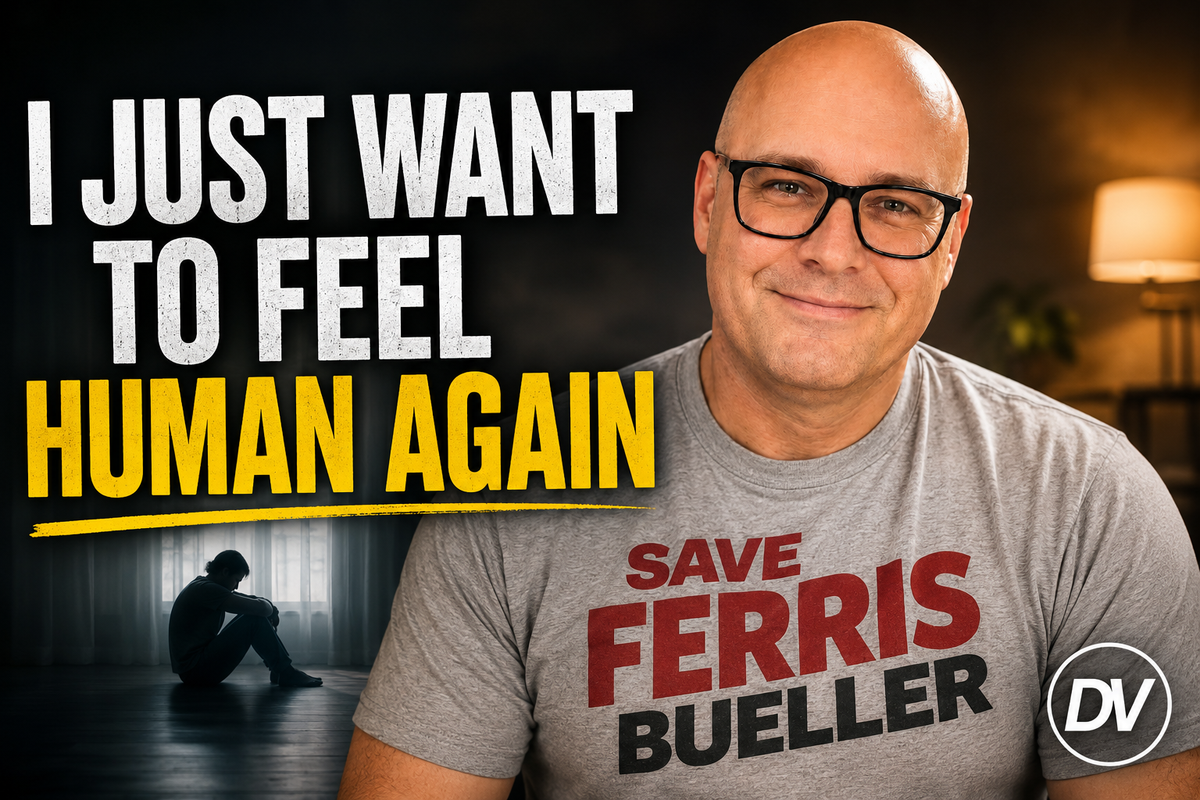
You can stand in front of the bathroom mirror before the house is fully awake and feel like you are looking at someone who has been carrying life instead of living it. The light is too bright, the sink still has yesterday’s toothpaste in it, and your phone is already waiting with messages, reminders, bills, work, family needs, and unfinished things you did not have the strength to finish the night before. Nothing dramatic has happened yet, but your body already feels behind. Your mind is already tired. Somewhere under all of it, a quiet sentence rises up: I just want to feel human again. That is the hidden cry behind the “I just want to feel human again” Christian encouragement, and it is also the doorway into the deeper written reflection on feeling human again with God’s help for the person who is still functioning but no longer feels fully present inside their own life.
This is not always the kind of pain people notice. Nobody stops you at the grocery store and says, “You look like your soul is tired.” Nobody hears the way your silence has changed. Nobody sees how long it takes you to answer a simple text because even small things feel like one more demand. You may still be working, caring for people, paying bills, showing up, smiling at the right time, and saying “I’m good” because explaining the truth would take more energy than you have. But inside, there is a distance growing between the person people see and the person you actually feel like. You are not trying to be negative. You are not trying to complain. You just miss feeling like a person instead of a set of responsibilities.
That is why this subject matters. There are seasons when the spiritual question is not only, “Do I believe in God?” Sometimes the question is, “Can I still come to God when I feel numb, worn down, and unlike myself?” That question is more honest than many people admit. It lives in kitchens after everyone else has gone to bed. It sits in parked cars before work. It shows up in the quiet moment after the child finally falls asleep, after the caregiver closes the bedroom door, after the worker clocks out, after the strong person has no one left to be strong for. It is the question of a human being who has been stretched so thin that even prayer feels harder than it used to.
One of the most dangerous things pressure does is that it slowly teaches you to treat yourself like a machine. Machines do not need comfort. Machines do not need mercy. Machines do not need rest because their hearts are heavy. Machines are measured by output. Did they produce? Did they respond? Did they finish? Did they keep going? A person can live under that kind of measurement for so long that it starts to feel normal. You begin to judge your day only by what got done. You begin to judge your worth by whether you disappointed anyone. You begin to believe you are only allowed to stop when every need around you has been satisfied, which means you almost never stop.
A man can sit at his desk late at night with the blue glow of a laptop on his face, not because he is chasing some grand dream in that moment, but because he is terrified of falling behind. He answers one more email, checks one more number, fixes one more problem, and tells himself he will rest after this. But “after this” keeps moving. By the time he finally closes the laptop, he does not feel proud. He feels hollow. He walks through the house quietly so he does not wake anyone, but the silence feels heavy because he knows he has been present for everyone’s needs and absent from his own life. He may love God. He may believe deeply. He may even encourage other people. But when he lies down, the only prayer he can find is, “Lord, I am tired of living like this.”
That prayer matters. It may not sound polished, but it is real. God is not waiting for exhausted people to edit their pain into religious language before He listens. He is not moved only by prayers that sound strong. A tired prayer can still be a faithful prayer. A quiet turning of the heart can still be a holy thing. Sometimes the first honest step back toward God is not a confident declaration. Sometimes it is the moment you stop pretending you are fine and admit, “I do not feel like myself anymore.”
There is a tenderness in Scripture that people often miss when they are ashamed of being tired. Jesus did not move through the world like a cold inspector of human performance. He noticed people. He noticed hunger. He noticed tears. He noticed sickness, fear, shame, grief, and exhaustion. He saw people who had been ignored so long that they probably expected to remain unseen. When He said, “Come to Me, all who are weary and burdened,” He was not speaking to people who had everything neatly managed. He was calling the loaded-down ones, the people whose backs were bent under more than others knew.
That changes how we understand the sentence, “I just want to feel human again.” It is not a childish sentence. It is not self-pity. It may be the soul telling the truth after being treated like a machine for too long. It may be the deepest part of you reaching for the kind of life God meant you to live, not a life without trouble, but a life where you are still a person inside the trouble. A life where you can breathe. A life where you can receive mercy instead of only handing out strength. A life where your worth is not decided by how much pressure you can absorb without breaking.
Many people do not lose themselves all at once. They lose themselves through small daily surrenders they never had time to name. They stop listening to music because the drive becomes a place to worry. They stop calling friends because every conversation feels like another thing to manage. They stop resting because rest makes them aware of how tired they really are. They stop praying honestly because they are afraid God is disappointed that they are still struggling. They keep functioning, but the color drains out of ordinary life. Food becomes fuel. Sleep becomes escape. Conversation becomes duty. Faith becomes something they respect but no longer feel close to in the way they once did.
If that is where you are, the answer is not to shame yourself into being more spiritual. Shame may get you moving for a little while, but it will not make you whole. Shame can force behavior, but it cannot restore the heart. Jesus does not heal by turning you into a better-performing machine. He heals by bringing you back into truth, mercy, and relationship. He does not deny what is wrong. He does not pretend sin, neglect, fear, bitterness, or exhaustion do not matter. But He also does not crush the bruised reed. He knows how to correct without destroying. He knows how to call without humiliating. He knows how to meet a tired person without demanding a performance first.
There may be a mother reading this before the children wake up, holding a cup of coffee that has already gone lukewarm. She loves her family, but she cannot remember the last time she had a thought that was not interrupted. She feels guilty for wanting quiet. She feels guilty for being irritated. She feels guilty for missing the person she used to be before everyone needed something from her all the time. She may have whispered, “God, I know I should be grateful,” when the more honest prayer was, “God, I am grateful, but I am also worn out.” Those two things can be true in the same heart. Gratitude does not erase weariness. Faith does not mean you never need rest.
This is where the perspective has to shift. Wanting to feel human again is not rebellion against God. It can be a return to the truth that you are not God. You have limits. You need sleep. You need quiet. You need grace. You need people who can hear the truth without punishing you for it. You need Scripture not as a weapon against your weakness, but as bread for your tired soul. You need prayer that does not begin with pretending, but with honest surrender. You need to remember that being human was never the problem. Sin is the problem. Pride is the problem. Fear can become a problem. Running from God is a problem. But being human, with needs and tears and limits, is not a failure.
Jesus entered human life. That is not a small detail in the Christian faith. He did not save from a distance without touching the dust of this world. He knew hunger. He knew tiredness. He knew what it was to be misunderstood by people close to Him. He knew the pressure of crowds, the grief of death, the loneliness of obedience, and the weight of surrender. When you come to Him saying, “I just want to feel human again,” you are not speaking to someone who is confused by human weakness. You are speaking to the Savior who stepped directly into it.
The first movement back may be very small. It may not look impressive. It may be turning off the noise for ten minutes and sitting with God before you try to fix the whole day. It may be saying one honest sentence instead of forcing a long prayer. It may be opening a window, taking a slow breath, and admitting that you have been living overloaded. It may be asking forgiveness where you need forgiveness, asking help where you need help, and asking God to teach you how to live as His child instead of as a machine that never gets to stop.
There is no need to dramatize that moment. God can work in quiet rooms. He can meet you at the sink, in the car, beside the bed, at the kitchen table, in the break room, in the chair where you finally stop scrolling because the noise is not helping anymore. The holy moment may begin with nothing more than honesty. “Lord, I am here. I am tired. I do not feel like myself. Help me come back to You. Help me come back to life.”
That is not the end of the road, but it is a real beginning. And sometimes a real beginning is exactly what a tired person needs.
Chapter 2: When You Become the Person Everyone Needs
The phone rings while you are already tired, and before you even look at the screen, you know there is a good chance somebody needs something from you. It may be a family member, a coworker, a child, a friend, or someone who always seems to call when life has already taken more than you had to give. You stare at the name for a second longer than you normally would. Part of you wants to answer because you care. Part of you wants to let it ring because you are empty. Then guilt steps in before you even make a decision, and suddenly you are not only tired. You feel bad for being tired.
That is one of the quiet traps of being dependable. People learn that you will answer. They learn that you will help. They learn that you will carry the extra weight, stay late, listen longer, forgive faster, absorb more, and keep going when others would have already stopped. At first, that may even feel like love. It may feel like responsibility. It may feel like faithfulness. And sometimes it is. There is a beautiful kind of strength in being someone others can count on. There is a holy kind of love in showing up when it costs you something.
But there is also a danger that sneaks in slowly. If you are always the one everyone needs, you can forget that you are someone who needs God too.
You can become so used to being the steady one that you no longer know how to be honest about your own weakness. You can become so practiced at helping others breathe that you ignore the fact that you have been holding your own breath for years. You can become so committed to not being a burden that you start carrying burdens God never asked you to carry alone.
This is where many people begin to lose the feeling of being human. Not because they stopped loving. Not because they stopped believing. Not because they became selfish. They lost it because they confused being faithful with being endlessly available. They confused love with never having limits. They confused strength with silence.
And the world often rewards that confusion. Work rewards the person who always says yes. Families often rely on the person who does not complain. Churches can sometimes celebrate the servant who never stops serving, even when that servant is quietly falling apart. Friends may praise you for being strong while never asking whether strength has become a hiding place. People may admire the very pattern that is draining the life out of you.
A caregiver knows this feeling in a way words can barely hold. Maybe it is an aging parent who needs help with appointments, medicine, meals, bills, and decisions that grow more complicated every month. Maybe it is a spouse with health problems. Maybe it is a child with needs that never really pause. The caregiver may love deeply and still feel trapped by the constant alertness. Every sound in the house means something. Every calendar square is full. Every quiet moment gets interrupted by another need. And because love is involved, guilt stands guard at the door every time the caregiver admits, even silently, “I am exhausted.”
That kind of exhaustion can make a person feel less human because there is no clean place to put it. You cannot stop loving the person. You cannot pretend the needs are not real. You cannot simply walk away without consequences. So the weariness gets buried under duty. The sadness gets buried under logistics. The prayer life becomes practical and brief. “God, help me get through today.” “God, don’t let anything go wrong.” “God, give me patience.” Those are good prayers, but sometimes there is another prayer underneath them: “God, does anyone see what this is doing to me?”
He does.
That is not a small comfort. It may be the beginning of a deeper reframing. The Lord sees the hidden cost of what you carry. He sees not only the task, but the toll. He sees the appointment you made, the meal you prepared, the bill you paid, the argument you avoided, the tears you swallowed, the sleep you lost, and the moment you sat in the car with your hand still on the steering wheel because you needed thirty seconds before walking back into the house.
But His seeing is not the same as asking you to become less human. God’s compassion does not require you to deny your limits. The fact that He gives strength does not mean He designed you to ignore rest. The fact that He calls us to love does not mean He calls us to disappear.
Jesus loved people perfectly, but He did not live as if every human demand had the right to control Him. There were crowds, needs, cries, expectations, interruptions, and urgent requests around Him constantly. Yet Scripture shows Him withdrawing to pray. It shows Him sleeping in a boat. It shows Him moving with compassion, but not with panic. It shows Him obeying the Father, not simply reacting to every pressure around Him.
That matters for the person who has built a life around reacting. The message is not that you should stop caring. The message is that love needs to be rooted in God, not driven by fear. When fear drives love, you feel responsible for everyone’s emotions, everyone’s outcomes, everyone’s disappointment, and everyone’s stability. When God roots love, you can serve with a real heart while still remembering that you are not the Savior.
That sentence may be hard to accept if you have spent years being the one who holds things together. You are not the Savior. You are loved by the Savior. There is a world of difference between those two things.
When you forget that difference, your identity starts getting tangled in what people need from you. If they are okay, you feel okay. If they are upset, you feel guilty. If they approve, you feel safe. If they are disappointed, you feel like you failed as a person. That is a crushing way to live. It keeps you in constant emotional debt, always trying to pay down a balance that never reaches zero.
There is a father somewhere who knows this pressure. He works hard, comes home tired, and still feels like he is failing everybody. The bills do not stop. The kids need attention. His wife needs more of him than what is left at the end of the day. His own body is telling him to slow down, but slowing down feels irresponsible. He may not say much about it because he thinks nobody wants to hear a man admit that he is scared. So he carries the fear quietly. He jokes when he can. He gets irritable when he cannot. Then he feels guilty for being irritable, and the cycle starts again.
What does that man need? Not a lecture. Not a slogan. Not someone telling him to be tougher. He needs to know that God sees him beneath the role. Before he is provider, worker, husband, father, fixer, protector, or problem-solver, he is a human being made by God. He is a soul. He is a son before he is a servant. If he never remembers that, responsibility will swallow his identity whole.
The same is true for the woman who keeps peace in the family, the friend who listens to everyone else’s crisis, the adult child who manages aging parents, the leader who carries pressure in public, the person at church who always volunteers, and the one who says “I’m fine” so often that it starts to feel like a job title. If you are not careful, the role can become a mask you forget how to remove.
Feeling human again may require telling the truth about what you have allowed your role to become. That does not mean blaming everyone around you. It means standing before God honestly and asking, “Have I let responsibility replace relationship? Have I let being needed become the only place I feel valuable? Have I been trying to prove my worth by never needing anything?”
Those questions are not meant to condemn you. They are meant to open a door. God is not trying to shame you for being tired. He is inviting you to come out from under a false burden. The gospel does not say you are loved because you are useful. It says you are loved because God is merciful, because Christ gave Himself, because grace reaches people who cannot save themselves.
That truth can feel almost too gentle when you have lived under pressure for a long time. You may know it in your head and still struggle to receive it in your daily life. You may say, “Yes, God loves me,” while still living as if His love depends on your ability to keep everyone else satisfied. But spiritual healing often begins when truth moves from a sentence you agree with into a place where your habits start to change.
Maybe that change begins with one honest boundary. Maybe it begins with not answering a non-urgent message the second it arrives. Maybe it begins with telling someone, “I want to help, but I cannot do that tonight.” Maybe it begins with asking another family member to share the load. Maybe it begins with sitting in silence for ten minutes without apologizing to anyone for being unavailable. These may seem like small things, but for someone who has forgotten they are human, small acts of truth can feel like coming back to life.
This is not selfishness. Selfishness refuses love. Wisdom protects love from becoming distorted. If you never rest, your service becomes strained. If you never tell the truth, resentment starts growing under your kindness. If you never let God care for you, you may begin serving Him and others from a place of fear instead of freedom.
And there is a better way than fear.
Jesus does not invite the weary to come so He can hand them a heavier religious load. He invites the weary to come and learn from Him. That means there is a way to carry life with Him that is different from the way pressure taught you to carry it. There is a way to love people without becoming their god. There is a way to be dependable without being destroyed. There is a way to serve without disappearing.
The shift may not happen in one day. Most deep patterns were not built in one day, and they are not always healed in one day. But today can still matter. Today you can tell God the truth. Today you can admit that being needed has become heavy. Today you can ask Him to show you what is yours to carry and what you have picked up out of fear. Today you can remember that you are allowed to be human because God never asked you to be anything else.
You may still have responsibilities after you finish reading this. The phone may still ring. The bills may still exist. The person you care for may still need care. The job may still demand effort. Faith does not erase the real world. But faith can change the way you stand inside it. You do not have to stand there as a machine. You do not have to stand there alone. You can stand there as a beloved human being under the mercy of God.
And when you forget, you can return again.
“Lord, I am not the Savior. You are. Teach me how to love without losing myself. Teach me how to serve without forgetting I am Your child. Teach me how to feel human again.”
Chapter 3: Coming Back to Life in Small Mercies
The house is quiet in the early morning, but not peaceful yet. There is a difference. Quiet can still feel crowded when your mind has already started working before your feet touch the floor. You reach for the phone, not because you want to, but because habit has trained your hand to look for demands before it looks for God. A few notifications appear. Nothing terrible. Nothing urgent. Still, your chest tightens a little because the day has already started speaking before you have had a chance to breathe.
That may be one of the first places where feeling human again begins. Not in a dramatic life change. Not in a perfect morning routine. Not in becoming a different person overnight. It may begin in the small moment where you do not give the whole day permission to own you before you have remembered who you are. It may begin with leaving the phone face down for a few minutes and sitting with God in the quiet, even if your mind wanders, even if your feelings are slow, even if the only prayer you can offer is, “Lord, help me not disappear today.”
A person who has been living under pressure often wants a large rescue. That is understandable. When the heart is tired, small steps can feel insulting at first. You may think, “I do not need a glass of water, a walk, a prayer, or a few minutes of silence. I need my whole life to stop being so heavy.” There is truth in that. Some situations really are heavy. Some burdens need more than a better attitude. Some seasons require help, counsel, honest conversation, medical attention, changed boundaries, or real support from other people. Faith does not ask you to call serious things small.
But faith does help you see that God often starts restoring life through the places you are still able to touch. A small mercy is not small because it does not matter. It is small because it is near enough for you to receive today. You may not be able to solve the whole future this morning, but you can open your Bible to one Psalm and read it without rushing. You may not be able to repair every relationship by tonight, but you can send one honest message instead of carrying silent resentment. You may not be able to change every demand around you, but you can stop pretending to God that you are not tired.
There is a person sitting in a doctor’s waiting room who understands this. Maybe the appointment is for them. Maybe it is for someone they love. The chairs are uncomfortable, the television on the wall is too loud, and every time a nurse opens the door, their stomach tightens. They have already prayed about the test results, but fear keeps circling back. They try to read something on their phone and cannot focus. They try to look calm for the person beside them. Inside, they feel like life has become one long act of bracing for impact.
In that room, feeling human again may not mean fear disappears. It may mean they stop pretending fear is not there. It may mean they breathe slowly and whisper, “Jesus, sit with me in this.” It may mean they remember that courage is not the absence of shaking. Sometimes courage is reaching for God while your hands are still unsteady. Sometimes peace does not arrive as a feeling that removes all fear. Sometimes peace arrives as the quiet truth that you are not alone in the waiting room.
That is one of the deepest shifts a person can make. You do not have to wait until you feel strong to return to God. You do not have to wait until you feel spiritual to pray. You do not have to wait until your emotions cooperate before you believe He is near. If you are waiting to feel completely ready, you may keep waiting while your heart keeps drying out. Come as you are. Come with the fear still there. Come with the sadness still there. Come with the questions still there. Come with the heaviness you do not know how to explain.
God is not asking you to present a finished version of yourself. He is inviting the real you into His presence.
That is hard for people who have spent years performing strength. It is hard for the dependable person. It is hard for the one who has been praised for being low maintenance. It is hard for the person who learned early that needs made people leave, criticize, mock, or withdraw. When that person hears, “Come to God honestly,” something inside may resist. They may know the words are true, but honesty can still feel dangerous. If being honest with people brought pain, being honest with God may feel risky too.
But God is not fragile like people. He does not need you to protect Him from your truth. He already knows the sentence you are afraid to say. He already sees the tear you keep swallowing. He already understands the anger you feel guilty for having, the disappointment you tried to bury, the doubt you do not want to admit, and the numbness that scares you because you remember when faith felt warmer than it does right now.
He sees all of that, and He is still calling you closer.
There is a kind of prayer that begins when the performance ends. It may sound awkward at first because you are no longer saying what you think a good Christian should say. You are telling the truth. “Lord, I am tired.” “Lord, I feel empty.” “Lord, I am scared that I will stay this way.” “Lord, I still believe, but I do not feel much right now.” Those prayers may not impress anyone in a public room, but heaven is not impressed by pretending. The Father receives the humble heart. Jesus meets the weary. The Spirit helps us in our weakness.
That is why coming back to life often begins with coming back to honesty. Not dramatic honesty for attention. Not dumping pain everywhere without wisdom. Just the plain truth before God. The truth that says, “I am not okay, but I am here.” The truth that says, “I want to trust You, but I need help.” The truth that says, “I have been living like a machine, and I need You to teach me how to live like Your child again.”
From there, God may begin to show you ordinary places where life can return. A meal eaten slowly instead of standing over the sink. A walk without headphones so your mind can settle. A call to someone safe where you do not have to act stronger than you are. A boundary that feels uncomfortable but honest. A few minutes in Scripture where you are not trying to master a lesson, but receive bread. A night of sleep treated not as laziness, but as humility. The world may not applaud these things. They may not look impressive online. But they can become places where grace touches the nervous system, the habits, the home, the body, and the heart.
This matters because some people are waiting to feel human again while still feeding everything that has made them feel less human. They wake up to noise, move through the day in panic, carry everyone else’s feelings, scroll until their minds are numb, eat in a hurry, pray only when afraid, sleep too little, and then wonder why their souls feel distant. This is not said with blame. Most people fall into these patterns while trying to survive. But at some point, love tells the truth. If the way you are living keeps burying the person God made, then grace may call you into a different way, one small obedience at a time.
Not a perfect life. A more honest one.
Not a life without responsibility. A life where responsibility no longer replaces relationship with God.
Not a life where you never feel tired. A life where tiredness becomes a signal to come to Jesus, not a reason to hide from Him.
There will still be days when you do not feel much. There will still be mornings when the heaviness is there before the sun is fully up. There will still be moments when prayer feels thin, when Scripture feels quiet, when your own thoughts feel louder than truth. Do not measure God’s nearness only by the strength of your emotions. Feelings matter, but they are not the foundation. The foundation is that God is faithful. Jesus is merciful. Grace is real even when your heart is slow to feel it.
Over time, small returns matter. Returning to prayer. Returning to truth. Returning to rest. Returning to the courage to ask for help. Returning to the simple belief that you are not a machine, not a burden, not a failure, not a forgotten person, but a human being loved by God. These returns may seem ordinary, but ordinary faithfulness can become a path out of numbness. Step by step, God can teach you to breathe again.
And maybe that is where this whole message finally lands. Feeling human again does not mean you become untouched by pain. It means pain no longer gets to steal the whole of you. It means responsibility no longer gets to rename you. It means exhaustion no longer gets the final word over your identity. It means you learn to live with open hands again, receiving mercy instead of only giving effort.
You may not feel fully alive today. That is okay. Start where you are. Bring God the truth you have. Take the next small step you can take. Sit in the quiet for a few minutes. Read one passage slowly. Tell one safe person the truth. Rest without apologizing to the whole world. Ask Jesus to meet you in the exact place where you feel least like yourself.
He can meet you there. He has met tired people before. He has restored people who thought they were too far gone. He has brought light into rooms that felt closed. He has carried souls through valleys that did not end as quickly as they wanted. He knows how to return life to the places pressure has worn down.
So if your prayer today is only, “Lord, I just want to feel human again,” let that be enough to begin. Do not despise the beginning. Do not shame the weakness. Do not run from the One who is calling you close. Bring the numbness. Bring the fear. Bring the weariness. Bring the version of you that does not know what to say.
Jesus is not finished with you.
And by His mercy, you can come back to life.
Your friend,
Douglas Vandergraph
Watch Douglas Vandergraph inspiring faith-based videos on YouTube:
https://www.youtube.com/@douglasvandergraph
Support the Christian encouragement library through GoFundMe:
https://www.gofundme.com/f/help-douglas-vandergraph-build-a-christian-encouragement-lib
Support the daily work by buying Douglas a coffee:
https://www.buymeacoffee.com/douglasvandergraph