When Grace Breaks the Strongest Walls
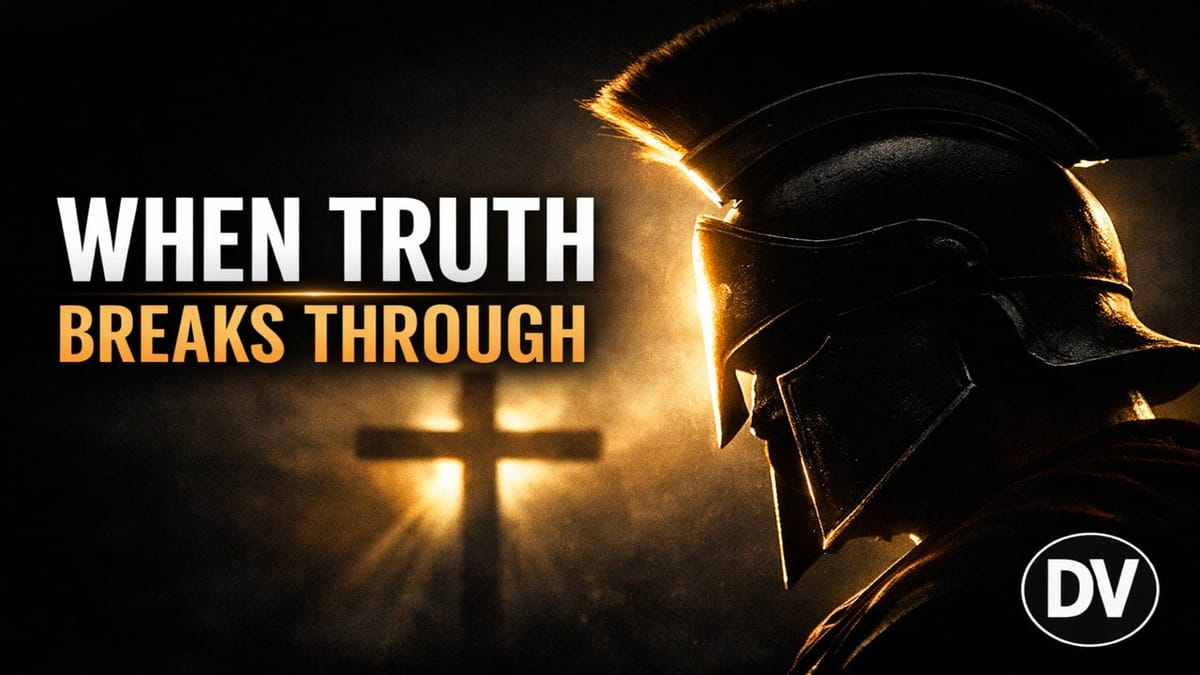
There are moments in Scripture that sit quietly between the lines, unnoticed by casual readers, waiting for the kind of soul who lingers long enough to feel the tremble beneath the surface. One of those moments stands at the foot of the cross, wrapped not in fanfare or thunderous revelation, but in the whispered collapse of a heart that had been hardened by a lifetime of violence, discipline, and bloodshed. It is the moment a Roman centurion, a man shaped by the architecture of empire and trained to obey brutality without hesitation, suddenly encounters a truth so overwhelming that it pulls a confession out of him before he even understands what is happening inside his own chest. Most people rush past this scene because the drama of the crucifixion itself seems to swallow every available breath, but if you slow down and listen deeply, you can hear the quiet crack of a soul awakening. This soldier’s transformation becomes one of the most powerful testimonies of the entire narrative, because it does not come from a disciple, a priest, a scholar, or a believer. It comes from the last person anyone would have expected God to reach that day. And sometimes, the most powerful evidence of God’s heart is not revealed in the people we assume are closest to Him, but in the ones who seem the farthest away.
When you imagine this centurion, you cannot reduce him to a simple caricature of a Roman soldier standing with a spear in hand. You must picture a man who had risen through a system that rewarded ruthlessness and punished hesitation. Each scar on his body, each command he had ever barked, each prisoner he had ever executed, had shaped him into someone who learned to shut off the softer parts of himself in order to survive the world he served. The centurion was not an accidental figure. He was the tactical expert at crucifixions, the man responsible for maintaining order during executions and ensuring they were carried out with precision. That meant he had witnessed more death than most human beings ever will. He had become familiar with the way bodies convulse, the way voices crack, the way terror paints itself across the eyes of the condemned. And because he had seen so much of it, he no longer felt anything. Emotional numbness was part of his uniform. Compassion was a liability. To thrive in his role, he had to build walls within himself that kept pity locked out and obedience locked in. But no matter how strong a wall becomes, it cannot withstand the touch of a God who decides to speak through the cracks.
From the very beginning of that day, something felt different. Jesus did not carry Himself like the others. Most men condemned to crucifixion arrived in panic or rage, but Jesus walked through the crowd with a dignity that made the centurion’s instincts sharpen. There was no fear in His eyes. There was no bitterness in His voice. There was no pleading, cursing, or desperate promise to Rome. Even as He stumbled under the weight of the cross, something about Him felt steady, as if He were moving toward something He had already accepted. The centurion had seen every posture a man could hold when confronted with death, but he had never seen this one. It was not defiance, and it was not surrender in the way condemned men usually surrendered. It was something deeper, something he didn’t have a name for, something that made the centurion wonder—if only for a silent second—who exactly this prisoner was.
As the nails were driven into Jesus’ hands and feet, the centurion observed a reaction he could not categorize. Most men screamed. Some begged. Others fought until exhaustion strangled their last ounce of strength. But Jesus did not direct anger toward the soldiers. He did not curse the hammer or the hands wielding it. Instead, Jesus prayed for them. Father, forgive them, for they know not what they do. Those words did something to the centurion that he could not stop. They slipped past his training, past his armor, and pierced a place inside him he had sealed long ago. Forgive them? Forgive the ones driving iron through flesh? Forgive the ones stripping Him bare and shaming Him in front of a crowd? Forgive the men carrying out the most brutal form of execution known to Rome? The centurion had never heard anything like that. Forgiveness was a foreign language in his world. Mercy was weakness. Yet Jesus offered it in His very breath. And that was the first tremor that loosened the stones in the wall of the soldier's heart.
Then the sky changed. It was not ordinary weather, not the slow dimming of the afternoon sun. This was a sudden, supernatural darkness, thick enough to silence the noise around them. The centurion felt the air shift, almost as if creation itself was bowing its head in sorrow or reverence. He had lived long enough to recognize an omen, and everything inside him whispered that something was unfolding far beyond the reach of Roman authority. Soldiers glanced at one another but said nothing, each of them feeling a presence in the darkness that left their palms damp and their hearts unsteady. Even the crowd grew quiet, unsure of what to think, as though they sensed that they were participants in a drama they did not understand. The centurion stood still, listening, watching, waiting, feeling an unspoken tension rise like the final breath before a storm.
Jesus cried out again, and His voice carried with it a power that did not match the brokenness of His body. It was not the cry of defeat; it was the cry of a man choosing His moment. It was the voice of authority wrapped in exhaustion, strength wrapped in suffering, triumph wrapped in torment. And in the wake of that cry, the earth began to tremble. The centurion felt the ground move beneath his sandals, felt the rocks split, felt creation react as if shaken by a hand not belonging to any mortal king. Earthquakes were not unheard of, but the timing—the exact moment of Jesus’ final breath—seemed too precise, too purposeful. And suddenly, all the stories, rumors, miracles, and whispers surrounding Jesus collided in the centurion’s mind with the force of revelation. This man was different. This death was different. Nothing about this crucifixion matched the others. Something holy was happening, and the walls inside him could not hold against it.
As Jesus released His spirit, the centurion felt more than shock or awe. He felt recognition. It was as if his soul suddenly remembered something he didn’t know he had forgotten. He saw something in Jesus’ face that stripped away every belief he had been taught about power, strength, and divinity. And out of the very core of him rose words he had never imagined himself saying: Certainly, this was a righteous man. Surely, this was the Son of God. This was not poetic reflection. It was not theological understanding. It was instinctual, undeniable, involuntary truth erupting from a heart that had just witnessed the collision of heaven and earth. Those words became the first Gentile confession of faith after Jesus’ death, and they stand forever as a testament to the reach of God’s mercy.
But what makes this moment so extraordinary is the way grace bypassed every barrier that should have prevented it. The centurion did not come from a world seeking God. He came from a world enforcing power. He did not come with humility. He came with authority. He did not come with purity. He came with blood on his hands. And yet God met him anyway. That is the breathtaking beauty of this story: God does not wait for the perfect environment or the perfect moment or the perfect heart. He steps into the darkest spaces, the hardest lives, the most unlikely corners of the human experience, and He breathes revelation into places no one else believes anything can grow. The centurion was not searching for Jesus, but Jesus found him in the very act of carrying out the sentence meant to destroy Him. Grace broke through the strongest walls that man had built, proving once again that nothing is impossible for a God who specializes in reaching the unreachable.
There is a quiet truth hidden in this scene: every person has places inside them where they feel unreachable. Sometimes it is the place shaped by disappointment. Sometimes it is the place shaped by trauma. Sometimes it is the place shaped by guilt, self-preservation, fear, or exhaustion. Over time, those places become fortified like ancient cities, guarded by habits and memories that whisper that nothing will ever change. But the cross tells a different story. The cross tells us that God can break through anything. The cross tells us that revelation can strike the heart of someone who wasn’t even looking for it. The cross shows us that God does not stand at a distance waiting for us to make ourselves presentable. He steps directly into the places where we feel most lost, most hardened, most resigned, and He speaks a truth powerful enough to break every barrier.
When I think about the centurion, I often imagine the silence that followed his confession. The other soldiers probably stared at him, confused, perhaps unsettled, wondering what had cracked their commander’s usually impenetrable composure. For the centurion himself, the moment must have felt like stepping into a light so bright he could not yet understand its source. In that confession, the soldier wasn’t simply recognizing that something unusual had happened. He was admitting that everything he thought he knew about life and death had just been turned upside down. He was acknowledging that the man he helped crucify had carried Himself with a strength beyond anything Rome had ever produced. He was admitting that Jesus was innocent, righteous, holy, and unlike any other man he had ever encountered. And he was proclaiming, whether he fully understood it or not, that the power standing before him belonged not to a victim of Rome, but to a King whose kingdom extended far beyond the reach of any empire. In that single confession, the centurion stepped across a line he did not even know existed that morning, crossing from observation into recognition, from duty into revelation, from distance into awakening.
Yet what makes this moment even more profound is what it teaches us about the way God works with human hearts. We often imagine that transformation requires ideal conditions, that breakthroughs happen in peaceful environments, and that God speaks loudest in moments of stillness. But here, the greatest revelation given to a Gentile during the crucifixion did not happen in a quiet prayer meeting or a serene field or a sacred temple. It happened in chaos. It happened in darkness. It happened in terror. It happened at the foot of a Roman execution stake while the sky shook, the ground split, and the world held its breath. This tells us that God does not wait for calm circumstances to reveal Himself. He is not intimidated by the storms that surround us, nor is He limited by the noise of our lives, nor does He hold revelation hostage until we create perfect conditions for Him. He speaks wherever He chooses. He breaks through whenever He wills. And sometimes, the most powerful moments of clarity come when life is shaking so hard we can barely stand upright. The centurion received his awakening not because he was seeking it, but because God decided that even in the most violent corner of the moment, a heart deserved the chance to see truth.
As I reflect on that, I think about how many people today live behind emotional fortresses built from years of heartbreak, failure, stress, or survival. People put up walls because they once cared too deeply, trusted too quickly, or believed too sincerely, and the world rewarded that vulnerability with pain. Over time, the heart responds the only way it knows how: by layering itself with stone and silence. But beneath those layers, the longing for something real still pulses, waiting for the moment when God breaks through the cracks and reminds the soul that it is not beyond repair. The centurion is the proof. He is the evidence that the heart can awaken even after years of training itself not to feel. He is the reminder that one encounter with Jesus can undo what survival mode built over decades. And if God could find that soldier in the middle of his darkest assignment, then He can find any of us in our darkest seasons. The same Jesus who reached through the fog of violence to pull a confession out of a Roman officer is still reaching into the fog of people’s lives today, whispering truth into places they thought would never hear His voice again.
This story also forces us to confront the mystery of God’s timing. Some people walk with God their whole lives, slowly growing, learning, trusting, and letting their faith expand over time. Others experience a sudden breakthrough, a dramatic turning point that feels like a lightning strike shattering the night. The centurion belonged to the latter. It was not a gentle unfolding. It was not a slow development. It was an eruption of revelation, a moment when the veil between heaven and earth tore open and the light of truth poured directly into a man who wasn’t prepared for it. And what that tells every believer is that God reserves the right to reveal Himself however He chooses. He may meet you gradually. He may meet you suddenly. But when He meets you, everything changes. The centurion’s confession wasn’t the end of his story; it was the beginning of a transformation that would ripple outward for the rest of his life. If Jesus could imprint Himself on the heart of a soldier overseeing His execution, then imagine what Jesus can do in the heart of someone who is actually searching.
There is also something deeply moving about the way grace came to this man without hesitation or condition. The centurion did not clean his life up before God revealed Himself. He did not quit his violent profession before receiving truth. He did not make amends, apologize, or earn his way into revelation. Grace simply reached into his world and said, I choose you now. That is one of the most hope-filled truths in the entire Gospel story. God does not wait for behavior to change before He extends mercy. He extends mercy so behavior can change. God does not wait for the heart to soften before He offers revelation. He offers revelation that softens the heart. And if the cross teaches us anything, it is that grace always moves first. Grace always initiates. Grace always reaches. Grace always enters the place where we think we deserve it least and proves that God writes His best stories in the most unexpected places. The centurion was not the kind of man anyone would have pointed to that morning and said, He will be the one to see clearly. But grace knew something no one else did: that the hardest heart often becomes the most powerful testimony once it breaks open.
In many ways, the centurion’s awakening mirrors the experience many believers have later in life, after years of wandering, resisting, or trying to carry the world on their own shoulders. There comes a moment when all the noise quiets, when something shakes the ground beneath you—not always literally, sometimes emotionally, spiritually, or circumstantially—and in that shaking, truth rises to the surface like a buried treasure suddenly revealed. It is often the moment you least expect, the moment you feel least prepared, the moment you assume God is farthest from you. Yet that is precisely where He speaks. The cross is not only a place of sacrifice; it is a place of revelation. It is where the deepest truths of heaven are unveiled to the most unlikely of people. And the centurion teaches us to stay open, even when we feel numb, even when we feel hardened, even when we feel unworthy of God’s attention. Because the same Jesus who transformed him still stands ready to transform anyone willing to look at Him and see more than a figure from history. He is alive, and the story He writes into each heart still carries the power to shift not only a moment, but an eternity.
What moves me most about the centurion’s confession is that it did not require a sermon, a miracle, or a theological debate. It happened through observation. Through presence. Through witnessing love in its most costly expression. Sometimes the greatest revelation does not come from answers, but from encounters—moments when you witness something so holy, so unexplainable, that your soul recognizes truth before your mind can articulate it. For the centurion, that moment was Jesus on the cross. For others, it might happen in a hospital room, at a graveside, in a quiet midnight prayer, during a season of heartbreak, or in a moment when you are utterly undone. God moves through all of it. And the same Jesus who opened the centurion’s eyes still opens the eyes of those who think they have already seen everything. He still invites the heart to soften, to awaken, to respond, to confess, and to follow. And when that happens, it is never simply an emotional moment. It is the beginning of a new identity.
As the story of the centurion echoes across centuries, it whispers a truth that may be exactly what someone needs today: your hardest places are not hopeless places. Your darkest moments are not abandoned moments. Your most painful memories are not proof of divine distance. God can work in the middle of anything. He can reveal Himself in the middle of the storm. He can speak in the middle of the shaking. He can transform you in the middle of the moments that seem the least spiritual, the least peaceful, the least sacred. Grace does not wait for convenience. It arrives in power. It breaks what needs to break, heals what needs to heal, and awakens what needs to awaken. The same voice that called the centurion into revelation can call you into a future shaped by new understanding, renewed hope, and the kind of faith that grows only when the heart finally sees truth for what it is.
If there is anything the centurion teaches us, it is that God can write resurrection into the most unlikely stories. He can breathe purpose into pain. He can carve redemption into regret. He can create a testimony from the ruins of what once seemed irredeemable. And when He does, the life that emerges on the other side becomes a beacon to others still standing in the places they cannot escape. The centurion’s confession did not just change him; it became a part of the Gospel story itself. His awakening stands as a reminder that the reach of God’s love is wider, deeper, and more powerful than anything we can imagine. And if God can reach a Roman soldier at the foot of the cross, He can reach anyone—anywhere, anytime, through anything. The story of grace never stops unfolding, and no heart is ever beyond the moment when truth breaks through.
Your friend,
Douglas Vandergraph
Watch Douglas Vandergraph’s inspiring faith-based videos on YouTube
https://www.youtube.com/@douglasvandergraph
Support the ministry by buying Douglas a coffee
https://www.buymeacoffee.com/douglasvandergraph
Donations to help keep this Ministry active daily can be mailed to:
Douglas Vandergraph
Po Box 271154
Fort Collins, Colorado 80527