When God Writes in the Margins
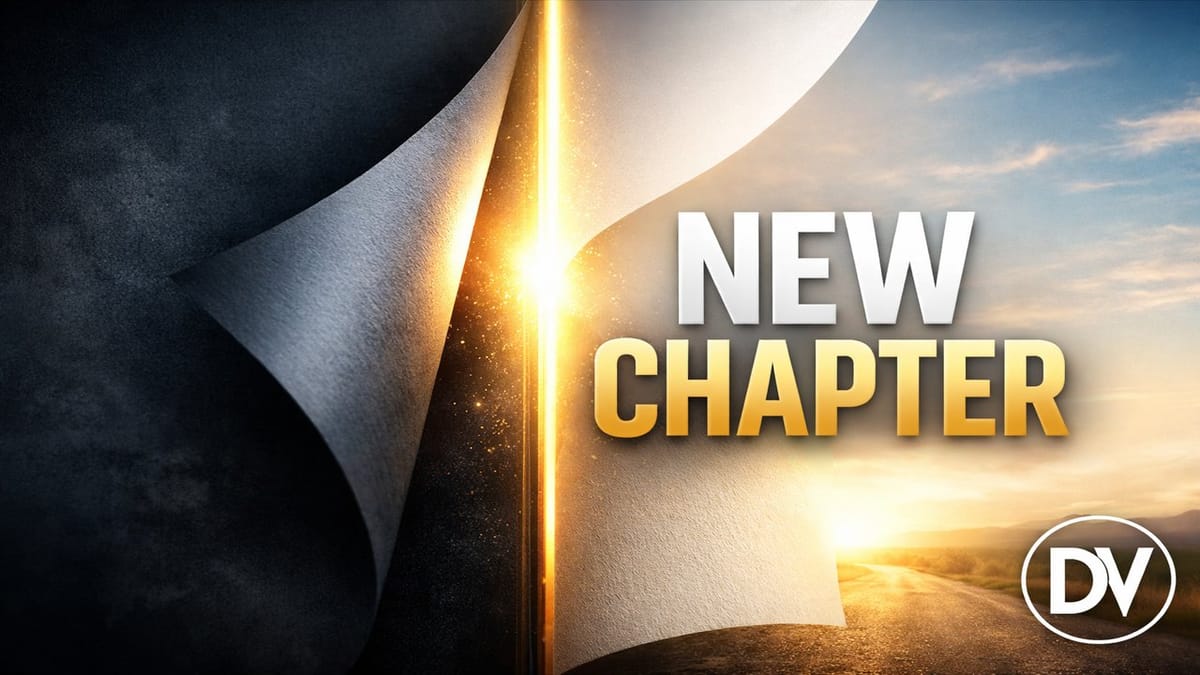
There is a strange thing that happens when a season of life ends. The world moves forward, but the heart sometimes stays behind. Days continue to turn into weeks and weeks into years, yet inside, we are still standing in the same emotional room, replaying conversations that are long over, touching scars that have already healed, and rereading chapters that God quietly closed. It does not look like disobedience. It looks like reflection. It does not feel like rebellion. It feels like caution. But over time, it becomes something far heavier than either. It becomes a refusal to let God speak in a new way.
Most people do not realize how much of their present is shaped by their past until the past becomes the lens through which they see everything. A betrayal becomes the reason they no longer trust. A failure becomes the reason they no longer try. A prayer that went unanswered becomes the reason they no longer ask. The story is not always dramatic. Sometimes it is quiet. Sometimes it is simply the slow hardening of hope. But it all traces back to the same habit: returning again and again to a chapter that was never meant to be permanent.
The soul was not designed to live backward. Memory has its place, but destiny has a direction. Scripture does not present God as a keeper of archives. It presents Him as an author. He is always moving the story forward. Even when His people are wandering, even when they are doubting, even when they are resisting, He is still writing. And the tragedy is not that people suffer. The tragedy is that they begin to believe their suffering is the final draft.
There is a subtle difference between remembering and reliving. Remembering teaches. Reliving traps. Remembering gives wisdom. Reliving steals courage. Remembering lets God redeem what happened. Reliving lets the past define what happens next. Over time, the heart forgets the difference. What once was a lesson becomes an identity. What once was an event becomes a personality. What once was a wound becomes a worldview.
It is not that people enjoy pain. It is that pain, once familiar, feels safer than the unknown. The past has rules. It has boundaries. It has expectations. You already know how it ends. The future requires trust. It requires surrender. It requires believing that God can write something better than what you already survived. That is a much harder faith.
There are people who can describe in perfect detail what broke them, but cannot describe what they are becoming. They can tell you the exact moment when everything changed, but they cannot imagine what comes next. Their prayers sound like autopsies instead of invitations. They keep God in the role of comforter but never allow Him to become architect. They believe He can heal what was, but they do not believe He can build what will be.
In the stories of Scripture, God never rescues people so they can remain where they were rescued from. He delivers so that movement can begin. When Abraham is called, he is not told to preserve his homeland in memory. He is told to leave. When Israel is freed, they are not instructed to preserve Egypt as a reference point. They are instructed to walk. When the disciples are chosen, they are not told to improve their fishing techniques. They are told to follow. The call of God always involves departure.
This is where resistance begins. Not because people do not love God, but because they love certainty. The past may have been painful, but it was understandable. The future requires a different kind of dependence. It means letting go of explanations and learning how to live with promise. It means trusting God with chapters you have never read before.
The human heart wants closure. God often gives calling instead. Closure feels like resolution. Calling feels like responsibility. Closure feels safe. Calling feels dangerous. But God rarely closes doors simply to create empty space. He closes them to redirect the story. He does not erase chapters. He fulfills them.
When people say they are stuck, what they usually mean is that they have not yet agreed with God about what is finished. They are waiting for something to go back to the way it was, while God is waiting for them to step into what could be. They are standing at the edge of something new while staring at something old.
This is not stubbornness. It is grief that has not learned how to hope again. It is disappointment that has not yet trusted God with another outcome. It is fear dressed up as wisdom. It is caution disguised as discernment.
God does not despise this struggle. He understands it. He walked with Israel through it. Again and again they said they wanted freedom, but again and again they longed for what they left behind. They remembered food but forgot chains. They remembered routine but forgot cruelty. They remembered stability but forgot oppression. What they missed was not Egypt. What they missed was certainty. They had not yet learned to see God as their future.
In the wilderness, the old system no longer worked and the new one had not yet fully formed. That space between chapters is always uncomfortable. It feels like loss before it feels like promise. It feels like emptiness before it feels like direction. And because it is so disorienting, people often turn back instead of moving forward. Not physically, but emotionally. They return to old explanations and old identities and old limitations.
Jesus never let people remain where they were healed. When He restored sight, He sent the man home. When He forgave sins, He sent the woman away from condemnation. When He raised the paralyzed man, He told him to carry what once carried him. These were not just miracles. They were invitations to live differently. He was not just fixing bodies. He was repositioning lives.
The man with the mat had an identity built around waiting. Years of lying in one place had taught him how to survive without expecting change. His healing did not just remove sickness. It removed an excuse. When Jesus told him to rise and walk, He was telling him that the chapter of waiting was finished. The mat that once supported him now became something he carried as evidence of what God had done. It was no longer a place of residence. It was a testimony.
This is what God does with every finished chapter. He does not erase it. He transforms it. He turns what once limited you into something that points beyond you. But that transformation only happens when you agree to stand up.
Some people do not realize how long they have been lying down. They have learned how to explain their position. They have learned how to justify their immobility. They have learned how to spiritualize their fear. They say they are waiting on God, but what they really mean is that they are afraid to walk without guarantees.
There is a holy difference between patience and paralysis. Patience trusts God while moving with Him. Paralysis demands certainty before movement. Faith walks with questions. Fear waits for answers.
The gospel never presents God as someone who only redeems the past. He redeems the future as well. He does not just forgive yesterday. He commissions tomorrow. When Peter failed, Jesus did not rehash the failure. He redefined the future. He did not interrogate Peter’s denial. He restored Peter’s direction. Love became the question, and purpose became the response.
Peter’s worst moment did not become his final chapter. It became the place where grace rewrote the story. His denial did not cancel his calling. It deepened it. He became someone who understood mercy because he had needed it. He became someone who preached boldly because he had known fear. His story did not end where he fell. It began where he was restored.
This is the pattern of God. He does not discard broken characters. He develops them. He does not shame wounded people. He reshapes them. But development requires release. You cannot become who God is forming while clinging to who you were protecting.
The past becomes dangerous when it becomes the measure of what is possible. When people say, “I tried that before,” they are often not speaking from wisdom. They are speaking from pain. They are confusing memory with prophecy. They are letting yesterday decide tomorrow.
But God does not write sequels. He writes continuations. The story moves forward. The themes may repeat, but the direction changes. What was once failure becomes foundation. What was once fear becomes faith. What was once confusion becomes calling.
This does not happen instantly. It happens gradually. It happens in moments of choice. It happens when you pray differently. It happens when you forgive again. It happens when you risk hope one more time. It happens when you agree with God that the chapter is over, even if the feelings have not caught up yet.
Healing is not the same as forgetting. It is choosing not to live there anymore. It is allowing God to use what was without letting it define what will be. It is trusting that the Author knows how to integrate every paragraph into a larger purpose.
There is a sacred humility in letting God write again. It means acknowledging that your interpretation of events is not the final meaning of them. It means believing that God’s perspective is wider than your pain. It means trusting that what felt like an ending may have been a transition.
Most people do not struggle with God’s presence. They struggle with God’s process. They want Him to arrive without requiring movement. They want peace without transition. They want clarity without surrender. But stories do not change without turning pages.
The spiritual life is not a loop. It is a journey. It has direction. It has development. It has unfolding meaning. God reveals Himself differently in each chapter because He is forming something in you that did not exist before.
What you walked through shaped you. But it is not meant to cage you. What you lost taught you. But it is not meant to limit you. What you survived prepared you. But it is not meant to define you.
There is a difference between honoring the past and living in it. Honoring it means thanking God for what it taught you. Living in it means letting it tell you who you are. One produces wisdom. The other produces fear.
God is not offended by your memories. He is inviting your trust. He is not asking you to pretend nothing happened. He is asking you to believe something else can happen. He is not erasing your story. He is continuing it.
And this is where the quiet courage of faith begins. Not in loud declarations, but in small agreements. Agreeing to pray again. Agreeing to hope again. Agreeing to love again. Agreeing to trust again. Agreeing to walk even when you cannot yet see where the path leads.
Every chapter God writes carries the marks of the previous one, but it also carries the promise of something new. The scars become footnotes. The failures become background. The pain becomes context. But the main story moves forward.
Somewhere inside you, there is a chapter waiting to be written that cannot exist while you are still reading the last one. It is not waiting for perfection. It is waiting for permission. It is waiting for you to believe that God still has something to say about your life.
He is not done. The pen has not stopped. The story has not ended.
It is only changing chapters.
There is something deeply human about wanting to linger where we were last certain of ourselves. Even if that certainty was painful, it was still known. The unknown demands faith, and faith exposes what we try to protect most: our sense of control. We want God’s comfort without God’s disruption. We want healing without change. We want redemption without relocation. But the Bible never portrays transformation as stationary. It always involves movement, whether outward or inward, whether across deserts or through hearts.
One of the great misunderstandings about spiritual growth is the belief that it looks like accumulation. People imagine maturity as something added on top of who they already are, like layers of wisdom stacked neatly on an unchanging self. But Scripture reveals something more radical. Growth is often subtraction. God removes old fears. Old identities. Old dependencies. Old narratives. He edits. He crosses out. He revises. And this editing process feels like loss before it feels like purpose.
The heart resists editing because it feels personal. When God changes a chapter, it can feel like He is changing us. And in a way, He is. But not by destroying who we were. By fulfilling who we were meant to become. The problem is that we sometimes cling to the rough draft because it is familiar, even when the Author is offering a finished version.
There are people who speak fluently about what happened to them, but struggle to speak about what God is doing in them. Their language is full of retrospection and light on expectation. Their faith is backward-facing. It draws its vocabulary from memory rather than promise. Over time, this posture reshapes prayer itself. Prayer becomes rehearsal instead of anticipation. It becomes retelling instead of requesting. God is still included, but only as a witness to the past rather than a guide to the future.
Yet when Scripture calls people to remember, it does so in a very specific way. It is not remembrance as fixation, but remembrance as foundation. “Remember what the Lord has done” is never followed by “and stay there.” It is always followed by “therefore go.” Memory is meant to fuel trust, not replace it. The past is meant to testify to God’s faithfulness, not define the limits of His activity.
This is why nostalgia can be spiritually dangerous. It softens the edges of what was and exaggerates the comfort of what is gone. It edits out the prayers that were cried and highlights only the moments that felt stable. It convinces the heart that what once existed must be recovered rather than transformed. But God does not resurrect old seasons. He redeems them by folding their meaning into something new.
When people say they want things to go back to how they were, what they often mean is that they want to feel safe again. But safety is not God’s ultimate goal. Formation is. He is less concerned with preserving a version of you than with preparing a deeper one. He is not trying to maintain your life. He is trying to shape your soul.
This is why forward movement often feels like loss before it feels like calling. The disciples did not just gain a mission when they followed Jesus. They lost a lifestyle. They lost a certain predictability. They lost social stability. They lost control of their schedules and futures. Their obedience was not a neat exchange. It was a reorientation. And that reorientation required them to close the chapter of who they had been known as in order to become who God was revealing them to be.
It is easier to spiritualize stillness than to trust motion. Stillness can be framed as reflection. Motion must be framed as obedience. Stillness can hide fear behind wisdom. Motion exposes what we truly believe about God. When God says “go,” He is not merely changing location. He is changing authorship. He is asking you to let Him determine what comes next.
There is a reason the Bible so often uses the language of walking. Walking implies direction without full visibility. It assumes trust rather than certainty. It means you cannot see the end from the beginning, only the next step. This is not a flaw in the design. It is the design. God reveals the story one sentence at a time.
People who live in old chapters often assume they are being realistic. They believe they are simply being honest about what happened. But realism without revelation becomes resignation. It stops expecting God to surprise. It stops leaving room for grace to alter outcomes. It settles for explanation instead of transformation.
This does not mean ignoring wounds. It means refusing to let wounds become the narrator. Pain may be part of your story, but it is not the Author. Failure may appear in the plot, but it is not the conclusion. Loss may shape the tone of certain chapters, but it does not determine the ending.
There is a sacred courage in believing that the next chapter can be different. Not because circumstances have improved, but because God is present. Faith is not optimism about conditions. It is trust in character. It believes that the One who carried you through the last chapter will also guide you into the next.
The book of Isaiah captures this tension when it says not to dwell on the former things because God is doing something new. That statement is not dismissive of history. It is directional. It is not saying the past had no meaning. It is saying the meaning is not finished. It is saying that God’s work is not confined to what has already happened.
People sometimes think that closing a chapter requires emotional closure first. But closure is not a feeling. It is a decision. It is the decision to stop interpreting your future through a finished experience. It is the decision to trust that God can speak beyond what you already know. It is the decision to step into something you cannot yet define.
This decision is rarely dramatic. It usually shows up in small obediences. In forgiving again. In praying differently. In trying one more time. In allowing yourself to imagine life without the constant retelling of what went wrong. In letting your testimony evolve.
Over time, the story shifts. The old chapter does not disappear. It changes function. It becomes context instead of conclusion. It becomes evidence instead of explanation. It becomes a reminder of what God has carried you through rather than a limit on what He can still do.
This is how transformation actually works. It does not delete the past. It reframes it. It does not silence memory. It redeems it. It does not deny pain. It integrates it into a larger purpose.
When God writes in the margins of your life, He is not correcting you. He is clarifying meaning. He is adding interpretation. He is showing you how what seemed random was actually relational. How what felt like loss was actually preparation. How what appeared like delay was actually design.
Most people underestimate how much of their future depends on what they release. They think doors are blocked by circumstances, when often they are blocked by attachment. God does not force you forward. He invites you. He waits for agreement. He waits for willingness. He waits for the heart to say, “You can write again.”
That willingness is the doorway to renewal. It does not require certainty. It requires trust. It does not require confidence. It requires surrender. It does not require a plan. It requires faith.
There is a chapter waiting that cannot be written while the last one is still being reread. Not because God cannot write, but because the heart has not yet made space. Stories need room to unfold. They need attention. They need expectation.
If you find yourself constantly returning to what happened, ask what God might be inviting you into. If you find your prayers circling old pain, ask what new promise He might be offering. If your identity is still anchored in what was lost, ask what might be forming in what remains.
God does not rush this process, but He does not abandon it either. He is patient with your hesitation. He understands your fear. But He will continue to call you forward because love always seeks growth. Love does not let stories stagnate.
The deepest form of trust is not believing God can fix what was. It is believing He can create what will be. It is believing that your life is not a finished manuscript. It is believing that grace still has sentences left to write.
Every time you choose hope over rehearsal, you turn a page. Every time you choose obedience over nostalgia, you step into a new paragraph. Every time you choose faith over familiarity, the story advances.
And one day, you will look back and realize that the chapter you thought defined you was actually preparing you. That the season you mourned was actually shaping you. That the pain you feared was actually teaching you how to listen for God’s voice.
You will see that the story did not end where you thought it did. It simply changed chapters.
God is still writing. Not with ink, but with experience. Not with pages, but with purpose. Not with endings, but with continuations.
The invitation is not to forget where you have been, but to trust where He is leading. Not to deny the past, but to believe in the future. Not to erase memory, but to embrace movement.
Somewhere beyond the chapter you keep revisiting, there is another waiting to be lived. It is not perfect. It is not predictable. But it is purposeful. And it is held in the same hands that carried you through everything before.
The Author has not put down the pen.
The story is not finished.
It is only changing chapters.
Your friend,
Douglas Vandergraph
Watch Douglas Vandergraph’s inspiring faith-based videos on YouTube
Support the ministry by buying Douglas a coffee