Walking in the Light Without Pretending

There is something quietly disarming about the opening words of 1 John. They do not begin with argument, defense, or explanation. They begin with testimony. What John offers is not theory about God, not philosophy, not even theology in the abstract. He begins with lived experience. He writes as someone who has heard, seen, touched, and walked with Jesus. That matters, because 1 John 1 is not a chapter meant to be studied from a distance. It is meant to be entered. It is an invitation into a way of living that is honest, exposed, and deeply grounded in truth, not the kind of truth we use to win debates, but the kind that changes how we walk through the world when no one is watching.
This letter is written late in John’s life. The tone is not rushed. It is not frantic. It is steady, pastoral, and firm. John is not trying to impress anyone. He is trying to protect something precious. The early church is facing confusion, half-truths, and spiritual shortcuts. Some voices are claiming enlightenment while quietly abandoning obedience. Others are redefining sin to make room for comfort. John responds not by raising his voice, but by anchoring everything back to the beginning. To what was from the beginning. To what was heard, seen, and handled. To the life that was made manifest.
And that is where 1 John 1 begins to confront us, gently but relentlessly. Because most of us would prefer a faith that allows us to remain hidden. We want forgiveness without exposure, light without heat, grace without transformation. John refuses to offer that version of Christianity. Instead, he offers something far better and far more demanding: fellowship with God that is rooted in truth, sustained by light, and made possible through honest confession.
John opens by grounding faith in reality. Christianity is not built on private visions or secret knowledge. It is built on a person who entered history. John emphasizes physicality for a reason. He is pushing back against the idea that Jesus was merely spiritual, merely symbolic, or merely an idea. The Word of life was heard. The Word of life was seen. The Word of life was touched. Faith, for John, is not an escape from the physical world. It is God entering it.
That matters today more than we realize. We live in an age of abstraction. Beliefs are curated. Faith is often reduced to slogans, aesthetics, or online personas. John reminds us that the Christian life is not about projecting spirituality, but about participating in reality. Jesus was real. His life was real. His light was real. And therefore, our response to Him must also be real.
John then introduces one of the most important themes of the entire letter: fellowship. This is not casual association. This is shared life. Fellowship with one another flows directly from fellowship with God. You cannot separate the two. John does not allow for a private Christianity that claims intimacy with God while remaining disconnected from people. Nor does he allow for community that ignores truth in the name of unity. Fellowship is rooted in shared truth and shared light.
Then comes the statement that changes the entire frame: God is light, and in Him there is no darkness at all. Not some darkness. Not manageable darkness. Not darkness with good intentions. No darkness at all.
This is where many people begin to feel uncomfortable. Light exposes. Light reveals. Light does not negotiate. We often prefer to think of God as accommodating, flexible, or endlessly understanding in ways that allow us to keep parts of ourselves untouched. John’s declaration removes that illusion. God is not a mixture of light and shadow. He is not partly holy and partly tolerant of sin. He is light. Pure, unfiltered, uncompromising light.
But John does not say this to push us away. He says it to invite us into honesty. The problem is not that God is light. The problem is when we claim to walk with Him while choosing darkness. John is not speaking about struggling believers here. He is speaking about those who say one thing while living another. Those who claim fellowship while refusing exposure. Those who speak the language of faith while walking in patterns that contradict it.
This is where 1 John 1 becomes deeply personal. John uses plain language. If we say we have fellowship with Him while we walk in darkness, we lie and do not practice the truth. Notice what John does not say. He does not say we lie if we ever stumble. He does not say we lie if we ever fail. He says we lie if we walk in darkness. Walking implies direction, habit, and posture. It implies choosing shadows as a way of life.
Darkness, in John’s writing, is not simply moral failure. It is refusal. Refusal to bring things into the light. Refusal to be honest. Refusal to let God define what is true and good. Darkness is not just sin. It is concealment.
This is where many believers quietly struggle. We want closeness with God, but we also want control over what He sees. We want grace, but not scrutiny. We want forgiveness, but not exposure. John dismantles this tension by showing us a better way. Walking in the light does not mean walking in perfection. It means walking in honesty.
If we walk in the light, as He is in the light, we have fellowship with one another, and the blood of Jesus cleanses us from all sin. This is one of the most freeing sentences in Scripture, and also one of the most misunderstood. Walking in the light does not mean sinless living. If it did, no one could remain there. Walking in the light means living openly before God. It means refusing to hide. It means allowing truth to shape our identity rather than fear.
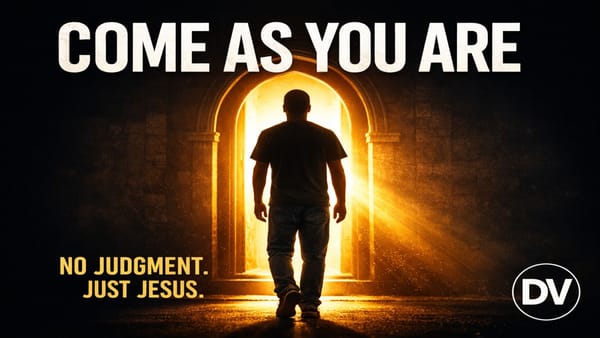
Notice the order. Walking in the light comes before cleansing. We often reverse that. We think we must clean ourselves up before coming into the light. John says the opposite. The light is where cleansing happens. You do not step into the light because you are clean. You step into the light so that you can be made clean.
This challenges the performance-based faith many people quietly carry. We imagine that God wants us presentable before He welcomes us. John says God wants us honest before He cleanses us. The blood of Jesus does not cleanse those who pretend they have no sin. It cleanses those who walk in the light, meaning those who stop hiding.
John then addresses a claim that was circulating then and still circulates now: the idea that spiritual maturity means being beyond sin. If we say we have no sin, we deceive ourselves, and the truth is not in us. This is not just theological error. John calls it self-deception. It is lying to oneself before it is lying to God.
There is something profoundly damaging about denying sin. It cuts us off from grace. If we do not believe we need cleansing, we will never receive it. If we redefine sin out of existence, we eliminate the very reason Jesus shed His blood. John is not harsh here, but he is unyielding. Spiritual honesty begins with acknowledging reality.
And then comes one of the most quoted and most comforting verses in the entire New Testament: If we confess our sins, He is faithful and just to forgive us our sins and to cleanse us from all unrighteousness. This verse is often read as a formula, but it is really a promise rooted in God’s character. Forgiveness does not depend on our eloquence or our emotional intensity. It depends on God’s faithfulness and justice.
That phrase matters. God is faithful. He keeps His word. And He is just. Forgiveness is not God overlooking sin. It is God dealing with sin fully through Jesus. Confession is not about informing God of something He does not know. It is about agreeing with Him about what is true.
Confession, in John’s framework, is not groveling. It is alignment. It is stepping into the light and saying, “This is real. This is broken. This is mine.” And in response, God does not shame. He cleanses. Completely. From all unrighteousness. Not just the parts we remember. Not just the parts we admit. All of it.
John ends the chapter with one more clarification. If we say we have not sinned, we make Him a liar, and His word is not in us. This is not hyperbole. When we deny our sin, we deny our need for a Savior. We deny the truth of God’s revelation. We contradict the entire message of redemption.
What 1 John 1 offers us is not condemnation, but clarity. It strips away the false versions of faith that promise peace without truth. It exposes the illusion that intimacy with God can coexist with secrecy. And it replaces all of that with something solid, honest, and life-giving.
Walking in the light is not about being impressive. It is about being real. It is not about broadcasting your flaws. It is about refusing to hide them from God. It is not about achieving sinlessness. It is about living in openness, where cleansing is ongoing and fellowship is deep.
In a world built on curation and image, this message is quietly revolutionary. God does not ask you to perform. He asks you to come into the light. He does not ask you to deny your need. He asks you to confess it. He does not ask you to fix yourself. He asks you to trust that He already has.
This is not a shallow comfort. It is a deep one. It is the comfort of knowing that you do not have to maintain a false self before God. You do not have to manage His perception of you. You do not have to hide parts of your story in order to belong. Fellowship with God is not built on illusion. It is built on truth, and truth, when met with grace, is the most freeing thing there is.
What makes 1 John 1 endure across centuries is that it does not flatter the reader. It does not assume spiritual maturity simply because someone identifies as a believer. It does not equate time spent around faith with transformation. Instead, it quietly asks a question that never stops being relevant: are you living honestly before God, or are you managing an image?
That question cuts through generations, denominations, and personalities. It cuts through public ministry and private devotion alike. Because the temptation John addresses is not dramatic rebellion. It is subtle self-deception. It is the slow drift toward believing that saying the right things is the same as walking in the light. It is confusing religious language with spiritual reality.
John is not writing to unbelievers here. He is writing to the church. He is writing to people who know the vocabulary. People who gather. People who claim fellowship. That is what makes his words both sobering and merciful. He is calling believers back to the kind of faith that does not fracture under scrutiny.
Walking in the light is not a moment. It is a posture. It is a daily decision to live without spiritual curtains. It means allowing God’s truth to speak louder than your self-justifications. It means choosing honesty over image even when honesty feels costly. Light has a way of revealing motives, not just actions. It exposes why we do what we do, not just what we do.
This is where many believers struggle quietly. We learn how to avoid obvious sins, but we become experts at hiding subtle ones. Pride that dresses itself up as discernment. Bitterness that masquerades as boundaries. Fear that pretends to be wisdom. We convince ourselves that as long as nothing looks obviously broken, everything must be fine. John will not let us settle for that.
Walking in darkness, as John describes it, is not merely moral failure. It is the refusal to bring things into the open. Darkness thrives on silence and justification. It grows where confession is avoided and accountability is optional. Light, by contrast, creates movement. It invites response. It does not leave us frozen in shame, but it does not allow us to remain unchanged either.
One of the most misunderstood fears among believers is the fear that honesty will push God away. That if we really admit what is happening inside, God will withdraw. John says the opposite. The light is not the threat. The darkness is. The light is where fellowship happens. The light is where cleansing happens. The light is where community deepens rather than fractures.
There is something profoundly relational about John’s message. He ties walking in the light directly to fellowship with one another. This means that secrecy does not just affect your relationship with God. It affects your relationships with people. Hidden sin isolates. Honest confession reconnects. When people live in the light, community becomes safer, not riskier.
This does not mean public confession of every thought or struggle. John is not advocating spiritual exhibitionism. He is advocating integrity. Integrity is when your private life and public confession are not in conflict. It is when your internal reality is not at war with your external claims.
One of the great lies of modern spirituality is that growth means needing less grace. John presents the opposite vision. Growth means becoming more honest about your need for grace. The closer you walk with God, the more sensitive you become to what does not belong. Not because you are becoming more sinful, but because you are becoming more awake.
This is why denial of sin is so dangerous. It is not confidence. It is disconnection. If you convince yourself that you have no sin, you cut yourself off from the very cleansing that sustains you. You trade living fellowship for fragile self-esteem. You replace dependence with denial.
John’s insistence on confession is not meant to keep believers stuck in guilt. It is meant to keep them free. Confession is not spiritual self-punishment. It is spiritual clarity. It is naming what is true so that healing can happen where it is actually needed, not where it looks impressive.
There is a reason John emphasizes that God is faithful and just to forgive. Faithful means He does not change. Just means forgiveness is not arbitrary. It is grounded in the finished work of Jesus. Forgiveness is not God ignoring sin. It is God having already dealt with it fully through Christ.
This matters because many believers subconsciously believe forgiveness depends on how sincerely they confess. How emotional they are. How many times they repeat it. John does not root forgiveness in our performance. He roots it in God’s character. Confession does not earn forgiveness. It receives what has already been secured.
And cleansing is not partial. John is explicit. From all unrighteousness. Not just the sins you remember. Not just the ones you understand. Not just the ones you are ready to let go of. All of it. This is not fragile grace. It is thorough grace.
That kind of grace produces something powerful: assurance. Not arrogance. Not complacency. Assurance. When your relationship with God is built on honesty rather than denial, you do not have to constantly wonder where you stand. You do not have to oscillate between confidence and panic. You learn to live grounded.
This is why 1 John 1 is foundational for the rest of the letter. Everything that follows builds on this posture. Love, obedience, discernment, assurance, and perseverance all depend on walking in the light. You cannot love authentically while hiding. You cannot obey freely while pretending. You cannot discern truth while denying reality.
John is also quietly dismantling a false hierarchy of spirituality. The most mature believer is not the one who claims sinlessness. It is the one who lives most honestly before God. The strongest faith is not the one that never stumbles. It is the one that always returns to the light.
This has profound implications for how we approach daily life. Walking in the light means regularly examining not just our actions, but our motivations. It means asking hard questions without fear. Why did I react that way? Why am I avoiding that conversation? Why does this bother me so deeply? Light does not just reveal sin. It reveals wounds that need healing and fears that need God’s presence.
John’s vision of the Christian life is not heavy, but it is serious. It is serious because truth matters. Darkness thrives on ambiguity. Light brings clarity. And clarity, while uncomfortable at first, eventually becomes peace.
Many people mistake peace for the absence of tension. Biblical peace is alignment. It is when your life is no longer split between what you claim and what you conceal. That is the peace John is inviting us into.
There is also deep hope embedded in this chapter. John does not write as someone disappointed in believers. He writes as someone confident in what God is doing. His tone is firm, but not cold. He is not scolding. He is shepherding. He wants believers to experience joy that is full, not joy that is propped up by denial.
Joy, in John’s framework, is directly connected to fellowship and truth. You cannot sustain joy while living a double life. You cannot experience deep joy while managing appearances. Joy grows where light is welcomed and grace is trusted.
This is why so many believers feel spiritually exhausted without knowing why. They are not failing because they are too honest. They are failing because they are too hidden. Hiding requires constant effort. Image management is draining. Walking in the light is freeing because it removes the need to pretend.
John is not calling us to introspective obsession. He is calling us to relational honesty. Confession is not meant to keep us focused on ourselves. It is meant to keep us connected to God. When confession becomes routine, shame loses its power. When light becomes normal, fear fades.
And when fear fades, love grows. Which is exactly where John will go next in his letter.
But everything begins here. With the courage to walk into the light. With the humility to admit need. With the trust that God’s grace is not fragile.
1 John 1 does not invite you to clean yourself up. It invites you to stop hiding. It invites you to believe that God already knows and already loves and already provides cleansing that is complete.
Walking in the light is not about perfection. It is about presence. It is about staying where God is rather than retreating into shadows. And God, John tells us plainly, is light.
Not harsh light. Not exposing light meant to humiliate. But holy light that heals, restores, and brings life.
That is the foundation of authentic faith. And it is as radical now as it was when John first wrote it.
Your friend,
Douglas Vandergraph
Watch Douglas Vandergraph’s inspiring faith-based videos on YouTube
https://www.youtube.com/@douglasvandergraph
Support the ministry by buying Douglas a coffee
https://www.buymeacoffee.com/douglasvandergraph
#1John #WalkingInTheLight #ChristianFaith #BiblicalTruth #GraceAndTruth #FaithJourney #SpiritualGrowth #ChristianLiving #LightOverDarkness #HonestFaith