The Voice That Trembled and Still Changed the World
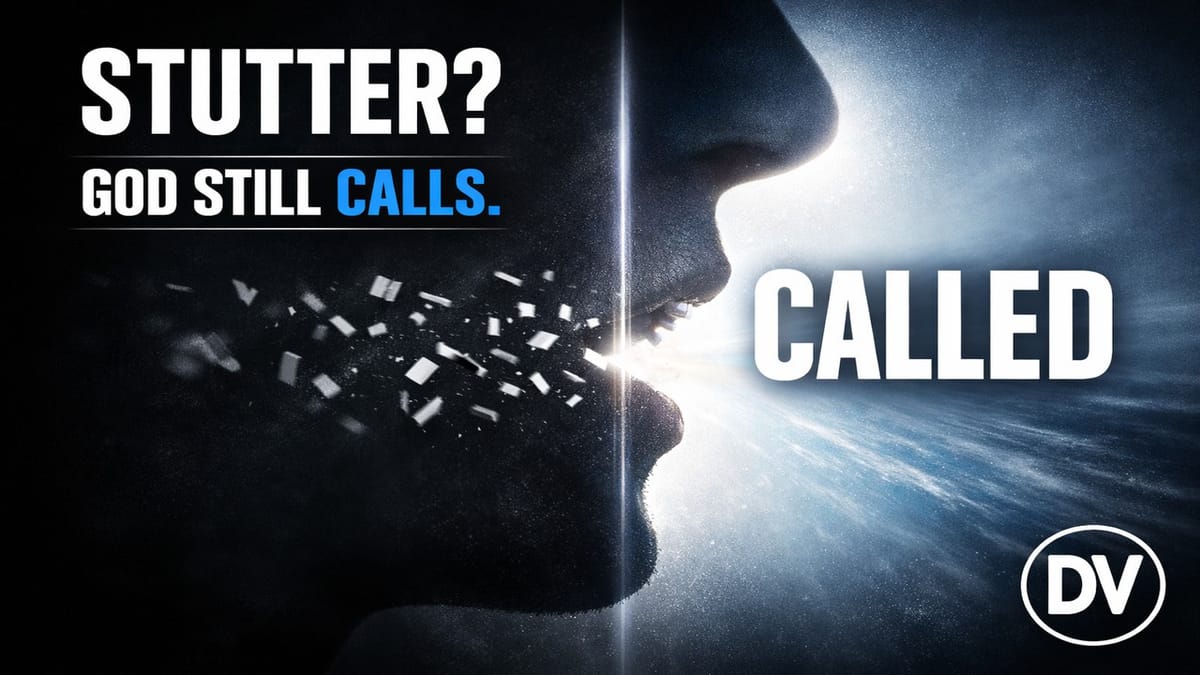
The Voice That Trembled and Still Changed the World
There is a quiet assumption that echoes through modern life, and it sounds reasonable on the surface. It tells us that impact belongs to the polished, that leadership belongs to the articulate, that influence belongs to those who can command a room without hesitation. It suggests that the strongest voice wins, that the smoothest delivery convinces, and that the most confident presence carries authority. It is an assumption so deeply embedded in our culture that we rarely question it. Yet Scripture dismantles it completely. History dismantles it. The lives of unlikely messengers dismantle it. And when we examine it honestly, we begin to realize that some of the most powerful voices in human history did not begin strong. They began trembling.
Moses stands at the center of this revelation. He was not raised in obscurity. He was raised in Pharaoh’s household. He understood power structures. He had seen royalty up close. He had witnessed the machinery of empire. Yet when God called him to confront that same empire, his immediate response was not strategic planning or personal confidence. It was resistance rooted in insecurity. He did not argue theology. He did not question the existence of God. He questioned himself. He said that he was slow of speech and slow of tongue. That confession was not poetic exaggeration. It was personal pain. Moses knew what it felt like to open his mouth and struggle to express what he carried inside. He knew what it felt like to anticipate misunderstanding. He knew what it felt like to fear public failure.
God’s response to Moses remains one of the most profound statements of sovereignty in all of Scripture. Instead of removing the assignment, God reframed the insecurity. He asked Moses who made the human mouth. He did not deny Moses’ limitation. He declared authority over it. In that moment, God established a pattern that runs through both biblical history and human history. He does not require the absence of weakness. He requires surrender within weakness. He does not wait for flawless communication. He moves through willing obedience.
That pattern did not end in the wilderness. It continued through centuries and into the modern era in ways that still surprise people. There was a country singer who stepped onto stages knowing that when he spoke, he would stutter. He knew the pauses would stretch. He knew the syllables would catch. He also knew that when he sang, something shifted. Rhythm carried him. Melody steadied him. The same mouth that stumbled in speech flowed in song. His name was Mel Tillis, and instead of hiding his speech impediment, he brought it with him into the spotlight. He did not allow embarrassment to silence him. He did not withdraw from public life because of a limitation. He stepped forward anyway. Crowds did not reject him for it. They embraced him for it. His imperfection made him accessible. His vulnerability made him human. And his willingness made him influential.
There is something deeply instructive about that contrast. When Moses hesitated, God did not cancel his calling. When Mel Tillis stuttered, the audience did not abandon him. In both cases, the weakness did not erase the mission. It became part of the story. That truth challenges our modern obsession with polish. We live in an era of curated images and rehearsed perfection. We have been trained to believe that credibility requires flawlessness. We assume that the strongest communicator wins the room. Yet Scripture and history keep presenting us with a different reality. They present us with trembling voices that changed nations.
The story grows even more compelling when we look beyond one or two examples. Consider the child who struggled so severely with speech that he withdrew into near silence. He was encouraged by a teacher to read poetry aloud. The rhythm and structure of verse gave his words a pathway. That child would grow into one of the most recognizable voices in cinematic history. The voice that once hesitated would one day narrate epics, embody villains, and command authority across generations. The weakness did not disappear overnight. It was refined through discipline. It was shaped by perseverance. It was strengthened through repetition. But it never disqualified him from influence.
There was also a wartime leader who faced his own speech difficulties. He practiced relentlessly. He wrote and rewrote. He learned how to shape cadence and timing. The man who struggled with articulation became the man whose speeches steadied a nation in its darkest hour. Those words did not emerge from effortless fluency. They emerged from effort. They emerged from persistence. They emerged from someone who refused to let limitation define destiny.
There is a powerful spiritual principle woven through all of these lives. Weakness, when surrendered, becomes a vessel. It does not become a barrier unless we allow it to. Moses’ insecurity forced him into dependence. Dependence deepened his trust. Trust unlocked obedience. And obedience activated divine power. The Red Sea did not part because Moses was eloquent. It parted because he was obedient. Pharaoh did not release Israel because Moses delivered flawless speeches. He released them because God moved through a willing servant.
We often misidentify the source of impact. We assume it is charisma. We assume it is clarity. We assume it is personal strength. Yet Scripture repeatedly attributes transformation to something deeper. It attributes it to surrender. The apostle Paul would later articulate this truth in striking language when he wrote that God’s power is made perfect in weakness. That phrase unsettles our cultural instincts. We want power perfected in competence. We want influence perfected in talent. We want leadership perfected in confidence. But God perfects power in weakness because weakness keeps the vessel aware of its dependence.
When Moses stood before Pharaoh, he stood as a man who knew he could not rely on his own rhetorical brilliance. He stood as a man who knew that if anything extraordinary happened, it would not be because of him. That awareness protected him from pride. It kept the spotlight on God rather than on the messenger. It ensured that when deliverance came, glory did not attach to personality. It attached to the One who called.
There is a subtle but dangerous shift that occurs when we idolize polish. We begin to believe that God needs our refinement before He can use us. We delay obedience until we feel ready. We postpone stepping forward until our voice feels steady. We silence ourselves because we anticipate judgment. In doing so, we may unintentionally resist the very pathway through which growth would occur. Moses did not overcome his insecurity before accepting the assignment. He accepted the assignment and grew within it. Mel Tillis did not eliminate his stutter before stepping onto the stage. He stepped onto the stage and learned how to live faithfully alongside it.
That reality speaks directly into modern insecurity. There are countless individuals who believe that their anxiety disqualifies them. They believe their past mistakes eliminate their future influence. They believe their lack of eloquence prevents them from sharing truth. They believe that because their voice shakes, they should remain silent. Yet history and Scripture stand together as witnesses against that assumption. They testify that trembling voices have confronted empires, comforted nations, and carried melodies that reached millions.
It is also important to recognize that weakness shapes character in ways that ease never could. A person who has struggled with speech often develops empathy for others who struggle. A leader who has battled insecurity often leads with humility rather than arrogance. A believer who has wrestled with doubt often extends grace rather than condemnation. Weakness cultivates compassion. It builds patience. It dismantles pride. These qualities do not merely accompany influence. They sustain it.
When Moses objected to God’s call, he was not disqualified for his hesitation. He was met with reassurance. God provided Aaron as a companion. Provision accompanied calling. That detail matters. Sometimes God removes obstacles. Sometimes He provides support within them. The presence of assistance does not indicate failure. It indicates divine wisdom. The mission was never meant to be carried alone. The trembling voice was not meant to echo in isolation. Community becomes part of the solution.
The same dynamic appears in artistic expression. Rhythm and melody became bridges for Mel Tillis. Poetry became a bridge for a future actor. Practice became a bridge for a statesman. Discipline became a bridge for others who once feared public speech. God often uses structure, community, and repetition as tools to refine what once felt fragile. The weakness does not disappear magically. It is transformed gradually.
There is also a deeper theological layer beneath all of this. When God chooses imperfect vessels, He exposes a truth about His nature. He is not dependent on human strength. He is not constrained by human limitation. He is not searching for the most impressive candidate. He is searching for the most surrendered heart. That truth levels the field. It removes excuses rooted in inadequacy. It dismantles pride rooted in talent. It invites both the hesitant and the confident into the same posture of reliance.
As we reflect on these stories, we begin to see that trembling is not a contradiction of calling. It is often evidence of its weight. The voice shakes because the moment matters. The heart races because the assignment carries significance. Fear does not necessarily signal disqualification. It can signal importance. Moses trembled because he understood the magnitude of confronting Pharaoh. The singer felt vulnerability because he understood the visibility of the stage. Yet neither retreated permanently. They moved forward with trembling.
There is a temptation to believe that courage means the absence of fear. Scripture suggests otherwise. Courage often means obedience in the presence of fear. It means stepping forward while aware of weakness. It means speaking even when the voice quivers. That is not reckless bravado. It is faithful surrender.
The narrative of Moses also reminds us that growth unfolds over time. The man who hesitated at the burning bush would later intercede boldly for an entire nation. The shepherd who doubted his own speech would later deliver law and guidance with clarity and authority. Transformation occurred within obedience. It did not precede it. That progression should encourage anyone who feels unqualified. Readiness is often discovered on the path, not before it.
The world today is saturated with noise. Platforms multiply. Opinions compete. Volume often substitutes for substance. In that environment, it is easy to believe that only the loudest voice prevails. Yet history consistently demonstrates that authenticity outlasts volume. A trembling voice rooted in conviction can endure longer than a polished voice rooted in ego. The depth of surrender matters more than the smoothness of delivery.
If we internalize this truth, it changes how we view our own limitations. Instead of seeing them as verdicts, we begin to see them as invitations. Instead of interpreting insecurity as final, we interpret it as formative. The trembling voice becomes a reminder that we are vessels, not sources. It keeps us aware that any impact flows through us, not from us.
Moses did not deliver Israel because he mastered speech. He delivered Israel because he trusted God. Mel Tillis did not touch audiences because he eliminated his stutter. He touched them because he refused to let it silence him. Others who once struggled with articulation did not become influential because weakness vanished. They became influential because perseverance matured alongside it.
There is a legacy embedded in these lives that speaks into every generation. It declares that imperfection does not negate purpose. It insists that hesitation does not erase destiny. It proclaims that God’s call does not wait for human polish. The voice may tremble. The heart may race. The insecurity may whisper. Yet the assignment remains.
When we begin to see weakness through this lens, we also begin to understand grace more fully. Grace is not merely forgiveness for failure. It is empowerment within limitation. It is the divine strength that meets human fragility. It is the sustaining presence that accompanies obedience. Grace does not always remove trembling. It steadies it.
The wilderness narrative continues to unfold, and so does the modern one. Each generation produces its own hesitant voices. Each era presents its own stages and palaces. The context shifts, but the principle remains. God calls. Humanity hesitates. Grace responds. Obedience follows. History changes.
The question that lingers is not whether weakness exists. It clearly does. The question is whether weakness will silence or surrender. Moses chose surrender. The singer chose surrender. Others who struggled chose surrender. And because they did, their trembling voices became instruments of transformation.
This is not merely an inspiring observation. It is an invitation. It is an invitation to reconsider what disqualifies and what qualifies. It is an invitation to stop postponing obedience until perfection arrives. It is an invitation to trust that the One who made the mouth understands its trembling. It is an invitation to step forward, not because the voice is flawless, but because the calling is faithful.
There is a profound difference between confidence in self and confidence in calling. The first is fragile because it depends on performance. The second is durable because it depends on obedience. When Moses finally stood before Pharaoh, he did not stand as a master orator. He stood as a commissioned servant. That distinction matters because it reveals where strength was located. It was not located in the steadiness of his voice. It was located in the authority of the One who sent him.
The modern world is deeply invested in presentation. Entire industries revolve around coaching people to refine their speech, curate their image, and optimize their delivery. There is nothing inherently wrong with growth or improvement. Discipline is a gift. Preparation is wise. Practice is honorable. Yet there is a subtle danger when refinement becomes a prerequisite for obedience. If we believe we must eliminate every flaw before stepping forward, we will spend a lifetime preparing and never begin.
Moses did not wait until he felt eloquent. He went while still aware of his limitation. That movement initiated transformation. With every confrontation, with every conversation, with every act of obedience, courage deepened. Courage does not descend fully formed. It is cultivated through action. The trembling does not disappear instantly. It weakens through repetition. Growth emerges from participation, not postponement.
When Mel Tillis stood before audiences, he did not pretend his stutter was absent. He acknowledged it. He even laughed about it. Humor became a form of ownership. Ownership became a form of freedom. Freedom became a form of influence. The audience sensed authenticity. Authenticity fosters connection. Connection sustains impact. That sequence reveals something essential. Vulnerability does not undermine leadership. It humanizes it.
There is an important spiritual insight hidden in that dynamic. God’s strength often becomes most visible when human weakness is most transparent. If Moses had been effortlessly eloquent, observers might have attributed deliverance to charisma. If the singer had never struggled, audiences might have admired talent without perceiving resilience. Weakness redirected attention. It ensured that the ultimate source of power remained unmistakable.
Throughout Scripture, God consistently selects unlikely messengers. A shepherd confronts a king. A widow sustains a prophet. A persecutor becomes a missionary. A fisherman becomes a preacher. These choices reveal a pattern. God is not restricted to conventional criteria. He does not measure suitability by human metrics. He measures surrender. He measures faithfulness. He measures willingness.
This truth dismantles comparison. Comparison thrives on visible strengths. It measures articulation against articulation, confidence against confidence, polish against polish. When we compare ourselves to others, we often magnify our own limitations and minimize our own calling. Moses could have compared himself to polished Egyptian officials. He could have compared himself to eloquent speakers. Instead, he was invited to trust that calling outweighed comparison.
The same temptation confronts people today. A person who struggles with speech may compare themselves to charismatic communicators. A person who battles anxiety may compare themselves to seemingly fearless leaders. A believer who wrestles with doubt may compare themselves to confident theologians. In each case, comparison becomes paralyzing. Yet Scripture invites a different posture. It invites trust in the One who calls, not in the self who responds.
Weakness also refines empathy. A leader who has known insecurity often listens more attentively. A teacher who has struggled often instructs more patiently. A pastor who has doubted often shepherds more gently. Hardship softens the heart. It deepens compassion. It produces leaders who remember what it felt like to tremble. That memory guards against arrogance. It anchors influence in humility.
The wilderness years shaped Moses long before the palace confrontation. Isolation, obscurity, and responsibility over sheep cultivated patience and attentiveness. Those qualities were not flashy. They were foundational. Likewise, seasons of struggle today may appear unimpressive. They may feel like detours. Yet they often become preparation. The trembling voice is not simply endured. It is formed.
In modern contexts, the stage may look different. It may be a boardroom, a classroom, a church platform, a counseling office, a courtroom, or a family table. The assignment varies. The principle remains. When insecurity whispers that one is unqualified, the call of God counters that weakness does not negate purpose. The question shifts from “Am I flawless?” to “Am I faithful?”
Faithfulness reorients the heart. It replaces self-evaluation with obedience. It replaces performance anxiety with surrender. It replaces delay with participation. This shift does not eliminate growth. It catalyzes it. When a person steps forward despite trembling, they enter a process. Each act of obedience builds strength. Each confrontation faced develops resilience. Each conversation attempted refines skill.
It is also crucial to acknowledge that God sometimes allows weakness to persist. Paul’s thorn in the flesh was not removed despite repeated prayer. Instead, he was given grace sufficient for the struggle. This challenges our expectation of instant deliverance. We often pray for elimination of difficulty. God sometimes provides endurance within difficulty. That endurance shapes character more deeply than removal would.
Mel Tillis did not wake up one day with a permanently erased stutter. He learned to live alongside it. He adapted. He leaned into music. He built a career not in denial of weakness but in partnership with perseverance. That posture mirrors the spiritual journey of countless believers. Growth is rarely linear. It is layered. It is gradual. It is marked by both setbacks and breakthroughs.
The narrative of trembling voices also reframes how we view failure. Failure does not equal finality. Moses would later make mistakes in the wilderness. He would face frustration, anger, and consequence. Yet his earlier obedience remained significant. The impact of his leadership endured beyond personal shortcomings. This reminds us that obedience does not guarantee perfection. It initiates purpose.
In contemporary culture, where mistakes are often magnified publicly, it is tempting to withdraw. Fear of criticism can silence potential leaders. Fear of imperfection can suppress initiative. Yet the biblical narrative consistently shows that God works through flawed individuals. The presence of limitation does not surprise Him. The presence of failure does not derail His sovereignty. Redemption threads through weakness.
The deeper lesson is not merely about speech. It is about identity. Moses initially defined himself by limitation. God redefined him by calling. Identity rooted in weakness produces hesitation. Identity rooted in calling produces courage. The shift from self-definition to God-definition is transformative. It anchors confidence not in ability but in assignment.
That shift also reorients community. When leaders acknowledge weakness, communities become safer. When pastors admit struggle, congregations breathe easier. When parents confess imperfection, children learn grace. When mentors share their own trembling beginnings, mentees find hope. Transparency does not erode authority. It strengthens trust.
There is a generational impact embedded in this truth. Imagine the child who struggles with speech today. Imagine the student who dreads presentations. Imagine the believer who fears sharing faith because words feel insufficient. When they encounter the stories of Moses and others who persevered, a new narrative emerges. The narrative declares that limitation is not destiny. It declares that growth is possible. It declares that calling is not reserved for the naturally confident.
History repeatedly affirms this narrative. Leaders who once hesitated have steadied movements. Artists who once doubted have shaped culture. Voices that once trembled have articulated hope in moments of crisis. The pattern is consistent. Surrender unlocks strength.
There is also a profound theological beauty in this pattern. It ensures that glory returns to God. When impact flows from visibly imperfect vessels, observers are reminded that the source is not human brilliance. It is divine empowerment. The trembling voice becomes evidence of grace. The stutter becomes a testimony of perseverance. The insecurity becomes a backdrop for sovereignty.
As we conclude this reflection, the invitation becomes unmistakable. Stop waiting for perfection before stepping into obedience. Stop equating trembling with disqualification. Stop believing that fluency determines faithfulness. The One who formed the mouth understands its struggle. The One who calls equips through grace. The One who sends sustains through presence.
The voice may tremble. Let it tremble. The heart may race. Let it race. Courage is not the absence of those sensations. It is the decision to move forward anyway. The wilderness, the palace, the stage, the platform, the classroom, the boardroom, the family table all await voices willing to trust calling over insecurity.
Moses stepped forward and an empire felt the impact. A singer stepped forward and millions listened. Others stepped forward and history shifted. The same principle holds today. The trembling voice that surrenders becomes the instrument through which transformation flows.
Do not measure readiness by steadiness. Measure it by willingness. Do not define identity by weakness. Define it by calling. Do not postpone obedience until the voice feels flawless. Begin while it shakes.
Because sometimes the most powerful words ever spoken are first released through trembling lips.
Your friend,
Douglas Vndergraph
Watch Douglas Vandergraph’s inspiring faith-based videos on YouTube: https://www.youtube.com/@douglasvandergraph
Support the ministry by buying Douglas a coffee: https://www.buymeacoffee.com/douglasvandergraph