The Storm Is Real, but Fear Is Not the Judge

Chapter 1: The Difference Between a Warning and a Verdict
The woman in the third row had folded her statement so many times that the paper was beginning to split. She had come to the town council meeting to ask for a safer crossing near the elementary school. Two weeks earlier, she had watched a car turn through the crosswalk while children were still in it. Now she was waiting for her name to be called, staring at the microphone and imagining herself forgetting every word. She had something worth saying, but fear was making her question whether she was the right person to say it.
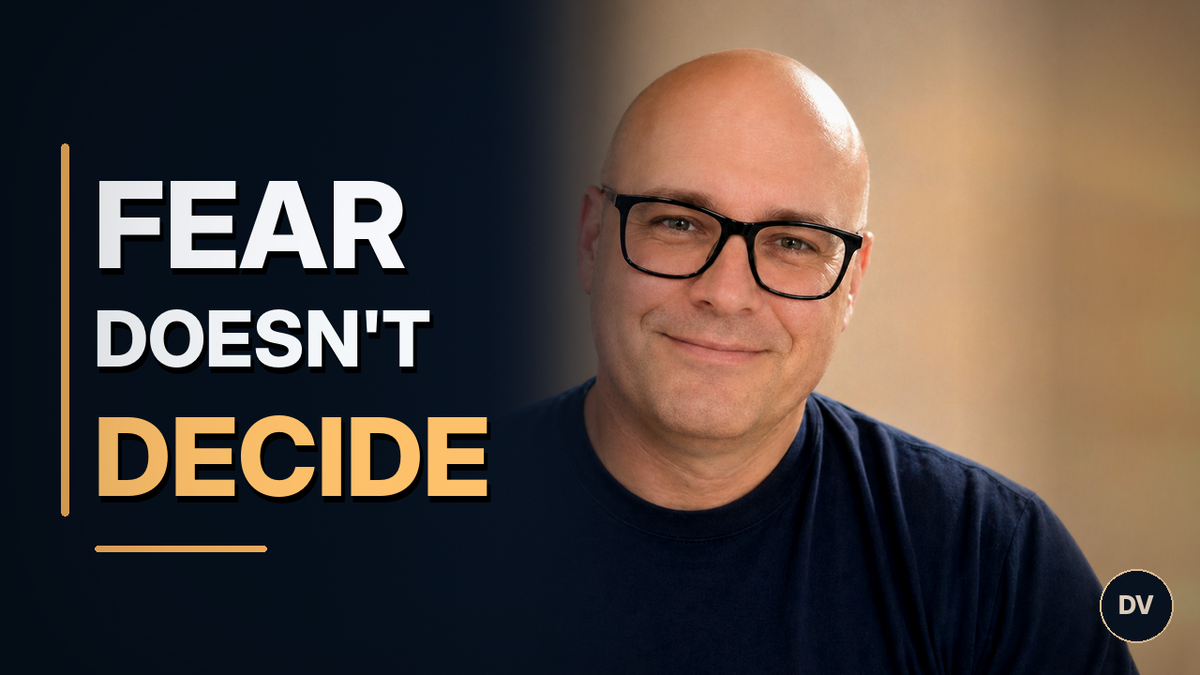
This is the part of fear that interests me most: it can notice something difficult without knowing what that difficulty means. Speaking in public might be uncomfortable. People might disagree. Neither possibility proves she should sit quietly. In my video about facing fear without letting it make your decisions, I talk about the courage Jesus makes possible, but the question goes deeper than finding enough confidence to act. We also have to learn which conclusions fear has no right to make for us.
That distinction belongs beside learning to trust God when uncertainty feels overwhelming, because fear often begins with a truthful observation and ends with an unsupported verdict. The situation is unfamiliar, so fear says we will fail. Somebody might be disappointed, so fear says we should never ask. We cannot guarantee the outcome, so fear declares that moving forward would be foolish. By the time we notice what has happened, we are treating a feeling as though it were a trusted judge.
Consider the disciples on the Sea of Galilee in Mark 4. A fierce storm rose while Jesus was asleep in the boat. The waves were real, and the danger was not imaginary. The disciples woke Him, frightened that they were going to die. Jesus calmed the wind and the water, then asked why they were afraid and whether they still had no faith. His question does not make the storm harmless. It exposes how completely the storm had taken over their understanding of who was with them.
We can miss this if we tell ourselves that faith means ignoring warning signs. It does not. A damaged tire needs attention. A troubling medical symptom deserves a proper assessment. A relationship that has become unsafe requires protection, not blind optimism. Fear can alert us to something that matters. The problem comes when we allow it to announce what our whole future must be, or who we are allowed to become.
When the clerk finally called the woman's name, she unfolded her paper and walked to the microphone. Her voice shook through the first sentence. She kept reading anyway. The council might agree with her, or it might not. She had no promise about that. But her trembling voice did not mean her concern was unworthy, and a difficult moment did not have to become a verdict on her courage.
Chapter 2: When Playing It Safe Becomes Its Own Kind of Loss
The application had been sitting beside the kitchen calendar for eleven days. A retired mechanic had been invited to volunteer with a program that taught young adults practical skills. He knew engines, tools, and the satisfaction of showing somebody how to solve a problem with their own hands. But he had been out of the workforce for several years, and the thought of standing in front of younger people made him uncomfortable. What if they knew more than he did? What if he struggled to explain something that had always come naturally to him? He finally put the application inside a drawer, telling himself that the program probably had enough volunteers.
Nothing terrible happened when he closed that drawer. Nobody criticized him. He avoided the possibility of embarrassment, and his afternoon continued exactly as it would have otherwise. That is what makes certain kinds of fear so difficult to recognize. They appear to protect us because the consequences of avoiding something are often invisible. We notice the discomfort we escaped, but we rarely see the relationships, experiences, and opportunities that never had a chance to develop.
Jesus addressed something similar in the parable of the talents in Matthew 25:14–30. A master entrusted his servants with different amounts of money before leaving on a journey. Two servants put what they received to work. The third, afraid of his master, buried what had been entrusted to him. When the master returned, that servant explained that fear had influenced his decision. He had protected the money from loss, but he had done nothing productive with it.
This parable deserves thoughtful reading. It is not a command to gamble recklessly, chase every opportunity, or measure our spiritual worth by financial success. Jesus was teaching about faithfulness and responsibility. The servant's problem was not simply that he felt afraid. His fear had become the reason he refused to act with what he had been given.
That distinction reaches into ordinary life. We sometimes call our hesitation wisdom because wisdom sounds respectable. We tell ourselves that avoiding disappointment is sensible, even when the real cost is gradually withdrawing from meaningful participation in the world. Genuine wisdom considers risks and responsibilities. Fear can imitate wisdom while quietly insisting that every uncertain outcome should be avoided.
The retired mechanic still had knowledge worth sharing. He did not need to impress anyone or become the most important person in the room. He could begin by asking whether the program needed help with a single workshop. If the experience proved unsuitable, he could reconsider. Taking that step would not guarantee success, but it would allow reality, rather than imagination alone, to inform his decision.
Perhaps the question we should ask is not whether a choice makes us uncomfortable, but whether avoiding it is keeping us from something worthwhile. God has not asked us to pursue every possibility. He has invited us to be faithful with what is actually in our hands.
Chapter 3: What Fear Cannot Decide About Your Life
The cardboard box sat beside the bedroom door for most of the afternoon. A widower had taken his wife's winter coat from the closet, folded it carefully, and then stopped. She had been gone for nearly two years. He needed the space, and he knew the coat could help someone who needed warm clothing. But as he looked at the empty hanger, he felt a sudden fear that giving it away would mean he was leaving her behind.
That is another verdict fear has no authority to deliver. It can tell us a change will hurt. It cannot decide that moving forward means we loved someone less. Grief deserves patience, and some belongings carry memories we may want to keep. Yet love is not measured by how long a closet remains untouched. A person can honor what mattered and still make room for the life in front of them.
In John 20, Mary Magdalene stood outside Jesus' tomb weeping. She had come looking for Him and found the tomb empty. At first she did not recognize the risen Jesus standing nearby. Then He spoke her name. Her understanding of that moment changed, not because her sorrow had been foolish, but because she encountered a truth she could not have discovered by listening only to her distress.
Jesus then gave Mary a message to carry to the disciples. She was not asked to remain beside the tomb trying to hold on to the moment as it had been. She was given something to do in the world beyond it. Her experience was unique, and our losses do not come with the same visible miracle. Still, the Gospel challenges the idea that pain has the right to define every day that follows.
The widower might keep the coat after all. There would be nothing wrong with that. Or he might place it in the box and take it to a charity the next morning. The faithful choice would not be proved by which option looked braver. It would come from deciding with care, rather than obeying the accusation that any change was a betrayal.
Fear may be present when you consider a difficult decision. Listen long enough to understand what concerns deserve attention, then ask what is true, what is loving, and what responsibility requires. Bring those questions to Jesus in prayer and, when needed, to someone wise whom you trust. Fear can describe how uncertain the moment feels. It cannot tell you that your story is finished.
Your friend,
Explore the complete Douglas Vandergraph Master Index:https://douglasvandergraph.com/douglas-vandergraph-master-index/
Watch Douglas Vandergraph’s faith-based videos on YouTube:https://www.youtube.com/@douglasvandergraph