The Stone He Could Not Hide

Chapter One
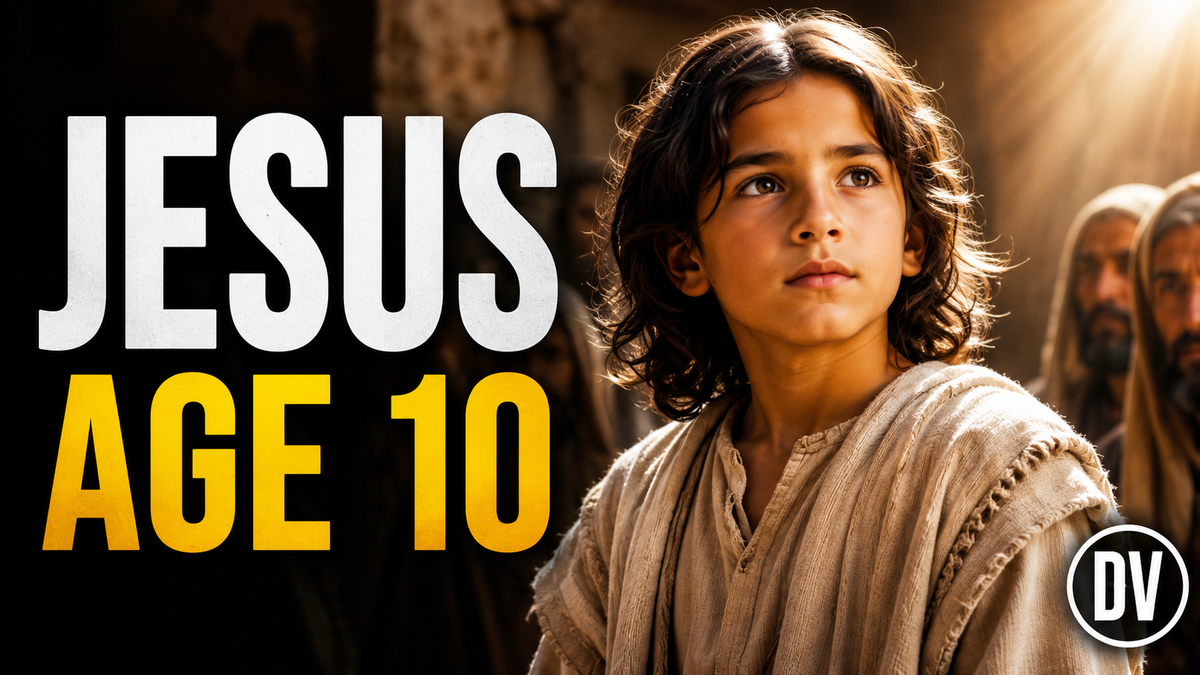
Jesus knelt before dawn where the packed earth of the house was still cool from the night, and the first gray light had not yet reached the doorway. The room was quiet except for the small breathing of His brothers and the low movement of Mary tending the last coals under a clay cover. Jesus held His hands open upon His knees. He did not hurry His prayer. He did not speak as a boy pretending toward heaven, but as one already known there, resting in the Father before the village began to ask anything of Him.
Nazareth had many mornings that seemed too ordinary to remember, yet this one belonged to the Jesus of Nazareth age 10 story because of what would happen after the streets filled with voices and dust. A woman would leave the market with less flour than she had paid for. A boy would hide a lie beneath his robe. A girl who had already lost too much would be blamed for something she had not done. None of it would look large enough for Rome, Jerusalem, or any man who measured importance by noise, but Jesus had never needed noise to hear a soul breaking under pressure.
In the years surrounding the quiet years of young Jesus in Nazareth, many people in the village thought holiness would appear as distance from trouble. They imagined that God’s favor would keep a household clean of accusations, debts, whispers, and the sort of shame that made neighbors lower their voices near a doorway. Jesus rose from prayer into the same narrow world everyone else woke to, and His face carried a peace that did not come from being untouched by human trouble. It came from seeing the Father in the middle of it.
Mary glanced toward Him as He stood. She had learned not to interrupt those first moments after prayer. There were mornings when His silence felt like a lamp left burning in a room no one else could see. She brushed ash from her fingers and said softly, “Your father will need you near the shop when the sun comes over the ridge.”
Jesus nodded, then looked toward the sleeping shape of His younger brother, who had kicked the thin covering to the floor. He bent, drew it back over the boy’s shoulder, and only then answered. “I will go to him.”
Mary studied Him for a moment longer than another mother might have. He was ten, narrow-shouldered and still growing into His hands, with dust on His feet like every child in Nazareth. Yet when He spoke, even quietly, the room felt steadier. She smiled, though something in her smile carried prayer of its own. “Eat first.”
Outside, Nazareth began to stir. A rooster called from a roof. A door scraped open. Somewhere a woman laughed once, quick and tired, before a child started crying. The village clung to the slope in clusters of stone, mud, timber, and smoke. Paths wound between homes with no concern for straightness, as if the village had grown by memory rather than design. Beyond the houses, fields lay under the pale morning, and the hills held their long silence over Galilee.
At the edge of the market path, Neriah ben Talmai stood with one hand gripping the cord of a grain sack and the other pressed against the fold of his tunic, where a small weighing stone pulled at the cloth. He was thirteen, old enough for men to give him work and young enough for their anger to still frighten him. The stone was smooth from years of use, but it was not honest. His uncle had filed its underside three nights ago while Neriah watched the doorway and tried not to understand.
“You will use this for small purchases,” his uncle Haggai had told him. “Not with men who will weigh again. Not with travelers. With widows, girls, and those who buy in handfuls. A little from each sale keeps us breathing.”
Neriah had asked, “Is it theft?”
Haggai had struck him across the ear so fast the question never had time to finish living in the room. “Theft is what rich men call it when poor men learn to survive.”
Since then, the false weight had lived against Neriah’s body like a second heart, heavier than stone should have been. His mother did not know. Or perhaps she knew and had decided there were some truths she could not afford to name. His father’s death the year before had left them with jars they could not fill, debts that arrived like weather, and a silence at supper that made every bite sound too loud.
He saw Jesus coming down the path with a bundle of small wooden pegs for Joseph’s shop. Neriah stiffened. He liked Jesus and avoided Him for the same reason. Other boys could be fooled by posture, jokes, and a quick answer. Jesus looked at a person as if He were not searching for weakness but still found the place where it lived.
“Neriah,” Jesus said.
The boy shifted the sack cord on his shoulder. “You are early.”
“So are you.”
“My uncle says grain sells better before the sun makes people impatient.”
Jesus looked at the fold of Neriah’s tunic, not long, not rudely, but long enough that Neriah felt heat rise along his neck. A cart creaked behind them, and a goat nosed at a basket near the wall. The ordinary sounds should have rescued him. They did not.
“Does the stone trouble you?” Jesus asked.
Neriah’s fingers closed over the cloth. “What stone?”
Jesus did not answer quickly. His eyes moved to the market, where Haggai was already arranging sacks beneath the awning. Haggai was broad, loud, and always seemed to stand so other people had to move around him. “The one you carry close because you do not want your hand to remember it.”
Neriah looked away. “You talk strangely sometimes.”
“My mother says I should speak plainly when a thing is plain.”
“Then speak plainly.”
Jesus stepped aside as two women passed with empty bowls. “A stone can be small and still bend a man’s back.”
For a moment Neriah hated Him. The feeling came sharp and sudden, not because Jesus had injured him, but because He had come too near the injury. Neriah wanted to say that boys with living fathers should not speak of bent backs. He wanted to say that hunger made clean words easy for people who had bread. He wanted to say many things that would move the light away from himself, but Adah the widow came up the path before he could choose one.
Adah’s veil was mended in three places. Her youngest grandson walked beside her, carrying a clay cup with both hands as if it were treasure. She greeted Jesus first, as many did without knowing why. “Peace to you, son of Mary.”
“And to you,” Jesus said.
Neriah felt the false weight turn colder under his tunic. Adah stopped at Haggai’s sacks and counted out coins so worn their edges were nearly smooth. Haggai smiled with all his teeth. “Fine barley today. Your boy will eat well.”
“He is not my boy,” Adah said gently, laying a hand on the child’s head. “He is my daughter’s son. But yes, may he eat well.”
Haggai snapped his fingers toward Neriah. “Measure.”
The command entered Neriah’s body before he thought. He set the sack down, knelt near the scale, and drew out the weighing stone. His honest stone lay in the basket beside the post. The false one was in his palm. Haggai kept talking to Adah, blocking her view with his body, and Neriah understood the practiced cruelty of it. No one had to say the wrong thing twice when fear had already learned the work.
He placed the false stone on the scale.
Jesus watched from a few steps away, the wooden pegs still gathered in His arms. Neriah felt His gaze and nearly reached for the honest stone. Haggai’s sandal shifted against the dirt. The warning was small, but Neriah heard it. He poured barley until the scale balanced under the lie, then tied the measure into Adah’s cloth. Her grandson smiled at the little mound as if the world had become kind.
A girl’s voice rose from the next stall before Adah could leave. “That is not enough.”
Everyone turned. The girl was Liora, twelve years old, thin from a season of poor meals, with a basket of reeds under one arm. Her mother had died in the winter, and her father had gone south for work and not yet returned. She had been sleeping in the corner of her aunt’s room, which everyone knew and no one mentioned unless they wanted to feel generous.
Haggai’s smile vanished. “Who asked you?”
Liora stood her ground, but her eyes flickered toward the barley. “I bought that much yesterday with fewer coins.”
“Then yesterday someone pitied you.”
Adah looked uncertainly at the bundle in her hands. “Is the measure wrong?”
Neriah’s mouth dried. He could still end it. He could pick up the honest stone. He could say his uncle had commanded him. He could choose one moment of truth and let the village do whatever villages did when truth embarrassed them. Instead he looked down at the dust.
Haggai snatched Liora’s reed basket and shook it. “Perhaps the girl knows the measure because she has been watching my stall too closely. Have you taken from me?”
Liora’s face changed. Not fear first, but insult so deep it seemed to steal her breath. “No.”
“A hungry girl sees grain and tells herself stories.” Haggai raised his voice, and people began to gather. “Maybe she thinks a handful missing from a sack belongs to her because her father left her nothing.”
Neriah looked at Jesus then, and what he saw was worse than accusation. Jesus looked grieved, not surprised. It was the look of someone watching a door close from the inside.
Adah clutched her bundle. “Haggai, she only spoke.”
“She accused my house,” Haggai said. “Let her empty her basket.”
Liora held it tighter. “It has reeds. Nothing else.”
“Then show us.”
The crowd leaned in with that hunger people sometimes have when another person’s shame gives them something to discuss before noon. Neriah could hear his own pulse. He saw the false stone beside the scale, plain as a witness. He saw Jesus set the wooden pegs down carefully against the wall.
Jesus came forward. He did not raise His voice, yet the space seemed to make room for Him. “If a measure is true, it does not fear being measured.”
Haggai gave a short laugh. “Joseph’s son is teaching merchants now?”
“No,” Jesus said. “I am asking why the girl must empty her basket before the stone is tested.”
Neriah felt the words pass through him like a blade drawn without haste. Haggai turned his head slowly, and for one terrible moment uncle and nephew looked at each other. The truth stood between them, small, smooth, and heavy.
“Bring the other stone,” Jesus said to Neriah.
It was not a command like Haggai’s. It gave him room to become someone else, and that room frightened him more than force. Neriah’s knees felt weak. The crowd watched. Liora watched. Adah watched. Jesus watched with mercy that did not excuse him.
His hand moved toward the basket where the honest stone lay. Then he stopped. He thought of his mother counting lentils in the dark. He thought of Haggai’s hand striking him. He thought of debt, hunger, and the way men spoke of boys who betrayed their own blood. He let his hand fall.
“I do not know where it is,” Neriah said.
The lie was quieter than he expected. It did not sound strong enough to change his life. Still, once spoken, it entered the air and made a home there.
Haggai smiled again, thinly this time. “You see? A child throws dust at a good name, and now another child repeats it.”
Liora’s eyes filled, but she refused to cry. That made the crowd harder on her, though they would have denied it if asked. Adah untied her cloth and looked at the barley, no longer trusting what she held and not knowing how to ask for justice without becoming another burden.
Jesus bent and picked up the false stone. Haggai stepped forward, but Jesus held it in His open palm where everyone could see it. He did not accuse Neriah. He did not rescue him from consequence. He simply held the thing that had been hidden and let its presence ask the question Neriah would not answer.
“Some weights are carried in the hand,” Jesus said, looking at Neriah with sorrow and invitation together. “Some are carried in the heart.”
The market went still. Neriah wished Jesus had shouted. He wished Haggai had struck him there. Noise would have been easier than that quiet sentence. The false stone sat in Jesus’ palm, and Neriah understood, with a terror that felt almost like hope, that the worst thing in the market was not being found out. The worst thing was remaining hidden and calling it survival.
Chapter Two
Haggai moved first, because men who make their living from fear know when a silence has turned against them. He reached for the stone in Jesus’ hand with the speed of someone snatching a coal before it burned through cloth, but Jesus did not pull away in panic or tighten His fist in defiance. He simply lowered His hand so the stone remained visible between them, open to the morning, open to every eye that had gathered near the stall.
“It is mine,” Haggai said.
Jesus looked at him. “Then you know its weight.”
“It is a stone from my own basket.”
“Then let it be set against the honest one.”
A murmur passed through the market, not loud enough to become courage but strong enough to disturb Haggai’s control. Neriah saw men glance toward the basket near the post. He saw Adah hold her cloth bundle closer, not because she trusted what was inside it, but because poverty had taught her to protect even what might be less than promised. Liora stood with her reed basket pressed against her ribs, her face pale with the stubborn dignity of a child who had already learned that innocence did not always protect the innocent.
Haggai’s eyes narrowed. “You speak as though you know my trade.”
“I know that truth does not lose weight when it is placed on a scale,” Jesus said.
The words entered the crowd differently than an accusation would have. Some frowned because they heard judgment. Others looked down because they heard mercy and did not know what to do with it. Neriah heard both, and the two together pressed harder on him than Haggai’s hand ever had. He wanted Jesus to name his uncle alone. He wanted all the light to move away from him and settle on the adult who had planned it, filed it, commanded it, and taught a frightened boy to call wrong a necessity. But Jesus had asked him to bring the other stone. Jesus had offered him one clean step, and Neriah had refused.
Joseph arrived from the lane above the market with his work belt still tied around his waist. He must have seen the crowd from the shop and come down before the trouble ripened into something worse. He stopped beside Jesus, took in the stone, the scale, Haggai’s face, Adah’s trembling hands, Liora’s guarded stare, and Neriah’s lowered head. Joseph did not speak immediately. He had the patient heaviness of a man who knew how quickly a village could injure itself with words.
“What has happened?” Joseph asked.
Haggai gave a rough laugh. “Your son has decided to shame my house before the market.”
Joseph looked at Jesus, and there was no embarrassment in his face, only attention. “Has He?”
Jesus set the stone upon the scale by itself. The pan dipped. “A woman paid for grain. A girl saw the measure was not right. The girl was accused. The stone should be tested.”
Joseph’s gaze moved to Neriah. It was not harsh, which somehow made it harder to bear. “Where is the other stone?”
Neriah’s throat tightened. Haggai answered before he could. “Misplaced. Boys are careless.”
Liora’s voice came low, but clear. “He reached toward the basket before he said he did not know.”
The crowd shifted again. Neriah could feel their judgment begin to choose a shape. A few moments earlier Liora had stood near shame. Now shame stepped toward him, and he nearly hated her for telling the truth he had been too cowardly to tell. The thought itself frightened him. He had not wanted to become the sort of person who resented honesty because it made him visible.
Haggai turned on her. “You will learn to keep your mouth closed.”
Joseph took one step, not threateningly, but enough that Haggai stopped. Jesus looked at Liora, and the girl seemed to breathe for the first time since the accusation began.
“Bring the basket,” Joseph said to Neriah.
Neriah did not move. His legs felt as though the dirt had closed around his ankles. He saw every path ahead and none that did not cost him something. If he brought the basket, Haggai would rage, and the truth would become public. If he refused, Joseph would know. Jesus already knew. Liora knew. Worst of all, Neriah knew, and knowledge had become an unwelcome witness inside him.
His mother’s face came to him then, not as she looked in the morning when she tied her veil and tried to make hope appear ordinary, but as she had looked the night his father’s body was brought home. She had not screamed. She had sat near the doorway with both hands open in her lap, as if she had dropped something she could not find. Later, after the burial, Haggai had come with bread and oil and a way of standing that made gratitude feel like debt. Since then, Neriah’s house had belonged partly to grief and partly to his uncle’s voice.
He stepped to the basket and lifted the honest stone.
Haggai cursed under his breath.
No one moved as Neriah carried it back. He placed it on the second pan of the scale. The difference was not dramatic. It did not look large enough to starve anyone. That was what made it terrible. The false weight was not a blade or a fist. It was smaller than open violence, easy to defend, easy to hide, easy to repeat until enough small thefts became one large hunger shared by those already struggling to eat.
Adah covered her mouth with her hand. Liora looked not triumphant but tired.
Joseph’s face darkened with grief. “How long?”
Haggai stepped closer to Neriah, his voice low enough to feel private and public at once. “Careful.”
Neriah stared at the two stones. The honest one sat plain and ordinary, but it seemed almost impossible to him now. A true thing had no cleverness in it. It did not protect him from anger. It did not promise bread. It did not explain away his fear. It simply was what it was, and demanded that he become the same.
Jesus stood near the scale, still and sorrowful. “Neriah,” He said, and the boy raised his eyes. “A hidden wrong asks more from you every day. First it asks for your silence. Then it asks for your name. Then it asks you to believe there is no way back.”
Neriah’s lips parted, but no sound came.
Haggai pointed at Jesus. “Enough. He is a child. You are all listening to a child.”
Jesus did not look away from Neriah. “So is he.”
That sentence broke something open in a place Neriah had kept locked even from himself. He was not a man of trade defending a method. He was not a partner in Haggai’s cleverness. He was a boy whose father was dead, whose hunger had been used against him, whose fear had been dressed up as loyalty until he could no longer tell the difference between obedience and surrender. Tears filled his eyes, and he hated them, but he could not stop them.
“I used it,” he said.
The market held its breath.
Haggai seized his shoulder. “Do not shame your blood.”
Neriah flinched, but Jesus’ voice came before fear could close around him again. “Truth does not dishonor a house. Sin does.”
Haggai’s grip tightened, then loosened when Joseph looked at his hand. Neriah stepped away from his uncle. It was a small movement, perhaps no more than the width of a sandal, but it felt to him like crossing a river.
“I used it,” Neriah said again, stronger, though the strength shook. “Not only today. Other days. My uncle made it, but I carried it. I knew. I said nothing. I lied when Jesus asked me.”
Adah lowered her bundle. The grandson beside her did not understand the full shape of what had happened, but he understood that the grown world had become unsafe and pressed himself against her side. Liora’s eyes rested on Neriah with a guarded question, as if she wanted to know whether his confession would reach all the way to her name or stop once he had relieved his own heart.
Neriah turned toward her. “You did not steal. You told the truth. I let him accuse you.”
Liora swallowed. Her mouth tightened, and for a moment she looked younger than twelve. “I know.”
Her answer cut him more deeply than anger would have. She had not needed his confession to know her innocence. What she had needed was someone willing to stand with it when accusation made innocence lonely.
Joseph bent and untied Adah’s cloth. With careful hands, he measured again using the honest stone. The shortage looked small in the pan and large in Adah’s face. Haggai protested that no one could prove every sale had been wrong, that one stone did not make a pattern, that poor memory and market dust could make fools of them all. His words grew louder as they grew weaker.
Jesus watched the barley fall into the measure until the scale balanced truly. Then He took a handful from Joseph and poured it into Adah’s cloth Himself. The grains made a soft, dry sound, like rain too small to cool the earth.
“This was owed,” Jesus said.
Adah bowed her head. “May the Lord see.”
“He does,” Jesus said.
Something in the way He said it moved through Neriah with both comfort and dread. He had thought being seen by God meant being caught. Now, for the first time, he wondered whether being unseen had been the more terrible thing. If the Lord saw Adah, then He had seen every thin meal. If He saw Liora, then He had seen every insult she swallowed because she had no father near enough to defend her. If He saw Neriah, then He had seen the fear beneath the lie, not to excuse the lie, but to keep fear from having the final word over him.
Haggai gathered the false stone and tried to shove it into his pouch, but Joseph stopped him. “No.”
The men nearest the stall came alive then, not with righteous courage exactly, but with the permission to act once someone steadier had acted first. One of them said Haggai should answer to the elders. Another said the measure of every sack should be tested. A third, who had bought grain for his own mother, demanded repayment. In moments the market became a place of voices again, but now the voices were too many for Haggai to command.
Neriah backed away until his shoulders touched the wall. He had imagined confession as a door into relief. Instead it opened into consequence. People looked at him differently. Some with pity, some with anger, some with the satisfaction of those glad not to be the one exposed. He wanted to run to his mother before the news reached her in someone else’s mouth. He wanted to disappear into the hills. He wanted his father alive so that Haggai would never have had the right to stand in their house as if grief had made him master.
Jesus came beside him, not blocking the consequence, not softening the faces of the crowd, not undoing what truth had begun. “You have told what is true,” He said.
Neriah wiped his face with the heel of his hand. “It does not feel like freedom.”
“No,” Jesus said. “Not at first.”
“Then why do people say truth makes a man free?”
“Because they often speak of the gate after forgetting the road to it.”
Neriah looked at Him. “What road?”
Jesus’ eyes moved across the market to Adah, to Liora, to Joseph gathering the honest measures, to Haggai arguing with men who no longer bent around him. “Restoring what was taken. Bearing what your lie tried to avoid. Letting the light remain even when it shows what you wish had stayed hidden.”
Neriah felt the words settle. They did not strike as Haggai’s words struck. They stayed. “My mother will be ashamed.”
“She will be wounded,” Jesus said. “Do not ask her wound to comfort you before you have told her the truth.”
The boy closed his eyes. He had wanted mercy to mean someone would understand him so completely that no one else would need to hurt. Jesus gave him something harder and cleaner. Mercy did not hide the broken thing. Mercy stayed near while it was brought into the open.
When Neriah opened his eyes, Liora was leaving the market with her basket of reeds. No one had apologized except him. No one had restored to her what suspicion had taken from her face. The crowd had moved on to Haggai because public guilt was easier to measure than private harm. Neriah watched her go, and the first clear desire born from his confession rose inside him, not as a feeling but as a responsibility.
“I need to speak to her again,” he said.
Jesus nodded. “Yes.”
“What do I say?”
“The truth. Not the truth that protects you. The truth that serves her.”
Neriah looked down the path where Liora had gone, then toward the lane that led to his mother’s house. Two roads stood before him, and both frightened him. One led to the person he had helped shame. The other led to the person his confession would hurt most. For the first time since his father died, he understood that fear did not decide which road was right. It only made the right road cost more.
He turned first toward Liora.
Chapter Three
Liora did not run when she heard Neriah’s steps behind her, but she walked faster in the way of someone refusing to look afraid. The reed basket bumped against her hip. The lane out of the market narrowed between two stone walls where morning shade still held on, and the smells of grain, smoke, animals, and warm bread gave way to dust and damp clay. Neriah followed at a distance because he did not know whether coming closer would be another kind of harm.
“Liora,” he said.
She stopped without turning. A woman at a doorway looked up from rinsing a bowl, saw them, and looked down again with the careful disinterest of someone already preparing to repeat what she had seen. Neriah felt the old instinct rise in him, the desire to protect himself from how the moment would sound when it traveled through Nazareth. He almost wished Liora would keep walking. Then he remembered Jesus’ words. The truth that serves her.
“I should not have let him accuse you,” Neriah said.
Liora turned then. Her face had settled into a stillness that made her look older than she was. “You already said that.”
“I know.”
“Then why are you here?”
Because I feel terrible, he almost said. Because Jesus told me to speak. Because if I do not say something, the market will remember your shame more clearly than my lie. All of those were true, but each one still bent back toward himself. He looked at the reeds in her basket, tied in neat bundles with strips of faded cloth. She sold them for lamp wicks and mat repairs, and no one paid her fairly because no one had to.
“I am here because I helped put a wrong name on you,” he said. “I cannot make everyone forget it. But I can tell anyone who asks that you told the truth and that I lied.”
Her eyes sharpened. “Anyone?”
The word found the place where his courage was thinnest. “Yes.”
“When your uncle says I am a thief again?”
“Yes.”
“When boys in the lane laugh because Haggai was shamed and they need someone weaker to throw it at?”
Neriah swallowed. “Yes.”
“When your mother cries because people say her son stole from widows?”
His answer did not come quickly. Liora saw the delay and gave a small nod as if it confirmed what she had expected. She shifted the basket on her arm and began to turn away.
“I will tell her,” Neriah said.
Liora stopped.
“I have not yet,” he continued, and the admission made his stomach tighten. “I wanted to speak to you first, but I will tell her. Not after someone else does. I will tell her myself.”
Liora studied him. Behind her, the lane opened toward a small yard where a broken jar had been set beneath a dripping roof to catch what little water fell from last night’s mist. A child’s tunic hung from a cord, mended at the shoulder. Everything around her seemed to say there was never enough of anything, not food, not protection, not room to be wrongly accused and recover easily.
“My aunt will hear,” Liora said. “She will say I should have kept quiet.”
“You should not have had to.”
“That does not change what she will say.”
“No.”
She looked away from him then, and he understood that his confession had not restored what the accusation had taken. It had only stopped the lie from growing larger. There was still the look people gave to a poor girl near a merchant’s sacks. There was still the way charity turned suspicious when the poor spoke boldly. There was still a stain on her morning, and his apology stood beside it like a cup of water beside a burned field.
“What do you want from me?” she asked.
Neriah shook his head. “I do not know.”
“Yes, you do. You want me to say it is finished so you can go home less afraid.”
The words landed with the clean cruelty of truth. He opened his mouth, then closed it again. He had thought Haggai was the only one skilled at exposing weakness, but Liora had been wounded enough to hear the selfishness hiding under a softer voice.
“I did want that,” he said. “I am sorry.”
For the first time, something in her expression shifted. Not forgiveness. Not trust. Only surprise that he had not defended himself.
At the far end of the lane, Jesus appeared with Joseph. They had left the market after the elders took charge of the stall, and Joseph carried the scale under one arm so the measure could be examined before witnesses. Jesus walked beside him, quiet, His face turned toward Neriah and Liora without intrusion. He did not come between them. He remained far enough away for Neriah to finish what he had begun.
Liora saw Him too. Her grip loosened slightly on the basket. “He looked at me as if He already knew I did not steal,” she said.
“He did.”
“How?”
Neriah looked toward Jesus, who had stopped near a fig tree growing out of a cracked terrace wall. The leaves stirred in the small morning wind. “I do not know.”
Liora’s voice dropped. “When He spoke, I felt less alone. Not safe exactly. The men were still there. Your uncle was still angry. But I felt seen without being trapped by their eyes.”
Neriah had no answer for that. He had felt seen too, though in a different way. Her innocence had been seen; his sin had been seen. Yet both forms of being seen had somehow come from the same mercy. He could not understand it. He only knew that Jesus’ gaze did not flatten people into what they had suffered or what they had done.
“I will go with you to your aunt,” Neriah said.
Liora frowned. “Why?”
“To tell her what happened.”
“She will not want you in the house.”
“I can stand outside.”
“You think one speech fixes everything.”
“No,” he said. “I think I have let you stand alone once already.”
She looked at him for a long moment. Then she nodded toward the far lane. “After your mother.”
Fear moved through him so quickly that his hands went cold. “My mother?”
“If you can tell everyone, tell her first. I will know by evening whether you meant it.”
He wanted to argue. Not because she was wrong, but because she had placed the harder road in front of him and called it by name. The lane to his house seemed to rise steeper than it had that morning. He imagined his mother sitting beside the low table, preparing lentils, unaware that shame was already walking toward her from the market. He imagined her eyes when he said Haggai’s name. He imagined her asking how long he had known.
Liora must have seen him falter. “You do not have to come back to me with words,” she said. “Words are easy when the person they hurt is poor enough that no one listens anyway.”
Neriah’s face burned. “I will come back.”
She did not answer. She turned and continued down the lane, and this time he did not follow. He watched until she passed behind a wall and disappeared into the lower part of the village, where roofs leaned close together and voices traveled through stone.
Joseph and Jesus approached. Joseph’s expression was grave, but not unkind. He looked down the lane where Liora had gone. “Did you speak truthfully?”
“I tried,” Neriah said.
“Trying is not the same as finishing,” Joseph said.
“I know.”
Joseph nodded, then lifted the scale slightly. “The elders will call for you. They will ask what happened. They will ask how long. They may ask what your uncle said. Do not add to the truth. Do not cut from it either.”
Neriah looked at the ground. “Will they punish my mother?”
“For your lie?”
“For the debt. For the grain. For being part of Haggai’s house.”
Joseph was quiet. The question was not foolish. In Nazareth, guilt often spread through family lines faster than mercy did. A widow could suffer for a brother-in-law’s pride. A boy’s sin could become a mother’s burden. People who spoke of righteousness did not always measure consequence as honestly as barley.
“I do not know what they will do,” Joseph said. “But hiding from fear has already helped Haggai harm others. It will not protect your mother now.”
Neriah looked at Jesus. “Will God be angry with me?”
Jesus did not answer as if anger were simple. He looked toward the hills beyond the village, where sunlight had begun to touch the stones. “The Father hates what steals bread from the hungry and names fear as master. But He does not call you into truth because He despises you. He calls you because He made you for something truer than the lie you carried.”
Neriah stared at Him. The words did not remove the dread before him, but they changed its shape. He had feared that truth would reveal him as worthless. Jesus spoke as if truth revealed that worthlessness was the lie.
“My father was honest,” Neriah said, the sentence breaking out before he knew he would say it. “He would give extra when someone had less. Men said he was foolish. After he died, they said kindness does not leave enough grain in the jar.”
Joseph’s face softened. “I remember your father.”
Neriah looked up quickly. “You do?”
“He repaired my roof beam once and refused the full price because he said my house had many mouths that season.”
Neriah had never heard that story. His father’s goodness had become, in his mind, one more reason they suffered, something beautiful but useless against hunger. Now Joseph’s memory placed that goodness in another house, another winter, another family kept warmer because a man had chosen mercy over gain.
“Haggai said my father died poor because he did not understand the world,” Neriah said.
Jesus stepped closer. “Your uncle mistook hardness for wisdom.”
The sentence stayed in the lane after He spoke it. Neriah felt something inside him turn, not all the way, but enough that he could see a different path. He had believed survival meant becoming less like his father. Haggai had taught him that kindness was weakness, honesty was a luxury, and fear was the price of bread. But if hardness was not wisdom, then perhaps his father had not been a fool. Perhaps hunger had not disproved goodness. Perhaps poverty had been used to shame a man whose life still bore witness in places Neriah had never seen.
This was the turning that frightened him most. If his father’s way had been foolish, Neriah could excuse his own compromise as grief learning sense. If his father’s way had been righteous, then Neriah had not merely obeyed an uncle. He had betrayed the very inheritance grief should have made precious.
Jesus seemed to know where the thought had led him. “You cannot honor your father by hiding from what is true.”
Neriah’s eyes filled again, but he did not wipe them this time. “I miss him.”
“I know,” Jesus said.
No one in the lane moved. A bird called from a roofline. Far away, Haggai’s angry voice rose near the market and fell beneath other voices. Neriah had spent a year trying not to miss his father in any way that would make him weak. He had turned grief into obedience to the strongest voice left near him. Now sorrow came back, not as an enemy, but as the place where love had been buried without being given a proper name.
“I thought if I did what my uncle said, my mother would have enough,” he whispered.
“And did she?” Jesus asked.
Neriah shook his head.
“Sin often promises bread and leaves hunger behind.”
The words were not loud. They did not sound like a lesson spoken to the air. They sounded like judgment upon the false bargain that had entered Neriah’s house and called itself help. He looked toward his home, where his mother still did not know that the bargain had broken in public.
“I have to tell her,” he said.
“Yes,” Jesus answered.
“Will You come?”
Jesus looked at him with a tenderness that did not let him become small. “I will walk with you to the door. The words must be yours.”
Neriah wanted Him inside. He wanted Jesus to speak first, to make his mother understand before his own confession wounded her. He wanted holiness to stand between him and consequence. Instead Jesus offered His presence without taking the obedience away.
They walked together up the lane. Joseph went back toward the market with the scale, and Neriah could hear villagers speaking in knots behind them. News was already outrunning him. At any moment someone might reach his mother before he did. He quickened his pace.
The house looked smaller when he reached it. The doorway stood open. Inside, his mother, Shira, knelt near a clay bowl, washing lentils that would not be enough for supper unless stretched with more water than taste. She looked up and smiled with tired relief when she saw him. Then she saw Jesus beside him, saw Neriah’s face, and the smile faded.
“What has happened?” she asked.
Neriah stood at the threshold, unable to step in and unable to flee. Jesus remained just outside the doorway, quiet as dawn prayer, near enough that Neriah could feel he was not abandoned, silent enough that he could not borrow another voice.
His mother rose slowly. “Neriah?”
He looked at the bowl in her hands, at the lentils turning in cloudy water, at the woman who had lost a husband and now had to hear what her son had become under another man’s roof.
“Mother,” he said, and the word trembled. “I have to tell you the truth.”
Chapter Four
For a moment, Shira did not move. She stood with the clay bowl in her hands, the water clouded from the lentils, and Neriah saw how quickly a mother’s face could travel from worry to fear without taking a single step. Her eyes went from him to Jesus, then to the lane behind them, as if the truth had a body and might already be coming up the path with witnesses.
Jesus remained just outside the doorway. Morning light touched His hair and shoulder, but He did not enter uninvited. Neriah felt the mercy of that, and the burden of it. This was his house. This was his mother. This was the place where his lie had been fed by fear and hunger until it became part of the daily work of their hands.
Shira set the bowl down slowly. “Tell me.”
Neriah wished she had scolded him first. Her steadiness made confession feel less like being pushed and more like stepping willingly into pain. He looked at the floor, where dust had gathered in the cracks between packed earth and old stone. “Uncle Haggai has been using a false weight at the grain stall.”
Her face changed, but not in the way he expected. She did not gasp. She did not ask how such a thing could be possible. Her mouth tightened, and her eyes closed for one brief moment, as if a fear she had tried not to name had finally spoken its own name aloud.
Neriah saw it and felt another truth open beneath the first. “You knew?”
Shira opened her eyes. “I knew there were days when the grain lasted longer than it should have. I knew your uncle spoke too quickly when I asked questions. I knew you came home with a face like someone had set a hand around your throat.” Her voice trembled then, not with anger first, but with grief. “I did not know enough, because I did not want to know enough.”
Neriah stared at her. He had expected to stand alone beneath her disappointment. Instead he found her beside him in a different kind of guilt, one quieter, one that had been built from exhaustion rather than greed.
“I used the stone,” he said. “Today. Other days. Adah paid for barley, and Liora saw the measure was wrong. Uncle accused her of stealing. Jesus asked me for the honest stone, and I lied.”
Shira pressed her hand to the doorpost. The bowl of lentils sat between them like a poor witness to every bargain hunger had tried to make in that house. “Liora? The girl whose father went south?”
“Yes.”
“And Adah the widow?”
Neriah nodded.
His mother turned away from him then, and the movement struck harder than any cry. She stepped to the back wall where his father’s tools still hung, though no one had used most of them since the burial. A small awl. A worn knife. A wooden smoothing block darkened by years of oil from his hand. She touched the smoothing block with two fingers, then let her hand fall.
“Your father would come home angry when men cheated the poor,” she said. “Not loud angry. Quiet angry. The kind that made him repair a broken gate for less than the work was worth because he could not bear to see a widow pay the full price while a rich man argued over a coin.”
Neriah could not lift his head. “Haggai says Father left us with nothing because he thought mercy could fill jars.”
Shira turned back. There was pain in her face now, but it had begun to clear into something stronger. “Your uncle has eaten from your father’s mercy more than once.”
The words startled Neriah. “What do you mean?”
“When your uncle’s first harvest failed, your father brought him grain and would not take payment. When Haggai’s roof split in a storm, your father worked two evenings on it after his own labor was done. When men laughed at Haggai for borrowing tools he could not return on time, your father stood beside him and said a man’s hardship was not a market game.” Her eyes shone. “After your father died, Haggai called him foolish because shame hates the memory of mercy.”
Neriah felt the room tilt. The story of his father had been narrowed by hunger until only one lesson remained: goodness had failed them. Now his mother gave the story back its missing weight. His father had not been a weak man who misunderstood the world. He had been strong in ways Haggai could receive but not honor. The poverty that followed his death did not make his righteousness false.
Jesus spoke from the threshold for the first time. “A life is not measured only by what remains in the jar.”
Shira looked at Him, and something in her guarded face softened. She had known Jesus since He was small enough to be carried by Mary through the village paths, yet there were moments when even adults seemed to remember that knowing His age did not explain Him. “No,” she said quietly. “It is not.”
Neriah’s tears came again, but this time they did not feel like fear alone. They felt like grief finding its proper place. “I thought I had to stop being like Father so we could live.”
Shira crossed the room quickly and took his face in both hands. Her palms smelled of lentils and water. “You do not have to become hard to keep me alive.”
“I helped steal from people who had less than us.”
“Yes,” she said, and the word did not bend. “You did.”
He flinched, but she did not release him.
“And I kept quiet around what I feared was wrong because I was tired and afraid,” she continued. “That is my sin, not yours to carry. Yours is yours. Mine is mine. We will not hide either one under your uncle’s voice.”
A sound came from the lane then, heavy steps and sharper breathing. Haggai filled the doorway before Neriah could answer, his face flushed, his eyes bright with anger that had lost its public footing and come searching for a private place to stand. He looked past Jesus as if Jesus were a child in his way, but he did not shoulder Him aside. Something about the boy’s stillness made even Haggai choose the edge of the threshold.
“So,” Haggai said. “The market sends its news before I can speak.”
Shira stepped in front of Neriah. “Do not come into my house with anger.”
“My house has fed this one since his father left you begging.”
“My husband did not leave me begging,” she said. “Death took him. You used what followed.”
Haggai’s jaw worked. “Careful, sister.”
“No,” Shira said, and Neriah heard years of swallowed fear strain and break inside that single word. “I have been careful enough to let my son carry what you placed in his hands.”
Haggai pointed at Neriah. “He confessed because Joseph’s boy frightened him with holy talk and village eyes. By evening they will make him the thief, not me. Do you understand that? A boy’s word will not stand if I say he took the stone himself.”
Neriah felt his mother’s hand reach back and find his wrist. Her fingers were cold. The threat was not empty. Haggai knew how stories could be shaped. By nightfall, the village could be made to wonder whether a desperate widow’s son had used his uncle’s stall to steal secretly. Haggai could become careless instead of guilty, deceived instead of deceitful. Neriah saw the path of that lie and nearly stepped toward silence again.
Jesus looked at Haggai. “You are asking him to return to the dark because you are afraid to stand in the light.”
Haggai laughed once. “And you think light fills empty stomachs?”
“No,” Jesus said. “But darkness does not become bread because a hungry man names it wisdom.”
The room seemed to tighten around the words. Haggai’s anger faltered, then hardened. “You know nothing of feeding a house.”
Shira drew a sharp breath, offended before Neriah understood why. Jesus’ expression did not change. He looked neither wounded nor proud. He looked at Haggai with the terrible compassion of someone seeing not only the wrong but the ruin it had made inside the one committing it.
“You have been fed by mercy you now mock,” Jesus said.
Haggai’s face went pale beneath the heat. For a moment Neriah wondered if his uncle had heard the same old memories his mother had just spoken, the grain carried in a bad season, the roof repaired, the tools defended, the dignity preserved by the man he now called foolish. Haggai looked toward the tools on the wall, and the glance betrayed him.
Shira saw it too. “He helped you.”
Haggai swallowed. “He helped everyone. That was his problem.”
“That was his witness,” she said.
The word witness seemed to settle over the house. Neriah looked from his mother to Jesus and understood that his father’s life was still speaking, not loudly, not from a place of power, but from every act of mercy that had survived in someone else’s memory. Haggai had tried to reframe that life as failure because it judged him without needing to accuse him. Neriah had believed the reframing because grief had made him hungry for any explanation that hurt less than loss.
Now the explanation was failing.
Haggai turned on Neriah again. “If you stand before the elders, remember who buys your grain. Remember who kept this house from closing its door. Remember what happens to women who owe more than they can repay.”
Fear entered the room like smoke. Shira’s grip tightened on Neriah’s wrist, and he felt the whole weight of the choice before him. Confession in the market had been terrible, but sudden. This was different. This was a future threatened piece by piece: food, debt, reputation, shelter. Haggai was not merely demanding a lie. He was offering the old bargain again, with clearer terms. Be silent and keep what little safety you have. Speak and watch the fragile walls shake.
Neriah looked at Jesus. “What if telling the truth costs her?”
Jesus did not answer with ease. “It may cost her.”
Shira closed her eyes, but she did not let go of her son.
Neriah’s voice broke. “Then how can I do it?”
Jesus stepped fully into the doorway’s light, still outside the house but near enough that the morning seemed gathered around Him. “Because a lie cannot protect what truth is meant to heal. It can only delay the wound while making it deeper.”
No one spoke. Neriah felt those words reach the exact place where his false belief had lived. He had thought hiding was protection. He had thought silence was shelter. He had thought a false stone in the market could become a wall around his mother. But the wall had been built from the same thing that injured Adah and Liora. It could not defend his house without poisoning it.
Shira turned and faced him. Her voice was quiet, and because it was quiet, he knew it was costly. “I am afraid.”
“So am I,” he said.
“I do not want to be hungry again.”
“I know.”
“I do not want men deciding our lives while your uncle washes his hands.”
Neriah’s mouth trembled. “Then tell me not to go.”
His mother looked at him with such love and sadness that he wished he could take the words back. “I cannot ask you to become less true so I can feel safer.”
Haggai made a disgusted sound. “Foolishness breeds foolishness.”
This time Neriah answered before his mother could. “No. Mercy breeds witness.”
He did not know where the sentence came from until he saw Jesus’ face. There was no smile exactly, but there was a depth of gladness in His eyes that made Neriah stand straighter. Haggai stared at him as if seeing, perhaps for the first time, not his dead brother’s dependent son but his dead brother’s courage beginning to rise in another body.
“I will speak to the elders,” Neriah said. “I will tell what I did. I will tell what you did. I will not add to it or cut from it.”
Haggai’s hand lifted halfway, then stopped. Joseph had appeared behind him in the lane with two elders and Liora’s aunt beside him, her face tight with suspicion and embarrassment. Behind them stood Liora, holding the same reed basket. She looked at Neriah through the doorway, and he knew she had heard enough to know whether his promise had been only words.
The final road had come to the house sooner than he expected. Neriah’s fear did not leave him. His mother’s hand still shook. Haggai still stood broad and furious in the doorway. But something had shifted that could not easily shift back. The false stone had been brought out of hiding. The old story about his father had been corrected. The lie that silence could save them had been named.
Jesus stepped aside so Neriah could leave the house.
Chapter Five
The walk from Shira’s doorway to the place where the elders had gathered was not long, but Neriah felt as though the whole village had lengthened itself to make room for his fear. Joseph walked ahead with the scale, one elder on each side of him. Haggai followed near enough that Neriah could hear his breathing, heavy and uneven, while Shira stayed close to her son without touching him. Liora and her aunt came behind them, and Jesus walked last, quiet among the dust and morning heat, as if He were guarding not the boy’s reputation but the fragile truth that had finally stepped into the open.
People left their doorways as they passed. A man paused with a rope over his shoulder. Two women stopped grinding grain and watched from the shade. Children came near until their mothers pulled them back by their tunics. Nazareth did not need a trumpet to gather around trouble. Trouble had its own sound, and everyone knew it.
At the open space near the sycamore, the elders set the scale on a low stone table used for settling ordinary disputes before they became family feuds. Neriah had seen men argue there over boundary markers, borrowed tools, broken jars, and the price of a goat that limped after purchase. He had never imagined standing there himself with his mother beside him and his uncle glaring as if love of family required obedience to darkness.
One of the elders, Mattan, was old enough that his beard had gone white in uneven patches. He looked first at Haggai, then at Neriah, then at Jesus, whose presence seemed to trouble him in a way he did not wish to name. “We will hear plainly,” Mattan said. “No shouting. No threats. No village theater.”
Haggai spread his hands. “Then begin by asking why a boy has been turned against his own house.”
Joseph placed the two stones on the table. “Begin with these.”
The second elder, Eliab, lifted the honest stone and the false one, testing them in his palms. His face tightened. He set them on the scale one after the other, then together with a measure of barley taken from Haggai’s own sack. No one needed a scribe to see the difference. It was small, but honest eyes could no longer pretend it was nothing.
Mattan looked at Haggai. “Where did this lighter stone come from?”
“My stall has many stones,” Haggai said. “Boys handle them. Customers touch them. Dust wears down what men use every day.”
Eliab’s voice was dry. “Dust has become skilled with a file?”
A few people murmured, and Haggai’s face darkened. Neriah stared at the stone and felt again how small it was. He had once thought sin should appear monstrous if it were truly evil. Now he saw that some wrongs looked ordinary precisely because they were designed to be repeated without awakening the conscience.
Mattan turned to him. “Neriah son of Joram, speak what you know.”
The name struck him. Son of Joram. Not nephew of Haggai. Not fatherless boy. Not the hungry one who needed someone stronger to tell him what survival meant. His father’s name stood beside his own before the village, and Neriah felt both steadier and more afraid.
He looked at Jesus. Jesus did not nod. He did not coax. He simply watched him with the same unwavering mercy that had followed him from the market to the lane to his mother’s door. Neriah understood then that courage borrowed from another person could begin a journey, but it could not finish it. The words had to become his.
“My uncle made the stone smaller,” Neriah said. “I saw him file it at night. He told me when to use it. He told me not to use it with men who would weigh again. He told me to use it with widows, girls, and those who bought little.”
A sound moved through the crowd, not a single gasp but many small breaths changing together. Adah stood near the back with her grandson, one hand on his shoulder. Liora lowered her eyes. Shira remained still beside Neriah, but he could feel how each sentence cost her.
Mattan held up a hand for quiet. “And you used it?”
“Yes.”
“How many times?”
Neriah almost looked to Haggai, but stopped himself. “I do not know the number. More than once. Enough that I stopped feeling surprised when my hand reached for it.”
The answer quieted the crowd more deeply than a number might have. It was not clean enough to satisfy curiosity, but it was honest enough to reveal the shape of the wrong.
Haggai stepped forward. “A frightened boy repeats whatever shame teaches him to say. Ask him who fed him. Ask him who kept his mother from begging. Ask him who had something to lose if the stall was searched.”
Mattan looked at Neriah again. “Did you file the stone?”
“No.”
“Did you ever use the false stone without Haggai’s command?”
Neriah closed his eyes for one moment. The truth that protected him would have said no. The truth that served those harmed required more. “At first no. Later I knew when he wanted it without being told.”
Haggai smiled bitterly. “There. You hear him.”
“I hear him confessing his own share,” Mattan said. “That does not clear yours.”
Haggai’s smile disappeared.
Eliab turned to Shira. “Did you know?”
Shira’s voice was low but clear. “I feared something was wrong and did not force the truth into the light. I did not know the stone. I did not ask enough because my house was hungry and my husband was gone.”
The crowd softened toward her, and Neriah saw the danger in that too. It would be easy for them to make Shira only pitiable and Neriah only guilty, while Haggai became the kind of man others condemned so they did not have to examine the smaller dishonesties living in their own measures. Jesus’ words in the market returned to him. Some weights are carried in the heart. The whole village had gathered around one visible stone, but Neriah sensed that many invisible ones had been brought there too.
Liora’s aunt, Damaris, moved forward before the elders called her. She was a narrow woman with tired eyes and a mouth trained by hardship to prepare for insult before kindness could arrive. She pulled Liora beside her. “My niece spoke truth and was accused. Men heard Haggai call her a thief. If the matter ends with grain counted and men arguing, then the girl carries the dirt while others wash their hands.”
Liora’s face flushed. “Aunt.”
“No,” Damaris said, not looking at her. “You have been quiet enough since your mother died.”
The words silenced the open space. Neriah felt them enter him with fresh force. He had known Liora was poor and father-absent. He had known her mother was dead. But there, before the elders, her aunt named the deeper wound, not only that Liora had been accused, but that her life had become a place where people expected silence from her because grief and poverty had already lowered her standing.
Mattan looked at Haggai. “You accused the girl.”
“She accused my stall first.”
“She told the truth.”
“She spoke without place.”
Jesus stepped forward then. He had not stood at the table. He had remained at the edge of the gathered people, near Adah and the children, but now He came close enough that Haggai’s words seemed to lose the shelter of adult importance. “Truth does not become smaller because it is spoken by someone with no place.”
Mattan frowned, perhaps because he was an elder and did not enjoy being taught by a child. Yet he did not rebuke Him. No one did. Jesus’ voice did not carry the hunger to overrule; it carried the authority of what could not be made false by rank.
Haggai turned on Him. “You keep speaking as if you are judge here.”
Jesus looked at him. “No. I am speaking as one who sees the girl.”
Liora’s face changed. Her aunt’s hand came around her shoulder. Adah began to cry quietly, though no one had spoken directly to her. Neriah felt the center of the matter shift. The false stone had exposed a dishonest trade, but Jesus was pressing them toward something more costly than correcting a measure. He was making them see the people whose lives had been treated as safe places to hide sin.
Mattan cleared his throat. “Haggai, you will restore grain or coin to those known to be shorted, beginning with Adah and others who bought today. The stall will not trade until the stones are examined and witnessed. As for past wrongs, we will hear claims and weigh them as fairly as we can.”
Haggai’s shoulders lowered a fraction, as if the decision, though costly, was still less than he had feared. He could pay something. He could argue amounts. He could rebuild his name with enough time and enough indignation. Neriah saw relief begin to disguise itself as anger.
Then Eliab said, “And before the village, you will withdraw the accusation against Liora daughter of Miriam.”
Haggai’s head snapped toward him. “I will not be made to kneel before a girl.”
“No one spoke of kneeling,” Mattan said. “Only truth.”
Haggai laughed, but the sound cracked. “You think this ends with an apology? You think men will buy from me after I bow my head to a reed-selling orphan? You will ruin me.”
Damaris stepped forward, fierce now. “Your ruin began when you chose her because you thought she was safe to shame.”
That sentence struck the gathering harder than anger, because everyone knew it was true. Liora had not been accused because she looked guilty. She had been accused because she looked undefended. The cruelty of it stood exposed, and for the first time Haggai seemed smaller than the wrong he had tried to command.
He looked around the crowd, searching for sympathy, for someone who owed him, feared him, laughed with him, traded with him, or disliked Damaris enough to help him. Some eyes dropped. Others held steady. No one stepped forward.
Neriah watched his uncle’s face and saw the terror beneath the pride. Haggai had built a life around never appearing needy, never owing mercy, never admitting that his brother’s kindness had once held him up. To apologize to Liora would mean confessing not merely that he had spoken falsely, but that he had chosen a wounded child as cover for his own greed. It would mean stepping into the very helplessness he despised.
For a moment Neriah pitied him, and the pity startled him. It did not soften the wrong. It did not erase Adah’s loss or Liora’s humiliation or his mother’s fear. But he saw that hardness had trapped Haggai too. It had promised him control and left him unable to receive truth without feeling destroyed.
Jesus looked at Neriah, and the boy understood that the decisive scene was not finished with his own confession. There was still one more costly obedience before him, one he had not expected. He had spoken against Haggai. Now he had to stop hiding behind Haggai.
Neriah stepped toward Liora. The crowd shifted to make room. “Before he speaks,” Neriah said, his voice unsteady but clear, “I need to say it so all hear it. Liora did not steal. She did not lie. She saw what I wanted hidden. When Haggai accused her, I stayed silent because I was afraid. My silence helped put shame on her. I ask her forgiveness, but whether she gives it or not, I will say the truth when anyone speaks of this day.”
Liora looked at him. Her eyes were wet, but she did not let tears fall. “I am still angry.”
Neriah nodded. “You should be.”
“I do not know if I forgive you.”
“I know.”
“I do not want people watching me like I am a lesson.”
He glanced at the crowd, and many looked away. “Then I will not make you one.”
The answer seemed to reach her more than the apology. She took a slow breath, as if the air had become easier to carry. “Then stand aside.”
Neriah did. It was a simple act, but it mattered. He had spoken what was needed and then made room for her to stand without his guilt taking all the space.
Mattan looked at Haggai. “Now you.”
Haggai stared at the elders, then at the crowd, then at Liora. The whole village seemed balanced on a scale no hand could touch. When he finally spoke, the words came through his teeth. “The girl did not steal.”
Eliab waited. “And?”
Haggai’s eyes flashed. His pride fought for one last shelter, but none remained. Jesus stood near, silent now, and His silence felt like a door left open to repentance without making repentance easy. Haggai looked at Liora again, and something in his face wavered, perhaps memory, perhaps shame, perhaps the first honest glimpse of the person he had used.
“I accused her falsely,” he said.
The words were not beautiful. They were not tender. But they were true, and truth, even poorly offered, changed the air. Liora did not thank him. She did not need to. Her aunt’s hand remained on her shoulder, and Adah quietly untied the barley bundle she had been clutching as if she no longer had to hold it like evidence.
Mattan declared that restitution would begin at once. Joseph offered to help measure what was owed from the remaining grain, and two men who had been silent all morning stepped forward, perhaps ashamed into usefulness. Haggai did not resist when Eliab took the false stone from the table and held it up for all to see.
“This will not return to trade,” Eliab said.
He moved toward the large boundary rock near the sycamore, lifted the false stone, and brought it down hard. The first strike chipped it. The second cracked it. The third broke it unevenly into pieces that scattered across the dirt. The sound was smaller than Neriah expected. A stone that had bent so many mornings broke without thunder.
Yet as the fragments settled, Neriah felt the old bargain break with it. Not all consequence. Not all fear. Not the debt, not hunger, not the long repair of names harmed and trust lost. But the hidden thing had lost its power to demand his silence.
Jesus came beside him as the crowd began to loosen into movement. “Do you feel free now?” He asked.
Neriah watched Liora leave with Damaris, not smiling, but walking differently than she had after the market. He watched his mother speak with Adah, both women crying softly. He watched Haggai stand alone near the table, no longer large enough to fill the space around him.
“Not like I thought,” Neriah said. “I feel emptied.”
Jesus looked at the broken stone. “That is often where the Father begins to fill a man rightly.”
Neriah breathed in. The air smelled of dust, barley, and the leaves of the sycamore warming in the sun. His life had not become easy. In some ways, it had become harder by becoming true. But the heaviness inside him had changed. It was no longer the weight of hiding. It was the weight of repair, and though that weight was real, it did not own him.
Chapter Six
By late afternoon, Nazareth had returned to its ordinary sounds, but not to its ordinary ease. The market reopened in pieces, with men speaking more carefully around the grain stall and women pausing longer over measures they had once accepted without inspection. Haggai’s awning remained lowered, its shadow falling over sacks that would not be sold again until the elders finished their accounting. The broken pieces of the false stone had been swept from the open space, yet Neriah kept seeing them in his mind, each fragment dull in the dust, each one proof that something hidden for many days could be brought into the light and lose its command.
He spent the afternoon carrying grain to those who had been named first. Joseph helped with the measures. Eliab watched. Shira walked with Neriah for the first hour, though no one required it, and when Adah received what was owed, she took Shira’s hands before accepting the grain. Neither woman spoke for a little while. Then Adah said, “May the Lord restore what fear has taken from both our houses.”
Shira bowed her head. “And from yours.”
Neriah stood beside them with the sack in his arms, feeling the strange discomfort of not being the center of mercy. He had imagined restitution as people looking at him, judging him, perhaps accepting his sorrow if he spoke it well enough. Instead, the work placed him near wounds that did not belong to him alone. Adah’s grandson watched the grain pour into their jar with the quiet fascination of a hungry child. That sight did more to teach Neriah than the elders’ stern faces had. The missing measure had never been an idea. It had been a thinner meal, a smaller handful, a child asking for more when there was no more to give.
When they reached Damaris’s house near the lower lane, Liora was outside sorting reeds by length. She did not stand when Neriah came. Damaris watched from the doorway with folded arms, prepared to defend her niece from any apology that asked too much of her.
Neriah set the grain sack down. “This is what the elders said was owed from this morning, and more for the accusation.”
Damaris looked toward Eliab, who nodded once. She came and inspected the measure herself before lifting it inside. Liora kept her eyes on the reeds. Neriah waited, not because he expected anything, but because leaving too quickly felt like another way of making her carry the moment alone.
After a while, Liora said, “People looked at me differently when I came back.”
Neriah’s stomach tightened. “Badly?”
“Some badly. Some like they were sorry but did not know how to be sorry without making themselves feel kind.” She tied one bundle of reeds with a strip of cloth and placed it beside another. “Adah looked at me like I had done something brave.”
“You did.”
“I only said the measure was wrong.”
“That was brave.”
She finally looked up. The late sun caught the side of her face, and Neriah saw how tired she was. Not only from that day, but from many days of having to be careful with people who could afford not to be careful with her. “I do not want everyone remembering me because your uncle shamed me.”
“Then I will remember you because you told the truth.”
Her expression changed, but only slightly. “You do not need to make a song out of it.”
“I will not.”
“And do not follow me around trying to prove you are sorry.”
“I will not.”
She looked down at the reeds again, then back at him. “If someone says I stole, you will answer?”
“Yes.”
“If someone says your uncle was only careless?”
“I will answer.”
“If someone says your father’s kindness made your house weak?”
Neriah felt that one enter more deeply. He glanced toward Shira, who stood several steps away with Joseph and Eliab, giving the children enough room to speak without turning their words into a hearing. His father’s name had been carried through the day in ways that healed and hurt at once. “I will answer that too,” he said. “But I think I will answer it first by not living as if it is true.”
Liora held his gaze for a moment, and something like respect appeared there, guarded but real. “That would be better than another speech.”
Neriah almost smiled, not because anything was easy, but because her sharpness no longer felt like a wall meant only to keep him out. It felt like the boundary of someone who had learned she was allowed to decide how close another person came. “Yes,” he said. “It would.”
He left without asking whether she forgave him. As he walked back toward the upper lane, he realized he no longer wanted forgiveness as a way to feel finished. He wanted to become the kind of person who would not make her regret giving it, whether she gave it soon, late, or never. That desire was quieter than relief, but stronger.
Near evening, Haggai came to Shira’s house. Neriah saw him from the doorway and felt his body prepare for fear before thought could stop it. His uncle looked smaller without the market around him. Dust clung to the hem of his robe. His beard was uncombed, and his eyes held the exhausted anger of a man who had spent the day losing arguments with the truth.
Shira stepped beside Neriah but did not move in front of him this time. That alone told him something had changed.
Haggai stood outside the threshold. He did not ask to enter. “The elders have taken account of the stall,” he said.
Shira waited.
“They will let me trade again after restitution is made and after witnesses approve the stones. Men will talk for months. Some will not buy from me.” He looked at Neriah, and bitterness rose into his voice. “You have done that.”
Neriah felt the old pull to accept blame simply because a stronger voice offered it. Then he heard Jesus’ words from the doorway of the morning. A lie cannot protect what truth is meant to heal. “No,” he said, though his voice was not loud. “Your false measure did that. My silence helped. My confession did not make the wrong.”
Haggai stared at him. Shira’s hand brushed Neriah’s sleeve, not to restrain him, but to steady herself.
For a moment, Haggai seemed ready to strike him with words sharp enough to undo the whole day. Then his face shifted. His gaze moved past them to the tools on the back wall, Joram’s tools, still hanging where Shira had touched them that morning. His anger did not vanish, but something older moved under it.
“Your father would have hated this day,” Haggai said.
Neriah answered carefully. “He would have hated what made it necessary.”
Haggai’s jaw tightened. “You speak like him now.”
The sentence came as accusation, but Neriah received it differently than his uncle intended. He felt his mother inhale beside him. He thought of Joseph’s roof beam, the grain in Haggai’s failed harvest, the tools defended when others mocked. He thought of his father not as a foolish man whose goodness had left them exposed, but as a witness whose mercy continued speaking after death.
“I hope one day I do,” Neriah said.
Haggai looked at him a long time. The evening around them held still. Then he turned slightly toward Shira. “The debt your house owes me will not be called tonight.”
Shira lifted her chin. “Will it be called tomorrow?”
Haggai’s mouth pulled tight. He had come wanting to appear generous without surrendering control, and Shira had named the chain before he could polish it. He looked away. “I do not know.”
“Then do not dress uncertainty as mercy.”
Neriah glanced at his mother, startled by the strength in her voice. Haggai heard it too. He seemed to search for the old fear in her face and found it changed. Not gone. Shira was still a widow with thin jars and debts that could not be prayed into invisibility. But fear no longer stood alone inside her. Truth had entered the house, and though truth had not filled the pantry, it had changed who was allowed to rule the room.
Haggai rubbed both hands over his face. When he lowered them, he looked older. “I do not know how to live any other way.”
No one answered quickly. It was the most honest thing he had said all day, and honesty, arriving late, still deserved not to be mocked. Neriah did not trust him. Shira did not soften into easy reconciliation. But the sentence had stepped out from behind pride, and even wounded people knew the difference.
Jesus came up the lane then, carrying nothing, His feet dusty, His face calm in the lowering light. Neriah did not know where He had been through the late afternoon, though he had heard from others that He had sat with Adah’s grandson while Adah measured the restored grain, and that He had helped an old man lift a water jar without making a show of kindness. Now He stopped near the doorway, close enough to be part of the moment, far enough not to take it over.
Haggai saw Him and looked ashamed before he looked angry, which was new. “Have You come to speak against me again?”
Jesus looked at him with steady mercy. “I have come because your words were true.”
Haggai frowned. “Which words?”
“That you do not know how to live another way.”
The admission seemed to embarrass Haggai more when repeated gently than when spoken in frustration. He looked down the lane, where smoke rose from evening fires and the first coolness moved between the houses.
Jesus continued, “A man who does not know the way may still turn when light is given.”
Haggai’s eyes flickered. “And if people do not let him?”
“Repentance does not begin with people trusting you. It begins with becoming true before God when trust has been broken.”
Haggai had no answer. Perhaps he wanted one. Perhaps he wanted to argue that broken trust was punishment enough, that public shame should count as repentance, that no man could be expected to repair everything he had bent. But Jesus’ words left him no path into self-pity. They were not cruel. They were worse for his pride than cruelty. They were clear.
After a long silence, Haggai said to Shira, “I will not call the debt tomorrow.”
Shira’s eyes searched his face. “And after tomorrow?”
“I will speak with the elders about what is just.” He swallowed, and the words seemed to hurt him. “Not only what is owed.”
Neriah did not know whether that was repentance or only the first crack in resistance. Jesus did not press it into more than it was. Shira nodded once, accepting the statement without pretending it healed the years.
Haggai turned to leave, then stopped. He looked at Neriah. “Your father was not foolish because he was merciful.”
The sentence was rough, almost unwilling, but it entered the house like a window opening after smoke. Neriah felt his throat tighten. Haggai did not wait for a response. He walked down the lane before anyone could ask him to become more than he was ready to become.
That night, Shira made the lentils with a little more water, as she often did, but she added a handful of barley Adah had insisted she take in return for carrying the sacks. They ate simply, Neriah and his mother sitting near the low table, neither speaking much. The silence was not the old silence. It did not hide a false stone. It did not carry Haggai’s command. It held grief, consequence, fear, and something clean beginning beneath them.
After the meal, Shira took Joram’s smoothing block from the wall and placed it in Neriah’s hands. “This was your father’s,” she said. “Not because tools make a son like his father, but because hands need to learn what the heart has chosen.”
Neriah held the block carefully. Its surface was worn smooth from years of honest work. He ran his thumb over the darkened wood and thought of measures, debts, roofs, widows, and mercy that left marks no scale could weigh. “Will you teach me what you remember?”
Shira smiled sadly. “Some. Joseph can teach you more. Your father would like that.”
Later, when the village had quieted and the sky had deepened over the hills, Neriah stepped outside. Jesus was at the edge of the path below the house, alone beneath the first stars. For a moment Neriah thought He was only looking across Nazareth, but then he saw the stillness of His posture and knew He was praying.
Jesus knelt on the earth as He had before dawn, hands open, face lifted slightly toward the Father. The day had begun with Him in quiet prayer before anyone knew a hidden stone would be exposed. It ended with Him in quiet prayer after the stone was broken, after the guilty had confessed, after the innocent had been named, after the hungry had received what was owed, after a widow’s house had taken one trembling step from fear toward truth.
Neriah did not interrupt Him. He stood in the doorway and let the sight settle into him. Jesus had not made life painless. He had not made obedience easy. He had not turned every hard consequence into comfort before sunset. But He had seen every person in the story: Adah with her thin bundle, Liora with her wounded dignity, Shira with her tired fear, Haggai with his hardened shame, and Neriah with a lie pressed close to his heart like a stone.
The boy looked down at his own hands. They were empty now, except for the memory of his father’s tool and the strange beginning of a new weight, not the heaviness of hiding, but the responsibility of becoming true. He understood that tomorrow would ask something of him. So would the next day. People would speak. Some would doubt. Repair would be slow. Hunger might still come. Trust would not return simply because a stone had broken.
But in the quiet outside his house, while Jesus prayed under the stars over Nazareth, Neriah knew the final word of the day was not shame. It was mercy strong enough to bring truth into the open and stay until a frightened boy could stand in it.
Your friend,
Douglas Vandergraph
Watch Douglas Vandergraph inspiring faith-based videos on YouTube:
https://www.youtube.com/@douglasvandergraph
Support the continued growth of the Douglas Vandergraph Christian encouragement library:
https://www.buymeacoffee.com/douglasvandergraph