The Quiet Architecture of Restoration
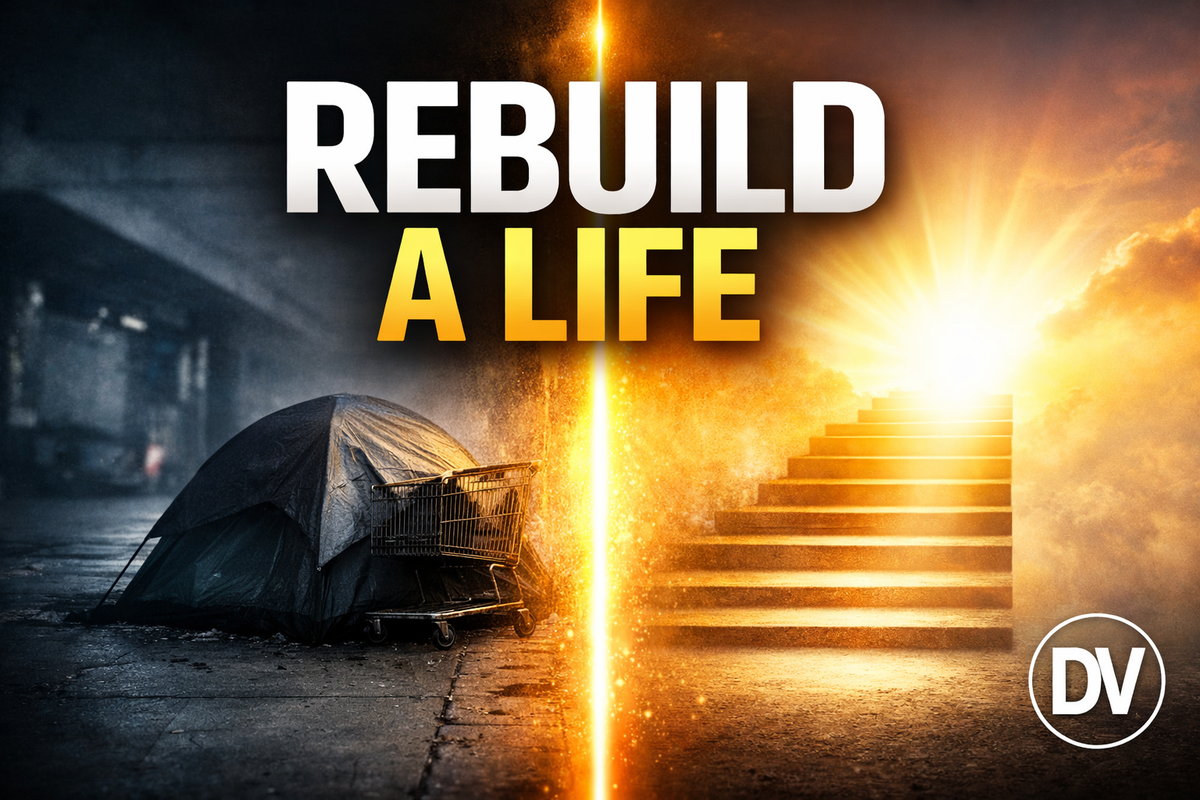
There is a moment that happens in the human heart when we see someone whose life appears to have completely unraveled. Perhaps it is someone sleeping on a sidewalk, someone sitting quietly outside a store with everything they own beside them, or someone wandering through a city street with a look that suggests the world has moved on without them. In that moment people often feel a mixture of emotions that are difficult to sort through. There may be compassion, sadness, confusion, or even frustration, but beneath all of those feelings is a deeper question that almost everyone eventually asks. How does a human life reach a place like this, and if a person has fallen that far, how could their life ever be rebuilt again? The question is not really about a single individual standing on a street corner, because the question is really about whether restoration is possible once someone has crossed the invisible lines that society quietly draws between stability and collapse. If we are honest, many people assume that once a life crosses that line, the path back becomes nearly impossible to find. Yet the entire message of faith tells a completely different story about human beings and the possibility of rebuilding what once appeared lost.
The reason this question matters so deeply is because every person intuitively understands that life is fragile. A few unexpected events can alter a future that once seemed secure. A lost job, a broken relationship, a health crisis, addiction, untreated trauma, or simply a long chain of discouragement can slowly push someone farther away from the stable ground where they once stood. When people look at homelessness only as a social problem, they miss the deeper human reality that it is often the visible surface of invisible storms that have been building for years. A person rarely wakes up one morning and chooses to lose everything. Instead, lives drift through a long sequence of events that gradually erode stability until survival replaces planning, fear replaces hope, and tomorrow becomes something too distant to think about. In that sense homelessness is not simply about housing, and it is not simply about economics, but about what happens to the human spirit when stability disappears and chaos becomes the daily environment. Understanding that reality is the first step toward seeing how lives can be rebuilt rather than merely managed.
Throughout the Gospels we see Jesus constantly encountering people whose lives had collapsed in ways that society believed were permanent. These were people whose reputations had been destroyed, whose health had failed, whose relationships had collapsed, or whose past mistakes had become so public that others believed redemption was no longer possible for them. Yet one of the most striking things about the way Jesus approached people was that He never treated them as permanent failures. Instead He treated them as individuals whose story had not yet reached its final chapter. That difference may sound subtle, but it completely changes the way restoration begins. When someone believes their story is finished, motivation disappears because the future feels closed. When someone believes that their story is still unfolding, the possibility of change begins to reappear in the mind. The ministry of Christ consistently restored that sense of unfinished possibility in people who had almost given up on themselves. In doing so He demonstrated something that modern communities often overlook, which is that rebuilding a life begins with changing the environment around the human spirit so hope can breathe again.
If we look closely at how transformation unfolds in Scripture, we begin to notice that restoration rarely happens through dramatic moments alone. While miracles certainly occurred, the deeper transformation often came through a sequence of experiences that gradually restored stability, purpose, and identity. In other words, rebuilding a life follows a kind of architecture that unfolds step by step rather than all at once. This architecture begins with the most basic foundation that every human being requires before anything else can change. That foundation is stability. When a person is living in constant survival mode, the brain cannot focus on long-term planning because it is preoccupied with immediate threats and immediate needs. Hunger, exhaustion, exposure to weather, and the constant uncertainty of safety force the mind into a state where tomorrow becomes almost irrelevant. In that environment advice rarely works because the mind cannot absorb it. Before transformation becomes possible the storm must calm enough for a person to breathe again.
The ministry of Jesus repeatedly acknowledged this reality by meeting physical needs before offering deeper instruction. Crowds were fed before sermons continued, the sick were healed before they were asked to follow a new path, and people who had been excluded from society were first restored to dignity before their behavior was corrected. This pattern reveals an important truth about the human condition that is just as relevant today as it was two thousand years ago. A person cannot rebuild their life while trapped in chaos because chaos consumes the attention required for change. Stability is not the final solution, but it is the ground on which every other solution stands. When someone has a safe place to sleep, access to food, clean clothing, and moments of rest, the nervous system begins to relax and the mind slowly regains the ability to think beyond the next hour. What appears small to someone living in comfort can feel monumental to someone who has lived in survival for months or years. Stability does not rebuild a life by itself, but it opens the door through which rebuilding can begin.
Once stability begins to return, the next layer of restoration involves something that God built into the fabric of creation itself. That element is rhythm. From the earliest pages of Scripture we see that God designed the world around repeating cycles that create order within life. Morning and evening, seasons that shift from planting to harvest, periods of work followed by rest, and patterns of gathering together as communities all reveal that rhythm provides structure for the human spirit. When someone lives on the streets for long periods of time those rhythms disappear almost completely. Days begin to blur together because there is no schedule, no sense of forward movement, and no predictable sequence that allows the mind to orient itself within time. Without rhythm life begins to feel shapeless, and when life feels shapeless motivation fades because there is nothing to anchor progress.
Reintroducing rhythm is therefore a critical step in rebuilding a life because rhythm teaches the mind to expect movement again. Waking at the same time each day, sharing meals at predictable hours, participating in daily tasks, and gathering within a community environment create a sense that time is moving forward rather than circling endlessly. These patterns may seem simple from the outside, yet they carry enormous psychological power because they retrain the mind to recognize progress again. Rhythm turns time into something that can be navigated rather than endured. When a person begins to wake up knowing what the day will contain, the brain slowly shifts from survival toward participation. That shift does not happen overnight, but repetition gradually builds a bridge between chaos and stability. Each predictable day reinforces the idea that life is moving forward again, and that sense of forward motion is one of the most important signals that hope is returning.
As rhythm begins to shape daily life, another essential element of restoration emerges naturally from within those patterns. That element is responsibility through meaningful contribution. Human beings were created with the desire to build, help, and participate in the world around them. Work is often misunderstood as merely a way to earn income, but its deeper role in the human spirit is far more significant than financial survival. Work reminds a person that they are capable of producing something that did not exist before their effort. That experience reinforces the idea that an individual still possesses value, ability, and agency within the world. When someone has spent years hearing messages that they are broken or useless, the simple act of completing a task can begin to rewrite the internal story they carry about themselves.
Meaningful responsibility does not have to begin with overwhelming expectations. In fact the most powerful changes often start with small tasks that create immediate evidence of contribution. Helping prepare meals for others, cleaning shared spaces, maintaining community gardens, repairing facilities, or assisting with simple projects can provide that first spark of renewed identity. The task itself may seem minor, yet the experience of completing it builds something far greater than the task itself. It builds momentum. Momentum is one of the most underestimated forces in human transformation because it replaces stagnation with movement. Once movement begins, the mind starts to believe that change is possible again. A person who believed they had nothing left to give may discover that their hands can still create value. That discovery quietly reshapes the way they see themselves and the future they might rebuild.
Another essential layer in the architecture of restoration is the rebuilding of identity itself. One of the most painful experiences within homelessness is the gradual loss of personal recognition. Over time people may begin to feel invisible as they move through public spaces where others avoid eye contact or treat them as problems rather than individuals. When that experience repeats day after day, the human spirit absorbs a dangerous message that says the world no longer sees you as someone who matters. Once that belief settles into the heart it becomes extremely difficult to imagine a different future. Rebuilding identity therefore requires restoring dignity in ways that remind someone they are still a person whose life carries meaning. That process begins with simple acts of recognition that many people take for granted in ordinary life.
Being greeted by name, being asked how one is doing, being invited into conversations where opinions matter, and being treated with respect all reinforce the truth that a human life cannot be reduced to its circumstances. The Gospel consistently affirms that every individual is created in the image of God and therefore possesses value that cannot be erased by mistakes, failures, or hardship. When someone begins to experience that truth through real interactions rather than distant theology, the internal story they carry about themselves begins to change. Instead of identifying only with past failures they begin to rediscover the deeper identity that God placed within them long before those failures occurred. Identity is not rebuilt through lectures but through repeated experiences that confirm a person still belongs within the human family. That sense of belonging becomes the emotional foundation on which every other change rests.
Yet rebuilding identity alone does not heal the deeper wounds that many people carry beneath the surface of homelessness. Behind the visible circumstances there are often layers of trauma that have shaped a person’s life in ways others cannot easily see. Experiences of abuse, abandonment, addiction, mental illness, and profound loss leave marks that remain long after the original events have passed. Those marks influence how a person perceives trust, safety, and the possibility of change. Healing those wounds requires patience and compassion because trauma cannot be erased through pressure or shame. Instead healing unfolds gradually through relationships that create safe environments where honesty and recovery can take root. Counseling, mentorship, support groups, and faith communities all play vital roles in creating spaces where individuals can confront the pain that has shaped their past.
Faith offers a powerful dimension to this healing process because it reminds people that their identity is not defined by the worst chapters of their story. The message of grace tells us that redemption is always possible and that God’s love does not withdraw when human beings fall short. That truth can become a lifeline for someone who has carried guilt or shame for many years. When a person begins to believe that forgiveness and renewal are real possibilities, the heavy weight of the past begins to loosen its grip on the future. Healing does not erase memory, but it transforms the meaning of those memories so they no longer control the direction of life. Through patience, compassion, and faith, the invisible wounds that once seemed permanent can gradually begin to close.
Another layer of restoration that emerges naturally from healing is community. Human beings are not designed to rebuild their lives in isolation because isolation often amplifies the very thoughts that led to despair in the first place. When someone believes they are alone in the world, hope becomes fragile because there is no one nearby to reinforce the belief that change is possible. Community interrupts that isolation by creating relationships that remind individuals they are not abandoned. Shared meals, conversations, worship gatherings, and collaborative work all contribute to an environment where people feel connected again. Connection restores emotional strength because it allows individuals to borrow hope from others during moments when their own hope feels weak.
Within healthy communities accountability also becomes possible in ways that encourage growth rather than shame. When people support one another they create gentle pressure that encourages individuals to continue moving forward even when progress feels difficult. Someone who might have given up alone may persevere because others believe in their potential. Community therefore becomes both a support system and a mirror that reflects the dignity and capability still present within each person. In that environment encouragement replaces condemnation, and progress becomes something that is celebrated rather than doubted. As community grows stronger the environment itself begins to nurture transformation, making it easier for individuals to remain on the path of rebuilding rather than drifting back toward the chaos they once knew.
Over time, as stability, rhythm, responsibility, identity, healing, and community take root, something remarkable begins to happen inside the human spirit. The future slowly reappears. A person who once believed their life had reached a permanent dead end begins to imagine possibilities again. Education may become attainable, employment opportunities may emerge, and housing that once seemed unreachable may begin to feel possible. Vision returns because the foundation beneath life has been rebuilt piece by piece. What once felt like an impossible climb begins to resemble a path that can be walked step by step. That is the quiet architecture of restoration that unfolds whenever compassion, structure, and faith intersect within a community that refuses to give up on human potential.
As the future begins to open again in the mind of someone who once believed their life was finished, a new layer of restoration begins to form that is often invisible to the outside world but deeply powerful within the heart. That layer is vision. Vision is the ability to imagine a life that does not yet exist but could exist if the steps of rebuilding continue forward. For someone who has lived in survival mode for months or years, the concept of a future can feel distant or unrealistic because survival compresses time into the present moment. When a person begins to believe that tomorrow may hold opportunity rather than merely another struggle to endure, something inside the mind begins to expand again. Vision creates a mental horizon that allows effort to feel meaningful because each step becomes connected to something larger than the moment. When individuals begin to envision themselves working, learning, reconnecting with family, or living in a stable home again, motivation grows because the path ahead finally leads somewhere worth reaching.
The restoration of vision is not merely about ambition or personal success. It is about restoring the belief that a life can still carry purpose. Many people who have experienced homelessness describe the gradual loss of that belief as one of the most painful parts of their journey. When the world repeatedly signals that someone no longer belongs, the mind can begin to internalize the idea that there is no place left to go. Vision interrupts that narrative by presenting the possibility that the future has not been permanently closed. Faith communities play an extraordinary role in restoring vision because they remind individuals that God’s plans often unfold long after human beings believe the story has ended. Throughout Scripture we see people whose lives appeared broken or insignificant before God redirected their path toward something meaningful. Those stories remind us that purpose can emerge from the most unlikely circumstances when grace begins to move within a life that had once felt forgotten.
As vision strengthens, practical pathways toward stability begin to appear with greater clarity. Education opportunities, vocational training, employment partnerships, and transitional housing programs become attainable because the earlier layers of restoration have already laid the groundwork. Without stability, rhythm, identity, healing, and community, these opportunities often fail because the individual is still fighting the chaos of survival. When those foundations exist, however, opportunities become stepping stones rather than overwhelming obstacles. The process may still involve setbacks, but setbacks no longer erase progress because the environment surrounding the individual now encourages persistence rather than defeat. Each success reinforces the belief that rebuilding is real and that the path forward remains open. Over time a life that once seemed permanently stalled begins to move with steady momentum toward stability.
One of the most remarkable aspects of this process is that transformation often occurs quietly rather than dramatically. Popular culture sometimes imagines change as a sudden moment of realization that instantly alters a person’s direction. While moments of inspiration certainly occur, lasting restoration more often unfolds through consistency rather than spectacle. A person shows up each morning, participates in meaningful work, builds relationships within a supportive community, and gradually watches their confidence return. Those simple actions may appear ordinary to observers, yet within the heart they represent a profound shift from chaos to order. The human spirit thrives on the sense that progress is occurring even when that progress moves slowly. Over time those daily steps accumulate into visible change that others can finally recognize.
The quiet nature of restoration reflects something deeply consistent with the way God often works throughout creation. The growth of a forest begins with seeds buried in soil where no one can see them. Mountains rise through processes that unfold over centuries rather than moments. Even the transformation of the human heart rarely occurs through instant perfection but through gradual renewal that reshapes attitudes, choices, and relationships over time. When we recognize this pattern within nature and faith, we begin to understand that rebuilding a life is not an event but a journey. Each stage of the journey strengthens the next stage until the individual who once struggled to survive finds themselves participating fully in the life of the community once again.
Communities that understand this architecture of restoration approach homelessness with a different mindset than communities that only attempt to manage visible symptoms. Instead of focusing solely on temporary relief, they focus on rebuilding the conditions that allow transformation to occur. Stability is offered not as charity alone but as the first step of a structured process that leads toward independence. Rhythm is introduced through daily activities that restore purpose and order. Responsibility becomes a pathway toward rediscovering dignity. Identity is rebuilt through relationships that affirm the value of every individual. Healing is pursued through compassionate support that addresses trauma rather than ignoring it. Community becomes the environment that nurtures perseverance. Vision expands as opportunities for education, work, and housing become attainable through sustained progress.
Faith plays an essential role throughout this process because faith provides a narrative larger than personal struggle. When individuals believe their life is part of a greater story written by God, suffering no longer feels meaningless. Instead it becomes a chapter within a larger journey toward redemption. That perspective strengthens resilience because setbacks are interpreted not as permanent defeat but as obstacles within a story that is still unfolding. Faith communities therefore possess a unique ability to sustain hope in ways that purely institutional systems sometimes struggle to achieve. Worship, prayer, mentorship, and shared belief create emotional and spiritual bonds that remind individuals they are not alone in their struggle. When hope is reinforced through both practical support and spiritual encouragement, the rebuilding process becomes far more sustainable.
Another powerful aspect of this approach is that it transforms not only the lives of those experiencing homelessness but also the communities that participate in restoration. When people engage directly with individuals who are rebuilding their lives, stereotypes begin to dissolve. Stories replace assumptions, and relationships replace distance. Volunteers, mentors, and neighbors often discover that the individuals they once saw only as statistics are in fact people with talents, dreams, humor, and resilience that had simply been buried beneath difficult circumstances. That discovery enriches the entire community because compassion deepens understanding and shared humanity becomes visible again. The process of helping others rebuild often transforms the helpers as much as those being helped because it reminds everyone involved that dignity and worth belong to every human being.
The idea that lives can be rebuilt through compassion, structure, and faith also challenges the common belief that homelessness is an unsolvable problem. While the issue is complex and influenced by many factors, the architecture of restoration demonstrates that meaningful progress is possible when communities commit themselves to addressing both the visible and invisible dimensions of the struggle. Housing alone cannot solve the deeper wounds of isolation and trauma, yet compassion without structure cannot sustain long-term progress. When stability, rhythm, responsibility, identity, healing, community, and vision work together, the environment surrounding individuals begins to nurture change rather than merely reacting to crisis. This holistic approach reflects the deeper wisdom found throughout Scripture, where restoration always involves both practical care and spiritual renewal.
As individuals progress through this journey of rebuilding, something extraordinary often occurs that few people anticipate at the beginning. Many of those who once struggled most deeply become some of the strongest advocates for others who are still walking the path behind them. Their experiences allow them to understand challenges that others might not fully grasp, and their success becomes living evidence that transformation is possible. When someone who once felt invisible begins mentoring another person who is still searching for hope, the cycle of restoration expands outward. The community grows stronger because each restored life becomes another source of encouragement and guidance for those who are just beginning the journey. In this way the architecture of restoration multiplies itself through human relationships, creating networks of support that continue long after formal programs have ended.
This multiplication reflects the heart of the Gospel itself. Jesus frequently transformed individuals who then carried the message of hope to others who were struggling in similar ways. Those individuals were not perfect, yet their restored lives demonstrated that grace had the power to rewrite stories that once seemed finished. When modern communities participate in rebuilding lives, they continue that same tradition of extending grace through action. Each act of compassion becomes a reminder that God’s work of restoration did not end in ancient times but continues through the hands and hearts of people today. The quiet architecture of restoration therefore becomes a living testimony to the belief that no life is beyond redemption.
Ultimately the process of rebuilding homelessness through faith-centered compassion reveals a profound truth about human dignity. Every person carries within them the image of God, and that image cannot be erased by hardship or mistakes. Circumstances may obscure it, but it remains present beneath the surface waiting to be rediscovered. When communities approach homelessness with this understanding, their efforts move beyond temporary relief toward genuine transformation. They see not just the visible struggle but the hidden potential within each individual. Restoration then becomes an act of faith that believes the human spirit can rise again when given the opportunity, support, and encouragement to do so.
The quiet architecture of restoration reminds us that rebuilding lives is not the responsibility of governments alone, nor is it the task of churches alone. It is a shared calling that invites every compassionate heart to participate. Whether through volunteering, mentorship, financial support, prayer, or simple acts of kindness, each person has the ability to contribute to an environment where transformation becomes possible. When enough individuals choose to respond with compassion rather than indifference, communities begin to reflect the heart of God in tangible ways. The streets that once seemed filled with despair can gradually become places where hope begins to grow again.
In the end the question of homelessness is not merely about housing or economics. It is about whether we believe restoration is possible for people who have lost their way. Faith answers that question with a resounding yes. The God who restores broken hearts and rebuilds shattered lives has never stopped working through the compassion of those who are willing to serve others. When we follow that example by offering stability, rhythm, responsibility, identity, healing, community, and vision, we participate in the same restorative work that has been unfolding since the beginning of faith itself. The quiet architecture of restoration reminds us that every life still carries the potential for renewal and that no story is truly finished until grace has spoken the final word.
Your friend,
Douglas Vandergraph
Watch Douglas Vandergraph’s inspiring faith-based videos on YouTube
https://www.youtube.com/@douglasvandergraph
Support the ministry by buying Douglas a coffee
https://www.buymeacoffee.com/douglasvandergraph
Financial support to help keep this Ministry active daily can be mailed to:
Vandergraph
Po Box 271154
Fort Collins, Colorado 80527