The Promise Above the Weather

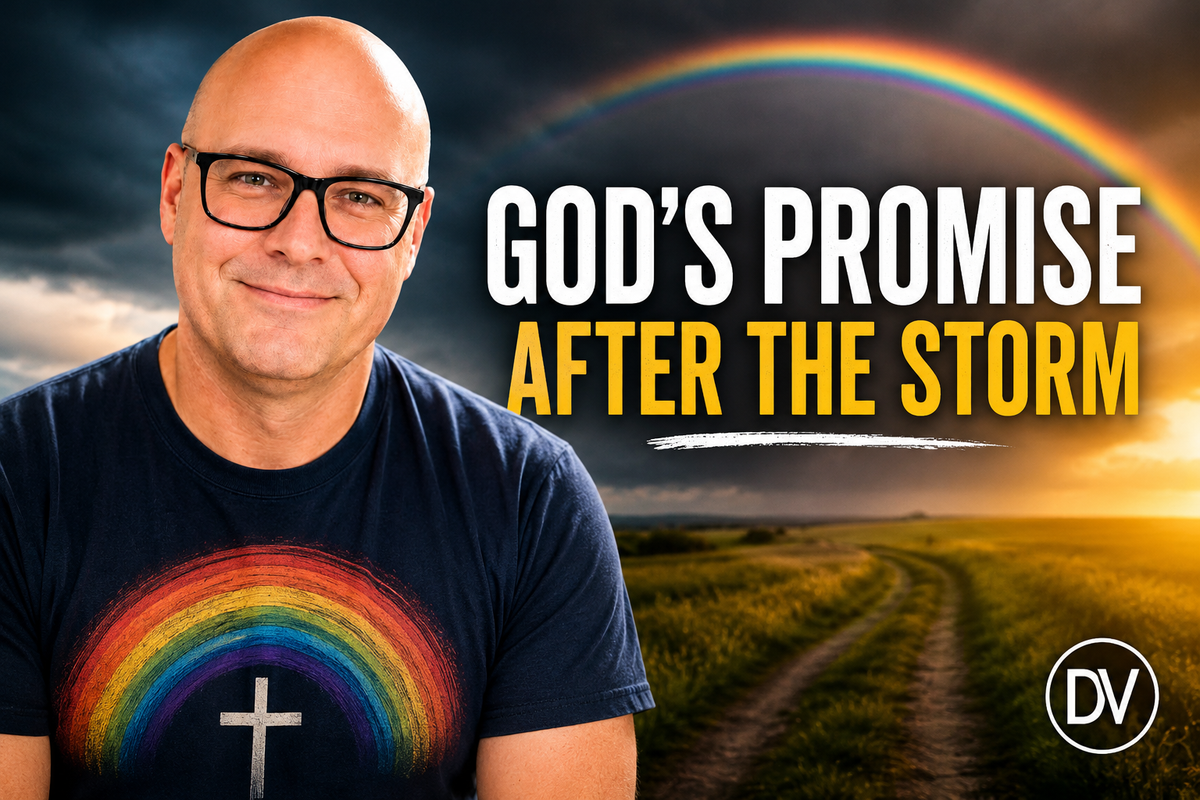
Chapter 1: When the Sky Looks Bruised
There is a certain kind of day when the house feels smaller than usual. The rain has been hitting the windows for hours, the kitchen light is on even though it is still afternoon, and the phone on the counter keeps pulling your attention back toward things you would rather not think about. A missed call. A bill reminder. A message you are not ready to answer. Maybe the weather outside is not even the hardest part. Maybe the harder storm is the one moving through your mind while you stand there trying to act normal, trying to decide whether to make coffee, answer the message, pray, or simply sit down for a minute before you lose the little strength you have left. That is where the message behind the real reason for rainbows faith-based begins to matter, not as a cute thought about the sky, but as a steady reminder for people who are tired of being told to pretend the storm did not hurt.
Some people talk about rainbows as if they are only decoration, as if they are only a pretty splash of color after bad weather. But when your heart has been through something heavy, you start to notice that beautiful things mean more when they appear in hard places. A rainbow over a quiet road after a storm feels different from a painting on a wall. A rainbow over a field that was just beaten down by rain feels different from a word printed on a greeting card. It does not erase the puddles, the broken branches, or the gray that came before it, and that is part of why it is powerful. In the same way, finding God’s promise after the storm is not about denying pain, rushing grief, or forcing yourself to sound strong before you are ready. It is about learning to recognize that God can place mercy above the very place where fear just passed through.
That small shift changes the whole subject. The question is not merely, “Why did God make rainbows?” The deeper question is, “Why would God put a promise in the clouds?” Not on a perfect blue day. Not in a safe little corner of creation where nothing frightening had happened. Not in a place untouched by loss. Scripture gives us the rainbow after the flood, after Noah and his family had lived through a world-changing judgment, after the ground itself must have felt strange beneath their feet. The rainbow was not given to people who had never been afraid. It was given to people who had survived something they could not control. That means the rainbow speaks most clearly to those who know what it feels like to keep breathing after life has changed.
It is easy to miss that because we often want faith to work like an umbrella. We want it to keep every drop off us. We want it to mean the clouds will go around our house, our family, our body, our finances, our mind, our future. We want prayer to make the weather behave. And sometimes God does protect us in ways we can see clearly. There are doors that close before disaster enters. There are warnings that come just in time. There are people who show up when we did not know how badly we needed help. But if we are honest, there are also seasons when the rain still comes. The diagnosis still lands. The relationship still strains. The child still wanders. The job still disappears. The apology still does not come. The grief still sits at the table with us while we try to eat dinner.
This is where many people quietly start feeling confused about God. They may not say it out loud because they do not want to sound ungrateful or faithless, but the question sits there anyway. If God loves me, why did He let the storm reach me? If God hears me, why did He not stop what broke my heart? If God is good, why am I standing here with water at my feet, trying to make sense of things I never asked for? These are not small questions. They are not questions to be mocked, rushed, or answered with religious slogans. A person who has just been through a hard season does not need someone to toss a cheerful phrase over the fence and walk away. They need a deeper kind of hope, the kind that can look honestly at the rain and still believe God has not abandoned the sky.
The rainbow does not tell us that storms are imaginary. It tells us that storms are not ultimate. That is a sharper and stronger hope than pretending nothing happened. If the rainbow only appeared on cloudless days, it would be easier to turn it into a symbol of comfort without cost. But it appears where weather has been. It appears where darkness and light meet in the air. It appears when water is still present. That means the promise is not removed from the storm; it is revealed through the conditions left behind by the storm. The very atmosphere that carried the rain becomes the place where color is seen. The same sky that made you nervous becomes the surface where mercy becomes visible.
That is a holy reframing. Many people spend years thinking their painful seasons are only evidence that something has gone wrong, that they have failed, that God is disappointed, or that hope must have moved on without them. A man sits in his truck before walking into work because he does not want anyone to see how exhausted he is. A mother folds laundry late at night and wonders if she is failing everyone she loves. A young adult scrolls through other people’s lives and feels behind, unseen, and unsure where God is in the delay. A caregiver smiles in public while carrying appointments, prescriptions, memories, and fear in private. In those moments, the soul can begin to treat clouds as proof that God is far away. But the rainbow teaches something different. It teaches that clouds can become the place where God reminds you He is still faithful.
That does not make suffering good in itself. Pain is still pain. Betrayal is still betrayal. Loss still hurts. Anxiety still feels like a weight in the chest when the house is quiet and tomorrow feels too large. Faith does not require you to call darkness light. It does not ask you to pretend the rain felt gentle when it was pounding. The Bible is not afraid of tears, questions, waiting, lament, weakness, or human weariness. Some of the most faithful people in Scripture cried out honestly before God. They did not polish their prayers until they sounded impressive. They brought Him the real thing: fear, confusion, regret, grief, longing, and need. That honesty matters because God is not looking for performances in the storm. He is looking for trust, even when trust sounds like a trembling voice.
The rainbow becomes even more meaningful when we understand that it is not mainly about human optimism. It is not the universe saying, “Cheer up.” It is not a soft suggestion that everything will be easy from here. It is God attaching visible beauty to a spoken promise. In Genesis, the rainbow is tied to covenant, which means it rests on God’s character, not on human mood. That is important because moods move. Some mornings you wake up ready to believe again, and by lunch one phone call can knock the wind out of you. Some evenings you feel steady, and then one memory walks through the room and changes your whole face. If the promise depended on your emotional consistency, you would be in trouble. But the promise belongs to God, and God does not become less faithful because you are tired.
This is why the real reason for rainbows reaches deeper than weather. A rainbow is a reminder that God knows we need something visible sometimes. He made us with hearts that remember through signs, places, songs, meals, scars, and moments. You may remember exactly where you were when bad news came. You may remember the chair you were sitting in during a hard conversation. You may remember the road you were driving on when you finally admitted you were not okay. God understands memory. So He gives a sign that interrupts the ordinary world. You look up, and for a few seconds your mind stops chasing every problem. The sky becomes a sermon without noise. It does not shout. It simply stands there, curved across the clouds, telling anyone humble enough to see it that mercy has not left creation.
There is something kind about the fact that you cannot hold a rainbow. You cannot fold it, save it in a drawer, lock it in a room, or make it appear by force. You can take a picture, but even the picture is not the same as standing there under the open sky, seeing it with your own eyes. A rainbow has to be received. It is given, not grabbed. That makes it a picture of grace. So much of life trains us to control, perform, prove, earn, defend, and manage. We try to hold everything together with calendars, passwords, bank balances, explanations, and late-night planning. But then God puts a promise above us that no human hand can manufacture, and we remember that the deepest mercy in life is not something we create. It is something God gives.
That can be hard for people who have always had to be strong. If you have spent years being the dependable one, the fixer, the provider, the calm voice, the person everyone calls when things fall apart, receiving grace can feel unfamiliar. You may know how to help others but struggle to admit you need help. You may know how to encourage someone else but feel uncomfortable when God’s kindness turns toward you. You may even look at the rainbow and think, “That is beautiful for other people, but I have made too many mistakes, wasted too much time, doubted too much, failed too often.” But the promise of God is not reserved for people who came through the storm looking polished. Noah stepped out into a world that must have smelled like wet earth and loss. The rainbow did not appear because everything felt easy. It appeared because God was faithful.
There is a difference between a sign that distracts you from reality and a sign that helps you see reality more truthfully. The rainbow does not distract us from the flood. It reframes what comes after it. It tells us that judgment does not erase mercy, that loss does not cancel covenant, and that the story of God and His creation is not finished in destruction. For the Christian, this points us toward Jesus, because the deepest promise of God is not finally found in the sky but in the Savior. The cross looked like the darkest storm humanity had ever gathered. The innocent Son of God was rejected, mocked, wounded, and crucified. To those watching, it must have looked like evil had written the final line. But resurrection changed the meaning of the whole scene. What looked like defeat became the place where salvation was revealed.
That is why Christians can look at a rainbow and see more than color. We can see a pattern of how God works. He brings promise after judgment, mercy after fear, life after death, morning after the long night, resurrection after the cross. He does not always explain the storm in the way we want Him to. He does not hand us a full map of every painful mile. But He gives us Himself, and He gives reminders that His faithfulness is stronger than what frightened us. The rainbow is one of those reminders. It is not childish to be moved by it. It is not shallow to pause and let your heart receive what God has placed in creation. Sometimes maturity is not rushing past wonder. Sometimes maturity is finally humble enough to look up.
So when the sky looks bruised and the day feels heavier than you expected, do not assume the darkness has the final word. Do not let the clouds tell the whole story. There may be a promise forming where you cannot yet see it. There may be mercy bending over a place that still feels wet with sorrow. There may be a reminder coming, not because you earned it by being strong, but because God is kind to tired people who need help remembering. And even if no rainbow appears outside your window today, the truth behind it still stands. The rain was real. The fear was real. The waiting was real. But God is real too, and His promise is not as fragile as the weather.
Chapter 2: The Promise Does Not Remove the Puddles
The morning after a storm can look almost insulting if you are already tired. The sun comes out, but the driveway is still covered with little rivers of dirty water. The trash can has tipped over near the curb. Leaves are stuck against the windshield. The shoes by the door are damp because someone stepped outside too soon and tracked the mess back into the house. You can look up and see light returning while still having to deal with everything the storm left behind. That is where many people struggle with faith. They hear that God is faithful, and they want that to mean the cleanup is over. They want the promise to mean the puddles disappear, the phone call fixes itself, the tension in the family melts away, and the old fear loses its voice by breakfast. But real life often moves more slowly than that.
This is one of the places where the rainbow corrects our expectations without crushing our hope. It does not appear because the ground is already dry. It does not wait until every damaged thing is repaired. It shines while evidence of the storm remains. That matters because many believers feel guilty when they still have emotional puddles after God has been faithful to them. They think, “If I really trusted God, why am I still nervous? If I really believed His promise, why do I still feel sad? If I really knew He was good, why does my heart still tighten when I think about what happened?” But seeing a rainbow while the ground is wet teaches us that promise and process can exist at the same time. God can be faithful before you feel fully restored. God can be present before the mess is gone. God can give you a sign of mercy while you are still carrying a mop.
Think about the person who finally gets through a season of financial fear. The emergency has passed, but the numbers are still tight. The late fee is still real. The account is still lower than they want it to be. They sit at the kitchen table with a pen, an envelope, and a tired calculator, whispering a prayer that is not polished at all. “Lord, help me. I do not know how to do this.” They are not faithless because they are stressed. They are human. They are standing in the wet aftermath, trying to make wise decisions while their body still remembers the panic of not knowing if there would be enough. A shallow version of encouragement would tell them to smile and move on. A deeper version says, “God’s promise can meet you right here, with the bill in your hand.”
That is the kind of reframing many of us need. We often judge God’s faithfulness by how quickly our circumstances become comfortable again. If peace does not arrive fast, we assume nothing has changed. If the relationship still requires patience, we assume God has not moved. If healing takes time, we assume prayer failed. If grief comes in waves, we assume we are going backward. But the rainbow suggests a different way to see. It does not announce that every consequence has vanished. It announces that the storm is not sovereign. It tells us that the weather may have passed through, but it does not own the future. The puddles may be real, but they are not in charge. The mud may still cling to your shoes, but it does not get to define the covenant of God.
That word covenant is important because it pulls us away from a faith built only on feelings. A feeling can be a gift, but it is not a foundation. Feelings rise and fall like water in a gutter after hard rain. One moment you feel brave. The next moment you feel exposed. One day you feel certain God is near. The next day you wonder why prayer feels quiet. If you build your whole understanding of God on the weather of your emotions, every inner shift will feel like a crisis. But a covenant is stronger than that. It is not God asking you to keep Him steady with your confidence. It is God revealing that He is steady even when your confidence is shaking.
This is not an excuse to ignore your feelings. It is an invitation to stop letting them serve as the judge of God’s character. Your fear may tell you something about what you have survived, but it cannot tell you the whole truth about God. Your sadness may reveal something that still needs tenderness, but it cannot overturn the resurrection. Your weariness may show that you need rest, help, prayer, and patience, but it does not mean the Lord has walked away. The puddles after the storm are real, and God is not offended when you acknowledge them. He is not asking you to call your struggle imaginary. He is asking you to look at the struggle under the light of His promise instead of under the shadow of despair.
A parent understands this in a simple, human way. Imagine a child waking up after a frightening night of thunder. The storm is over, but the child still wants the hallway light on. The parent does not stand in the doorway and say, “Why are you still scared? The thunder stopped.” A loving parent comes closer. A loving parent sits on the edge of the bed, maybe pushes the hair back from the child’s face, and says, “You are safe. I am here.” The room may still feel strange to the child. The heart may still be beating fast. But the presence of the parent begins to teach the child what the silence after fear means. In a much deeper way, God meets His children in the aftermath, not with contempt, but with patience.
That is why we have to be careful with the way we speak to people who are coming out of storms. Sometimes the person who seems quiet is not being negative. They are still drying out inside. Sometimes the person who is slow to trust again is not rebellious. They are learning how to breathe after disappointment. Sometimes the person who asks for prayer again and again is not weak in a shameful way. They are doing what a child of God does when they know they cannot carry the whole weight alone. The rainbow does not scold the earth for being wet. It simply appears above it. We should learn from that. Our encouragement should not shame people for the evidence of what they have endured. It should help them see that mercy is still over them.
There is also a practical side to this. Faith after the storm often looks like small obedience, not dramatic confidence. It looks like answering one message honestly instead of hiding from everyone. It looks like making one appointment. It looks like apologizing without rehearsing a defense. It looks like opening the Bible even when you only have enough attention for a few verses. It looks like praying in the car because the house feels too noisy. It looks like taking a walk instead of sitting all evening with the same fear. It looks like doing the next right thing while still feeling the mud under your feet. The promise of God does not remove the need to walk. It gives you a reason to keep walking.
This is where many people misunderstand spiritual strength. They imagine it as a spotless kind of confidence, a voice that never trembles, a heart that never sinks, a mind that never wrestles with doubt. But much of the strength God forms in people is quieter than that. It is the strength to keep showing up when your emotions have not caught up with your beliefs. It is the strength to forgive in stages, to rebuild trust carefully, to tell the truth without bitterness, to rest without feeling useless, to receive help without shame. It is the strength to say, “Lord, I still feel the storm in me, but I believe Your promise is above me.”
That sentence may be one of the most honest prayers a person can pray. It does not pretend. It does not perform. It does not demand that the soul heal on a schedule. It simply places the real condition of the heart under the real faithfulness of God. That is where hope begins to become durable. Not flashy. Not loud. Durable. The kind of hope that can sit with unanswered questions and still refuse to call God cruel. The kind of hope that can cry and still pray. The kind of hope that can look at a wet driveway, a messy kitchen, a tense conversation, a thin bank account, or a long recovery and still believe that God’s mercy has not been canceled.
The rainbow over wet ground tells us that beauty does not have to wait for perfect conditions. This is one of the strongest truths a tired believer can carry. You do not have to be fully healed before God can use your life to show His goodness. You do not have to be completely fearless before you can obey. You do not have to understand everything before you can take the next faithful step. You do not have to erase every tear before your life can carry witness. Sometimes the most powerful testimony is not, “Nothing hard happened to me.” Sometimes it is, “Hard things happened, and God did not leave.”
That kind of testimony has weight because it is honest. People can feel the difference between polished religion and lived faith. They know when someone is speaking from a place that has never been tested, and they know when someone is speaking with mud still on their shoes. A person who has seen the promise after the storm does not need to exaggerate. Their life becomes quieter but stronger. Their words become simpler but deeper. They stop needing to explain every detail, because they know the One who carried them through details no one else saw. That is not weakness. That is seasoned trust.
So do not despise the puddles in your life. Do not let them convince you the promise is fake. Do not assume that because you are still cleaning up, God has not been faithful. The rainbow never promised that the ground would dry instantly. It promised that the God above the ground remembers mercy. It promised that the storm does not own the story. It promised that there is something stronger than the weather you just survived. And when you begin to see your life that way, not as a denial of pain but as a deeper reading of reality, you start to understand that faith is not the absence of wet ground beneath your feet. Faith is looking up while you keep walking.
Chapter 3: The Bow That Points Beyond the Storm
A person can sit in a hospital parking lot and forget what the sky looks like. The mind gets narrow in places like that. It notices the plastic wristband, the elevator smell, the half-empty water bottle in the cup holder, the message from a family member asking for an update, and the strange quiet that comes after a doctor says words you were not ready to hear. In moments like that, nobody needs a shallow promise. Nobody needs a decorative faith that only works when the sun is out and everyone is healthy. What the heart needs is something stronger than mood, stronger than circumstance, stronger than the version of hope that disappears when life becomes serious. It needs a promise that can stand in a parking lot, in a hospital hallway, in a room where someone is trying to pray but cannot find many words.
This is why the rainbow matters, but it is also why the rainbow is not the end of the story. It points beyond itself. It lifts our eyes, but it is not asking us to worship the sky. It is a sign, and every true sign from God is meant to lead the heart back to Him. The rainbow tells us that mercy is real, covenant is real, and the storm does not get the final word. But Jesus shows us how far that mercy goes. In Him, the promise of God is not only above us; the promise of God comes near. He steps into human weather. He enters pain, hunger, grief, temptation, rejection, exhaustion, friendship, betrayal, and death. He does not stand at a distance from a world soaked in sorrow. He comes into it.
That changes how we see every storm. Without Jesus, suffering can feel like a locked room with no window. With Jesus, suffering is still painful, but it is no longer empty. The cross tells us that God is not unfamiliar with darkness. The resurrection tells us that darkness is not undefeated. When Jesus was crucified, the people who loved Him did not understand what God was doing. They did not stand there saying, “This will make sense by Sunday.” They watched what looked like the collapse of everything they hoped for. Their Teacher, their Lord, their friend, the One they believed was the Messiah, was nailed to a cross. The sky itself darkened. To human eyes, it looked like the storm had won.
But the storm was wrong.
That single truth can hold a person when nothing else feels strong enough. The storm was wrong about Jesus, and because of that, your storm may be wrong about you. Fear may be telling you that you are finished, but fear is not God. Regret may be telling you that your failure is the final title over your life, but regret is not Lord. Anxiety may be telling you that tomorrow is already ruined, but anxiety does not sit on the throne. Grief may be telling you that joy will never visit again, but grief does not have resurrection power. The voice of the storm can be loud, but loud is not the same as true.
There is a man who drives home after a long day and sits in the driveway before going inside because he knows his family needs him, but he is not sure how much of himself is left. He turns the engine off and hears the small clicking sound as the car settles. The porch light is on. Through the window, he can see normal life waiting for him, but inside he feels stretched thin by work pressure, money pressure, and the private fear that he is not becoming the person he hoped he would be. That moment may not look spiritual from the outside, but it is exactly the kind of moment where faith becomes real. Not because he suddenly feels powerful, but because he can whisper, “Jesus, meet me before I walk through that door. Help me carry love into this house.”
That is how the promise moves from the sky into the soul. It becomes prayer. It becomes patience before a hard conversation. It becomes restraint when you want to speak out of pain. It becomes humility when you would rather protect your image. It becomes courage to ask for help. It becomes the decision to believe that God is still shaping you even when you are tired of yourself. A rainbow may appear for a few minutes, but the truth behind it can train your heart for a lifetime. God keeps promises. God remembers mercy. God can make beauty visible where fear just passed through. God can begin again where you thought everything was over.
This does not mean every situation gets wrapped in a neat ribbon. Some wounds remain tender for a long time. Some prayers are answered in ways we would not have chosen. Some losses leave empty chairs at the table, and no honest Christian encouragement should pretend otherwise. The hope of Jesus is not built on pretending the chair is not empty. It is built on believing that death itself will not have the final word. It is built on the resurrection, on the promise that God is making all things new, on the truth that what is broken in this world is not beyond His reach. Christian hope is not weak because it cries. It is strong because it keeps looking toward God through tears.
When you understand that, a rainbow becomes more than a brief moment of beauty. It becomes training for spiritual sight. It teaches you to look twice. The first look sees the damage, the delay, the disappointment, the wet ground, the tired body, the unanswered question. That first look is not wrong. It is honest. But faith invites a second look. The second look asks, “Where is God’s mercy here? What promise is still true? What has Jesus already secured that this storm cannot steal? What next faithful step can I take under the covering of His love?” That second look is not denial. It is deeper vision.
A lot of people lose strength because they think the first look is the only look available. They see one hard conversation and assume the relationship is hopeless. They see one season of weakness and assume their calling is over. They see one mistake and assume God has put them on a shelf. They see one unanswered prayer and assume heaven is closed. But the gospel teaches us to look again. The tomb looked final until God revealed otherwise. Friday looked final until Sunday came. The cross looked like shame until resurrection displayed victory. If God can change the meaning of the darkest moment in history, then He can bring holy meaning into the places in your life that still feel unfinished.
This is where motivation becomes more than positive thinking. The Christian does not keep going because everything feels easy. The Christian keeps going because Jesus is alive. The Christian forgives because mercy has been received. The Christian serves because love has become stronger than self-protection. The Christian repents because grace makes honesty possible. The Christian endures because suffering is not the whole story. The Christian gets up again because resurrection is not a metaphor for better moods. It is the center of reality. Jesus rose from the dead, and that means despair is never allowed to be the final authority over a child of God.
So the next time you see a rainbow, let it slow you down. Let it interrupt the rush. Let it speak to the part of you that has been trying to move on too quickly or the part of you that is afraid you will never move at all. Stand there for a moment if you can. Look at the colors bending over a sky that still remembers rain. Think about Noah stepping into a changed world. Think about God placing a sign in the clouds. Think about Jesus stepping out of the grave. Think about the promise that is stronger than weather, stronger than fear, stronger than shame, stronger than the things you could not prevent and the things you still do not understand.
And then carry that promise into ordinary life. Carry it into the kitchen when the sink is full and your patience is thin. Carry it into the meeting where you feel overlooked. Carry it into the apology you have been avoiding. Carry it into the quiet morning when the Bible is open but your mind is scattered. Carry it into the day when you have to make one faithful decision with no applause. Carry it into the place where you are tempted to believe that God only works in other people’s lives. The rainbow is not only for someone with an easier story. The promise of God is not only for people who know how to explain their pain. It is for tired sons and daughters who need to remember that the Father has not changed.
Maybe that is the real invitation hidden in the colors. Not just to admire beauty, but to become a person who remembers. A person who remembers mercy when fear gets loud. A person who remembers covenant when emotions move. A person who remembers Jesus when the storm tries to name the future. A person who can look at wet ground and still believe in the faithfulness of God. The world does not need people who pretend storms never come. It needs people who have seen rain, felt weakness, known sorrow, received grace, and still point upward with honest hope.
The real reason for rainbows is not that life is always bright. It is that God is faithful when it is not. The colors come after rain because the promise was made for a world that knows storms. They bend across the clouds because God knows we sometimes need to see mercy above the places that frightened us. And every time that sign appears, it quietly tells the truth again: the rain was not the whole story, the darkness was not the final word, and the God who placed His promise in the sky has given His deepest promise in Jesus Christ.
Your friend,
Douglas Vandergraph
Watch Douglas Vandergraph inspiring faith-based videos on YouTube:
https://www.youtube.com/@douglasvandergraph
Support the Christian encouragement library through GoFundMe:
https://www.gofundme.com/f/help-douglas-vandergraph-build-a-christian-encouragement-lib
Support the daily work by buying Douglas a coffee:
https://www.buymeacoffee.com/douglasvandergraph