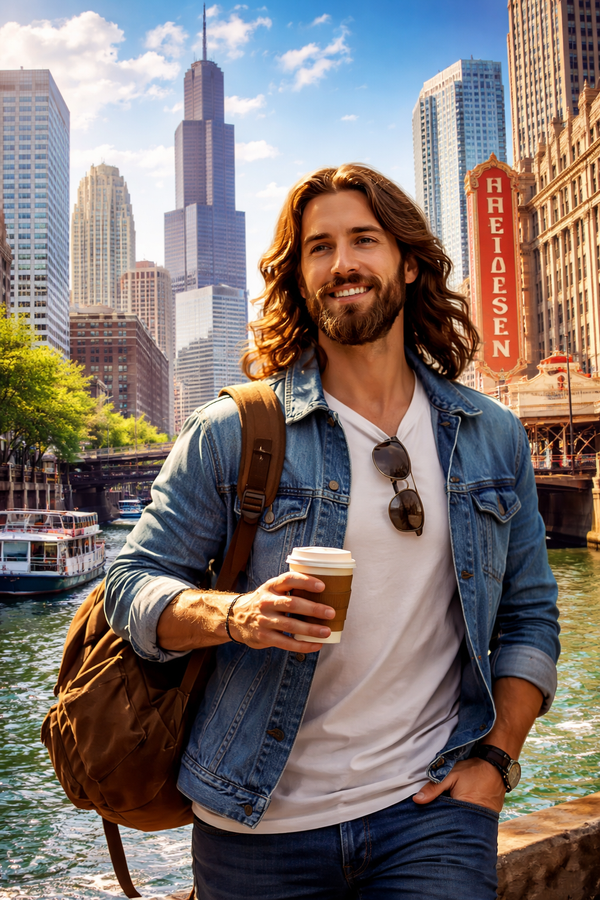
The People Nobody Knew Were Running Out of Strength
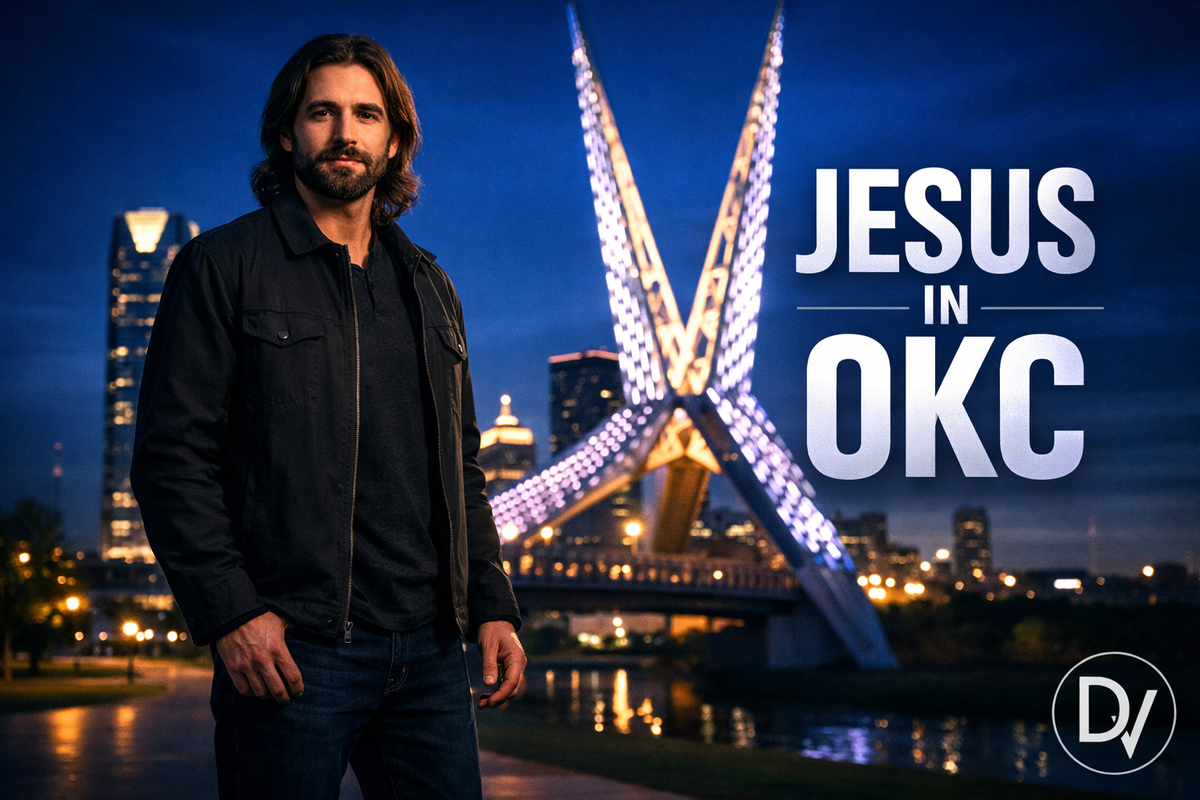
Before the first light had fully opened over Oklahoma City, Jesus was on His knees in the quiet stillness near Scissortail Park, with the skyline standing dark and patient behind Him and the city not yet loud enough to hide what it carried. He prayed without hurry. He prayed like a man who was fully present to the Father and fully present to the people He had come to walk among. Not far away, traffic lights were still changing for almost no one. Delivery trucks were beginning to roll. A few windows in apartment buildings had come alive. The long stretch of parkland, the paths, the open ground, and the bridge waiting over the waking city all held that strange hour when a place feels exposed because the noise has not started yet. Jesus stayed there until the prayer had sunk deep and steady into the morning, then He rose with that same quiet authority He always carried and stepped into the day as if He already knew where the pain was gathering.
Across the city, Naomi Alvarez was standing barefoot on cold linoleum in an apartment kitchen that looked cleaner than she felt. The sink was empty because she had washed the dishes after midnight. The lunch for her father was already packed. Her daughter’s school hoodie was draped over the back of a chair where it had been thrown the night before. In Naomi’s hand was a pink notice from the electric company that she had opened in the dark because she did not want her father to see it and because she knew exactly what it probably said before she even pulled the paper free. She had enough to keep the lights on or enough to cover the prescription refill she had been putting off or enough to make the car payment, but not enough for all three. That had become the rhythm of her life. She no longer asked whether she was tired. She measured everything by what absolutely could not fall apart first.
Her father, Mateo, came into the kitchen in the same gray sweater he had worn yesterday and maybe the day before that. Some mornings he was still mostly himself. Some mornings he looked like a man standing just outside the room, hearing voices from a house he used to live in. He asked her whether Elena had already left for work, and Naomi closed her eyes for one second because Elena had been dead for four years and because she did not have the strength to reopen that wound before sunrise. She turned and put both hands around the coffee mug she had not yet filled, then she looked back at him with the softness she had learned to force into her face. “Mama’s not here, Dad,” she said, gentle enough that it might not shame him. He stared at her, then at the counter, and something in his expression caved in. “That’s right,” he said, as if the truth had returned to hurt him all over again.
From the hallway came the sound of a door opening hard enough to hit the wall. Naomi’s daughter, Sofia, came through in jeans and an oversized sweatshirt, her dark hair tied up badly, her jaw already set for war. She was sixteen and carried hurt the way some people carried heat. It came off her before she ever said a word. Naomi asked whether she had finished the history assignment that had turned the whole apartment bitter the night before, and Sofia grabbed a banana from the counter and said nothing. Naomi tried again, asked if she could please not leave her wet towel on the bathroom floor, asked if she could please text after school because she had to work late, asked if they could please just get through one morning without acting like enemies. Sofia looked at her with the kind of exhausted anger that only comes when love has started to feel like pressure. “You don’t talk to me,” she said. “You manage me.” The words were flat, which made them hurt more. Then she walked out before Naomi could answer.
Naomi wanted to cry, but she had no room left for crying before six in the morning. She put her father’s pills beside his plate and checked the time and saw that if she moved fast enough she might still make it to Classen Coffee before heading downtown. She had started stopping there not because she had money for little comforts, because she did not, but because the car felt too much like another room she was failing in, and that short stop between home and work was the closest thing she had to taking one breath before carrying the day again. She got her father settled with breakfast and instructions written in thick black marker on a yellow note, though she knew he might forget to read it. Then she walked out of the apartment with the shutoff notice folded in her purse and a headache already building at the base of her skull.
Jesus was already moving north when Naomi pulled into the parking lot at Classen Coffee. The city was awake now in that half-finished way it often is early, where everything is beginning but nothing has settled yet. He entered the little coffee shop without the need to be noticed and stood in line with the patience of someone who was never trying to get ahead of anyone. It was the kind of place people used for a quick start, a short conversation, a small reset before work, with inside and outside seating and the kind of familiar traffic that makes strangers feel like part of a pattern. Naomi came in a minute later, one hand digging in her purse for her wallet, the other holding her phone between shoulder and cheek while her supervisor’s voicemail filled the air in her ear. She looked like someone who had not fully arrived in her own body yet. Her eyes were open, but they were already somewhere down the road in all the places the day might break.
She almost made it to the register before the call from her supervisor turned into a second call from the school. Sofia had not shown up for first period. Naomi stopped walking. The line shifted around her. Someone behind her glanced up, then away. The school secretary asked if Sofia might be sick. Naomi said no too quickly because she knew this was not sickness. This was anger, maybe shame, maybe one more thing Naomi had missed because all her energy went to rent and groceries and medicine and not drowning. By the time she got off the phone, the room felt smaller. Her coffee order came out wrong because she had not heard the barista repeat it back, and when she reached for the cup, the lid tipped and hot coffee spilled over her hand and onto the counter.
It happened in a small ugly way, but it was enough. Naomi jerked back. Someone reached for napkins. The barista apologized. Naomi said she was fine in the exact voice people use when they are one breath away from not being fine at all. Then she realized her purse had fallen open and the pink notice from the electric company had slid halfway into view. She snatched it back like it was something indecent. That was when Jesus, standing beside the counter with His own cup untouched, laid a stack of napkins near her hand and said, “You don’t have to hide your hard day.” He did not say it loudly. He did not say it in a way that turned heads. He said it like truth had found the only opening it needed.
Naomi looked up, irritated first because she did not want kindness from a stranger, not when kindness might turn into pity, and pity was one more thing she could not carry. But there was nothing invasive in His face. No curiosity. No performance. He looked like a man who had seen a thousand people trying not to come apart in public and had no need to expose her to prove He understood. She took the napkins and wiped the coffee from the counter with short angry motions. “I’m fine,” she said again, because she had said it so often the words came out on instinct. Jesus nodded once. “I know that’s what you’ve been telling everyone,” He said. “I also know it isn’t true.”
Most people would have walked away after that. Most people would have felt they had already said too much. Jesus stayed where He was, not crowding her, not pressing. Naomi should have left. She was late. She had a missing daughter and a father who should not be alone and a supervisor who had already warned her about attendance. Instead she found herself standing still in a coffee shop she could barely afford, staring at a man she did not know and feeling the dangerous pull of being seen. “I don’t have time to fall apart,” she said, and her voice shook on the last word because it had finally found the one true sentence in her chest. Jesus looked at her hand, red from the spill, then back at her face. “That’s not the same thing as being strong,” He said.
Something in her wanted to get angry. Another part of her wanted to sit down and tell Him everything. The part that won was the trained, practical, exhausted part. She picked up the fresh cup the barista had remade and took a step back. “I really have to go,” she said. Jesus answered with the same calm that had not left Him since dawn. “Then go,” He said. “But stop telling yourself that being needed means you are held together.” Naomi frowned because that sentence landed too close. She opened her mouth as if to ask who He thought He was, but her phone lit again with a number she knew from home, and in the second she looked down, Jesus had already turned toward the door.
It was her father. Or rather, it was the building manager calling from her father’s phone. Mateo had gone downstairs without his keys and was standing in the lot asking neighbors where Elena was and whether anyone had seen the old truck he sold fifteen years ago. Naomi thanked the manager, said she was on her way, and then stood frozen for a moment because the whole day had collapsed before eight in the morning. Work was no longer possible. School was no longer under control. Home was no longer stable. She looked toward the door and saw Jesus crossing the lot under the pale morning light, not moving quickly, not looking back, but somehow leaving her with the unbearable sense that He knew exactly what this day was going to cost.
By the time Naomi got home, Mateo was sitting on the curb with his elbows on his knees and his face bent toward the ground. The manager was nearby pretending not to watch too closely. Naomi thanked him and crouched in front of her father and asked if he was all right. He blinked at her as though he was trying to place her in time. “I thought I was supposed to pick your mother up,” he said. Naomi swallowed hard. “Not today, Dad.” He nodded and then asked if she was angry. The question cut worse than the confusion. “No,” she said. “I’m not angry.” But she was angry, just not at him. She was angry at the shrinking life of a man who had once fixed engines by sound. She was angry at the bills. She was angry at how grief never seemed content to kill only one thing. It took the dead, then it came back for the living.
She got him upstairs and reheated the breakfast he had forgotten to eat, and while he sat at the table turning the spoon in his hand, Naomi called work and took the warning she knew was coming. Her supervisor did not yell. That almost made it worse. There was only that clipped professional tone people use when they are done making room for your humanity. Naomi said she understood. She did not understand. She wanted to ask who was supposed to take care of the people who did not have money for help and did not have family nearby and did not have the luxury of collapsing. Instead she said she would do better, though she no longer knew what that meant.
The next hour passed in that slow ugly drag that comes when disaster has not exploded but has settled into the room with you. Mateo drifted between silence and strange questions. Sofia would not answer her phone. Naomi called twice, then six times, then stopped because panic was making her hands shake too much to dial cleanly. She texted her daughter that she loved her and that they needed to talk and that she was sorry for the morning. Then she erased the words “I’m sorry” twice before finally sending them because she was not sure whether apology sounded weak or true anymore. Around eleven, Mateo stood and said he wanted fresh air. Naomi almost said no, but he looked so tired and so small in that moment that she agreed to drive him downtown and sit with him for a while before figuring out the next step. She did not know why downtown. She only knew he had been restless all morning in a way that meant staying inside would turn into another kind of unraveling.
Jesus was already there before they arrived, and the city was louder now, full of noon-bound people and movement and the ordinary business of lives intersecting without truly touching. Naomi parked near a streetcar stop because Mateo had once loved trains and anything that moved on tracks or followed a route, and for a few minutes the simple sight of the streetcar gliding through downtown seemed to pull him out of himself. He even smiled. It was quick, but Naomi saw it. Jesus stood farther down the platform, one hand resting lightly on the railing as the car approached. The streetcar threaded through the districts of downtown and Midtown, linking parts of the city that each carried their own kind of pace and face, but what Naomi noticed was not the system or the route. What she noticed was that Jesus looked entirely untroubled by being in motion, as if He had long ago made peace with meeting people wherever their lives were hardest to hold.
Mateo wanted to ride, so they boarded. Naomi sat beside him and kept one eye on his hands and the other on the phone that remained mercilessly silent. Across from them sat Jesus. He was close enough now that she knew this was the same man from the coffee shop, and that should have felt strange, but it did not. The day had already become too strange for ordinary reactions. Mateo looked at Jesus and gave the small nod older men give one another when words are not yet necessary. Jesus returned it with warmth, not distance. For a few stops no one said anything. Then Mateo asked, “Do I know you?” Jesus answered, “You have known My kind of voice longer than you think.”
Naomi almost apologized for her father, but Jesus looked at Mateo as if there were nothing to excuse. That alone felt like mercy. Mateo’s face changed the way faces do when some deep buried part of a person is listening harder than the mind can manage. “You sound familiar,” he said. Jesus leaned back slightly as the streetcar turned. “Sometimes the soul remembers what the mind has trouble carrying,” He said. Naomi stared out the window because something in those words made her feel exposed, and she did not want to be exposed in public again. But Mateo was no longer restless. He sat still and listened the way children listen when fear has finally gone quiet enough for trust to get in.
They got off in Midtown because Mateo said he wanted to walk, and Naomi let him because he seemed clear for the first time all day. The air had warmed. Traffic moved in pulses. People crossed streets with phones in hand and lunch in paper bags and faces full of a hundred private concerns. Jesus walked beside them without hurry. No one stopped Him. No one seemed to notice that the center of the world was moving past brick buildings and storefront windows in the middle of an ordinary weekday. Naomi hated how much comfort she felt simply because He had not left. She did not understand it, and that made her wary. At the same time, she knew most people disappeared the moment your trouble became inconvenient. This man had not.
Mateo grew tired near The Harvey Bakery, and Naomi suggested they sit. The place felt warm and busy in a human way, like a room made for people who needed a meal and a little relief from the street. Naomi bought one pastry and three waters because that was what her bank account could bear and because she was too proud to do anything else. Jesus thanked her as though she had offered a feast. Mateo broke his pastry in half and handed the larger piece to Jesus without being asked. Naomi watched her father do that and felt tears threaten again because he had always been the man who gave away the better portion even when he had little. Disease had taken so much from him, but somehow kindness still remained in his hands.
Sitting there, Naomi finally looked at Jesus straight on. “Who are you?” she asked, not in awe, not yet, but in the worn-out tone of a person who no longer has the strength for mystery. Jesus took a sip of water before He answered. “The One who came to you before you broke,” He said. Naomi almost laughed because that felt impossible. “I’m already breaking,” she replied. Jesus shook His head. “No. You are still holding the pieces in place with your own hands. That is different. Breaking comes later when the body cannot carry what the heart never laid down.” Naomi stared at the table. No one had ever described her life so plainly. She had been calling it resilience because she did not know what else to call it. He was telling her it was unsurrendered pain.
That should have comforted her. Instead it made her angry again. “I don’t get to lay things down,” she said. “People say that like it means something. Bills don’t get paid because I have a spiritual moment. My daughter doesn’t come home because I cry. My father doesn’t get better because I admit I’m tired.” She kept her voice low, but it came fast now, years pressing through a crack. “I’ve prayed. I’ve worked. I’ve stayed. I’ve done the right thing over and over, and all I get is more to carry.” Jesus listened without interrupting. He did not flinch when her pain sharpened into accusation. When she finished, He said, “I did not tell you to pretend your burden is light. I came because it is crushing you.”
Naomi looked away because kindness had started to feel more dangerous than pressure. Pressure she understood. Pressure told her what to do next. Kindness made room for the truth, and the truth was that she no longer knew how to live without strain. If God took it all away, she was not sure she would remember how to unclench. Mateo had begun watching people pass outside the window. For one quiet minute the table held all three of them in a stillness that felt strangely holy and very fragile. Then Naomi’s phone buzzed.
It was not Sofia. It was a number from the apartment complex. Naomi answered with immediate dread. The manager’s voice was tight. He said he was sorry to bother her again, but one of the neighbors had just called to say her front door was standing open. Naomi’s stomach dropped so fast it felt like illness. She turned to Mateo. His face had gone blank. “Dad,” she said carefully, “did you leave the apartment unlocked?” He looked at her with rising confusion. “I thought you locked it,” he whispered. Naomi was already standing, already reaching for her bag, already leaving half the pastry untouched on the table. The whole room seemed to tilt. She could picture the open apartment, the empty rooms, the little bit of safety she fought for every month just hanging loose in the middle of the day.
Jesus stood too. He did not rush, but the air around Naomi’s panic seemed to change when He moved. “We need to go,” she said, more to herself than to Him. Jesus answered, “Yes. But not where you think first.” Naomi turned on Him, raw now, beyond politeness. “I don’t have time for riddles.” He held her gaze, calm as ever, and said, “Your daughter is not at your apartment.” Her whole body went still. “What?” she said. Jesus continued, “She is trying not to be found because she thinks being hurt in front of you would only give you one more weight to carry.” Naomi’s throat tightened. It was exactly the kind of thing Sofia would do. Hide the wound so her mother could keep functioning. Bleed in private so the house could keep moving.
Naomi took one step back and sat down again because her knees had suddenly lost their strength. “How do you know that?” she asked. Jesus did not answer the question she used. He answered the one beneath it. “Because I see the places people go when they stop believing they can be tender and still be loved.” Mateo looked from one face to the other, and for a second Naomi wondered whether he understood more than she did. Outside, the city kept moving as if no revelation had just cracked open a life. A man laughed on the sidewalk. A truck rolled through the light. Someone held a door for someone else and never knew heaven had just stepped into a bakery and named the deepest wound in a family no one else had noticed.
Naomi pressed her hand over her mouth and fought for breath. She thought of Sofia’s face that morning, hard and shut down and too old for sixteen. She thought of every time she had answered pain with instruction because there was always something that needed to be done first. She thought of how often love in their apartment came out sounding like management because management was quicker and cleaner and easier to survive. When she lowered her hand, she was crying without drama, the tears just falling because her body had finally decided it could not negotiate anymore. “Where is she?” she asked. Jesus did not hesitate. “Near the Memorial,” He said. “She went where grief already has a name because she does not know what to call her own.”
Naomi stood again, but this time the movement felt different. The panic was still there, but underneath it was something heavier and truer. She was not just chasing a missing child now. She was being forced to see what had been going missing between them for months. Mateo rose slowly beside her. His voice came thin but steady. “I want to go too,” he said. Naomi moved to protest, then stopped. The old man who forgot breakfast and lost time and wandered parking lots was looking at her with unusual clarity. Jesus stepped toward the door and held it open for them both. “Then come,” He said, and there was no urgency in His tone, though every second mattered. There was only certainty, as if even lost things still had a path back when He was the one leading the way.
They walked into the afternoon together, toward the Oklahoma City National Memorial, where the city’s public grief had been given shape in stone, water, space, and silence, and where people still came to remember those killed, those who survived, and those changed forever. Naomi did not yet know what she would say when she found her daughter. She did not know whether Sofia would turn toward her or shut down harder. She did not know whether the open apartment, the unpaid bill, the threatened job, and the slow disappearance of her father would all be waiting for her exactly as before by the time the sun went down. She only knew that Jesus was walking beside her and that for the first time all day, she was no longer pretending strength and peace were the same thing.
The Memorial grounds were quieter than the city around them, but it was not the quiet of peace. It was the quiet of a wound that had been named and honored so it would not be swallowed by the noise of ordinary life. People walked more slowly there. Voices lowered without being asked. The long reflecting pool held the sky in a stillness that made even hurried people pause, and the empty chairs stood with that terrible gentleness that only true grief can carry, each one saying absence in a way words never fully can. Naomi saw Sofia before Sofia saw them. Her daughter was sitting alone with her elbows on her knees and her hands locked together so tightly her knuckles looked white. She was not crying. That was worse. When Sofia cried, there was still a doorway open. This face, bent down and shut off from the world, was the face of a girl trying to survive by going numb. Naomi took one desperate step forward, but Jesus put a hand lightly against her arm and stopped her without force.
“Not like that,” He said.
Naomi turned to Him with fresh panic. “She’s right there.”
“I know,” He said. “But if you go to her as the woman who has been chasing one more crisis all day, she will hear your fear before she hears your love.”
Naomi hated that He was right. She hated it because it named the very thing she had been unable to fix. Every time something broke, she moved fast. She tightened. She corrected. She rushed toward the problem and somehow pushed the person further away. She looked at Sofia again and saw, maybe for the first time with full honesty, how many times her daughter had watched her mother come close physically while staying far away emotionally. Naomi put a hand over her mouth, then lowered it and asked in a near whisper, “Then how do I go to her?”
Jesus looked toward the chairs and the water and the old pain held in that place, then back at Naomi. “Go to her as a mother who is finally willing to stop winning the day long enough to tell the truth.”
Those words stripped her clean. She had spent years trying to win the day. Get through the bills. Get through the grief. Get through school calls and medication schedules and late notices and dishes and work and traffic and all the million ordinary pressures that pile on a person until life feels less like living and more like crisis management with brief pauses for sleep. She had called that devotion because it sounded noble. She had called it sacrifice because it sounded holy. Standing there in the long shadow of public loss, she saw something she had not let herself see before. A person can be devoted and still be emotionally absent. A person can sacrifice and still leave the people closest to them starving for tenderness.
Jesus motioned toward a bench not far from where Sofia sat. “Wait here one minute,” He said.
Then He walked to Sofia and sat beside her without asking permission, not because He was rude, but because He knew the difference between intrusion and presence. Sofia noticed Him after a few seconds and shifted with the guarded irritation of a teenager who wanted to be alone and did not believe strangers had earned the right to interrupt that. Jesus did not start with a question. He did not ask if she was all right, because people only ask that when they do not want the real answer. He looked out over the water and said, “You came somewhere honest because you were tired of pretending your pain didn’t count.”
Sofia did not answer right away. She looked at Him, then away. “Do you do this to random people?” she asked.
“Only the ones trying to disappear in public,” Jesus said.
That almost made her smile, but the smile died before it fully reached her mouth. “I’m not trying to disappear.”
Jesus turned His head slightly and looked at her with a softness that did not let her lie stand. “Then why did you choose a place where everyone speaks in whispers and no one asks too many questions?”
Sofia let out a breath that sounded like surrender but was really just exhaustion. “Because nobody looks weird here if they’re quiet,” she said. “Everybody comes here carrying something.”
“That’s true,” Jesus said. “What are you carrying?”
Sofia’s jaw set again. “Nothing.”
Jesus nodded once, as if He had expected that first answer and did not need to fight it. “Then why are your hands shaking?”
She looked down and saw that they were. That annoyed her, because she had come here to feel hidden, not revealed. She tucked her hands under her arms and leaned back on the bench. “I don’t know you.”
“No,” Jesus said. “But I know what it feels like when a person starts believing their pain only makes life harder for everybody else.”
That hit hard enough to make her look at Him fully now. She had not told anyone that sentence. She had barely admitted it to herself. Yet it had been growing in her for months. Every time her mother rushed past one more feeling to handle one more emergency, every time her grandfather forgot the day, every time money got tight and Naomi’s whole body turned into tension and instructions, Sofia had felt herself becoming one more demand in a house already too full of demands. She had stopped asking for much because even normal teenage need felt selfish when your mother was one shutoff notice away from losing it. “I didn’t say that,” she muttered.
“You didn’t have to,” Jesus said.
At the bench, Naomi sat down because her legs would not hold her anymore. Mateo remained standing for a moment, looking out over the grounds. The breeze moved lightly through the trees. For a strange, beautiful second he seemed entirely clear. “Your mother would have hated this,” he said quietly. Naomi looked up at him, startled. “What?”
He kept his eyes on the water. “You carrying all of it by yourself. Elena hated when people turned love into silent punishment.”
Naomi felt the words go through her like a blade. Mateo had said many confused things that day, many sad things, but this was clean. This was him. She had not heard him sound like himself in weeks. “What do you mean?” she asked.
He lowered himself beside her with more care than strength. “Your mother used to say some people never ask for help because they think that makes them strong. Really it just makes everybody around them feel shut out.” He rubbed his hands together as though trying to remember warmth. “You do that now.”
Naomi stared at him with tears already rising. “Dad…”
“I know you love us,” he said. “But sometimes love from you feels like being handled, not held.”
There are moments when truth comes from the last mouth you expected and leaves you nowhere to hide. Naomi sat in it. She did not defend herself. She did not explain the bills or the job or the pills or the fear. She just sat there under a wide Oklahoma sky and let the full weight of it land. She had been trying to keep everyone alive. Somewhere along the way, the house had stopped feeling like a place to rest and started feeling like a place where survival was organized.
Not far away, Sofia was finally speaking, though she kept her eyes on the reflecting pool because looking at Jesus felt too dangerous. “I failed a class,” she said. “That’s not the whole thing, but it started there.” Her voice stayed flat, which meant the pain was deep. “I’ve been falling behind for months. I stopped doing assignments when Grandpa started getting worse because I couldn’t think at home and I couldn’t focus at school and every time Mom talked to me it was like she was already in a hurry before the conversation even started. I know that sounds selfish.”
“It sounds lonely,” Jesus said.
The word broke something loose in her. She looked down hard and swallowed. “I know she’s trying,” she said. “I know that. Everybody says that. Mom’s trying. Mom’s exhausted. Mom’s doing everything. I get it.” She drew in a shaky breath. “But I don’t think she even sees me anymore unless I’m another problem she has to solve.”
Jesus let that sit between them. He did not rush to soften it. He did not correct her for sounding harsh. He knew wounded people often speak in the sharpest words they can find because soft words feel too easy to ignore. After a moment He said, “And what have you done with that hurt?”
Sofia laughed once, bitter and embarrassed. “I stopped talking. Then I got angry. Then I said stuff I shouldn’t say. Then I started skipping pieces of my life because I didn’t know how to matter without causing more stress.” She rubbed at her eyes roughly. “I know that doesn’t make sense.”
“It makes perfect sense,” Jesus said. “When people stop feeling reached, they either get loud or they disappear.”
She looked at Him again. “So what am I supposed to do? Go home and tell her I’m sad? She doesn’t need one more thing.”
Jesus turned and faced her now. “You are not one more thing.”
Those seven words settled into her like warmth after a long cold stretch. Nobody had said them to her. Not like that. Not without attaching a lesson or a next step or a warning about behavior. Jesus said them as if they were simple fact, as if heaven itself refused to count her as a burden. Sofia blinked hard, and this time the tears came whether she wanted them to or not.
Naomi rose slowly from the bench. Jesus looked over at her and gave the smallest nod. It was time. She walked toward her daughter with none of the urgency she had arrived with. Her chest still ached. Her pulse still ran too fast. But something in her had finally loosened enough to make room for a different kind of strength. When she reached the bench, Sofia looked up and immediately looked ready either to fight or flee. Naomi did not lecture. She did not say, “Do you know how worried I’ve been?” even though she had been terrified. She did not say, “Why would you do this to me?” even though part of her wanted to. She sat down beside her daughter and let the silence hold for one long breath.
Then she said, “I have been loving you like a woman under attack.”
Sofia looked at her, confused by the sentence.
Naomi kept going because if she stopped now, fear would seize the wheel again. “I have been trying to keep this whole life from falling apart, and I turned that into the way I speak to you. I turned my fear into pressure and called it responsibility. I turned my exhaustion into sharpness and called it a bad day. I kept telling myself I was holding this family together, but I haven’t been holding you well.” Her voice shook, but she did not look away. “You were right this morning. I have been managing you. I have not been reaching you.”
Sofia’s face changed. The anger was still there, but now it had nowhere firm to stand. She had expected defense. She had expected explanation. She had expected the whole familiar chain where her pain would be answered by a larger adult pain that forced hers back underground. Instead her mother was telling the truth first. “I didn’t mean…” Sofia started.
“I know,” Naomi said. “And I did mean what I’ve made you feel, even when I didn’t mean to. That matters.”
Teenagers do not trust quickly once hurt settles in. Sofia did not melt into forgiveness on the spot. Real life does not move that way. She looked down again and wiped at her cheeks with the heel of her hand. “I’m so tired at home,” she whispered. “Everything feels heavy there.”
Naomi nodded because denying that now would only insult reality. “It is heavy,” she said. “I’m not going to lie to you. Grandpa is getting worse. Money is tight. I’m scared a lot more than I let on.” She swallowed. “But I do not want you learning from me that love means swallowing everything until it turns into anger.”
Jesus stood a little farther off now, near the line where the chairs gave way to open space. He did not need to direct every word. He had already opened the place where truth could live. Mateo moved closer too, slower than before but steady enough. Sofia looked at him and something softened again. “I’m sorry I didn’t come home,” she said.
Mateo gave a tired little shrug. “I got lost too,” he said. “Different way.” Then he sat beside them and rested his hands on his knees. “People in families spend too much time pretending they are protecting each other when really they are just keeping each other out.”
Naomi almost laughed through tears because it sounded exactly like something Elena would have said after years of watching all of them fail in slightly different directions. Sofia leaned against the bench and looked at the water. “I failed history,” she said finally.
Naomi let out a small breath. Of all the terrible things a mother imagines when a child goes missing, a failed class is not the worst. Yet she knew it was not really about the grade. “Okay,” she said. “We can deal with that.”
“There’s more,” Sofia said. “I’ve been cutting class sometimes because I can’t think. Not all day. Just pieces of it. And the counselor called me in because one of my teachers thought I looked checked out all the time.” She glanced at Naomi, bracing for impact. “They asked if I was depressed.”
Naomi felt guilt rise so hard it nearly knocked the air from her lungs. How had the counselor seen that before she did? Because the counselor was looking at Sofia, not at the whole collapsing machine Naomi had been trying to keep running. Shame is a liar, but sometimes it first arrives through truth. Naomi did not let it take over. This was not the moment to drown in what she had missed. “Are you?” she asked softly.
Sofia took her time. “I don’t know,” she said. “I just feel shut down a lot. I feel mad. I feel guilty for being mad. I feel like if I say what’s really going on, I’m making everything worse.”
Jesus spoke then, not loudly, but clearly enough that all three heard Him. “Pain does not become holy because it stays hidden.”
They all looked toward Him. He was standing near the Survivor Tree now, that living witness that had endured devastation and still kept reaching upward, and the sight of Him there made the whole place feel even more alive with meaning. He continued, “Some of you have been calling silence maturity. Some of you have been calling control faithfulness. Some of you have been calling numbness strength. But none of those names change what those things are doing to you.”
No one answered because no one could honestly argue.
Jesus took a few steps toward them and His voice gentled again. “I did not come to this city to shame people for surviving badly. I came to bring truth close enough that survival no longer has to be the best thing your house knows.” He looked at Naomi. “You are not saved by being indispensable.” He looked at Sofia. “You are not loved less because you need care.” He looked at Mateo. “And you are not disappearing from the Father even when memory thins and names slip away.”
Mateo’s eyes filled at that. “Sometimes I feel myself leaving,” he said, almost like a confession.
Jesus stepped close enough to place a hand on his shoulder. “You are not leaving Me.”
There are words a person hears and then there are words a person feels enter the places fear has been living for months. Mateo closed his eyes and breathed like a man who had finally found a rail to hold onto inside a moving train. Naomi bent forward and cried without hiding it. Sofia, seeing her mother cry this way without turning it into a lesson or a crisis, did something she had not done in a long time. She leaned in. Not fully. Not dramatically. Just enough that her shoulder touched Naomi’s. It was a small movement. In broken families, small movements are holy.
They stayed there longer than any of them planned. A school group passed through with a guide speaking softly. A couple stood near the chairs holding hands. Wind moved across the water. Nothing magical happened to erase the city’s history or their own. The chairs still stood for the dead. The names still remained. Grief was still real. But something in their family shifted from secrecy to honesty, and that is where many miracles begin. Not in sudden escape, but in the end of hiding.
Eventually Naomi checked her phone. There were two missed messages from work and one from the apartment manager saying a neighbor had closed her door and nothing seemed disturbed. She stared at that last message for a long moment and almost laughed from the sheer mercy of one thing not getting worse. She looked up at Jesus. “What do I do now?” she asked.
He answered with the kind of plainness that leaves no room for dramatics. “Go home. Tell the truth there too. Stop building a household around emergency. Ask for help instead of waiting to collapse. Make room for grief to be spoken. Make room for rest to count. Make room for each person to be more than the trouble they bring into the room.”
Naomi nodded slowly. It sounded almost too simple. Yet deep down she knew simple did not mean easy. This would take humility. It would take asking the school counselor what support Sofia needed. It would take telling work more truth instead of vague apologies. It would take reaching out to neighbors, maybe church, maybe the one cousin in Norman she had avoided leaning on because she hated feeling needy. It would take changing the whole emotional climate of the apartment, and that felt harder than paying bills because money problems at least had visible numbers. Family pain hid in tone, timing, silence, and all the thousand unnoticed ways people stopped reaching for one another.
They left the Memorial together in the softer light of late afternoon. Jesus walked with them through downtown, not filling every block with teaching, not forcing every minute to become a sermon. Some of the holiest hours of the day are made of ordinary walking after truth has landed. Sofia told Mateo about a teacher she actually liked. Mateo forgot the name halfway through, and for once everyone laughed instead of tightening. Naomi called the school counselor and left a message asking for a meeting. Her voice shook while she did it. That was all right. Courage often sounds shaky when it is new. They stopped near Myriad Botanical Gardens because Mateo wanted to sit where there was green around him, and the gardens opened around them with the kind of beauty that does not need to be loud to do its work. Children ran past. A woman pushed a stroller. Water moved softly in the distance. Life, ordinary and unspectacular, kept happening. Sometimes that is the mercy. (myriadgardens.org)
Sofia looked at Jesus there with a teenager’s directness. “Are You always like this?” she asked. “Like what?” He said.
She thought about it. “Like You see people, but it doesn’t feel creepy. And You say really intense things, but somehow it still feels safe.”
Jesus smiled, and it was not a distant holy smile. It was warm, almost amused, like He delighted in honest questions. “I tell the truth in the direction of healing,” He said. “People are less afraid of truth when they know it came to save them.”
Sofia nodded and looked away as if storing that sentence somewhere she would need later. Naomi sat with her hands around a paper cup of water and thought about all the years she had known religious language without always knowing how to let God into the exact shape of her real life. It was one thing to believe in Jesus as Lord. It was another to let Him interrupt the emotional habits that had become your identity. She had become “the strong one.” She had become “the one who handles it.” She had become “the one who doesn’t need help.” Those titles had fed her pride while starving her soul, and worse, they had trained the people she loved to bring her logistics instead of themselves.
As the sun moved lower, Jesus led them back toward Scissortail Park. The city looked different now, not because the skyline had changed, but because they had. Evening made the glass and steel catch light in softer colors. The paths held joggers, couples, children, tired workers heading toward cars, people carrying takeout, people walking dogs, people living lives that probably looked normal from a distance and held private strain up close. Naomi watched them and wondered how many homes in Oklahoma City were full of love that had been bent by fear, how many daughters were going silent in bedrooms, how many fathers were fading, how many mothers were one phone call away from tears and still telling everyone they were fine. She had always known suffering existed in the world. Today Jesus had shown her how much of it hides behind functionality.
They paused near the water as the first evening lights came on. Sofia had grown quiet again, but not in the same way as before. This quiet had air in it. Mateo sat on a bench and leaned back with the tiredness of a man whose body was done for the day. Naomi stood beside Jesus and let the breeze move through her hair. “Nothing is actually fixed yet,” she said after a while. “The money. The job. Dad’s memory. Sofia’s school. None of it.”
Jesus nodded. “No,” He said. “But the lies that have been governing your house were named today. That matters more than you know.”
Naomi thought about that. It was true. The facts were still hard. Morning would still come with bills and appointments and work and school and all the unfinished things. But something underneath the facts had changed. The family was no longer organized around pretending. She was no longer going to keep wearing panic as proof of love. “I’m scared I’ll fall back into the same ways,” she admitted.
“You will be tempted to,” Jesus said. “People return to familiar chains because they know how to move inside them. Freedom can feel clumsy at first.” He looked out across the park where the city breathed around them. “So when you feel that tightening return, do not call it strength. Call it fear and bring it to the Father before it turns you hard again.”
Naomi stood in that counsel like a thirsty person being handed water. It was not flashy. It was not complicated. It was simply true enough to live by. Nearby, Sofia sat down beside Mateo and slipped her hand into his. He looked surprised by it, then covered her hand with his other one. Naomi saw them and nearly cried again, but this time the feeling was not only grief. It was gratitude too, thin and new and real.
The sky deepened by degrees. Sounds of the city rose and softened in waves. A siren moved somewhere far off, then faded. A train horn carried in the distance. Someone laughed across the path. Life in Oklahoma City kept unfolding in all its ache and beauty, and Jesus remained what He had been from the beginning of the day: calm, grounded, compassionate, observant, deeply present, carrying that quiet authority that never needed volume to be unmistakable. He had moved through the city not as a tourist collecting locations, but as the living center of mercy, stepping into coffee shops and streetcars and bakeries and memorial grounds and park paths the way light steps into rooms people had grown used to keeping dim.
Naomi finally turned to Him and asked the question that had been waiting in her all afternoon. “Will You stay?”
Jesus looked at her, and there was so much kindness in His face that the answer mattered before He even spoke. “I do stay,” He said. “Not always in the ways people demand. Not always in the form they expect. But I stay. Bring Me the house as it is. Bring Me the fear before it hardens. Bring Me the anger before it turns cruel. Bring Me the grief before it goes silent. I am not frightened by what is real.”
Sofia came over then, and Mateo rose slowly, and the four of them stood together in the evening as if the day had drawn a circle no one else could quite see. Jesus put one hand on Naomi’s shoulder and the other lightly at Sofia’s back, then looked at Mateo with the tenderness due a man who had lost more than he could name. None of them wanted to speak. Some moments are too full for extra words. So they stayed there in that deepening quiet until Jesus finally stepped away and moved toward the same solitude He had sought at dawn.
He walked to a quieter edge of the park where the city lights shimmered beyond the darkening water and the paths thinned and the voices of other people fell back into distance. Then He knelt once more, just as He had in the first unlit hour of morning, and bowed His head before the Father. The city still held bills, sorrow, fading memory, adolescent pain, crowded apartments, missed assignments, strained jobs, private loneliness, and the countless hidden burdens people carried behind ordinary faces. Yet there in the gathering Oklahoma night, Jesus prayed over it all with the stillness of One who knew every fracture and had not turned away from any of it. He prayed over Naomi’s apartment before they even unlocked the door. He prayed over Sofia’s bruised young heart and Mateo’s thinning mind. He prayed over streets He had walked and lives He had touched and people He had passed who never knew how near heaven had come to them. And as the last light sank and the city settled into evening, the prayer held the day together in a way Naomi’s hands never could.
Your friend,
Douglas Vandergraph
Watch Douglas Vandergraph inspiring faith-based videos on YouTube:
https://www.youtube.com/@douglasvandergraph
Support the ministry by buying Douglas a coffee:
https://www.buymeacoffee.com/douglasvandergraph
Financial support to help keep this Ministry active daily can be mailed to:
Vandergraph
Po Box 271154
Fort Collins, Colorado 80527