The Man Who Would Not Use the Throne

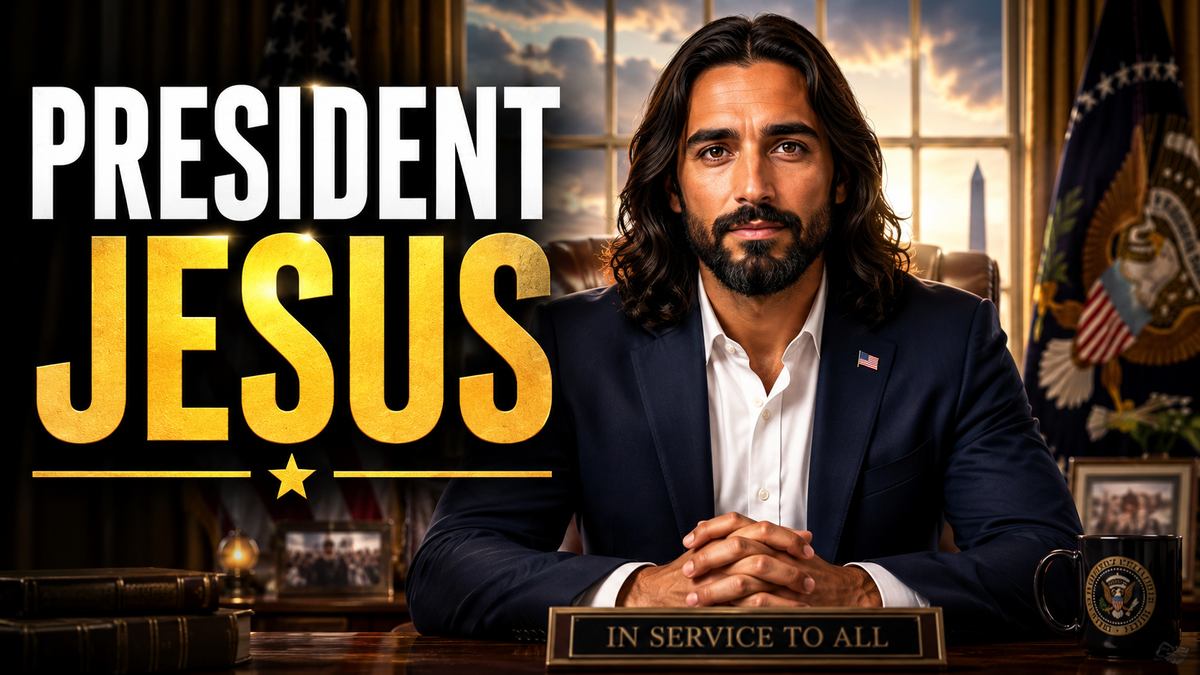
Chapter One
Jesus prayed before dawn in a small room above a closed hardware store in the old part of the city, where the streets were still wet from midnight rain and the traffic lights changed for no one. The building belonged to a widow named Mrs. Albright, who rented the upper rooms to people passing through and asked few questions as long as they did not track mud across the stairs. A narrow table stood beneath the window. A cracked mug sat beside an unopened envelope. Far below, a delivery truck hissed at the curb, and somewhere in the distance a siren rose and faded like the tired breath of a country that no longer knew how to sleep. Jesus knelt beside the bed with His hands open, not as a man preparing to take hold of power, but as the Son listening for the will of His Father.
Across the city, people were already waking to the same headlines that had followed them for months. Another investigation had ended in nothing anyone trusted. Another public leader had apologized without admitting wrong. Another town had buried strangers after an act of fear became an act of violence. Another market report had frightened families who were already choosing between medicine and groceries. Churches argued about influence. Newsrooms argued about truth. Neighborhoods argued about signs in yards. People who had once believed public life could be honorable now spoke of it the way exhausted doctors speak of a disease that no treatment has stopped. In those days, a small group of ordinary citizens had begun sharing the Jesus elected President of the United States story because they did not know how else to describe their longing for leadership that did not feed on them.
The envelope on the table had arrived the evening before. It contained a formal petition, written by lawyers and signed by citizens from every region, asking Him to allow His name to be placed before the country as an independent candidate under the lawful processes available in that alternate republic. The paper was heavy. The language was careful. The request beneath it was not careful at all. People wanted rescue. Some wanted revenge. Some wanted a holy symbol they could use against enemies. Some wanted a miracle large enough to avoid repentance. Others, quieter and more afraid to hope, wanted to know whether truth could stand inside power without becoming power’s servant. That question had followed Miriam Vale for twenty years, and it had led her, against everything she believed about politics, to write the first strategy memo that would become part of a related reflection on truth, mercy, and public leadership.
Miriam was awake before the first staff call, staring at the ceiling of her apartment while the city buses groaned below her window. She had not slept more than four hours in weeks. Her laptop was open on the chair by the bed, still glowing with maps, ballot requirements, donor reports, legal deadlines, security briefings, and one message from a network producer asking whether Jesus would finally answer questions about His “political ambitions.” Miriam had laughed when she read that phrase, but it had not been a happy laugh. In her world, ambition was assumed. Nobody believed a person entered public life without hunger. If someone said they did not want power, that usually meant they wanted it so badly they had learned to hide the smell.
She had learned that lesson early, first as a press aide for a governor who spoke beautifully about integrity and privately destroyed anyone who became inconvenient, then as a crisis consultant for senators, mayors, judges, and wealthy reformers whose consciences always seemed to awaken after the cameras had left. Miriam knew how to turn a scandal into a misunderstanding, a betrayal into a process failure, cowardice into prudence, greed into complexity. She did not think of herself as corrupt anymore. Corrupt people, in her mind, enjoyed the lie. She had simply become useful to people who could not survive without one.
Her father had called that survival. He had been a city ethics commissioner before his name became a warning. Years earlier, he had refused to bury a report exposing bribery in a redevelopment deal that displaced three blocks of families while making donors rich. The mayor’s office attacked him. The press questioned his motives. His friends vanished into careful silence. A witness changed his story. Her father lost his position, then his reputation, then his health. He died with a stack of documents beside his bed and a daughter who loved him but secretly believed he had been foolish. Not wrong. Foolish. That was the wound Miriam never named. Truth might be holy, but inside power it became homeless.
Now she was managing the public path of Jesus of Nazareth toward the presidency of the United States.
She sat up slowly and pressed both palms over her face. Even in the half-light of morning, the sentence felt impossible. There were lawyers who had spent months arguing constitutional qualifications, ballot access, state procedures, religious liberty questions, security frameworks, and the strange difficulty of explaining a candidacy that did not behave like a candidacy. There were scholars who insisted that nothing in the founding law required the nation to understand everything about a person before voting for him, only that the processes be lawful and the office be carried under oath. There were critics who accused the movement of madness, supporters who sounded even worse, and citizens who stood in lines for hours just to see whether His eyes looked at them the way the stories said they did.
Miriam had tried to resign twice.
Both times Jesus had listened without interrupting. Both times He had accepted her reasons as real without accepting them as final. The second time, when she told Him she was not the right person because she knew too much about image and not enough about faith, He had answered, “That is why you can see the temptation when it enters the room.”
She had been angry for three days after that, mostly because He was right.
By six-thirty, campaign headquarters had already become a place of controlled panic. The office occupied two floors of an old civic building near the river, chosen because it was cheap, central, and plain enough to disappoint anyone expecting a palace. Volunteers had taped hand-drawn signs above folding tables. A retired school principal managed phone banks with the calm authority of someone who had survived seventh graders. Lawyers slept on couches beneath whiteboards filled with filing dates. Veterans handled security coordination with the Secret Service detail assigned after the threats became too specific to ignore. Pastors, social workers, farmers, nurses, students, and former public servants moved through the halls carrying coffee, paper, prayer, suspicion, hope, and the faint embarrassment of people who knew history was happening in fluorescent light.
Miriam entered through the back, badge clipped to her coat, hair still damp from a rushed shower. She passed two security agents at the stairwell. One of them, Daniel Rusk, gave her a small nod. Daniel had the stillness of a man who noticed exits before faces. He had served in war, then protected officials he respected, officials he tolerated, and officials he quietly despised. He had not yet decided what to do with Jesus, who thanked agents by name, refused unnecessary spectacle, and once stopped a rope line because a boy in a wheelchair had dropped his glove.
“He’s upstairs?” Miriam asked.
“Prayer room,” Daniel said.
“Of course He is.”
Daniel did not smile, but something in his eyes shifted. “Network debate prep starts in twenty minutes.”
“I know.”
“They moved the threat briefing to after.”
“I know that too.”
He looked at her more carefully. “You look like you’re carrying bad news.”
“I work in politics. That’s my face.”
This time Daniel almost smiled. “Noted.”
Miriam climbed the stairs and found the senior staff gathered outside the conference room. Alan Cho, the legal director, was arguing quietly with Priya Senn, the policy coordinator, while a communications assistant refreshed a screen showing overnight clips. Every headline had found a different way to misunderstand the same event. Jesus had refused a private meeting with a group of billionaires who wanted to fund the final stretch of ballot access in exchange for “clarity” on future appointments. He had not condemned them publicly. He had not flattered them privately. He had simply told them that public office could not be purchased in advance by men who called their fear wisdom.
The donors had leaked their offense by midnight.
Now the morning shows were asking whether Jesus was naïve about governing, hostile to success, or secretly planning to punish wealth. A commentator who had never met Him declared that mercy was not a budget strategy. Another said His refusal proved He lacked seriousness. A third said no one could win a national election while insulting the people who paid for one.
Miriam watched the clips without speaking. She had warned Jesus not to take the meeting unless He was willing to leave with money. He had gone because refusing to sit with powerful men would have been its own performance. He had listened to them for nearly an hour. He had asked about their workers by name when He knew the names. He had asked one man when he had last walked the floor of the factory his grandfather built. He had asked another whether he believed a country was healthy when the poor had to become inspiring before anyone helped them. Then, when the largest donor slid a folder across the polished table and said they needed assurance that “their people” would not be treated unfairly in the new administration, Jesus had placed His hand on the folder but had not opened it.
“Your people,” He had said gently, “are not only the people who protect your life from discomfort.”
That was the sentence now being carved into weapons by every side.
Miriam turned from the screen. “Where is the revised statement?”
A young communications aide handed her a draft. Miriam scanned the first lines and felt the old machinery in her mind begin to move. Respectful clarification. Gratitude for concern. Commitment to economic growth. No office for sale, but no hostility toward enterprise. Firm, calm, balanced. She could hear the pundits losing interest by noon.
“It’s too defensive,” she said.
Alan looked relieved. “So we soften it?”
“No. We shorten it.”
Priya folded her arms. “To what?”
Miriam took a pen and crossed out nearly the whole page. At the bottom she wrote one sentence. No promise of appointment, policy, access, or favor will be exchanged for money, influence, silence, or praise.
The room went quiet.
Alan rubbed his forehead. “That will start a fire.”
“It already started.”
“It will cost us ballot operations in three states.”
Miriam knew he was right. The campaign was not funded like the others. It had no party machine, no inherited donor class, no quiet agreements with industries that expected a return. It had small contributions, volunteer networks, a surprising number of churches that gave no money but opened parking lots for gatherings, and citizens who mailed checks with handwritten notes saying they had not believed in anything public for years. That kind of support could move hearts, but lawyers still charged by the hour and ballot printing was not paid for with sincerity.
“We can’t pretend He said less than He said,” Priya murmured.
Alan turned toward her. “And we can’t govern if we don’t win.”
Miriam felt those words land in the place where her father’s voice still lived. We can’t govern if we don’t win. She had said versions of that sentence for years. She had said it while cutting paragraphs from speeches, burying internal reports, advising clients to apologize for timing instead of wrongdoing, telling herself that one more compromise might preserve enough influence to do some good later. Winning was the room where righteousness could eventually be invited, provided righteousness learned patience, manners, and the importance of not embarrassing donors.
The door at the end of the hall opened.
Jesus stepped out quietly. Conversation faded, not because He demanded silence, but because people became aware of the noise inside themselves when He entered. He wore a dark suit because the office had asked Him to for the debate, though no suit ever made Him look owned by the room. His face carried the peace of prayer and the sorrow of someone who had not prayed to escape the day.
Miriam handed Him the statement. “This is the cleanest version.”
He read it once.
Alan spoke before Jesus could. “It is true, but it may be strategically damaging.”
Jesus looked at him with kindness. “Is there another kind of damage we should fear more?”
Alan opened his mouth, then closed it. He was a good man, which made the question harder.
Miriam expected Jesus to approve the sentence and move on. Instead He looked at her. “Do you believe it should be released?”
The room waited.
She hated when He did that. Other candidates had asked her opinion when they wanted cover. Jesus asked as though conscience was not a tool but a place where God still spoke. It made every answer heavier.
“Yes,” she said.
“Why?”
“Because it’s true.”
His eyes remained on her, steady and unhurried.
“And because if we dress it up until everyone can pretend it means something else,” she added, “then we will have started lying before we even know whether the country will let You serve.”
Something in His face softened, not into approval exactly, but into recognition. “Then release it.”
Alan exhaled. Priya nodded to the communications aide, who hurried away.
Miriam should have felt clean. Instead she felt exposed. She had told the truth in a room where truth was costly, and her first instinct was not joy but calculation. How many states would this jeopardize? How would the debate moderators frame it? Which donors would punish them? Which supporters would twist the sentence into permission to hate wealthy people? Which enemies would call it theater? The old machinery had not died because she had spoken one honest sentence. It simply changed gears.
Jesus turned toward the conference room. “We should begin.”
Debate preparation was held around a scarred wooden table beneath a flag that had been donated by a veteran from Ohio. Miriam had argued against using it as a backdrop in campaign materials. Not because she disliked the flag, but because she had seen too many people wrap ambition in cloth and call it sacrifice. Jesus had agreed without needing the explanation. The flag stayed in the room, not as a prop, but as a reminder that a nation was made of souls before it was made of symbols.
For two hours they pressed Him with questions. Some were fair. Some were traps. Some were ugly because public fear had become ugly. What would He do about corruption inside agencies? Would He prosecute enemies? Would He pardon allies? Would He punish cities that rejected Him? Would He use executive power to force moral renewal? Would He allow criticism of Himself? Did mercy mean weakness toward violence? Did justice mean humiliation for the guilty? Did holiness have any place in a constitutional office built to restrain human power?
Jesus answered plainly, but never quickly for the sake of appearing quick. He spoke of law without worshiping law. He spoke of justice without feeding vengeance. He spoke of mercy without excusing harm. He spoke of constitutional limits as if restraint were not an obstacle to righteousness but one way fallen people were protected from the pride of rulers. When pressed about whether He would use power to silence those who lied about Him, He looked at Miriam before answering.
“A lie should be answered by truth,” He said. “It should not be answered by a throne seeking revenge.”
The room fell still.
Miriam looked down at her notes, though she had written nothing. She knew that sentence would not survive television. It was too clean. Someone would cut it into a slogan, then into an accusation, then into a fundraising email. She could already see the chyron: WOULD JESUS LET LIARS WALK FREE? She could hear the consultants saying He needed sharper contrast, stronger offense, better enemy definition. She could hear herself, ten years earlier, teaching a candidate how to turn a false attack into a weapon that destroyed the attacker twice as thoroughly.
When the session ended, the others moved toward coffee and calls. Jesus remained seated. Miriam gathered her papers too carefully.
“You are troubled,” He said.
“I’m employed,” she answered.
He waited.
She sighed. “You know they’re going to distort everything tonight.”
“Yes.”
“And You know the other candidates will come ready to perform strength.”
“Yes.”
“They’ll interrupt. They’ll bait You. They’ll try to make mercy sound childish. They’ll try to make restraint look like weakness. They’ll try to make You either condemn half the country or bless the other half.”
“Yes.”
Her frustration rose faster than she intended. “Then why won’t You let us prepare You to win the room?”
Jesus looked at her with such direct compassion that she wished He had rebuked her instead. “What do you mean by win?”
The question was quiet, but it opened something.
Miriam glanced toward the glass wall where staffers moved in purposeful lines beyond them. “I mean persuade people. Survive attacks. Keep control. Stop letting other people define You.”
“Is that what you have spent your life doing?”
She stiffened. “This is not about me.”
“It is not only about you.”
“That’s a very gentle way to make it about me.”
His expression did not change, but there was warmth in His eyes. “Miriam, when did you begin to believe truth needs image in order to survive?”
She hated the tears immediately. They did not fall, but they came close enough to make her angry. “Truth doesn’t need image. People do. Institutions do. Campaigns do. Movements do. Nations do. Truth can be pure in heaven. Down here, it gets eaten unless someone knows how to protect it.”
“By changing it?”
“By presenting it in ways people can receive.”
“And when they still reject it?”
“Then you make sure the lie costs them something.”
Jesus was silent.
Miriam heard herself. She heard the hardness. She heard her father coughing in a dark bedroom while the city moved on without repentance. She heard the mayor smiling at a ribbon cutting two weeks after destroying him. She heard donors laughing behind closed doors, anchors asking dishonest questions, candidates thanking God before betraying every vulnerable person who had believed them. She looked away.
“My father told the truth,” she said. “It did not set him free. It ruined him.”
Jesus did not answer quickly. Outside the room, phones rang. Somewhere in the building, a volunteer laughed too loudly, then stopped as if remembering the seriousness of the day.
“At times,” Jesus said, “truth brings a cross before it brings a crown.”
Miriam’s throat tightened. “That is not a campaign strategy.”
“No,” He said. “It is obedience.”
She stood because sitting there felt dangerous. “The motorcade leaves at four. Debate begins at seven. Please don’t say that onstage unless you want every analyst in the country asking whether You have a martyr complex.”
Jesus rose too. “You are afraid they will destroy what is true.”
“I am afraid they already know how.”
“And yet you are still here.”
She had no answer for that.
By afternoon, the city outside headquarters had changed. Barricades lined the streets. Supporters gathered behind security fencing, holding signs that ranged from reverent to ridiculous. Some prayed. Some chanted. Some sold unauthorized shirts until police moved them along. Across the avenue, protesters shouted that no holy man belonged near executive power. Others shouted that He should take more power than the Constitution allowed and cleanse the nation by force. Between them stood tired officers trying to keep bodies from becoming symbols.
Miriam watched from an upper window as Jesus stepped outside before the motorcade. Daniel Rusk moved close, scanning rooftops, hands ready, jaw tight. The agents hated unscheduled pauses. Jesus made them often, never recklessly, but always as if people were not interruptions to history.
A woman near the barricade called His name. She was not loud, but He heard her. She held a folded photograph. Daniel shifted, and Miriam could see the calculation in his shoulders. Distance. Angle. Exposure. Crowd compression. Jesus walked toward the barrier anyway, slowly enough for the agents to move with Him.
The woman was older, with a face drawn by grief. Miriam could not hear every word through the glass, but she saw the photograph pass from the woman’s hand to Jesus’ hand. Later she would learn it showed a son who had died in a federal detention facility after a chain of neglect, paperwork, indifference, and no single villain large enough to satisfy the mother’s pain. The woman did not ask for policy. She did not ask for a quote. She asked whether her son had mattered.
Jesus held the photograph with both hands. He did not perform sorrow for the cameras. He did not promise what He had not yet been given authority to do. He did not turn the mother into a campaign moment. He looked at the face in the picture, then at her.
“Yes,” He said.
The woman began to cry with the terrible relief of someone who had been waiting for one honest word.
Miriam turned from the window before anyone could see her own face. She told herself the moment was politically powerful, then felt ashamed for thinking in those terms. It was not that strategy made her unable to recognize holiness. It was worse. She recognized holiness and immediately wondered how it would play.
At four, the motorcade pulled away beneath a sky the color of old steel. Miriam rode in the staff vehicle behind Jesus, laptop open, phone buzzing without mercy. A donor coalition had suspended support. Three state directors needed emergency funds. A hostile committee had requested documents. A debate moderator had added a segment on “religion and executive restraint.” A leaked memo falsely claimed Miriam had advised Jesus to build an enemies list for after inauguration, though the election had not even happened. The lie was absurd, which meant it would travel well.
Her deputy, Lena Ortiz, called from headquarters. “We can kill it fast if we release the opposition research on Senator Bell.”
Miriam closed her eyes.
Senator Adrian Bell was the leading opponent in the race, a polished former prosecutor with a gift for sounding moral when cornered. His campaign had quietly encouraged the enemies-list story through friendly surrogates. Miriam had a file on him. Everyone had files on everyone. Bell had once buried evidence of misconduct by a political ally in exchange for support on a judicial appointment. It was documented, ugly, and still unknown to most voters.
“Is the file verified?” Miriam asked.
“Yes.”
“Is it relevant to the office?”
“Yes.”
“Is this why we would release it?”
Lena hesitated. “He punched first.”
That answer reached into Miriam like a familiar hand.
Traffic slowed near the debate hall. Protesters pressed against barricades. Cameras flashed against tinted glass. Rain began again, light but steady, turning every red brake light into a wound on the street.
“Miriam?” Lena said. “Do you want me to send it?”
Miriam looked toward the lead vehicle where Jesus sat beyond the dark glass, going to face a nation that wanted Him to be less merciful or more useful depending on which fear they served. She thought of her father. She thought of the sentence Jesus had spoken that morning. A lie should be answered by truth. It should not be answered by a throne seeking revenge.
The file on Bell was true. That was what made the decision harder. Truth could still be used like a knife held for the wrong reason. She had built a career on knowing exactly when to cut.
“Not yet,” she said.
Lena sounded startled. “We may not get another window.”
“I know.”
“If this story sets by morning, every outlet in the country will be asking whether we’re secretly planning retaliation.”
Miriam watched rain crawl across the window. “Then we answer what is false. We don’t release Bell because we’re angry.”
“And if he brings it up tonight?”
Miriam’s voice changed before she fully understood why. “Then we tell the truth without vengeance.”
Lena was quiet for a moment. “That sounds like Him.”
Miriam almost laughed, but it caught in her chest. “Yeah,” she said. “That’s what worries me.”
The debate hall had been built for concerts, not civic judgment, but that night it became the room where a frightened country tried to measure its own soul. Backstage corridors smelled of paint, coffee, damp wool, and electrical heat. Staffers moved quickly beneath headsets. Journalists rehearsed standups near glowing monitors. Security agents spoke into sleeves. Somewhere beyond the curtains, thousands of people murmured with the restless appetite of a crowd waiting for conflict.
Jesus stood in a small holding room with Miriam, Daniel, and two aides. On the monitor, Senator Bell greeted supporters with practiced ease. Bell had silver hair, a calm smile, and the ability to make accusation sound like concern. Miriam had worked against men like him and for men like him. Sometimes they were the same men.
A producer knocked and announced five minutes.
Miriam stepped closer to Jesus, lowering her voice. “They’re going to try to make You choose between justice and mercy as if one cancels the other.”
Jesus nodded.
“Bell may imply You’re building a government of religious loyalists.”
“I am not.”
“He may say Your followers want domination.”
“Some do.”
The answer unsettled her because it was not defensive.
She continued. “He may accuse You personally.”
“Yes.”
“You don’t have to absorb every blow in silence.”
“No,” Jesus said. “Silence can be obedience, and it can also be fear.”
Miriam looked up. “How do You know which is which?”
Jesus’ gaze was steady. “By asking whether love is being protected, or only self.”
The producer returned. “It’s time.”
Daniel opened the door and moved first. Miriam followed Jesus into the corridor, where the sound of the audience swelled. Just before the stage entrance, Jesus stopped. The staff nearly collided behind Him. Daniel glanced sharply down the hall.
Jesus turned to Miriam. “Do not be afraid of truth losing.”
She swallowed. “That is easy to say when You know the end.”
His face held both sorrow and tenderness. “I know the Father.”
Then He walked onto the stage.
The lights were brutal. The applause was uneven, rising from some sections, resisted in others, swallowed by the rules of broadcast timing. Miriam stood in the wings beside a monitor, headset pressed to one ear. Senator Bell shook Jesus’ hand with statesmanlike gravity. Two other candidates took their places, each carrying a different version of the nation’s anger. The moderators welcomed the audience. The first questions were sharp but expected. Economy. Security. Corruption. Public trust.
Jesus answered with a calm that seemed at first like discipline and then, as the minutes passed, like something deeper. He refused to flatter the people. He refused to despise them. When asked what He would do first if elected, He did not promise spectacle. He spoke of calling the nation to public truth, beginning with a full review of executive favors, hidden obligations, emergency powers, detention failures, and the quiet arrangements by which suffering became invisible when the sufferers had no access.
Bell smiled thinly. “That sounds noble. It also sounds dangerously vague. The American people need a president, not a national confessor.”
Some in the audience clapped.
Jesus turned toward him. “A nation that cannot confess what it has done will keep calling its wounds policy.”
The room stirred.
Bell leaned in. “And who decides what must be confessed? You?”
“No. Truth does not become truth because I say it. But leadership becomes corruption when it knows what is true and hides it to remain admired.”
Miriam felt her hands go cold.
Bell’s eyes flashed. He pivoted exactly as she expected. “Strong words from a campaign currently facing reports that your own advisers are preparing lists of political enemies for prosecution after the election.”
The moderator turned. “Would you like to respond?”
Every instinct in Miriam screamed for counterattack. Release Bell’s file. Leak the documents. Cut him open before he cut deeper. Her phone buzzed again and again in her hand. Lena was asking permission. Networks were already clipping the accusation. Miriam stared at Jesus on the monitor, willing Him to understand that mercy toward a lie could become cruelty toward everyone deceived by it.
Jesus looked at Bell, then at the moderator. “The report is false.”
Bell lifted his eyebrows. “Can you assure the country no one around you has discussed political accountability for those who abused power?”
“Accountability is not revenge,” Jesus said. “And revenge must not be dressed as accountability.”
Bell began to interrupt, but Jesus continued, not louder, only clearer.
“If I am entrusted with office, I will not use the law to punish criticism, settle resentment, protect friends, or frighten enemies into silence. No president owns justice. The office is a stewardship under law. Those who have harmed the vulnerable should fear truth, not because I hate them, but because the people they harmed have been unseen for too long. Those who have lied about me should not fear prison for their lies. They should fear becoming the kind of people who can no longer recognize truth when it stands before them.”
The hall was silent in a way applause could not have achieved.
Miriam stood frozen in the wing, phone still buzzing. For the first time in years, she did not want to manage the moment. She wanted to survive it honestly.
Bell recovered, but not fully. He spoke of stability, seriousness, constitutional order, experience. Some of it was fair. Some of it was performance. The debate moved on, yet something had shifted that could not be measured in instant polls. Jesus had not crushed His opponent. He had not let the lie stand. He had drawn a line between justice and vengeance so cleanly that everyone in the hall had to decide which side of it they secretly preferred.
When the debate ended, staff rushed the stage. Cameras pressed close. Commentators began speaking before they knew what they had seen. Miriam remained near the curtain until Jesus stepped down and approached her. The noise around them seemed to fold back.
“You didn’t use it,” He said.
She knew what He meant.
“No.”
“Why?”
The answer formed slowly. “Because I wanted to.”
He regarded her with the mercy of someone who knew the whole sentence beneath that sentence.
She looked away, blinking hard. “That does not mean I am changed.”
“No,” Jesus said gently. “It means you told the truth about where change must begin.”
Around them, the campaign surged into motion. There would be calls, clips, attacks, praise, distortions, donors lost, volunteers gained, legal fights renewed, security threats reassessed, and a long road still ahead toward an election no one could predict. But Miriam stood in the noise with the strange sensation that a door inside her had opened, not into peace exactly, but into the possibility that her father had not been foolish for telling the truth. Maybe he had simply refused to let power teach him what truth was worth.
Outside, rain fell on the debate hall, on the barricades, on the cameras, on the police, on the angry and the hopeful, on the signs raised for love and the signs raised for fear. Jesus paused beneath the awning before entering the vehicle. For a brief moment, away from the microphones, He looked out at the wet city and closed His eyes.
Miriam saw His lips move in prayer.
She could not hear the words. But for the first time since the campaign began, she wondered whether the nation’s deepest crisis was not that truth could not survive inside power, but that people like her had stopped believing it was worth suffering for.
Chapter Two
By morning, every screen in the country seemed to have chosen a different Jesus.
One network showed Him as a gentle reformer who had embarrassed professional politics by refusing to sound frightened. Another framed Him as a dangerous moral absolutist whose language about confession hinted at national humiliation. A third played the clip of His answer to Senator Bell without the sentences before or after it, then asked a panel whether the country was prepared to elect a man who believed liars should “fear truth.” The phrase sounded menacing when removed from His mouth. Miriam stood in headquarters beneath the low hum of fluorescent lights and watched strangers carve Him into shapes that served their hour.
The debate had changed the race, though no one agreed how. Small donations had surged overnight, many arriving with notes from people who said they had wept without knowing why. Volunteers had called from states where the campaign had no office, asking whether they could use church basements, union halls, libraries, barns, closed malls, or front porches. At the same time, three donor groups had formally withdrawn, two state ballot teams were warning of missed deadlines, and Senator Bell’s campaign had begun repeating the enemies-list accusation with the solemn sadness of men pretending not to enjoy a lie.
Miriam had not gone home after the debate. She had slept forty minutes on a couch in the legal room, waking with her shoes still on and her phone beneath her shoulder. Her first coherent thought was that the Bell file remained unreleased. Her second was that the world had not ended because of it. Her third was that the world was now trying very hard to make her regret restraint.
Lena Ortiz found her beside the main conference table, where coffee had gone cold in six different cups. Lena was younger than Miriam by almost fifteen years, sharp-eyed, loyal, and tired enough to stop pretending she was not angry.
“We have a path,” Lena said, setting a folder down. “Not the full Bell file. A narrower release. Timeline only. Public records plus one interview. No commentary. It answers his credibility without looking like revenge.”
Miriam looked at the folder but did not touch it. “Does it answer the enemies-list story?”
“It makes people stop caring about the enemies-list story.”
“That is not the same thing.”
“No,” Lena said, “but it may be the only thing that works.”
Across the room, volunteers were arriving in winter coats, shaking rain from umbrellas. Someone had taped a handwritten quote from the debate near the elevators, and someone else had already crossed it out because it made Jesus look like a slogan. Miriam noticed the argument from twenty feet away and almost smiled. Even the campaign’s sincerity created communications problems.
Alan Cho came in behind Lena with a tablet in one hand and a legal pad in the other. “We need a decision by ten. If we are going to release anything on Bell, it has to happen before the noon shows settle the narrative.”
Lena gestured toward the folder. “It is verified.”
“I know.”
“It is relevant.”
“I know that too.”
Alan’s voice dropped. “Miriam, the accusation is spreading. The longer we wait, the more people assume we are hiding something.”
She looked toward the hallway that led to the small prayer room. “Where is He?”
“Meeting with the mother from last night,” Alan said.
Miriam turned back. “The woman with the photograph?”
“Yes. Her name is Celia Maren. Her son was Tomas. The detention neglect case.”
Lena’s anger softened into something more human. “Press wants her.”
“Of course they do.”
“She wants to speak,” Alan said. “Not for us. For him.”
Miriam frowned. “For Jesus?”
“For her son.”
That distinction should have steadied the room. Instead it made Miriam more afraid. Grief was the most dangerous kind of truth in public life because everyone claimed to honor it while looking for a way to use it. A grieving mother could break open a nation’s conscience, or she could be turned into a prop by people who needed a face for their argument. Miriam had done both. She had told herself there was a moral difference between exploitation and amplification. Sometimes there was. Sometimes the difference was only whether the consultant felt ashamed afterward.
“Has anyone prepped her?” Miriam asked.
Lena looked uncomfortable. “No.”
“Good.”
Alan raised his eyebrows. “Good?”
“If she speaks, she speaks as herself.”
Lena studied her. “That sounds noble, but she is walking into a machine.”
“Yes,” Miriam said quietly. “I know.”
Before anyone could answer, Daniel Rusk entered with two agents behind him. He did not waste words. “Threat level increased. Credible enough to change movement. We are moving the afternoon town hall from open air to the rail depot.”
Miriam felt another piece of the day slide out of place. “The depot holds eight hundred. The park holds six thousand.”
“The park has rooftops, trees, unsecured sightlines, and three access points we cannot control.”
“The whole point was that people without tickets could come.”
“The whole point is that He stays alive.”
The bluntness snapped the room silent.
Daniel’s face did not change, but Miriam saw the cost of the sentence. He was not a fearful man. He was a responsible one. That responsibility had narrowed his world to angles, windows, hands in pockets, sudden movements, and the awful knowledge that one second could become history forever.
“Who knows?” Miriam asked.
“Senior security, local law enforcement, and now you.”
“Does He know?”
Daniel glanced toward the hallway. “He knows there are concerns.”
Miriam understood. “He doesn’t know you’ve already decided.”
“I am not asking His permission to protect Him.”
“He may disagree.”
“He can disagree from inside the depot.”
The exchange should have irritated her, but instead Miriam felt a strange gratitude for Daniel’s stubbornness. Jesus had a way of making people want to be brave, and sometimes brave people needed someone nearby who remembered that bullets did not become symbolic until after they had torn through flesh.
She picked up her phone. “I’ll rewrite the public advisory. Weather and safety. No mention of threat.”
Jesus’ voice came from the doorway. “Do not lie about danger.”
Everyone turned.
He stood beside Celia Maren. She was smaller than Miriam remembered, wrapped in a dark coat that seemed too thin for the weather. In daylight, grief had settled into the fine lines around her mouth and eyes, not as drama but as exhaustion. She held the photograph of Tomas against her chest. Jesus stood slightly behind her, not presenting her, not shielding her from view as though she were fragile glass, but near enough that she did not appear alone.
Daniel stepped forward. “Sir, the park is not secure.”
“I heard.”
“We are moving to the depot.”
Jesus looked at him with calm respect. “You have been given a duty.”
“Yes.”
“Carry it without fear.”
Daniel’s jaw tightened. “I can carry it better indoors.”
“And the people who cannot enter?”
“They will watch the feed.”
“Some came because they needed to be seen, not streamed.”
The room held its breath. Miriam waited for Daniel to soften. He did not. His voice was quieter when he answered.
“I have buried men who were seen by everyone. Seen is not the same as safe.”
Jesus received the words fully. That was one of the things Miriam had noticed. He did not treat resistance as disobedience simply because it resisted Him. He listened for the wound beneath the argument.
“No,” Jesus said. “It is not.”
Daniel looked almost relieved, then immediately guarded again.
Jesus continued. “Move the town hall to the depot. Ask the overflow to gather in the park if they choose, and I will go there briefly afterward if it can be done without recklessness.”
Daniel exhaled through his nose. It was not agreement exactly. It was the sound of a man accepting a burden he did not like because the one placing it on him understood its weight.
“We will assess after the depot,” Daniel said.
Jesus nodded. “Thank you.”
Celia had watched the exchange with eyes that seemed both hollow and alert. Miriam approached her carefully, as she would approach a witness whose truth had already been handled too roughly.
“Mrs. Maren,” Miriam said, “I’m Miriam Vale. I help coordinate public communications.”
“I know who you are.”
There was no accusation in the woman’s voice, which made Miriam feel worse.
“I’m sorry about Tomas.”
Celia looked down at the photograph. “People keep saying that. Some mean it.”
Miriam accepted the correction. “Yes.”
“I asked Him if I should speak today,” Celia said, glancing back at Jesus.
“And what did He say?”
“He asked me whether I wanted people to know Tomas or only know what happened to him.”
Miriam’s throat tightened. She looked at the photograph. Tomas Maren had been twenty-seven, with a guarded smile and dark hair falling across his forehead. There were a thousand ways to make him useful to a message and only one way to honor him as a son.
“If you speak,” Miriam said slowly, “there will be people who try to make your grief serve their side.”
“I know.”
“They will praise you if they can use you and dismiss you if they can’t.”
“I know that too.”
Miriam studied her. “Then why do you want to do it?”
Celia’s eyes lifted. “Because my son died in a place where no one thought they had enough power to be responsible. The clerk blamed the form. The guard blamed the nurse. The nurse blamed the contractor. The contractor blamed the policy. The policy blamed the budget. The budget blamed the voters. By the time they were done, everybody had clean hands and my boy was still dead.”
No one moved.
Celia held the photograph tighter. “I don’t want revenge. I did. For a while I wanted people to suffer just so they would stop explaining suffering to me. But last night He looked at Tomas like he was not evidence. Like he was not a headline. Like he was not a mistake that could be rounded down. I want to say his name where people in power have to hear it.”
Miriam nodded because she could not speak immediately.
Jesus looked at her. “Can that be done truthfully?”
It was not a communications question. It was a conscience question wearing ordinary clothes.
“Yes,” Miriam said. “But not safely.”
Celia gave a faint, tired smile. “I stopped believing safety was coming.”
Miriam did not know what to do with the sentence. It sounded too much like her father. Not in content, but in posture. The quiet refusal to let fear become the final editor.
The rail depot sat near the old industrial edge of the city, a brick building with tall arched windows and iron beams that had once held the noise of arrivals, departures, soldiers, workers, reunions, and people leaving home because staying had become impossible. The campaign had chosen it as a backup venue weeks earlier, never expecting to need it. By noon, crews were running cables across the floor while agents checked balconies and local police redirected crowds from the park. Rain tapped against the glass roof in restless waves.
Miriam moved through the building with a clipboard she did not need, answering questions before people finished asking them. The town hall format had changed three times. Celia would speak briefly, but not as an endorsement. Jesus would answer citizens selected by lottery, not pre-screened by friendliness. The overflow crowd in the park had grown despite the rain, and Daniel looked as if every additional person had added a pound to his shoulders.
At two, a pastor from a nearby congregation cornered Miriam near the side entrance. He was broad, gray-bearded, and visibly upset. His name was Malcolm Greer, and his church had opened its fellowship hall to volunteers for three months.
“You have to tell them outside He’s coming,” Malcolm said.
“We don’t know that yet.”
“They’ve been standing in the rain since morning.”
“I know.”
“They believe He’ll see them.”
“I know that too.”
His eyes narrowed. “Do you?”
The question struck harder than it deserved to. Miriam almost answered with rank and exhaustion. Instead she looked through the glass doors at the people gathered beyond the barricades, coats darkening under the weather, faces lifted toward a building most of them would never enter.
“I believe they need more than we can give them,” she said.
Malcolm’s expression changed. “That may be the first honest thing anyone in politics has ever said to me.”
“I wouldn’t put it on a sign.”
“No,” he said. “But I might put it in a prayer.”
Before she could respond, a shout rose near the west entrance. Miriam turned and saw a young man being pushed back by security. He was maybe twenty-two, soaked through, furious, holding a cardboard sign that had begun to collapse in the rain. The words were smeared, but Miriam caught enough: DON’T CROWN ANY MAN.
The crowd reacted before the agents did. Some booed. Some shouted at him to leave. A few surged forward, and the young man stumbled. Daniel moved fast, agents with him, but Jesus was already turning from a conversation near the stage.
Miriam whispered, “No, no, no,” though no one heard her.
Jesus crossed the floor toward the entrance. Daniel intercepted Him halfway. Their exchange lasted only seconds. Miriam could not hear it, but she saw Daniel’s refusal and Jesus’ answer. Then Daniel signaled the agents into a tighter formation and opened a narrow path.
The young man had been brought inside by the time Jesus reached him. Water dripped from his hair onto the polished floor. His face was flushed with fear disguised as anger.
“I don’t worship presidents,” the young man said, voice shaking.
Jesus stood before him. “You should not.”
The words disarmed the room.
The young man blinked. “They’re treating You like one already.”
“Some are.”
“They want You to take over everything.”
“Some do.”
“They’re wrong.”
“Yes.”
The young man’s mouth opened, but no sound came. He had arrived ready to fight a fantasy of Jesus that Jesus Himself would not defend.
“What is your name?” Jesus asked.
“Nathan.”
“Nathan, you are right not to give worship to public office.”
Nathan looked around as if searching for the trap. “Then why are You doing this?”
Jesus answered gently, and the quiet in the depot deepened until even the rain seemed to listen. “Because many have used office to be served, and the Father has sent Me here to serve. Because some have used truth to injure, and some have abandoned truth to keep peace with lies. Because the wounded are told to wait while the powerful arrange their comfort. Because authority is not evil when it bows before God, but it becomes a beast when it demands what belongs only to Him.”
Miriam felt the sentence move through the room. Not like a campaign line. Like a window opening in a house full of smoke.
Nathan’s hand trembled around the ruined sign. “I still don’t trust it.”
Jesus’ face softened. “Then do not trust the office. Trust the Father. Test every word. Refuse every idol. Begin with the ones that promise safety through control.”
The young man lowered his eyes.
Miriam looked away first.
By the time the town hall began, the clip was already online. Depending on the caption, Jesus had either humbled a protester, affirmed constitutional restraint, attacked His own followers, or confessed that His candidacy was dangerous. Miriam stopped checking after the fifth version. There was no keeping up with distortion. There was only telling the truth again and again without letting repetition become performance.
Celia spoke before the questions. She stood alone at the microphone, though Jesus remained seated nearby. Her voice shook at first. She did not mention parties, platforms, enemies, or campaigns. She spoke of Tomas as a boy who hated peas, loved trains, sang off-key, fixed neighbors’ bikes, made mistakes, recovered slowly, laughed rarely but fully, and died after five people in five offices each decided their small neglect was not large enough to matter. She did not call for anyone to be destroyed. She asked that no leader ever again speak of systems as if systems were not made of human decisions.
Miriam watched from beside the stage with tears she refused to wipe because wiping them would make them visible. Around the depot, people bowed their heads, not in the clean unity of staged grief, but in the uncomfortable recognition that innocence was not required in order for a life to matter.
When Jesus rose after her, He did not embrace her for the cameras. He asked permission with His eyes. Celia nodded. Only then did He take her hand.
The questions that followed were not easy. A factory owner wanted to know whether Jesus understood what regulations did to payroll. A nurse asked why mercy always seemed to require more from the exhausted than from the cruel. A judge asked how He would appoint people without rewarding loyalty. A father whose son had been killed in a robbery asked whether forgiveness meant the murderer should breathe free air. A college student asked whether Jesus would protect those who rejected Him.
He answered each person as if the question were not a category but a soul. He told the factory owner that workers were not costs to be managed around but neighbors whose labor had weight before God. He told the nurse that mercy without justice becomes another burden laid on the wounded. He told the judge that loyalty to truth mattered more than loyalty to Him personally. He told the grieving father that forgiveness did not erase the need to restrain evil, but vengeance could not raise the dead. He told the student that any government requiring love for Him as a condition of protection would already have betrayed Him.
Each answer created both comfort and offense. Miriam could feel consultants across the country developing ulcers.
Near the end, a local official rose from the third row. He had not been selected by lottery. Miriam recognized him from a background memo: Councilman Reed Halpern, polished, ambitious, tied to two redevelopment scandals that had never quite become indictments. Security moved toward him, but Jesus lifted a hand.
Halpern smiled with the weary patience of a man about to educate the room. “You speak beautifully about truth. But governing is compromise. Everyone here knows that. You cannot run a country by asking every official to tear open every wound, confess every mistake, and pretend moral purity will pave roads. At some point, leadership means choosing what can actually be done.”
There was enough reasonableness in his tone to make the danger harder to see. Miriam had always respected that kind of danger.
Jesus looked at him. “Yes. Leadership requires choosing what can be done.”
Halpern nodded, encouraged.
“And also refusing to call evil necessary because righteousness is difficult.”
The councilman’s smile thinned. “That sounds like a luxury of someone who has never had to pass a budget.”
Jesus did not move away from the challenge. “A budget is a moral document written in numbers.”
Murmurs spread.
Halpern’s voice sharpened. “And what would You cut? Which office would You close? Which promise would You break? Which people would You disappoint?”
“All leaders disappoint people,” Jesus said. “The question is whether they disappoint ambition or abandon the vulnerable.”
Miriam saw Halpern glance toward the cameras. He had expected either vagueness or thunder. Jesus had given him neither.
The councilman sat.
The town hall ended without resolution, which meant it ended honestly. People left still arguing, but not in the same way they had entered. Some were angry because Jesus had not confirmed their anger. Some were relieved because He had not demanded their performance. Some were confused because they had expected a conqueror or a harmless saint and had encountered someone more difficult than both.
The overflow visit remained uncertain until the last minute. Daniel walked the park perimeter twice, spoke with local command, checked rooftops, argued with three people, and finally returned to Jesus with rain dripping from his coat.
“Seven minutes,” he said. “No rope line. No stopping. You speak from the platform, then we move.”
Jesus looked at him. “Thank you.”
Daniel’s expression was severe. “That was not permission to improvise.”
“No.”
“I mean it.”
“I know.”
Miriam rode with them in the lead staff vehicle, pressed between Lena and a field director who was quietly praying into his sleeve. The park was only four blocks away, but the movement felt longer. Crowds lined the street despite the weather. Some reached out as the vehicles passed. Some shouted blessings. Some shouted warnings. One man held a sign reading MAKE HIM KING, and beside him a woman held another reading HE TOLD US NOT TO.
Miriam saw Jesus notice both.
The platform in the park had been meant for the larger town hall. Now it stood under temporary lights, slick with rain, facing thousands who had waited with the stubborn patience of people who needed something they could not name. Jesus climbed the steps with Daniel close behind. Miriam stood at the base, heart pounding every time a hand moved too quickly in the crowd.
Jesus did not give a campaign speech. He thanked them for waiting, then asked them not to confuse His willingness to serve with permission to surrender their conscience to any leader.
“No office can repent for you,” He said, His voice carrying through rain and speakers. “No president can love your neighbor in your place. No law can make a hard heart merciful. Do not ask public power to do the holy work you are refusing to do before God.”
A strange sound moved through the crowd, not applause, not protest, but recognition mixed with disappointment. People wanted hope. He gave them responsibility with it.
Then someone near the front shouted, “Save us!”
The cry pierced the park.
Jesus looked toward the voice. For one suspended moment, even Daniel stopped scanning and looked at Him.
“I have come to save,” Jesus said. “But not by making you children of power. Come to the Father. Turn from what is false. Do justice. Love mercy. Walk humbly. If I am given this office, I will serve within it. I will not become your idol inside it.”
Miriam felt the words strike the very center of the false belief that had sustained her career. She had thought the danger was that truth could not survive power. But perhaps another danger had been working beside it all along: people did not only use image to protect truth from power. They used power to protect themselves from truth.
Daniel touched his earpiece. His posture changed.
Miriam saw it and went cold.
The agents moved at once, closing around Jesus before the crowd understood. There was no gunshot, no visible attacker, only a sudden tightening of bodies and command voices cutting through rain. Jesus allowed Himself to be moved, but His eyes remained on the crowd, not in fear, not in defiance, but in sorrow for how quickly human longing could become danger.
They rushed Him down the steps and into the vehicle. Miriam climbed in behind Lena as doors slammed. The motorcade lurched forward.
“What happened?” she asked.
Daniel’s voice came over the radio, clipped and controlled. “Possible weapon sightline. North tree line. Local has a suspect detained.”
Lena covered her mouth.
Miriam looked toward Jesus. Rainwater darkened His hair and shoulders. He sat quietly, hands folded, breathing steadily. Not shaken. Not untouched either. That distinction mattered. He was not acting as if danger were unreal. He was carrying it without letting it rule Him.
“I’m sorry,” Miriam said before she knew what she meant.
Jesus turned toward her. “For what?”
She looked out the window at the blurred lights, the running agents, the crowd receding behind them. “For wanting this to be easier to manage than it is to obey.”
He said nothing, but His silence gave her room to hear herself.
Her phone buzzed. Then buzzed again. Then again. Clips from the park were everywhere already. The cry of “Save us.” Jesus’ warning about idols. The sudden security movement. Speculation had begun before the motorcade cleared the block. Some said the threat was staged. Some said His followers had created the danger. Some said His refusal to accept worship proved humility. Some said it proved manipulation. Senator Bell’s campaign issued a statement expressing relief that no one was hurt, then added that America needed “steady leadership, not scenes of messianic confusion.”
Lena swore under her breath.
Miriam stared at the statement until the words blurred. Her hand moved toward the Bell folder on the seat between them. The old instinct rose again, hot and clean. He had used the moment. He had wrapped poison in concern. He had seen a crowd frightened by possible violence and reached for advantage before the rain was dry on anyone’s coat.
She could release the file before dinner.
This time, she did not even need to ask whether she wanted to.
Jesus looked at the folder, then at her.
Miriam’s fingers rested on the edge.
“It’s true,” she said.
“I know.”
“It matters.”
“Yes.”
“He keeps lying.”
“Yes.”
“If we do nothing, people will believe him.”
“Answer the lie,” Jesus said. “Do not become it.”
She shut her eyes. “I don’t know how to fight like that.”
His voice was gentle. “You are learning.”
The words did not comfort her. Not immediately. Learning sounded too slow for a country on fire, too small for an election that had become a vessel for every grief, idol, rage, hope, and fear the nation could pour into it. But as the motorcade moved through the wet city, Miriam lifted her hand from the folder.
Outside the window, America blurred past in sirens, streetlights, barricades, soaked flags, angry mouths, praying hands, and tired faces turned toward a man who refused to use their fear to make himself larger.
Miriam did not yet know whether truth could survive inside power.
But for the first time, she began to understand that truth might ask to survive inside her first.
Chapter Three
The final weeks of the campaign did not feel like history while Miriam was living them. They felt like bad coffee, frozen fingers, airport carpet, courthouse hallways, hoarse volunteers, emergency filings, security sweeps, missed meals, and the endless humiliation of watching truth become content before it could become understanding.
Every state seemed to have its own way of testing endurance. In one, a county clerk misplaced three boxes of petitions and found them only after a retired librarian stood in the office lobby for six hours with a thermos and a list of names. In another, a judge demanded clarification on ballot language after opponents argued that allowing Jesus to be listed without a conventional party label would confuse voters who were already confused by the whole idea of Him running at all. In a third, campaign attorneys slept in rental cars outside a courthouse because the hotel rooms had filled with reporters, protesters, and people who believed proximity to the campaign might heal something in them that no election could reach.
Jesus moved through it all without hurry, which made the hurry around Him more visible. He met with farmers in a machine shed that smelled of diesel and hay. He sat with school janitors in a cafeteria after midnight while they finished mopping floors around Him. He listened to border families, prison chaplains, widows of police officers, men who had lost sons to addiction, women who had lost daughters to men with power, and mayors who no longer knew whether honesty could survive a budget meeting. In every place, Miriam watched people try to hand Him their version of the nation and ask Him to bless it. He would receive their pain, but He would not baptize their idols.
That refusal cost Him daily.
Supporters walked away because He would not say their enemies were beyond mercy. Critics softened, then hardened again because He would not say mercy meant no one should answer for harm. Religious leaders praised Him until He corrected their hunger for influence. Secular reformers admired Him until He spoke of repentance as though public ethics without a changed heart would only build cleaner-looking systems for the same old pride. Wealthy donors disliked Him because He would not sell access. Poor communities sometimes mistrusted Him because they had heard too many promises spoken gently by people who left before the rent came due.
By the time the campaign reached the last televised forum, Miriam had become so tired that her thoughts began arriving without polish. The forum took place at a university auditorium in the middle of the country, far from the coasts, in a city that had watched factories close, hospitals consolidate, churches shrink, and young people leave with apologetic smiles. The stage was smaller than the debate hall, the lighting less cruel, the audience more worn than angry. It should have been easier.
It was not.
Senator Bell came prepared. He did not attack Jesus directly at first. He spoke instead of steadiness, experience, administrative realism, the danger of confusing moral beauty with governing competence. He praised Jesus’ compassion so thoroughly that the praise became a cage. He said the nation did not need a symbol. It needed a president who understood the machinery of state.
Miriam stood backstage with Lena, Daniel, and Alan, watching on a monitor beside racks of black curtains. She knew Bell’s strategy the way a former thief knows the sound of a lock being picked. Admiration was safer than contempt. If Bell could make Jesus seem too holy for office, he would not need to make Him seem unworthy of it.
The moderator turned to Jesus. “Senator Bell says compassion alone cannot govern. How do you respond?”
Jesus looked toward the audience before He answered, as if refusing to turn the question into a duel.
“Compassion alone is not administration,” He said. “But administration without compassion becomes a polished way to ignore suffering. A nation needs competence. It also needs leaders who remember what competence is for.”
Bell nodded, smiling. “I agree with that. But there are hard decisions in office. There are classified threats, budget limitations, allies to reassure, enemies to deter, agencies to manage, constitutional boundaries, and laws that do not bend just because the heart is moved. Forgive me, but many Americans wonder whether you can make decisions that disappoint people who believe you should never disappoint them.”
Jesus did not avoid the question. “I will disappoint many people.”
A ripple passed through the room.
“I will disappoint those who want me to use public office to make them feel righteous without repentance. I will disappoint those who want mercy without truth. I will disappoint those who want truth without mercy. I will disappoint those who believe the law should be a weapon for their resentment. I will disappoint those who believe restraint is weakness. I will disappoint those who ask government to become God.”
Miriam heard a staffer behind her whisper, “That’s going to clip everywhere.”
It did.
Within twenty minutes, the sentence had been separated from everything around it. By midnight, Jesus had “promised to disappoint America.” By morning, one editorial said He had finally admitted He was unfit to lead a diverse republic. Another said He had displayed the only kind of honesty left in public life. Bell’s campaign released a calm, sorrowful statement saying the presidency should not be entrusted to a man who spoke so easily about disappointing voters.
The polls tightened.
For the first time since the debate, Miriam saw fear enter the staff in a way no briefing could contain. It was not panic exactly. It was the dread of people who had sacrificed too much to pretend they did not care about the outcome. Volunteers who had slept on floors and eaten donated soup began asking whether the message needed refinement. State directors wanted sharper contrast. Small donors sent desperate emails. Pastors asked for reassurance. Journalists asked whether the campaign was considering a closing pivot.
A closing pivot. Miriam almost admired the phrase. It made abandoning the truth sound like turning a corner.
Two nights later, in a hotel conference room outside Milwaukee, the senior team gathered after another rally that had run late because Jesus refused to leave while a line of workers waited in the cold. The room smelled of reheated pasta and damp coats. People looked older than they had three months earlier.
Alan laid out the numbers. “We can still win, but the path narrowed this week.”
Priya added, “The policy team is getting pressure to simplify the closing argument.”
“Meaning?” Miriam asked.
“Less repentance. More reform.”
Lena leaned forward. “Less correction. More comfort.”
No one contradicted her.
Daniel stood near the wall with his arms folded, half-listening while scanning the hallway every time footsteps passed. His world had tightened too. Threats had multiplied after the park incident. Some came from people who hated Jesus. Some came from people who adored Him in ways that frightened the security team even more. Miriam had learned that worship twisted into possession could look very much like hatred when disappointed.
Alan rubbed his eyes. “We are not talking about lying. We are talking about emphasis. The country is exhausted. People need hope.”
“They are being offered hope,” Priya said.
“They are being offered a cross before they are offered relief.”
The room fell quiet because Alan had not meant to sound accusing, and yet the accusation had been there.
Jesus sat at the end of the table, listening as He always did, without the impatience of someone waiting to correct everyone. Miriam had seen powerful men use silence as theater, forcing others to fill the room with fear. Jesus’ silence did the opposite. It made people more responsible for what they said.
Finally He asked, “What do you believe should be changed?”
Alan looked at Miriam, then back to Jesus. “The closing message should focus on trust, service, and healing. Keep the language about truth, but stop framing the nation’s pain around repentance. People hear that as condemnation.”
“Some of it is condemnation,” Priya said softly. “Not hatred. But judgment.”
Alan turned toward her. “That may be true, but truth delivered at the wrong time can become ineffective.”
Miriam felt the old instinct rise, not with anger this time, but with competence. She could fix this. She could keep the moral center while sanding down the edges. She could make repentance sound like renewal, correction sound like healing, judgment sound like accountability, obedience sound like shared values. The message would remain true enough to defend and soft enough to travel. It would not be a lie. Not exactly. It would be a version of truth trained not to bleed in public.
Jesus looked at her. “Miriam?”
Everyone turned.
She wanted to be angry at Him again for asking. But anger required distance, and He had been closing the distance for weeks without forcing the door. He had let her see the machinery. He had let her name the temptation. He had not shamed her for knowing how to manipulate a moment. He had simply kept asking whether she would use that knowledge as a servant or a master.
She folded her hands on the table. They were shaking slightly.
“I know how to make the closing message easier to receive,” she said. “I know how to keep every sentence technically true while removing the part that makes people decide anything. I know how to turn repentance into a mood. I know how to make courage sound safe. I know how to give voters the feeling of moral seriousness without the burden of moral response.”
No one spoke.
Her voice lowered. “And I think that is why I should not be the one to rewrite it.”
Alan stared at her. Lena’s eyes softened, but she did not rescue the moment. Daniel had stopped watching the hallway.
Jesus said, “Why?”
Miriam looked at Him. “Because I still want to win badly enough to confuse usefulness with obedience.”
The confession did not cleanse the room. It made the room heavier. That was the first thing Miriam noticed. Truth did not float above consequences. It entered and gave every consequence a name.
Alan leaned back. “So what are we supposed to do? Lose honestly?”
The question sounded bitter, but Miriam heard the fear beneath it.
Jesus answered, “Obey honestly.”
Alan’s face tightened. “And if that leads to losing?”
“Then losing will not become our god.”
Miriam looked down at the table. She thought of her father again, not as the ruined man in the bedroom, but as he had been when she was young, teaching her to ride a bike in the cracked parking lot behind their apartment. He had run beside her with one hand near the seat and told her that balance could not be learned while someone else secretly held her upright. She had hated him for letting go. She had loved him for believing she could ride.
Maybe truth was like that. Maybe it did not survive because people like her held it up with image. Maybe it survived because it came from God, and the question was whether she would stop trying to keep it from falling long enough to discover it could stand.
The closing message did not pivot.
It sharpened, though not in the way the consultants wanted. Jesus spoke less about what He would do to the country and more about what the office could not do for it. He promised lawful service, not national salvation through executive command. He promised to review hidden corruption, not humiliate enemies for public pleasure. He promised to protect the vulnerable, not flatter them as morally superior. He promised to restrain violence, not feed the fantasies of people who wanted justice to feel like revenge. He promised to honor constitutional limits, not because He lacked authority, but because no earthly office deserved the surrender of conscience.
The crowds changed during that final stretch. They did not shrink as much as some feared, but they grew quieter. The rallies began to feel less like events and more like examinations no one had studied for. People still applauded. They still prayed. They still argued outside. But something in the nation’s listening had deepened. Jesus had refused to become a banner large enough for everyone to hide behind. That refusal forced people to notice what they had brought with them.
On the last night before the election, the campaign returned to the old civic building near the river. There was no rally. Jesus had insisted on an evening of rest for the staff and volunteers, though most of them remained on-site because rest felt impossible. Folding tables were pushed together. Someone brought soup. Someone else found bread from a bakery that had been sending loaves every Friday since the first ballot challenge. Celia Maren came with a small tray of cookies she said Tomas used to burn. Nathan, the young protester from the depot, arrived with three friends and asked if volunteers were still needed to drive elderly voters in the morning. Miriam watched him receive a clipboard from Lena and wondered when the story of a country had become so strange that a protester might become a servant without becoming a follower of politics.
Late that night, she found Jesus in the stairwell landing between floors. He was not hiding. He was simply sitting where the noise thinned. Through a narrow window, the river reflected the city lights in broken lines.
“Tomorrow will be difficult,” He said.
She sat on the step below Him, too tired to maintain professional posture. “That is a very gentle way of describing a national election involving You.”
He smiled faintly.
For a while they listened to the building breathe. Phones rang below them. Volunteers laughed in the exhausted way people laugh when seriousness has become too much for one body to carry. Somewhere upstairs, Daniel was arguing with the advance team about morning routes.
Miriam looked at her hands. “I used to think my father died because he told the truth badly.”
Jesus waited.
“I told myself that if he had been smarter, more strategic, more careful with timing, he could have survived. Maybe even won. I think I needed to believe that because the alternative was unbearable.”
“What was the alternative?”
“That truth could cost everything even when you tell it rightly.”
The words sat between them.
Jesus did not soften them. “Yes.”
She closed her eyes. “I hated that.”
“I know.”
“I still hate it.”
“I know that too.”
Her laugh broke slightly. “You’re not making a very strong case for truth as a career path.”
“No,” He said. “Truth is not a career path. It is a way.”
She leaned her shoulder against the wall. “What if the country chooses someone else tomorrow?”
“Then the Father remains the Father.”
“What if they choose You for the wrong reasons?”
“Many already have.”
“What if they expect You to become what You keep refusing to become?”
“Then I will keep refusing.”
Miriam turned toward Him. “Does it ever grieve You? Being misunderstood by people who claim to love You?”
His face changed, not dramatically, but enough that she wished she had not asked lightly.
“Yes,” He said.
She nodded, chastened.
After a moment, He added, “But love is not obedience because it is understood. It is obedience because the Father is worthy.”
Election Day came cold and clear.
Across the country, people stood in lines before sunrise. Some brought folding chairs, children, thermoses, oxygen tanks, rosaries, work uniforms, grief, suspicion, hope, and private reasons they would never explain to exit pollsters. In some precincts, citizens sang hymns until officials asked them to stop because others felt pressured. In others, protesters held signs warning against idolatry and signs warning against corruption and signs warning against both. Lawyers monitored irregularities. Judges denied last-minute motions. Machines jammed. Volunteers delivered water. Rumors spread faster than corrections. For one long day, the whole country seemed to hold its breath through ordinary civic procedures: signatures, ballots, stickers, lines, names checked against lists, curtains drawn, choices made in private.
Jesus voted in a modest community center under constitutional procedure, surrounded by security and silence. He did not speak to reporters beyond thanking the workers. When asked whether He expected victory, He said, “I expect the Father to remain faithful.”
The answer irritated every analyst who needed something measurable.
Miriam spent the day at headquarters, moving between legal calls and field reports. She had imagined election day would feel like the climax of every skill she had built. Instead it felt like surrender by spreadsheet. There was so much to do and almost nothing to control. By evening, the staff gathered around screens. Results came slowly, then too quickly, then not at all in the places everyone cared about most. Bell led early. Then Jesus gained in rural counties no one had polled correctly. Then Bell surged in suburbs. Then independent voters broke in unexpected numbers. Commentators became cautious. Then excited. Then solemn. Then confused.
At midnight, no one knew.
At two in the morning, three states remained too close.
At four, Miriam found Daniel in the hallway outside the room where Jesus had gone to pray.
“You should sleep,” she said.
“So should you.”
“Not my brand.”
“Mine either.”
They stood together beneath a flickering light. Daniel looked more worn than she had ever seen him.
“You believe He’ll win?” Miriam asked.
Daniel’s answer took time. “I believe people want Him to. I don’t know if they want what comes with Him.”
That was the most accurate analysis anyone had offered all night.
By noon the next day, the final state was called.
Jesus of Nazareth had been lawfully elected President of the United States.
The room did not erupt the way Miriam expected. Some cried. Some sank into chairs. Some prayed aloud. Some stared at the screens as if victory had become too heavy to lift. Outside, bells rang from a church down the street, then sirens drowned them, then cheers rose from the crowd gathered beyond the barricades. Around the country, people celebrated, protested, knelt, argued, feared, hoped, mocked, and wondered what they had done.
Miriam stood still while Lena hugged her. Alan was crying openly. Priya had both hands over her mouth. Daniel spoke into his radio, already living in the next threat.
Jesus entered the room quietly.
Everyone turned toward Him, waiting for triumph.
He looked at their faces one by one. Then He bowed His head.
“Father,” He prayed, “do not let this office become an idol in our hands. Have mercy on this nation. Teach us to serve what we cannot save.”
No one clapped.
Miriam wept then, not because they had won, but because she understood at last that winning had not made them righteous. It had only given them a larger place to obey.
Chapter Four
The weeks between election and inauguration did not feel like victory. They felt like a country discovering that hope could frighten people as deeply as despair.
Every institution reacted in its own language. Courts handled filings. Agencies prepared briefing books. Foreign governments sent formal congratulations written carefully enough to reveal their uncertainty. Markets shook, recovered, shook again. Commentators asked whether Jesus would govern through established channels or expose the emptiness of channels that had learned to preserve themselves. Supporters demanded transformation by noon on the first day. Opponents warned that even lawful power could become dangerous when carried by someone people loved too intensely. The constitutional machinery held, but every gear made noise.
Miriam moved through the transition offices with a visitor badge, then a staff credential, then a title she had not wanted and could not refuse: Counselor to the President for Public Trust. The name sounded noble enough to make her suspicious. She told Jesus it was too polished.
He said, “Then carry it plainly.”
That was all.
The transition headquarters occupied a federal building whose hallways smelled of wax, dust, and old decisions. Miriam spent her days in rooms where people argued over appointments, disclosures, ethics rules, executive orders, intelligence summaries, legal boundaries, and whether the inaugural address should calm the country or confront it. Jesus listened more than He spoke. When He did speak, He often changed the question beneath the question. A nominee’s résumé mattered, but so did whether she treated janitors by name. A reform plan mattered, but so did whether it turned suffering people into proof of its own courage. A speech mattered, but so did whether it invited repentance without turning repentance into a national performance.
Miriam watched seasoned officials become uneasy around Him. Some mistook His gentleness for softness and tried to move Him. They learned quickly that His mercy did not make Him pliable. Others expected thunder and found themselves disarmed by patience. A few became angry because He saw too clearly the little bargains they had made with themselves and did not flatter those bargains as experience.
Senator Bell conceded without warmth, though with enough dignity to preserve his future. Miriam saw him once during the transition, in a closed briefing on continuity of government. He shook Jesus’ hand, offered cooperation, and avoided her eyes. The file on him remained unreleased. It sat in a secure archive, no longer a weapon in Miriam’s mind but still a fact with moral weight. Truth unused for revenge did not become truth ignored. That was one of the harder lessons. Restraint was not burial. It was waiting for the right purpose.
Celia Maren attended one transition meeting on detention reform. She sat at the end of a long table beneath portraits of former officials and listened while experts described oversight structures, funding streams, contractor liability, reporting gaps, medical access, and interagency coordination. Her face did not change until one deputy used the phrase “acceptable loss environment.” He meant it technically. Miriam saw Jesus close His eyes.
Celia spoke before anyone else did. “My son was not an environment.”
No one used the phrase again.
Nathan volunteered outside the transition building twice a week, helping manage visitors who had come with letters, warnings, prophecies, policy binders, photographs, accusations, blessings, and grief. He still carried distrust of power, but now it had become cleaner, less performative, more useful. He told Miriam one afternoon that he had not changed his mind about presidents.
“Good,” she said.
He looked startled.
Miriam smiled faintly. “Just don’t let distrust become another idol.”
He nodded as if the sentence had bruised him in the right place.
Daniel Rusk became quieter as inauguration approached. The security plans were unlike anything he had ever carried. The danger was not only hatred. It was adoration without obedience, expectation without restraint, fear without truth. Every route, rooftop, window, credential, and crowd pattern became a battlefield inside his head. Jesus submitted to protection, but never to panic. That made Daniel’s work both easier and impossible.
On the morning of the inauguration, Washington woke beneath a pale winter sky. The city had prepared itself with fences, flags, barricades, snipers, choirs, armored vehicles, street vendors, prayer circles, protest zones, and the solemn awkwardness of a republic trying to host something it did not understand. Crowds filled the avenues long before daylight. Some had traveled for days. Some came to celebrate. Some came to object. Some came because history had become too strange to watch from home.
Miriam stood inside the Capitol holding a copy of the address she had helped not polish. That was how she thought of it. They had cut what was ornamental and left what was costly. Jesus would not promise national greatness as a substitute for national repentance. He would not condemn the country as though He hated it. He would not bless its myths in order to calm its nerves. He would take the oath required by law, assume the office lawfully entrusted to Him, and then remind the people that no oath of office could do the work of a surrendered heart.
Before the ceremony, she found Him in a small room set aside for waiting officials. He stood near a window, looking out toward the gathered multitude. The noise outside rose and fell like the sea.
“Do You need anything?” Miriam asked.
He turned. “Pray.”
She almost answered that many people were praying already. Then she understood He had not asked what the crowd was doing.
She stood beside Him, unsure what to say. Prayer still felt, to her, like entering a room where everyone else knew the customs. Jesus did not correct her silence. After a moment, Miriam bowed her head.
“Father,” she said, her voice barely above breath, “keep us from using what You gave us to protect ourselves from You.”
Jesus looked at her with a tenderness that made the room seem larger.
“Amen,” He said.
The ceremony unfolded with constitutional precision and human trembling. The oath was administered. Jesus spoke the words plainly, not as a claim of ownership but as a submission to duty. No light split the clouds. No miracle interrupted the law. The crowd reacted in waves, some weeping, some cheering, some standing rigid in protest, some silent as though afraid to breathe.
Then President Jesus of Nazareth stepped to the podium.
Miriam stood behind and to the side, watching the faces more than the speech. She had read the address so many times she almost knew it by muscle.
Jesus thanked the nation for entrusting Him with office and thanked those who had opposed Him for reminding the country that no leader should be placed beyond question. He honored the constitutional order, not as salvation, but as a restraint against the pride that tempts every ruler and every crowd. He spoke of the poor without making poverty a symbol. He spoke of the wealthy without making wealth a sin. He spoke of agencies, courts, schools, prisons, farms, hospitals, borders, factories, and families as places where human decisions either honored or denied the image of God.
“I have not come into this office to be served by your hope,” He said. “I have come to serve under the Father, within the law, for the good of those He sees. Do not give this office your worship. Do not give any leader your conscience. Bring your conscience before God. Let truth begin where you live. Let mercy begin with the person you would rather despise. Let justice begin with the harm you would rather not name. Let repentance begin before it becomes policy, or policy will only rearrange the furniture in a house whose foundation is still cracked.”
The applause came slowly, then unevenly, then strongly, though not from everywhere. That seemed right. Miriam no longer trusted applause that arrived too easily.
The first crisis began before the inaugural luncheon ended.
A severe winter storm, worse than forecast, had struck the central corridor of the country with ice, wind, and power failures. At first it seemed like a natural emergency of the kind every administration must manage. Then reports came from three federal detention facilities and two contracted medical transport centers. Backup generators had failed. Communications were down. Roads were blocked. A fight had broken out at one facility after detainees were left in freezing conditions. Guards were injured. Detainees were injured. One nurse was missing. Local officials were overwhelmed. Rumors claimed dozens dead. Other rumors claimed detainees had taken hostages. Still others claimed the whole thing was exaggerated to embarrass the new president.
By dusk, the country that had watched Him take an oath was watching smoke rise from a facility in the snow.
The Situation Room did not feel dramatic. That was what unsettled Miriam most. It felt procedural. Screens, maps, calls, acronyms, weather data, casualty estimates, agency heads, legal counsel, military options, emergency authorities, local requests, state coordination, communications drafts. Human terror entered the room as information. Miriam understood then how easily suffering became manageable once it arrived in the right format.
Jesus sat at the head of the table, not because He needed the seat to be Himself, but because the office now required His decision. Daniel stood along the wall, changed out of ceremonial posture and back into watchfulness. Alan was present as legal counsel. Priya coordinated domestic policy details. Miriam held a folder containing the first public statement.
A senior emergency official recommended immediate federalization of the response where legally available, deployment of medical teams, generator airlifts, and negotiated de-escalation at the primary facility. Another official urged a stronger posture. “Sir, with respect, this is your first night. If the country sees disorder, enemies foreign and domestic will test you. We need overwhelming control.”
Control. The word moved through Miriam like an old song.
Jesus asked, “What do you mean by overwhelming?”
The official hesitated. “Visible force. Curfew around the facilities. Tactical units prepared to retake the compound if negotiations fail. Clear warning that violence will be met decisively.”
“Will that save the freezing?”
“It may prevent spread.”
“Will it find the missing nurse?”
“It may create conditions to do so.”
“Will it distinguish between the violent, the frightened, the negligent, and the abandoned?”
The official did not answer immediately.
Another adviser spoke. “Mr. President, the public needs to know you are in command.”
Jesus looked at the map. “The suffering need to know help is coming.”
Miriam felt the difference settle over the room. Command could become an image. Help had to become action.
Then the political layer arrived, as it always did. Within an hour, clips emerged of detainees shouting from behind fences, guards being carried out on stretchers, families screaming at roadblocks, commentators demanding force, activists demanding abolition, local leaders demanding money, and Bell appearing on a broadcast urging the administration to prove that “mercy does not mean paralysis.” He did not sound cruel. He sounded responsible. That made the temptation sharper.
Lena called Miriam from the communications office. “We’re getting hammered. They’re saying He cares more about detainees than officers. Others are saying He’ll use the storm to hide abuses. We need a strong line.”
“What kind of strong line?”
“Something like, ‘Order will be restored.’”
Miriam looked through the glass toward Jesus. He was listening to a field commander describe conditions inside the facility where Tomas Maren had died months earlier. Not the same building, but the same system, the same language, the same habit of passing responsibility along until no one was left holding it.
“No,” Miriam said.
Lena was quiet. “No?”
“Say help is moving. Say every injured person matters. Say officers, detainees, medical staff, and families will be accounted for by name wherever possible. Say violence will be restrained, neglect will be exposed, and no life will be treated as a message.”
“That’s longer.”
“Then let it be longer.”
“Miriam, people want certainty.”
“They can have truth.”
She ended the call and looked down at her hands. They were steady. Not because she had become fearless, but because something in her had stopped asking fear for permission to obey.
Near midnight, the worst report came. At the primary facility, a group of armed contractors had attempted to move detainees without proper coordination. Panic spread. A guard fired. A detainee died. Then two officers were beaten badly by men who thought they were about to be abandoned in the cold. The missing nurse was still unaccounted for. Outside, families of staff and detainees were screaming at one another across barricades in freezing rain.
The room wanted a clean villain.
So did the country.
So did Miriam.
Jesus did not allow it.
“Names,” He said.
The room paused.
He looked at the emergency official. “I want the names of the dead, the injured, the missing, and those making decisions on site. Not categories. Names.”
“Sir, that may take time.”
“Then begin.”
He authorized emergency medical deployment, power restoration, temporary transfer under strict oversight, and federal support coordinated with state authorities. He authorized tactical readiness but required de-escalation and medical rescue to remain the first operational priority unless life was under immediate threat. He ordered preservation of records. He ordered no destruction of internal communications. He ordered independent review before blame hardened into narrative. He ordered that families of officers and detainees receive updates through separate teams trained to speak plainly.
Then He looked at Miriam. “Tell the country.”
She stood behind the press room podium at one in the morning, the first major statement of the new administration in her hands. Cameras stared back like unblinking judgment. She could feel the hunger behind them. Give us strength. Give us blame. Give us a sentence sharp enough to throw.
She began with facts. Not all facts were known. Some early reports were wrong. People were injured. One death had been confirmed. The missing nurse had not been found. Officers had been hurt. Detainees had been hurt. Families were afraid. Help was moving. Records were being preserved. The president would not allow neglect to hide behind weather, violence to hide behind grief, or vengeance to hide behind justice.
A reporter shouted, “Is the president refusing to restore order?”
Miriam gripped the podium. For one second, she saw her whole life behind her: the polished evasions, the softened betrayals, the lies made useful, the truth made decorative, the father she had judged because his honesty had not saved him from ruin.
Then she told the truth.
“The president is restoring order by first remembering what order is for,” she said. “Order that leaves people freezing is not peace. Force that cannot tell the difference between rescue and revenge is not justice. Mercy that ignores injured officers is not mercy. Justice that ignores injured detainees is not justice. We are not choosing one set of lives to make a point against another set of lives. We are choosing responsibility.”
The room erupted with questions, but Miriam did not retreat inside language. She answered what she knew. She admitted what she did not. She refused to make Jesus look larger by making the crisis look simpler.
By morning, the nurse was found alive in a locked medical supply room where she had sheltered two injured detainees and one young guard through the cold. The confirmed deaths rose to three. That number was both lower than rumors and too high for comfort. The facilities were stabilized by afternoon. Records later revealed years of deferred maintenance, contractor warnings ignored, budget choices disguised as efficiency, and supervisors who had learned to make every danger sound temporary until it became fatal.
The country argued for weeks about the response. Some called it weak. Some called it humane. Some said Jesus had saved lives by refusing spectacle. Some said He had endangered order by refusing to crush disorder visibly enough. Families of the dead did not become symbols cleanly. Celia Maren met privately with two of them, including the mother of the young guard who had died after returning inside to help evacuate a freezing unit. No cameras were allowed.
Miriam attended the first review hearing in silence. When Senator Bell questioned the administration’s response, she watched him carefully. He was still ambitious. Still polished. Still capable of making concern serve himself. But she no longer needed to destroy him in order to prove that truth mattered. The facts would be brought forward. The dead would be named. The living would answer. That was enough work for obedience.
Late that night, after the hearing, she found Jesus in the Oval Office. The room was dim except for one lamp near the desk. He was not seated behind the desk, but kneeling beside a chair near the window, hands open, head bowed. Outside, the city moved under winter clouds. Inside, the highest office in the nation had become again what the small room above the hardware store had been: a place where power bowed before the Father.
Miriam stood at the doorway and did not interrupt.
She thought of how she had once believed truth could not survive inside power. She still knew power could twist truth, purchase it, bury it, decorate it, quote it, brand it, and weaponize it. She had seen enough to never become naïve. But she had also seen something power had not been able to do. It had not made Jesus hungry for domination. It had not made mercy weak. It had not made restraint cowardly. It had not made truth dependent on image. It had revealed what was already in every heart that came near it, including hers.
Her father had not been foolish.
He had been costly.
There was a difference.
Jesus lifted His head, though she had made no sound. He looked toward her with the quiet recognition that had undone her from the beginning.
“Are you well, Miriam?”
She considered giving the efficient answer. Then she let it go.
“I’m not finished changing,” she said.
“No.”
“But I don’t want to manage truth anymore.”
His eyes were kind. “Then serve it.”
She nodded, and for the first time the title she had been given did not feel polished or false. Public trust was not a message to maintain. It was a wound to stop exploiting. It was a responsibility to carry without pretending any office could heal what only God could heal.
Jesus bowed His head again.
Miriam stepped back from the doorway and let Him pray.
The nation outside was still divided, still frightened, still capable of cruelty, still tempted to worship leaders or destroy them, still waiting for someone else to repent first. The office had not saved America. It had only placed truth in a room where evasion had learned to speak fluently. But somewhere in that room, under lamplight and winter silence, the President of the United States knelt before His Father, asking not to be made great, but to be obedient.
And Miriam Vale, who had once believed truth could not survive inside power, walked down the hall carrying a quieter and more difficult hope: that truth could survive wherever one wounded human being finally stopped using fear as an excuse to lie.
Your friend,
Douglas Vandergraph
Watch Douglas Vandergraph inspiring faith-based videos on YouTube
https://www.youtube.com/@douglasvandergraph
Support the Christian encouragement library through GoFundMe:
https://www.gofundme.com/f/help-douglas-vandergraph-build-a-christian-encouragement-lib
Support the ministry by buying Douglas a coffee
https://www.buymeacoffee.com/douglasvandergraph