The God Who Never Got Smaller, Only Farther From View

WATCH THE FULL STORY VIDEO HERE: https://youtu.be/u6ycmUtyTKo
A little boy once asked his father a question so simple it could pass by an adult mind too fast if the heart was not paying attention. He asked, “How big is God?” Children do that. They ask the kind of question grown people often stop asking out loud, not because the question has been answered, but because life has layered so much noise over the soul that we forget how to speak from the deepest place anymore. A child does not always know how to protect himself with polished words. He does not know how to hide behind religious phrases or intellectual distance. He just asks. And sometimes that kind of question reaches farther into truth than a whole shelf of books. How big is God? That question is not only about size. It is about nearness. It is about whether the God who made everything can still be close enough to matter in the life of one small person. It is about whether His greatness pushes people away or whether His greatness is exactly why no one is ever outside His reach.
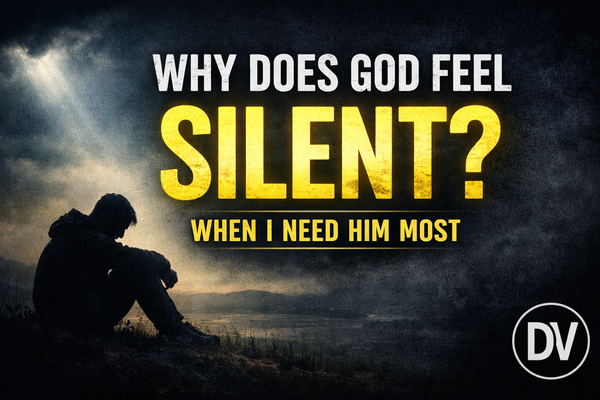
That is why this story touches people so deeply. It does not only sound sweet. It touches a wound. It reaches the person who still believes in God but feels like heaven has gone quiet. It reaches the one who used to feel close to Him and now feels numb. It reaches the one who still prays but no longer feels much when they do. It reaches the one who wonders if distance means abandonment. It reaches the one who has drifted and does not know how to come back without feeling fake. It reaches the one who has been carrying life so hard and so long that even the thought of trying to feel spiritual again sounds exhausting. A little boy asked, “How big is God,” but underneath that question is another question most people know well. Is God close enough to notice me.
A lot of people never stop asking that. They just change the words. Some ask it from a hospital room. Some ask it after a funeral when the house is too quiet and every room feels wrong. Some ask it while trying to hold a marriage together that already feels like it is breaking under their hands. Some ask it while staring at bills they do not know how to pay. Some ask it after a private failure they cannot stop replaying. Some ask it while looking at a ceiling late at night with a mind too loud to sleep. Some ask it while sitting in church surrounded by people singing about God’s closeness while they themselves feel strangely far away. Some ask it without language at all. They ask it in the ache. They ask it in the silence. They ask it in the way their heart keeps reaching for something more than what this world has been able to give.
The father in the story did not answer with a long speech. He did not start with a theological argument. He did not hand his son a lesson too heavy for a child to carry. He did something much simpler, and because it was simple, it reached straight into the heart. He took the boy outside and pointed up at an airplane in the sky. He asked his son how big it looked. The little boy said it looked small. It did look small. It was high up and far away. Then the father took him closer to another airplane, close enough for the child to really see it. Now it looked huge. Massive. Hard to ignore. Then the father gave the answer. God is like that. It is not that He becomes bigger or smaller. It is that He seems small when He feels far away, and He feels overwhelming when you are close.
That answer stays with people because it explains something many have lived without knowing how to name. We often confuse appearance with reality. We often mistake the condition of our perception for the condition of God Himself. If He feels near, we assume all is well. If He feels far, we begin shrinking Him in our minds. We start measuring Him by our own current awareness. We treat our emotional range as if it were the final judge of truth. But the airplane did not actually become tiny in the sky. It only looked tiny from where the child was standing. In the same way, God does not become less glorious because you are in a tired season. He does not become less present because your prayers feel flat. He does not become less real because your emotions are dim. He does not become less loving because you are struggling to feel anything warm at all. He remains who He is. What changes so often is not His reality, but our sense of it.
That matters because human beings are deeply affected by distance. Distance changes how things look. Distance removes detail. Distance makes what is massive seem manageable. Distance can flatten what should humble you. It can make what is living seem vague. Anyone who has seen mountains from far away knows this. From a distance they can almost look soft. But get near them and everything changes. You feel scale. You feel weight. You feel how small you are in the best possible way. The mountain did not grow. Your position changed. Many people have been trying to understand God while standing too far away in heart, in trust, in attention, in surrender, or in rest, and then they wonder why He seems faint. It is not always because God is hiding. Often it is because life has crowded the soul until nearness has been replaced by noise.
This is one of the quiet tragedies of modern life. A person can still believe in God and yet become so mentally scattered, so emotionally exhausted, and so inwardly crowded that they no longer notice Him the way they once did. Their life gets consumed with tasks, responsibilities, worries, screens, pressure, deadlines, disappointments, errands, messages, bills, and a constant low hum of mental strain. They are not rebelling. They are overloaded. They are not always walking away from God on purpose. They are simply too full of everything else to really be still before Him. And when stillness disappears, awareness often weakens with it. Then the person begins saying that God feels far away. Maybe He does feel far. But the difference between feeling far and being far matters.
This is where many people live in quiet confusion. They think their present sense of God must be the whole truth about God. If they feel peace, they assume God is near. If they feel dry, they assume God is absent. But feelings are real without being final. They are part of being human, but they are not the throne. They change with sleep, with stress, with grief, with hormones, with trauma, with disappointment, with nervous system overload, with seasons of life, and with private battles other people cannot see. God is not changing with those things the way our inner life does. He is not becoming unreliable because we are tired. He is not becoming small because we are wounded. He is not shrinking to match our current ability to sense Him.
A lot of damage has been done by the idea that if God is near, you should always feel it clearly. That sounds spiritual on the surface, but it quietly trains people to trust sensation more than truth. Then when the soul enters a winter season, when prayer feels dry, when worship feels hard, when the Bible feels like it takes effort just to stay present, people start panicking. They think something has gone terribly wrong. They think maybe they failed. Maybe God stepped back. Maybe they are too far gone. Maybe heaven is silent because they are unwanted now. But some of the deepest faith in the world is formed in those very places. Faith is not proven only when the heart feels full. Faith is often revealed when a person keeps turning toward God without the comfort of constant emotional confirmation. That kind of faith does not look dramatic, but it is strong. It says, I will not make my feelings the ruler over what is true. I will not call God absent simply because my senses are tired.
Pain complicates this even more. Pain narrows vision. Pain makes the immediate moment feel absolute. Pain can make yesterday’s mercy seem small and today’s sorrow seem endless. Grief can crowd the sky so completely that a person forgets what open light feels like. Shame can make grace seem too thin to reach them. Disappointment can make hope feel dangerous. Fear can make silence feel like rejection. This is why so many people have quietly mistaken their current suffering for a statement about God Himself. They look at the smallness of what they feel and assume that must be the size of His presence. But pain is a lens, and not always a clear one. Hurt is real, but it does not always see accurately.
Some people create distance from God through busyness. Others through disappointment. Others through shame. Others through familiarity. Others through sheer exhaustion. Busyness can make God feel like a distant thought because the mind never slows down long enough to really notice Him. Disappointment can make a person emotionally step back from God after prayers they thought would be answered differently. Shame can make someone think closeness is no longer for them because of what they did, what they became, or what they failed to do. Familiarity can flatten holy things until they no longer carry wonder. A person can know all the right words and still be miles away in the heart. Exhaustion can leave the soul so drained that even good things feel hard to receive. All of these can make God appear smaller, not because He is smaller, but because distance changes perception.
Shame may be one of the most painful of these because shame directly attacks nearness. Shame does not only say you did wrong. It says you should stay back now. It says grace might be enough for other people, but probably not for you in a deeply personal way. It tells you to hide until you become acceptable again. It teaches distance. It tells a person they can maybe talk about God in broad terms, but they should not dare come close with what is actually true inside them. That lie has kept many people spiritually starving while standing only a few steps away from mercy. They do not come near because they assume they will meet disgust instead of grace. But that assumption reveals just how much distance has distorted their view. The real God is not waiting behind the door of honesty with cold rejection in His hands.
This is where Jesus changes everything. Without Jesus, people might imagine that the greatness of God must naturally create distance. They might think that if God is truly vast, holy, and beyond all things, then He must be emotionally inaccessible. But Jesus reveals something utterly different. The greatness of God does not make Him less compassionate. It makes His compassion even more astonishing. In Christ, the God who made all things came near. He did not remain a distant concept above human struggle. He entered human life. He walked dusty roads. He sat with the overlooked. He touched the unclean. He listened to the ashamed. He stopped for the desperate. He wept. He suffered. He was betrayed. He bled. He died. He rose. That means when you look at Jesus, you are looking at the answer to the fear that God’s greatness must mean emotional distance. The God who is beyond measure also comes near enough to be touched.
That is the scandal and beauty of Christianity. It is not a story about human beings finally climbing high enough to reach God. It is the story of God coming near to us. The Word became flesh and dwelt among us. That means the question of how big God is can never be separated from the question of how close He chose to come. He came near enough to enter hunger. Near enough to enter sorrow. Near enough to enter rejection. Near enough to enter death and break it open from the inside. So when someone says, “God feels far,” the answer is not only to search for a better feeling. The answer is to look again at Christ. Look at the God who came near. Look at the God who did not stay safely above human pain. Look at the God who chose nearness, not because we deserved it, but because love moved Him toward us.
This is why the father’s answer with the airplane reaches so deeply. It gently separates what seems true from what is true. It gives language to something many have felt but not understood. It says maybe the issue is not that God has become small. Maybe the issue is distance. Maybe life, pain, shame, distraction, disappointment, or fatigue has pulled you farther from view. Maybe the answer is not to force yourself to stare harder from where you are and pretend. Maybe the answer is to come near again.
That is one of the sweetest truths in all of faith. You can come back. You can return. You can draw near again. Distance is real, but it does not have to be final. There is no law written over your life that says the numbness must last forever. There is no decree that says a drifted heart can never return. There is no rule that says because you once felt close and now feel far, the farness gets the last word. The whole story of Scripture keeps moving in the direction of return. God calls people back. He meets wanderers. He restores the fallen. He receives the ashamed. He answers those who come honestly. He does not invite people back because He enjoys watching them crawl. He invites them back because He knows what distance does to the human soul.
Return rarely begins with impressiveness. It begins with honesty. It begins when performance ends. It begins when a person says what is actually true. God, I feel far. God, I do not know what happened to me. God, I still believe, but I feel numb. God, I have been hiding. God, I am ashamed. God, I am tired. God, I miss You. Those prayers matter. They may not sound dramatic, but they are alive. They are often the first breath after a long stretch of spiritual holding. God does not need polished language. He does not need spiritual theater. He wants truth. He wants the place where the heart stops pretending it is fine at a distance.
This is something children understand better than adults sometimes. A child asks from a clean place. A child reaches without the same layers of guardedness. Jesus treasured that quality. He did not tell people to become childish in the sense of shallow or foolish. He told them to become childlike in the sense of open, trusting, and willing to receive. That matters here. Many adults do not need more complexity. They need less defense. They need the courage to ask again. They need the humility to admit the ache. They need permission to be small before God without feeling ashamed of that smallness. There is nothing humiliating about need when the One you need is faithful.
The father’s use of an airplane also reveals something important about how God teaches. He often uses ordinary things to reveal eternal truth. Jesus did this constantly. Seeds, lamps, bread, fields, sheep, storms, vines, doors, coins. The God who made ordinary life loves to speak through it. That means you do not always have to wait for a dramatic spiritual event to be reminded of who He is. Sometimes truth comes through the sky above you. Sometimes through rain on a window. Sometimes through the quiet of early morning. Sometimes through the sound of a child’s voice asking what your adult heart had stopped saying. God is not absent from ordinary life. He often hides holy reminders inside it.
And that is where we need to pause for now, because this question deserves more than a rushed ending. There is still more to unfold about what it means to come near to God again, about how distance distorts not only our view of Him but our view of ourselves, about why the cross and resurrection change this whole question at its deepest level, and about the painful gap between being held by God and feeling held by God. There is more to say about what happens when a person stops measuring God by present sensation and begins letting the truth of Christ become larger than their current emotional weather. There is more to say about the kind of greatness that does not push you away, but becomes the safest place your soul could ever rest.
What makes this truth so life changing is that it does not just answer a question about God. It also uncovers something about the way human beings live. We are constantly shaped by distance. Distance affects what we can see clearly. Distance removes detail. Distance flattens things that should carry weight. Distance can make what is beautiful seem ordinary and what is powerful seem faint. That is true in every part of life. People misread one another through distance all the time. Hurt grows in silence. Fear fills in the blanks. Assumptions take the place of presence. Over time, people begin reacting not to what is actually true, but to what distance has suggested. The same thing happens in the life of faith. When a person lives far from God in attention, in trust, in openness, in surrender, or in simple stillness, they begin to imagine Him through fog. They start seeing Him through disappointment, through religious damage, through their own shame, through old pain, through unanswered questions, or through a tired nervous system that can barely register comfort anymore. The result is that the real God can begin to disappear behind a version shaped by distance.
That is one reason this story is so emotional. People hear it and suddenly realize they may have been measuring God by how He looked from far away. They may have been calling Him small because they could barely make out His shape through grief, through stress, through disappointment, through shame, or through the endless pressure of trying to survive life. They may have been calling Him distant because they had stopped living near enough to see Him clearly. That realization can break a heart open, because it means the thing they feared most may not be true. God may not have become less. He may not have stepped back. He may not have gone quiet in the cruel way pain suggested. The issue may not be abandonment at all. The issue may be distance, and distance can change.
That is where hope begins to breathe again. Hope begins when a person understands that felt reality and actual reality are not always the same thing. The plane in the sky looked tiny, but it was not tiny. God can feel far and still be near. He can feel silent and still be present. He can feel hard to sense and still be holding everything together, including you. This matters deeply for the person who has been living in the terrible gap between being held and feeling held. That gap can be brutal. It can make a person doubt everything. They may know the right verses. They may know the right doctrine. They may tell other people to trust God. Yet inside themselves, they feel no warmth, no strong reassurance, no emotional sense of being carried. That gap can feel like torture when it lasts a long time. But the answer hidden in this story is gentle and strong. The lack of felt closeness is not the same thing as the lack of actual closeness. God can be holding you while your exhausted soul struggles to register it. He can be sustaining you while your emotions lag behind. He can be present in ways deeper than sensation.
This is part of what mature faith learns over time. Mature faith is not emotionless, but it is anchored. It learns how to say, I do not feel much right now, but I will not call that the whole truth. I do not understand this season, but I will not reduce God to what my current pain can perceive. I do not feel held in a comforting way, but I will not conclude that I am abandoned. That kind of faith is often born in difficult places. It is formed in nights nobody would choose. It is shaped in waiting, in loss, in confusion, in prayers that feel thin, in mornings where you open Scripture without fireworks and keep opening it anyway. That faith may not look dramatic, but it is strong because it has learned not to worship feeling. It has learned to stand on the character of God.
And the character of God is where everything changes. When people live at a distance, they often begin believing things about God that feel true from far away, but collapse when brought into the light of Christ. They think He is mostly disappointed. They think He is patient with stronger people, but probably worn out by them. They think He is holy in a way that makes intimacy impossible. They think He listens in general but not with tenderness toward their actual life. They think He is near for worship songs and testimonies but not for the ordinary, heavy, repetitive ache of their own days. Yet when a person draws near again and begins seeing God through Jesus instead of through distance, a different picture emerges. They discover that God is not less holy than they feared, but far kinder. Not less truthful, but far more merciful. Not less powerful, but far more gentle with the bruised than shame ever allowed them to imagine.
This is why Jesus matters so completely here. Jesus is not a side note to the question. He is the answer to it. If someone asks, “How big is God,” the Christian answer is not only found in creation, in stars, in oceans, in mountains, or in the endless sky. It is found in Christ. Because in Christ, the greatness of God comes near without losing any of its glory. In Christ, the One who made all things enters ordinary human life. He is born in vulnerability. He grows in obscurity. He walks among the poor. He meets the sick. He notices the unseen. He touches the untouchable. He weeps at graves. He listens to desperate people. He restores those who have failed publicly. He speaks with those society has pushed aside. He moves toward pain, not away from it. That means God’s greatness does not create emotional coldness. It reveals a kind of love so strong that it can come close without fear, without contamination, and without losing its holiness.
That changes the entire meaning of nearness. Nearness to God is not us climbing our way up through enough effort until we finally reach someone who was otherwise unavailable. Nearness to God begins with the fact that He came near first. Christianity stands on that truth. God did not remain distant. He came. The Word became flesh and dwelt among us. He entered hunger, rejection, weariness, betrayal, suffering, blood, and death. He did not merely observe human pain from above. He entered it from within. So when a person says, “God feels far,” the answer is not only to chase some better emotion. The answer is to look again at the incarnation, the cross, and the resurrection. Look at Jesus and you are looking at the God who comes near enough to suffer with humanity and for humanity. Look at Jesus and you are seeing the size of divine love made visible in human history.
That is why the cross is so important to this whole conversation. The cross proves that God’s greatness does not make Him unwilling to get close to what is ugly, broken, shameful, and painful. The cross proves that He does not turn away from sin by keeping it at a comfortable distance and letting it destroy us. He deals with it Himself. He bears it. He carries it. He lets it do its worst to Him so that mercy can open a way home for us. There is nothing distant about that. There is nothing detached about that. The cross is the end of the lie that God’s greatness must mean He is emotionally inaccessible. The resurrection then takes that nearness and fills it with triumph. Christ did not come near only to suffer and stay buried. He rose. He overcame death. He is alive. The One who came near is still living. The One who entered human pain is still able to meet human pain now.
That means a person can come near again. That may sound simple, but for many people it is the hardest thing in the world to believe. They think the drift has lasted too long. They think the numbness is too deep. They think they have become too compromised, too cynical, too disappointed, too ashamed, or too tired to truly return. But grace speaks another word. Return. Come back. Draw near. There is something beautiful in the fact that Scripture keeps using return language. Return is a soft word and a strong word at the same time. It does not pretend that distance is nothing. It acknowledges distance while refusing to let it be final. It says there is still a road home. It says the door is not locked. It says the Father is not standing there with crossed arms, waiting to humiliate the child who wandered. It says there is still mercy ahead of you if you turn and walk toward Him.
Many people need to hear that without any extra religious weight added to it. You do not come back to God by first becoming impressive. You do not draw near by constructing a polished spiritual version of yourself. You do not return by pretending the distance was not real. You return through truth. You return by admitting what has happened. Lord, I have drifted. Lord, I am ashamed. Lord, I still believe, but I feel numb. Lord, I am disappointed. Lord, I have been hiding. Lord, I am tired. Lord, I need You. That kind of honesty is not weak spirituality. It is the beginning of real nearness. God does not need cleaned up language. He wants the place where pretending ends.
This is why prayer matters so much, not as performance but as presence. Prayer is where distance starts getting interrupted. It is where the soul stops only thinking about God and begins speaking to Him again. The beauty of prayer is that it does not require eloquence to be real. A person can whisper one true sentence and begin coming near. Sometimes the most powerful prayer is not long. It is simply honest. Help me. I miss You. I am tired. Forgive me. Stay with me. Teach me to trust You here. Those prayers matter because they refuse distance. They turn the face back toward God. They say, I am no longer willing to live only in my own closed inner world.
Scripture matters for the same reason. Not because reading enough pages earns closeness, but because truth restores sight. Distance teaches lies. It teaches you that your season defines God. It teaches you that your numbness proves abandonment. It teaches you that your failure is louder than grace. Scripture pulls those lies apart. It reteaches the soul. It reminds you who God actually is when your pain has been speaking louder than His promises. It reminds you that His patience is older than your wandering, that His mercy is deeper than your shame, that His faithfulness is not at the mercy of your feelings, and that His character remains what it has always been. Sometimes a person does not need a new spiritual strategy. They need to sit still with truth long enough for truth to become more believable than fear again.
Repentance matters too, and it deserves to be spoken of with tenderness, not harshness. Repentance is not God humiliating you. Repentance is mercy calling you out of what is harming you. It is reality breaking through illusion. It is the grace of no longer having to defend the thing that is draining life out of your soul. A lot of people hear the word repentance and feel only threat, but repentance is one of the kindest gifts God gives. It means you do not have to stay loyal to what is killing your peace. It means you can stop naming chains freedom. It means you can stop pretending that bitterness, compromise, self-protection, pride, hidden sin, or endless self-rule are harmless. Repentance opens the door to nearness because it stops agreeing with what keeps you far away.
Shame hates that. Shame wants people hidden. Shame wants them managing appearances from a distance while they quietly starve inside. Shame says stay away until you improve. Grace says come into the light so healing can begin. Shame says God is tired of you. Grace says Christ knew exactly what He was taking on when He went to the cross. Shame says closeness is over. Grace says return. Shame says the distance defines you now. Grace says the distance is real, but it does not get the last word. That is why the gospel is so precious to bruised people. It breaks the lie that the worst thing about you is stronger than the mercy of God.
There is also another layer in this story that matters. Nearness does not only restore your view of God. It restores your view of yourself. Distance distorts identity. When people live far from God, they often begin defining themselves through their worst moments, deepest wounds, loudest fears, or most embarrassing failures. They start living inside labels handed to them by pain, by other people, by shame, or by the enemy’s accusations. They feel forgotten, damaged, unworthy, or permanently less than what grace says they are. But near God, identity starts healing. Near God, the loudest voice changes. Near God, you are no longer first defined by what broke you, what you lost, what others did, what you regret, or what still feels unfinished. Near God, you begin hearing the truth from the One who made you and redeemed you. You begin understanding that your deepest reality is not your wound. It is the mercy that sees you within it.
That is why the enemy fights nearness so hard. Distance serves lies. Distance lets fear sound wise. Distance lets bitterness sound justified. Distance lets compromise sound manageable. Distance lets discouragement sound final. Distance lets people interpret God through their wounds instead of bringing their wounds into His presence. It keeps them staring at the tiny plane in the sky and believing that is all there is. But when a person comes near, lies start losing oxygen. Fear is no longer the only voice in the room. Shame no longer gets to act like the final authority. Truth begins to breathe again. Light returns one small piece at a time. Sometimes not all at once, but enough to begin living differently.
This is where many people miss the gentleness of God. They think coming near must mean being crushed by all the ways they fell short. But God is not a cruel surgeon. He does not heal with delight in pain. He heals with holy tenderness. Yes, He confronts what is false. Yes, He speaks truth. Yes, He does not leave people in darkness while calling it compassion. But His correction is not rejection. His conviction is not disgust. He is not exposing you because He loves your humiliation. He is exposing what is hurting you because He loves your restoration. There is a world of difference between those two things. Some people have spent years hiding from a God they imagine as cold, when in truth He is far kinder than the voice of shame ever told them.
The father in the story understood something profound by answering his son the way he did. He did not shame the question. He walked the child into understanding. That is often how God teaches us too. He does not always answer us with abstract explanations. He leads us into clearer sight. He brings us close enough to see what was already true. Many believers can look back over their life and realize that God taught them more through being with them than through giving them instant answers. They learned Him in grief. They learned Him in restoration. They learned Him in weakness. They learned Him in seasons where His faithfulness became more real than their confusion. That is because God does not merely throw truth at people. He often walks them into it.
And maybe that is exactly what He is doing for someone through this story. Maybe this is not just a sweet idea. Maybe it is a hand reaching into a season where God has felt small, faint, or far away. Maybe it is permission to stop calling your present emotional range the ruler of heaven and earth. Maybe it is an invitation to return without pretending. Maybe it is a reminder that the God who feels distant has not become distant in the way fear told you. Maybe it is a whisper to the person who still aches when they hear His name. Come near. Come back. Let the view change.
How big is God. He is big enough to hold galaxies in place. Big enough to command seas. Big enough to sustain the universe without strain. Big enough to carry history toward its appointed end. Big enough to defeat death. Big enough to hold what is breaking you. Big enough to see every hidden tear. Big enough to hear every prayer you whisper when no one else knows what is happening inside you. Big enough to remain steady while your life shakes. Big enough to enter your pain without being threatened by it. Big enough that nothing in your story is beyond His reach. And close enough that you never have to shout to be heard. Close enough that a whisper is enough. Close enough that even when He feels far, He may be nearer than the air you breathe.
That little boy asked a question, and a father answered with an airplane. But inside that simple answer was a truth large enough to steady a lifetime. God does not get smaller because He feels far. He does not disappear because your soul is tired. He does not step back because you are struggling. He does not become less because your emotions are weak. He is still who He has always been. Vast beyond imagination. Holy beyond words. Merciful beyond deserving. Near beyond what fear says is possible. And when you come near again, when you let Christ become larger than your distance, when you stop measuring God by your pain and begin seeing Him through truth, you may find yourself in tears too. Not because the story was touching, but because your soul remembered what it was made for. The greatness of God was never meant to make you feel abandoned. It was meant to become the safest place you could ever rest.
Your friend,
Douglas Vandergraph
Watch Douglas Vandergraph inspiring faith-based videos on YouTube:
https://www.youtube.com/@douglasvandergraph
Support the ministry by buying Douglas a coffee:
https://www.buymeacoffee.com/douglasvandergraph
Financial support to help keep this Ministry active daily can be mailed to:
Vandergraph
Po Box 271154
Fort Collins, Colorado 80527