The Day Running Ended
There are moments in a human life that do not look important while they are happening. They do not arrive with music. They do not announce themselves as turning points. They do not feel like the kind of thing anyone would remember years later. They happen in ordinary places on ordinary days while the rest of the world keeps moving. Yet some of those moments become dividing lines. Before them, a person sees himself one way. After them, something has shifted, even if only a little. A new thought has entered. A new strength has started to wake up. A new understanding has taken root. God has always worked like that. He has always hidden enormous things inside small moments because He is not impressed by spectacle the way people are. He can take something that looks almost invisible and use it to begin changing the course of a life.
A lot of people think the biggest moments in life are the public ones. They think the great turning points are the ones everyone else can see. They think it is the graduation, the promotion, the wedding day, the sermon, the applause, the visible success, or the breakthrough everyone can point to afterward. But many times the real turning point happened long before any of that. It happened in some small exchange. It happened in some private wound. It happened in some quiet decision. It happened on a day when nobody watching would have guessed that something deep had just been planted. That is how the kingdom of God moves so often. A seed does not look like a forest. A child in Bethlehem did not look like the salvation of the world. A lunch in a little boy’s hands did not look like enough to feed a crowd. A cross did not look like victory. Heaven loves to hide power where shallow eyes would never think to search for it.
There was a little boy once who did not seem like the kind of child anyone would expect to become a symbol of strength. He was not loud. He was not naturally imposing. He was not the child who carried himself with the kind of easy confidence that makes the world step back and notice. He was shy. He was quiet. He was the kind of boy who could disappear into the background if the room around him got too loud. Life had a way of pressing on him instead of opening for him. He did not move through the world like someone who believed he had power. He moved through it like someone trying to stay out of trouble. There are children who seem to arrive in life already standing tall, and then there are children who carry themselves as if they are apologizing for taking up space. He belonged to the second kind.
Some people understand that feeling before the story even goes any further. They know what it is to carry a timid spirit because life taught them early to brace for pain. They know what it is to be careful all the time. They know what it is to watch the room before entering it. They know what it is to measure voices, to study expressions, to look for danger, to prepare themselves for embarrassment before anything even happens. It is a hard way to live, but it becomes normal for many people. When fear starts early, it can feel less like an emotion and more like part of your personality. You begin to think this is just who I am. You begin to think this is the way I was made. You begin to think maybe other people were made for confidence and ease, but you were made for shrinking, retreating, and getting through life as quietly as possible.
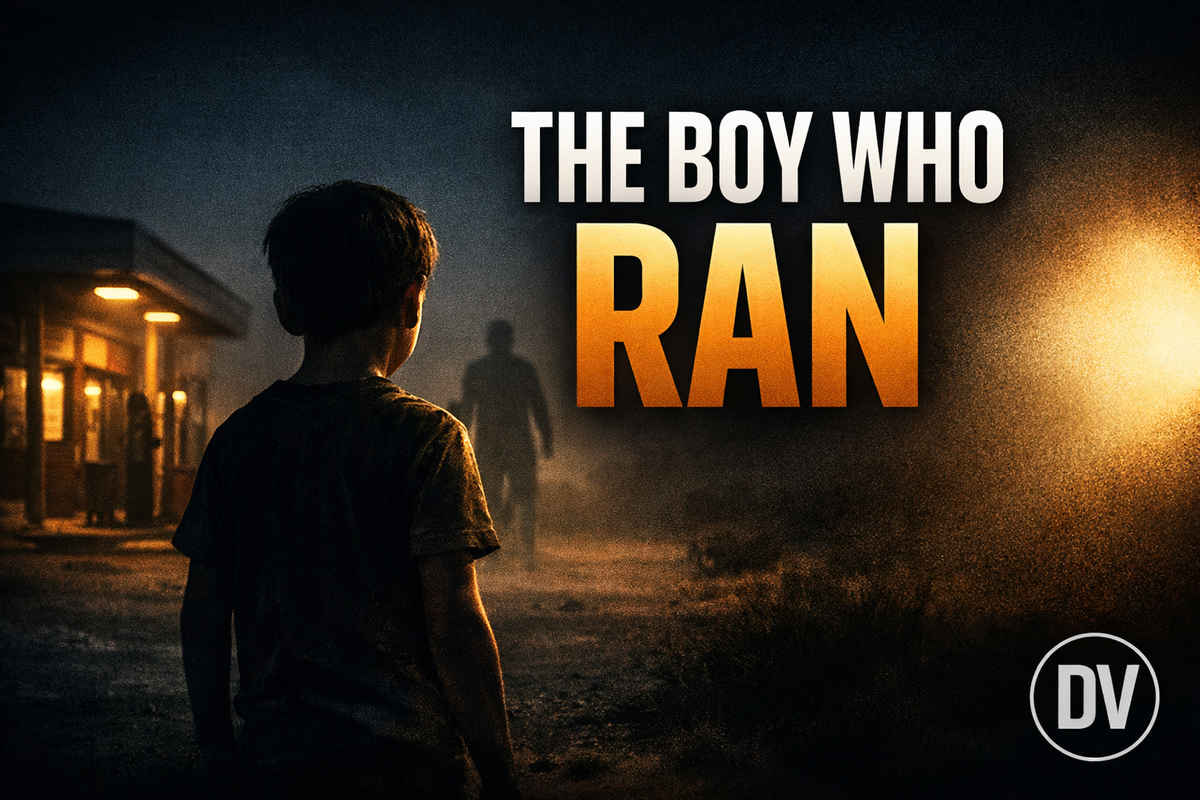
That little boy’s name was Carlos. His family moved to Miami, Arizona, and in that little town he ran into a problem that became part of his daily life. The problem had a face and a name. His name was Bobby. Bobby was the boy next door. He was the same age as Carlos. He was in the same grammar school class. But Bobby was bigger, stronger, and mean enough to use that advantage day after day. Every afternoon, Carlos ran home from school, and Bobby chased him. Most days Bobby caught him. Most days Bobby beat him up. Then the next day it happened again. It became a pattern. It became a routine. It became part of the shape of Carlos’s life. School ended, feet started moving, fear took over, and the race home began all over again.
That kind of repeated humiliation does something to a person. One painful moment hurts, but repeated pain starts teaching lessons. It starts writing conclusions inside the mind and heart. It tells you that you are weaker than what is chasing you. It tells you that the best thing you can do is run. It tells you that you do not really have a choice. It tells you that this is the arrangement life has handed you, and your job is to survive it. That is how strongholds begin. They do not always start with grand sins or obvious rebellion. Sometimes they start with repeated fear. Sometimes they start with shame. Sometimes they start with a pattern that gets into the soul and begins calling itself reality. A person begins to accept what should never have been accepted simply because it has happened too many times.
There are adults living with that same pattern even now. The bully may not be a bigger boy from school anymore, but the running is still there. Some people are running from old memories that keep finding them. Some are running from anxiety that chases them every morning. Some are running from rejection they never really healed from. Some are running from the voices they still hear in their heads from parents, teachers, pastors, friends, or strangers who spoke death into them years ago. Some are running from the fear of conflict. Some are running from failure. Some are running from the thought that if they stand still long enough, life will catch them and prove every dark thing they have feared about themselves. So they keep moving. They keep retreating. They keep structuring their lives around avoidance. They do not call it slavery because it has become familiar, but that is what it is.
What makes this story so powerful is that it was not only about a bully and a frightened child. It was about a pattern. It was about a boy learning every day that his first instinct should be escape. It was about a child becoming used to surrender. It was about fear being practiced until fear started to look normal. That is why some moments matter more than they appear to matter. The moment that interrupts the pattern matters because the pattern was doing more than shaping the day. It was shaping identity. A child who runs long enough starts to see himself as a runner. A person who retreats long enough starts to believe retreat is wisdom. A soul that keeps bowing to fear long enough starts to think fear has earned the right to lead.
Next door to the cottages where those boys lived was a gas station. The owner’s name was Jack. Every day Jack watched the same scene unfold. He watched one little boy run. He watched another boy chase him. He watched the bigger boy catch him. He watched the smaller boy lose. He watched this happen again and again. There are times in life when people see pain and stay detached from it. They tell themselves it is none of their business. They tell themselves somebody else will handle it. They tell themselves they do not want to get involved. But sometimes God places a person near a moment because He intends them to do more than watch. Sometimes He lets somebody stand close enough to the problem because He has already decided they are part of the answer.
Jack was not a famous man in this story. He was not standing on a stage. He was not writing a book. He was not delivering a polished speech. He was a gas station owner watching a frightened child live inside the same defeat every day. Yet that is how God often works. The person who changes something is not always the person the world has been waiting for. Sometimes it is just the person who is present and willing. Sometimes it is the one who sees clearly enough to know that the pattern cannot continue. Sometimes it is a person with enough courage to step in when everyone else has accepted what should never have been accepted.
There is another part of this story that makes it hit even harder. The reports tied to the old retelling say Carlos’s father was an alcoholic and largely unaware of what his son was facing. Whether people hear that part and feel sorrow or recognition, it adds a painful layer to the whole picture. It means the boy was not only dealing with public fear. He was also living in a world where the protection that should have surrounded him was not fully there. There is a special ache in that kind of childhood. It leaves the child feeling more alone than he has words for. It teaches him to carry things a child should never have to carry by himself. Many people know that feeling too well. They know what it is when the person who should have protected them could not, would not, or did not notice enough to do it. That kind of gap leaves a wound. It can make the whole world feel less safe.
Still, God is never limited by the places where human protection failed. That does not make the failure good. It does not excuse the damage. It does not pretend the wound is small. But it does mean the Lord knows how to place grace where people were absent. He knows how to send help into a life in ways that nobody would have planned. He knows how to let one right moment stand in the place where many wrong moments once lived. God is not trapped by what did not happen for you when it should have happened. He can still move. He can still restore. He can still begin something new in the middle of what you missed.
One day Jack decided he was no longer going to simply watch. He went to Carlos’s mother and told her not to interfere that afternoon. He told her to stay in the house. This is one reason the story lands with such force. Jack was not acting on impulse in the middle of panic. He had watched enough. He had understood the pattern. He had made up his mind that the pattern had to break. Then he positioned himself for that moment.
That afternoon, as so many afternoons before it, little Carlos came running by the gas station on his way home. Bobby was behind him, not yet in sight, but coming. Carlos was doing what he always did because habit is powerful. When fear has trained the body, the body moves before the mind can even think. He was running for safety because that was the script. That was the routine. That was the life he knew. Then Jack stopped him. Carlos tried to explain that he could not stop. He had to keep moving. Bobby was coming. He needed to get inside. He needed to get away. To Carlos, this was simple reality. Standing there made no sense because standing there meant getting caught.
How many people live exactly like that in their spiritual lives. They cannot imagine another way because they have lived too long inside the script. They cannot imagine peace because panic has become familiar. They cannot imagine confidence because insecurity has become home. They cannot imagine standing because running has become instinct. Then one day the truth of God steps into the path and interrupts what feels normal. It says you do not have to keep living this way. It says the thing you keep bowing to is not as absolute as you think. It says the routine that has ruled you is not the same thing as destiny. It says what has repeated itself is not the same thing as what must continue forever.
Jack would not let Carlos keep running. He told him he was not going anywhere. He told him he was going to stand up and fight. Carlos answered the way many frightened people answer when strength is first demanded of them. He said the thing chasing him was too big. He said the danger was too strong. He said, in essence, I cannot. That is a painfully human sentence. It lives in all of us somewhere. I cannot face this. I cannot carry this. I cannot change. I cannot break this pattern. I cannot become different. I cannot stand up to what has ruled me for so long. Fear always tries to speak as if it is realism. It dresses itself like common sense. It tells you that surrender is just wisdom. It tells you that running is the responsible thing to do. It tells you that defeat is simply honest self-knowledge.
But Jack would not accept that answer. He kept telling Carlos that the running had to stop. That is one of the deepest truths in the whole story. There are moments when God sends somebody into your life not merely to comfort your pain, but to confront the agreement you have made with fear. That kind of help does not always feel soft. It does not always arrive as soothing. Sometimes it arrives as a firm voice that says enough. Enough losing. Enough shrinking. Enough surrendering. Enough structuring your life around the thing that keeps chasing you. Enough assuming that because something has happened many times it must keep happening forever.
This is not cruelty. This is not hardness. It is love of a deeper kind. The world often thinks love means never making anyone uncomfortable. The world thinks kindness means protecting people from every hard thing. But biblical love is wiser than that. Biblical love knows there are times when shielding somebody from a necessary battle does not preserve them. It weakens them. God does comfort. He does hold. He does shelter. He does speak tenderly. But He also calls people to rise. He also says be strong and courageous. He also tells His people to stand. He also leads them into battles they would never have chosen because He knows they will not become who they are meant to be by running from everything that scares them.
As Jack kept urging him, something started happening in Carlos. Courage did not descend from the sky all at once. The fear did not vanish in a flash. What changed first was smaller than that, but it was enough. Something inside him started to respond. Something started to wake up. That is often how change begins. People imagine they need to feel brave before they act brave. Usually that is not how it works. Usually courage begins while fear is still present. Usually the first movement is shaky. Usually the first step still has trembling in it. But the moment matters because it breaks the absolute rule fear thought it held over the soul.
Then Bobby arrived. For all the many days before this one, the script would have remained the same. Carlos would have kept running. Bobby would have kept chasing. Bobby would have caught him. Bobby would have won. But this time the pattern did not continue. This time Carlos turned on him. He jumped him. He fought back. He wrestled him down. It was not a long battle. It was not a dramatic war. It was brief, direct, and decisive. Then Bobby cried out that he gave up. The boy who had been doing the chasing surrendered. The boy who had spent so long running stood over the broken pattern of his own fear.
That one moment changed more than an afternoon. It changed the meaning of all the afternoons after it. The story says Bobby never chased Carlos again. Think about that. The thing that had ruled the rhythm of his days stopped. The pattern ended. What had seemed inevitable turned out not to be inevitable after all. It had only felt that way because fear had never been challenged. Many people are living under things that feel inevitable only because they have never really turned and faced them. The lie has not been challenged. The pattern has not been broken. The boundary has not been drawn. The soul has not yet fully believed that by the grace of God, it can stand.
There is something almost holy in that realization. What if the thing chasing you is not as powerful as the pattern has made it seem. What if the panic has lasted so long that it has borrowed authority it does not actually possess. What if the shame has repeated itself so many times that you have mistaken repetition for truth. What if the thing that keeps driving you backward has only been winning because you have not yet learned, in God’s strength, to stop, turn, and face it. That does not mean every battle ends in one afternoon. Life is often more layered than that. Some wounds take time. Some patterns require help, prayer, discipline, community, and many repeated acts of courage. But the principle still stands. Running is not always the only option, even when fear insists that it is.
The old retelling also says that later on Bobby and Carlos became friends. That detail matters because it gives the story more depth than simple revenge. This was not merely about one boy crushing another boy. It was about order being restored. It was about one child no longer accepting humiliation as his place. It was about the relationship between them changing because the terms of fear had changed. Sometimes when one person stops agreeing to a broken pattern, everything around that pattern has to rearrange itself. People who were used to your silence do not know what to do with your voice. People who were used to your fear do not know what to do with your steadiness. People who were used to crossing your boundaries do not know what to do when those boundaries finally exist.
The spiritual lesson inside all of this reaches far beyond childhood. The enemy has many ways of teaching people to run. He teaches some to run into distraction. He teaches some to run into addiction. He teaches some to run into bitterness, people-pleasing, numbness, isolation, overwork, shallow religion, or endless inner retreat. He does not care what the running looks like as long as it keeps happening. Because as long as it keeps happening, identity stays bent. The person never discovers what God can build in them when they stop bowing. The person never discovers that there was more in them than fear had allowed them to see.
That is why Scripture speaks so often about endurance, steadfastness, courage, and standing firm. Those words are not there to make people feel tough in some shallow way. They are there because the Christian life is not a life of constant retreat. We are not called to spend our lives moving backward from every pressure. We are called to trust God enough to stand where He has told us to stand. David had to walk toward Goliath. Joshua had to step into the river before the water parted. Esther had to go before the king though fear was real. Peter had to step out of the boat before he knew what the water would feel like under his feet. The Bible is full of moments where God does not merely comfort a frightened person. He calls them forward through the fear.
That does not mean tenderness disappears. It means tenderness is joined by strengthening grace. God is not only the God who wipes tears. He is also the God who puts courage into shaking bones. He is not only the God who says do not fear. He is also the God who teaches hands to war and hearts to endure. He knows when we need comfort, and He knows when comfort alone would leave the old pattern untouched. There are seasons where the greatest mercy in your life is not the removal of the battle. It is the awakening of courage inside you while the battle is still standing there.
Part of what makes this story so moving is that the little boy would later become a man the world associated with strength, discipline, and force. People would know the name. People would see the image. People would laugh about the legends attached to him. People would treat him like someone who had always been larger than life. Yet before the image, before the fame, before the championships, before the roles, there was a frightened child running home every day from a bully he thought was too big to face. That is important because it reminds us how little the world knows when it looks at finished people. It sees the outer result and assumes the beginning must have looked the same. It rarely did.
A lot of strong people have secret beginnings. A lot of steady people used to tremble. A lot of people who now carry authority once felt almost invisible. A lot of people admired for confidence once lived in deep insecurity. That does not make them fake. It makes them human. It makes them testimonies to what can happen when a life does not remain trapped in its earliest fear. The world loves myths of natural greatness. God loves stories of formed strength. The world wants to believe some people simply arrive different. God shows, again and again, that many people become different through process, pain, interruption, grace, and the kind of moment that changes what they believe about themselves.
And maybe that is where this story meets the heart of the person reading it right now. Maybe you have spent so long in the running stage that you cannot picture anything else. Maybe the thing chasing you has become part of the daily atmosphere of your life. Maybe you are tired of being ruled by it, but you still feel small every time you think about turning around. Maybe there is some old Bobby in your life, some pressure, some memory, some fear, some lie, some wound, some voice, some habit, some shame that has taught you to retreat before the day has even fully begun. If that is where you are, then hear this clearly. The fact that you have been running does not mean running is your true name. The fact that fear has repeated itself does not mean fear owns your future. The fact that the pattern has lasted does not mean the pattern is permanent.
God knows how to interrupt a life at the exact point where the script needs to break. He knows how to send the right word into the right day. He knows how to put truth in your path like Jack standing at the edge of that gas station. He knows how to stop you long enough to say this is where the running ends.
That sentence matters more than some people realize. This is where the running ends. There are words that comfort, and then there are words that confront the false peace people make with fear. A lot of us know how to live beside our chains. We know how to reorganize our lives around what keeps intimidating us. We know how to avoid, how to delay, how to numb out, how to stay just functional enough to survive without ever truly becoming free. Then God, in His mercy, brings us to a place where the old arrangement is no longer acceptable. He does not always begin by changing everything around us. Sometimes He begins by changing what rises inside us. Sometimes He begins by calling us to stop agreeing with the lie that says we will always be what fear has made us.
The hard thing about that kind of moment is that it rarely feels comfortable while it is happening. The person standing in front of his fear does not usually feel triumphant at first. He feels exposed. He feels uncertain. He feels the old instinct to run trying to pull at him one more time. That is why courage is so often misunderstood. People think courage must feel clean and strong from the very beginning. Most of the time it does not. Most of the time it feels like your body still remembers fear while your spirit has decided not to obey it anymore. It feels like standing on shaky legs while something deeper than your emotions begins to wake up. It feels like a person saying yes to truth before the full feeling of confidence has had time to arrive.
That is what makes Carlos’s moment so real. It was not a polished transformation. It was not a speech. It was not an angelic vision. It was not one of those dramatic scenes people prefer because they are easy to admire from a distance. It was a little boy with a long habit of retreat, being told that the habit had to stop, and then discovering that the thing he thought was too big to face could actually be faced. That is how many breakthroughs begin. Not with a public miracle everyone can see, but with a private reversal where a soul stops bowing to something it has bowed to for too long. The outside world may see almost nothing. Heaven sees an entire script being rewritten.
There are people reading this right now who keep waiting for God to change their life in a way that requires nothing from them. They want peace without standing. They want freedom without the painful honesty of naming what has ruled them. They want healing without having to step into places that still feel vulnerable. They want strength without ever having to feel weak in the process of becoming strong. But God often works through cooperation. He gives grace, but He also calls response. He gives comfort, but He also calls obedience. He gives presence, but He also calls movement. The child still had to turn. The feet still had to stop running. The body still had to engage the battle. Grace met him there, but grace did not remove him from the moment. It awakened him inside it.
That is one reason the Christian life can never be reduced to inspiration alone. Inspiration can stir a person for an hour and still leave the old pattern untouched. Real discipleship goes deeper than that. It reaches into the routines of fear, the agreements of shame, the reflexes of retreat, and it begins undoing them under the lordship of Christ. Jesus does not only want to make us feel better about ourselves. He wants to free us to live in truth. He wants to restore what fear bent out of shape. He wants to teach His people how to stand in Him, not just how to survive beside their chains with more positive language.
When I think about that little scene by the gas station, what strikes me is not only the fight itself. It is the fact that somebody nearby had been paying attention long enough to know the pattern. That is what love often does. Love notices. Love sees what others ignore because love is not detached. It watches enough to understand what keeps happening. It sees when pain has become routine. It recognizes when a person has started living under something that should never have been normalized. Then, when the right moment comes, love acts. That action may be gentle. It may be tender. It may be sheltering. Or, as in this case, it may be strong, direct, and disruptive. But underneath it is still love because it is working for freedom, not mere relief.
Many people have never learned to recognize that form of love. They associate love only with softness and reassurance. They do not realize that one of the mercies of God is that He refuses to let us remain peacefully enslaved. He refuses to let us settle into identities shaped by fear when He has something truer to say. He refuses to leave us forever inside the patterns that have reduced us. Sometimes His love wraps around us. Sometimes His love interrupts us. Sometimes His love carries us. Sometimes His love commands us to rise. The same Lord who says, “Come to me, all who labor and are heavy laden,” is also the Lord who says, “Take heart,” and, “Do not be afraid,” and, “Follow me.” His tenderness never contradicts His strength. His compassion never removes His call to growth.
There is also something deeply important about the fact that the bully never chased Carlos again after that moment. The old pattern really ended. That detail matters because it exposes how much fear depends on expectation. A bully often wins before the first punch is thrown because the other person has already decided he cannot stand. Fear is powerful that way. It borrows authority from our agreement. It grows larger every time we yield without challenge. It tells us the next day will be the same as the last one, and after enough repetition we begin to believe it. But when the pattern is broken, even once, the illusion starts to crack. The thing that looked absolute is suddenly revealed to have limits after all.
That principle reaches much farther than playground violence. The same thing happens in the inner life. A person who has been ruled by condemnation begins to think condemnation is reality. A person who has lived in anxiety begins to think anxiety is wisdom. A person who has been bound by lust, bitterness, numbness, despair, or self-hatred begins to think that bondage is simply who they are. The pattern has repeated itself so often that it feels like truth. Then one day, by the grace of God, something different happens. The person resists. The person tells the truth. The person prays honestly. The person refuses the familiar lie. The person reaches out for help. The person stands where they once would have retreated. The whole pattern has not vanished yet, but something decisive has already happened. The soul has stopped handing over total authority.
That is why even small acts of obedience matter so much. The enemy hates them because they expose that his rule is not total. He hates when a person who usually spirals stops and prays. He hates when a person who usually isolates sends the message, makes the call, tells the truth, confesses the struggle, or opens the Bible instead of obeying the old impulse. He hates the little interruption because he knows what is hidden inside it. Heaven hides enormous power inside small acts of obedience. They do not look impressive to the world. They may not even feel dramatic to the person performing them. But they break agreements. They form new reflexes. They teach the soul that another way of living is possible.
Carlos’s story also carries another layer that feels especially important in our time. We live in a culture that loves image. We see the public figure, the strong body, the disciplined presence, the calm exterior, and we imagine that person must have always been that way. We see the finished shape and forget that there was once a forming. We admire visible strength and almost never ask what hidden weakness it grew out of. Yet the hidden part is often the part that tells the truth. A person’s real story usually begins long before the visible reputation does. There was a frightened child before there was a respected man. There was running before there was standing. There was defeat before there was discipline. There was humiliation before there was authority.
That should humble the way we look at each other. It should also soften the way we look at ourselves. Some of you are discouraged because you are comparing your present chapter to somebody else’s visible result. You are looking at their steadiness while you still feel shaky. You are looking at their discipline while you still feel inconsistent. You are looking at their confidence while you still feel fragile. But you are not comparing beginnings to beginnings. You are comparing your hidden formation to somebody else’s more public outcome. That is almost always cruel, and it is rarely truthful. God is doing work in people that the world cannot see, and He is often doing that same kind of hidden work in you.
The Gospel itself teaches us not to despise beginnings that look unimpressive. Jesus came into the world in a form no empire would have respected. He grew in obscurity. He spent years in ordinary life before the public ministry began. He called men who did not look like history changers. He compared the kingdom to seeds, leaven, lamps, and cups of water. Again and again, He trained His followers to recognize that God loves to begin with what proud eyes overlook. So when we see a shy child, a wounded person, a trembling believer, or a life that still looks unfinished, we should be careful about our conclusions. God may already be shaping in secret what the world will one day call remarkable.
There is another reason I keep coming back to this story. It is because so many people have built entire lives around survival but have never really asked what they were meant for beyond surviving. Running can become such a dominant habit that a person mistakes survival for purpose. They are not truly free. They are not fully present. They are not deeply at peace. They are just managing. They are making it through another day. They are trying not to be overwhelmed. They are trying not to be exposed. They are trying not to get hurt again. That kind of life can continue for years. It can even look respectable from the outside. But deep down the soul knows it was made for more than a constant defensive posture.
The Lord does not call people into freedom merely so they can feel stronger in themselves. He calls them into freedom because they were made for a life that reflects Him more fully. A person no longer ruled by fear can love more openly. A person no longer ruled by shame can serve more honestly. A person no longer ruled by old intimidation can speak more clearly, give more boldly, pray more sincerely, and stand more steadily when others are collapsing. Freedom is never just about the self. It is about restored usefulness in the hands of God. That is one reason fear matters so much spiritually. It is not just painful. It is restrictive. It keeps people from becoming available to the life God is actually inviting them into.
That may be one of the quiet tragedies of fear. It convinces people they are being wise when they are really being diminished. It tells them that caution is maturity when often it is just old bondage dressed up in respectable clothing. It tells them that if they avoid enough risk, enough honesty, enough vulnerability, enough standing, they can keep themselves safe. But safety becomes a kind of prison when it is built by fear rather than guided by wisdom. The Christian life is not reckless, but it is not fear-ruled either. Jesus did not come to produce cautious souls hiding from the world. He came to make people alive in truth, grounded in love, and steady under God.
One of the most moving details in the old telling is that Bobby and Carlos later became friends. I keep thinking about that because it reveals something larger than victory. It suggests that once the false order was broken, a new order became possible. Carlos did not have to stay the hunted boy. Bobby did not have to stay the unchallenged aggressor. The relationship itself could change because the old imbalance had been confronted. That is true in many parts of life. Once fear stops dictating the terms, reality often becomes more honest. Sometimes people respect you differently. Sometimes you see them differently. Sometimes the thing that seemed impossible to face loses its unnatural power once it has finally been faced.
Not every story ends that neatly, of course. Some bullies never become friends. Some battles leave scars that remain. Some conflicts do not resolve into peace on this side of heaven. We need to say that honestly. This is not a shallow formula. It is not a promise that every hard thing will become simple once you face it. But it is still true that fear gains too much territory when it is never confronted. It is still true that the soul changes when it stops agreeing with intimidation. It is still true that God can begin something new in the exact place where a person has felt trapped for years.
There is something else hidden inside this story that I do not want to miss. The turning point did not come from Carlos discovering some heroic strength already fully formed within himself. It came through relationship. Somebody outside him helped interrupt the lie. Somebody nearby saw more than he could see in that moment. Somebody with greater steadiness stood close enough to loan him a different vision of what was possible. That matters because many of us want transformation to be completely private and self-generated. We want to be able to say we figured it all out alone. Yet God often works through people. He sends voices. He sends witnesses. He sends encouragers, pastors, friends, strangers, and mentors. He sends somebody who sees the pattern and refuses to let us believe it forever.
That should change how we value the people around us. You may not know when you are standing in a Jack moment for somebody else. You may be the one God uses to help interrupt a life pattern that has been stealing years from a person. That will not always look dramatic. It may be a conversation. It may be a challenge spoken in love. It may be a prayer. It may be refusing to flatter somebody’s fear when what they need is truth. It may be staying close enough to notice what keeps repeating in their life. Not every intervention is wise, and not every situation is simple, but we should not miss the principle. God frequently uses human presence as the place where grace becomes tangible.
That truth has real implications for the church. The church is not meant to be a room full of people managing appearances while silently running from their own private Bobs. It is meant to be a people among whom truth can be spoken, burdens can be shared, courage can be strengthened, and fear does not get to rule unchallenged in the dark. We are meant to bear one another’s burdens, to exhort one another daily, to stir one another up to love and good works, to confess, pray, strengthen, and restore. That kind of community is not always easy. It requires honesty. It requires tenderness. It requires wisdom. It requires patience. But it matters because isolated fear grows stronger in secrecy. Courage often grows best in the company of grace.
The larger story of redemption moves this way too. Humanity, in a sense, has been running for a very long time. We have run from God, from truth, from responsibility, from holiness, from one another, and from our own need. Since Eden, fallen people have been hiding, covering, blaming, avoiding, and retreating. Then Christ comes into the world not merely to comfort us in our hiding but to call us out of it. He takes on flesh and steps straight into the place of our fear and shame. He does not run from sin, death, or darkness. He faces them. At the cross, He confronts the deepest enemies we could never conquer on our own. In the resurrection, He breaks the pattern at its root. That is why Christian courage is not motivational self-talk. It is participation in the life of the One who has already faced the ultimate enemy and triumphed.
Because of that, the believer does not stand alone. When God calls you to stop running, He is not demanding strength from an empty place. He gives what He asks for. He supplies grace for the step. He supplies presence for the battle. He supplies truth for the lie. He supplies people when people are needed. He supplies conviction, endurance, and help. We still feel weakness. We still feel fear. We still feel the trembling of old reflexes. But we do not face those things abandoned. We face them under the lordship of a Savior who knows how to make steady people out of shaky beginnings.
And maybe that is the word someone needs to hear more than anything else right now. Your beginning does not have to dictate your ending. The chapter where you were small does not get to summarize the whole book. The habit of running may explain some of your past, but it does not own your future. The thing that has kept chasing you may feel larger than life, but feelings are not final authorities. In Christ, there is room for new reflexes, new steadiness, new truth, new boundaries, new courage, and new patterns. The old script can be interrupted. The old verdict can be challenged. The old name fear gave you does not have the right to remain your deepest identity.
That does not mean you become loud. It does not mean you become harsh. It does not mean you perform strength for the world. It means something truer. It means you become grounded. It means you become less governable by fear. It means the soul begins to settle into the reality that God is with you and that your life no longer has to be organized around whatever has been chasing you. There is a kind of quiet power in that. It is not showy. It does not need to be. It is the power of a person whose life is no longer built entirely around retreat.
When the world later saw Chuck Norris, it saw a man associated with discipline, toughness, martial skill, and force of presence. It saw the public shape of strength. What it did not automatically see was the little boy named Carlos running home from school because the world around him had already taught him to expect defeat. It did not see the gas station. It did not see Jack. It did not see the afternoon when the running stopped. But that hidden moment belonged to the making of the visible man. The story behind the image tells the truth the image alone cannot tell. Strength is often forged where no crowd is looking. Identity often turns in places history almost missed.
That is why we should handle small moments with reverence. The world tends to sort moments by spectacle. God sorts them by substance. The world asks how visible this is. God asks what is being formed here. The world wants proof that something big is happening. God is content to begin where almost nobody notices because He knows what can grow from seeds. So do not despise the quiet interruption. Do not dismiss the day that feels too ordinary to matter. Do not overlook the conversation, the challenge, the decision, the prayer, the honest confession, the brave boundary, or the first time you tell fear no in the strength of God. Those moments may not look impressive, but they may be sacred turning points all the same.
I think many people also need permission to grieve the years they spent running. It is easy, once courage begins to wake up, to feel angry at yourself for how long you lived under fear. You look back and think about all the days lost, all the opportunities missed, all the relationships shaped by insecurity, all the self-betrayal, all the unnecessary surrender, and sorrow rises. That sorrow is understandable. But do not let it become another chain. God is not asking you to live in shame over the years of your weakness. He is calling you into truth now. He redeems from where you are. He does not need a flawless past to begin a freer future. He is able to restore years in ways you cannot yet imagine.
And if you are one of those people who has been watching someone else run, ask God for wisdom. Not every situation is yours to step into. Not every pain is yours to address. But some are. Some people near you have lived inside a defeating pattern for so long that they can no longer imagine life outside it. They may need tenderness. They may need presence. They may need protection. They may need practical help. They may need truth spoken without cruelty. They may need somebody to see clearly enough to say this does not have to keep happening. Pray for the wisdom to know when to be gentle, when to be patient, when to be quiet, and when holy love requires you to interrupt the script.
In the end, one reason this story stays with people is because it carries both realism and hope. It does not pretend fear is imaginary. It does not deny that some people really do start small, wounded, and intimidated. It does not act as though strength comes cheaply. But it also refuses to let weakness have the last word. It insists that patterns can break. It insists that a person can become more than the atmosphere of his earliest fear. It insists that hidden moments matter. It insists that one interruption, under the providence of God, can begin reshaping a life.
So the next time you hear the name Chuck Norris and think about the image the world built around it, remember the quieter truth beneath the image. Remember the boy named Carlos. Remember the daily running. Remember the gas station. Remember the man named Jack who had watched long enough to know the pattern had to end. Remember the afternoon when a frightened child discovered that what had ruled him did not get to rule him forever. Then carry that truth into your own life. The thing that has chased you for years may not be as final as it feels. The pattern that has shaped your days may not be permanent. With God, there can come an ordinary-looking afternoon when the running ends.
Your friend,
Douglas Vandergraph
Watch Douglas Vandergraph inspiring faith-based videos on YouTube:
https://www.youtube.com/@douglasvandergraph
Support the ministry by buying Douglas a coffee:
https://www.buymeacoffee.com/douglasvandergraph
Financial support to help keep this Ministry active daily can be mailed to:
Vandergraph
Po Box 271154
Fort Collins, Colorado 80527