The Day Jesus Dismantled Fear: A Deep Reckoning with Luke 12

Luke 12 is not a gentle chapter. It does not whisper. It does not ease its way into the room. It walks in with authority and begins rearranging the furniture of the human heart. It confronts performance, exposes hypocrisy, dismantles greed, confronts anxiety, reframes success, redefines security, and demands readiness. It is one of the most comprehensive spiritual recalibrations ever recorded. It is not a collection of disconnected sayings. It is a surgical intervention. It is Jesus speaking into the bloodstream of humanity and identifying the toxins we have learned to live with.
The chapter opens with a warning about hypocrisy. Jesus tells His listeners to beware of the yeast of the Pharisees. Yeast is small, subtle, invisible at first. It works quietly, but it spreads completely. Hypocrisy does not begin as open rebellion. It begins as small compromises between who we are and who we pretend to be. It begins with caring more about appearance than authenticity. It begins with polishing the outside while neglecting the inside. And Jesus makes it clear that nothing hidden will remain hidden. Nothing concealed will stay buried. Every whisper spoken in darkness will eventually echo in the light.
This is not a threat. It is liberation. Because the only people who fear exposure are those who are living divided. The person walking in integrity has nothing to hide. Jesus dismantles the illusion that we can curate our lives before God. He dismantles religious theater. He dismantles spiritual branding. He speaks into a world obsessed with image and says that what is hidden matters more than what is displayed. He calls His followers out of performance and into reality.
Then He pivots. He tells them not to fear those who can kill the body but cannot touch the soul. He acknowledges persecution. He acknowledges danger. He does not promise comfort. Instead, He redefines fear. He shifts the axis. Human beings naturally fear losing reputation, security, approval, control, influence, money, comfort, relationships, health. Jesus narrows fear down to one thing: reverence for God. Everything else loses its grip in comparison.
He speaks about sparrows. He speaks about hair counted on heads. He speaks about being known. The Creator of the universe is not distant or indifferent. He is attentive. He is intimate. He is aware of details that no one else notices. In a world where people fear being forgotten, overlooked, dismissed, and invisible, Jesus declares that heaven’s gaze never wanders. There is a deep security in being known by God. There is a strength that rises in the soul when identity is anchored not in public applause but in divine awareness.
He then speaks about confession and denial. Whoever acknowledges Him before others will be acknowledged before angels. Whoever denies Him will be denied. This is not about impulsive failure. It is about allegiance. It is about alignment. It is about which kingdom we ultimately belong to. There is a cost to following Jesus. Luke 12 does not pretend otherwise. It exposes the illusion that faith is a private hobby. It presents discipleship as public loyalty.
And then, almost abruptly, the conversation shifts to money. A man interrupts Jesus, asking Him to settle an inheritance dispute. Jesus refuses to arbitrate. Instead, He addresses something deeper. He warns against all kinds of greed. He says that life does not consist in the abundance of possessions. And then He tells the parable of the rich fool.
The rich man’s land produces abundantly. There is nothing inherently sinful about abundance. The issue is not productivity. The issue is perspective. The man looks at his overflowing harvest and sees only one solution: build bigger barns. Expand storage. Increase capacity. Secure the surplus. Protect the overflow. His entire inner dialogue revolves around himself. My crops. My barns. My goods. My soul. His imagination cannot see beyond accumulation.
And then comes the interruption. God calls him a fool. Not because he was successful. Not because he worked hard. Not because he prospered. He is called a fool because he believed his security rested in storage. He believed that tomorrow was guaranteed. He believed that material surplus translated into existential safety. He believed that the accumulation of goods equaled the preservation of life.
Luke 12 forces a confrontation with the way modern culture defines success. Bigger barns are still being built. Storage units line cities. Bank accounts swell. Investments diversify. Homes expand. Digital portfolios grow. Yet anxiety remains untouched. Fear remains. Insecurity remains. Jesus reveals that greed is not about how much we have. It is about where we believe life is found.
He then addresses anxiety directly. He tells His followers not to worry about what they will eat or wear. This is not naïve. It is radical trust. He points to ravens. They do not sow or reap. They have no storerooms or barns. Yet God feeds them. He points to wildflowers. They do not spin or labor. Yet they are clothed with splendor greater than royalty. The argument is not that effort is unnecessary. The argument is that worry is ineffective.
Worry cannot add a single hour to life. Worry cannot secure tomorrow. Worry cannot create certainty. It drains the present without protecting the future. Jesus is not dismissing responsibility. He is dismantling obsession. He is uprooting the belief that constant mental rehearsal of worst-case scenarios produces control. He is challenging the addiction to anxiety.
He identifies the root. The pagan world runs after these things. The world without a Father lives in pursuit of survival. But you have a Father who knows what you need. That sentence changes everything. Anxiety is not primarily about circumstances. It is about fatherhood. It is about whether the universe is random or relational. It is about whether provision is accidental or intentional.
Then comes one of the most revolutionary commands in Scripture: seek first His kingdom. Sell possessions. Give to the poor. Provide purses that do not wear out. Store treasure in heaven. For where your treasure is, there your heart will be also. Jesus does not simply critique greed. He prescribes generosity. He does not merely warn about materialism. He calls for redistribution. He invites participation in a different economy.
Luke 12 reveals that the heart follows investment. The world teaches that investment follows affection. Jesus flips it. If you want your heart anchored in heaven, invest there. If you want your soul free from material chains, give. Generosity is not loss. It is relocation. It is moving treasure from a fragile vault to an eternal one.
Then the tone shifts again. He speaks about readiness. Be dressed and ready for service. Keep your lamps burning. Be like servants waiting for their master to return from a wedding banquet. The imagery is vivid. Servants alert in the night. Eyes scanning the horizon. Lamps lit against the darkness. Expectation alive. The master may return at any hour.
The blessing is astonishing. When the master returns and finds them watching, he will dress himself to serve them. He will have them recline at the table and will come and wait on them. The inversion is breathtaking. The master becomes servant. Faithful readiness is rewarded with intimacy. Watchfulness is not about paranoia. It is about anticipation.
Luke 12 refuses to let faith become passive. It refuses to let disciples drift into spiritual sleep. It speaks into complacency. It speaks into delay. It speaks into the human tendency to believe that there will always be more time. Jesus describes a servant who assumes the master is taking a long time in coming. That assumption produces cruelty and indulgence. It produces abuse of authority. It produces self-indulgence.
Delay exposes character. When accountability feels distant, integrity is tested. When consequences seem postponed, the heart reveals its true allegiance. Luke 12 insists that readiness is not seasonal. It is constant. Faithfulness is not reactive. It is habitual.
Peter asks whether this teaching is meant for them or for everyone. Jesus responds with another parable about stewardship. The faithful manager distributes food at the proper time. Authority is given not for domination but for distribution. Leadership in the kingdom is not about status. It is about service. To whom much is given, much will be required.
Luke 12 dismantles entitlement. It confronts privilege. It declares that blessing carries responsibility. Influence carries expectation. Knowledge carries accountability. The more light received, the greater the responsibility to reflect it. There is no room for passive spectatorship in the kingdom of God.
Then Jesus says something that unsettles every comfortable image of Him. He says He has come to bring fire on the earth. He speaks of division, not peace. Households split. Relationships strained. Allegiances tested. Luke 12 shatters the myth of a domesticated Messiah. He does not arrive to maintain superficial harmony. He arrives to ignite transformation. Fire purifies. Fire reveals. Fire separates.
The division He describes is not the goal. It is the consequence. When truth enters a room, neutrality evaporates. When light shines, shadows retreat or resist. Allegiance to Christ exposes competing loyalties. Luke 12 refuses to promise universal approval. It prepares believers for resistance.
Finally, Jesus rebukes the crowd for interpreting the weather but failing to interpret the times. They can read clouds and winds, but they cannot discern spiritual urgency. He calls them hypocrites, not for ignorance of meteorology, but for blindness to meaning. The signs are present. The moment is critical. The opportunity is now.
He concludes with a call to settle matters before reaching the judge. Resolve quickly. Do not wait for final judgment to address unresolved conflict. Luke 12 ends where it began: exposure. Accountability. Urgency. Reality.
When read as a whole, Luke 12 is a masterclass in spiritual clarity. It addresses fear, greed, anxiety, stewardship, readiness, allegiance, division, discernment, and urgency in one sweeping movement. It dismantles false security at every level. It strips away illusions. It confronts self-deception. It calls for authenticity, generosity, watchfulness, courage, and trust.
The chapter is not random. It is layered. Hypocrisy is confronted because authenticity is foundational. Fear is redefined because courage is necessary. Greed is exposed because generosity is essential. Anxiety is dismantled because trust is central. Readiness is demanded because time is limited. Division is predicted because truth divides. Discernment is required because the moment matters.
Luke 12 is not merely information. It is invitation. It invites readers to examine what they fear, what they hoard, what they worry about, what they prioritize, what they assume, what they delay, and what they ignore. It invites a reordering of the heart.
The rich fool thought he had years. The anxious heart believes control comes through calculation. The hypocrite believes image protects reputation. The complacent servant believes delay guarantees safety. The crowd believes there will always be another opportunity. Luke 12 dismantles each assumption.
And beneath every warning is mercy. Beneath every confrontation is love. The Father who feeds ravens and clothes lilies is not indifferent. The Master who serves faithful servants is not distant. The fire that divides is also the fire that purifies. The exposure of hypocrisy is the beginning of healing.
Luke 12 is not about fear-driven religion. It is about freedom-driven allegiance. It is about living awake. It is about living undivided. It is about living invested in eternity rather than imprisoned by accumulation. It is about living with lamps lit, hands open, and hearts anchored beyond the temporary.
This chapter refuses to let faith remain theoretical. It pushes belief into behavior. It calls for visible loyalty. It demands internal integrity. It redefines wealth. It reframes anxiety. It reorients ambition. It recalibrates leadership. It clarifies urgency.
The world still builds barns. The world still rehearses worries. The world still curates appearances. The world still assumes tomorrow is guaranteed. The world still reads weather better than it reads eternity. Luke 12 stands in the middle of that world and offers a different way.
It offers a life rooted in reverence rather than fear. A life fueled by generosity rather than greed. A life marked by trust rather than anxiety. A life characterized by readiness rather than delay. A life defined by allegiance rather than convenience. A life aware that treasure determines trajectory.
Luke 12 does not flatter. It transforms. It does not comfort complacency. It confronts it. It does not soothe illusions. It shatters them. And in the breaking, it rebuilds something stronger. It builds a heart that cannot be shaken by loss because it is invested in eternity. It builds a mind that cannot be paralyzed by anxiety because it is anchored in fatherhood. It builds a life that cannot be seduced by accumulation because it understands stewardship.
This chapter is not simply to be read. It is to be wrestled with. It is to be allowed inside. It is to be permitted to rearrange assumptions. It is to be allowed to expose hidden motives. It is to be permitted to challenge comfort.
Luke 12 is Jesus refusing to let humanity settle for shallow living. It is Him pulling back the curtain and revealing what actually matters. It is Him calling people into courage, generosity, vigilance, and discernment.
And in doing so, He dismantles fear at its root.
Luke 12 does not simply challenge behavior. It reconstructs identity. It does not merely warn against external mistakes. It confronts internal allegiances. When Jesus speaks in this chapter, He is not offering religious tips for better living. He is exposing the architecture of misplaced trust. He is identifying the invisible agreements that quietly govern the human heart.
The warning against hypocrisy is more than a caution about reputation. It is a declaration that divided living is unsustainable. Every human being eventually becomes what they consistently pretend to be. Masks fuse to faces. Performance replaces presence. Image replaces integrity. Jesus interrupts that cycle. He declares that everything hidden will be revealed not because God is eager to shame, but because truth always surfaces. Reality is not threatened by exposure. Only illusion is.
This means Luke 12 is deeply hopeful. The exposure of hypocrisy is an invitation to wholeness. When nothing is hidden, nothing controls. Secrets lose leverage. Pretending loses power. The person who lives in the light does not fear the light. That is freedom.
When Jesus speaks about fearing God rather than fearing those who can kill the body, He is not introducing terror. He is introducing proportion. Human threats are temporary. Divine authority is eternal. Most fear is rooted in exaggeration. We magnify what can only touch the surface and minimize what shapes eternity. Luke 12 recalibrates perspective. It restores scale. It reminds the listener that physical safety is not the highest good. Eternal alignment is.
The mention of sparrows and numbered hairs is not poetic filler. It is strategic reassurance. Fear dissolves in the presence of belonging. When identity is grounded in being seen and known by the Creator, the volatility of human approval loses its dominance. Luke 12 insists that value is not determined by market demand or social metrics. It is anchored in divine attention.
Then comes the confrontation with greed. The rich man in the parable is not depicted as cruel. He is not oppressive. He is not corrupt. He is successful. And that is precisely why the parable is dangerous. It dismantles the assumption that visible prosperity equals divine favor or personal wisdom. The man’s downfall is not his harvest. It is his horizon. He cannot see beyond accumulation. He speaks to himself about relaxation, indulgence, and longevity. He confuses capacity with control.
When God calls him a fool, the word pierces deeper than financial mismanagement. It exposes existential blindness. The man believed life was a possession. He treated it as an asset. He forgot it was a gift. Luke 12 reveals that greed is not merely a desire for more. It is a belief that more will stabilize mortality.
This is why Jesus transitions seamlessly into the subject of worry. Greed and anxiety are siblings. One hoards to feel secure. The other obsesses to feel prepared. Both are rooted in distrust. Both assume the burden of self-preservation rests entirely on human effort. Both reveal a distorted view of God.
When Jesus points to ravens and lilies, He is not romanticizing passivity. He is dismantling panic. The natural world exists within provision without anxiety. The birds gather. The flowers grow. Effort exists without obsession. Jesus invites His listeners into that same rhythm. Work without worry. Responsibility without panic. Planning without fear.
The command to seek first the kingdom is not an abstract spiritual cliché. It is a reordering principle. It demands that allegiance to God’s reign supersede allegiance to personal security. When kingdom becomes primary, possessions become tools rather than anchors. Money becomes means rather than identity. Resources become instruments of generosity rather than trophies of success.
Selling possessions and giving to the poor is not presented as optional spirituality. It is described as treasure relocation. Luke 12 makes it impossible to pretend that faith is detached from finances. Where treasure goes, heart follows. If the heart is to remain free, treasure must move beyond fragile systems.
This challenges modern assumptions about retirement, savings, and security. It does not condemn prudence. It confronts idolatry. There is a difference between stewardship and worship. Stewardship manages resources under God. Worship assigns ultimate trust to resources. Luke 12 slices that difference with precision.
The imagery of lamps burning introduces urgency. Faith is not static. It is vigilant. The servants waiting for the master embody anticipation. Their readiness is not fueled by anxiety but by expectation. They believe return is certain even if timing is unknown. That belief shapes behavior.
When Jesus describes the master serving the servants, He unveils the heart of God. Authority in the kingdom does not mirror authority in the world. Divine greatness stoops. Divine power serves. Luke 12 foreshadows the cross, where the Lord of glory kneels in sacrifice. The call to readiness is rooted in relationship, not fear.
The warning about the unfaithful servant deepens the accountability theme. Assuming delay leads to indulgence. Believing consequences are distant breeds carelessness. Luke 12 dismantles spiritual procrastination. It insists that faithfulness is not seasonal. It is sustained. It is not dependent on visible supervision. It is internalized obedience.
To whom much is given, much is required. That statement dismantles entitlement culture. It reframes privilege as responsibility. Influence becomes weighty. Knowledge becomes sobering. Blessing becomes mission. Luke 12 strips away the fantasy that favor is for comfort. It reveals that favor is for stewardship.
The declaration about fire unsettles sentimental interpretations of Jesus. Fire represents purification, judgment, transformation. It disrupts comfort. It consumes impurity. It spreads. Jesus acknowledges the tension His presence creates. Truth demands decision. Allegiance divides. The cost of discipleship is real.
Division within households is not celebrated. It is anticipated. Luke 12 prepares followers for relational strain. Faith is not always applauded. Conviction is not always convenient. Loyalty to Christ may expose fractures that comfort had previously concealed. The chapter refuses to promise universal acceptance.
When Jesus criticizes the crowd for interpreting weather but not spiritual urgency, He identifies a timeless problem. Humans are skilled at analyzing external patterns while ignoring internal realities. We forecast markets, track trends, study data, predict storms. Yet we avoid confronting mortality, accountability, and eternity. Luke 12 confronts selective intelligence.
The call to settle matters before reaching the judge reinforces urgency. Delay intensifies consequence. Avoidance magnifies debt. Reconciliation postponed becomes reconciliation complicated. Jesus urges immediate alignment. Do not gamble with time. Do not assume tomorrow guarantees opportunity.
When taken together, Luke 12 forms a cohesive spiritual manifesto. It dismantles superficial faith. It exposes divided hearts. It redefines security. It confronts greed and anxiety. It demands readiness. It predicts division. It insists on discernment. It urges reconciliation.
At its core, Luke 12 is about allegiance. What governs the heart governs the life. If fear governs, life shrinks. If greed governs, life hoards. If anxiety governs, life trembles. If complacency governs, life drifts. If the kingdom governs, life expands into purpose.
The chapter invites a series of personal questions. What is feared most? What is being stored to feel safe? What thoughts dominate when silence falls? What assumptions exist about time? What priorities reveal true treasure? What responsibilities accompany influence? What divisions might faith require?
Luke 12 does not allow the reader to remain theoretical. It presses inward. It refuses neutrality. It demands examination. It exposes that spiritual maturity is not measured by knowledge accumulation but by trust, generosity, courage, vigilance, and discernment.
The dismantling of fear is not accomplished by denial. It is accomplished by replacement. Fear of human opinion is replaced with reverence for God. Fear of scarcity is replaced with trust in provision. Fear of exposure is replaced with integrity. Fear of missing out is replaced with kingdom priority. Fear of loss is replaced with eternal treasure.
This is why Luke 12 remains piercingly relevant. Modern society has perfected the art of distraction. Noise masks anxiety. Consumption masks insecurity. Achievement masks mortality. Digital applause masks loneliness. Luke 12 cuts through the noise. It demands stillness. It demands reflection.
It asks whether barns have become identities. It asks whether worry has become a habit. It asks whether readiness has faded into delay. It asks whether discernment has been replaced by distraction.
And yet, beneath every warning, there is invitation. The Father knows what is needed. The Master will return. The kingdom is available. Treasure can be relocated. Lamps can be lit again. Hearts can be undivided.
Luke 12 is not condemnation. It is clarity. It is Jesus standing before humanity and saying that life is more than accumulation, more than anxiety, more than appearance, more than delay. It is Him revealing that true security is relational, not material. Eternal, not temporary. Rooted in allegiance, not accumulation.
The dismantling of fear begins when identity shifts from self-preservation to divine belonging. When belonging is secure, greed loses urgency. Anxiety loses authority. Hypocrisy loses purpose. Complacency loses comfort.
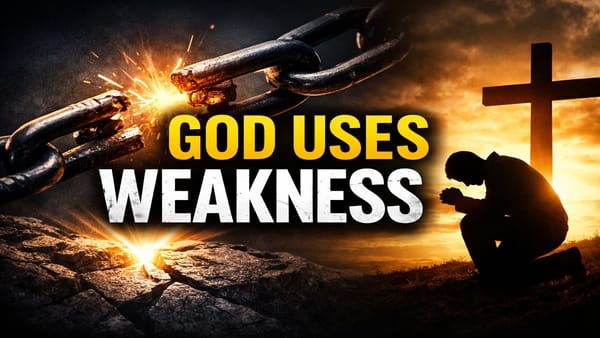
Luke 12 is the sound of chains breaking quietly. It is the sound of illusions collapsing. It is the sound of a kingdom emerging within human hearts.
It is not gentle, but it is good. It is not soft, but it is loving. It is not vague, but it is merciful.
It calls for open hands. It calls for steady lamps. It calls for clear eyes. It calls for undivided hearts.
It calls for courage in the face of division. It calls for generosity in the face of abundance. It calls for trust in the face of uncertainty. It calls for urgency in the face of delay.
It calls for allegiance in the face of everything that competes for it.
Luke 12 is the day Jesus dismantled fear not by promising comfort, but by revealing truth. Not by removing responsibility, but by redefining security. Not by eliminating tension, but by anchoring identity.
And when fear is dismantled at the root, life no longer revolves around protection. It revolves around purpose.
Your friend,
Douglas Vandergraph
Watch Douglas Vandergraph’s inspiring faith-based videos on YouTube https://www.youtube.com/@douglasvandergraph
Support the ministry by buying Douglas a coffee https://www.buymeacoffee.com/douglasvandergraph