The Day Dallas Stopped Hiding
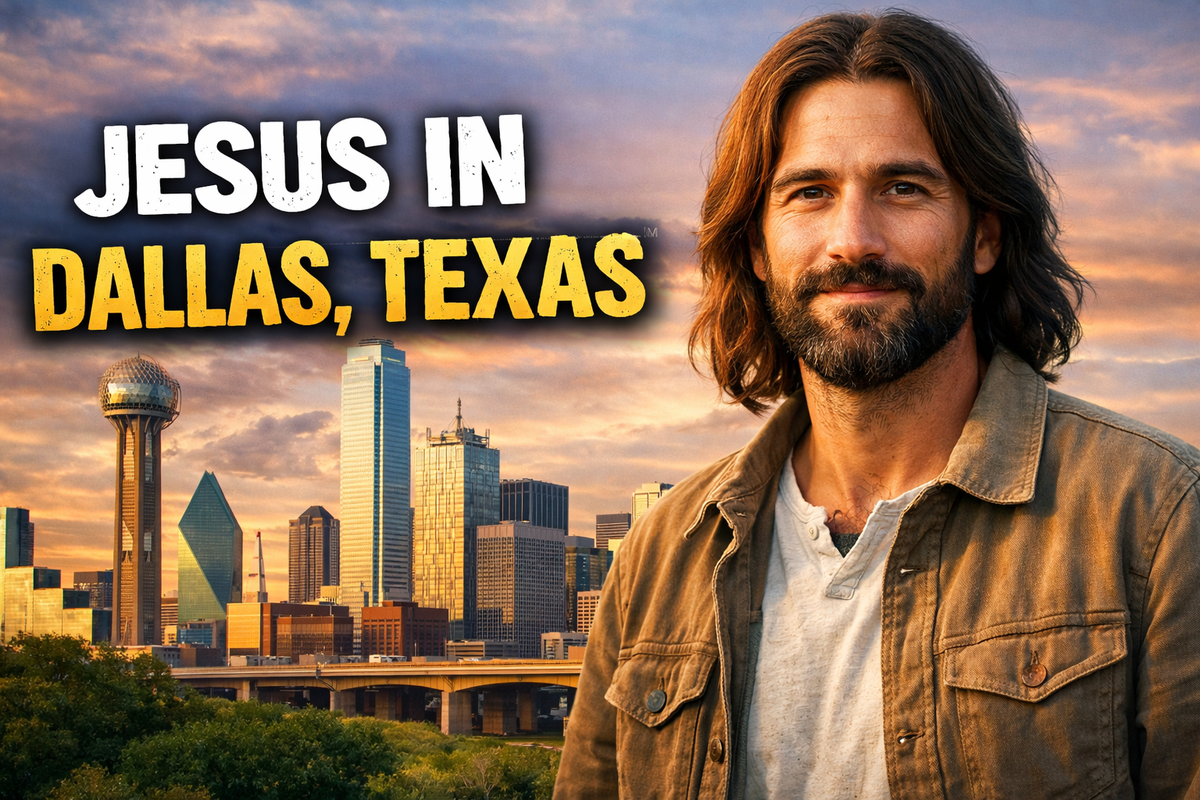
Before the city found its voice, before the traffic thickened and the towers began reflecting a hard clean light back into the morning, Jesus was alone in quiet prayer near White Rock Lake. The sky was still dark enough to hold the last of the night, and the water moved with that soft, low sound it makes when the whole world feels like it is breathing slowly. He knelt where the grass ran close to the stone edge and bowed His head as if there were no other place He needed to be and no other hour He would rather enter. Not far from Him, a woman in navy scrubs sat behind the wheel of a silver sedan with both hands locked at the top of it. She had parked there ten minutes earlier, then twenty, then longer than that, and she still had not turned the car off. Her name was Marisol Vega, and she was trying not to come apart before daylight. She had worked all night at Baylor University Medical Center, and in the last hour of her shift one patient had coded, another family had screamed at her in a hallway, and her phone had filled with messages she did not have the strength to open. One was from her son’s school. One was from her landlord. One was from her brother, which meant it was probably not help. She stared straight ahead like a person trying to outlast something invisible. Then her mouth tightened, her shoulders started shaking, and she bent over the steering wheel because there was no one there to watch her lose control.
She did not hear Jesus stand. She did not hear His steps on the path. What she heard was a soft knock on the edge of the rolled-up glass, and even that startled her enough to make her wipe her face hard and sit up with the kind of anger tired people use when they are afraid of being seen. She lowered the window halfway and looked at Him with the guarded expression of someone who had spent too many years handling other people’s needs and had nothing left for one more stranger. He was calm in a way that did not feel detached. He was present in a way that made the air around the car feel steadier. He did not lean in. He did not force concern onto her. He simply rested one hand on the roof and said, “You do not have to hide from Me.” Marisol laughed once, sharp and humorless. “That’s great,” she said. “Really. But I’m not hiding. I’m trying to get it together.” Jesus looked at her the way a person looks at someone who has been carrying more than their body was built to hold. “Those are not the same thing,” He said.
She should have rolled the window back up. She should have driven away. That was what she told herself. Instead she stared at Him and felt something she did not want to feel, because it was easier to stay upright when everyone else could be blamed for the weight. This felt different. This felt like the dangerous kind of safety. “I just got off work,” she said. “I am tired. I am not in the mood for religion. I’m not in the mood for a speech. I’m not in the mood for somebody telling me God has a plan.” Jesus nodded once, as if He had no interest in rehearsed answers either. “Good,” He said. “Neither am I.” That caught her off guard enough to make her glance at Him again. He did not move. Behind Him, the first thin line of morning had begun to lift the edge of the horizon. “Then what are You doing?” she asked. “Noticing you,” He said. It should not have landed the way it did. It was a small sentence. Simple. Quiet. But it hit the part of her that had been disappearing by inches for years.
Marisol opened the door and stepped out because sitting in the car suddenly felt too small for what was pressing against her chest. Her legs ached from the shift. Her back ached from months of too little sleep. She crossed her arms against the cold that lives in Texas mornings before the heat takes over. Up close, she looked older than thirty-nine, not because time had been cruel to her face but because strain had settled into it and made a home there. “You noticed wrong,” she said. “I’m fine.” Jesus glanced at the phone in her hand, where the notification screen was still lit with unpaid urgency. He glanced at the badge clipped to her scrub top. He glanced at the way she kept flexing her fingers like they hurt. “No,” He said, and there was no sharpness in it at all. “You are functioning.” She shut her eyes for a second because it was such an exact word that it felt like a hand touching a bruise. When she opened them again, she looked not angry now but worn clean through. “Same thing,” she muttered. Jesus shook His head. “Not for a person. A machine can function. A person can survive long after life has stopped feeling like life.”
She turned away from Him and looked at the lake because if she looked at His face she felt like she might start saying things she had held in too long. “My son got suspended yesterday,” she said. “I haven’t even dealt with it because I picked up another shift. My father is in the hospital two floors above the floor where I work, which is a special kind of hell if you want to know the truth. My brother says he’s trying, but he sends apologies the way some people send weather reports. The landlord posted a notice on my door last week. I told myself I would catch up. Then my transmission started slipping. Then my son punched another kid. Then my father refused another rehab recommendation because he says nobody is putting him somewhere to die. So no, I’m not fine, but I don’t really have the option of not being fine.” She said the words fast, almost defensively, as though if she gave her pain speed it would count less. Jesus listened without interrupting. When she was done, the silence between them was not empty. It made room. Finally He said, “You have mistaken collapse for sin.” Marisol frowned. “What does that even mean?” He looked out over the water and answered gently. “It means you think falling down would make you a failure, so you have turned exhaustion into a moral duty.”
That sentence did something the rest of the morning had not been able to do. It stopped her. Not because it solved anything. Not because it softened the facts. It stopped her because she knew it was true. She had spent so long being the one who stayed standing that she no longer knew how to tell the difference between love and overextension. People needed her. That part was real. Bills were real. Her father’s weakness was real. Nico’s anger was real. The problem was that somewhere in the middle of all of it she had begun to believe that if she sat down, even in her own soul, the entire world around her would go dark. “If I stop,” she said quietly, “everything gets worse.” Jesus turned back to her. “Some things will,” He said. “That is true. But some things are already worse because you have been bleeding strength into places that do not know how to love you back.” Marisol laughed again, but this time it broke in the middle. “I don’t even know what You want me to do with that.” Jesus said, “Tell the truth before you make another sacrifice.”
The path beside the lake had begun filling with runners and walkers and people wearing expensive shoes for bodies that still had margin in them. A man with a golden retriever jogged past. Two women in clean black workout sets moved by in quick conversation about a fundraiser. A cyclist rang his bell twice. The city was waking up in all the visible ways. Marisol watched them and felt for one bitter second how far away their ease seemed from her own life. “People think Dallas is all money and shine,” she said. “Do You know how many of us are holding the whole thing together with debt and caffeine?” Jesus said, “I know how many are smiling while they drown.” There was no drama in the way He said it. Only fact. Marisol pressed her lips together. “I can’t go home yet,” she admitted. “If I go home right now, my son is going to look at me with that face. The one that says everything is my fault and I was stupid to think I could do this by myself. Then I’m going to shower and sleep for three hours and drag myself back for another shift tomorrow and maybe the lights stay on and maybe they don’t.” Jesus asked, “Have you eaten?” She stared at Him. “What?” “Have you eaten?” He repeated. “Not coffee. Food.” She let out a breath that almost sounded like surrender. “No.” He said, “Then your sorrow is talking inside a starving body. Start smaller than panic.”
He walked with her to a bench under a tree not far from the parking area, and she sat because He had not told her to be brave and had not praised her for breaking herself. He had, without saying it directly, given her permission to be a person again. From a paper bag someone had left forgotten near the edge of the bench, there was nothing usable, so Jesus led her across to a small kiosk stand that had just opened by the path. The young man behind the counter looked half asleep and annoyed to be there. He recognized Marisol’s scrubs and assumed she wanted coffee. Jesus asked for water and two breakfast tacos. Marisol started to say she did not need anything bought for her, but the words died because she was suddenly embarrassed by how badly she did need something as ordinary as breakfast. They sat with the paper wrappers warming their hands while the sun rose over the lake and turned the water silver. She took one bite, then another, and the act of chewing almost made her cry again. No one had taken care of her in a long time without trying to collect something later. Jesus let her eat in silence until her breathing slowed. Then He said, “Go see your father before you go home.” Marisol looked at Him like He had not heard anything she said. “I just came from there. I work there.” “Not as a nurse,” Jesus said. “As his daughter.”
She wiped her hands and stared at the ground. “He doesn’t want that version of me. He wants the strong one. The one who already knows what to do.” Jesus turned the water bottle slowly in His hand. “No,” He said. “That is what you want to be allowed to keep being, because it is easier than grief. Your father does not need your control. He needs your presence. So do you.” The morning had brightened now, and with it came the practical edge of the hour. Marisol checked her phone, saw the unread school message again, and winced. “I can’t do everything in one day.” Jesus said, “Then stop promising yourself everything. Start with what is next.” She looked up at Him, tired enough now to stop resisting plain truth. “And after that?” she asked. “After that,” He said, “do what is next again.”
When they reached her car, she hesitated with the driver’s door open. It suddenly felt strange to let Him remain a stranger by the lake after He had stepped into the middle of her breaking point so gently. “Do You need a ride?” she asked. He smiled, and the expression carried no demand at all. “Toward downtown,” He said. “That would be kind.” She nodded. The drive from White Rock into the city moved through that changing light Dallas knows so well, where the neighborhoods begin waking in patches and the skyline seems to gather itself all at once. Marisol kept waiting for the conversation to turn into something that made less sense than the morning already had. It did not. Jesus asked her about Nico instead. Not the suspension report. Nico. The boy himself. At first she answered like a tired parent filling out a form. Sixteen. Smart. Angry. Used to love drawing when he was younger. Lately barely talked unless he was fighting. Then, because Jesus listened the way people listen when they are not trying to sort you into categories, she said more. She said Nico had not been the same since his father left three years ago. She said the boy had grown taller but less reachable. She said every conversation seemed to begin in accusation and end in slammed doors. She said she was scared one day she would say the wrong thing and lose him for good. “He thinks I chose work over him,” she said. “Maybe I did. Maybe I had to. I don’t know anymore.” Jesus looked out through the windshield as traffic thickened. “Children do not always know how to name pain,” He said. “So they turn it into blame because blame feels stronger. Do not answer only the words he says. Listen for the wound underneath them.”
She let that sit between them while she changed lanes and merged closer to downtown. The skyline rose ahead, clean and hard and expensive-looking, like a city that had no patience for weakness. “That sounds nice,” she said after a while, “but wounds don’t pay rent.” Jesus did not correct her. He said, “No. But untreated wounds will make a person destroy what little shelter he has left.” Marisol tightened her hands on the wheel. She thought of Nico’s room, the clothes on the floor, the broken desk chair, the hole in the drywall that she had covered with a poster because she did not have money to repair it. She thought of how quickly anger becomes the house language in families that do not have room to breathe. “What if I’m too late?” she asked. Jesus answered at once. “You are not too late to tell the truth.” She asked, “What truth?” He said, “That you are tired. That you are scared. That you love him. That your love is not proven by pretending not to hurt.”
The hospital rose ahead, broad and familiar. When Marisol pulled into the parking structure near Baylor University Medical Center, the whole place hit her with a fresh wave of fatigue. She had spent so many years under fluorescent lights that sometimes natural morning felt less real. She parked, turned off the engine, and sat without moving. “I should go in alone,” she said, but it came out more like a question than a decision. Jesus said, “You can.” She looked at Him. “That’s not what I meant.” He gave her a small smile. “I know.” They rode the elevator in silence with a woman carrying flowers and a teenage boy in a basketball hoodie who smelled like cologne and fear. On the seventh floor, the doors opened to the sharp, clean scent of hospital air and the low ongoing music of monitored bodies. Marisol’s badge got them through one set of doors faster than the others in the waiting area, and for a second she hated that even here she moved easiest as staff. She slowed outside her father’s room. The curtain was half drawn. A television was on with the sound low. Tomás Vega sat propped in bed looking smaller than he had any right to look. He had once been a man who repaired roofs in summer heat and carried sheets of plywood like they were nothing. Now his wrists looked thin against the blanket, and the skin around his jaw had loosened. He turned at the sound of her step and immediately put on the face older men use when they want weakness to remain theoretical. “You should be home sleeping,” he said.
Marisol almost laughed at the familiarity of it. Even this. Even now. She moved to the side of the bed and kissed his cheek. “Good morning to you too,” she said. Tomás glanced past her and saw Jesus. “Who’s this?” he asked. Marisol opened her mouth, realized she did not know how to answer, then said the most honest thing she had. “Someone who saw me before I fell apart in a parking lot.” Tomás grunted softly. “That’s one way to start the day.” Jesus stepped closer, not with the air of a visitor imposing on private family ground, but with the ease of someone who already belonged wherever pain was telling the truth. “Good morning, Tomás,” He said. Tomás studied Him for a second. “Do I know You?” Jesus replied, “You have been known by Me for a long time.” It was the kind of sentence that should have felt too large for a hospital room, yet somehow it settled there without strain. Tomás looked away first.
There are some fathers who make softness easy. Tomás had never been one of them. He loved hard, worked hard, endured hard, and expected everyone near him to develop the same armor. Marisol had spent her adult life trying to earn warmth from a man who mostly offered instruction. Even sick, he held onto a stubborn pride that made help feel like insult. “The doctor says rehab again,” she said, keeping her tone flat so it would not tip into another argument. “You need to stop fighting everything.” Tomás stared at the television screen without seeing it. “I’m not going somewhere to rot while strangers tell me when I can stand up.” Marisol’s jaw tightened at once. “It’s not rotting. It’s recovery.” “For who?” he snapped, more sharply than his strength justified. “For me, or for you?” She opened her mouth and then stopped, because the answer was not simple. Some of it was for him. Some of it was for her. Some of it was because every person carrying too much eventually starts calling relief by whatever name people will accept. Jesus stood near the window, saying nothing yet, and His silence made the room feel almost painfully honest.
Tomás looked toward Marisol again, and beneath the stubbornness there was something else now. Shame. “You already work all night,” he muttered. “Then you come in here and act like this is normal. It’s not normal.” Marisol swallowed. “No,” she said quietly. “It’s not.” Her father’s eyes glistened for a second, which he hated enough to look angry about it. “Your mother would have known what to do,” he said. It was a cruel sentence and not because he meant it cruelly. It was cruel because grief often reaches for the oldest knife in the room. Marisol drew back as if struck. Her mother had been dead nine years. There were still days that loss sat inside the family like unfinished weather. Jesus moved then, taking one of the chairs and setting it closer to the bed before sitting down, as though He had every right to remain in the middle of their grief without flinching. “Tomás,” He said, and there was nothing harsh in His voice, “you are afraid of becoming a burden.” Tomás gave a humorless smile. “That’s because I have eyes.” Jesus replied, “No. It is because you built your whole life around being the one who carried others, and now you do not know who you are if someone must carry you.” Tomás’s face changed. Not softened yet. Exposed.
The monitor beside the bed kept its small regular rhythm. Down the hall, someone laughed too loudly at a nurses’ station. A cart rattled past. Marisol stared at Jesus because no one in her family said things like that out loud. They circled truth until it hardened into resentment. “What am I supposed to do with that?” Tomás asked. It was nearly the same question Marisol had asked by the lake. Jesus answered him with the same calm certainty. “Tell the truth before you demand strength.” Tomás looked over at his daughter, and for the first time that morning his eyes held less authority than apology. “I don’t want to die in one of those places,” he said. The sentence came out smaller than everything he had said before it. Marisol felt her own throat tighten. “I know,” she said. “But I also don’t want to carry you home and watch you fall again in the bathroom when I haven’t slept in thirty hours.” There it was. Not polished. Not dutiful. True. Tomás looked at the blanket. “You should have said that sooner.” Marisol gave a tired, almost broken smile. “You should have listened sooner.”
A knock came at the door, then Adrian walked in with his suit jacket over one arm and his phone still in his hand. He looked exactly like the part of Dallas that acts like a schedule is character. He was forty-two, clean-cut, successful by every outward measure that tends to impress strangers, and stretched so thin by the arrangement of his own life that even his kindness had started sounding transactional. He had the same dark eyes as Marisol, but where hers showed fatigue, his showed calculation. He kissed the air near his father’s forehead, nodded at Marisol, then glanced at Jesus with quick confusion. “I’m sorry I’m late,” he said before anyone could speak. “Client breakfast ran long and traffic was awful.” Marisol gave him a flat look. “Of course it did.” Adrian ignored the tone because that was his preferred way of handling conflict. He moved to the foot of the bed and said, “Dad, I talked to somebody I know about a private recovery option. It could be better than standard rehab.” Tomás stared at him. “You talked to somebody you know,” he repeated, as if the whole phrase itself explained the problem. Adrian sighed. “I’m trying to help.” Marisol crossed her arms. “No, you’re trying to manage this from a distance, so it doesn’t interfere with your day.”
Adrian ignored the tone because that was his preferred way of handling conflict. He moved to the foot of the bed and said, “Dad, I talked to somebody I know about a private recovery option. It could be better than standard rehab.” Tomás stared at him. “You talked to somebody you know,” he repeated, as if the whole phrase itself explained the problem. Adrian sighed. “I’m trying to help.” Marisol crossed her arms. “No, you’re trying to manage this from a distance so it doesn’t interfere with your day.”
Adrian’s face tightened at once. He had the kind of expression that usually worked in conference rooms and made other people back up. It did not do much here. “That’s unfair,” he said. “I send money when you need it. I show up when something matters.” Marisol gave him a look that had years in it. “Everything matters,” she said. “That’s the point.” He started to answer, then glanced toward Jesus as if suddenly aware that a stranger was standing inside the family’s worst habits. “I don’t even know who this is,” he said. Jesus met his eyes without any trace of challenge. “Someone who is not impressed by how well you have organized your avoidance.” The room went still. Adrian let out a breath through his nose and looked away first, like a man who had just been spoken to in the only language he could not out-argue.
He set his jacket over the back of a chair and reached for his phone again on instinct, then stopped with it in his hand. That tiny pause said more than anything else in the room. He did not know how to be present without also staying in motion. Marisol had spent years collapsing under the weight of responsibility. Adrian had spent years escaping into competence. Both of them looked stronger than they were. Both of them were tired in different costumes. “You think I wanted this?” Adrian asked, and now there was anger in his voice, but it was not aimed cleanly at anyone. “You think I wanted to be the one everybody calls because I can get something done? You think I don’t know what she carries? I know. I just can’t live in crisis every day.” Jesus said, “No. So you built a life where you could stay close enough to feel decent and far enough to remain untouched.” Adrian’s jaw flexed. It was the exact sentence he would never have chosen for himself, which was why it landed.
Tomás looked at his son with a weariness that had less to do with illness than regret. “Your mother died and you learned how to leave without looking like you were leaving,” he said. Adrian stared at him. There are sentences that make a person angry because they are false. Then there are sentences that make a person angry because they are family truth spoken out loud at the wrong time. This was the second kind. “That’s not fair,” Adrian said, but he said it more quietly now. Tomás shrugged weakly against the pillow. “Maybe not. But fair has nothing to do with whether it’s true.” Marisol looked between them and felt the old ache rise again, the one that comes when a family starts touching the deepest place and everyone immediately wants to retreat.
Jesus let the moment breathe. He did not rush in to make peace because peace that arrives too early usually protects the wrong thing. Finally He said, “The two of you have spent years trying not to become each other. In the process, you have each become a different kind of absence.” Marisol blinked at Him. Adrian looked offended. Tomás looked almost relieved, because older men who have carried too much pride often feel strange gratitude when someone else finally names the fracture they helped create. “I stayed,” Marisol said, and there was hurt in her voice now, not just anger. “I was there. I carried this.” Jesus nodded. “Yes. And you began to believe carrying everything was the only proof of love.” Then He turned to Adrian. “And you began to believe solving parts from a distance was safer than standing inside the sorrow itself.” Neither of them argued, which was its own kind of confession.
A doctor came in a few minutes later with a case manager beside him. The discussion was exactly the kind of discussion families hate, because it had facts in it and facts are harder to fight than fear. Tomás was not safe to go home without more recovery support. He needed rehab, at least for a time. He needed physical therapy, supervision, some humility, and some help. The case manager spoke kindly, but there was no magic inside her tone. Marisol listened with both hands locked around the strap of her purse. Adrian asked the practical questions because that was what he knew how to do. Tomás kept looking at the wall as though he could out-stare reality until it changed its terms. When the doctor left, no one spoke for a long moment. Then Tomás said, without looking at either of his children, “I will go if neither of you turns it into one more performance.” Marisol frowned. “What does that mean?” He looked at her first. “It means stop acting like you can save everybody by breaking yourself.” Then he looked at Adrian. “And stop acting like writing a check is the same thing as showing up.” Neither of them moved. The old man on the bed looked weak enough to disappear into the sheets, but in that moment his voice was the strongest thing in the room.
Marisol’s phone buzzed again. She glanced down and saw the school number, then the voicemail icon a second later. Her stomach dropped before she even listened. She stepped toward the corner of the room, pressed play, and felt the floor inside her shift. Nico had not stayed where he was supposed to stay after being sent to the assistant principal’s office. He had walked out before his meeting with the counselor. A classmate had said he was heading toward the DART line. The school was calling because nobody had been able to reach her earlier. For one second the entire morning narrowed into a single hot point of fear. Jesus was beside her before she even lowered the phone. “What happened?” He asked. She swallowed hard. “My son left school,” she said. “He’s gone.” The sentence came out in pieces. Her body reacted before her mind did. She grabbed her keys. Adrian moved too. “I’ll call someone,” he said reflexively. Jesus said, “Call if you must. But first go look for the boy, not the problem.”
They left the hospital together, the three of them moving fast through hallways where nobody else knew their day had just changed shape again. On the elevator down, Marisol tried calling Nico twice. Straight to voicemail. Her hands shook. Adrian texted three people before they even reached the lobby. Jesus stood between them, calm but not passive, like a man who understood urgency without surrendering to panic. Outside, the city had fully entered the day. Traffic pushed and flashed. Sirens moved somewhere a few blocks off. Sunlight bounced hard off glass. Dallas looked like a place where everyone had somewhere important to be, which made fear feel even lonelier. “He could be anywhere,” Marisol said as they reached the car. Jesus asked, “Where does he go when he wants to disappear without being entirely gone?” She stopped with the driver’s door open. It was not the kind of question that school officials asked and not the kind of question she had been asking herself. Adrian answered first. “Downtown. He likes the trains.” Marisol looked at him. “How do you know that?” Adrian hesitated. “He told me once,” he said. The sentence landed heavily. She stared at him for a beat too long, then got into the car without answering.
They drove toward Akard Station through late morning traffic, and the silence in the car had a different texture now. It was no longer just exhaustion and family history. It was fear mixed with discovery. Marisol kept thinking about the fact that Nico had told Adrian something he had never told her. Adrian kept staring out the window like a man realizing there were rooms in the family he had not visited enough to understand. Jesus sat in the back and watched the city pass without hurry, as though He could see through surfaces without effort. They parked near the station and moved fast along the sidewalk where people in dress shirts, business dresses, work boots, and backpacks all crossed through one another in practiced urban indifference. Downtown Dallas at that hour carried that strange mix of movement and emotional isolation cities do so well. Hundreds of people, each alone inside whatever they were carrying.
A DART employee in a blue uniform stood near the platform entrance talking with a security officer. Marisol approached too fast and too breathless, speaking before she even had all the details in order. She described Nico, his hoodie, his backpack, his age. The employee listened carefully and said he thought he had seen a boy matching that description not long before, sketchbook in hand, heading out and walking north. “Toward Klyde Warren,” he said. “He looked upset, but not dangerous.” Marisol thanked him and started moving again immediately. Jesus lingered for one second with the employee, who looked more tired than his age justified. There were shadows under his eyes and the slack posture of someone who had learned how invisible service work can make a person feel. Jesus said quietly, “You were kind to notice the boy.” The man gave a small shrug. “Most people don’t get noticed until they become a problem.” Jesus replied, “That is one of the reasons so many become one.” The employee looked at Him strangely, then nodded once as if he had just heard something he would think about later on the train ride home.
They walked toward Klyde Warren Park, crossing blocks where the towers rose clean and expensive above them and men in polished shoes passed women pushing strollers and food delivery cyclists weaving through heat that was already beginning to build. Dallas could make almost any life look successful from twenty feet away. It was one of the city’s hidden talents. As they reached the park, the green stretch over the freeway was alive with lunch traffic beginning to gather. Children ran near the fountains. Office workers stood in lines at food trucks. A woman in sunglasses laughed into her phone. A man in workout clothes sat alone staring blankly at nothing, as if even his good health had not protected him from some private collapse. Jesus slowed. “He came here because it feels open,” He said. “Not because he wanted to be found, but because he wanted room around his anger.”
Marisol scanned faces so quickly that none of them seemed human to her. Then Adrian touched her arm and pointed. Nico sat under the edge of a shaded area near the lawn, knees up, sketchbook balanced against them, his backpack open beside him. Even from a distance there was something about the set of his shoulders that made him look younger than sixteen. He was not drawing the park. He was drawing the skyline beyond it, dark and hard, with one section of shadow pressed heavier than the rest. Marisol started toward him instantly, but Jesus touched her sleeve lightly. “Do not begin with accusation,” He said. “Begin with the truth.” She looked at Him, breathing hard. “The truth is I’m furious.” “That is part of it,” He said. “Not the first part.”
Nico saw them when they were still a few yards away. His whole body changed at once, the way teenage bodies do when they are trying to convert fear into defiance before anyone gets too close. He stood fast and shoved the sketchbook halfway into his bag. “I’m fine,” he said before anybody spoke, which was so much like his mother that even in that moment it might have been funny if it had not hurt. “You’re not fine,” Marisol said, but she stopped there because she remembered. Her face was tight with stress. Her voice shook anyway. “I was scared.” Nico looked away. “I didn’t ask you to be.” The old rhythm was right there, ready to repeat itself. Jesus watched both of them without stepping in yet. Marisol swallowed. “No,” she said. “But I was.” Nico’s eyes flicked back to her, suspicious now, because teenagers know scripted parenting when they hear it and this did not sound scripted. “School called,” she said. “I heard the message in the hospital. I thought something had happened to you.” He shrugged too hard. “Nothing happened. I just left.” “Why?” Adrian asked, more sharply than he meant to. Nico looked at him and laughed once. “Why do you care?” Adrian opened his mouth, then shut it. For one second his whole polished self cracked enough to show the part underneath. “Because I do,” he said, and it sounded small but real.
Nico slung his backpack over one shoulder like he might walk off again. “Everybody cares once it gets dramatic,” he muttered. “That’s how this works.” Marisol flinched because there was enough truth in that to sting. Jesus stepped closer then, not in front of them, but into the open space between what each person felt and what they knew how to say. “You left because you were angry,” He said to Nico. “But that is not the whole reason.” Nico frowned at Him. Teenagers are excellent at measuring adults for weakness, and yet there was something about Jesus that did not invite posturing. “You don’t know me,” Nico said. Jesus answered, “Not yet. But I know the look of a boy who is tired of being the place where all the family strain lands.” Nico’s face changed before he could stop it. It was brief, but enough. “That’s not what this is,” he said, and now his voice was lower. Jesus asked, “Then what is it?”
For a while Nico said nothing. The noise of the park moved around them. Somewhere a child shouted in delight. Someone at a food truck called out an order number. A train sounded faintly in the distance. It was the sort of ordinary city life that makes private pain feel almost offensive in its intensity. Finally Nico muttered, “They called me in because I hit somebody.” Marisol let out a tired breath. “I know.” “No,” he said, looking at the ground. “You know I hit somebody. You don’t know why.” She waited. He kicked at the edge of the pavement with the toe of his shoe. “He was talking about Grandpa. He said everybody knows he’s not coming home again and my family is broke and my mom lives at the hospital and maybe they should put me in foster care when we get evicted.” Marisol felt the blood leave her face. “What?” she said. Nico looked at her then, angry now because pain had finally found a doorway. “The notice was on the counter. I saw it. You thought I didn’t. I’m not stupid.”
Marisol closed her eyes for one second. So that was it. Not just school trouble. Not teenage attitude. The boy had been living inside fear she had not even known he had fully seen. “Why didn’t you tell me?” she asked. Nico laughed bitterly. “Tell you when? Between your shifts? While you were asleep? While you were telling me not to make things harder?” Every word came out raw, but none of it sounded theatrical. It sounded like a boy who had run out of places to put his fear. Adrian rubbed a hand over his face and looked suddenly older. “You should have called me,” he said. Nico gave him a look that held years of disappointment a sixteen-year-old should not have had to organize. “For what?” he asked. “So you could cash-app the problem and say you were proud of me?” Adrian had no answer for that. Jesus looked at Nico and said, “You thought if you spoke your fear, it would crush the little stability your mother had left.” Nico did not answer, but his eyes filled anyway.
They sat on a low wall at the edge of the park because nobody could keep standing like that and still tell the truth. Marisol sat first, then Nico beside her after a long hesitation. Adrian stayed a little apart until Jesus looked at the empty space on the other side of the boy and said nothing at all. Adrian understood and sat. For a moment none of them spoke. Then Marisol said the hardest sentence in the order it needed to be said. “I am tired in ways I should have told you sooner.” Nico kept staring ahead. She continued anyway. “I have been trying so hard to keep everything from falling that I stopped being honest about how hard it is. That made you carry fear by yourself, and that is not something I wanted for you.” He swallowed hard and kept his face angled away from her, but he listened. “I love you,” she said, and her voice broke in the middle. “Not because you behave. Not because you make this easier. Not because you are grateful. I love you because you are my son. I need you to know that before we talk about anything else.”
Nico wiped one eye with the heel of his hand so fast it was almost angry. “I don’t hate you,” he muttered. “I know,” Marisol said. “I know.” He shook his head. “No. I need you to hear me. I say stuff. I slam doors. I know. But I don’t hate you. I just…” He stopped because the rest of the sentence was too young and too painful to come out with dignity. Jesus supplied nothing. He waited. After a while Nico said it himself. “I just feel like everything bad gets closer every week and nobody says it out loud.” Marisol reached for his hand. He let her take it. “Then we say it out loud now,” she said. “We’re behind on rent. Grandpa is sick. I’m exhausted. You’re angry and scared. None of that means we stop being a family.”
Adrian sat very still beside them. Success had taught him how to speak in polished ways, but polished language is mostly useless around real grief. “I have not been here enough,” he said finally. Nico looked at him with that same guarded expression. Adrian forced himself not to look away. “I kept telling myself I was helping. Some of that was true. But some of it was just easier for me. Easier to send something than to sit in something.” He looked over at Marisol. “You were drowning and I kept calling it support because I didn’t want to rearrange my life.” Marisol stared at him. It was the first truly plain apology he had given her in years. Not wrapped in excuses. Not padded with logistics. Jesus watched him, and for the first time since entering the family, Adrian looked less like a man protecting an image and more like a son who missed his mother, a brother who had stayed away too long, and an uncle who had mistaken efficiency for love.
“Then rearrange it,” Jesus said. The words were simple. They were also impossible to hide from. Adrian nodded once, slowly, as if the sentence had reached him further down than he preferred. “I can take the first two weeks with Dad’s rehab coordination,” he said, now speaking less to defend himself than to finally commit. “Not just phone calls. I can actually do it. I can move meetings. I can come by the apartment in the evenings. I can help with Nico. I should have already.” Nico looked at him skeptically because teenagers have good instincts about last-minute sincerity, but skepticism is not the same thing as refusal. It was room. That was enough for the moment.
The three of them had not eaten, and the longer truth goes on inside the body, the more a person feels the ordinary needs they ignored while panicking. Jesus suggested they walk to the Dallas Farmers Market before making any more decisions. No one argued. They moved together through downtown in the early afternoon heat, not healed, not fixed, but different from the people who had entered the morning separately armored. At the market, the smells of coffee, spices, bread, grilled meat, and fruit met them at the entrance with the warm, messy honesty food always carries. Families moved through with strollers. Couples sampled things they did not need. A man argued cheerfully with a vendor over peaches. A little girl held a cup of shaved ice with both hands like it was treasure. Life was happening everywhere, ordinary and unselfconscious. It did something to all of them to be in the middle of a place where not everything was about crisis.
They found a table with shade and carried over tacos, water, and a basket of chips nobody really wanted until it was there. Nico ate like a boy who had forgotten hunger until the first bite. Marisol watched him and felt grief and relief braid together in that painful way mothers know. Adrian took off his suit jacket entirely and loosened his collar, which on its own looked like a small surrender to reality. Jesus sat with them as though there were nothing more holy in Dallas that afternoon than a family finally telling the truth over lunch. At the next table, a woman in business clothes kept trying to quiet a toddler while answering messages from her watch. Across the aisle, a vendor slipped extra fruit into an older man’s bag and pretended not to. Everywhere there were people holding it together in public. Everywhere there were private costs.
Nico pulled the sketchbook from his bag while the others were finishing their food. He did not mean to at first. It just happened because Jesus looked at the edge of it and said, “Show me what you see when you are silent.” Nico hesitated, then opened it. Page after page carried the city in pencil and shadow. Trains. Overpasses. Building edges. Hands. His grandfather asleep in a chair. His mother at the kitchen sink with her head bowed. One sketch of the apartment hallway with the eviction notice crooked on the floor where it had slipped. The drawings were strong. Not polished in a trained way, but alive with observation. Jesus turned a page slowly and stopped at one sketch of downtown, where the tallest buildings were drawn clearly but a darker layer underneath them looked almost like pressure rising from below. “You draw what people do not say,” He told the boy. Nico looked embarrassed. “It’s just drawing.” Jesus shook His head. “No. It is seeing.” Nico glanced down, and for the first time that day something like dignity touched his face without defensiveness attached to it.
Marisol looked over the pages and felt another kind of sorrow, the kind parents feel when they realize their child has been becoming someone in rooms they were too tired to enter. “Why didn’t you show me these?” she asked. Nico shrugged. “You were busy.” The answer was not accusation now. It was fact. She nodded, because facts do not soften just because love is present. “I want to see from now on,” she said. He did not answer, but he did not close the book either. Adrian leaned over and studied the drawings too. “These are really good,” he said. Nico gave him a suspicious glance, then looked back at the paper. “You don’t have to say that.” Adrian let out a quiet breath. “I know,” he said. “I said it because it’s true.”
By late afternoon, the hardest edges of the day had shifted. Not disappeared. Shifted. Adrian stepped away to make the rehab arrangements he had promised to make, and when he came back his tone had changed. He was not announcing solutions like trophies. He was simply reporting what was next. Tomás would transfer the following morning. Adrian had spoken to the case manager. He had already moved two meetings. He would take Nico to see his grandfather the next day if Marisol needed sleep first. Every part of him still sounded like a man used to handling things, but now there was less self-importance in it. Service always sounds different when ego is not standing inside it. Marisol listened and nodded. She was too tired for speeches and too honest now to mistake one for change. Still, something real had begun.
As the afternoon moved toward evening, Jesus walked with Marisol and Nico through Bishop Arts District after Adrian left to pick up a few things for Tomás. The neighborhood held that particular Dallas blend of charm, reinvention, and performance, where color and style and storefront confidence can make people feel briefly more whole than they are. They passed couples carrying drinks, young women taking photos against painted walls, a man unlocking a boutique, a tired server smoking behind a restaurant, and two older women laughing like they had survived something together. Jesus noticed them all without commentary. Nico walked on one side of Him, sketchbook under his arm now instead of hidden away. Marisol walked on the other, slower than she had in the morning. The day had not removed her burdens, but it had changed their arrangement. She was no longer carrying them alone in secret.
They stopped near a quiet side street where the evening light had begun softening the brick and turning the whole block gentler than it had any right to be. Marisol looked at Jesus and finally asked the question she had been circling all day. “Who are You?” She did not mean it theatrically. She meant it the way people mean things when their life has been interrupted at the deepest level and politeness no longer helps. Jesus looked at her, then at Nico, then down the street where strangers were still going on with their evening plans unaware that anything eternal had passed among them. “I am the One who enters what people think they must survive alone,” He said. Nico frowned slightly, not in rejection, but in the way young people do when truth is bigger than they expected. Marisol felt tears rise again, but these were not the tears from the parking lot. Those had come from collapse. These came from recognition.
“Will everything be okay?” Nico asked. It was such a simple question that it could not be answered cheaply. Jesus did not insult him with a clean promise. “Everything will not become easy,” He said. “But you will not have to become hard in order to endure it.” Nico let that sit. Marisol did too. There was more strength in that answer than in most reassurance people offer. Jesus continued, “Tell the truth sooner. Stay near one another. Do not wait until fear turns into damage before speaking. And when weakness comes, do not treat it like shame. Bring it into the light before it teaches the house how to hide.” The city moved around them with all its usual noise, but for a few moments those words felt like the most solid thing in Dallas.
When Marisol and Nico reached the apartment that evening, the notice on the counter was still there, because of course it was. The day had not erased paper. Nico looked at it, then at his mother. She picked it up, read it again, and instead of shoving it under something or turning away, she laid it flat on the table. “We deal with what is true,” she said. Nico nodded. Adrian arrived twenty minutes later with groceries, which made Nico stare because it was so unlike his uncle to show up carrying something as unglamorous as a bag of potatoes. He set them on the counter without trying to make the moment noble. “Thought you might need dinner tomorrow too,” he said. Marisol almost smiled. Almost. It was enough.
That night, for the first time in a long time, they ate together without pretending the room was lighter than it was. Tomás was not there. The rent was still late. School trouble was still real. Work would still call. Rehab would still happen. Yet something had changed in the center of the house. Marisol did not hide how tired she was. Nico did not hide that he was scared about his grandfather and embarrassed about school. Adrian did not hide that he had been absent in ways money could not cover. Honesty did not solve everything, but it stopped feeding the lie that each person had to carry their piece alone. Sometimes that is where peace begins. Not in resolution. In exposure.
After dinner, Nico pulled out his sketchbook again and sat at the table drawing while Adrian washed dishes with the awkwardness of a man new to ordinary service. Marisol stood in the doorway of the kitchen for a while just watching them. No soundtrack rose. No grand speech came. It was only a small family in a modest apartment under strain, doing unremarkable things with more truth in the room than there had been that morning. She thought of White Rock Lake before dawn. She thought of her father’s face in the hospital bed. She thought of the park, the market, the long blocks of downtown where everyone looked busy enough to avoid being known. She thought of Jesus saying, You have mistaken collapse for sin. The sentence had not left her all day because it had named the prison she had been calling responsibility.
She stepped out onto the narrow apartment balcony for air as the sky deepened. Dallas glittered in the distance the way cities do at night, all promise and presentation from far away. Somewhere out there people were still performing strength, still arranging themselves for survival, still smiling while they drowned. She understood that world because she had lived inside it. Then she saw Jesus across the lot near a patch of quiet ground beside the building where the light from one security lamp fell soft over the concrete and the edge of a small tree. He was alone. He knelt there in quiet prayer just as He had begun the day, steady and unhurried, as though every place where human fear had opened was a place worthy of bringing gently before the Father.
Marisol watched from the balcony without calling out. She did not want to interrupt something holy just because it was near. The city hummed around Him. A siren moved far off. Someone laughed two buildings over. A television flickered behind a curtain. Nico called from inside the apartment to ask where the black pen had gone. Adrian answered that it was in the grocery bag by accident. Ordinary life kept moving in small imperfect circles, and there Jesus was in the middle of Dallas, praying as if none of it was beneath heaven’s notice. After a while He stood, and for one brief moment He looked up toward her. He did not wave. He did not need to. The look itself carried the same truth the whole day had carried. He had seen them. He had not turned away. He had entered the strain without flinching. Then He walked into the evening shadows with the calm of Someone who had left peace behind Him without needing to announce it.
Inside, Nico was at the table again, bent over a fresh page. Marisol stepped back in and looked over his shoulder. He had started drawing the apartment, but not the way he usually drew things. The lines were still honest. The room was still small. The chair still had a cracked leg. The overhead light was still too harsh. Yet in the middle of it, at the kitchen table, he had drawn three people sitting close enough to matter. No one in the sketch looked polished. No one looked impressive. They just looked present. Marisol put a hand lightly on the back of his shoulder. He leaned into it without thinking. Adrian looked over from the sink and said nothing. The night did not need more words.
Some cities teach people how to shine. Some teach them how to compete. Some teach them how to disappear in crowds. Dallas could teach a person all three before lunch. But on that day, beneath the towers and the traffic and the polish and the private panic, another lesson had moved quietly through the city. Strength is not the same thing as hiding. Provision is not the same thing as presence. Love is not proven by how convincingly people deny their need. The healing did not begin when the money came in or when the paperwork got solved or when somebody finally found the perfect plan. It began when the truth stopped being delayed. It began when fear was spoken before it had time to become damage. It began when people who had spent years performing different versions of survival finally let themselves be seen.
Long after the apartment had quieted and the city kept glowing beyond the window, Marisol sat awake for a while in the dark and let the day settle into her. She knew tomorrow would still ask much from her. She knew sleep would not erase bills or rehab forms or school meetings. But she also knew something else now. She did not need to turn herself into steel to get her family through this. She did not need to call her breaking holy. She did not need to worship her own functioning. The God who had found her in a parked car before dawn had not come to hand her a prettier script for endurance. He had come to bring truth, presence, and the kind of mercy that does not flatter people while they fall apart. He had come close enough to expose every false thing they had been leaning on, and somehow that exposure felt less like judgment than rescue.
That is how the day ended in Dallas. Not with everything solved. Not with a dramatic display that made strangers stop and stare. It ended in a quieter way, which is often the holier way. A mother told the truth. A boy stopped carrying fear alone. A brother let his polished distance crack open. An old man admitted he was afraid. A family sat at one table without pretending. And Jesus, who had begun the day in quiet prayer before the city fully woke, ended it in quiet prayer again after the lights came on and all the hidden ache of the city had shown itself. Between those two prayers, He moved through Dallas the way He still moves through every city, every house, every strained heart that thinks survival is the same as life. Calm. Present. Observant. Carrying quiet authority. Not rushing past what hurts. Not frightened by what is frayed. Not asking people to perform strength before they are loved. Just entering the truth, making room for it, and teaching people that being seen by Him is not the end of dignity. It is where dignity comes back.
Your friend,
Douglas Vandergraph
Watch Douglas Vandergraph inspiring faith-based videos on YouTube:
https://www.youtube.com/@douglasvandergraph
Support the ministry by buying Douglas a coffee:
https://www.buymeacoffee.com/douglasvandergraph
Financial support to help keep this Ministry active daily can be mailed to:
Vandergraph
Po Box 271154
Fort Collins, Colorado 80527