The Child Who Taught the House to See

Chapter One
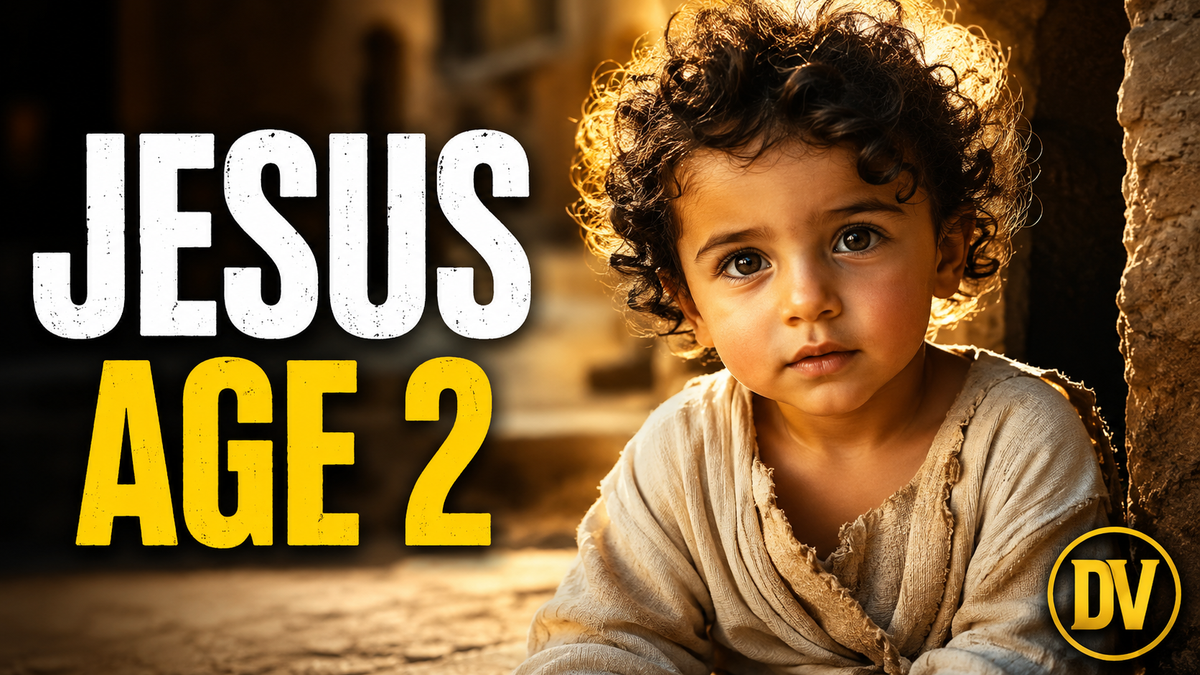
The child knelt in the low quiet of the house before anyone asked Him to. Morning had only begun to gather itself over Nazareth, and the room still held the soft gray of night along the walls. Mary had risen to grind the grain, and Joseph had stepped outside to look at a cracked board he meant to mend before the heat grew strong. The little boy, not yet tall enough to reach the table without stretching both hands above His head, had moved to the corner where the first light entered and bowed His face as if listening to someone who had already spoken. He was two years old, small in His tunic, curls resting near His cheek, and yet the stillness around Him seemed older than the hills beyond the village.
From the doorway, Shira watched Him with a basket pressed against her hip. She had come before sunrise because she did not want the village women asking why she had walked to Mary’s house again. Word had already begun to move around Nazareth in the half-whispered way that made every kindness feel suspicious. Some said Mary’s child was unusually gentle. Some said He looked at people as if He knew the sentence they could not finish. Some only said that Mary had suffered enough attention and should be left alone. Shira did not know what she believed. She only knew that the child in the corner did not look strange to her. He looked peaceful, and peace had become the one thing she could not bear to see in another house. The phrase Jesus of Nazareth age 2 companion story had not yet become anything anyone would search for, but if such a story could have been named in that moment, it would have begun in the silence of that room, with a grieving woman holding a basket and a holy child praying before the day had made its demands.
Mary turned when she heard Shira shift her weight. Her face was tired in the way all young mothers look tired before the village wakes, but her eyes were kind. Shira had brought lentils, a small jar of oil, and a length of mended cloth that did not look like charity if held the right way. She had told herself she came because Joseph had repaired the latch on her door without payment. She had told herself that returning kindness was honorable and ordinary. Yet beneath that explanation lay the truth she avoided even in prayer: she came because Mary’s house still carried the sound of a child breathing in sleep, and her own house had been too quiet for nearly six months. She had read and reread in her mind the quiet reflection on Jesus as a little child in Nazareth, though no scroll bore those words, because she needed some way to stand near innocence without being destroyed by what she had lost.
Mary took the basket gently and said, “You came early.”
“I was awake,” Shira answered.
Mary did not ask why. That was one of the things Shira liked about her. Other women filled silence with concern until it became a kind of pressure. Mary let silence remain silence, as if God could still pass through it.
The child lifted His head. Shira had seen many children look at strangers with curiosity, hunger, mischief, or fear. He looked at her as if He had been expecting her and had no need to hurry the moment. His dark eyes rested on her basket first, then on her face, then on the fingers of her left hand, which had tightened around the frayed handle until the skin turned pale. Shira loosened her grip quickly, embarrassed by the small betrayal of her body.
“Peace to you,” Mary said.
Shira nodded, but she did not speak the blessing back. The words had become difficult after her son died. Peace sounded like something other people said when they did not know what else to offer. It sounded like a cloth laid over a wound no one planned to clean.
The boy rose carefully from His knees. He was unsteady in the ordinary way of children, one small hand touching the wall as He stood. That steadiness and unsteadiness together troubled Shira. She had expected, perhaps without admitting it, that if something holy lived in Mary’s child, it would remove all the signs of childhood. But He walked across the packed floor with the slightly uneven steps of a toddler, pausing once to look back toward the place where He had prayed, as if leaving conversation behind with love.
He came to Mary and touched the side of the basket.
“Bread?” He asked.
Mary smiled. “Not yet. Grain first.”
He looked at Shira again, and she felt a strange discomfort, not because He accused her, but because He did not. Accusation she understood. She had used it against herself since the fever took her boy. If she had called the healer sooner. If she had not been angry that morning. If she had not fallen asleep for those few moments while the child’s breathing changed. If she had been more righteous, more watchful, more favored. Blame had become a harsh kind of order in a world that no longer made sense. But the boy’s gaze held none of it, and mercy, when it came too close, felt more frightening than judgment.
Joseph stepped in carrying the cracked board. He greeted Shira with the respectful warmth he gave everyone, neither too much nor too little. Sawdust clung to his sleeve. He looked at the child and said, “You have already been awake with your Father, little one?”
Mary glanced at him, and the child did not answer in any way Shira understood. He only placed both hands on the basket rim and looked toward the doorway where the village had begun to stir.
A shout rose outside. It was not the shout of danger, but of irritation sharpened by morning labor. Someone’s animal had gotten loose. A clay jar broke. A man cursed, and another voice answered him. Nazareth was waking as it always did, with work, hunger, old disagreements, and the scraping sound of people trying to carry more than the day should hold.
Shira should have left then. She had delivered the basket. She had done the neighborly thing. But Mary invited her to sit, and Shira sat because refusal would have required more strength than staying.
The child found a small clay cup near the wall. It was chipped along one side, too damaged for guests, useful enough for water when no one wanted to waste a better vessel. He carried it with both hands and brought it to Shira. There was no water in it. He held it out anyway.
She stared at the empty cup.
Mary watched quietly, one hand resting in the grain bowl.
“For me?” Shira asked, trying to make her voice light.
The child nodded.
She took it. The cup was warm from His hands. That simple warmth moved through her faster than she wanted. Her son had once brought her stones, dead leaves, a beetle, a piece of torn cord, every worthless treasure a child believes his mother should receive with wonder. She had kept some of them in a shallow bowl near her sleeping mat until the grief became too sharp and she buried them outside the wall behind her house. Since then she had touched no child’s offering without guarding herself.
“It is empty,” she said.
The child leaned close enough for her to smell milk and dust and the clean skin of a morning-washed face.
“No,” He said.
The word was small, clear, and without strain.
Shira looked into the cup again, foolishly, because what else could she do? It was still empty. No miracle filled it. No water shimmered at the bottom. No sign came to make the room bow. The cup remained a chipped clay cup in a poor house in Nazareth, held by a woman whose arms had forgotten the weight of her child.
Something hard rose in her chest. She almost laughed, but the sound would have broken wrong.
Mary lowered her eyes, not in shame, but in prayer.
Joseph moved back toward the doorway with the board, giving the moment space.
Shira set the cup on her knee. “Children see what they want to see.”
The little boy touched the edge of the cup with one finger, then touched His own chest.
Shira did not understand. She did not want to understand. She stood abruptly, and the cup nearly fell. Mary reached out, but Shira caught it before it struck the floor. For one breath the room held the fear of breaking, and Shira hated that even a cup could make her body remember the night her son’s fever broke into death.
“I should go,” she said.
Mary rose. “You do not have to hurry.”
“Yes,” Shira said, too quickly. “There is work.”
The child did not cry when she stepped away. He did not follow. He simply watched her with a seriousness that did not belong to age and yet did not make Him less a child. Shira placed the cup back near the wall, but He shook His head once.
“For you,” He said again.
She could not refuse Him without feeling cruel, and she could not accept without feeling exposed. In the end she wrapped her fingers around the cup and carried it out of Mary’s house like a woman carrying evidence of something she was not ready to name.
Outside, the lane had filled with morning. A goat nosed through a scatter of peelings. Two boys argued over a sling. A woman balanced water and called sharply to her daughter. Smoke rose from cooking fires, and the sunlight came over the roofs with no regard for sorrow. Shira walked home with the empty cup hidden beneath the fold of her shawl.
Her house stood near the edge of the village, close enough to hear everyone and far enough to feel forgotten. Her husband, Natan, had already left for the terraces. He had become a man of few words since their son died, though grief did not make him gentle. It made him efficient. He repaired tools, counted measures, spoke of weather, and avoided the corner where the child’s sleeping mat had been rolled and tied. Shira had not moved it because moving it felt like betrayal. Natan had not moved it because he could not bear the argument.
She entered and shut the door. The room smelled of old smoke, wool, and the faint bitterness of herbs she no longer needed to boil. For a while she stood without moving. Then she drew the clay cup from her shawl and placed it on the low table.
It looked even poorer in her house than it had in Mary’s. Chipped, plain, unremarkable. A child’s gift that should have meant nothing.
By midday, it had begun to trouble her.
She tried to grind grain and found herself looking at it. She swept the threshold and turned back to make sure it had not moved. She lifted it once, inspected the inside, and placed it down harder than she meant to. Empty. Of course it was empty.
Near the sixth hour, Natan returned earlier than usual because the handle of his hoe had split. He found her sitting near the table with the cup between her hands.
“Where did that come from?” he asked.
“Mary’s child gave it to me.”
His face closed. Not in anger at Mary, but in weariness at any subject that might lead where he refused to go. “Why?”
“I do not know.”
Natan took the broken hoe handle to the wall and began sorting through wood scraps. “Then throw it out.”
The words struck her with unreasonable force. “It is only a cup.”
“Then it should not matter.”
“It does not.”
He glanced at her, and the silence between them filled with all the things they had stopped saying. Before their son’s sickness, they had fought like ordinary people and forgiven like ordinary people. Afterward, every disagreement seemed to step around a grave. Even kindness became dangerous because it might loosen the wrong thing. Shira looked down at the cup and hated Mary’s child for giving it to her, then hated herself for letting that thought exist.
Natan found a piece of wood and sat near the doorway, shaving it down with a knife. “You go there often.”
“I have gone three times.”
“That is often enough when people talk.”
“Let them talk.”
He cut too sharply and sliced his thumb. Blood rose at once. He cursed under his breath and pressed the wound against his tunic.
Shira stood to help him, then stopped because he had already turned away. That was what they did now. Pain appeared, and each one turned before the other could reach.
“It was not your fault,” she said suddenly.
The knife stilled.
She had not planned to say it. The words came out as if the empty cup had opened something against her will.
Natan did not look at her. “Do not start.”
“I only said it was not your fault.”
His shoulders tightened. “You think I do not know what you mean?”
“I mean what I said.”
“No,” he answered, low and bitter. “You mean it was yours.”
The room went still.
Shira felt the blood leave her face. For months they had carried their blame separately, each one believing silence protected the other. Now the silence had torn, and what came through it was not relief, but heat.
Natan turned, his eyes red with more than anger. “You think I have not watched you punish yourself? You think I do not hear you at night? You think I do not know you count the hours of that day as if one of them will open and let you change it?”
Shira gripped the edge of the table. “You would not speak of him.”
“I could not.”
“You would not speak of him,” she repeated, and now the pain in her voice had found its own strength. “You rolled up his mat and tied it as if he had gone on a journey.”
Natan stood. “Because I found you holding it every morning until you could not cook, could not wash, could not hear when someone called your name.”
“He was my son.”
“He was mine.”
The words landed with such force that both of them fell silent. Outside, someone laughed in the lane. The ordinary sound made the room feel even more broken.
Natan looked at the cup, and his expression changed. It was not softness yet. It was recognition mixed with fear. “What did the child say when He gave it to you?”
Shira swallowed. “I said it was empty.”
“And?”
“He said no.”
Natan looked away, but not before she saw something in him tremble.
For the first time in months, Shira wondered whether her husband’s silence had not been absence, but survival. She had judged his stillness as coldness because it cost less than seeing it as grief. That realization did not heal her. It unsettled her. It made her angry in a different way, because if he had been suffering too, then her loneliness was not proof that no one cared. It was proof that pain had made them strangers under the same roof.
A knock sounded at the doorpost.
Shira wiped her face quickly, though she had not noticed tears. Natan turned away and busied himself with the broken handle. When Shira opened the door, Mary stood there with the child on her hip.
“I am sorry,” Mary said. “He wanted to come.”
Jesus rested against His mother, one arm around her neck. He looked smaller in the bright doorway, sun touching His hair, dust on His feet. He was a toddler who had insisted on visiting, and yet the room changed when He entered Mary’s shadow. Not dramatically. Not like thunder. More like a lamp being uncovered in a room where people had grown used to darkness.
Shira wanted to say it was not a good time. She wanted to say Natan was tired, that the house was not ready, that they had nothing to offer. Instead she stepped back.
Mary entered quietly. Her eyes moved once to Natan’s cut thumb, once to Shira’s face, once to the rolled sleeping mat in the corner. She did not stare at it. That mercy nearly undid Shira more than staring would have.
The child pointed to the cup on the table.
Mary lowered Him to the floor. He walked to it with both hands slightly lifted for balance. Then He picked it up, carried it to Natan, and held it out.
Natan did not take it.
Shira watched her husband’s jaw tighten. He could resist men. He could resist arguments. He could resist his wife’s grief because her grief had become tangled with his own. But he did not seem to know how to resist a child offering him an empty cup.
Mary said softly, “He has carried it in His mind all morning.”
Natan gave a strained laugh. “It is only clay.”
Jesus kept holding it out.
Natan looked at Mary, perhaps hoping she would rescue him from the tenderness of the moment. She did not. At last he took the cup with his uninjured hand.
The child touched Natan’s wounded thumb. His finger did not glow. The cut did not vanish. No spectacle entered the house. Jesus simply touched the place where Natan bled and looked up at him with compassion so direct that Natan’s face changed before he could hide it.
“Abba sees,” the child said.
Shira drew in a breath.
Mary closed her eyes briefly, as if the words had reached her too.
Natan sat down hard on the low stool. The cup rested between his hands. His wounded thumb left a small red mark along the rim. He stared at it, and Shira knew he was seeing what she had seen in the morning: emptiness that refused to stay empty because the child had named it otherwise.
“I was in the field,” Natan said.
Shira did not move.
His voice lowered. “When the fever worsened, I was in the field. You sent for me, and I thought there was time. I finished binding the row because rain was coming. I thought there was time.”
Shira’s hand went to her mouth.
Natan looked at the cup rather than at her. “When I came home, you were holding him, and I knew before you spoke. I have hated that row of vines every day since.”
The confession entered the room not as a solution, but as a door opening onto a place both of them had feared to enter. Shira had spent months believing she alone had failed. Natan had lived beside her believing the same of himself. Their sorrow had not only taken their son. It had taught them to misread one another until even love looked like accusation.
Jesus leaned against Mary’s knee. He was growing tired, as children do after morning walks and adult sorrow. His eyelids lowered, but His gaze remained steady.
Shira crossed the room slowly. She sat beside Natan, not touching him at first. The space between them felt like a road washed out by storm. Then she reached for his wounded hand. He let her take it.
“I fell asleep,” she whispered. “Only a little. I had been awake all night, and I thought if I closed my eyes beside him, I would hear him if he stirred. When I woke, his breathing was different.”
Natan’s eyes filled.
“I thought God took him because I slept,” she said.
Mary made a small sound, almost a breath of sorrow.
Natan turned toward Shira fully then, and the motion seemed to cost him. “I thought God took him because I stayed in the field.”
The cup sat between them, marked by blood and held by both their hands.
Jesus stepped closer and placed His small palm on the cup. He did not explain the ways of God. He did not answer the question that had tormented them. He did not turn grief into a lesson. He stood with them inside the wound their silence had guarded, and somehow His presence made the truth bearable enough to speak.
“No,” He said again.
The same word He had spoken that morning. Small, clear, without strain.
Shira bowed over the cup and wept, not as she had wept alone, muffling herself into cloth so no one would hear, but openly, with Natan’s hand in hers and Mary standing near and the child beside them. Natan wept too, quietly at first, then with a brokenness that seemed pulled from a deep place he had sealed with work and weather and practical words.
The child watched them with holy tenderness. After a while He leaned His head against Mary’s leg, and Mary lifted Him again. He rested there, tired from the day’s mercy, His cheek against her shoulder.
Shira looked at Him through tears. The perspective that had ruled her for months began to shift, not all at once, not easily, but truly. She had believed an empty house meant God had turned His face away. She had believed silence meant punishment. She had believed guilt was the last remaining proof that she had loved her son enough. But the child had brought her an empty cup and refused to call it empty. Now she understood only this much: some vessels held what could not be seen yet. Some rooms were not abandoned because laughter had left them. Some griefs were not accusations from heaven, but wounds into which God Himself could step without disgust.
Mary prepared to go before the heat thickened. At the doorway, she shifted Jesus on her hip, and He looked back at the cup.
Shira followed His gaze. “Should I keep it?”
The child nodded, already half sleepy.
“For what?” Natan asked, his voice rough.
Jesus’s eyes rested on him, then on Shira. “When you speak.”
Neither of them answered.
Mary gave Shira a look that held no demand. Then she carried Him into the lane, where the sun had risen fully and Nazareth had become loud with life.
Shira stood beside Natan in the doorway long after they had gone. The village was still the village. Work waited. Pain remained. Their son was not returned to them. The mat still lay rolled in the corner. The cup still held no water.
But Natan’s hand was in hers.
That was not everything.
It was not nothing.
And for the first time since the burial, Shira wondered whether the house had not been empty in the way she thought. Perhaps the Lord had been nearer than her sorrow allowed her to feel. Perhaps the first mercy was not the removal of grief, but the breaking of the lie that grief had spoken in God’s name.
Behind them, on the low table, the clay cup caught the light.
Chapter Two
By the next morning, the cup had become the most honest thing in the house.
Shira noticed it before she noticed the cold ash in the hearth, before she remembered the grain waiting to be ground, before she heard Natan shift on his sleeping mat and sit up with the guarded heaviness of a man who had wept the day before and did not yet know what such weeping required of him now. The cup stood on the low table where they had left it, turned slightly toward the doorway, the red mark from Natan’s thumb dried along the rim. It was small enough to hide in one hand. It was plain enough that no visitor would have admired it. Yet the room seemed arranged around it, as if the little vessel had gathered all their avoided words and set them where neither husband nor wife could pretend not to see.
Natan rose without speaking. He washed his hands in the basin, then looked toward the corner where their son’s sleeping mat remained tied. Shira saw the glance, and for once she did not turn away from it. The mat had become a boundary in their home. She passed it every day, stepping around it as if it were both sacred and dangerous. Natan avoided it with the same care he gave a broken tool too sharp to touch. Neither of them had said their son’s name aloud since the burial. They had spoken around him with phrases that carried less risk: the child, our boy, before the fever, after. His name was Eliab, and silence had made even that sound feel forbidden.
Shira placed two flat stones beside the hearth and began preparing the morning fire. Her hands knew the work well enough to continue while her mind remained on the corner. Natan took up the repaired hoe handle and tested its strength though he had already finished it. Outside, the village opened into its familiar noise. A neighbor called for a missing jar. A donkey protested its load. Someone laughed with the careless ease of a person whose home had not forgotten how to breathe.
Natan finally said, “I dreamed of him.”
Shira’s hand paused above the kindling.
“He was running near the lower path,” Natan continued, still looking at the tool in his hands. “He had both sandals on the wrong feet. He kept telling me to hurry, but when I tried to reach him, the path grew longer.”
Shira closed her eyes. The picture was too clear. Eliab had worn his sandals wrong whenever he dressed himself, and he had argued fiercely when she tried to correct them. She had forgotten that small stubbornness, or else she had buried it because remembering ordinary things hurt more than remembering the sickness. Fever had made him still. The living child had been motion, insistence, crumbs on his face, dirt under his nails, questions asked at the worst possible time.
“I dreamed of him last week,” she said.
Natan turned.
“He was asking for figs. I told him we had none. He laughed as if I had said something foolish.”
Natan’s face changed, and the change frightened her because it was tenderness returning. Tenderness required a person to live with an uncovered heart. It was easier to be bitter. Bitterness made rules. Tenderness asked for trust.
“Why did we stop saying his name?” Natan asked.
Shira looked toward the cup. “Because we thought the name would empty us.”
Natan’s voice was quiet. “It emptied us anyway.”
The truth of that settled between them without argument. Shira fed the kindling and watched the flame take slowly. The fire did not remove the chill from the house at once. It simply began, and perhaps that was enough for morning.
Later, Mary came to the well with Jesus walking beside her, one small hand wrapped around her fingers. Shira was there already, not because she needed water so early, but because she had not wanted to remain alone with the mat in the corner. Women stood in small groups, drawing water, speaking of bread, cloth, weather, and the careless failures of men. Their words lowered when Mary approached, not cruelly in every case, but with the old curiosity that followed her like a second shadow. Mary greeted them without defensiveness. She moved as one who had learned that obedience to God did not require answering every whisper.
Jesus looked toward Shira. His face brightened with recognition, and He released Mary’s hand to toddle the few steps toward her. Shira knelt before she could think better of it. The other women watched. She knew they watched. Yesterday that would have tightened her spine. Today the watching mattered less than the small child approaching with dust on His feet and solemn joy in His eyes.
“Peace,” He said.
This time Shira answered, “Peace to You.”
Mary heard it. So did two of the women nearest the well. Shira felt heat rise in her face, but she did not take the words back. Jesus touched the empty water jar beside her, then pointed toward her house.
“Cup,” He said.
“At home,” Shira answered.
He nodded as if this pleased Him.
One of the women, Yael, leaned closer with the sharp concern of someone who disguised judgment as interest. “What cup?”
Shira stood slowly. The old instinct told her to make the moment small, to laugh, to say children chatter about anything. Yet something in her had shifted when she spoke Eliab’s name with Natan after breakfast. She had lived as though privacy could protect grief from harm, but privacy had also protected the lies grief had grown in the dark.
“A cup Mary’s son gave me,” she said.
Yael looked from Shira to Mary. “A child’s cup?”
“Yes.”
“And that has meaning now?”
Mary did not intervene. Jesus stood quietly beside Shira’s jar, looking not at Yael but at Shira. The pressure of the moment was not large by the measure of kings or armies, but it was large enough for a wounded woman. To speak truth in the village was to risk having truth handled badly. To remain silent was to return to the narrow room where guilt had ruled her.
“It has meaning to me,” Shira said. “My husband and I spoke our son’s name yesterday for the first time in many months.”
Yael’s expression faltered. Another woman lowered her eyes. The well rope creaked in someone’s hands.
Shira continued, not because she wished to explain herself, but because the truth, once opened, seemed less fragile than fear had warned her. “His name was Eliab.”
The name entered the morning air and did not destroy her. No stone split. No woman mocked. No hidden punishment fell from heaven because a grieving mother spoke the name of the child she missed. Instead Mary’s eyes filled with quiet compassion, and Jesus reached for Shira’s hand. His fingers were small and warm. He did not say anything, but His presence held the moment steady until Shira could breathe again.
That afternoon, Natan came home with a bundle of vine cuttings across his shoulder. He found Shira kneeling in the corner beside the tied sleeping mat. She had not opened it yet. She had only touched the cord and then withdrawn her hand several times, as if the knot might burn her.
Natan set the cuttings down. “Do you want me to do it?”
“No,” she said. Then, after a moment, “Not alone.”
He came and knelt beside her. For a while they simply looked at the mat. It was astonishing how much power a rolled piece of woven reed could hold. Shira remembered washing it after Eliab spilled goat’s milk and blamed a bird. Natan remembered carrying the sleeping child in from the doorway and laying him there after a long day when the boy refused to admit he was tired. Their memories did not arrive in order. They came like birds startled from a tree, one after another, too many to count and too alive to command.
Shira untied the cord.
The mat loosened, then opened across the floor with a faint dry sound. A small wooden animal fell out, one leg broken, the toy Natan had carved during the winter rains. Shira covered her mouth. Natan picked it up and turned it in his hands.
“I thought this was lost,” he said.
“So did I.”
He held the toy as if it weighed more than wood. “I can mend the leg.”
The words pierced her, not because of the toy, but because mending had returned to his voice. For months he had repaired what was useful and ignored what was tender. Now he was offering to mend something that would not help the harvest, would not fill a jar, would not bring their son back. It would only honor love.
Shira nodded. “Please.”
They spread the mat in the courtyard and beat the dust from it. Neighbors passed. Some looked, then looked away. One older man paused as if he wanted to speak, but thought better of it. Shira expected shame to rise, but it did not come with the same strength. The mat was not proof that she had failed to let go. It was proof that a child had lived in their house and had been loved there.
Near evening, Mary came again, this time with Joseph and Jesus. Joseph carried a small piece of smooth wood and a bit of cord. He greeted Natan and glanced at the broken toy in his hand.
“I heard there was mending,” Joseph said.
Natan’s eyes moved to Shira in question. She shook her head, equally puzzled. Joseph smiled faintly and sat near the doorway. “The little one was very sure.”
Jesus walked straight to the open mat and sat down on it. The adults grew still. For one sharp instant, Shira nearly told Him not to, because that place belonged to Eliab. The thought rose fast and fierce. Then she saw Jesus place His hands on the woven reeds with a care too gentle to be intrusion. He did not claim the mat. He honored it.
Joseph and Natan bent over the wooden animal together. They spoke quietly of grain, pressure, and the clean angle of a small cut. Mary sat with Shira near the hearth, not filling the air with comfort. Jesus remained on the mat, turning a small scrap of cord between His fingers. After a while He looked up at Shira.
“Tell,” He said.
Shira knew what He meant before she wanted to know.
Mary’s gaze rested on her, patient and unafraid.
Shira looked toward Natan. He had stopped working. The broken toy lay in his hands, half-mended.
“He liked figs,” Shira began, and her voice trembled. “Even when they were not ripe enough. He would make a face and still ask for another.”
Natan laughed once, and the sound broke into tears. “He chased the neighbor’s hens until they chased him back.”
“He hated having his hair washed,” Shira said.
“He said the moon followed him because it wanted to hear his songs.”
The memories came slowly, then more freely. Not all at once, not without tears, but without the old terror that speaking would tear away the last covering over their grief. Mary listened. Joseph listened. Jesus listened from the mat with the full attention of heaven resting inside the body of a small child. Outside, the evening spread over Nazareth. Smoke lifted from nearby roofs. Someone called children in from the lane. A dog barked at nothing. Life continued around the house, but inside it something long frozen began to thaw.
Then Natan said the hardest thing. “I was angry with God.”
Shira looked at him.
“I still may be,” he admitted. “I do not know how to stop. I know the Holy One is righteous. I know we are dust. I know all the words men say when they do not want to sound faithless. But my son died, and I wanted heaven to answer me.”
The room did not recoil. Mary did not correct him. Joseph’s hands stilled over the toy. Shira felt the old fear of judgment, but Jesus only rose from the mat and walked to Natan. He placed one hand on Natan’s knee and looked up at him with a tenderness that did not excuse bitterness but did not despise the wounded man beneath it.
“Abba heard,” Jesus said.
Natan bowed his head. “Then why did He not answer?”
The question filled the house, and no one hurried to soften it. Jesus was silent. His silence was not emptiness. It was presence without pretense. He did not give Natan an answer small enough to fit inside one evening. He gave him something harder and kinder: the nearness of God without the removal of mystery.
Shira saw the shift then. Not in Natan only, but in herself. She had believed faith meant never bringing God the question that frightened her most. Natan had believed honesty would make him unworthy. Both had been hiding from the Lord while calling it reverence. Yet the child stood in their house, unafraid of their sorrow, unashamed of their questions, and unwilling to let guilt speak as though it were God.
Natan reached for Shira’s hand. “I do not know how to pray anymore.”
Jesus looked toward the cup on the table.
Shira understood. She stood, took the cup, and brought it to the mat. She set it between them. The dried blood still marked the rim. The cup was empty, but no longer accusingly so. It was empty like open hands. Empty like a room making space. Empty like a heart that had finally stopped pretending to be full of answers.
Natan whispered, “Holy One, I am angry, and I am sorry, and I miss my son.”
Shira closed her eyes. “Lord, I thought You were punishing me. I thought I had to keep blaming myself so Eliab would not be forgotten.”
Natan’s grip tightened around her hand. “Help us remember him with love instead of fear.”
The prayer was rough. It did not rise smoothly. It had no polished dignity. But it was true, and truth in the presence of God was the first clean breath their house had taken in months.
Jesus placed both hands around the cup. His little palms did not cover it completely. He looked at Shira and Natan, then at the open mat, then toward the doorway where the last light of day rested on the threshold.
“Full,” He said.
Shira wept again, but this time the tears did not feel like drowning. Natan leaned against her shoulder. Mary quietly wiped her face. Joseph finished tying the mended wooden leg into place and set the small animal on the mat beside the cup.
The next morning, Shira did not roll the mat away. She folded it carefully and placed it near the wall, not hidden, not worshiped, not clung to as a wound, but kept as part of the house’s true story. Natan set the mended toy on the shelf. Before he left for the terraces, he touched Shira’s shoulder and said Eliab’s name without breaking. Not because he no longer grieved, but because grief had lost the authority to forbid love from speaking.
Days passed, and the cup remained on the table. Sometimes it held water. Sometimes it held lentils while Shira sorted them. Sometimes it held nothing at all. When neighbors came, she did not explain it unless they asked with humility. When Yael later stood at the doorway with red eyes and a loaf wrapped in cloth, Shira let her in without making her earn gentleness. That became the second mercy of the cup. What Jesus had opened in one house did not stay trapped there. It made room for another woman’s fear, another man’s regret, another story that had been kept too long behind a shut door.
On the seventh evening after the child first brought the cup, Shira walked to Mary’s house to return a cloth. She found the door partly open. Inside, Mary was putting away the day’s work while Joseph shaped a peg by lamplight. Jesus was in the same corner where Shira had first seen Him, kneeling again in quiet prayer. His small shoulders were relaxed. His head was bowed. The room held the same stillness as before, but Shira no longer mistook stillness for distance.
She remained at the doorway, unwilling to interrupt. The child’s lips moved softly, too softly for her to hear every word. Yet she heard enough to know He was speaking to His Father as one who belonged completely to Him. He was still two years old. He would still grow tired, still need Mary’s arms, still stumble over thresholds, still be carried when His legs could not manage the long road. Yet holiness was there, not as a performance, not as a wonder meant to draw crowds, but as quiet obedience hidden in childhood, as mercy small enough to enter a grieving house through a chipped cup.
Mary saw Shira and came to the doorway.
“How is your home?” Mary asked.
Shira looked back toward the lane, toward her own roof, toward the place where Natan would be setting aside bread and perhaps touching the mended toy as he passed. “Not healed all at once,” she said. “But no longer sealed.”
Mary nodded as if she understood that this was no small answer.
Jesus lifted His head from prayer and looked at Shira. The lamplight rested on His face. He smiled, not brightly, not like a child seeking play, but with a joy so gentle it seemed to come from a place sorrow could not conquer.
Shira bowed her head. “Peace to You,” she whispered.
Jesus returned to prayer.
And in the quiet of Nazareth, while the village settled into sleep and the hills darkened beneath the evening sky, the Son remained before the Father, carrying in holy silence the homes, the names, the tears, and the empty places that were not empty to God.
Your friend,
Douglas Vandergraph
Watch Douglas Vandergraph inspiring faith-based videos on YouTube:
https://www.youtube.com/@douglasvandergraph
Support the continued growth of the Douglas Vandergraph Christian encouragement library:
https://www.buymeacoffee.com/douglasvandergraph