The Cathedral Built from Cracks
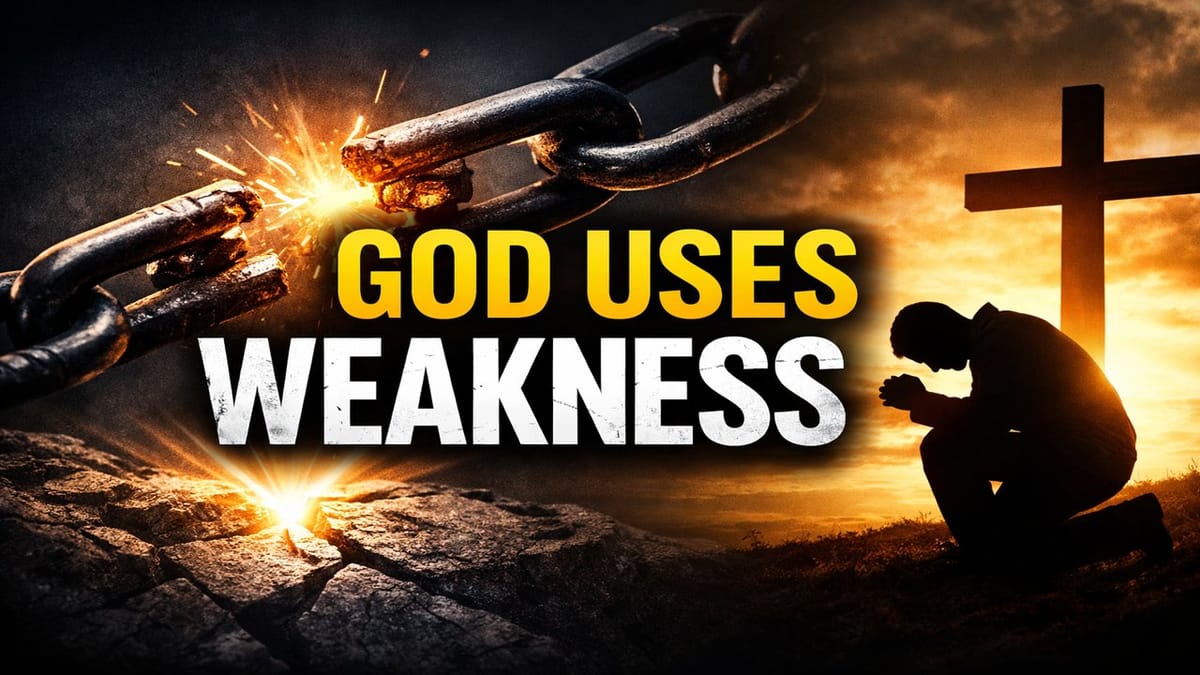
There is a quiet exhaustion that settles into a person who has spent years trying to hide what hurts. It is not always visible. It does not always show up in dramatic breakdowns or public confessions. Often it looks like success. It looks like competence. It looks like someone who has learned how to manage perception. But beneath the surface there is a constant calculation, a careful editing of the self, a steady effort to keep certain rooms of the soul locked and dimly lit. The fear is simple and ancient: if people see the weakness, they will see the unworthiness. If God sees the weakness, perhaps He will quietly move on to someone stronger.
Many believers carry this silent theology without realizing it. They affirm grace with their mouths, but in their bones they believe usefulness belongs to the polished. They assume that calling rests on the capable. They postpone obedience until confidence arrives. They delay stepping forward until doubt disappears. They imagine a future version of themselves who is finally free from insecurity, finally healed from the past, finally disciplined enough, fearless enough, stable enough to be entrusted with something meaningful. Until then, they wait in the shadows, apologizing inwardly for not being more impressive.
But what if the waiting is unnecessary. What if the weakness itself is not an interruption of purpose but the very architecture of it. What if the place you have labeled as disqualifying is in fact the precise location where God intends to demonstrate something unmistakably divine.
Scripture does not present a parade of flawless heroes. It presents men and women who are startlingly human. Consider the apostle Paul’s words in 2 Corinthians 12, where he describes a thorn in the flesh that he pleaded with God to remove. We are not told what the thorn was, and perhaps that omission is intentional so that no one can dismiss the passage by saying their struggle does not qualify. Paul, a man of revelation, discipline, intellect, and spiritual authority, carried something that pained him, limited him, and drove him to prayer. He asked for deliverance. Instead, he received a declaration: grace is sufficient, and power is made perfect in weakness.
The statement is not sentimental. It is structural. It reveals the way the Kingdom actually functions. Power does not merely coexist with weakness. It reaches its fullness there. The place of limitation becomes the canvas on which divine strength is most clearly seen. If that is true, then weakness is not an embarrassing footnote in the story of faith. It is a central theme.
Many people listening to these words know exactly what their thorn feels like. It might be anxiety that rises without warning, tightening the chest and clouding the mind. It might be a history of addiction that leaves lingering vulnerability. It might be a marriage that failed despite sincere effort. It might be a temper that flares too quickly, a body that does not cooperate, a memory that replays regret, or a fear of rejection that shapes every conversation. Some weaknesses are visible; others are hidden behind humor, work ethic, or spiritual language. All of them carry the same accusation: you are not enough.
The tragedy is not that weakness exists. The tragedy is that we try to exile it rather than understand it. We treat it as a trespasser instead of a teacher. We assume that if God truly loved us, He would remove the struggle. Yet again and again, the biblical narrative reveals a different pattern. Moses protested that he was slow of speech when called to confront Pharaoh. Gideon hid in fear when addressed as a mighty warrior. Peter denied Jesus in the moment of pressure. David was overlooked by his own father before he was anointed king. These are not side notes. They are the pattern. The calling of God consistently rests on those who are aware of their inadequacy.
Awareness of inadequacy is not the same as insecurity. Insecurity whispers that you are worthless. Awareness of inadequacy acknowledges that you are dependent. That difference changes everything. When a person believes they must be self-sufficient, weakness feels like a threat. When a person understands that dependence is the design, weakness becomes an invitation.
There is a profound intimacy born from dependence. A person who knows they cannot carry the weight alone prays differently. They do not perform eloquence; they cling. They do not negotiate from a place of pride; they surrender from a place of need. In that posture, something sacred unfolds. The relationship deepens. The awareness of God’s nearness becomes more than theology; it becomes oxygen.
Imagine for a moment that the anxiety you have fought for years is not merely an obstacle but a doorway. Imagine that in every episode, every racing thought, every trembling hesitation, there is an invitation to practice trust in a way that someone naturally confident never has to. Imagine that the compassion you extend to others who struggle is sharpened precisely because you know what it feels like to battle your own mind. That sensitivity, which you once despised, becomes the soil of empathy. The empathy becomes the bridge through which others encounter grace. What if the weakness you tried to bury is the very reason someone else feels seen.
Or consider the person carrying the weight of past moral failure. Shame can be a relentless narrator. It revisits old decisions and replays them in high definition. It suggests that while forgiveness might be theoretically available, influence is not. Yet the gospel itself is built upon restoration. The one who denied Christ became a bold preacher. The one who persecuted believers became a missionary. The story of redemption is not decorative; it is foundational. When a person who has fallen stands again, their voice carries a credibility that sterile perfection never could. They do not speak about grace as an abstraction. They speak about it as rescue.
This is where the heart begins to see itself in the narrative. You may not identify as a prophet or apostle, but you understand what it means to feel insufficient. You understand the quiet comparison that happens in crowded rooms. You understand the tension of wanting to step forward while fearing exposure. You understand the subtle self-sabotage that occurs when opportunity appears and you convince yourself that someone else is more qualified. In those moments, weakness feels like a verdict.
But what if it is a vessel.
A vessel is not admired for its own strength. It is valued for what it carries. If the vessel were flawless and dazzling on its own, attention would remain fixed on it. When the vessel is visibly fragile, the focus shifts to its contents. The apostle Paul went so far as to describe believers as jars of clay carrying treasure so that the surpassing power would be recognized as belonging to God and not to them. That imagery is not poetic exaggeration. It is theological clarity. The fragility of the container protects the glory of the One who fills it.
There is also a hidden mercy in weakness. Strength can be intoxicating. Talent can breed independence. Success can cultivate subtle pride. Weakness, when surrendered, keeps a person grounded. It keeps prayer from becoming optional. It keeps gratitude from fading. It reminds the heart that every breakthrough, every provision, every open door is grace. Without that reminder, it is easy to drift into self-congratulation.
Yet none of this means weakness is comfortable. It often feels like a thorn for a reason. It can be painful, humiliating, frustrating. It can tempt a person toward isolation. That is why the invitation is not to celebrate brokenness for its own sake, but to surrender it. Surrender is different from resignation. Resignation says this is just how it is and nothing can change. Surrender says I place this in God’s hands and trust Him to work through it, in it, and sometimes even despite it.
There is a difference between asking God to remove a weakness and asking Him to inhabit it. Removal might be immediate relief, but inhabitation is transformative. When God inhabits a weakness, it becomes a site of encounter. The very place you feared would repel Him becomes the place you discover He is already present.
Think about how often people assume that spiritual maturity looks like emotional invulnerability. They imagine a version of faith where fear no longer flickers, doubt never surfaces, and temptation is permanently silenced. Yet the New Testament letters are filled with exhortations to endure, to persevere, to stand firm. Those instructions imply ongoing struggle. Maturity is not the absence of battle; it is the choice to trust in the middle of it.
If you have ever felt disqualified because your struggle persists, consider the possibility that persistence does not signal rejection. It may signal reliance. The testimony is not always that the storm stopped. Sometimes it is that you were sustained within it. Sustaining grace does not draw as much applause as dramatic deliverance, but it is no less miraculous. Day after day, breath after breath, you remain. You continue. You hope. That endurance is evidence of something greater than willpower.
Picture a cathedral built from cracked stones. From a distance, the structure is majestic. Up close, you can see the fractures in each block. Those fractures do not compromise the building; they define its character. They tell a story of quarry and chisel, of pressure and placement. The strength of the cathedral is not in the perfection of each stone but in the design of the architect. In the same way, the beauty of a life surrendered to God is not in the absence of cracks but in the presence of divine design.
The fear of exposure often keeps people from stepping into community. They assume that if others knew the full story, rejection would follow. Yet vulnerability, when guided by wisdom, becomes the bridge to authentic connection. When one person has the courage to say this is where I struggle, it grants silent permission for others to exhale. Masks loosen. Walls lower. Grace circulates. The weakness you tried to hide becomes the doorway through which collective healing begins.
It is also important to recognize that weakness does not negate responsibility. Surrender does not excuse destructive behavior. There are habits that must be confronted, patterns that must be broken, wounds that must be addressed. But even that process is grounded in dependence. Transformation does not emerge from self-loathing; it emerges from grace. When you know you are loved in your weakness, you are empowered to grow beyond it. Shame paralyzes; grace mobilizes.
Many people have lived with a silent ultimatum in their hearts. They believe that once they conquer their weakness, then God will use them. Until then, they will remain in the background. But what if obedience is not waiting for confidence. What if obedience is stepping forward while trembling, trusting that the One who called you is aware of your limitations and has not miscalculated.
The cross itself reframes the definition of strength. From a human perspective, crucifixion was humiliation. It was vulnerability exposed. It was apparent defeat. Yet in that moment of apparent weakness, redemption unfolded. God has never been intimidated by fragility. He specializes in working through it. If the central event of Christian faith looks like weakness to the world, then perhaps our own vulnerabilities are not barriers but reflections of the pattern.
As you reflect on your own life, consider the area you most wish were different. The insecurity you try to overcompensate for. The memory you wish you could erase. The limitation you pray would disappear. Instead of asking only for removal, ask what might be formed in you through it. Ask how compassion, humility, patience, or perseverance might be cultivated in that space. Ask how your story might one day become someone else’s survival guide.
The weakness you carry may never become glamorous. It may not turn into a dramatic testimony that fills auditoriums. It may simply keep you close to God. It may keep your prayers honest. It may soften your responses to others. It may prevent pride from taking root. Those quiet transformations are not small. They are the architecture of a faithful life.
And perhaps the most tender realization of all is this: God is not surprised by your weakness. He saw it before you did. He called you anyway. He entrusted you with purpose anyway. He placed desires in your heart anyway. That calling was not issued under the assumption that you would become flawless. It was issued with full knowledge of your humanity.
When that truth settles in, hiding begins to lose its appeal. The energy once spent on maintaining an image can be redirected toward living authentically. The fear of being found out is replaced by the freedom of being known. You no longer have to construct a persona strong enough to impress heaven. You can come as you are, cracks and all, and discover that the Architect is already at work.
This is not a message of complacency. It is a message of courage. The courage to believe that God’s power does not wait for your perfection. The courage to step into calling while aware of your limitations. The courage to let grace be sufficient, not as a slogan, but as a lived reality. In that courage, weakness stops being a verdict and becomes a vessel. And from that vessel, something enduring begins to rise.
There is a sacred turning point in a person’s life when they stop asking, “How do I get rid of this weakness?” and begin asking, “How might God use this?” That shift does not happen in a moment of hype. It happens quietly. It often happens after disappointment. After prayer that did not produce the expected outcome. After the realization that the struggle did not vanish with maturity. It happens when a person grows tired of fighting their own humanity and begins to place it honestly before God.
That turning point is not defeat. It is alignment.
Many believers have been shaped by an unspoken equation: strength equals usefulness. But the longer you walk with God, the more you see that usefulness flows from surrender. Strength that is rooted in ego can accomplish impressive things, but it does not necessarily produce eternal fruit. Surrender that is rooted in trust becomes fertile ground for impact that cannot be explained by personality or talent.
When Paul wrote about his thorn in 2 Corinthians 12, he did not romanticize pain. He admitted he asked for it to be removed. That honesty matters. There is no virtue in pretending that weakness feels pleasant. It does not. It can feel humiliating. It can feel like a ceiling. It can feel like a constant reminder that you are not self-sufficient. Yet the answer he received reframed everything. Grace was not a consolation prize. It was the mechanism through which divine power would be displayed.
That means weakness is not an interruption of calling. It is woven into it.
Think about the people who have impacted you most deeply. It is rarely the person who seemed untouchable. It is often the one who spoke from scars. The one who admitted they did not have all the answers. The one who shared their struggle without dramatizing it. There is something profoundly disarming about honesty. It creates space. It dismantles isolation. It whispers to the listener, “You are not alone.”
Isolation thrives in hidden weakness. It tells you that your struggle is unique, that others have outgrown what still grips you. But the gospel dismantles that lie. It insists that every person stands on equal ground at the foot of the cross. No one arrives by merit. No one is sustained by perfection. All of us depend on grace.
When you begin to see your weakness as a shared human reality rather than a private disgrace, compassion begins to grow. The judgment that once surfaced when others stumbled softens. You recognize yourself in their story. You remember what it feels like to wrestle. That humility becomes a gift. It allows you to serve without superiority. It allows you to lead without pretending you are immune to the very battles others fight.
There is also a deeper layer to consider. Weakness has a way of exposing false foundations. If your identity is built on competence, then incompetence feels catastrophic. If your worth is built on achievement, then failure feels annihilating. But when identity is rooted in being loved by God, weakness loses its power to define you. It may still challenge you, but it cannot erase you.
This is where the heart begins to heal.
Imagine a person who has spent years believing that their anxiety makes them spiritually deficient. They attend church. They read Scripture. They pray. Yet panic still visits. They begin to question whether their faith is authentic. But then they encounter the truth that faith is not the absence of fear; it is trust in the presence of it. They realize that every time they choose to lean on God while their heart races, they are exercising faith. The weakness that once felt like proof of failure becomes the arena where trust is practiced daily.
Or imagine someone carrying the weight of a past addiction. They fear that their history will always overshadow their future. But as they walk in recovery, they begin to speak honestly about their journey. Others listen. Some quietly approach afterward and say, “I thought I was the only one.” Suddenly, the very chapter they wished had never existed becomes the chapter that opens doors. It does not glorify the addiction. It glorifies the grace that carried them through it.
This is how weakness becomes a witness.
The transformation is not always dramatic. It often unfolds slowly, through repeated choices to surrender rather than hide. Each time you resist the urge to pretend you are stronger than you are, you create space for authenticity. Each time you admit need rather than projecting control, you create space for grace. Over time, that pattern shapes character.
Character formed in weakness has a depth that cannot be manufactured. It understands patience because it has waited. It understands mercy because it has needed it. It understands perseverance because it has endured. That depth is not loud, but it is steady. And in a world obsessed with image, steadiness is powerful.
There is also something profoundly freeing about recognizing that God does not require you to impress Him. He is not evaluating your performance with a clipboard. He is not scanning your life for signs that you have finally become worthy of His investment. He knew your limitations before you did. He saw your tendencies, your temperament, your history. He called you anyway.
That truth dismantles the fear that you must outgrow your humanity to be used. Instead, you begin to see that your humanity, surrendered, becomes the very medium through which God works. The cracks are not patched over to create the illusion of perfection. They are filled with light.
Picture light passing through fractured glass. The fractures do not stop the light; they refract it. They create patterns that would not exist in a flawless pane. In the same way, the places where you have felt broken can refract grace in unique ways. The comfort you offer carries weight because you have needed comfort. The wisdom you share carries credibility because you have learned it through experience. The hope you speak carries resonance because you have clung to it when circumstances argued otherwise.
None of this suggests complacency. Growth remains essential. Healing remains worth pursuing. Discipline remains necessary. But growth does not emerge from self-hatred. It emerges from love. When you know that God’s affection for you is not suspended until you fix yourself, you are free to pursue change without panic. You can confront weakness without being crushed by it.
There is a quiet confidence that forms when you embrace this perspective. It is not the confidence of self-sufficiency. It is the confidence of dependence. You no longer need to be the strongest person in the room. You no longer need to have the final word. You no longer need to mask uncertainty. You can say, “I do not have all the answers, but I trust the One who does.” That posture is not fragile. It is grounded.
As you reflect on your own life, consider the area that still makes you hesitate. The place where you feel exposed. The story you are tempted to edit. What if that very place is the seedbed of your most meaningful impact. What if your willingness to bring it into the light becomes the catalyst for someone else’s freedom.
God has always delighted in using unlikely vessels. Not to humiliate them, but to reveal Himself. When the outcome exceeds the apparent capacity of the person involved, attention shifts upward. That shift protects the heart from pride and directs glory where it belongs.
Your weakness does not disqualify you from purpose. It clarifies the source of it. It reminds you that whatever fruit emerges is not self-generated. It keeps you near to the One who sustains you. It cultivates gratitude rather than entitlement. It shapes a life that is not built on image, but on intimacy.
In the end, the question is not whether weakness exists. It does. The question is what you will do with it. You can continue to hide it, allowing shame to define the narrative. Or you can surrender it, allowing grace to rewrite the story. The cathedral is not built from flawless stone. It is built from pieces that have been shaped, chipped, and placed according to a design greater than themselves.
You are not disqualified because you have cracks. You are human. And in your humanity, surrendered, God is at work.
The part of you that feels least impressive may be the very place where heaven intends to move. The struggle you wish would vanish may be the space where dependence deepens. The weakness you once tried to bury may become the testimony that sets someone else free.
Do not wait to feel strong enough. Step forward in trust. Bring the whole of yourself before God, not the edited version. Let grace be sufficient, not as a slogan, but as a lived reality. In that surrender, you will discover that weakness is not the end of your story. It is the doorway through which divine strength enters and remains.
Your friend,
Douglas Vandergraph
Watch Douglas Vandergraph’s inspiring faith-based videos on YouTube https://www.youtube.com/@douglasvandergraph
Support the ministry by buying Douglas a coffee https://www.buymeacoffee.com/douglasvandergraph