Jesus in Fort Collins and the People Who Looked Fine From a Distance

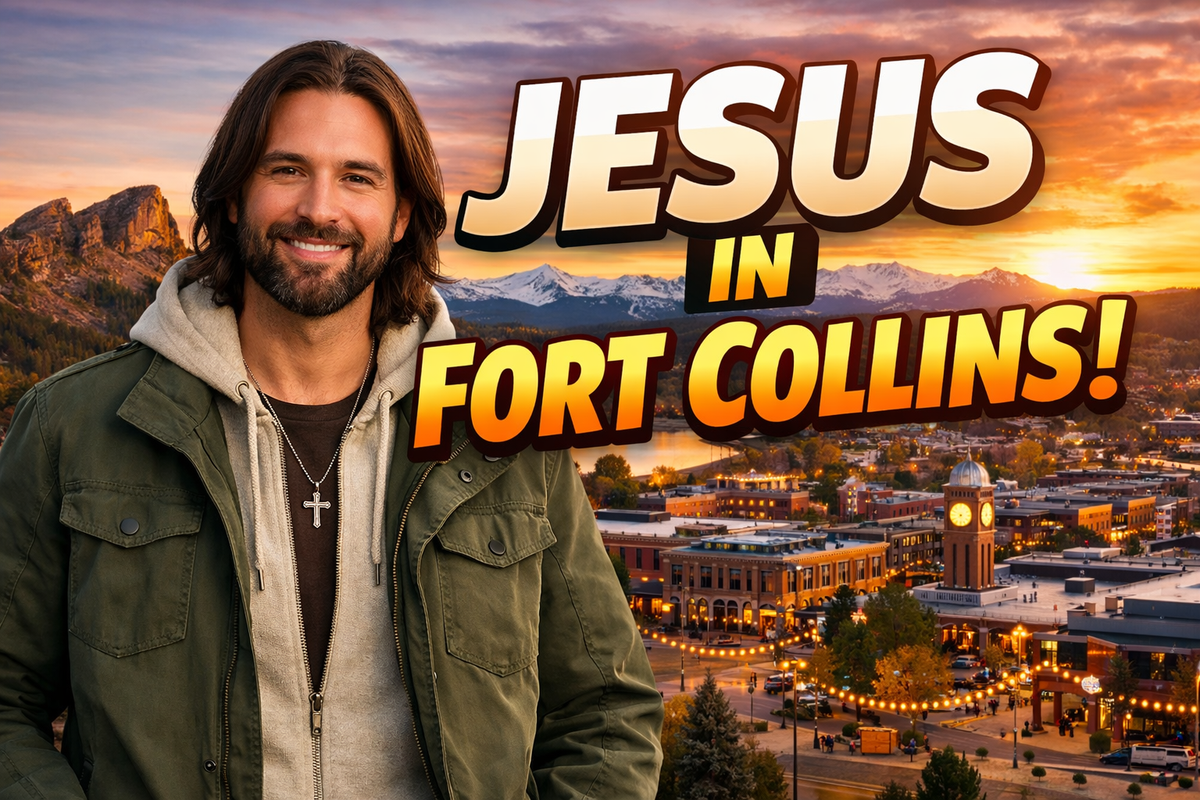
Before the sun came up over Fort Collins, while porch lights still held their place against the dark and the town had not yet fully decided to wake, Jesus was kneeling in the quiet on the Oval at Colorado State University. The air carried that thin morning cold that slips through a jacket and finds the skin anyway. The grass held a silver edge of frost. The elm branches rose above Him like old hands spread open against the pale sky. He was still there in the hush, bowed and unhurried, as though the whole city could keep racing if it wanted to and He would not let its speed tell Him what mattered.
A few miles away, Leah Morgan sat in her car with both hands tight around the steering wheel and the engine running though she had nowhere else to go. She was parked off Old Town, not far from the place she had opened almost every weekday for six straight years, and she was trying to gather enough strength to get out, unlock the door, and become the woman everyone expected her to be again. Reliable Leah. Capable Leah. The one who remembered orders, covered shifts, fixed mistakes, took extra calls, smiled at strangers, and said no problem even when every part of her life was a problem.
That morning she had already cried once before leaving the house, though not enough to feel any better. Her seventeen-year-old son, Owen, had walked through the kitchen without touching the breakfast she made, taken his backpack, and said he would eat later, which usually meant not at all. He had his father’s jaw now and his father’s silence too. Her mother had called at 5:12 in the morning from assisted living, confused again, asking why nobody had come to get her from school. The rent had gone up in January. The transmission in Leah’s car had started slipping on turns. The owner of the café had texted the night before to ask if she could take on more weekend hours because payroll was tight and nobody else could be trusted. Leah had typed yes before she even finished feeling angry about it.
Now she sat there with her forehead near the steering wheel and a terrible thought rising inside her. Not a dramatic thought. Not the kind that breaks glass. The more dangerous kind. The one that arrives quietly and sounds reasonable.
What if I just do not go in.
Not forever. Not in a grand way. Just today. Just one day where the whole machine has to learn it can grind without her bones in it.
She stared through the windshield until the lights in the rearview mirror blurred. She did not want to die. She did not want to disappear. She wanted relief so badly that even the idea of letting people down felt almost soft.
On the Oval, Jesus lifted His head.
The town did not know what kind of day it was about to have. People were turning on showers, opening garage doors, pulling on scrubs, boots, aprons, slacks, leggings, uniforms, polished versions of themselves. A young father near Rigden was trying not to snap at his little daughter because she had spilled orange juice on the only clean shirt he had left for work. A retired man in a small apartment off College Avenue had been awake since 3:40, staring at a photo of his wife and wondering how many more mornings he would have to survive without hearing her voice. A university employee on the south side of campus was already drafting the apology he would never send to his grown daughter because pride had calcified into a shape he no longer knew how to move. A teenage girl in a bathroom mirror near Fossil Creek was covering the shadows under her eyes and telling herself nobody could tell she had started feeling numb on purpose.
Most of them would have said they were fine if asked the right way.
That was one of the things Jesus noticed first.
He stood from prayer without hurry. The light had shifted only a little. A cyclist passed at the far edge of the path and did not know who he had just ridden by. The world was full of moments like that. Holy things standing in plain sight while people rushed past because their minds were already at 10:30, already at the bill, already at the email, already at the argument, already at the next place they needed to be needed.
As He walked off the Oval, a grounds worker was unloading tools from a utility cart near one of the older buildings. He looked to be in his late fifties, broad shouldered but tired around the eyes, with the kind of face that had spent years outside in Colorado light. He kept checking his phone, then locking it, then checking it again as if disappointment might change if he kept opening it from a different angle.
Jesus stopped near him.
“You are waiting for a message,” He said.
The man looked up, half guarded, half embarrassed. “Aren’t we all.”
Jesus smiled a little. “Not like this.”
The man let out a breath through his nose. “My daughter was supposed to call last night. She didn’t. We haven’t talked right in months. I keep telling myself she’s busy. Then I keep checking anyway.”
“What would you say if she answered now?”
The man looked back at the phone in his hand. “Depends what version of me picked up.”
Jesus did not move. “Which version have you been practicing?”
That landed harder than the man wanted it to. He shifted his weight and stared out toward the path. “The one who acts like I’m not hurt. The one who acts like she’s the whole problem. The one who says I did my best.”
“And is that the truth?”
The man swallowed. His voice came out lower now. “Not all of it.”
Jesus nodded toward the phone. “Then when she calls, do not protect yourself with half the truth.”
The man gave a small, tired laugh. “That’s easy for you to say.”
“It will not be easy for you to do,” Jesus said. “But it will be cleaner than living inside the same wall another year.”
The man studied Him then, more carefully than before. Something in Jesus made people feel seen before they had decided whether they wanted that. It was unsettling at first. Then, if they were honest, relieving.
“Do I know you?” the man asked.
Jesus only said, “You are not only waiting for your daughter. You are waiting for the courage to stop speaking from your pride.”
Then He walked on.
The man stood with the phone in his hand and did not unlock it again for a while.
Leah finally got out of the car because habit can drag a person farther than hope some mornings. The streets around Old Town were beginning to move. Delivery trucks were appearing. The sky had turned that color that is not yet gold but promises it. She unlocked the side door of the café, disarmed the alarm, stepped into the dark room, and felt a wave of resentment so strong it made her dizzy.
She turned on lights. She started grinders. She counted the till. She set pastry trays. She checked the espresso machine, restocked lids, pulled chairs down, wiped a counter that was already clean. Her body knew the order better than her mind did. That was part of what scared her. She could perform an entire morning with almost nothing left inside her.
At 6:14, Tessa came in late.
She was nineteen, a CSU sophomore, sharp and funny when she had sleep, and carrying something in her these last few weeks that had made her more careless around the edges. Her apron was half stuffed into her tote bag. Her hair was up badly. Her eyes were puffy like she had either cried or not slept or both.
“Sorry,” she said. “Train held me up by Mason.”
Leah was scraping burnt crumbs from a tray, and the apology hit her on the wrong nerve at the wrong second.
“You’re always sorry lately.”
Tessa stopped. “Okay.”
“I do not need okay. I need you here when you’re supposed to be here.”
“I said I was sorry.”
“And I said I need something besides sorry.”
The room went tight.
Tessa set her bag down harder than she meant to. “I’m here now.”
Leah turned toward her with the tray cloth still in her hand. “That’s not the point.”
“Then what is the point, Leah? Because every time I walk in here lately it feels like you’re waiting to be mad at me for something.”
Leah should have stopped. She knew that even as she kept going. “Maybe I’m tired of being the only person in this place who acts like any of this matters.”
Tessa’s face changed. Not loud. Worse than loud. Hurt, then shut.
“Got it,” she said.
“No, you don’t.”
But the girl had already tied on the apron and turned away.
There are moments when a person hears themselves from the outside and knows exactly who they have become in that instant. Leah hated that sentence as soon as it left her mouth, but there was no clean way to call it back. The door unlocked at 6:30 and the first customers came in with their dogs and laptops and pleasant voices, and the day began pretending everything was ordinary.
By 7:20 the line had reached the door. A man in running clothes wanted oat milk but not too much foam. A mother with two small kids apologized for the stroller blocking the pastry case. Someone complained the drip tasted weak. A delivery order printed crooked and had to be remade. The owner texted to ask if Leah could stay late because the afternoon shift might be short.
She was carrying a tray of mugs from the back when one slid, struck the edge of the counter, and shattered across the floor.
The sound snapped through the room.
A few people turned. Tessa flinched. Leah stood there for one second longer than she should have, staring down at the pieces.
“I’ve got it,” Tessa said quietly.
Leah bent to help anyway, and that was when she noticed a man standing just beyond the entrance line, not impatient, not distracted, simply watching with a kind of full attention nobody offered anymore unless something had gone badly wrong.
He did not look theatrical. He did not glow. He did not carry the strain of someone trying to seem important. He looked like a man who had walked a long way and was not burdened by it. There was steadiness in His face. Not blankness. Not passivity. Steadiness. The kind that makes frantic people feel both exposed and invited.
Leah rose with a broken handle in one hand.
“Can I help you?” she asked, more sharply than she meant to.
“Yes,” He said.
There was no edge in Him. That somehow made her sharper.
“What can I get you?”
“A glass of water would be good.”
She almost told Him they were in the middle of a rush, as if He could not see that. Instead she filled a glass, set it on the counter, and turned back toward the machine.
“You have not slept,” He said.
Leah looked over.
It was not a guess. He said it too plainly.
“I’m fine,” she replied.
He rested one hand near the glass but did not reach for it yet. “That is not what I said.”
A customer stepped up. Leah took the order. Another wanted a refund on a mistaken size. Tessa called out a name. Milk hissed. Cups stacked. Someone laughed too loudly near the front. But even with all of that happening, Leah was aware of Him still standing there, not pressing, not moving on, as if He had all day and knew exactly where it belonged.
When the line thinned for one brief minute, she came back.
“Look,” she said in a low voice, “I don’t know you, and I’m working.”
“Yes.”
“So if you want water, you have it.”
He took a drink, set the glass down, and said, “They are thanking you for carrying what should have been shared.”
Her chest tightened.
She crossed her arms. “You don’t know anything about me.”
“I know the shape of this kind of tired,” He said. “It is the tired that comes after people start admiring your endurance instead of helping your pain.”
For a second she forgot where she was. It felt like being struck without violence.
Tessa called her name from behind the machine.
Leah glanced away, then back. “Who are you?”
But a customer stepped between them to ask for extra napkins, and when Leah finished answering and looked again, He had taken the glass, thanked Tessa instead, and stepped back outside into the morning crowd.
She told herself to let it go. People say odd things. People project. People guess. But the sentence followed her anyway.
Admiring your endurance instead of helping your pain.
She hated how true it felt.
Outside, Jesus moved through Old Town Square as the city brightened around Him. Workers rolled open storefronts. A pair of friends in hiking clothes were deciding where to grab breakfast before driving west. A mother knelt to zip her little boy’s coat. Two older men were already arguing softly about politics as if no other subject had ever been invented. A woman in business clothes walked with the posture of someone late to her own collapse.
Near a bench, a man in his mid-thirties sat with a little girl beside him. She wore a purple coat and held a stuffed rabbit by one ear. The man had the look of someone trying very hard not to let his child become responsible for his mood. He kept smiling at her a second too late.
“Is Mom coming?” the girl asked.
“She’s just running behind,” he said.
She looked up at him. “You said that last time.”
He gave her a smile that did not survive his eyes. “I know.”
Jesus sat at the far end of the bench without crowding them.
The girl looked at Him first. Children often did. “Hi.”
“Hello,” Jesus said.
The father gave a polite nod, then checked his phone for what had to be the sixth time in two minutes.
“You are preparing yourself to be angry,” Jesus said.
The father looked over, caught off guard. “Excuse me?”
“You are rehearsing the speech in your head.”
The man stared at Him, then gave the kind of tight laugh people use when they want to deny something without fully lying. “You must be very observant.”
“I am.”
The little girl leaned against her father’s arm. “He is mad a lot now.”
“Lily,” the man said softly.
“It’s okay,” Jesus told her. Then to the father, “You are afraid that if you stop being angry, all that is left is hurt.”
The man’s jaw tightened.
After a few seconds he said, “You don’t know what she did.”
Jesus looked at the child beside him, then back at the man. “I know your daughter is learning what love feels like from the version of you that divorce left behind.”
That man had been running on injury for so long he had started confusing it with identity. He looked down at Lily, who was tracing the bench slat with one finger. Shame moved through his face, but it was the useful kind, the kind that opens instead of hardens.
“I’m trying,” he said, almost under his breath.
“I know,” Jesus said. “But trying is not the same as healing.”
The father swallowed and nodded once. When he looked up again, he seemed less defended and more tired, which was often a better beginning.
As Jesus left the Square and walked north, He passed Tessa out behind the café by the service alley, standing near the recycling bins with her back against the brick wall and both hands over her face. She dropped them quickly when she heard footsteps.
“I’m on break,” she said before He even spoke.
“Yes.”
She looked embarrassed, then irritated that she looked embarrassed. “Do people around here always answer in one word.”
“Not always.”
That drew the smallest unwilling breath of humor from her, but it vanished fast. She looked at the pavement.
“She hates me lately,” Tessa said.
“No.”
Tessa frowned. “You were inside. You heard her.”
“I heard a woman drowning speak from under the water.”
The girl went quiet.
That was the kind of sentence young people remembered even when they wished they did not.
Tessa folded her arms. “So what, I’m supposed to just take it because she has problems?”
“No.”
“Then what?”
Jesus leaned back lightly against the wall across from her. “You have started using carelessness as a shield.”
She looked at Him hard. “You don’t know me either.”
“You were not late because of a train.”
The color shifted in her face.
“My brother called at three this morning,” she said after a while. “He was drunk again. My mom kept handing him the phone because she thinks he listens to me. He doesn’t listen to anybody. Then I overslept.”
Jesus said nothing.
Tessa looked away toward the alley opening. “I had a test yesterday. I didn’t even go. I told myself I’d email the professor. I still haven’t. I keep letting little things slide because I’m tired and then they become big things and then I’m more tired because now they’re big.”
“You are trying to survive chaos by becoming vague.”
That one made her laugh once, though there were tears behind it. “That sounds so stupid when you say it like that.”
“It felt less stupid when you were calling it coping.”
She wiped at her face with the heel of her hand. “I used to be good at things.”
“You still can be,” He said. “But not while pretending confusion is rest.”
She stared at Him.
Young people were used to being told they were either fragile or lazy. It startled them to be addressed as if they were honest souls standing in front of real choices.
“What am I supposed to do?” she asked.
“Tell the truth in one place today. One real place. Start there.”
“Like what. To Leah?”
“If that is where the truth belongs first.”
Tessa looked back toward the café door. “She won’t care.”
Jesus answered gently, “That is not the same as you not saying it.”
When she went inside, she was still unsure what to do with Him, but something inside her had straightened.
By late morning the sky had cleared into that bright Colorado blue that can make a hard life look easy from far away. Leah made it to eleven-thirty before she told Tessa she was stepping out for ten minutes. Tessa only nodded. The distance between them had become clean and cold.
Leah walked without deciding where. She crossed toward Mason and followed the trail because movement felt easier than stillness. Bikes passed. A man pushed a stroller one-handed while answering a call on speaker. A woman in scrubs sat on a bench eating crackers over a chart note. Somewhere nearby, the MAX line hummed through another ordinary pass of the city.
Leah stopped under a thin strip of shade and pressed the heels of her hands into her eyes until color flashed behind them. She did not want to cry in public. She did not want to cry anywhere. Crying took energy and she needed every bit of energy for later.
“You are angry because you are afraid that if you stop, everything you have been holding will hit the ground.”
She lowered her hands.
Jesus was standing a few feet away as if He had simply arrived at the place where the truth needed to be said.
Leah did not even ask how He found her. Something in her was past that kind of question.
“People keep doing that today,” she said.
“Doing what?”
“Talking to me like they know me.”
He stepped closer, though not enough to make her pull back. “I know you are tired of being necessary in rooms where no one asks what it costs you.”
Her face tightened. “You think you’re the first person to notice I’m stressed?”
“No,” He said. “I think most people noticed and benefited.”
That broke something open.
Not loudly. Not dramatically. Just enough.
Leah looked away because tears had come too fast and she hated crying in daylight. “I can’t do this right now.”
“You have been doing this for a long time.”
“No, I mean this.” She made a helpless motion between them. “Whatever this is.”
“It is being seen without having to perform.”
That sentence hurt more than the others because it named what she had missed without knowing she missed it.
A cyclist passed. Two students laughed farther down the trail. The whole city kept moving like nothing sacred was happening beside it.
Leah swallowed hard. “I have people depending on me.”
“Yes.”
“My son barely talks to me. My mother thinks I’m her sister half the time. I work for a man who calls me family every time he wants free labor. Everybody says I’m strong and I’m starting to hate them for it.”
Jesus listened the way only the completely present can listen.
Then He said, “You think strength means never becoming a burden.”
She stared at Him.
He went on. “So you offer service where you need care. You give solutions where you need comfort. You answer texts while your own heart goes unanswered. Then you call it love because calling it abandonment would force the truth.”
Leah let out one broken sound and covered her mouth immediately.
She had not cried like that in front of a stranger since she was a child. It came out of her before dignity could stop it.
“I don’t know how to need anything anymore,” she said.
Jesus’ voice stayed low. “That is why you are beginning to disappear inside your own usefulness.”
The trail, the city, the noon light, all of it seemed to hold still around that.
Leah bent forward with both hands on her knees as if the truth itself had weight. She had spent years telling herself she was simply tired, simply overbooked, simply in a hard season, simply making sacrifices like adults do. But this was different. This was the first time anyone had touched the deeper wound. Not overwork. Not stress. Not bad timing. The slow erasure that comes when a person is praised for functioning while their soul goes untouched.
After a while she straightened.
“What do I do now?” she asked, and there was no challenge left in it.
“You tell the truth somewhere it will cost you.”
She gave a wet laugh. “That sounds terrible.”
“It will feel cleaner than this.”
She looked at Him through the remains of tears. “And then what. Everything gets better.”
“Not all at once.”
“Then what’s the point?”
Jesus glanced down the trail where cotton from some nearby tree had started lifting through the air in white little drifts. “The point is that truth opens what pretending keeps sealed.”
Leah wiped her face. “I don’t have time to fall apart.”
“I am not asking you to fall apart,” He said. “I am asking you to stop calling your collapse faithfulness.”
That was the moment she knew she would not be able to go back to the day she was having before this conversation. She might still go back to the café. She might still clock in, finish shifts, answer texts, drive home, pay bills, check on her son, call the facility, fold laundry. But something false had been named, and once named, it could not comfortably live in the dark again.
A buzz sounded from her phone. She looked down. It was the assisted living center. Her stomach dropped.
She answered fast. “Hello?”
The nurse’s voice was calm. Her mother had become agitated. Nothing catastrophic. They wanted Leah to come if she could because she was asking for her.
Leah closed her eyes.
“Yeah,” she said. “I’ll come.”
When she lowered the phone, she looked for Jesus, and for one second panic moved through her that He might be gone. But He was still there.
“I can’t keep leaving work,” she said.
“No,” He said. “You cannot keep leaving yourself either.”
She breathed out hard.
Then, from farther down the trail, a voice called her name.
It was Tessa, jogging toward them, slightly out of breath, apron off, tote bag half open at her side.
“Leah,” she said, slowing as she reached them. She glanced once at Jesus, then back to Leah. “I’m sorry. Not just late. I mean actually sorry. I’ve been a mess and I haven’t said anything because I didn’t want to sound like I was asking for special treatment, but my brother’s spiraling and I’m not doing great and I think I’m starting to wreck things because I’m acting like if I stay vague long enough none of it becomes real.”
Leah just looked at her.
The exact phrase was not hers. She knew that. Jesus said nothing.
Tessa kept going because once truth starts coming it hates being stuffed back down too soon.
“I should’ve told you. And you were wrong this morning, but you also weren’t fully wrong, and I don’t know how to say that better. I’m slipping.”
Leah’s first instinct was to manage the moment. To reassure. To smooth it. To act okay for both of them. She felt that old reflex reach for control.
Then she heard again, tell the truth somewhere it will cost you.
So instead of management, she gave honesty.
“I’m slipping too,” Leah said.
Tessa blinked.
Leah looked down once, then back up. “I’ve been taking my whole life out on whatever is closest to me. Today that was you.”
The girl’s face softened. Not fixed. Softened.
The wind moved through the strip of trees beside the trail. A train sounded somewhere beyond the city blocks. Fort Collins kept doing what cities do, unaware that three people had just stepped into a cleaner kind of air.
Leah turned toward Jesus.
But the words that rose in her did not come out first as questions.
They came out as need.
And that was where the afternoon truly began.
Jesus looked at Leah, then at Tessa, and for a moment neither woman spoke because both of them knew something had shifted beyond mood and beyond coincidence. The trail no longer felt like a place they had accidentally landed. It felt like one of those places life brings a person when pretending has finally become heavier than truth. Leah was the first to breathe again, though it came unevenly. “I have to go see my mother,” she said. “And I have to call my boss, and I already know how that’s going to go.” Jesus nodded as if He had already heard the conversation in the shape of her fear. “Then do not prepare your words to make him comfortable,” He said. “Tell the truth plainly.” Tessa looked between them, still trying to understand why standing near Him made excuses feel thin. “What about me,” she asked. “Do I go back in there and act normal.” Jesus turned to her. “No. Go back in there and act honest.”
Leah called from the edge of the trail because if she sat in the car first she might lose her nerve. The owner answered on the second ring already sounding rushed, already halfway inside his own needs. She told him the facility had called and her mother needed her. He gave the first expected response, which was practiced sympathy shaped around inconvenience. Then he gave the second expected response, which was pressure dressed up as appreciation. He reminded her they were short. He reminded her Saturdays had been rough. He reminded her she was the one person he could count on. Leah closed her eyes because every version of her old self wanted to surrender right there and call it responsibility. Then she heard again the sentence Jesus had spoken on the trail, that line about telling the truth where it cost her, and she understood how much of her life had been built on making everyone else’s day easier by making her own heart disappear. So she said, in a voice that shook only a little, “I need to leave now, and I need tomorrow morning off. I cannot keep absorbing every gap in this place. I know that puts you in a bind, but that is the truth.” There was a pause on the other end, and it was not the pause of compassion. It was the pause of someone encountering a boundary where he had come expecting access. “This is not a great time for that,” he said. Leah almost laughed because of course it was not. Truth rarely arrives at a convenient time for the people who benefit from your silence. “I know,” she replied. “That doesn’t make it less true.”
Tessa went back to the café with her pulse thudding and found the room exactly as she had left it, which almost made her angry. Orders still came in. Milk still steamed. Names still got called. It offended her a little that the world could keep moving while something inside her had just been exposed. She stepped behind the counter, took two drinks down the line, then caught Leah’s eye. Leah came close enough to hear. “I’m leaving,” she said. “I told him.” Tessa nodded, then swallowed and said the thing she had not planned to say until she was already saying it. “I emailed my professor from the alley. I told him I missed the test because my life is a mess and I’ve been hiding behind vague excuses. He may not care, but at least now the lie is gone.” Leah looked at her for one long second, and this time there was no hardness in it. Only recognition. “Good,” she said. “That matters.” Tessa gave a small, uncertain laugh. “It doesn’t feel good yet.” Leah picked up her bag. “Most clean things don’t at first.”
Jesus did not ride with Leah, but when she drove east and then north through the city’s midday light, she had the unshakable sense that He was not absent from the road. Fort Collins looked almost offensively ordinary that afternoon. People sat on patios. Traffic lights changed with their usual indifference. A dog leaned out of a truck window near Mulberry with the kind of joy human beings rarely permit themselves anymore. Someone jogged across an intersection with earbuds in and a face full of determination. It was strange how a city could look so whole while so many of the people inside it were splitting quietly in half. Leah thought about all the years she had admired people for being strong, and all the years others had admired her for the same reason, and it struck her that much of what passed for strength was often just unloved pain wearing shoes and going to work.
The facility where her mother lived had a small courtyard with a few metal chairs and a view of bare branches against the clean Colorado sky. The building smelled faintly of disinfectant and old coffee and the sad sweetness of flowers people bring when they do not know what else to bring. Leah signed in, passed the front desk, and followed the nurse down the hall where televisions murmured from half-open doors and somebody farther down was calling for a husband who had likely been dead for years. Her mother, Carol, was sitting near the window in a soft blue sweater, turning a tissue over and over in her hands as if it were something she had been asked to remember. When Leah walked in, her mother looked up and smiled with immediate relief, the kind that still arrives before memory sorts out the names.
“There you are,” Carol said. “I told them my sister would come.”
Leah felt the old ache rise, the one she had never found a righteous way to carry. Grief would have been simpler if her mother had gone all at once. This slow fading left Leah with a mother who was still physically present enough to stir longing and absent enough to wound it. She sat in the chair beside her and took her hand. “I’m here,” she said. Her mother looked at her face carefully and then beyond it, as if she were searching a room from forty years ago and this one at the same time. “Did the boys get home,” Carol asked. Leah nearly corrected her, then stopped. There were no boys waiting at home now. Only Owen, almost grown, and even he felt far away lately. “Not yet,” Leah said softly. “Not yet.”
Jesus was standing just outside the open doorway when Leah lifted her head again. No nurse had announced Him. No one had asked how He got there. He simply stood in that hallway light with the same calm presence He had carried all day, as though confusion itself could not make Him lose His footing. Her mother turned toward Him too, and something changed in her face. The cloudy restlessness eased. “You came,” Carol said, and her voice held the strange certainty of the very old and the very young. Jesus stepped into the room and knelt beside her so that His eyes were level with hers. “Yes,” He said. “I came.” Carol studied Him in silence and then smiled in a way Leah had not seen in months, simple and unguarded, like a woman greeting someone she trusted before words were needed. “I’ve been forgetting things,” she whispered. Jesus took the tissue gently from her hand and folded it once. “You are held even where memory cannot hold,” He said.
Leah turned away because tears had come again and she was tired of being ambushed by them. She moved toward the window and looked out into the courtyard until the blur passed enough for her to see. Behind her, Jesus spoke to Carol with that same gentle weight He carried with everyone, not talking over her confusion, not correcting it like it was an inconvenience, but meeting her where it was. He asked whether the sunlight on the glass felt warm. He asked if she could hear the birds in the branches. He spoke to her as though she were still fully worthy of unhurried presence, which is something the confused and forgotten rarely receive once they become difficult to categorize. After a few minutes her mother grew drowsy, and Leah helped settle the blanket over her lap. Then, just before her eyes closed, Carol looked up at Leah with a sudden shard of clarity sharp enough to pierce straight through the fog.
“You were always the one who kept standing,” she murmured. “Even when you should have sat down.”
Leah froze.
Her mother’s gaze drifted again, but the sentence remained. It had not sounded like random memory. It sounded like something old and true making one final clean pass through the room before disappearing again. Leah sat there with her hand still on the blanket and felt the line enter her in the same place the other truths had entered that day. She had been standing for years. Standing in kitchens. Standing behind counters. Standing between her son and his father’s silence. Standing between her mother and the pieces of a mind that no longer obeyed. Standing between every crisis and the people who wanted it solved. She had called it love. She had called it adulthood. She had called it being the dependable one. But beneath all the naming, there was also fear. If she sat down, if she admitted weakness, if she let herself need anything, would anyone come near her without first asking what she could still do for them.
When they stepped back into the hallway, Jesus did not rush her out of the ache. He let her carry it for a few breaths before He spoke. “Your mother remembers more than you think,” He said. Leah wiped under her eyes. “Not enough to make this easier.” “No,” He said. “But enough to place one piece of truth in your hands.” She leaned back against the wall with the kind of exhaustion that feels almost hollow. “I don’t even know how to start changing a life that got this way slowly.” Jesus looked down the hallway where an orderly was helping a resident toward lunch and a woman in a wheelchair was singing softly to herself. “Most lives are changed slowly,” He said. “The trouble is that people only honor dramatic turning points, so they keep waiting for thunder while mercy is trying to enter through smaller doors.” Leah let that settle. It was exactly the kind of thing she needed to hear because she had spent years believing that unless something shattered, nothing counted.
Her phone buzzed again. This time it was the school. There had been several missed assignments. Owen had left before lunch. They wanted to make sure she was aware. Leah thanked the counselor, listened, apologized for not knowing more than she knew, and hung up with a fear that sat low and cold. A familiar response rose immediately. Anger. Not because anger was truer, but because it felt easier to carry than worry. She could already hear the old conversation forming in her mind before it happened. Where were you. Why aren’t you answering. Do you know how much I’m dealing with. She almost started the text right there. Then she remembered the father on the bench, the way Jesus had named his rehearsed anger for what it was, hurt trying to avoid its own face. Leah deleted the first words she typed and stood still.
“What do I say,” she asked.
Jesus answered without hesitation. “Say what is true, not what is efficient.”
So she wrote, I’m not texting to lecture you. I know I’ve been speaking at you more than with you. I need to see you. Please tell me where you are.
She stared at the message before sending it because it felt too exposed, almost irresponsible. Parents were supposed to lead with control. They were supposed to know. They were supposed to keep the upper hand. This sounded like a mother who had finally realized authority without connection had become noise. Still, she sent it. Three minutes passed. Then five. Then her phone lit again.
At the whitewater park.
She knew at once which one he meant. Poudre River Whitewater Park sat just north of Old Town, where the river runs through a place built for access and movement and all the stubborn beauty that water carries when it refuses to stop. Leah had taken Owen there when he was younger, back when he still reached for her hand without embarrassment and before his father leaving had made the whole house feel like a room someone had exited mid-sentence. On summer evenings they had watched people in tubes drift through and kids throw rocks and dogs lose their minds with joy at the edge of the water. It had been one of the places where he still looked like himself. She had not realized until that moment that he might still go there when he needed to remember something he could not yet say.
The route took her back toward the heart of the city, past the Fort Collins Museum of Discovery on Mason Court where families and school groups still moved in and out under the bright afternoon light. She parked near the trail and walked the rest of the way with Jesus beside her, neither hurried, though she felt urgent all over. The river could be heard before it came fully into view, that rough steady rush that sounds both restless and sure of itself. Owen was sitting on a flat patch of ground above the water with his backpack beside him and his elbows on his knees. From a distance he looked older than seventeen and younger too. That is the strange thing about grief and pressure in the young. It can age them and expose their childhood at the same time.
He glanced up when Leah approached and immediately looked wary, as if he had expected blame to arrive before she did. Jesus stopped a little apart and let the first silence belong to mother and son. Leah sat down a few feet from Owen rather than standing over him. That small decision mattered more than either of them knew right then. “Thanks for answering,” she said. Owen picked at a loose thread on his sleeve. “You said you weren’t texting to lecture me.” “I meant it.” He gave a short humorless laugh. “That’d be a first lately.” Leah winced because he was not wrong. The truth had become crowding. There was no point pretending otherwise. “Yes,” she said quietly. “It would be.”
He looked over then, surprised not by her pain but by her agreement. Parents spend years trying to preserve credibility by resisting confession, and then they wonder why their children no longer trust their words. Owen had been braced for correction. He did not yet know what to do with humility. Leah kept her eyes on the river because looking straight at him felt too heavy too fast. “The school called,” she said. “I know you left. I know you’ve missed work. I know something’s been off for longer than I wanted to admit.” Owen’s jaw tightened. “I’m not failing everything.” “I didn’t say you were.” “It sounds like you’re about to.” Leah shook her head. “No. I’m trying not to talk at you.” The sentence hung there awkwardly, unfinished around the edges, but it was honest. For once she let the conversation be clumsy instead of managing it into something fake and polished.
Owen looked past her toward Jesus. “Who’s that.” Leah turned. Jesus was watching the water with the attention of someone listening to more than sound. “Someone who’s been telling the truth all day,” she said. Owen gave her a skeptical look. “That sounds weird.” “It is weird,” Leah admitted. “And I don’t really have a better way to explain it right now.” Owen looked at Jesus again, then back down. “Okay.” It was not acceptance. It was simply the maximum amount of openness he could afford in that moment. Sometimes that is enough to begin.
After a while Jesus came closer and sat down on the other side of Owen, leaving a little space between them. The boy studied Him with that guarded teenage instinct that expects adults to either preach, patronize, or pry. Jesus did none of those things. He let the river keep speaking for a few breaths. Then He said, “You come here when your mind is too loud.” Owen glanced over sharply. “Sometimes.” “Because the water keeps moving without panicking.” That drew the faintest shift in Owen’s expression, not a smile exactly, but recognition. “Maybe.” Jesus nodded toward the backpack. “There are notes inside you have not shown your mother.” Owen’s shoulders tightened. Leah looked over but did not reach for the bag. She had reached for too many things too fast before. Owen stared at the water. “It’s not drugs or anything,” he muttered. “I didn’t think it was.” “Then why are you acting like this is huge.” Jesus answered before Leah could. “Because hidden things grow heavier while people are pretending they are manageable.”
Owen was quiet so long Leah thought he might stand up and leave. Instead he unzipped the front pocket, took out a folded packet of papers, and held them in his hand without opening them. “The counselor gave me these,” he said. “Some attendance thing. Some anxiety thing. A referral. I don’t know.” He laughed once without humor. “I kept meaning to show you, but every time I thought about it you were already dealing with Grandma or work or bills or some other thing, and I just…” He stopped. The rest of the sentence did not need much help. Leah finished it inside herself anyway. And I just didn’t want to become one more weight in the room.
He looked at her then with a mix of defiance and embarrassment. “I can’t focus half the time. I sit down in class and my chest gets tight and it feels like I’m going to crawl out of my skin. Then I start thinking about missing things and then I miss more things because now I don’t want to go back in there and have everybody know I’m behind.” He pressed the papers flat against his knee. “Sometimes I don’t eat because my stomach’s weird. Sometimes I’m just not hungry. Sometimes I hear you in the kitchen at night on the phone and I think, I can’t walk in there with one more problem.” He shrugged, but it broke in the middle. “So I just stopped saying stuff.”
Leah felt her own breathing change. There is a particular pain that comes when a child finally reveals the loneliness they have been protecting you from. It is not only grief for them. It is grief for every moment you were near and did not know how far away they had already gone. “Owen,” she said, and the name came out rough. He looked down immediately because teenage boys often cannot bear too much tenderness all at once. “I know,” he said. “I messed up.” “No,” Jesus said, and His voice was not hard but it stopped the lie cleanly. Owen looked over. Jesus continued, “You hid your pain because you believed love in your house was already over capacity.” No one spoke after that because there was nothing to add that could improve it. It was the truth. Bare and sad and exact.
Leah reached out slowly and laid her hand over the packet in Owen’s grip instead of trying to pull it from him. “I am so sorry,” she said. She did not follow it with explanation. She did not mention being tired. She did not say she did her best. She did not ask him to understand her. For once she let apology stay clean. “I have been acting like keeping things moving was the same as being with you. It isn’t. I see that now.” Owen’s mouth tightened as if he were fighting not to feel too much too quickly. “You’ve had a lot going on,” he said, which is the sort of mercy children often offer the adults who failed them because they are desperate to keep the room from breaking. Leah shook her head. “That’s true,” she said. “But it’s not the whole truth. The whole truth is I got so used to surviving that I started bringing survival into every conversation. Even with you.”
The river moved on below them. A kayaker shouted upstream. Somewhere behind them, a child laughed, and the ordinary sound of it only deepened the holiness of the moment because nothing in the wider city had stopped for this. Still, something eternal was taking place on that bank. Owen looked at Jesus again, as if trying to place Him in some category he understood. “So what now,” he asked. “I just go back and magically be better.” Jesus shook His head. “No. You stop carrying this alone, and your mother stops calling frantic management care. Then you begin from there.” Owen let out a long breath. “That sounds less impossible than magic.” Jesus smiled a little. “Most real healings do.”
Leah took the papers then, and this time Owen let her. They were exactly what he said. Attendance notices. A counselor referral. Notes about panic symptoms. Information about support options. Nothing theatrical. Nothing sensational. Just the kind of quiet unraveling that ruins young lives when no one notices until they are already far behind. Leah looked through them with a steadier mind than she would have had that morning because Jesus had been peeling false urgency off her all day. She did not go into fix-it mode. She did not start mapping punishments or plans. She asked one thing first. “Are you scared a lot.” Owen gave the kind of shrug that means yes but cannot yet say yes cleanly. “More than I say.” Leah nodded. “Okay.” Then after a pause, “Thank you for telling me.”
That thank you did something to him. It removed the feeling that confession had made him the enemy. He rubbed a hand over his face and looked out at the water. “I’m also mad at Dad,” he said suddenly, with the bluntness young men sometimes use when they finally stop circling the wound. “Like all the time. Even when I’m not thinking about him, I kind of am.” Leah did not answer right away because there are some truths a mother can rush and damage. Jesus spoke instead. “Anger can keep you company for a while,” He said. “That is why people trust it. It feels strong. It feels active. But if you build your inner life around it, it starts deciding what kind of man you will become.” Owen listened without flinching. “So what, I’m just supposed to forgive him.” “Not by pretending what he did did not wound you.” Jesus looked directly at him. “But do not let another man’s failure become the architect of your own soul.”
Leah watched her son absorb that. It did not solve him. It did not erase years. But it reached him in a place her advice never had because it was not management. It was a call to become more than what had happened to him. After a while Owen stood and slung the backpack over one shoulder. “I don’t really want to go home yet,” he said. Leah rose too. “Okay.” He looked surprised again. “Okay.” She nodded. “We don’t have to force this whole day into one conversation.” He stared at her for a second and then gave the smallest actual smile she had seen from him in weeks. “That sounds new.” Leah exhaled. “It is.”
They walked together toward the car, with Jesus beside them, and for the first time in a long while Leah was not trying to drag her son toward a better version of himself before she had even listened to the version currently in front of her. The city had softened toward evening by then. Light had started changing at the edges. Long shadows stretched across pavement and trail. On the drive south they passed the Gardens on Spring Creek, that green place set along the corridor where people come looking for a little beauty, a little order, a little restoration they may not know how to name. Owen glanced over at it through the window and said, almost absently, “We haven’t gone there in forever.” Leah looked too. “No,” she said. “We haven’t.” Then, after a beat, “We could.”
They did not go home right away. That would have been the old reflex too, to stuff revelation back into routine before it had a chance to breathe. Instead they stopped for an early evening walk at the Gardens, not because flowers solve grief, but because some places let guarded people loosen a little simply by refusing to rush them. The paths were quiet. The last light held on branches and early blooms and the kind of careful beauty that grows slowly enough to shame every hurried life. Owen walked with his hands in his pockets. Leah did not fill the air. Jesus moved a little ahead of them now and then, then beside them, then still again, as though He was teaching them another kind of pace simply by inhabiting it. At one point they came to a bench and sat without speaking. A child somewhere nearby was asking too many questions about insects. A couple walked past in the low easy conversation of people who had weathered enough life to stop performing at each other. The whole place felt like a quiet refusal of panic.
Leah’s phone buzzed. It was Tessa. She had expected chaos from the owner after Leah left, but it had not unfolded the way fear wrote it. He had been irritated. He had made a comment about reliability. Then an older regular had spilled a drink, another barista had stepped in, and the day had simply kept happening. Tessa wrote that she was thinking about what Jesus had said, about becoming vague instead of resting, and that after her shift she planned to call her mother and tell the truth without trying to sound impressive or okay. Leah stared at the message with a tenderness that surprised her. It struck her that sometimes whole cities are changed in ways no one tracks, not by large events but by hidden moments where people finally stop lying in the language of coping. She texted back, Good. Keep going.
Not long after that, another message came in, this one from the grounds worker Jesus had spoken with that morning. Leah did not know him, of course, but his story was still moving through the city all the same. He had called his daughter. He had not defended himself with half-truths. He had not led with injury. He had simply said he was sorry for the ways pride had made him hard to come back to. The conversation had not fixed everything. His daughter had cried. He had cried more quietly. They were meeting for coffee next week. That was all. But sometimes “that was all” is a miracle wearing work clothes.
As dusk lowered, Leah and Owen came to another stretch of path where no one else was immediately near. Jesus stopped there and turned toward them, and they both knew without saying it that the day had reached one of those endings that is not really an ending. It is only the moment before the next honest stretch begins. Leah looked at Him with gratitude and sadness mixed together because she had the strange feeling that one day with Him had shown her more truth than years of functioning had allowed. “How do I keep from becoming the old version of me again by tomorrow morning,” she asked. Jesus’ answer was gentle and unspectacular, which was one reason it carried so much weight. “Do not worship efficiency,” He said. “Do not mistake usefulness for love. When someone you care for speaks from pain, do not answer the speed of the crisis first. Answer the person. And when your own soul starts disappearing into service again, stop sooner.” Leah let that settle. There was no drama in it, and yet it felt like a doorway opening.
Then Jesus looked at Owen. The evening light had gone softer across the boy’s face, making him seem less defended and more what he really was, still young, still forming, still deeply in need of gentleness without being excused from courage. “And you,” Jesus said, “when fear tightens around your mind, do not hide until the room in your life goes dark. Speak sooner. Bring it into the light before it grows claws.” Owen nodded once. He was too old to respond with simple childlike trust and too young to hide well from truth when it was spoken this clearly. “I’ll try,” he said. Jesus gave him the mercy of not demanding a better answer. “Trying honestly is different from hiding honestly,” He said. “Learn the difference.”
On the way back to the car, Owen walked closer to Leah than he had earlier. Not hand in hand. Not some sentimental return to childhood. Just close enough that the distance between them no longer felt like a wall. He asked if they could pick up something easy for dinner because he actually thought he might be hungry later. She said yes. He asked if tomorrow they could look through the school papers together without turning it into a whole disaster. She said yes to that too. Each yes felt small and ordinary, and because it felt small and ordinary it also felt believable. Real lives are mostly rebuilt there, not in soaring speeches but in cleaner responses, in softer rooms, in a mother choosing not to turn fear into force, in a son deciding not to let shame write the rest of the week.
Night came on over Fort Collins in layers. Porch lights returned. Traffic thinned and then thickened in different pockets of town. Somewhere in Old Town, chairs were being stacked. Somewhere near campus, students were beginning nights they would later misremember. Somewhere in a small apartment, a widower sat with less emptiness than the morning had held because someone had finally let grief sit down beside him without trying to hurry it away. Somewhere in a café kitchen, Tessa was washing the last pitchers and feeling the tremor that comes after a day of truth, that strange mix of relief and exposure. Somewhere in an assisted living room, Carol slept under a blanket with her hands unclenched. No headline would mark any of it. No public account would call it transformation. But heaven has never needed the world’s way of measuring significance.
When Jesus left Leah and Owen for the last stretch of their evening, neither of them asked Him to explain Himself fully. People who have truly encountered holiness do not always demand definitions on the spot. Sometimes they know enough to receive what was given and let explanation come later. Leah watched Him walk away until the path turned and the low trees and fading light took Him from view. Then she got into the car with her son, and for the first time in a long time she did not feel like she was driving back into a life that would simply consume her. The problems were still there. Bills were still there. Her mother’s mind would not be restored by dawn. Owen’s anxiety would not vanish overnight. Work would still try to take more than was holy to give. But the lie had been named, and named lies lose power. She no longer believed that love meant disappearing. She no longer believed that endurance alone was virtue. She no longer believed that the people who looked fine from a distance were fine because they kept moving.
Much later, when the city had dimmed and windows had gone dark one neighborhood at a time, Jesus returned to quiet. He came again to prayer as He had begun, not because the day had drained Him of peace, but because peace was where He lived and prayer was never performance for Him. He found a place away from the noise, where the night could be night and the sky could spread unchallenged over the sleeping city. He knelt there in stillness while Fort Collins rested in all its visible beauty and hidden ache, and He carried before the Father the people who had spent the day pretending they were fine, the ones who had finally told the truth, the ones still rehearsing anger because hurt felt too raw, the ones still standing when they should have sat down, the young who had gone quiet, the old who were fading, the strong who were starving for care, and the tired who had forgotten they were allowed to need anything at all. The night held Him gently. No crowd watched. No one applauded. The city did not know the Son of God had walked through its ordinary hours and touched its secret wounds. But heaven knew. The Father knew. And before dawn came again, mercy had already settled over the streets like something patient enough to return tomorrow.
Your friend,
Douglas Vandergraph
Watch Douglas Vandergraph inspiring faith-based videos on YouTube:
https://www.youtube.com/@douglasvandergraph
Support the ministry by buying Douglas a coffee:
https://www.buymeacoffee.com/douglasvandergraph
Financial support to help keep this Ministry active daily can be mailed to:
Vandergraph
Po Box 271154
Fort Collins, Colorado 80527