Before the World Knew His Name, Mary Held Him Close

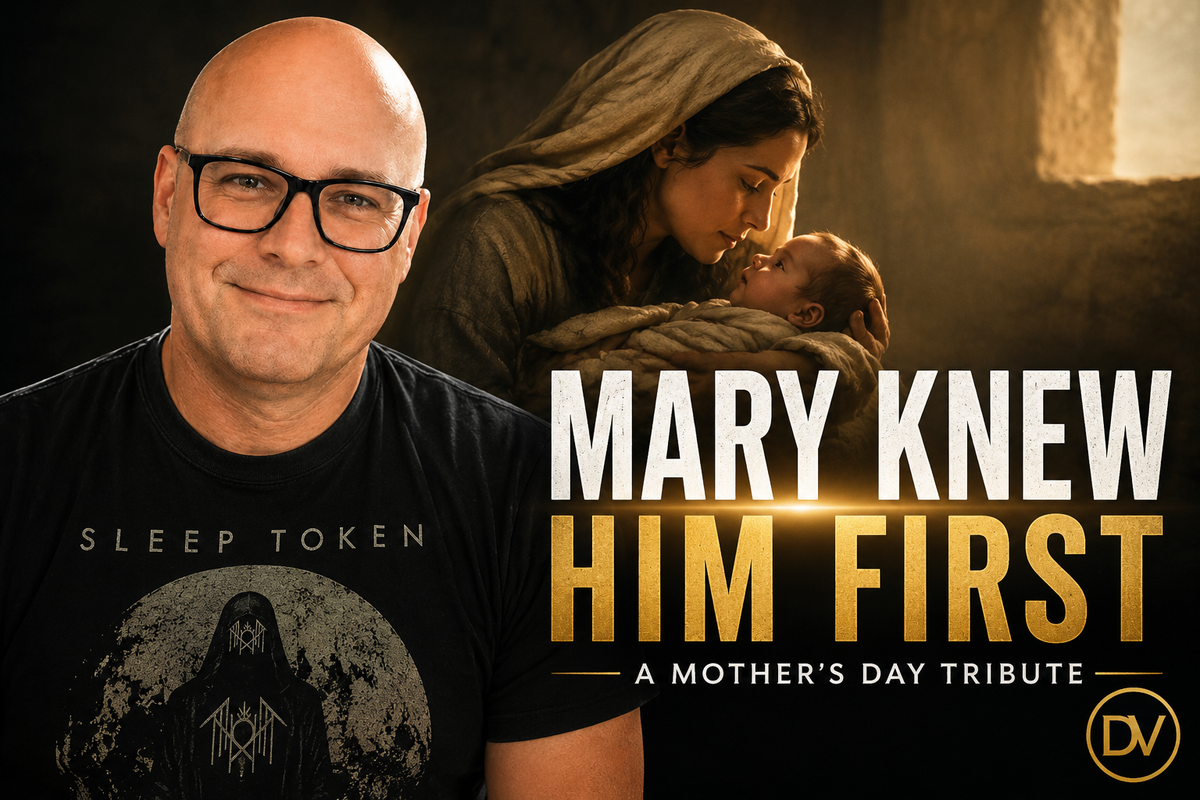
Chapter 1: The Mother Who Knew Before Anyone Else Could See
There is a quiet kind of knowing that belongs to a mother, and it often begins long before the rest of the world has any proof. A mother can look at her child and sense something nobody else has language for yet. She may not know the full road ahead, and she may not be able to explain every feeling in her heart, but she knows when something deep has been placed inside that child. That is where this Mother’s Day reflection begins, with Mary standing in the hidden years of Jesus’ life, long before the crowds gathered, long before the public questions started, and long before most people could understand Mary knew Jesus before the world did.
Most people meet Jesus first through His teaching, His miracles, His cross, and His resurrection, but Mary met Him first as a baby placed into her arms. Before anyone else called Him Lord, she heard Him cry. Before anyone else watched Him heal the sick, she watched Him sleep. Before His name moved through villages and cities, His mother knew the weight and wonder of raising Him in the ordinary rooms of daily life. That makes this subject feel different from a Mother’s Day tribute to Mary and her Son Jesus, because it does not begin with a public moment, but with a mother’s private love.
That private love is easy to rush past if we only think about Jesus through the biggest moments of His ministry. We see Him speaking with authority, calming storms, opening blind eyes, feeding hungry crowds, forgiving sinners, and walking toward the cross with a strength no human being could invent. All of that is true, and all of that matters. Yet before the world saw His power, Mary saw His face across a table, in a doorway, near a sleeping mat, on roads they traveled, and in the quiet years Scripture does not fully describe.
That changes how we think about motherhood. It reminds us that some of the most important love in the world is hidden from public view. A mother may spend years doing things that never get praised, recorded, applauded, or even remembered by anyone but God. She is there in the small hours, in the ordinary routines, in the daily care that can feel invisible. Mary’s story tells us that God sees those hidden years because He placed His own Son inside them.
Mary did not begin as a famous religious figure. She began as a young woman who was asked to trust God with something larger than her own understanding. The angel’s message did not come with a full map of every sorrow and every miracle to come. It came with a call to surrender. Mary said yes before she could see how much that yes would cost.
There is something deeply moving about that kind of yes. It was not a polished answer spoken from a life of comfort. It was a human answer given by a woman whose whole future was about to change. She received a promise that was holy, but holiness did not make the road simple. The child she would carry would be called the Son of God, yet she would still have to carry Him through a world that did not always understand what God was doing.
That is why Mary’s relationship with Jesus cannot be treated like a distant religious idea. It is too human for that. It is too close to the real feelings that mothers understand, especially the feeling of loving someone so deeply that their life becomes wrapped around your own. Mary loved Jesus with faith, but she also loved Him with a mother’s heart.
A mother’s heart does not love from far away. It notices the small changes. It remembers the things others forget. It hears what is not being said. Mary’s life with Jesus was full of moments that did not need a crowd to be sacred.
The Bible tells us Mary treasured things in her heart. That one detail tells us so much. She was not always speaking, explaining, or announcing what she knew. She was holding it. She was carrying memories and questions together, allowing them to sit inside her while the years moved forward.
That feels like real motherhood. Many mothers carry more than they say. They hold memories that seem small to everyone else but mean everything to them. A mother may remember the first time her child smiled in a certain way, the first moment she sensed fear, the day a child asked a question that sounded too deep for their age, or the look in their eyes when life first began to press on them.
Mary had those moments with Jesus. She watched Him grow. She saw His gentleness before the crowds felt it. She heard His voice before the world heard His teaching. She knew His presence before anyone wrote about it.
When Jesus was twelve and stayed behind in the temple, Mary felt a fear that many parents can understand. She and Joseph searched for Him, and when they found Him, He was among the teachers, listening and asking questions. The people there were amazed at His understanding. Mary was relieved, but she was also confronted with something she could not ignore.
Jesus said He had to be about His Father’s business. Those words must have landed in her heart with both wonder and pain. He was her Son, but He was also the Son of the Father. Mary had always known this in some way, but moments like that made the truth more real.
That is one of the deeper parts of her story. Mary’s love had to keep making room for who Jesus truly was. She could not reduce Him to what was most comfortable for her. She could not hold Him so tightly that she forgot He had come for a purpose beyond her own home.
This is where many mothers may feel something familiar. A child comes through a mother, but that child’s life belongs finally to God. Mothers shape, guide, protect, teach, and pray, but they cannot own the full road. That is painful because love naturally wants to hold close what it treasures.
Mary lived that truth in a way no other mother ever has. Her Son’s road was not just difficult. It was redemptive. He had come to save, and salvation would lead Him through suffering.
Yet before we move too quickly toward the cross, we need to stay a while in the hidden years. Those years matter because they show us that Jesus did not skip ordinary life. He did not appear as a grown man untouched by family, care, hunger, work, responsibility, and human bonds. He entered the world as a child, and God entrusted Him to a mother.
That should make us pause. God could have chosen any way to send His Son, but He chose the womb of Mary, the arms of Mary, and the daily care of Mary. The Savior of the world entered human life through dependency. He allowed Himself to be carried, fed, protected, and raised.
This does not make Jesus less divine. It makes His coming even more astonishing. The Lord of heaven stepped into the helplessness of infancy, and Mary was there at the beginning of His earthly life in a way no one else could be. She knew the mystery before anyone could explain it.
When we say Mary knew before we did, we are not saying she understood every detail. Knowing does not always mean having full understanding. Sometimes knowing means recognizing that God is doing something holy even when you cannot see the full shape of it yet. Mary knew enough to trust, and that trust carried her through years of wonder and pain.
The wedding at Cana gives us one of the clearest glimpses of that trust. The wine ran out, and Mary noticed. It was a small crisis compared with the suffering Jesus would later face, but to the people in that room, it mattered. Shame was approaching, and Mary saw it before the celebration broke apart.
She brought the need to Jesus. Her words were simple. She told Him they had no wine, and in that moment, her relationship with Him becomes tender and layered. She was not talking to a stranger. She was talking to her Son, and she knew there was something in Him that could answer what the room could not fix.
Jesus told her His hour had not yet come. That answer is not cold, but it does create a holy tension. Mary knew, but the timing belonged to the Father. She could see what others could not, yet she could not control when or how Jesus would reveal Himself.
This is where her faith becomes so beautiful. She did not argue. She did not make herself the center. She turned to the servants and told them to do whatever He said.
That line carries the heart of Mary’s witness. She points away from herself and toward Jesus. She does not explain Him fully, because she cannot. She does not try to manage Him, because He belongs to the Father’s will. She simply trusts Him.
For a Mother’s Day tribute, that moment matters because it honors the kind of motherly love that knows how to guide without controlling. Mary notices the need, brings it to Jesus, and then lets Him move as He chooses. That is not weakness. That is a deep kind of strength.
Many people think strength means holding everything together by force. Mary shows us another way. Her strength is steady because it trusts God beyond what it can control. She does not need to turn the water into wine herself. She knows where to bring the empty jars.
That picture speaks to mothers, but it also speaks to anyone who has loved another person and felt helpless. You may see a need you cannot meet. You may notice pain you cannot remove. You may carry concern that has no quick answer. Mary teaches us to bring the need to Jesus and trust Him with the part we cannot hold.
This is not a fake easy answer. Mary’s trust did not protect her from grief. Her faith did not keep every hard thing away. Saying yes to God did not mean she lived without fear, confusion, sorrow, or loss.
That makes her tribute more honest. We do not honor Mary by pretending her life was soft. We honor her by seeing the courage it took to love Jesus from the manger to the cross. She was blessed among women, but her blessing carried a weight most people would never understand.
Simeon had spoken words over the child Jesus in the temple. He said this child was appointed for the falling and rising of many, and he told Mary that a sword would pierce her own soul too. That was not the kind of word a mother would want to hear over her baby. It suggested that the joy of His coming would be tied to suffering she could not escape.
Mary had to live with that. She had to carry a promise and a warning in the same heart. That is part of what makes her so human. Faith does not always remove the fear that comes when you know love will cost you something.
The more we sit with Mary’s story, the more we begin to see motherhood through a different lens. Motherhood is not only tenderness. It is also endurance. It is the strength to keep loving when the road becomes harder than expected. It is the quiet faith to stay near when you cannot fix what is happening.
Mary’s relationship with Jesus was full of tenderness, but it was never small. She did not merely raise a child who became a good teacher. She raised the Son who came to bear the sin of the world. Her motherly love existed beside a mission that would stretch beyond anything she could hold in her arms.
There is a reverence in that. Mary had to love Jesus personally while surrendering Him spiritually. She had to know Him as her Son while honoring Him as Lord. No other mother has ever carried that exact mystery.
Still, there is something in her story that reaches ordinary people. Many mothers know the feeling of watching a child step into a life they cannot control. Many know the hidden prayers that come when a child leaves the safety of home. Many know the strange mix of pride and sorrow that comes when a child becomes who they were meant to become, but that becoming carries risk.
Mary’s love was not possessive. It was faithful. She did not try to shrink Jesus down to what would hurt her less. She allowed His calling to be bigger than her comfort.
That is one of the most powerful parts of her witness. Love often wants to protect, but faith learns to release. Mary’s life shows us that releasing someone into God’s hands is not the same as loving them less. Sometimes it is love at its deepest.
When we think about Mother’s Day, it is easy to keep everything soft and sentimental. Gratitude is good, and tenderness belongs there, but Mary’s story asks us to honor something stronger than sentiment. It asks us to honor the love that stays faithful when the heart is stretched. It asks us to honor the mothers who carry pain quietly while still pointing their children toward God.
Some people come to Mother’s Day with joy. Their memories are warm, and their gratitude is easy to speak. Others come with grief because their mother is gone, or the relationship was painful, or the day reminds them of what they never had. A true tribute has to leave room for all of that.
Mary’s story does leave room. It is not a greeting card version of motherhood. It holds birth, wonder, confusion, fear, release, public pressure, and the sorrow of the cross. Her life with Jesus tells the truth about love in a broken world.
That truth is not hopeless, though. The hope is not that love avoids pain. The hope is that God is present inside the pain, and Jesus is still who Mary knew Him to be. He is still the Son who sees the human heart.
At the cross, Jesus saw His mother. That one detail should never become small to us. In the middle of His suffering, He looked at Mary and made sure she would be cared for. The Savior of the world did not overlook the mother who had stood with Him.
That tells us something about the heart of Jesus. He is never too great to notice personal sorrow. He is never so focused on the whole world that He forgets the one person standing in front of Him. His love is vast enough to save humanity and close enough to see His mother’s pain.
Mary knew His heart before we did. She had seen His compassion before the crowds did. She had watched Him live with a holiness that was not loud or showy. She knew the steadiness of Him in ordinary days.
That is why her words at Cana matter so much. Do whatever He tells you. Those are not the words of someone guessing. Those are the words of a mother who knows her Son.
This first chapter begins here because the whole article must turn around that simple truth. Mary knew Him in the hidden years, and her knowing was not shallow. It was formed through surrender, care, memory, fear, wonder, and trust. She knew before the world understood, and what she knew led her to point others toward Him.
A Mother’s Day tribute to Mary should not make her distant from us. It should help us see the beauty of a mother who loved deeply and trusted God with the cost. She was not trying to build her own name. She was not trying to stand in the center of the story. She became part of the story by saying yes, staying faithful, and pointing to Jesus.
That is a different kind of greatness. It does not demand attention. It does not fight for applause. It carries holy things quietly and remains present when love becomes painful.
Mary’s life with Jesus invites us to slow down and look again at the hidden side of faith. Before public ministry, there was private obedience. Before public recognition, there was a mother’s care. Before the world heard His teaching, there was a home where He grew in wisdom and stature.
That hidden side matters because most of our lives are lived there too. We may not stand in front of crowds. We may not be praised for the prayers we whisper or the love we keep giving when nobody thanks us. Yet God sees the hidden rooms, the quiet faith, and the years that shape what the world only notices later.
Mary’s motherhood reminds us that God often begins His greatest work in places people overlook. He begins with a yes spoken in humility. He begins in a home. He begins with daily faithfulness that seems ordinary from the outside. Then, in His time, He reveals what He has been doing all along.
The world eventually saw Jesus heal, teach, forgive, suffer, die, and rise. Mary had known Him before all of that was public. She had known Him when the promise was still wrapped in childhood. She had known Him when the holy looked like daily responsibility.
There is comfort in that for anyone who feels unseen. God is not waiting for the public moment to value faithfulness. He values the hidden yes. He sees the quiet care. He remembers the love that kept going when no one else understood.
Mary knew before we did, and she teaches us how to respond when we sense God is doing something we cannot yet explain. We do not have to force the hour. We do not have to make ourselves the center. We do not have to understand the whole road before we trust the One walking it.
We can do what Mary did. We can bring the need to Jesus. We can place the empty jars before Him. We can tell our own hearts to do whatever He says.
That is where this book-length reflection begins, not with noise, but with a mother’s knowing. It begins with the quiet strength of Mary, who held Jesus before the world believed in Him. It begins with the truth that some of God’s deepest work is recognized first by a heart that has learned to treasure and ponder.
As we move forward, we will not rush Mary into the background. We will stay with the relationship between a mother and her Son. We will look at what she carried, what she knew, what she released, and what her love still teaches us about Jesus. Most of all, we will remember that before we ever spoke His name in worship, Mary had already whispered it with a mother’s love.
Chapter 2: The Hidden Years That Held the Holy
Mary’s relationship with Jesus did not begin in public. That matters because the world often notices people only after something visible happens, but mothers live through the unseen years. They know the long stretch before recognition. They know the mornings that feel ordinary to everyone else. They know the work behind a life before that life becomes something other people can talk about.
When people think of Jesus, they often think of the moments that changed history. They think of the water becoming wine, the blind receiving sight, the hungry being fed, the storm becoming still, the cross, the empty tomb, and the promise of life that death could not hold. Those moments deserve reverence, but Mary knew Jesus before the public story opened. She knew Him when holiness was wrapped in childhood. She knew Him when the Son of God still lived under her roof, ate at her table, and grew one day at a time.
That should make us slow down. Jesus did not come into the world as a man who skipped the hidden life. He came as a child who needed to be held. He came into a home where someone had to care for Him when He was hungry, tired, cold, or young enough to need help with ordinary things. Mary was there in that quiet beginning, and her love was not theatrical. It was daily.
There is a kind of holiness in daily love that many people overlook. It does not always feel dramatic. It can look like washing, cooking, waiting, worrying, teaching, listening, and doing the same faithful things again the next day. It can feel small while it is happening. Yet God chose that kind of life as the setting for His Son’s early years.
That gives dignity to every mother who has ever wondered whether the hidden work matters. It gives dignity to every person who has loved faithfully without being seen. God did not treat the hidden years of Jesus as wasted years. He did not hurry past the home, the family, the small routines, or the quiet formation of a child becoming a man.
Mary lived inside those years. She did not get to stand outside them and admire them from a distance. She had to wake up into them. She had to carry the responsibility of raising a child whose life came with a promise no ordinary mother had ever been asked to carry. There must have been moments when the mystery of it felt too large for the room she was standing in.
Still, she lived faithfully in the room.
That is important because many people think faith is mostly about big moments. They think it is about the clear calling, the powerful answer, the breakthrough, the miracle, or the day everything finally makes sense. Mary’s life teaches another truth. Faith is often lived in the years before anything looks complete.
Mary knew Jesus was not ordinary, but she still had to live through ordinary days. She still had to raise Him in the middle of real life. That means she knew both wonder and responsibility. She had the memory of the angel’s words, but she also had the work of motherhood.
This is where Mary’s tribute becomes more than admiration. It becomes recognition. She was not simply a figure in a stained-glass window. She was a mother living under the weight of a holy promise, and she had to keep saying yes after the first yes.
Many people say yes to God in one moment, but the harder test is the life that follows. Mary’s first yes was beautiful, but her long obedience was just as beautiful. She had to keep trusting when she was tired. She had to keep pondering when she did not understand. She had to keep loving Jesus without trying to make His path fit her own comfort.
That kind of faith does not need to sound dramatic to be deep. It is the faith of someone who keeps going when no crowd is watching. It is the faith of a mother who knows God has placed something sacred in her hands and chooses to be faithful with what she can do today.
The hidden years of Jesus show us something tender about God. He does not despise slow growth. He does not rush every holy thing into public view. He allows strength to form quietly. He allows wisdom to grow in ordinary settings. He allows purpose to mature through years that may look uneventful from the outside.
Mary had to live with that pace. She knew Jesus carried a destiny beyond her understanding, but she could not make the world recognize Him sooner. She could not open every door before the Father’s time. She could not force people to understand what she had treasured in her heart.
That must have required patience. Not the shallow kind of patience people talk about when they are only waiting a few minutes. I mean the deeper patience that has to live with unanswered questions. Mary had to wait inside the mystery of her own Son’s life.
There is something deeply human there. Many mothers sense something in their children before anyone else sees it. They see a tenderness, a strength, a gift, a burden, or a calling that others may not notice yet. Sometimes they try to explain it, and people do not understand. Sometimes they keep it to themselves because words feel too small.
Mary knew that silence. She had to carry what she knew without turning it into noise. The Bible does not present her as someone constantly announcing herself. It shows her treasuring, pondering, speaking when needed, and trusting.
That is not weakness. That is a strong soul under control.
In our world, people are often trained to think everything meaningful has to be broadcast. If something important is happening, we feel pressure to prove it, post it, explain it, defend it, or make others notice. Mary’s life pushes against that. She reminds us that some of the deepest things God does begin in silence.
The Son of God grew up in a real home before He stood in front of crowds. That should change how we see the quiet seasons of life. A hidden season is not the same as an empty season. God can be working where nobody is clapping.
Mary’s hidden years with Jesus were not a delay in God’s plan. They were part of God’s plan. The childhood of Jesus was not separate from His mission. It was the way the eternal Son entered fully into human life.
That means Mary’s ordinary care mattered. Her motherhood was not a side detail. God placed her in the story with purpose. Her love created a human home for the One who came to make a home for the lost.
Think about that carefully. Jesus came to save people who felt far from God, but His earthly life began with being welcomed into the arms of a mother. Before He welcomed sinners, He was welcomed as a child. Before He touched the hurting, He was touched with care. Before He fed the hungry, someone fed Him.
That does not lower Jesus. It reveals the humility of His coming.
Mary was the first person to live with that humility so closely. She knew the greatness of Jesus, but she also knew His smallness as a child. She saw the mystery of heaven wrapped in the needs of a baby. That is a truth too deep to make casual.
Mother’s Day can sometimes become too polished. People say the right words. They buy the card. They post a picture. None of that is wrong, but Mary’s story takes us deeper than a quick thank-you. It makes us consider the holy weight carried by mothers whose work happens behind the scenes.
Mary’s love was not only soft. It was costly. She had to hold the Son of God without pretending she could own His destiny. She had to guide Him as a mother while surrendering Him to the Father’s will. That tension did not start at the cross. It began long before, in the quiet years, as she watched Him become who He had always been.
There is a moment in every good mother’s life when she begins to realize that love cannot keep a child small. The child grows. The voice changes. The questions deepen. The road widens. A mother may still remember the baby, but the person standing in front of her is becoming someone she cannot fully hold in the old way.
Mary experienced that with Jesus in the most sacred and piercing way. She knew He was her Son, but she also knew He was moving toward something bigger than her home. The temple scene when He was twelve shows this clearly. She searched for Him with real fear, and when she found Him, He spoke of His Father’s house.
Those words did not erase Mary’s motherhood, but they placed it inside a larger truth. Jesus loved Mary, but His deepest obedience was to the Father. That does not make their relationship less tender. It makes it more holy.
A lesser love would have tried to pull Him back into comfort. Mary’s love had to keep widening. She had to let her Son be her Lord. There is no way to make that easy.
Some people may read Mary’s story and think she always understood because she was chosen. Scripture does not present it that way. Being chosen did not mean she understood everything as it unfolded. She treasured and pondered because she was still living with mystery.
That is helpful for us because many people feel guilty when they do not understand what God is doing. They think faith means never feeling confused. Mary teaches us that faith can hold wonder and confusion in the same heart.
She did not need to have every answer in order to remain faithful. She did not need to know every detail of Jesus’ future before she loved Him well in the present. She did what was in front of her, and she trusted God with what was beyond her.
That is a powerful way to live. It is also deeply practical. Most people do not receive a full map for their lives. Mothers do not receive a full map for their children’s futures. Families do not receive a full map for every sorrow, joy, challenge, and change they will face.
Mary did not either.
She had promises. She had signs. She had memories. She had moments that made her stop and wonder. But she did not have control, and that is where faith became real.
In the hidden years, Mary’s faith had to take the shape of daily trust. She had to trust when Jesus was small. She had to trust when He was growing. She had to trust when His wisdom began to reveal itself. She had to trust when she could not fully understand His words.
This is why Mary matters so deeply in a Mother’s Day tribute. She shows us that a mother’s love can be both tender and brave. Tenderness without courage can collapse under pressure. Courage without tenderness can become hard. Mary carried both.
She was tender enough to treasure the moments and brave enough to keep walking when those moments pointed toward a future she could not control. She was humble enough to say yes and strong enough to keep saying it. She was close enough to Jesus to know Him as her Son and faithful enough to point others to Him as Lord.
That combination is rare.
The hidden years also help us see Jesus more clearly. He did not grow in a cold place. He grew in a home shaped by faith, work, and obedience. He knew what it meant to live under parental care. He knew the rhythms of family life. He knew the beauty and difficulty of being human in ways that were not distant or symbolic.
When Jesus later looked at people with compassion, He did not do it from outside the human story. He had lived inside it. He knew hunger, fatigue, family bonds, misunderstandings, and the weight of ordinary days. Mary was part of that human life.
That matters for anyone who feels unseen in the ordinary parts of their own life. Jesus is not only present in church buildings, worship songs, or major spiritual moments. He entered a home. He entered daily life. He entered the kind of routine that many people think is too common to matter.
Nothing is too common for God to enter.
Mary’s motherhood shows that God can be present in the simple work of love. The meal matters. The care matters. The worry carried in prayer matters. The teaching of a child matters. The years no one applauds matter.
This is a word many people need, especially on Mother’s Day. Some mothers wonder if what they did was enough. Some carry regret. Some look back and remember the things they wish they had handled differently. Some gave everything they had, and still life did not turn out the way they hoped.
Mary’s story does not erase the pain of motherhood, but it does show that God sees the love poured out in hidden places. He knows the difference between perfection and faithfulness. Mary was not honored because her life was easy. She was honored because she trusted God in the life she was given.
That distinction matters. We often want to honor mothers by pretending everything about motherhood is simple, sweet, and clean. Real mothers know better. Love can be beautiful and exhausting. It can bring joy and fear into the same day. It can fill the heart while stretching it beyond what seems bearable.
Mary’s story has room for all of that.
She carried joy when Jesus was born, but she also fled danger when Herod sought His life. She heard words of blessing, but she also heard that a sword would pierce her soul. She watched Him grow in wisdom, but she also had to learn that His life would not stay within the safe borders of her own plans.
The hidden years were not untouched by pressure. They were human years. The holiness of Jesus did not remove Mary from the realities of family life in a hard world.
That is why her faith is not fragile. It was tested by real life. It was shaped in the kind of conditions that make faith either deepen or fade. Mary kept trusting.
There is a beautiful restraint in her story. She does not push herself forward. She does not compete with the mission of Jesus. She does not turn motherhood into control. At Cana, she gives one instruction, and it is still the best counsel a human being can give.
Do whatever He tells you.
Those words came from years of knowing Him. Mary was not speaking from theory. She had lived with Jesus. She had watched Him. She knew His goodness. She knew His obedience. She knew His heart.
That makes her witness powerful. The one who knew Him first tells others to trust Him.
There may be no better tribute to Mary than that. Her greatness is not separate from Jesus. Her greatness is that she received Him, loved Him, trusted Him, and pointed to Him. She did not need to take His place. She knew who He was.
The hidden years taught her that. They taught her to hold mystery without panic. They taught her to love without possession. They taught her to see what God was doing without trying to seize control of it.
Those lessons are not small. They are the kind of lessons that can steady a human life.
If you are listening to this as someone who feels stuck in a hidden season, Mary’s story speaks gently to you. The world may not see what you are carrying. People may not understand the weight inside your ordinary days. You may be doing work that seems invisible, loving people who do not know how much it costs, and trusting God without any clear public sign that your faithfulness matters.
God sees it.
The hidden years are not wasted when they are lived with Him. Mary’s hidden years with Jesus became part of the story of salvation. Your hidden faithfulness may also be shaping things you cannot yet see.
That does not mean every hardship will suddenly make sense. It does not mean the pain disappears because you trust God. Mary’s road proves the opposite. Faith can lead a person into deeper love, and deeper love can bring deeper sorrow.
But sorrow is not the final word in Mary’s story because Jesus is not only her Son. He is the risen Lord. The child she held became the Savior who conquered death. The One she watched suffer is the One who lives forever.
That truth changes the way we look at her hidden years. They were not just years before pain. They were years before glory. Mary could not have seen the full shape of that glory at the beginning, but she trusted the God who could.
This is where the perspective begins to shift. Mary did not know before the world because she had more information than everyone else. She knew because she was close, and closeness taught her to trust what others could not yet see.
That is one of the deepest gifts of her story. She reminds us that closeness to Jesus changes what we notice. The more we stay near Him, the more we begin to trust His heart even when His timing does not match ours. Mary lived that before she ever spoke those words at Cana.
A Mother’s Day tribute to Mary should leave us with gratitude, but it should also leave us with courage. Gratitude for the mother who loved Jesus in the years no one else saw. Courage to trust God in our own hidden years. Gratitude for the quiet strength of women who carry love with faith. Courage to bring our empty places to Jesus and let Him decide the hour.
Mary knew before we did. She knew in the hidden years. She knew in the moments she treasured quietly. She knew when she watched Him grow. She knew when she had to release Him beyond her own understanding.
And because she knew Him, she pointed others to Him.
That is where this chapter rests. Before the miracle at Cana became a sign, there was a mother who trusted her Son. Before the world heard His voice in public, Mary had heard it in the home. Before we learned to call Him Savior, she had already loved Him with the steady heart of a mother who knew God was doing something too holy to rush.
Chapter 3: When Love Has to Release What It Cannot Keep
There is a moment in Mary’s story that is easy to read too quickly. Jesus is no longer a child in the house. He is no longer only the Son she raised in the hidden years. He is becoming publicly known, and the truth she carried quietly is beginning to move out into the open. That kind of moment can bring joy, but it can also bring a strange kind of loss.
A mother can spend years seeing something in her child before the rest of the world sees it. She may know the strength is there. She may know the tenderness is there. She may know there is a calling, a gift, or a depth that has not yet been noticed. Then one day, other people begin to see what she has known all along, and the child’s life starts to move into places she cannot follow in the same way.
Mary knew Jesus before the world did, but she could not keep Him hidden forever. The truth inside Him was never meant to remain only in her home. The same Son she had held close was also the Light who came into the world. Her love had to make room for that.
That is one of the hardest things love ever does. Love wants to protect. Love wants to stay close. Love wants to keep the person safe from misunderstanding, rejection, and pain. Yet the love that truly trusts God eventually has to release what it cannot keep.
Mary did not stop being His mother when His public ministry began. Her love did not become less real. Her heart did not suddenly become calm just because Jesus stepped into the work He came to do. If anything, the cost of loving Him probably became clearer as the road widened before Him.
This is where Mary’s motherhood becomes more than tender. It becomes brave. She had to watch her Son walk toward people who needed Him, but not all of those people would receive Him. Some would follow Him with hungry hearts. Some would question Him. Some would use Him for what they wanted and then turn away when His words became hard.
A mother sees those things differently than a crowd does. A crowd may see a teacher. A mother sees her child standing in front of people who may not understand the heart behind His words. A crowd may see power. A mother may still see the boy she once searched for in the temple.
That does not mean Mary’s view of Jesus was small. It means her love was close. She knew both the holy truth of who He was and the human bond of being His mother. Those two realities lived together in her heart.
This is part of what makes her relationship with Jesus so meaningful. She did not love an idea. She loved her Son. She did not only believe a doctrine. She carried a life, raised a child, and watched that child become the Savior of the world.
That is a holy mystery, but it is also deeply human. Mary’s story reaches into the places where many people live on Mother’s Day. It touches the mother who has had to watch a child leave home. It touches the mother who sees a child struggling and cannot fix it. It touches the person who misses a mother and remembers the way she knew things no one else knew.
There is a kind of release that happens slowly. It does not always happen in one dramatic moment. Sometimes it begins when a child starts asking questions that sound older than their age. Sometimes it begins when a mother realizes her child has thoughts she cannot enter, choices she cannot make, and a path she cannot walk for them. Mary lived that truth in the deepest way any mother ever has.
When Jesus was twelve, His words in the temple were not cruel, but they did reveal something. He had to be about His Father’s business. That did not erase Mary. It placed her motherhood inside the larger will of God. She was honored, but she was not in control.
Many people struggle with that difference. We think being important in someone’s life should give us control over their road. But Mary shows us that love can be deeply important without being in charge. Her role was sacred, yet Jesus belonged first to the Father.
That truth can steady anyone who loves someone and feels helpless. You can matter deeply and still not control everything. You can be faithful and still not be able to decide the timing. You can love someone with your whole heart and still have to trust God with parts of their life that are beyond your reach.
Mary had to do that with Jesus. She had to hold Him close and release Him at the same time. That sounds impossible, but many mothers understand it. They spend years holding a child so that one day the child can stand where God calls them.
This is why Mary’s love should never be reduced to sentiment. Sentiment can be soft without being strong. Mary’s love was both. It was soft enough to treasure, and it was strong enough to surrender.
The wedding at Cana gives us a clear picture of that surrender. Mary saw a need and brought it to Jesus. She knew Him well enough to come to Him with confidence. Yet when He answered that His hour had not yet come, she did not try to take over the moment.
She could have pushed. She could have made the situation about her own certainty. She could have said, “I know who You are, and I know what You can do.” But she did not. She trusted Him in front of others.
That kind of trust is not passive. It takes strength to bring a need to Jesus and then leave the answer in His hands. It takes strength to believe without demanding control. Mary’s words to the servants show a heart that has learned to trust His voice more than her own pressure.
Do whatever He tells you.
Those words are simple, but they carry years of relationship. Mary was not speaking as someone who had watched Jesus from a distance. She had lived near Him. She knew His character. She knew He could be trusted even when His timing was not hers to command.
That is a word many of us need. We often bring needs to Jesus, but we want to tell Him exactly how to answer. We want to decide the hour, the method, the speed, and the outcome. Mary shows us another way, not because she did not care, but because she trusted Him more than she trusted her own need to manage the moment.
That is difficult for a mother. It is difficult for anyone who loves deeply. When someone you love is tied to the outcome, surrender can feel almost unbearable. You want to help. You want to protect. You want to keep pain away.
Mary could not keep pain away from Jesus. That truth was already present long before the cross. Every step of His public life moved Him closer to conflict, misunderstanding, and sacrifice. The miracle at Cana was beautiful, but it was also a sign that the hidden years were giving way to public revelation.
Once the water became wine, things could not stay the same forever. The quiet knowing Mary carried was beginning to unfold where others could see. The Son she knew in private was stepping into the mission He came to fulfill.
There is a deep cost when hidden things become public. People begin to speak. People begin to judge. People begin to misunderstand. Mary had known the holiness of Jesus in ways no critic ever could, yet she still had to watch others respond to Him with confusion, suspicion, and eventually hatred.
That must have wounded her heart. Not because Jesus was weak, but because love feels the pain of the beloved. When someone mocks a person you love, you feel it in your own body. When someone rejects someone you know to be good, something inside you burns with grief.
Mary’s love for Jesus was not protected from that. She had to watch the world mishandle the One she knew was holy. She had to see people fail to recognize what had been clear to her from the beginning.
This is where Mary’s story speaks to the mothers who feel misunderstood in their own love. Sometimes a mother sees something in her child that others do not see. She may see the goodness beneath the struggle, the pain beneath the behavior, or the calling beneath the confusion. Other people may judge quickly because they have not carried the history that she has carried.
Mary carried history with Jesus. She had memories no crowd had. She had seen the hidden faithfulness, the quiet goodness, and the steady obedience. When others debated Him, she knew Him.
Still, her knowing did not give her power to make everyone else understand. That is a painful part of love. You can know the truth about someone and still not be able to force others to see it. Mary had to live with that.
Yet she did not turn bitter. Scripture does not show her trying to make the story serve her pain. She remains a quiet, faithful presence. Her strength is not in taking over the room. Her strength is in staying near Jesus and pointing others toward Him.
That is one of the greatest lessons of her life. Love does not have to be loud to be strong. Faithfulness does not have to draw attention to be real. Some of the strongest people in the kingdom of God are the ones who keep trusting when their hearts have every reason to shake.
Mary was one of them.
On Mother’s Day, this matters because we need to honor the quiet strength mothers carry. We honor the mother who loved when no one saw it. We honor the mother who prayed in private. We honor the mother who had to release a child into a road she could not control. We honor the mother who knew more than she could explain and still trusted God.
But we also need to be honest. Not every mother-child relationship feels like Mary and Jesus. Some people have deep pain around this day. Some had mothers who were absent, harsh, broken, overwhelmed, or unable to love well. Others were loved deeply and now feel the emptiness of loss.
A real Mother’s Day tribute has to make room for all of that. Mary’s story does not erase anyone’s pain, but it does give us a picture of love held in the presence of God. It shows us what faithful love can look like when it is surrendered instead of possessive.
That distinction matters. Possessive love says, “You belong to me.” Faithful love says, “You are entrusted to me, and I trust God with you.” Mary’s motherhood was faithful love. She received Jesus, cared for Him, and released Him into the Father’s will.
This kind of love is not easy to practice. It asks the heart to stay open without taking control. It asks a mother to love fiercely without making the child’s life a possession. It asks all of us to admit that the people we love most are finally held by God, not by our fear.
Mary teaches this not through a lecture, but through her life. She does not stand in front of us with a long explanation. She gives us a picture. A mother brings the need to Jesus, trusts His timing, and tells others to listen to Him.
That is enough to shape a lifetime.
It also shifts how we think about Jesus. He was not a detached spiritual figure moving through the world without human ties. He had a mother. He had a home. He had people who loved Him personally. His obedience to the Father did not make Him less human.
That should comfort us. Jesus knows the pull of family love. He knows the tenderness of being known by someone before the world understands you. He knows what it is to be loved by a mother and also called beyond what even that mother can fully hold.
Because of that, He understands the tension in our lives too. He understands when love and obedience feel tangled together. He understands when you are trying to honor family and still follow God. He understands when people close to you see part of your calling but do not fully understand the timing.
Jesus lived inside that tension without sin. He loved Mary perfectly, and He obeyed the Father perfectly. He did not despise His mother’s love, and He did not let that love replace His mission. That balance is beautiful.
Many of us do not know how to hold that balance. We either cling too tightly or pull away too coldly. We confuse obedience with distance, or we confuse love with control. Jesus shows another way, and Mary’s relationship with Him helps us see it.
He was tender without being controlled. She was loving without being possessive. Their relationship gives us a picture of holy love that honors both closeness and surrender.
That is one reason the Cana moment matters so much. It is not only about a miracle. It is about trust between a mother and her Son. Mary brings the need, Jesus answers from the place of divine timing, and Mary responds with confidence instead of control.
The water becomes wine, but before that happens, Mary gives us a way to live. Bring the need to Jesus. Trust His timing. Tell your own heart to obey His voice.
This is not a soft message for easy days. It is a hard-won truth for people who have reached the end of what they can manage. It is for the mother who has prayed until she has no more words. It is for the child who wishes they could fix the past. It is for the person standing near an empty place and wondering what Jesus will do.
Mary does not tell us to understand everything. She tells us to do whatever He says.
That means the center stays where it belongs. The focus is not Mary’s control, but Jesus’ trustworthiness. Mary’s honor is tied to her faith in Him. She knew Him before the world did, and because she knew Him, she pointed others to Him.
As this article moves forward, that truth will keep guiding us. Mary’s relationship with Jesus was not only about what she carried at the beginning. It was about what she released as His mission unfolded. She had to let the Son she loved step into the hour appointed by the Father.
That is the deep work of love. It receives with gratitude, holds with tenderness, guides with faith, and releases with trust. Mary did all of that under a weight no other mother has ever carried.
So when we honor her, we are not simply honoring the fact that she gave birth to Jesus. We are honoring the faithful love that stayed with Him through every stage of the road. We are honoring the mother who knew, the mother who trusted, and the mother who released what she could not keep for herself.
Mary knew before we did. She knew before the first public sign. She knew before people understood His words. She knew before the cross revealed the depth of His love. But her knowing did not turn into control.
It became trust.
That may be the message many hearts need most on Mother’s Day. Love does not always get to keep what it loves from pain. Love does not always get to choose the hour. Love does not always get to explain itself to the crowd.
But love can stay faithful. Love can bring the need to Jesus. Love can point others to Him.
Mary’s love did that. Her relationship with Jesus shows us that the deepest love is not measured by how tightly it holds, but by how faithfully it trusts God with what it has been given. In that light, Mary stands before us not as someone distant and untouchable, but as a mother whose quiet courage still teaches the human heart how to love without fear taking over.
Chapter 4: The Quiet Courage of a Mother Who Stayed
There are some kinds of love that do not announce themselves. They do not need to be seen by a crowd. They do not need to explain every sacrifice. They do not ask for attention every time they endure something heavy. They simply remain, and sometimes remaining is the strongest thing a human heart can do.
Mary’s love for Jesus had that kind of courage.
It would be easy to think of Mary only in the earliest scenes, holding the baby Jesus, hearing the shepherds, receiving the wise men, and carrying the wonder of His birth. Those moments are beautiful, and they belong in every serious reflection about her. Yet if we leave Mary only near the manger, we miss the full weight of her motherhood. Mary did not only hold Jesus when He was small. She stayed near the story as He grew, as He taught, as He was misunderstood, and as the road moved toward suffering.
That is where her love becomes even more powerful.
A mother’s love is not proven only in warm moments. It is also proven when she cannot fix what hurts. It is proven when she has to stand near pain without being able to remove it. It is proven when the child she once protected steps into a world that will not treat him gently. Mary lived that in a way no other mother ever has, because the Son she loved was also the Savior who had come to give His life.
There is no way to make that light.
Mary knew before the world did, but knowing did not spare her. She knew there was something holy about Jesus, but she still had to watch people resist Him. She knew His goodness, but she still had to hear His name questioned. She knew His heart, but she still had to see a world that often wanted His gifts more than His truth.
That kind of love carries pain quietly.
Think about what it must have been like for Mary to hear reports about Jesus as His ministry grew. Some people were amazed by Him. Some people were healed by Him. Some people followed Him with hunger in their souls. Others accused Him, doubted Him, mocked Him, tested Him, or watched Him with suspicion.
For Mary, those were not just public reactions to a teacher. They were reactions to her Son.
A crowd can debate a man from a distance, but a mother does not hear those words from a distance. She hears them through memory. She hears them through years of care. She hears them while remembering the child she raised, the face she knew, and the goodness she had seen before anyone else had a public opinion.
That is part of what makes Mary’s position so tender. She stood between private knowing and public misunderstanding. She had seen Jesus in the hidden places, and then she had to watch others judge Him in public places.
Many mothers understand some part of that. A mother can know a child’s heart in a way other people do not. She can know the history behind a struggle, the pain behind a mistake, the tenderness beneath the silence, or the goodness beneath a season of confusion. Others may judge quickly because they only see one moment. A mother often sees the whole road.
Mary saw the whole road of Jesus more closely than anyone else in His early life. She knew where the story began. She knew the miracle of His birth. She knew the words spoken over Him. She knew the moments that Scripture only hints at and the years Scripture leaves mostly hidden.
So when the world misunderstood Him, Mary did not stand there as a stranger. She stood there as the mother who knew.
That knowing had to hurt sometimes.
It hurts to see someone you love misread by people who do not know the cost behind their life. It hurts to watch goodness questioned. It hurts to see a person’s heart handled carelessly by those who have no idea what they are touching. Mary felt that in ways we cannot fully measure.
Yet Scripture never gives us a picture of Mary becoming bitter, loud, controlling, or desperate to explain herself. She remains present. She stays faithful. She appears at crucial moments not as someone trying to take over the mission of Jesus, but as someone still bound to Him by love.
That kind of restraint is holy.
Restraint is not the same as weakness. Sometimes restraint is the sign of a strong soul. Mary did not need to force everyone to see what she saw. She did not need to stand in every crowd defending her own place in the story. She trusted God with the truth.
That is hard for people like us. We often want to correct every misunderstanding. We want to explain every wound. We want to make others see what they refuse to see. Mary shows us a different kind of strength, the strength of staying faithful when God has not asked you to control the room.
Her courage was not noisy. It was steady.
There is something deeply needed about that in our time. So much of the world is built around reaction. Someone misunderstands us, and we feel pressure to answer quickly. Someone questions us, and we want to defend our story. Someone misses our heart, and we want to make the whole world know what they got wrong.
Mary’s life reminds us that not every holy thing needs to be explained by us. Some things must be entrusted to God. Some truths reveal themselves in time. Some love is most faithful when it refuses to become frantic.
Mary stayed close to Jesus without trying to replace His obedience. She loved Him, but she did not take His mission into her own hands. She trusted the Father even when the road looked painful.
That is what makes her presence at the cross so overwhelming.
By the time we see Mary standing near the cross, every soft and simple version of motherhood has fallen away. There is no room for shallow sentiment there. There is no room for a pretty phrase that makes everything feel easy. A mother is watching her Son suffer, and she cannot stop it.
The same Mary who once wrapped Him as a baby now sees Him wounded. The same Mary who once heard His first cries now hears Him speak through pain. The same Mary who once protected His small body from danger now stands before a suffering she cannot prevent.
No mother should have to see that.
Yet Mary stayed.
That one truth deserves silence before it deserves explanation. She stayed near Him when staying would break her heart. She stayed near Him when the crowd was cruel. She stayed near Him when she could not change what was happening. She stayed because love does not measure faithfulness by its ability to fix everything.
Some people know that kind of love. They have sat beside hospital beds. They have stood in courtrooms. They have answered late-night calls. They have watched someone they love walk through something they could not remove. They have prayed and still had to remain near suffering.
Mary belongs close to those people.
Her story does not float above human pain. It enters it. She is not only the mother of a miracle birth. She is the mother who stood near a cross.
That matters on Mother’s Day because many people need a tribute that tells the truth. Some mothers have known deep joy, but they have also known fear that kept them awake. Some have carried family burdens nobody else understood. Some have watched children suffer in ways they could not repair. Some have loved faithfully and still faced heartbreak.
Mary’s life honors them because her motherhood was not protected from sorrow. It was filled with faith, but faith did not make her numb. She loved Jesus with a real mother’s heart, and that heart was pierced, just as Simeon said it would be.
A sword would pierce her soul.
Those words are not decorative. They are severe. They tell us that Mary’s motherhood would include pain that reached deep into her inner life. She would not simply admire Jesus from a safe place. She would be wounded by the cost of His mission.
That is what love does. It ties your heart to another person in such a way that their pain touches you. Mary’s love for Jesus meant His suffering could not stay outside her. It entered her.
Still, even at the cross, Jesus saw her.
That is one of the most tender moments in Scripture. In His suffering, Jesus looks at His mother and makes sure she will be cared for. He is bearing the weight of sin. He is fulfilling the will of the Father. He is giving His life. Yet He does not overlook Mary.
This tells us something about Jesus that we must never forget. His greatness does not make Him distant from personal pain. His mission does not make Him blind to human relationships. He can carry the whole world and still see one grieving mother.
That is not a small detail. That is the heart of Christ revealed in suffering.
Jesus does not love humanity in a vague way. He sees actual people. He sees the woman standing there. He sees the disciple beside her. He sees the need that will remain after His death. Even in agony, He provides care.
For Mary, that moment must have held both sorrow and tenderness. Her Son was suffering, yet He was still loving. He was being rejected, yet He was still faithful. He was dying, yet His heart remained clear.
Mary had known that heart before the world understood it. She had known His tenderness before it became public testimony. She had known His obedience before it led Him to the cross. Standing there, she saw the fullness of what she had carried in pieces through the years.
And still, she stayed.
The quiet courage of Mary is not mainly found in one dramatic speech. It is found in her presence. She is there when the promise begins. She is there when the mystery deepens. She is there when Jesus gives the first sign. She is there when the suffering becomes unbearable to watch.
Presence can be a sacred form of love.
In a world that praises big gestures, Mary teaches us to honor faithful presence. The person who stays near when there is no easy answer may be offering more love than the person who speaks many words. The mother who keeps showing up through exhaustion may be living a kind of courage that heaven sees clearly.
Mary’s presence near Jesus was not helpless in the way people often think helplessness means uselessness. She could not stop the cross, but her presence still mattered. Love mattered. Witness mattered. Staying mattered.
Sometimes people feel useless when they cannot fix someone’s pain. They think, “What good am I if I cannot change this?” Mary’s story answers gently. You may not be able to change the moment, but faithful presence is not nothing.
To remain near someone in love is a holy thing.
That does not mean every situation is safe to stay in, and it does not mean people should remain in harm when wisdom says they need protection. But when love calls someone to stand near suffering that cannot be avoided, Mary shows us that presence can carry strength beyond words.
She stayed near Jesus without denying the pain. She stayed near Him without pretending everything was fine. She stayed near Him because love had made her faithful, and faith had made her brave.
This is where Mary’s Mother’s Day tribute becomes more than a tribute to her alone. It becomes a window into the kind of love God honors. God honors hidden love. God honors surrendered love. God honors faithful love. God honors the quiet courage of people who remain true when the road becomes harder than they expected.
Mary’s courage also reframes how we think about motherhood. The world often praises mothers for being endlessly strong, but that can become unfair if it means mothers are never allowed to be human. Mary’s strength was not the strength of someone untouched by grief. It was the strength of someone who trusted God while grief was real.
That is a more honest kind of strength.
A mother can be strong and still cry. She can trust God and still feel fear. She can love deeply and still feel the weight of letting go. Mary’s life gives room for that kind of humanity.
This matters because many people carry guilt around Mother’s Day. Mothers may feel they did not do enough. Children may feel they did not say enough. Families may remember both beauty and pain. Some people feel pressure to make the day simple when their hearts are not simple.
Mary’s story does not demand that we pretend. It lets us bring the whole truth into the presence of Jesus. It lets us honor love without denying sorrow. It lets us see motherhood as sacred without making it unreal.
When Mary stood near the cross, she did not get an easy answer in that moment. She did not receive a quick explanation that made the pain feel small. She had to stand in the dark hour and trust the God whose promise had brought her there.
That is why the resurrection matters so deeply. The cross was not the final word over Mary’s Son. The suffering was real, but it was not the end of the story. The One she watched die rose again, and the love she carried through sorrow was gathered into victory beyond human strength.
Still, we should not use the resurrection to rush past Mary’s pain. Hope does not become stronger by denying grief. Hope becomes stronger when it enters grief and still stands.
Mary’s hope was not shallow. It had passed through the kind of pain that strips away easy words. She knew Jesus before we did, and she also knew the cost of loving Him before many others understood what that love would require.
This chapter rests on her courage because courage is one of the least sentimental parts of motherhood. A mother’s courage is often not dramatic from the outside. It may look like getting up again. It may look like staying calm enough to care for others when her own heart is shaking. It may look like praying in a room where nobody hears her. It may look like standing near a cross.
Mary’s courage was not separate from her tenderness. It grew from it. She stayed because she loved. She endured because Jesus mattered more to her than her own escape from pain. That is not weakness. That is love refined by faith.
So when we honor Mary on Mother’s Day, we should honor the whole of her. We should honor the young woman who said yes. We should honor the mother who raised Jesus in the hidden years. We should honor the woman who noticed the need at Cana. We should honor the mother who stood near the cross.
Her life teaches us that the deepest love is not always the love that can prevent suffering. Sometimes it is the love that remains faithful when suffering cannot be prevented.
That kind of love points us back to Jesus. Mary’s courage is beautiful, but Jesus remains the center. He is the Son she loved, the Lord she trusted, and the Savior who saw her even in His suffering. Her story matters because it helps us see Him more clearly.
Mary knew before we did that Jesus could be trusted. She knew His voice. She knew His heart. She knew His goodness. She had watched Him from the beginning, and when the hour came, her love stayed near.
That is the quiet courage this world still needs.
It is needed in mothers who are tired but still loving. It is needed in children who are grieving but still grateful. It is needed in families trying to heal from what has been broken. It is needed in every person who has reached the limit of control and must decide whether to trust Jesus anyway.
Mary’s life says that trust is possible, but not cheap. It may lead through hidden years. It may require release. It may stand near pain. But trust in Jesus is never trust placed in someone cold or careless.
Jesus saw His mother.
If you remember nothing else from this chapter, remember that. Jesus saw His mother from the cross. He saw the woman who knew Him before the world did. He saw the heart that had carried both promise and pain. He saw her, and He cared for her.
That same Jesus sees you.
He sees the love you carried quietly. He sees the pain you could not explain. He sees the family story that is too complicated for a simple holiday greeting. He sees the gratitude, the grief, the regret, the tenderness, and the prayers that never turned into public words.
Mary’s story does not ask you to make your heart look cleaner than it is. It invites you to bring your real heart near Jesus. The same Son who saw His mother from the cross is close enough to see you now.
That is why this tribute must stay close to Mary and Jesus together. Mary shows us the courage of a mother who stayed. Jesus shows us the love of a Savior who saw her. Together, that moment opens a door for every person who needs to believe that God is present in the most painful places love can stand.
Mary knew before the world did, but at the cross, the world began to see what her knowing had cost. The child she held was the Lamb who gave Himself. The Son she loved was the Savior who loved to the end. The mother who stayed became a witness to a love greater than death.
And because she stayed, we are invited to look more closely at Jesus. Not as a distant figure, but as the Son who loved His mother, the Savior who carried our sin, and the Lord who still sees the people standing in sorrow with nowhere else to go.
Chapter 5: The Words of a Mother Who Trusted Her Son
Mary’s words at the wedding in Cana are among the simplest words she ever speaks in Scripture, yet they carry the weight of a lifetime. She does not give a long explanation. She does not try to prove what she knows about Jesus. She does not turn the moment into a scene centered on her own certainty. She simply turns to the servants and tells them to do whatever He tells them.
That sentence matters because it comes from a mother who knew Him. Mary was not guessing about the heart of Jesus. She had watched Him grow in the hidden years. She had held the memories that others could not hold. She had lived close enough to Him to trust His goodness even when she did not control His timing.
There is something deeply beautiful about a mother’s confidence when it is rooted in love and trust rather than control. Mary’s confidence in Jesus was not loud, but it was steady. She knew enough to bring the need to Him, and she trusted enough to step back after she had done so. That is a powerful picture of faith because most of us know how to bring a need to Jesus, but we struggle to step back and let Him answer in His own way.
At Cana, Mary saw a problem before many others understood the seriousness of it. A wedding was supposed to be a place of joy, but the wine had run out. In that culture, this was more than a small inconvenience. It could bring shame to the family hosting the celebration. Mary noticed the problem before it became the story of the day, and her first instinct was to bring it to Jesus.
That tells us something about her heart. She was attentive to the needs of others. She did not ignore the embarrassment that was coming. She did not shrug it off as someone else’s concern. She saw the need in the room, and because she knew her Son, she knew where to bring it.
A mother often notices what other people miss. She sees the face that changes before the tears come. She hears the quiet in someone’s voice before anyone else senses trouble. She can feel the weight in a room before others name it. Mary had that watchful love, and at Cana, her watchfulness turned into faith.
This is one of the reasons Mary’s relationship with Jesus is so moving on Mother’s Day. Her love was personal, but it was not closed in on itself. She did not only care about what affected her own comfort. She saw the strain in another family’s celebration and quietly moved toward the One she trusted.
There is a tenderness in the way she speaks to Jesus. “They have no wine.” She does not add pressure to the sentence. She does not make a long request. She names the need and brings it into His presence. Sometimes the deepest prayer is not complicated. It is simply telling Jesus what is empty.
That may be one of the most human things in the whole story. Mary does not pretend the jars are full. She does not cover the lack with polite words. She does not try to fix the problem with her own hands. She brings the emptiness to Jesus and lets the truth stand in front of Him.
Many people need that kind of permission. We often feel we have to dress up our prayers before we bring them to God. We think we need stronger words, better faith, cleaner emotions, or a more polished heart. Mary’s example is quieter and simpler. She sees what is lacking, and she tells Jesus.
There is no panic in her words, but there is concern. There is no demand, but there is trust. She does not explain to Him what He can do because she knows who He is. She knows Him as her Son, but she also knows there is a depth in Him that belongs to the Father’s will.
Jesus responds by saying His hour has not yet come. This reply can feel difficult at first because Mary has brought a real need to Him, and His answer points beyond the immediate problem to the larger movement of His mission. He is not simply deciding whether to help at a wedding. He is living in obedience to divine timing. His life is moving toward an hour far greater than Cana, an hour that will lead to the cross.
Mary does not argue with that. She does not act offended. She does not try to pull rank as His mother. This is where the relationship becomes especially beautiful because she trusts Him enough not to control Him. She understands something about Him, yet she does not pretend to govern the mystery.
That is not easy for any mother. A mother may know her child deeply, but there comes a point where knowing does not mean controlling. Mary knew Jesus before the world did, yet she still had to honor the Father’s timing in Him. She could bring the need, but she could not seize the hour.
That is a hard truth for anyone who loves. We can see a need clearly and still not own the answer. We can love deeply and still not control the timing. We can know someone well and still have to let God be God in their life.
Mary teaches this without making it sound like a lesson. She simply turns to the servants and says, “Do whatever He tells you.” Those words are strong because they do not try to manage Jesus. They prepare others to obey Him. Mary’s trust becomes an invitation for others to trust too.
That is one of the purest things about Mary’s role. She points to Jesus. Her life does not pull attention away from Him. Her presence does not compete with His mission. Her motherly love becomes a doorway through which others are directed toward His voice.
On Mother’s Day, that is worth honoring deeply. A faithful mother does not need to make herself the center of every story. She wants her child to become who God made them to be. Mary’s love for Jesus did not shrink His mission into her own need to be seen. She loved Him so truly that she pointed others toward Him.
There is a difference between wanting to be needed and wanting someone to be trusted. Mary could have used that moment to remind everyone of her closeness to Jesus. She could have drawn attention to what she knew. Instead, she gave the servants one clear direction. Listen to Him.
That is humility, but it is not emptiness. It is a humility full of spiritual strength. Mary stands there with the authority of one who knows Jesus personally, and yet the content of her witness is not “look at me.” It is “do what He says.”
That is what makes her words live beyond the wedding. They are not only instructions for servants near stone jars. They become a way of faith for anyone standing near emptiness. When something has run out and you do not know how to fix it, Mary’s words still make sense. Do whatever He tells you.
The servants did not know what was about to happen. They were told to fill jars with water. That must have seemed ordinary, maybe even strange. There was a need for wine, and Jesus told them to handle water. Obedience often feels like that at first. It can feel too simple for the size of the need.
That is where faith becomes practical. Mary’s words did not call them into dramatic display. They called them into obedience. Fill what He tells you to fill. Carry what He tells you to carry. Draw what He tells you to draw. Let Him decide what happens in the process.
There is a lesson there, but it is not a cold lesson. It is the kind of truth a tired person can hold. You may not be able to create the miracle, but you can obey the next word of Jesus. You may not be able to change the whole room, but you can bring Him the emptiness. You may not be able to understand the hour, but you can trust the heart of the One who does.
Mary’s trust makes room for that kind of obedience. She does not tell the servants to understand Jesus. She tells them to obey Him. That matters because many of us wait to obey until we understand the full plan, but faith often begins with the next step.
The water became wine, but the servants had to fill the jars before they saw the sign. Mary’s words stood between the lack and the miracle. She did not perform the miracle, but she helped turn the attention of the room toward the One who could.
This is why Mary’s tribute should be more than sentimental praise. Her life gives us a pattern of surrendered trust. She sees, she brings, she releases, and she points. She does not have to control the outcome in order to be faithful in the moment.
That is a strong word for mothers. It is also a strong word for sons and daughters, for grieving families, for people with complicated memories, and for anyone who has loved someone with a concern too heavy to carry alone. Mary shows us what to do with the need we cannot fix. Bring it to Jesus, then trust His voice.
This does not mean everything becomes easy. Cana was joyful, but Mary’s road would not remain at a wedding table. The same Jesus who turned water into wine would later set His face toward suffering. The signs would grow. The crowds would gather. The opposition would sharpen. Mary’s trust would be tested far beyond that room.
That is why her words matter even more. They were not spoken by someone whose faith had never faced cost. They were spoken by a mother who had been carrying holy mystery from the beginning. She had already learned that God’s work can be beautiful and heavy at the same time.
A shallow faith wants every miracle without any surrender. Mary’s faith was deeper than that. She knew Jesus could be trusted even when His hour was not hers to command. That is the kind of trust that can survive beyond one answered need.
Some people may come to Mother’s Day thinking about a mother who pointed them toward Jesus. Maybe she did not do it perfectly. Maybe she had her own struggles. Maybe her faith was simple, quiet, and not always wrapped in the right words. But there may have been moments when her life said, “Listen to Him.” That kind of witness can stay with a person long after childhood is gone.
Others may not have had that kind of mother. Some may carry sadness because no one pointed them gently toward Jesus when they were young. If that is your story, Mary’s words can still meet you with kindness. They do not belong only to people with perfect family memories. They belong to anyone standing near emptiness and needing a trustworthy voice.
Do whatever He tells you.
That phrase is simple enough for a child to understand and deep enough for a lifetime. It does not tell you that the road will be painless. It does not promise that every answer will come when you want it. It does not pretend faith removes the need to wait. It places the center where it belongs, on Jesus.
Mary’s relationship with Jesus keeps bringing us back to that center. She knew Him, but she did not replace Him. She loved Him, but she did not control Him. She carried the wonder of His life, but she pointed others toward His voice.
That is why she is worthy of honor. Not because she tried to stand above her Son, but because she remained faithful beneath the weight of what God had given her. Her love was steady enough to trust Him and humble enough to direct others to Him.
In a world full of noise, Mary’s words at Cana feel almost startling. They are not complicated. They do not try to impress. They do not sound polished for the sake of sounding spiritual. They sound like something a mother would say when she knows her Son and trusts Him completely.
Do whatever He tells you.
There is no need to decorate that with extra meaning. The meaning is already there. It is faith reduced to its clearest movement. Listen to Jesus and respond.
The beautiful thing is that Mary’s words do not only belong at the beginning of His public signs. They also echo forward into every empty place of human life. When joy runs low, do whatever He tells you. When shame threatens to rise, do whatever He tells you. When you are standing at the edge of what you can manage, do whatever He tells you.
That does not make the situation easy. It makes Jesus near.
Mary understood nearness. She had been near Him in the hidden years, near Him at Cana, and later near Him at the cross. Her witness was not built on distance. It was built on relationship. She trusted the One she knew.
This is where the perspective shifts again. Mary did not merely know facts about Jesus. She knew His heart through years of closeness. Her faith was personal before it was public. She trusted Him in a way that grew from living near Him.
That invites us to consider our own distance or closeness. Some people try to obey Jesus without really staying near Him. They want instructions, but not relationship. Mary’s trust came from nearness, and her words invite us not only to obey a command, but to listen to the voice of the One who loves us.
Jesus is not a cold authority. He is the Son Mary knew, the Savior who sees, and the Lord whose commands are never separated from His goodness. When He tells the servants to fill the jars, He is not wasting their obedience. He is drawing them into a sign of abundance they could not create on their own.
That is what Jesus does. He uses ordinary obedience as a place where His power becomes visible. The servants brought water, and Jesus gave wine. They filled jars, and He changed the story. Mary had trusted Him before the sign appeared, and her trust helped turn others toward the moment when His glory would be revealed.
A mother’s trust can affect a room. It may not make noise, but it can change the direction of attention. Mary’s quiet confidence at Cana helped place the servants in a posture of obedience. She did not need to understand every detail. She knew enough to trust Jesus with the need.
There is a Mother’s Day truth hidden in that. A mother’s faith can become a quiet bridge for others. It can help a child, a family, or even a room turn toward God when they do not know what else to do. Not every mother had that faith, and not every family story carries that kind of memory, but when it is present, it is a gift beyond words.
Still, Mary’s example is not only for mothers. It is for every heart that needs to learn how to trust Jesus without taking control. It is for the person who feels responsible for everything and exhausted from trying to manage what only God can change. It is for the one who has noticed the emptiness and does not know where to place it.
Mary shows us where.
Bring it to Jesus.
That may sound too simple, but simple is not the same as shallow. The hardest truths are often simple because they leave us no room to hide behind complexity. We either bring the need to Him, or we keep trying to carry it alone. We either do what He says, or we keep trusting our own panic.
Mary had every reason to feel the pressure of what she knew. She knew Jesus carried something beyond ordinary life. She knew the promises spoken over Him. She knew His hour mattered. Yet at Cana, she does not let pressure turn into control.
That is a miracle of the heart before the miracle of the water. A human heart that releases control to Jesus is already being changed. Mary’s trust was not the public sign, but it prepared the way for the sign.
The more we think about her, the more we realize her greatness is not in trying to be more than a mother. Her greatness shines through the way she was a mother under God. She loved Jesus faithfully. She trusted Him deeply. She pointed others toward Him clearly.
That is a tribute worth giving.
Mother’s Day is not only about flowers, memories, and warm words. It is about honoring the hidden strength of love that pays attention, carries concern, releases control, and points toward what is good. Mary’s love did all of that in the presence of Jesus.
Her words at Cana still stand because they came from a heart that had learned the shape of trust. She did not need to know exactly how Jesus would answer. She did not need to make the servants understand everything. She knew the most important thing. Jesus was the One to listen to.
That is where this chapter lands. Mary knew before the world did, and because she knew, she trusted Him in front of others. Her trust was not loud, but it was strong enough to guide the room. Her love was not controlling, but it was close enough to notice the need. Her faith was not complicated, but it was deep enough to point everyone to Jesus.
If we want to honor Mary well, we should not only admire her from a distance. We should hear what she said. We should let her words bring us back to the Son she knew so well.
Do whatever He tells you.
That is not a decorative line for a Mother’s Day message. It is the voice of a mother who knew Jesus before the world knew His name. It is a steady invitation to bring Him what is empty, trust Him with the hour, and follow His voice even before we see how the water will change.
Chapter 6: The Son Who Saw His Mother
There is a moment at the cross that should stop us from moving too quickly through the story. Jesus is suffering. His body is breaking under the cruelty of men. The weight of sin is being carried by the One who had no sin of His own. The sky itself seems to understand that something terrible and holy is happening. And in the middle of that moment, Jesus sees His mother.
That is not a small detail.
He sees Mary standing near the cross. He sees the woman who carried Him before the world knew His name. He sees the mother who heard His first cries and is now hearing His voice through suffering. He sees the heart that treasured the promise, carried the mystery, endured the hidden years, trusted Him at Cana, and now stands close enough to be wounded by what love cannot stop.
Jesus sees her.
This tells us something about Him that we must never lose. Jesus is not the kind of Savior who loves the world in a distant way while missing the person right in front of Him. He does not become so great that He forgets tenderness. He does not become so holy that He stops caring about human grief. Even while giving Himself for the salvation of the world, He notices His mother.
That should move us deeply.
Mary had seen Jesus before others saw Him, and now Jesus sees Mary in the hour when her heart is being pierced. The mother who knew before the world did is known by the Son she loved. The one who carried Him is now being cared for by Him. The one who watched over Him in His early life is now seen by Him in His final suffering before death.
This is one of the most tender exchanges in Scripture because it shows love under the weight of agony. Jesus speaks from the cross and entrusts Mary to the care of the disciple He loved. He makes provision for her. He does not leave her unseen in the wreckage of the moment.
There is something deeply human in that. When suffering becomes severe, people can become consumed by their own pain. That is understandable because pain narrows the world. It pulls the mind inward. It makes even small acts of care feel difficult. But Jesus, even in His suffering, remains fully loving. His pain does not make Him selfish. His mission does not make Him cold.
He sees His mother.
That line carries a whole world of meaning. It means Mary was not forgotten in the plan of salvation. It means the personal grief of a mother mattered to Jesus even while He was fulfilling the purpose for which He came. It means the cross was not only cosmic in scope. It was also close enough to touch one grieving woman standing nearby.
This is where the relationship between Mary and Jesus becomes almost too tender to explain. She had held Him when He was helpless. Now He is nailed to a cross, choosing not to save Himself so He can save others. She had once protected Him from danger when He was small. Now she cannot protect Him from the suffering He came to bear.
And still, He loves her.
That love matters on Mother’s Day because it reveals something beautiful about the way Jesus honors His mother. He does not treat Mary as a background figure once His public mission reaches its highest point. He does not leave her out of His care because the moment is too important. In the most important moment in history, He still remembers the woman who raised Him.
There is no tension between His love for the world and His love for His mother. His love is not divided that way. The heart of Jesus is large enough to carry both. He can bear the sin of humanity and still speak tenderly to Mary. He can open the way to the Father and still make sure His mother is not left alone.
That should change how we think about God’s care for us.
Sometimes people believe their personal pain is too small to matter to God when compared with the suffering of the whole world. They think, “Why would God care about this grief, this family wound, this memory, this quiet fear, when so many larger things are happening?” But Jesus at the cross answers that fear without giving a lecture. He shows us.
He sees the individual heart.
Mary’s sorrow mattered. Her motherhood mattered. Her standing there mattered. Her pain did not disappear inside the largeness of the moment. Jesus held the largest mission and the nearest love at the same time.
That is who He is.
Mary had spent her life learning that Jesus belonged to the Father’s will, but the Father’s will did not make Jesus less loving toward her. Sometimes obedience to God is misunderstood as coldness toward people, but Jesus never lived that way. He obeyed the Father perfectly, and He loved people perfectly. He did not choose one by neglecting the other.
That matters for anyone who has felt torn between calling and family, between obedience and affection, between doing what God asks and caring for the people who are affected by it. Jesus shows us that holy obedience does not require a hard heart. He moved toward the cross with full surrender, but He did not lose tenderness along the way.
Mary saw that tenderness up close. She had known it in His childhood, in His hidden years, and in His ministry. Now she sees it from the cross. Even as He suffers, He remains the Son she knew. Even as He gives His life, His love stays clear.
There must have been pain in hearing His words, but there must also have been comfort. He was not forgetting her. He was not leaving her uncared for. He was placing her into the protection of another trusted relationship.
That care does not remove the grief. We should not pretend it does. Mary still had to stand there and watch what no mother should ever see. She still had to live through the horror of the cross. She still had to carry the memory of that day in a way none of us can fully understand.
But Jesus’ care tells us grief is not the same as abandonment.
That is a powerful truth. Sometimes people think if they are grieving, God must have left them. If they are hurting, God must not see them. If the pain remains, they assume love has failed. Mary standing at the cross shows us something different. She was deeply loved by Jesus, and she was still walking through unspeakable sorrow.
Love does not always prevent pain. Sometimes love meets us inside it.
That is not an easy answer, but it is a true one. Mary’s story does not let us settle for shallow comfort. It does not tell us that faith makes sorrow disappear. It tells us that Jesus sees us in the place where sorrow feels unbearable.
That is hope with weight in it.
Mother’s Day can stir all kinds of memories. Some people remember a mother who made them feel safe. Some remember a mother they could not reach. Some are grieving a mother who is gone. Some are mothers themselves and are carrying pain no one else knows. Some have lost children. Some wanted to be mothers and never got to hold that dream the way they hoped.
A real tribute cannot ignore those hearts.
Mary’s story gives room for them because she knew both holy joy and deep sorrow. She knew what it was to carry life and what it was to stand near death. She knew what it was to hear words of promise and what it was to live through a sword piercing her soul. She knew the tenderness of motherhood and the terrible helplessness of not being able to stop suffering.
That is why Mary does not feel distant when we let the whole story speak. She is not only the mother in a peaceful nativity scene. She is also the mother near the cross, standing where love stays when it cannot fix.
And Jesus sees her there.
If we only focus on Mary’s pain, we may lose the center of the story. If we only focus on Jesus’ mission, we may miss the tenderness of His heart. The cross holds both. It shows the Savior giving Himself for sinners, and it shows the Son caring for His mother.
That is not a side note. It is part of the beauty of who He is.
The relationship between Jesus and Mary helps us see that holiness does not erase human love. In fact, true holiness makes love more faithful, more pure, and more attentive. Jesus was not less loving because He was divine. He was love in its truest form.
Mary’s love had pointed people to Jesus. Now Jesus’ love provides for Mary. The relationship is not sentimental. It is real. It is tested under the worst pressure imaginable, and it does not break into bitterness or neglect.
It becomes a witness.
Mary’s presence at the cross witnesses to faithful love. Jesus’ words from the cross witness to perfect love. Together, they show us that God enters the deepest human bonds and redeems them without flattening their pain.
That matters because family love is often complicated. Even when it is beautiful, it is vulnerable. To love someone is to risk grief. To be a mother is to carry a piece of your heart in another person’s life. Mary’s motherhood shows this with startling clarity.
She knew Jesus before the world knew Him, but she could not shield Him from the world’s rejection. She knew His holiness, but she could not make everyone honor Him. She knew His goodness, but she could not stop evil men from condemning Him. All she could do in that hour was stand near Him.
And sometimes standing near is sacred.
We should not rush past that. Many people want to be useful in ways that feel measurable. They want to solve, repair, explain, or control. But there are moments when the most faithful act is simply not to abandon the person who is suffering. Mary stood there as a mother. She could not change the cross, but she could love Him there.
Her presence did not save Jesus from death. Jesus was giving Himself willingly. But her presence mattered because love matters even when it does not control the outcome.
That is hard for modern people to accept. We want love to be proven by results. We think if we love enough, pray enough, and work hard enough, then the outcome should bend toward what we want. Mary’s story is more honest. She loved Jesus perfectly as a mother could, and still He suffered.
That does not mean her love failed. It means His mission was bigger than what even a mother’s love could prevent.
There is a difficult comfort in that for people who carry guilt. Some mothers blame themselves for roads their children walked. Some children blame themselves for things they could not fix in their mothers’ lives. Families carry regret that keeps returning on days meant for celebration. Mary’s story does not answer every question, but it does remind us that not all pain is proof of failure.
Mary was faithful, and the cross still happened.
That truth can be painful, but it can also release people from false blame. Love is real, but love is not control. Faith is real, but faith is not possession. Mary’s faithfulness did not give her command over the mission of Jesus, and our faithfulness does not give us command over every outcome in the lives of those we love.
What Mary gives us is a picture of staying close to God when love hurts.
That is enough for many days. It may not answer every ache of the heart, and yes, even that word feels too polished sometimes, so let me say it more plainly. It may not answer every pain. It may not explain every loss. But it gives us a place to stand. Near Jesus. Near the One who sees.
At the cross, Mary stands near Jesus, and Jesus sees Mary. That is the holy meeting place of human sorrow and divine love. It tells us that when we stand near Him with our pain, we are not invisible.
This is one of the reasons a Mother’s Day tribute to Mary must remain centered on Jesus. Mary’s beauty is seen most clearly when we see her relationship to Him. She is the mother who knew Him, loved Him, trusted Him, released Him, and stood near Him. But Jesus is the Son who loved her, honored her, provided for her, and fulfilled the will of the Father for her salvation and ours.
Mary needed the Savior she bore.
That sentence is worth holding gently. She was blessed among women, but she still needed the redemption Jesus came to bring. Her motherhood was unique, but her hope was still in God. The Son she held was also the Lord who would save her.
This does not diminish her. It places her in the truth. Mary is not beautiful because she replaces Jesus. She is beautiful because she belongs to Him and points us toward Him. Her life makes us look at Him with deeper wonder.
The Son she raised is the Savior who saw her from the cross.
That is the heart of this chapter. Jesus’ care for Mary shows the tenderness of God in the middle of the harshest hour. He does not treat personal love as unimportant. He does not forget the human bond that shaped His earthly life. He honors Mary while giving Himself for the world.
There is a lesson there for how we honor mothers too. We honor them not only with public words, but with care. We honor them by seeing what they carried. We honor them by remembering that love has a cost. We honor them by not waiting until it is too late to notice their hearts.
Jesus noticed Mary.
On Mother’s Day, that is a powerful model. He did not merely speak generally about love. He practiced it. He made sure His mother would not be left without care. His love had action inside it, even as He suffered.
This does not mean every family can be repaired by one moment. It does not mean every relationship has been safe, healthy, or whole. Some people must honor the truth of their story with wisdom and boundaries. But where love can be shown in righteousness, Jesus shows that care matters.
He saw His mother.
That line keeps returning because it needs to. The whole chapter turns on it. The Savior of the world saw His mother. The Son of God saw the woman who had carried Him. The One who would rise in victory first looked with tenderness on the one who was standing in sorrow.
Mary knew before we did, but Jesus saw more deeply than anyone ever could. He saw the full story in her heart. He saw the hidden years. He saw the fear when He was a child. He saw the memories she treasured. He saw the wound Simeon had foretold. He saw the love that stayed.
And He cared for her.
That should steady us. If Jesus saw Mary at the cross, He sees the mother today who feels forgotten. He sees the son who wishes he had one more conversation. He sees the daughter who carries a complicated grief. He sees the family where love and pain have been tangled together for years. He sees the person trying to honor the day while quietly hurting.
He does not turn away.
The cross proves that Jesus does not avoid pain. He enters it. He does not only comfort from safe places. He comforts from the place where suffering was most real. That is why His comfort has authority. He knows pain from the inside.
Mary saw that suffering, and she also became one of the first witnesses to the depth of His love. Her Son was not only dying in front of her. He was giving Himself for her too, and for all who would come to Him.
That is where the sorrow begins to open toward hope. Not easy hope. Not cheerful language pasted over grief. Real hope. The kind that stands at the cross and waits for God to do what only God can do.
Mary’s story reminds us that faith sometimes has to stand through Friday before it sees Sunday. She could not rush the resurrection. She could not shorten the grief. She could not make the disciples understand faster. She had to live through the silence between death and victory.
That silence matters. Many people live in that kind of space. Something has died, and resurrection has not yet become visible. A relationship, a dream, a season, a certainty, a sense of safety, or a version of life they thought would last. They stand there with Mary, not knowing how God will bring life from what looks finished.
The hope of Jesus does not mock that silence. It passes through it.
Mary’s Mother’s Day tribute would be incomplete without that truth. She is not only honored because she gave birth. She is honored because she endured with faith through the unfolding of a mission that took her through sorrow and into the hope of resurrection. She stayed near Jesus when it cost her.
And Jesus saw her.
As we keep moving through this article, we need to let that shape everything. Mary knew her Son before the world knew Him, but her knowing did not mean she possessed Him. She loved Him, but she released Him. She trusted Him, but she suffered beside Him. She followed the road far enough to see that the Son she loved was also the Savior she needed.
That is a perspective shift worth carrying. Mary’s greatness is not found in distance from ordinary human pain. It is found in faithfulness inside it. Jesus’ greatness is not found in distance from human relationships. It is found in perfect love within them.
So this chapter ends at the cross, but not without hope. It ends with Mary seen by Jesus, cared for by Jesus, and held within a love deeper than the pain of that hour. It ends with the truth that the Savior does not overlook the heart of a mother. It ends with the reminder that personal sorrow is not too small for the Son of God.
The world may rush past quiet grief, but Jesus does not.
Mary stood near the cross as the mother who knew before anyone else understood. Jesus looked at her as the Son who loved her to the end. Between them, we see a love that is tender, holy, painful, and faithful. We see motherhood honored not by sentiment alone, but by the caring gaze of Christ.
Chapter 7: The Love That Makes Room for God
One of the quiet surprises in Mary’s story is that her love for Jesus never becomes a cage. She knows Him more closely than anyone else in His early life, yet she does not try to keep Him from becoming who He came to be. She carries the memory of His birth, the warning spoken over Him, the wonder of His childhood, and the weight of His public ministry, but her love keeps making room for God’s will. That kind of love is not weak. It is one of the strongest forms of love a person can live.
A mother’s love naturally wants to hold close. That is not wrong. A mother holds a child before the child can stand, feeds a child before the child can ask, protects a child before the child understands danger, and gives herself to needs that are often invisible to everyone else. Holding is part of love at the beginning. Mary held Jesus in that way. She carried Him, nursed Him, watched over Him, and lived through the ordinary care that surrounded the Son of God in His earliest days.
But love cannot only hold. If love never learns to release, it can become fear wearing the language of care. Mary’s story shows a love that moves from holding to trusting. She does not stop loving Jesus when His road moves beyond her control. She does not stop being His mother when His public life begins. She simply learns, again and again, that the Son entrusted to her belongs first to the Father.
That is a hard truth, and we should not make it sound easy. A mother may know in her mind that her child belongs to God, but her heart still feels every risk along the road. She may know she cannot control the future, but that does not stop her from lying awake at night with concern. She may know prayer matters, but that does not mean waiting becomes painless. Mary’s faith was not a shortcut around those feelings. It was the place where she carried them.
The more we sit with Mary, the more we see that her greatness is not found in having a life without tension. Her greatness is found in trusting God inside the tension. She knows Jesus is holy, but she still has to raise Him through human days. She knows He has come from God, but she still has to watch Him be misunderstood by people. She knows His life has purpose, but she still has to stand near the cross when that purpose becomes suffering.
That is love making room for God.
It is not the kind of love that says, “I do not care what happens.” Mary cared deeply. It is not the kind of love that pulls away to avoid pain. Mary stayed near. It is not the kind of love that pretends everything is fine. Mary’s soul was pierced. Her love made room for God because it trusted Him beyond what her own hands could hold.
There is a lesson here that reaches far beyond one Mother’s Day. Many people are worn out because they are trying to love people and control outcomes at the same time. They are trying to care for family, protect children, fix wounds, manage other people’s choices, carry everyone’s pain, and somehow keep themselves from breaking. The heart can only live under that weight for so long.
Mary gives us another picture. She brings needs to Jesus, but she does not become the answer herself. She notices what is empty, but she does not pretend she has the power to fill it. She loves Jesus, but she does not try to take the Father’s place in His life. Her faith does not make her careless. It makes her surrendered.
That surrender is easy to misunderstand. Some people hear the word surrender and think it means giving up. In Mary’s life, surrender looks like faithful love. She says yes to God. She raises Jesus. She treasures what she sees. She shows up at Cana. She stands near the cross. Nothing about that looks like giving up. It looks like a woman who keeps trusting God without trying to become God.
That may be one of the most needed truths in family life. You can love someone deeply without being able to save them from every hard road. You can guide someone without owning their future. You can pray with real faith while admitting that the timing belongs to God. You can stay close without taking control.
Mary’s love had that kind of holy space inside it. She did not crowd Jesus with her own fear. She did not make His calling serve her need for safety. She let Him be who He was. That might sound obvious because we know Jesus is the Son of God, but from Mary’s human side, this had to be painfully real. He was not a symbol to her. He was her Son.
That is what makes her trust so beautiful. She did not release an idea. She released the child she had carried. She released the boy she had watched grow. She released the man whose face she knew before anyone else did. Her faith was not abstract. It lived inside a mother’s heart.
A Mother’s Day tribute should honor that kind of faith because it tells the truth about what many mothers carry. Good mothers spend years loving children who will one day walk roads outside their reach. They pour into lives that will not always move the way they hoped. They remember moments no one else remembers. They see warning signs others miss. They pray over doors they cannot open or close.
Mary stands with them, not because every mother is Mary, but because Mary’s story reveals the sacred weight of motherly love. It shows how much can be carried quietly. It shows how deep love can go before anyone applauds it. It shows that motherhood is not only about warm memories. It is also about trust when the future becomes larger than a mother’s arms.
The relationship between Mary and Jesus also helps us see something important about honoring mothers. Real honor is not shallow praise. It is not pretending every mother was perfect or every family story is clean. Real honor tells the truth about the cost of love. It recognizes the years of care, the worry, the sacrifice, the prayers, and the strength it took to stay faithful when nobody saw the whole picture.
Mary’s honor is not built on fantasy. Scripture lets us see her wonder, her questions, her fear, her trust, her pain, and her presence. That makes her more meaningful, not less. A perfect-looking image can feel distant, but a faithful woman carrying mystery and sorrow can meet us where we live.
Many people need that on Mother’s Day. They do not need a polished speech that makes motherhood sound easy. They need a true word. They need space to be grateful without denying pain. They need space to grieve without feeling guilty. They need space to remember that Jesus sees the whole story, even when the day feels complicated.
Mary’s story gives that space because her motherhood held both joy and sorrow. She heard the angel’s promise, but she also fled danger. She saw the wisdom of Jesus, but she also felt the fear of searching for Him. She brought a need to Him at Cana, but she also heard Him speak of an hour beyond her control. She stood near Him at the cross, but she later knew the hope of the risen Lord.
Her life was not one color. It carried the full range of love under God.
That matters because people often want life to be easier to explain than it is. They want motherhood to be either beautiful or painful, gratitude or grief, blessing or burden. Mary’s life refuses to be flattened like that. Her motherhood is beautiful because it is true. It holds holy joy and piercing sorrow in the same story.
This is why Mary points us so clearly to Jesus. She does not give us a way to escape being human. She shows us how to bring our humanity under the care of God. She shows us how to treasure without clinging, how to love without owning, and how to trust without understanding everything.
Jesus, in turn, shows us how God receives that love. He does not despise Mary’s motherhood. He honors her. He does not let family love become a substitute for obedience to the Father, but He also does not treat family love as meaningless. He holds both with perfect truth.
That balance is something we desperately need. Some people use faith as an excuse to become cold toward family, as if obedience to God means they no longer have to care well for the people closest to them. Others make family into the highest thing, even above the will of God. Jesus does neither. He loves Mary truly, and He obeys the Father completely.
Mary’s relationship with Jesus lives inside that holy balance. She is close to Him, but she is not above the Father’s will. She is honored by Him, but she does not replace His mission. She knows Him before the world does, but she still has to follow Him by faith.
That is the perspective shift this chapter brings forward. Mary’s knowing did not place her in control. It invited her into deeper trust. The more she knew, the more she had to surrender. The more she loved, the more room her love had to make for God.
That is not only Mary’s story. It becomes the shape of Christian love. The closer we come to Jesus, the more we learn that love is not possession. Faith is not control. Trust is not pretending. Hope is not rushing God’s timing. Love, when it is healed by God, becomes spacious enough to let the Lord be Lord.
This can be hard for people who have spent years surviving through control. Control can feel like safety when life has hurt you. It can feel like the only way to keep something from falling apart. But control cannot give the heart peace. It can only make the heart more tired because there is always one more thing to manage.
Mary’s peace was not the peace of someone who had every answer. It was the peace of someone who knew where to turn. At Cana, she turns to Jesus. At the cross, she remains near Jesus. In the hidden years, she treasures what God is doing in Jesus. Her life keeps bending toward Him.
That is what makes her Mother’s Day tribute so powerful. She does not teach us to make motherhood the center. She shows us motherhood surrendered to Christ. She does not teach us to glorify human love above all things. She shows us human love made holy by trust.
Some mothers need that freedom. They need to know they are allowed to love deeply without carrying the whole world on their backs. They need to know they can bring their child, their fear, their regret, their hope, and their exhaustion to Jesus. They need to know that not being able to fix everything does not mean they have failed.
Mary could not fix the cross.
That sentence is heavy, but it is also freeing when understood rightly. Mary’s inability to stop the cross was not failure. Jesus’ suffering was not evidence that she had loved poorly. The cross was the place where God’s redemptive purpose was unfolding through the willing sacrifice of Christ. Mary stood there as a faithful mother, not as someone responsible for preventing what only Jesus had come to bear.
That distinction can bring mercy to the heart. There are burdens people have carried for years that were never theirs to control. There are outcomes they have blamed themselves for that were beyond their power. There are sorrows they keep replaying, wondering what they could have done to make everything different.
Mary’s story does not answer every personal question, but it does bring us back to truth. Love is not control. Faithfulness is not ownership. Being unable to stop suffering is not the same as being unfaithful.
That truth is needed not only by mothers, but by children too. Some sons and daughters carry guilt over their mothers. They wish they had understood sooner. They wish they had listened better. They wish they had one more day, one more call, one more chance to say what they now know was true. Mother’s Day can stir that kind of regret.
Jesus sees that too.
The same Jesus who saw Mary sees the child who is grieving. He sees the adult who wishes they could go back and become gentler. He sees the person who had a painful mother relationship and does not know how to honor the day without lying about the wounds. He sees all of it without turning away.
Mary’s story gives us permission to bring family love into the light of Christ without pretending it was simple. If your mother was loving, thank God honestly. If your relationship was painful, bring that truth honestly. If she is gone, grieve honestly. If you are a mother carrying silent weight, come honestly. Jesus does not require a false version of your heart.
That is part of why Mary’s relationship with Jesus is so comforting. It is holy, but it is not fake. It contains real tenderness, real release, real sorrow, and real trust. It does not turn family into an idol, and it does not dismiss family as unimportant. It places family in the hands of God.
That may be the safest place for every family story. Not hidden in denial. Not buried under guilt. Not controlled by fear. Not polished into a version that looks good from the outside. Placed in the hands of Jesus.
Mary did that. She placed the need at Cana into His hands. She placed her own understanding beneath the Father’s will. She placed her love for Jesus inside trust. Her life teaches us that the hands of God are strong enough to hold what our hearts cannot manage.
This is why her words still matter. Do whatever He tells you. They are not only words for servants at a wedding. They are words for every person trying to love without being ruled by fear. They are words for the mother who needs to trust Jesus with her child. They are words for the child who needs to trust Jesus with grief. They are words for the family that needs to stop trying to heal itself without Him.
Do whatever He tells you means the center moves back to Christ. It means our love does not have to become frantic. It means our pain does not have to become our guide. It means our fear does not get the final authority. Jesus does.
This does not make the road painless. Mary’s road proves that. But it makes the road holy because Jesus is there, and His presence changes the way we carry what we cannot change.
A book-length reflection on Mary and Jesus has to linger here because this is where so much of real life happens. Most people are not living in a dramatic public moment. They are living in the hidden work of loving, releasing, praying, waiting, grieving, and trusting. Mary meets us there with quiet strength.
Her life says that God sees the hidden mother. God sees the hidden sacrifice. God sees the hidden fear. God sees the hidden yes. God sees the hidden release when a person chooses to trust Him instead of tightening their grip.
And Jesus shows that God’s seeing is tender. He sees Mary from the cross. He sees the servants at Cana. He sees the empty jars. He sees the shame before it fully arrives. He sees the pain no one else can name. Nothing truly human is too small for Him.
That is the hope running underneath this chapter. Mary’s love made room for God, and God did not waste that surrender. Her yes became part of the story through which the world would meet Jesus. Her motherhood became a sacred place where the Son of God entered ordinary human life. Her trust became a witness that still speaks.
On Mother’s Day, we can honor Mary by honoring the truth she lived. Love deeply, but do not try to be God. Care faithfully, but bring the empty places to Jesus. Stay close when love requires presence, but do not let fear become your lord. Treasure what God is doing, but let Him decide the hour.
That is not a neat formula. It is a way of walking with Jesus when life is too real for easy words.
Mary knew Him before the world did, and what she knew led her not to control Him, but to trust Him. That is the heart of this chapter. The mother who knew made room for the Father’s will. The Son who was loved walked the road of redemption. Between Mary’s surrender and Jesus’ obedience, we see a holy love that can teach our own restless hearts how to become still before God.
Chapter 8: When a Mother’s Memory Becomes a Witness
Mary’s memory matters because she knew Jesus before His life became public. She carried moments no crowd could claim. She held the story from the inside, not as an observer trying to understand a famous teacher, but as a mother who had lived through the years when the world was not watching. That kind of memory is not small. It becomes a kind of witness.
The Bible tells us Mary treasured things and pondered them in her heart. That one detail has a quiet power because it tells us she was not careless with what God had placed before her. She did not rush every moment into speech. She did not turn every sign into an announcement. She carried what she saw with reverence. She let the meaning deepen over time.
A mother’s memory can work that way. She may remember a moment that passed quickly for everyone else, but stayed alive in her heart for years. She may remember a sentence her child spoke at a young age, a look that revealed something deeper, or a day when she sensed the future pressing through the present. Other people may not understand why that memory matters, but she knows.
Mary had many memories like that. She remembered the angel’s message. She remembered the long road before Jesus was born. She remembered the birth in Bethlehem, the shepherds coming with wonder, and the words spoken by those who recognized something holy in the child. She remembered Simeon in the temple, speaking both promise and pain over her Son. She remembered finding Jesus among the teachers when He was twelve. She remembered Cana. She remembered the cross.
Those memories were not random scenes. They formed a long witness inside her. Each one carried a piece of the truth. Each one helped her see that the Son she loved was walking a road no one else could walk for Him.
That is how faith often grows. It does not always grow through one clear explanation. Sometimes it grows through memory. A moment returns to you later with more meaning than it had when it first happened. Something you once only survived becomes something you finally begin to understand. A sentence that confused you years ago becomes strength when life brings you to a new place.
Mary’s pondering shows us that faith can take time. She did not have to understand everything immediately in order to be faithful. She could hold the mystery before God. She could keep walking while the meaning unfolded.
That is comforting because many people feel pressure to have clean answers too soon. They think faith means being able to explain everything as it happens. Mary’s life says otherwise. Faith can be quiet. Faith can wonder. Faith can carry questions without throwing away trust.
Mary did not know Jesus from a distance. She knew Him through years of presence, and that nearness made her memory different. The crowds remembered miracles. The disciples remembered teachings. Mary remembered Him before all of that, when the holy looked ordinary to everyone else.
That is an important perspective shift. The world often respects what is visible, measurable, or publicly impressive. Mary’s witness reminds us that God was at work before the public evidence came. The Son of God did not become holy when people started noticing Him. He was holy in the hidden years. He was holy in the home. He was holy when Mary was the one feeding Him, protecting Him, and watching Him grow.
This gives value to the hidden memories many mothers carry. The years that seem unseen are not meaningless. The small moments may be part of a larger story God understands long before anyone else can name it. Mary’s memory teaches us to treat the hidden life with reverence.
There is a deep kindness in the fact that Scripture gives us glimpses of Mary’s inner life. It does not tell us everything she thought or felt, but it tells us enough to know she was paying attention. She was not a passive figure being dragged through events. She was a woman receiving, holding, weighing, and trusting.
Her memory became a form of faithfulness.
That matters because memory can either deepen faith or harden the heart, depending on what we do with it. Some memories become bitterness because they are carried alone. Some become regret because they are rehearsed without mercy. Some become fear because pain taught the heart to expect only more pain. Mary shows another way. She carries memory before God.
She treasured and pondered. That does not mean every memory was sweet. The words about a sword piercing her soul were not sweet. Losing track of Jesus in Jerusalem was not sweet. Standing at the cross was not sweet. But Mary’s memories were held inside trust, not despair.
That is a powerful witness for anyone whose Mother’s Day memories are mixed. You may carry warm memories and painful ones in the same heart. You may remember a mother’s love and a mother’s flaws. You may remember what you received and what you wish had been different. You may be a mother looking back on your own choices with gratitude in one place and regret in another.
Jesus can meet you there.
Mary’s story does not ask us to clean up memory before bringing it to God. It shows us that memory can be brought into His presence as it is. The joyful parts, the confusing parts, the painful parts, and the parts we still do not know how to name can all be held before Him.
That is important because memory shapes the way we see the present. If we remember only pain, we may miss grace. If we remember only comfort, we may avoid truth. Mary’s memory had room for both. She remembered wonder and sorrow. She carried promise and warning. She knew the beauty of Jesus and the cost of His mission.
Her memory became a witness because it did not deny either side.
This is one reason Mary should be honored carefully. We do not honor her by making her story less human. We honor her by seeing the faithfulness of a woman who carried the truth through every stage of her Son’s life. She remembered what God had done when others could not see the full picture yet.
There is something sacred about being the first one to know. Mary knew before the crowds, before the arguments, before the praise, before the rejection, before the cross became public shame, and before the empty tomb revealed victory. She knew from the beginning that Jesus was not ordinary.
But knowing first can be lonely. It means you may carry something before others understand. It means people may look at the same person, the same promise, or the same sign and not see what you see. Mary’s knowledge did not place her above the need for faith. It gave her more to trust God with.
That is often how calling works. The more God lets you see, the more you may have to carry quietly. Mary had seen enough to know Jesus was the Holy One, but she had not seen the whole road. She had to keep trusting as each stage opened.
This can help mothers who see something in a child before others do. Maybe they see a tenderness that the world overlooks. Maybe they see pain behind behavior. Maybe they see purpose before the child has the confidence to walk in it. Maybe they see the person beneath the struggle, and that knowing becomes both a gift and a burden.
Mary understands that kind of burden in a way no other mother can. She knew the truth about Jesus, and still she had to watch the world slowly misunderstand, resist, and finally condemn Him. Her memory held the truth when public opinion could not.
That is what makes her witness so steady. She knew Him. She did not know Him as a theory. She knew Him as her Son. She knew Him through the touch and sound and nearness of real life. That kind of knowing does not disappear because a crowd becomes confused.
Mary’s memory also reminds us that Jesus had a real human life. Sometimes people speak of Him in ways that feel distant from the dust and strain of living. But Mary’s story brings Him close again. He had a mother who remembered Him. He had a childhood with moments that mattered. He had a home where faith was lived in daily rhythms.
The eternal Son entered time so fully that He could be remembered by His mother.
That truth should humble us. Jesus was not pretending to be human. He really entered human life. He allowed Himself to be known by a mother, to be raised in a family, to grow through years, and to be shaped within the ordinary world He came to redeem.
Mary’s witness protects us from making Jesus too abstract. She reminds us that He had a face before He had a following. He had a mother before He had disciples. He had hidden years before He had public ministry. He was near before He was known.
That matters for people who need Jesus to feel near right now. Some people imagine Him only in formal religious language, and that can make Him feel far away. Mary’s relationship with Him pulls us back into the warmth and weight of real life. Jesus knows family. He knows being loved. He knows being misunderstood. He knows what it is to belong to a home and yet be called beyond it.
Mary remembered the whole movement of that life.
Her memory was not stuck in one season. That is another important point. Sometimes love tries to freeze a person in the version that feels safest. A mother may remember the child and struggle to receive the adult. A family may hold someone to an old role because change feels like loss. Mary had to keep letting Jesus be fully who He was in each season.
She remembered the baby, but she could not force Him to remain the baby. She remembered the boy in the temple, but she had to watch Him become the man who taught with authority. She remembered the Son she raised, but she had to stand near the Savior who gave His life.
Her memory did not become a chain. It became a witness.
That is a beautiful thing. Healthy memory does not trap a person in the past. It helps us honor the road God has walked with them. Mary’s memories helped her see the continuity of God’s work. The child promised by the angel was the boy in the temple, the man at Cana, the suffering Son at the cross, and the risen Lord.
The same Jesus was present through every stage.
This can steady us in our own lives. We often think God is working only when we understand the season we are in. Mary’s story shows that God’s work may stretch across years in ways we can only understand later. The hidden years, the confusing moments, the painful hours, and the glorious revelation may all belong to one story God has been writing all along.
That does not make the hard parts easy. Mary’s pain was real. Her confusion was real. Her fear as a mother was real. But none of it existed outside God’s redemptive purpose in Christ.
A Mother’s Day tribute can carry that truth gently. It can say to the grateful heart, “Remember with joy.” It can say to the grieving heart, “Remember with mercy.” It can say to the wounded heart, “Bring the truth to Jesus.” It can say to the mother looking back, “God saw the hidden years.” It can say to the son or daughter, “The love you received is worth honoring, and the pain you carry is safe with Christ.”
Mary’s memory helps make room for all of that because it was neither shallow nor simple. She did not live a life untouched by sorrow. She lived a life touched by God in ways that brought both joy and pain.
That is why she remains such a powerful Mother’s Day figure. She is not merely an example of sweetness. She is an example of faithful memory. She carried the story of Jesus in her heart before the world had written its testimony about Him.
Imagine what those memories must have felt like after the resurrection. The angel’s words would have sounded different. Simeon’s prophecy would have carried a completed weight. The temple scene would have been seen with deeper understanding. Cana would have glowed with new meaning. The cross would still have been painful, but no longer final.
Resurrection does not erase memory. It redeems it.
That is a powerful thought. In Christ, even the memories that once seemed only painful can be gathered into a larger hope. They may still hurt. They may still bring tears. But they are no longer the final word. Jesus’ victory gives the past a future in the mercy of God.
Mary’s memories did not end at the cross. The cross was real, but Jesus rose. The Son she loved was not held by death. The story she had carried from the beginning opened into a glory that only God could bring.
That is where Christian hope becomes different from optimism. Optimism tries to feel positive before it has a reason. Christian hope stands in the truth of Christ’s resurrection. It does not deny the cross. It says the cross was not the end.
Mary’s witness helps us understand that. She did not avoid the cross. She stood near it. She did not deny the sorrow. She lived it. But the Son she watched suffer became the risen Lord. That means her memories were not left trapped in grief.
This matters for people whose Mother’s Day memories are painful. Jesus can redeem memory without pretending the pain was good. He can bring healing without asking you to lie. He can help you remember with truth and mercy, rather than with bitterness or shame.
Mary’s life gives us the courage to let Jesus enter memory. Not only the memories we are proud of. Not only the memories that make us smile. The ones that still carry weight. The ones we do not know how to talk about. The ones that shaped us in ways we are still trying to understand.
If Mary treasured and pondered in her heart, then the human heart must be a place God is willing to meet. He is not afraid of what is stored there. He is not confused by our mixed feelings. He can handle memory because He is Lord over time, truth, mercy, and healing.
That does not mean healing happens quickly. Mary’s road did not move quickly. It unfolded across years. The work of God often does. There may be memories Jesus touches slowly because the heart can only open so much at once. There may be layers of grief and gratitude that take time to bring into His light.
That is all right. Mary’s life teaches patience with holy things. She did not force every meaning to arrive at once. She carried, pondered, waited, and trusted.
There is grace in that kind of pace.
As this article continues, Mary’s memory will keep guiding us. She knew before we did because she remembered before we could. Her heart held the early witness. Her love preserved the hidden years. Her presence at the cross showed that her memory had not faded when the story became painful.
That is what faithful love does. It remembers truly. It does not rewrite the beloved into something false. It holds the person as they are, across seasons, with reverence. Mary remembered Jesus as child, Son, teacher, sufferer, and Lord.
Her memory became a witness because it kept pointing to Him.
That is the difference between memory that turns inward and memory that becomes holy. Inward memory circles only around our own pain, pride, or longing. Holy memory brings what we have seen back to God. Mary’s memory did that. It did not make her the center. It deepened her witness to Jesus.
A mother’s best memories often work that way too. They are not only about the mother. They are about the life she loved, the God who was present, and the meaning she could not fully see at the time. When those memories are placed before Christ, they become more than nostalgia. They become testimony.
Mary’s testimony is quiet, but it is strong. She tells us that Jesus was worthy of trust before the first public miracle. She tells us that God was faithful before the resurrection was visible. She tells us that motherhood can carry holy meaning even when much of its work is unseen. She tells us that the hidden years matter because God was there.
That may be one of the most comforting truths in this whole reflection. God was there in the hidden years. Not only in the temple. Not only at Cana. Not only at the cross. Not only at the empty tomb. He was there in the ordinary days Mary remembered.
And if God was there in those days, then He can be present in ours.
He can be present in a kitchen where a mother is tired. He can be present in a quiet car where a son misses the sound of his mother’s voice. He can be present in a daughter trying to forgive what still hurts. He can be present in a family that is grateful but imperfect. He can be present in the memory that returns when a certain song plays, a certain holiday comes, or a certain empty chair says more than words.
Jesus does not avoid those places. He entered a family, and He still enters the places where family love has left its deepest marks.
Mary knew before we did, and her memory helps us know Him better now. She invites us to look at Jesus not only as the One who spoke to crowds, but as the Son who was held, raised, watched, loved, released, and mourned by His mother. That does not make Him less Lord. It makes His Lordship more wonderful because He came so near.
The Son of God allowed Himself to be known first in the arms of a mother.
That truth is worthy of a long silence. It is worthy of more than a passing thought on Mother’s Day. It tells us that God does not despise human tenderness. He entered it. He received it. He honored it. He redeemed it.
Mary’s memory stands as a witness to that nearness. She knew the face of Jesus before the world knew His mission. She knew the sound of His voice before crowds leaned in to hear Him. She knew the hidden holiness before history saw the public glory.
So when we honor Mary, we honor the mother whose memory carried the first human witness to the closeness of Christ. We honor the woman who treasured what God was doing when the rest of the world could not yet see it. We honor the heart that held wonder, fear, love, sorrow, and hope without letting go of trust.
And then we follow her witness back to Jesus.
That is where every chapter must return. Mary matters because she leads us closer to Him. Her memory does not end with herself. It opens our eyes to the Son she knew before we did. It helps us see that Jesus was not only revealed in public power, but also in hidden faithfulness.
The mother remembered. The Son fulfilled. The world was invited to believe.
Chapter 9: The Silence Between Her Sorrow and His Victory
There is a kind of silence that comes after deep sorrow, and it can feel heavier than the moment that caused it. The noise stops. The crowd leaves. The crisis is over in one sense, but the heart is still standing there trying to understand what just happened. I imagine that kind of silence around Mary after the cross.
We have to be careful here because Scripture does not tell us every detail of what Mary felt in those hours. It does not give us a private diary from her heart. But we do know enough to understand that she had stood near the suffering of her Son. She had watched the One she loved die. She had seen the promise of God pass through a darkness that no mother would have chosen.
That silence matters because it belongs to real life. Many people know what it feels like to live in the space after something breaks but before anything feels restored. The funeral has ended, but grief has not. The hard conversation is over, but the words still echo. The house is quiet, but the mind is not. Everyone else may return to their routines, while the person carrying the loss is still trying to breathe through the weight of it.
Mary’s story holds space for that kind of silence. The cross was not a quick religious symbol to her. It was the death of her Son. It was the fulfillment of a mission she had not controlled and a sorrow she could not avoid. She had known before the world knew, and now she had suffered in a way the world could not fully know.
This is one reason we should never make Mary’s faith sound flat or easy. Faith does not mean sorrow becomes unreal. Faith does not mean a mother stands near a cross and feels nothing because she trusts God. Faith does not turn a human heart into stone. Mary’s faith had to live inside a real human body, with real memory, real love, and real pain.
The silence after the cross would have carried all of that. It would have carried Bethlehem. It would have carried the angel’s message. It would have carried the shepherds and the temple and Cana. It would have carried the years when Jesus was under her roof, and the moment she watched Him give Himself completely.
When love remembers, silence is rarely empty.
That is true for many people on Mother’s Day too. A quiet room can be full of memory. An empty chair can speak louder than a crowd. A familiar date can bring back years in a single moment. A person may smile at a photograph and cry a minute later because love does not follow a neat path when someone is gone.
Mary’s silence after the cross helps us honor those complicated places. We do not have to rush every sorrow into a lesson. We do not have to turn every loss into a sentence that sounds neat. Sometimes the most faithful thing we can do is sit in the truth before God and refuse to lie about how much it hurts.
That is not a lack of faith. It may be part of faith becoming honest.
Jesus Himself never treated grief as something shameful. He wept at the tomb of Lazarus. He felt deep sorrow. He entered pain with His whole heart. The Son Mary loved was not distant from human tears, and that means Mary’s own sorrow was not outside the reach of God.
This is important because some people think Christian hope means moving quickly past grief. They feel pressure to sound strong before they have even had time to be honest. They worry that if they admit the depth of their sadness, they are failing God. But the story of Jesus does not ask us to pretend Friday did not happen because Sunday is coming.
Friday mattered.
The cross mattered. The suffering mattered. Mary’s sorrow mattered. The silence mattered. Christian hope is not the denial of the dark. It is the presence of Christ beyond what the dark can finally hold.
That difference matters. False hope wants to skip pain. Real hope passes through it with Jesus.
Mary had to live in the space where the promise of God looked impossible to the eyes. She had heard who Jesus was. She had known He was not ordinary. She had seen His goodness. She had trusted Him. Yet after the cross, everything visible looked like loss.
That is a place many believers know in their own way. They have trusted God, and still something broke. They have prayed, and still someone suffered. They have believed, and still the road became harder than they expected. The visible facts seem to argue against the promise in their heart.
Mary’s life brings dignity to that tension. She reminds us that faith may have to wait in silence before it sees the shape of resurrection. She does not give us a cheap version of trust. She gives us trust that has passed through the cost of love.
This is especially meaningful in a Mother’s Day tribute because mothers often live in tension between hope and fear. A mother can believe God is good and still worry about her child. She can trust God and still feel the heaviness of not knowing what comes next. She can pray with faith and still sit in a quiet room after bad news wondering how to stand up again.
Mary’s story does not scold that mother. It sits beside her.
The silence between the cross and resurrection tells us that God is not absent just because we cannot yet see what He is doing. That is a hard truth, but it is one Mary’s story invites us to consider. The greatest victory in history was near, but in the silence after the cross, victory did not yet appear. The world looked unchanged. Death looked final. Grief looked stronger than promise.
But God was not finished.
That is the thread of hope we must hold carefully. Not as a way to rush Mary’s pain, but as the deeper truth beneath it. The Son she watched die would rise. The sorrow she carried would not have the last word. The cross would not be erased, but it would be transformed by resurrection.
The resurrection does not make the cross less painful. It reveals that the cross was not defeat. It was the place where Jesus gave Himself in love, and the Father raised Him in victory. Mary’s sorrow stood inside a story larger than she could have fully seen in the moment.
That is often true of our own lives. We may be standing inside a chapter we cannot understand because the next chapter has not opened yet. We may think God is silent when He is working beyond our sight. We may believe loss has spoken the final word because we have not yet seen what Christ will do.
Mary’s story teaches patience without passivity. She does not control the outcome. She does not create resurrection. She waits within the faithfulness of God. That waiting is not empty because the God who promised is still alive and working.
It takes courage to wait when the heart is wounded. Waiting is easy when you feel confident. It becomes difficult when your whole life feels shaken. Mary’s waiting after the cross would not have been clean, simple, or decorative. It would have been the waiting of a mother who had given everything her heart could give.
This is where we need to speak tenderly. Some people are living in that kind of waiting right now. They are not waiting for a small preference. They are waiting for healing, reconciliation, direction, strength, or enough grace to make it through another day. They are waiting with memories they cannot turn off. They are waiting with questions they do not know how to ask out loud.
Jesus is not offended by that place.
The risen Christ is not threatened by the honesty of the human heart. He knows what happened at the cross. He knows what Mary carried. He knows what you carry too. He does not require you to clean up your grief before coming near Him.
Mary’s silence also helps us understand the sacredness of not knowing. That may sound strange because most of us hate not knowing. We want answers quickly. We want the meaning now. We want to know why something happened, how long it will last, and what God is going to do with it.
But Mary had lived with mystery from the beginning. She had said yes before she had all the details. She had treasured and pondered before everything made sense. She had trusted Jesus’ timing at Cana. She had stood at the cross when the mystery became suffering. Her whole life with Jesus trained her to hold what she could not yet explain.
That does not make not knowing easy. It makes it holy when it is held before God.
There is a kind of trust that is formed only when explanations are not available. It is not the trust of someone who has every answer. It is the trust of someone who knows the heart of the One they are waiting on. Mary knew the heart of Jesus. She had known it before crowds, before miracles, before arguments, and before the cross.
That knowing did not remove the silence. It gave her a place to stand inside it.
This is one of the gifts Mary offers us. She shows us that knowing Jesus does not always mean knowing what He will do next. It means knowing enough of His heart to remain near Him when the next step is hidden. That is not easy faith, but it is real faith.
A Mother’s Day tribute to Mary should honor the mother who knew, but also the mother who waited. She waited through pregnancy, through the hidden years, through the timing of His public work, through the unfolding of His mission, and through the silence after His death. Her love was not impatient possession. It was faithful presence over time.
That kind of love is rare. It gives the beloved room to be held by God. It does not demand that every part of the story exist for the comfort of the one who loves. Mary’s love kept making room for God’s purpose, even when that purpose took her through sorrow.
In that way, Mary helps us understand the difference between love that clings and love that trusts. Clinging says, “I cannot survive unless I control this.” Trust says, “I do not know how to survive this, but I will place it in God’s hands.” Mary’s life leans toward trust, even when trust must have trembled.
There is mercy in admitting that trust can tremble. People often talk about faith as if it is always calm. But a trembling faith can still be real faith. A shaking heart can still turn toward God. A person can be crying and trusting at the same time.
Mary’s story makes room for that because it never asks us to imagine her as less than human. She was blessed, but she was not untouched. She was faithful, but she was not made of stone. Her soul was pierced, and still God was at work.
This is a word for the person who feels weak on a day when everyone expects them to be joyful. Maybe Mother’s Day opens a door to memories you were not ready to face. Maybe it reminds you of a mother you lost, a mother you never really had, a child you miss, or a family story that still carries pain. You do not have to force a feeling that is not true.
Bring the truth to Jesus.
Mary’s Son is not only near to people who have clean and happy stories. He is near to the grieving, the confused, the weary, and the ones who do not know how to make sense of what they have lived. He was near enough to see His mother from the cross, and He is near enough to see you now.
That is where the hope begins to breathe. Jesus sees. Jesus knows. Jesus enters sorrow. Jesus rises. His resurrection does not erase the reality of what happened, but it changes the final authority over it. Death does not get to be lord. Pain does not get to be lord. Regret does not get to be lord. Jesus is Lord.
Mary’s silence after the cross was not the end of her story because Jesus’ death was not the end of His. The resurrection means that everything Mary carried was gathered into a victory beyond human power. The child she bore, the Son she raised, the man she watched suffer, is the Lord who lives.
That truth does not make Mary less of a mother. It makes her motherhood part of the wonder. She carried the One death could not keep. She loved the One who would defeat the grave. She knew Him before the world did, and then the world was invited to know Him as risen Savior.
There is a quiet beauty in that movement. The story begins in the hidden womb and moves toward an empty tomb. It begins with Mary saying yes to a promise and moves toward God fulfilling that promise in a way no human heart could have invented. It begins with a mother holding her child and moves toward the risen Christ holding the hope of the world.
Mary stood inside that whole movement.
That is why her tribute cannot be shallow. Her life with Jesus was not only sweet. It was holy, costly, and full of mystery. She knew the kind of love that holds a child close and the kind of faith that releases Him into God’s will. She knew the silence after sorrow and the hope beyond it.
For Ghost.org, this perspective matters because the deeper question is not only what Mary felt. The deeper question is what her relationship with Jesus helps us see differently. It shifts our view of motherhood from sentiment to holy witness. It shifts our view of grief from failure to a place where God can still be present. It shifts our view of Jesus from distant Savior to the Son who entered human love fully and redeemed it from within.
Mary helps us see that God does not work only in the obvious places. He works in the hidden years, in the quiet yes, in the mother’s memory, in the release of control, in the silence after loss, and in the waiting before resurrection becomes visible.
That means your hidden places are not outside His reach.
Your quiet grief is not outside His reach. Your family story is not outside His reach. Your Mother’s Day memories are not outside His reach. The parts of your life that feel unresolved are not outside His reach.
Mary did not have to know the whole story to be held by the God who did. You do not have to know the whole story either.
This does not mean we become passive about life. Mary’s life was full of faithful response. She said yes. She cared. She noticed. She brought the need. She stayed. But she also understood the limit of her own hands. She knew there were places only God could rule.
That is wisdom. It is the wisdom of a mother who knows love is not the same as control. It is the wisdom of a disciple who knows obedience does not always come with immediate clarity. It is the wisdom of a heart that has learned to treasure and ponder rather than panic and possess.
The silence between sorrow and victory can become a holy classroom if Jesus is there. Not because silence feels good, but because it teaches us what easy seasons cannot. It teaches us to trust without visible proof. It teaches us to bring our real grief to God. It teaches us that the story is not over just because we cannot hear the next page turning.
Mary’s life stands as a witness to that.
She knew before the world did, but she still had to wait like everyone else for God’s promise to unfold. She knew Jesus intimately, but she still had to live through the silence after His death. She loved Him deeply, but she still needed the victory only He could bring.
That is what makes her both unique and near to us. Unique because no other mother bore the Son of God. Near because she still walked by faith through human sorrow, memory, waiting, and trust.
On Mother’s Day, we can honor her by refusing to make love look smaller than it is. Love is not only celebration. It is also endurance. It is not only holding. It is also releasing. It is not only memory. It is also hope when memory hurts.
Mary’s silence after the cross reminds us that even the holiest love may pass through days when no answer is visible. But because of Jesus, silence is not the same as abandonment. Waiting is not the same as defeat. Sorrow is not the same as the end.
The Son Mary loved rose from the dead.
That truth rises over every chapter, even the chapters filled with pain. It does not erase Mary’s tears, but it places them in the hands of the risen Christ. It does not make the cross less real, but it makes the cross the place where love conquered what looked unconquerable.
So this chapter rests in that sacred in-between. Mary had known Jesus before the world did, and now the world was about to discover that death could not hold Him. The silence was real, but it was not final. The sorrow was real, but it was not sovereign. The waiting was real, but resurrection was already moving closer than the brokenhearted could see.
Chapter 10: The Mother Who Teaches Us How to Look at Jesus
Mary teaches us how to look at Jesus without trying to make ourselves the center of the story. That may sound simple, but it is not simple in the way most people live. Human beings are quick to pull everything back toward themselves. We want to know what a moment means for our pain, our future, our name, our place, and our control. Mary’s life keeps moving in another direction. She receives Jesus, loves Jesus, trusts Jesus, and points others back to Jesus.
That is why she belongs in a Mother’s Day tribute that stays centered on her relationship with her Son. She is not honored by being separated from Him. She is honored most clearly when we see her near Him. Her greatness is not the greatness of a person trying to be noticed. It is the greatness of a mother whose faith made room for the glory of her Son.
Mary knew before the world did, but she did not use that knowing to build her own platform. She did not turn private knowledge into public self-importance. She did not stand beside Jesus as if His mission existed to prove her value. She held the truth, pondered the truth, trusted the truth, and let the truth become visible in God’s time.
That is a rare kind of humility.
Most of us struggle when we know something before others do. We want people to recognize that we saw it first. We want credit for carrying what others missed. We want to say, “I told you,” when the truth finally appears. Mary’s story is different. She knew, but her knowing became worship, not pride.
That matters because true closeness to Jesus should make us humbler, not louder about ourselves. Mary was closer to the beginning of His earthly life than anyone. She carried Him in her body. She held Him in her arms. She lived with Him in the hidden years. Yet the direction of her life was not self-display. It was surrender.
At Cana, we see this clearly. She notices the need, brings it to Jesus, and then steps aside. Her instruction is not, “Listen to me because I know Him best.” Her instruction is, “Do whatever He tells you.” That is what a soul shaped by holy love sounds like. It does not need to possess the moment. It only wants the room to turn toward Jesus.
There is a lesson there for anyone who wants to serve God. The closer we are to Jesus, the more natural it should become to point away from ourselves and toward Him. That does not mean our lives do not matter. Mary’s life mattered deeply. It means our lives find their right meaning when they help others see Christ more clearly.
Mary teaches us how to look at Jesus by refusing to compete with Him.
That is a needed word in a world where even faith can become self-focused. People can talk about God and still make themselves the center. They can use spiritual language while chasing attention. They can turn service into performance. Mary shows another way. She carries the holiest calling ever given to a mother, and still her witness is quiet, faithful, and Christ-centered.
That quietness should not be mistaken for smallness. Some of the deepest faith in Scripture is not noisy. It does not always come with many recorded speeches. It is seen in obedience, presence, surrender, and trust. Mary’s life is powerful because she stands near the work of God without trying to take it over.
This is also how a good mother often loves. A mother may give so much of herself that her greatest hope is not to be celebrated, but to see her child become who God made them to be. She may carry years of hidden sacrifice, yet her deepest joy is not applause. It is seeing life, goodness, faith, and purpose grow in the one she loves.
Mary’s love for Jesus carried that purity in a way no other mother’s love ever could. Her Son was not merely called to a meaningful human life. He was the Savior. He was the Lamb of God. He was the One who would bear sin, defeat death, and open the way to the Father. Mary’s motherly love had to keep yielding to that truth.
That yielding did not erase her tenderness. It purified it. She loved Jesus personally, but she did not reduce Him to her personal experience of Him. She could say, in the deepest sense, “He is my Son,” while also having to bow before the truth, “He is my Lord.”
That is where Mary teaches us how to look at Jesus. We must not make Him smaller than He is so He will fit inside our comfort. We must not treat Him only as the version of Himself that feels easiest to us. Jesus is tender and near, but He is also holy and sovereign. He is personal, but He is not private property. He comes close, but He remains Lord.
Mary lived with that truth before theology books explained it. She did not know Jesus as an idea first. She knew Him in the nearness of real life. She had to keep expanding her heart as the truth of Him became more visible.
That is how it often works for us too. Many people first come to Jesus because they need comfort. They are tired, afraid, guilty, lonely, or worn down. They need to know He is close. That is not wrong. Jesus does come close. He meets people in their need with compassion that is stronger than shame.
But as we walk with Him, we begin to see that He is more than the comfort we first needed. He is King. He is Truth. He is Savior. He is Lord over the parts of us we would rather keep untouched. He is not only there to soothe us. He is there to redeem us, lead us, correct us, and make us whole.
Mary’s relationship with Jesus helps us hold both. She knew His nearness, and she honored His Lordship. She received His tenderness, and she trusted His mission. She loved Him as her Son, and she pointed others to Him as the One to obey.
That makes her witness deeply balanced. She does not turn Jesus into a distant figure beyond human feeling, and she does not turn Him into a sentimental figure without authority. She lets Him be fully who He is. That may be one of the hardest and most important things faith can do.
Let Jesus be who He is.
Not who our fear wants Him to be. Not who our politics want Him to be. Not who our pain tries to demand He become. Not who our comfort would prefer. Let Him be the Son of God, the Savior of sinners, the Lord of life, the One who sees His mother from the cross and still obeys the Father all the way through death into resurrection.
Mary does that. Her life does not try to edit Jesus into a safer shape. She follows the truth of Him as it unfolds, even when that truth wounds her. That is trust at a depth many of us barely understand.
This is especially important for a Mother’s Day reflection because the relationship between a mother and child can be so emotionally strong that it becomes hard to see clearly. Love can make a person protective, which is often good. But fear can hide inside protection and begin to resist God’s work. Mary’s love did not do that.
She did not stand against the Father’s will because the Father’s will hurt her heart. She did not turn her pain into rebellion against the mission of Jesus. She suffered, but she trusted. She grieved, but she remained near. She did not understand everything at once, but she kept the posture of faith.
That posture teaches us how to look at Jesus when His way does not match our expectations. At Cana, His timing was not hers to command. At the cross, His mission was not hers to prevent. After the cross, His resurrection was not hers to create. Mary’s faith kept bringing her to the same place. Trust Him.
There is nothing shallow about that. Trusting Jesus when you cannot control the hour is not easy. Trusting Him when love hurts is not easy. Trusting Him when the room is empty, the future is unclear, and the promise feels buried beneath sorrow is not easy.
Mary’s trust was not soft in the sense of being weak. It was soft in the sense of being open to God. It was strong enough not to harden under pain.
That is a beautiful thing.
A heart can become hard when it suffers. It can become guarded, bitter, and afraid to hope again. Mary’s heart was pierced, but her story does not show her becoming hard. That does not mean she felt no sorrow. It means sorrow did not become her lord. God remained God. Jesus remained true. Hope remained possible because the Son she loved was the Son who would rise.
Mary teaches us to look at Jesus through sorrow without letting sorrow distort Him.
That is something many people need. Pain can make Jesus look far away when He is actually near. Grief can make God’s silence feel like absence when He may be working beyond sight. Fear can make obedience feel unsafe when Jesus is the only truly safe place for the soul.
Mary’s life helps correct our vision. She stood close enough to the story to know that Jesus was trustworthy before everything made sense. She had seen enough of His heart to keep trusting when His road became costly.
That kind of knowing is formed through nearness.
If we only know Jesus from a distance, we may not trust Him when the hour becomes painful. We may know religious words but not His heart. We may know stories about Him but not the steadiness of walking with Him. Mary’s witness invites us into a closer kind of knowing.
She knew Him in the hidden years. We cannot know Him in the same exact way, but we can know Him through Scripture, prayer, obedience, suffering, worship, and the daily turning of our hearts toward Him. We can learn His voice. We can learn His character. We can learn that His commands come from love, not from cruelty.
That is why Mary’s words at Cana still carry so much power. They are not only instructions. They are the fruit of nearness. She knew enough to say, “Do whatever He tells you.” Her trust had a history behind it.
Every believer needs that kind of history with Jesus. Not a perfect history. Not a history with no doubt or weakness. A real history. A walked-out history. A history of bringing Him needs, waiting through silence, receiving mercy, being corrected, being carried, and learning that He is faithful.
Mary had a real history with Jesus.
That history began before His birth, when the promise came. It continued through His childhood, when daily care became the shape of love. It deepened when she found Him in the temple and had to face the truth that His life belonged first to the Father. It opened publicly at Cana. It passed through the sorrow of the cross. It was gathered into the hope of resurrection.
Her witness is not one moment. It is a life.
That is why this article has to keep moving slowly. We are not trying to pull one quick lesson from Mary and rush away. We are trying to see how her relationship with Jesus changes the way we understand motherhood, faith, surrender, grief, and hope. A mother who knew before the world did has something to show us about how to recognize Christ when others do not yet see.
Mary recognized Him through humility. She did not need to make herself large in order for His greatness to be clear. She recognized Him through memory. She held the signs of God in her heart and let them deepen with time. She recognized Him through surrender. She trusted the Father’s will even when it cost her. She recognized Him through presence. She stayed near when the road became painful.
Those are not separate points stacked for effect. They are movements of one faithful life. Mary’s humility, memory, surrender, and presence all flowed from her relationship with Jesus. She knew Him, and that knowing shaped her.
That is the deeper invitation for us. Do we let knowing Jesus shape us, or do we simply add His name to lives we still want to control? Mary’s life challenges us gently, but clearly. To know Jesus is to be changed by Him. To love Him is to trust Him beyond what we can manage. To honor Him is to point others toward His voice.
A Mother’s Day tribute can become powerful when it stops being only about emotion and becomes a doorway into truth. Mary’s love is deeply emotional, but it is not merely emotional. It is anchored in God. That is what gives it strength.
Emotion by itself can rise and fall. Sentiment can fade after the holiday ends. But love anchored in God can endure hidden years, unanswered questions, painful release, and even the silence before resurrection. Mary’s love endured because it was held inside her trust in God.
That kind of love still speaks.
It speaks to mothers who feel unseen. It says the hidden years matter. It speaks to mothers who feel afraid. It says bring the need to Jesus. It speaks to mothers who feel guilty. It says you are not God, and not every sorrow was yours to control. It speaks to children with complicated hearts. It says Jesus sees the whole story. It speaks to anyone who wants to know Christ more deeply. It says stay near Him and do what He tells you.
Mary’s witness does not flatten anyone’s life into a simple line. It opens space for honesty. That is one reason people can find comfort in her story even when Mother’s Day is not easy. She stands in Scripture as a mother whose life held blessing and sorrow together. She does not ask people to pretend family love is always clean and simple. She shows that Jesus can be present in the full truth of it.
This is where we need to keep our eyes on Jesus. Mary helps us see Him, but He is the One who saves. Her motherhood is honored because of the Son she bore. Her faith is meaningful because of the Lord she trusted. Her sorrow is not final because of His resurrection.
Without Jesus at the center, even Mary’s story becomes something less than it is. With Jesus at the center, her story becomes radiant in the right way. It shines by reflecting Him.
That is the way all faithful lives shine. Not by replacing Christ, but by reflecting Him. Mary does this first in a unique way. She receives Him into the world, and then her life keeps turning attention toward Him.
Before the world knew His name, Mary held Him close. Before the disciples understood His mission, Mary had already carried the mystery of His life. Before the cross revealed the full cost of redemption, Mary had been told that sorrow would pierce her too. Before the resurrection opened hope to the world, Mary had already walked through the darkness of watching her Son suffer.
That history gives her witness weight. She is not a distant symbol of perfect calm. She is a mother who lived through holy mystery with a human heart. That makes her tribute stronger because it makes it true.
Truth is always stronger than polished sentiment.
This is why the article’s tone must stay grounded. Mary does not need decoration to be meaningful. Jesus does not need exaggeration to be glorious. The relationship between them is already full of depth. A mother knew her Son before we knew Him, loved Him in the hidden places, released Him to the Father’s will, stood near Him in suffering, and was seen by Him from the cross.
That is enough to move the heart if we let it.
Mary teaches us how to look at Jesus by showing us that true love does not demand control. True love trusts. True love notices need and brings it to Him. True love remembers without clinging to the past. True love stays near without making itself the center. True love points others toward His voice.
Jesus teaches us how to look at Mary by showing us that motherhood matters. He honored her. He saw her. He cared for her. He did not treat her pain as unimportant. Even in the hour of redemption, He made room for personal love.
Together, they show us something beautiful. The kingdom of God does not erase human tenderness. It purifies it. It does not make family love meaningless. It places it under the Lordship of Christ. It does not tell mothers to stop caring. It teaches them to bring their care to Jesus and trust Him with what only He can hold.
That truth is needed because many hearts are tired from carrying what belongs to God. Love can become heavy when it forgets where to place its burden. Mary’s life gently turns us back. Bring the need. Trust the hour. Do whatever He tells you.
There is no better counsel for a soul that feels overwhelmed.
As this chapter closes, we should let Mary’s witness become practical in the deepest sense. Not practical like a checklist. Practical like a way of seeing. When you look at Jesus, do not look at Him as a distant idea. Look at Him as the Son Mary knew, the Savior who saw her, and the Lord who can be trusted with the people and places you love most.
When you look at motherhood, do not look at it only through holiday softness. Look at it through Mary’s whole story. See the hidden work, the memory, the fear, the release, the presence, and the faith. See the cost, and see the honor Jesus gave.
When you look at your own life, do not despise the hidden years. God may be forming something there. Do not assume silence means nothing is happening. Mary lived with mystery before the world saw glory. Do not turn pain into proof that God has left. Mary stood near the cross before resurrection broke the power of death.
Mary teaches us how to look at Jesus, and Jesus teaches us how to look at everything else. He becomes the center that holds the story together. Without Him, motherhood becomes either sentiment or sorrow. With Him, even the hardest parts can be brought into redemption.
That does not mean every wound is healed in a moment. It does not mean every family story becomes easy to speak about. It means nothing true has to be hidden from Him. Mary’s life proves that Jesus can stand at the center of wonder, waiting, release, grief, and hope.
So we keep looking where Mary pointed.
Do whatever He tells you.
Not because Mary’s life was easy. Not because motherhood was simple. Not because sorrow was small. But because the Son she knew before the world did is worthy of trust. He is near enough to be held as a child, holy enough to save the world, tender enough to see His mother, and powerful enough to rise from the dead.
That is the Jesus Mary helps us see.
Chapter 11: The Mother’s Day Tribute That Tells the Truth
A true Mother’s Day tribute should not have to pretend that love is simple in order to honor it. Mary’s life will not let us do that. Her relationship with Jesus is too deep, too costly, too tender, and too holy to be reduced to a soft message that only touches the easy parts. If we are going to honor Mary as the mother of Jesus, we have to honor the whole road she walked with Him.
That road began with a yes. It moved through hidden years. It carried wonder, danger, memory, release, public misunderstanding, the cross, silence, and the hope of resurrection. Mary’s motherhood was not small because it happened in many ordinary places. It was sacred because God was present in those ordinary places, and because the child she loved was the Son sent to save the world.
This is where many tributes miss the deeper beauty of Mary. They honor the sweetness, but they rush past the strength. They talk about the baby in her arms, but they do not stay long enough with the mother who watched that baby become the man of sorrows. They remember Bethlehem, but they grow quiet before Golgotha. Mary’s motherhood includes both, and the truth of both makes her love more powerful.
Mother’s Day can be beautiful, but it can also be complicated. Some people celebrate with a full heart because they were loved well. Others feel a quiet sadness because the person they want to call is no longer here. Some are mothers who carry memories of joy and regret in the same breath. Some have a painful relationship with the word mother itself. A tribute that tells the truth must leave room for all of them.
Mary helps us do that because her story does not flatten motherhood into one feeling. She knew joy when Jesus was born, but she also knew fear when danger came. She knew wonder when others spoke over Him, but she also knew confusion when His words reached beyond what she could grasp in the moment. She knew pride, concern, surrender, sorrow, and faith. Her life had room for more than one feeling because real love almost always does.
That is why Mary’s story belongs close to real people. She is not distant when we see her rightly. She is not an untouchable figure placed so high above human life that ordinary mothers cannot relate to her at all. Yes, her calling was unique. No other woman carried the Son of God. No other mother stood in that exact place in the story of salvation. But the heart of her motherhood still touches ordinary human places.
She loved. She remembered. She worried. She waited. She released. She stayed.
Those are not small things.
A mother’s love often lives in those quiet movements. It lives in the memory of a child’s face at an age no one else remembers. It lives in the concern that rises before there is evidence. It lives in the prayers spoken under her breath while everyone else is asleep. It lives in the strength to keep showing up even when nobody thanks her for the daily weight she carries.
Mary knew that kind of hidden love. She knew Jesus in the years before anyone else could speak about Him with understanding. She knew Him before public honor, before public pressure, before public rejection. That hidden knowing gave her relationship with Him a depth no crowd could claim.
When we say Mary knew before we did, we are not only saying she had earlier information. We are saying she had a mother’s nearness. She knew Him through life shared together. She knew the child before the teacher, the Son before the public figure, the face before the fame, the heart before the debate.
That changes how we honor her.
We do not honor Mary by turning her into a distant symbol. We honor her by seeing the real love God allowed her to carry. We honor the young woman who said yes when the promise was bigger than her understanding. We honor the mother who raised Jesus faithfully in years most of us know almost nothing about. We honor the woman who noticed need at Cana and brought it to Him. We honor the mother who stood near the cross when love could not stop suffering but refused to leave.
That is a tribute with weight.
It also helps us honor mothers in a more honest way. We do not have to make motherhood sound perfect in order to call it sacred. We do not have to deny weakness, weariness, mistakes, grief, or pain. Real honor is not built on pretending. Real honor sees what love has carried and says, “That mattered.”
Mary’s love mattered.
The hidden years mattered. The care mattered. The memories mattered. The release mattered. The presence at the cross mattered. And Jesus Himself showed that Mary mattered when He saw her from the cross and made sure she would be cared for. That moment does more to honor motherhood than any polished sentence ever could.
Jesus did not speak about love in a general way and then forget the person closest to Him in sorrow. He saw His mother. He honored her not with public praise, but with personal care. While bearing a burden none of us can fully understand, He still noticed the woman who had carried Him.
That tells us something about how we should treat the people who loved us quietly. Do not wait until the moment is gone to see what they carried. Do not assume the strongest people do not need care. Do not let familiar love become invisible because it has always been there. Mary’s story teaches us to look again at the hidden faithfulness we may have overlooked.
It also teaches us something about mothers who feel unseen. God sees the hidden years. He sees the love that never became a story anyone told. He sees the nights, the prayers, the fear, the small sacrifices, and the silent strength. He sees the mother who feels like she gave everything and still wonders if it was enough.
Mary did not know every detail of how the story would unfold. She did not control every outcome. She could not prevent every pain. Yet her faithfulness mattered because it was lived before God. That is important for every mother who has carried guilt for things beyond her power.
Love is not control.
Mary’s life shows this with painful clarity. She loved Jesus with a mother’s heart, but she could not control His hour. She could not shield Him from rejection. She could not stop the cross. Her inability to stop His suffering was not a failure of love. It was the place where her love had to become surrender.
Many mothers need that mercy. They have blamed themselves for roads their children walked. They have replayed old choices. They have wondered if one more word, one more prayer, one more effort, or one more act of protection could have changed everything. Sometimes there are things to learn and things to grieve. But not every pain in a child’s life belongs to a mother’s blame.
Mary was faithful, and still her Son suffered.
That truth should be handled gently, but it should be said. A mother can love deeply and still not be able to remove every cross from the road. A mother can be faithful and still have to watch things unfold beyond her reach. A mother can do what is right and still need to trust God with what only God can hold.
This does not make love powerless. It makes love honest. Love does not become less meaningful because it cannot control the outcome. Mary’s presence at the cross mattered even though she could not stop the cross. Her faithfulness mattered even when the moment broke her heart.
That gives dignity to every act of love that has no visible victory attached to it. The hand held at the hospital. The prayer whispered for a child who will not listen. The forgiveness offered quietly. The care given to an aging mother. The grief carried after a loss. The steady presence when there is nothing left to say.
Jesus sees that.
A Mother’s Day tribute rooted in Mary and Jesus must keep coming back to the eyes of Christ. He saw His mother. He sees yours. He sees you. He sees the people who carry this day with joy, and He sees the people who carry it with pain. He sees the family stories that are easy to celebrate and the ones that are hard to explain.
That is why we do not need to make this tribute overly polished. The truth itself is enough. Mary knew Him before we did. She loved Him in the hidden places. She trusted Him when she could not control Him. She stayed near Him when it cost her. Jesus honored her with tenderness even as He fulfilled the Father’s will.
That is the heart of it.
There is something beautiful about the fact that Mary’s most famous instruction points away from herself. Do whatever He tells you. She does not invite people to focus on her pain, her closeness, her sacrifice, or her insight. She points them to Jesus. That is the purest tribute to her because it follows the direction of her own heart.
Mary’s greatness is not that she pulls attention from Christ. Her greatness is that she leads us to Him. She shows us what it looks like to receive Him humbly, love Him personally, trust Him deeply, and release Him faithfully. Her life becomes a window, and through that window we see Jesus more clearly.
We see a Jesus who came close enough to be held. We see a Jesus who lived inside real family bonds. We see a Jesus who honored His mother without letting any human relationship replace the will of the Father. We see a Jesus who noticed personal sorrow while carrying the salvation of the world.
That is the Jesus people need on Mother’s Day.
They do not need a distant religious idea. They need the Savior who understands family love, family pain, human grief, and the strange heaviness that can come with days meant for celebration. They need the Son who saw His mother from the cross. They need the Lord who knows how to hold both the whole world and one wounded heart.
Mary’s life helps us trust that He is that kind of Savior.
She knew His heart before crowds did. She knew His gentleness before strangers told stories about it. She knew His steadiness before the disciples learned to depend on it. She knew Him in a way formed by closeness, care, and years of watching.
Her witness tells us that Jesus can be trusted.
Not because every road is easy. Her road was not. Not because faith removes sorrow. Her sorrow was real. Not because love always gets the outcome it wants. Her love had to surrender more than most of us can imagine. Jesus can be trusted because He is who Mary knew Him to be, and more. He is good, holy, faithful, tender, obedient, and strong enough to rise from the dead.
That is where hope becomes real.
A sentimental message may comfort for a moment, but real hope has to be strong enough to stand near the cross. Mary’s hope had to pass through the place where everything looked lost. Her Son died, and yet death did not get the final word. The resurrection means Mary’s sorrow was not the end of her story.
That matters for every Mother’s Day sorrow too. Jesus does not erase the truth of what happened. He does not ask people to deny the empty chair, the complicated past, the missed words, or the grief that still returns. But He does bring resurrection hope into places where human strength runs out.
That hope may not answer every question today. It may not make the day easy. It may not remove the tears. But it gives the heart somewhere to stand. It says the story is larger than the sorrow. It says Jesus is Lord even over what felt final. It says the love God redeems is not wasted.
Mary’s relationship with Jesus shows us that holy love can survive the hardest truth. It can hold memory without becoming trapped in the past. It can release without becoming cold. It can grieve without losing faith. It can trust without pretending the road is simple.
That is the tribute Mother’s Day needs.
Not a perfect picture, but a true one. Not a polished performance, but a faithful remembering. Not shallow praise, but gratitude with depth. Mary deserves that kind of honor because her motherhood carried the first human nearness to Christ. She knew Him before anyone else could understand what His life would mean.
She knew before the servants saw water become wine. She knew before the crowds felt the power of His words. She knew before the soldiers mocked Him. She knew before the world looked back and called Him Savior. She had known Him as her Son.
And yet she still had to follow Him by faith.
That may be one of the most important truths in this whole reflection. Mary’s closeness did not remove her need to trust. Being chosen did not remove mystery. Being blessed did not remove pain. Being the mother of Jesus did not mean she walked without surrender.
This should humble us. It should also comfort us. If Mary had to trust through what she could not understand, then we are not failing just because we also have to trust through confusion. If Mary had to wait for God’s timing, then waiting does not mean God has forgotten us. If Mary had to stand in sorrow before resurrection became visible, then our own hard seasons are not proof that hope is gone.
Jesus is still Lord in the silence.
That truth becomes especially strong when we remember Mary’s instruction again. Do whatever He tells you. It is not a line for an easy moment only. It is a line for empty places. It is a line for uncertain timing. It is a line for hearts that have reached the end of control.
On Mother’s Day, those words can become a quiet invitation. If you are grateful, do whatever He tells you with that gratitude. Let it become honor, care, and love while you still have time to show it. If you are grieving, do whatever He tells you with that grief. Bring it honestly into His presence and let Him meet you there. If your family story is painful, do whatever He tells you with the truth. Do not lie, but do not let bitterness become your master.
If you are a mother who feels tired, bring that tiredness to Jesus. If you are a son or daughter carrying regret, bring that regret to Jesus. If you do not know what to feel on this day, bring that too. Mary’s Son is not frightened by the real condition of the human heart.
He sees it.
That is the place where this chapter settles. A true tribute to Mary must tell the truth about motherhood, love, sorrow, trust, and Jesus. It must not soften her story until it loses its strength. It must not make her so distant that ordinary hearts cannot learn from her. It must not center her in a way she never centered herself.
It must honor her by following her gaze.
Mary looks toward Jesus. Her life points toward Jesus. Her words direct us toward Jesus. Her sorrow is held by Jesus. Her hope is fulfilled in Jesus. She knew Him before we did, and now her story helps us know Him more deeply.
That is the tribute that lasts longer than one day. It honors mothers without pretending they are perfect. It honors love without denying pain. It honors Mary without moving Jesus out of the center. It tells the truth, and the truth is more beautiful than anything polished could be.
Mary held Him before the world believed in Him. She trusted Him before the room saw the miracle. She stayed near Him before the world understood the cross. And through her life, we are invited to see what she saw first.
Jesus is worthy of trust.
Chapter 12: The Son She Raised and the Savior She Needed
There is a truth about Mary that should be handled with tenderness because it is both beautiful and humbling. She raised Jesus as her Son, but she also needed Jesus as her Savior. She held Him close in ways no one else could, but she also had to trust Him in ways every human soul must. Her motherhood was unique, but her hope was still found in the mercy of God.
That does not make Mary less honorable. It makes her more real. She was not a distant figure floating above the need for grace. She was a faithful woman chosen by God, loved by God, entrusted with a calling beyond anything she could have planned, and still fully dependent on the salvation her Son came to bring. The child she carried would become the Redeemer who carried her too.
That is a holy reversal. The mother carried the Son, and the Son carried the mother into the mercy of God. Mary gave Him human life through her yes, and Jesus gave eternal life through His cross and resurrection. She gave Him a home in the hidden years, and He opened the way home to the Father.
This is where her relationship with Jesus becomes even deeper than sentiment. If we only see Mary as a mother, we miss the full glory of her story. If we only see Jesus as her child, we miss who He truly is. Their relationship contains real motherly tenderness, but it also contains the mystery of salvation. The Son she loved was also the Lord she needed.
Mary knew that Jesus was not ordinary. The angel’s message had told her that from the beginning. The shepherds, Simeon, Anna, the wise men, the temple scene, Cana, the cross, and the resurrection all carried signs that her Son belonged to a purpose no human family could contain. Yet knowing that did not remove the personal nature of her love. She still knew His face as a mother knows the face of her child.
That is what makes this so moving. Mary did not have to stop loving Jesus as her Son in order to receive Him as Lord. Her motherly love did not compete with faith when it was surrendered to God. It was drawn into something deeper. She loved the child in her arms, and over time she had to bow her heart before the Savior He revealed Himself to be.
Many people struggle with that kind of shift. They want Jesus to stay in the form that feels most comfortable. They want Him as helper, comforter, encourager, friend, and gentle presence. He is all of that in the truest way. But He is also Lord. He is not only near to us. He is over us. He does not only soothe our hearts. He saves them, searches them, corrects them, and leads them back to the Father.
Mary helps us receive the full truth of Jesus. She shows us that closeness to Him should not make us casual with Him. She was closer to Him than anyone in His early life, but her story keeps pointing toward reverence. She does not treat her nearness as a right to control Him. She does not place her role above His mission. She knows Him personally, yet she still has to trust Him spiritually.
That is a word for us. Sometimes people who grew up around faith can become too familiar with sacred things. They know the language, the songs, the stories, the holidays, and the routines, but the wonder begins to fade. Mary’s life calls us back to reverence. If anyone could have treated Jesus as familiar, it was Mary. Yet her relationship with Him leads us not toward casualness, but toward worship.
She knew Him as no one else did, and still she tells the servants to do whatever He says. That means she trusted His authority. She was not merely proud of Him. She believed Him. She did not merely love Him. She surrendered to the truth of who He was.
That is the kind of motherhood we are honoring here. Not motherhood turned into control, not motherhood turned into self-importance, and not motherhood turned into an idol. We are honoring a mother whose love for her Son made room for the will of God. We are honoring a mother who could hold Jesus as a child and later stand before the mystery that He was the One sent to save.
This matters because Mother’s Day can sometimes make human love feel like the highest thing. Human love is precious, and we should honor it. A good mother’s love can shape a life in ways that last for generations. But even the best human love cannot save the soul. Mary’s love was faithful, but Jesus is the Savior.
That is not an insult to motherhood. It is the truth that gives motherhood its safest place. When a mother knows she is not the Savior, she can love without trying to carry a burden no human heart was made to bear. When a child knows a mother is not the Savior, the child can honor her without turning her into something she was never meant to be. Jesus alone can carry the full weight of redemption.
Mary’s story teaches that with grace. She does not need to be made into the center in order to be honored. Her honor is secure because God chose her, Jesus loved her, and her life pointed toward Him. She is not diminished when Jesus remains the center. She is rightly seen.
That is also true for every faithful mother. A mother is not less important because she is not the Savior. She is more free. She can love, teach, guide, pray, and remain present, but she does not have to become God for her child. She can place her child in the hands of the One who loved them before she did and will hold them beyond what she can see.
Mary had to do that with Jesus in a way no other mother has. She had to entrust the Savior to the Father’s mission, even though He was the child she had raised. She had to accept that His life was not hers to direct. She had to recognize that the One who had been dependent on her care in childhood was also the One upon whom her own soul depended.
That is a holy humbling. It is the kind of humbling that does not shame a person. It lifts the burden of false control and places the heart where it belongs, before God.
Every person needs that. Mothers need it. Sons and daughters need it. Families need it. Creators, workers, leaders, caregivers, and people who feel responsible for everyone around them need it. We are not the Savior. We need the Savior.
Mary’s life shows us that even the person closest to the earthly beginning of Jesus still needed the work He came to accomplish. She stood near the cross not only as His mother, but as one who would be saved by the sacrifice taking place before her. That thought is almost too much to hold. She watched her Son suffer, and through that suffering, her own hope was being secured.
This is why the cross is both personal and universal. It is large enough for the world and close enough for Mary. It reaches sinners across every nation and every generation, and it also reaches the mother standing nearby with a pierced heart. Jesus’ death was not only for people far away from that hill. It was for those close enough to hear Him breathe through pain.
Mary needed the mercy flowing from the Son she loved. That does not make her faith less beautiful. It makes the grace of Jesus more beautiful. He came for the far-off and the near. He came for strangers and family. He came for crowds and for His mother. No one is saved by closeness alone. We are saved by Christ.
That truth matters today because some people assume that being near religious things is enough. They grew up around church, Scripture, prayer, Christian language, or family faith, and they think nearness is the same as surrender. Mary’s story reminds us that nearness to holy things should lead us to trust Jesus personally. Being close to the story is not the same as being saved by the Savior.
Mary trusted Him. Her life points us toward that trust.
There is also comfort here for people whose family story is not what they wish it had been. Maybe your mother did not point you to Jesus. Maybe your home was not shaped by faith. Maybe the word mother brings more confusion than warmth. Mary’s unique relationship with Jesus is beautiful, but the Savior she needed is the same Savior available to you. You are not left outside because your family story was broken.
Jesus becomes the true center where every family story can be brought. He receives the grateful heart, the grieving heart, the wounded heart, the regretful heart, and the tired heart. Mary’s place near Him does not close the door to others. Her witness opens the door wider by saying, “Do whatever He tells you.”
That invitation is for everyone.
Do whatever He tells you when your memories are sweet. Do whatever He tells you when they are painful. Do whatever He tells you when you are carrying honor and sorrow together. Do whatever He tells you when you realize the person you loved most could never be your savior. Do whatever He tells you when you need mercy for the ways you failed to love well.
Jesus can hold the truth.
That is one of the strongest comforts in this whole subject. Jesus does not need us to polish our family stories before bringing them to Him. He does not ask us to pretend every mother was gentle, every child was grateful, every home was safe, or every memory is clean. He is the Savior, which means He enters what actually needs saving.
Mary did not need saving from a fake world. She lived in the real one. She lived under Roman occupation, family uncertainty, danger, social pressure, grief, and loss. The holiness of her calling did not remove her from the brokenness of the world. It placed her close to the One who came to redeem it.
That is why her story has strength for ordinary people. Her life was unique, but it was not unreal. She knew what it meant to trust God when the road was not easy. She knew what it meant to hold mystery. She knew what it meant to release someone she loved into God’s hands. She knew what it meant to need the Savior even while being deeply connected to Him.
Some people might think needing a Savior sounds like weakness. It is not. It is honesty. The strongest people in Scripture are not the ones who pretend they need nothing from God. They are the ones who know where their help comes from. Mary’s strength was not independence from grace. Her strength was humble trust in God.
That kind of trust can change the way we see Mother’s Day. Instead of making the day a test of perfect emotions, we can make it a place of honest surrender. We can thank God for the love we received. We can grieve what was missing. We can ask forgiveness where we need it. We can release false blame where we have carried what was never ours to control. We can bring every part of it to Jesus.
Mary would not tell us to stop at her. She would point us to Him.
That is the steady movement of her witness. She does not become less meaningful when she points us away from herself. She becomes more meaningful because she is doing what faithful love does. She helps others see the One who can save.
A mother who points a child to Jesus gives a gift beyond her own strength. She may not do it perfectly. She may stumble. She may have fears, limits, and wounds of her own. But when her life says, “Trust Him,” she gives something that can outlast her presence on earth.
Mary’s words at Cana did that. They outlasted the wedding. They outlasted the water jars. They have reached across centuries because they place every generation before the voice of Christ. Do whatever He tells you.
Those words still carry motherly wisdom. Not controlling wisdom. Not anxious wisdom. Not wisdom that makes everything about the mother’s need to be right. It is wisdom born from trust. Mary knew Jesus, and because she knew Him, she directed others to listen.
That is one of the purest forms of spiritual love. It does not create dependence on itself. It directs dependence toward Jesus.
There are families that need this shift. Some family love becomes tangled because one person tries to become the center of everyone else’s life. That kind of love may have started from concern, but it can become heavy. Mary’s love shows another path. She is close, but she points beyond herself. She loves deeply, but she keeps Jesus at the center.
That is how love stays healthy before God. It knows its place. It does not try to be less than love, and it does not try to be more than human. It gives what it can give and trusts Christ with what only He can do.
Mary gave Jesus motherly care. Jesus gave Mary salvation. Mary gave Him human nurture. Jesus gave her eternal hope. Mary stood near Him in sorrow. Jesus rose as her Lord.
That relationship is tender beyond words, but it is also clear. Jesus is not only the child of Mary. He is the Savior of Mary. He is the Savior of all who come to Him.
This is the perspective that keeps the tribute from becoming sentimental. Sentiment alone may make us feel warmth for a moment, but it cannot save. Jesus saves. Mary’s story is beautiful because it leads us toward the One who can do what no human love can do.
Human love can comfort, but Jesus can redeem. Human love can stay near, but Jesus can conquer death. Human love can remember, but Jesus can restore what sin and death have broken. Human love can bless a life, but Jesus can give eternal life.
That does not make human love small. It shows why human love must be placed in Him.
Mary’s love was placed in Him. Her motherhood found its meaning in the Son who was also Lord. She did not need to carry the impossible burden of saving Him, protecting Him from His mission, or making the world understand Him. She had to love faithfully and trust the Father’s will.
That is enough for a human being. More than enough. It is a high calling, but it is not the calling to be God.
For anyone reading this who feels crushed under responsibility, Mary’s story can bring relief. You may be called to love someone, but you are not called to be their Jesus. You may be called to speak truth, but you are not called to control the hour. You may be called to pray, but you are not called to force the miracle. You may be called to stand near, but you are not called to carry the cross only Christ can carry.
This is not an excuse for neglect. Mary was not neglectful. She was faithful. It is freedom from false burden. Faithful love does what love can do, then places the rest in the hands of God.
That is a hard freedom to receive because control can feel safer than trust. But Mary shows that trust is the holier road. She trusted God when Jesus was placed in her womb. She trusted God when Jesus grew beyond her understanding. She trusted Jesus at Cana. She stood near Him at the cross. She lived as one whose life was bound to the promise and mercy of God.
The Son she raised became the Savior she needed.
That truth does something inside the heart if we let it. It humbles pride. It comforts guilt. It steadies grief. It honors motherhood without making motherhood ultimate. It gives Mary her rightful beauty without moving Jesus from His rightful place.
On Mother’s Day, we can hold all of that together. We can honor mothers as a gift from God while remembering that only Jesus saves. We can honor Mary as uniquely blessed while remembering that her blessedness leads us to worship her Son. We can honor family love while surrendering every family story to the Lordship and mercy of Christ.
This keeps the tribute clean, strong, and deeply human. It does not make false promises. It does not pretend love fixes everything. It does not pretend every family wound disappears because the day on the calendar says it should. It brings the whole truth to the Savior who sees.
Mary knew before we did, but she also needed what we need. She needed the mercy of God, the victory of Christ, and the hope of resurrection. Her closeness to Jesus was unlike anyone else’s, but her hope was not separate from His saving work. She was held by the same grace all of us must receive.
That is beautiful.
It means Mary stands before us not as an unreachable figure of religious distance, but as a faithful woman whose life says, “Trust Him.” She trusted the Son she raised because He was more than her Son. He was the Holy One. He was the Lamb. He was the risen Lord.
The mother who knew Him first still points us to the Savior who knows us fully.
That is where this chapter lands. Mary held Jesus close, but Jesus held Mary in a deeper way. She gave Him motherly love, and He gave her eternal mercy. She watched Him suffer, and He rose as her hope. She knew before the world did, and now the world is invited to know what she came to trust.
Jesus is not only worthy of our admiration. He is worthy of our surrender.
Chapter 13: When Her Love Points Us Back to His Voice
Mary’s love keeps pointing us back to the voice of Jesus. That is one of the clearest things about her relationship with Him. She does not ask people to build their faith around her feelings. She does not tell them to trust her closeness more than His authority. She does not try to explain the mystery of her Son in a way that makes her the center. She gives the room one direction, and that direction still matters.
Do whatever He tells you.
Those words are simple enough to miss if we rush past them. They do not sound grand. They do not sound like someone trying to create a famous line. They sound like a mother who knows her Son and trusts Him. That is what makes them powerful. Mary is not speaking from distance. She is speaking from years of closeness, memory, surrender, and faith.
A mother’s voice can stay with a person for a long time. Sometimes it is the sound of comfort. Sometimes it is correction. Sometimes it is a sentence said once that keeps returning years later when life gets hard. Mary’s words at Cana have that kind of staying power because they are not trapped in one wedding. They reach into every empty place where human effort has run out.
The wine was gone. The room had a need. Mary saw it and brought it to Jesus. Then she gave the servants the only instruction that mattered. She did not tell them to panic. She did not tell them to save the family from shame by pretending everything was fine. She did not tell them to trust their own cleverness. She told them to listen to Jesus.
That is still the work of faithful love.
Real love does not only comfort people where they are. It helps turn them toward the One who can save, heal, lead, and strengthen them. Mary’s love did that. It did not pull people toward dependence on her. It moved them toward obedience to Him.
That matters because many people have been hurt by forms of love that became control. Someone cared, but the care became pressure. Someone wanted the best, but the wanting became fear. Someone saw a need, but instead of bringing it to Jesus, they tried to manage everything themselves. Mary’s example is different. She sees clearly, cares deeply, and still leaves room for Jesus to speak.
There is a humility in that which is easy to overlook. Mary had every human reason to feel that her closeness to Jesus gave her special standing in that room. She was His mother. She had known Him before anyone else there had known Him. She had carried secrets and memories that no servant at that wedding could imagine. Yet when the need came, she did not use her place to make herself important.
She pointed to His voice.
That is what makes Mary’s Mother’s Day tribute so different from shallow praise. Her strength was not in needing attention. Her strength was in knowing where attention belonged. She loved Jesus too much to make the moment about herself.
That is a rare kind of love.
A lot of people say they love someone, but they still want to be the center of the person’s story. They want to be thanked constantly. They want to be seen as the reason the other person became who they became. They want their sacrifice to be remembered in a way that gives them control. Mary shows a cleaner kind of love. She loves Jesus, serves the purposes of God, and releases the room toward Him.
This is not because Mary did not matter. She mattered deeply. God chose her. Jesus honored her. Scripture remembers her. But her meaning is found in relationship to Christ, not in competition with Him. That is what makes her witness so pure.
Her life says that the highest form of motherly love is not possession. It is faithful direction. She does not say, “Look at what I know.” She says, “Listen to Him.”
That line has comfort in it, but it also has challenge. It means we cannot honor Mary while ignoring Jesus. We cannot admire her tenderness and refuse the Son she trusted. We cannot turn her into a warm figure for Mother’s Day and then walk away from the voice she told us to obey.
If we really hear Mary, we will move toward Jesus.
That is the center of her witness. Her love becomes a signpost. It does not stop with itself. It sends us onward.
This is where a Mother’s Day reflection can become deeply personal. Many of us can think of someone whose faith pointed us toward Jesus. Maybe it was a mother. Maybe it was a grandmother. Maybe it was a father, a friend, a teacher, or a quiet person who never seemed important to the world. They may not have had perfect words, but their life carried a direction. They helped us see that Jesus could be trusted.
Mary stands at the beginning of that kind of witness in a unique way. She points to the Son she knew before we did. She points with the authority of love, not the force of control. She points with trust that had been formed over years.
This should make us think carefully about what our own lives are pointing toward. When people watch us carry pressure, do they see panic as the final authority, or do they see a heart trying to trust Jesus? When they hear us speak about the people we love, do they hear control, fear, and resentment, or do they hear surrender slowly forming? When we face what is empty, do we cover it, or do we bring it to Christ?
Mary’s life does not shame us with those questions. It invites us. She shows that trust can be learned in ordinary life. It can grow in hidden years. It can deepen through questions and waiting. It can become strong enough to speak simply when a room needs direction.
Do whatever He tells you.
That is not a complicated spiritual system. It is a surrendered life brought down to one sentence. It is what faith looks like when it has stopped trying to control the miracle. It is what love sounds like when it has learned where help comes from.
The servants had to obey before they saw the result. That matters. Jesus told them to fill the jars with water. It would have been easy for them to wonder why water mattered when the need was wine. Obedience often feels like that. Jesus may ask us to do something simple, humble, or ordinary while our heart is crying out for something dramatic.
Mary’s instruction helps us in that place. She does not say, “Do whatever makes sense to you.” She does not say, “Do whatever feels big enough for the problem.” She says to do whatever Jesus tells you. That means His voice becomes the guide, even when the next step seems smaller than the need.
Many people need this because they are waiting for a whole map before they obey. They want God to explain the full outcome before they take one step. They want to know how every empty jar will become enough. Mary’s words do not give them that kind of control. They give them something better. They give them Jesus.
That is enough, but it does not always feel like enough at first. Faith has to learn that. Mary learned it across her life. She said yes before she knew every detail. She treasured and pondered before she understood everything. She trusted Jesus’ timing at Cana. She stood near the cross before resurrection was visible.
Her whole life teaches that obedience does not always come with complete explanation.
This is a strong word for Mother’s Day because motherhood often involves obedience without full understanding. A mother may do the next faithful thing without knowing how her child’s life will unfold. She may pray without seeing immediate change. She may love through a season where the results are not clear. She may keep showing up while carrying questions no one else can answer.
Mary’s story dignifies that kind of faithfulness. It says the hidden obedience matters. It says the small acts are not wasted when they are offered to God. It says a mother’s trust can point others toward Jesus even when she cannot control what happens next.
The same is true for anyone who is not a mother but carries love with responsibility. You may be caring for an aging parent. You may be walking with a friend through grief. You may be trying to repair what has been broken in your family. You may be trying to follow Jesus while everything inside you wants to grab control. Mary’s words still speak.
Do whatever He tells you.
That may mean speaking truth gently. It may mean staying quiet when your fear wants to take over the room. It may mean apologizing. It may mean forgiving in a way that does not deny the truth. It may mean setting a boundary with a clean heart. It may mean praying again after disappointment has made prayer feel difficult. It may mean taking the next faithful step even when you do not feel strong.
The point is not that every person receives the same instruction in every situation. The point is that Jesus has the right to speak, and His voice is trustworthy. Mary knew that. Her love points us back to Him.
That is why her tribute must not drift away from Christ. The more we honor Mary rightly, the more clearly we should hear Jesus. If a reflection on Mary leaves us thinking only about motherhood in general, we have not gone deep enough. Her motherhood is beautiful because of the Son she bore, raised, trusted, and followed.
Jesus is the center of her story.
He is the child she held, the boy she found in the temple, the man she approached at Cana, the Son she watched suffer, and the risen Lord in whom her hope rests. Every part of Mary’s story gathers around Him. To honor her is to follow her gaze.
And her gaze does not turn us toward easy comfort. It turns us toward obedience.
That matters because people often want inspiration without surrender. They want a message that makes them feel warm, but not a word that asks them to change direction. Mary’s instruction is loving, but it is not empty. Do whatever He tells you means Jesus has authority over the next step.
That is good news, even when it feels hard. A life led by fear becomes exhausting. A life led by resentment becomes bitter. A life led by guilt becomes heavy. A life led by Jesus can still pass through suffering, but it is held by truth, mercy, and hope.
Mary knew that not from a theory, but from walking with God through real life. Her trust was not decorative. It was lived. It was tested. It became strong enough to remain simple.
There is something beautiful about simplicity that has survived pain. Some people speak simply because they have not lived much yet. Mary’s simple words are different. They come from a woman who had already carried promise, danger, hidden years, and questions. Later, she would carry sorrow at the cross too. Her simplicity was not shallow. It was refined.
Do whatever He tells you.
That sentence is clear because Mary’s trust had become clear. She did not need to fill the room with many words. She knew who Jesus was.
That should make us long for a faith that becomes less frantic with time. Not less passionate. Not less alive. Less frantic. A faith that does not need to control every outcome. A faith that does not need to explain every silence. A faith that has learned to bring the need to Jesus and wait for His voice.
Mary’s life shows that kind of faith is possible, but it is formed through surrender. It is formed by letting God be God in the places we cannot manage. It is formed by loving without possession. It is formed by remembering what God has done and trusting Him for what we cannot yet see.
This is also what makes Mary such a meaningful figure for mothers who are tired. A tired mother may not need more pressure to be perfect. She may need permission to bring the empty jars to Jesus. She may need to hear that her job is not to become the miracle, but to trust the One who can work beyond her strength. She may need to know that pointing her family to Jesus matters, even if she cannot fix everything.
Mary gives that permission through her example. She does not fill the jars herself. She does not change the water herself. She does not make herself the rescuer of the wedding. She brings the need to Jesus and directs obedience to Him.
That is faithful motherhood at its clearest.
It also gives sons and daughters a way to honor what is good in a mother’s love. If your mother pointed you to Jesus, even imperfectly, that is a gift worth receiving. If she prayed when you did not care, if she spoke truth when you resisted, if she kept loving when she was tired, there may be grace there that only time has helped you see. Mother’s Day can become a time to recognize that more honestly.
And if your mother did not do that, Mary’s words can still become a motherly witness to your soul. They can reach into the places where you lacked guidance and point you toward the Son who sees you. No family story is beyond the reach of Christ. The Savior Mary trusted is not limited by what you did or did not receive growing up.
That is part of the mercy of Jesus. He can become near in places where human love failed. He can heal what was neglected. He can guide what was never guided well. He can give wisdom where confusion ruled for years. He can become the voice you follow now, even if the voices in your past were painful.
Mary’s instruction still stands.
Do whatever He tells you.
Not because the past was perfect. Not because the present is easy. Not because you understand every reason. Because Jesus is trustworthy.
This is where her Mother’s Day tribute becomes an invitation to all of us. We honor Mary best by taking her words seriously. We do not stop at admiration. We let her witness move us toward obedience.
That obedience may begin in a quiet place. It may begin by telling Jesus what has run out. Joy has run out. Patience has run out. Strength has run out. Hope feels low. Peace feels thin. Love feels tired. Faith feels worn. Mary’s example does not ask you to hide the lack. It shows you where to bring it.
Tell Jesus the truth.
Then listen.
That listening may not feel dramatic. It may come through Scripture. It may come through conviction. It may come through the quiet knowledge that you need to make something right. It may come through the sense that you need to stop carrying what belongs to God. It may come through a simple next step you have been avoiding because it seemed too small.
Do it.
Do whatever He tells you.
That is not a slogan. It is a path through the empty places.
Mary’s relationship with Jesus gives those words a tenderness they would not have if spoken by a stranger. A stranger might say them harshly. Mary says them as one who knows His heart. She knows His goodness. She knows His authority is not cruel. She knows His timing belongs to the Father, but His compassion is real.
When Jesus speaks, He does not speak as someone indifferent to human need. At Cana, He answers lack with abundance. At the cross, He answers sin with sacrifice. In resurrection, He answers death with life. His voice can be trusted because His heart has been revealed.
Mary knew that heart before we did.
That is why her words carry such strength. They come from the first human relationship in which Jesus was known with motherly closeness. She had watched enough to trust Him. She had carried enough to know that God was at work in Him beyond what others could see.
The beautiful thing is that her witness is still serving people. Across generations, Mary keeps pointing away from herself and toward her Son. Her words keep finding people standing near empty jars, uncertain timing, and quiet need. Her love keeps saying, “Listen to Him.”
A mother’s voice can outlast her earthly life when it speaks truth. Mary’s voice has done that in a way no other mother’s voice ever has. Not because she sought greatness, but because she trusted the One who is great.
That is how the kingdom often works. Humility becomes fruitful in ways pride never can. The person who does not need to be the center becomes a clear window for God’s light. Mary’s humility lets us see Jesus without obstruction.
As this chapter closes, the invitation is plain. Let Mary’s love point you back to His voice. Do not only admire the mother who knew. Hear what she said about the Son she trusted. Bring Him the empty places. Stop trying to control the hour. Take the next faithful step. Trust the heart of Jesus even before you see how the water will change.
Mary knew before the world did, and what she knew was not meant to end with her. It was meant to become witness. It was meant to help the room turn toward Jesus. It was meant to help us, even now, remember that the Son she loved is the Lord we need.
Chapter 14: The Hidden Faithfulness God Never Forgot
There is a kind of faithfulness that does not look important while it is happening. It happens in small rooms, ordinary days, quiet choices, and private prayers. It does not come with applause, and it does not always feel strong to the person living it. Mary’s life with Jesus helps us see that God does not overlook that kind of faithfulness.
Before Mary stood near the cross, before she spoke at Cana, before anyone publicly wondered about the authority of Jesus, there were years of ordinary care. Those years were not empty. They were not wasted space before the real story began. They were part of the story because the Son of God entered a real human life, and Mary was faithful in the hidden place where that life was nurtured.
This matters because people often measure life by what can be seen. They measure impact by public response, recognition, numbers, praise, and visible results. God sees differently. He saw Mary when her faithfulness was not yet attached to any public moment. He saw the yes she gave before she could explain it to everyone else. He saw the years when obedience looked like daily care rather than dramatic display.
A Mother’s Day tribute to Mary has to honor those hidden years because so much of motherhood lives there. Most of what a mother does does not become a public memory. People may remember a few big moments, but they often miss the daily weight. They miss the patience, the fear, the repeated work, the quiet forgiveness, the prayers whispered when nobody else knows what is going on.
Mary lived in that unseen place with Jesus. She had been given a promise beyond anything human language could hold, but she still had to live one day at a time. She still had to do the next faithful thing. That is where her love became real.
Sometimes people want God’s calling without the hidden process that forms the heart. Mary’s life does not give us that. Her calling was holy from the beginning, but it was lived through humility, waiting, care, and surrender. She did not get to skip the slow years.
That should encourage anyone who feels hidden right now. Hidden does not mean forgotten. Quiet does not mean useless. Ordinary does not mean empty. God can be doing something sacred in a life that no one else is measuring correctly.
Mary’s hidden faithfulness was not loud, but it mattered to God. The years of raising Jesus did not need public attention to be holy. The world did not have to recognize her role for heaven to see it. She did not have to make herself visible for God to remember her.
This is a strong word for mothers who feel unseen. A mother can pour years of love into a family and still feel like no one fully understands the cost. She may carry the emotional temperature of a home, notice what is wrong before anyone says it, and hold together pieces of life others take for granted. The work may feel endless, and gratitude may not always come when it should.
Mary’s story says God sees.
That does not erase the tiredness, but it gives the tiredness dignity. It does not make every day easy, but it reminds the heart that hidden faithfulness is not lost. The God who chose Mary did not only see her when the angel arrived. He saw her through the long obedience that followed.
That is where many people struggle. They can believe God sees the big moment, but they wonder if He sees the long middle. Mary’s life answers yes. God saw the middle. God saw the ordinary years. God saw the mother who kept living faithfully with a mystery in her heart.
There is a deep spiritual lesson in that. Much of life with God happens before others understand what He is doing. A person may carry a promise, a burden, a calling, or a quiet conviction that cannot yet be explained. Others may not notice. Some may misunderstand. Still, God sees the faithful heart that keeps walking.
Mary had to keep walking. She did not live only in the glow of one holy announcement. She lived in the daily reality of raising a child, protecting a family, and trusting a God whose plan was unfolding in ways she could not control. Her faithfulness was not measured by how much she understood. It was measured by her willingness to keep trusting.
That helps us because many people punish themselves for not understanding everything. They think if their faith were stronger, they would have perfect clarity. Mary’s life shows a better truth. Faithfulness can exist with unanswered questions. Obedience can continue while the heart is still pondering.
Mary pondered because she did not have every answer at once. She treasured because she knew the moments mattered even when their full meaning had not yet opened. That kind of heart is patient with God’s process. It does not throw away mystery just because it cannot master it.
This is important for families because family life is filled with things people cannot master. A mother cannot see every future event. A father cannot control every outcome. A child cannot always understand a parent’s story. A family can love deeply and still face confusion, disappointment, loss, and change.
Mary’s relationship with Jesus brings God into that real human space. It shows us that holiness can be present in family life without making family life simple. The presence of Jesus does not turn Mary’s road into ease. It turns it into faithfulness.
That is a major perspective shift. Sometimes we think being close to Jesus means our lives should become less complicated. Mary was closer to Jesus in His earthly beginning than anyone, and her life was still filled with mystery and sorrow. Closeness to Jesus does not always remove the weight. It gives us the grace to carry the weight truthfully.
Mary carried her calling truthfully. She did not need to pretend motherhood was effortless. She did not need to pretend she controlled the whole story. She did not need to make herself the hero. She simply remained faithful to what God had placed before her.
There is a freedom in that. A life does not have to look impressive to be faithful. A mother does not have to be perfect to matter. A person does not have to understand the entire road to take the next obedient step. Mary’s life gives us permission to stop measuring hidden faithfulness by public applause.
This matters for the person who feels like their love has been invisible. Maybe you cared for someone for years, and no one saw the cost. Maybe you gave up comfort, time, sleep, money, or dreams in ways no one ever thanked you for properly. Maybe you are still carrying responsibilities that feel too ordinary to mention but too heavy to ignore.
Jesus sees that.
The Son who saw Mary from the cross sees the quiet sacrifices that never become stories. He sees the work done in love. He sees the prayers that never sound polished. He sees the faithfulness that kept going when emotions were tired and recognition was absent.
That does not mean people should be taken for granted. It means God does not take them for granted. There is a difference. Human beings may overlook what love costs, but God does not.
Mary’s life also challenges those of us who have overlooked faithful love. Sometimes we do not see what our mothers carried until much later. As children, we may have assumed care just appeared. We may not have known how much was being held together in the background. We may not have understood the fear, the sacrifice, the waiting, or the prayer.
Mother’s Day can become a holy pause if it helps us look again. Not with false guilt, and not with a fake version of the past, but with honest attention. Who loved us quietly? Who carried what we did not see? Who stayed faithful in ways we only understand now?
Mary helps us ask those questions because her hidden love was real. The world came to know Jesus through His public ministry, but Mary knew Him through years of private life. Her witness reminds us that the hidden person in the story may have carried more than anyone realized.
That is true in many families. The most faithful person is not always the loudest. The one who carried the most may not be the one everyone praised. The person who prayed, forgave, worked, and stayed may have done more for the life of the home than anyone fully understood at the time.
Mary’s faithfulness was not lost in the background. God wove it into the story of Jesus’ earthly life. That should help us honor hidden faithfulness wherever we find it.
It should also help us stop despising the hidden seasons of our own lives. A hidden season can feel frustrating because no one sees the growth. It can feel like delay because nothing public is happening. It can feel like silence because the outcome is not visible yet. But God often forms deep things in hidden places.
Jesus Himself lived hidden years. That alone should change our view of them. If the Son of God could live years without public recognition, then hiddenness cannot be a sign of worthlessness. It can be a place of formation, obedience, and quiet strength.
Mary was there for those years. She lived alongside the holy hiddenness of Jesus. She saw that God’s greatest work did not need to rush. The Father was not late because Jesus was not yet publicly known. The mission was not failing because the world had not yet noticed Him.
That is a word for anyone who feels behind. Maybe you think because no one sees your effort, nothing meaningful is happening. Maybe you think because the promise has not become public, God has forgotten it. Mary’s life says something different. God can be deeply at work before anyone else knows what to call it.
This does not mean every hidden thing will become famous. That is not the point. Faithfulness is not valuable only if it later becomes public. It is valuable because God sees it and because love offered to Him is never wasted. Mary’s hidden faithfulness mattered before the world knew her name.
That is the kind of truth that steadies the soul. It frees a person from living for recognition. It allows love to be offered cleanly. It helps a mother, a caregiver, a servant, a friend, or a faithful worker keep going without needing every act to be noticed by people.
Mary did not need the servants at Cana to understand all her hidden years before she pointed them to Jesus. She did not need the crowd at the cross to understand what she had carried. She had lived before God. That was enough.
Living before God is different from living for display. It means the center of the heart becomes quieter and stronger. It means faithfulness is not dependent on being seen by the right people. It means obedience has value even when no one claps.
Mary’s hidden life with Jesus reflects that. She was part of the holiest earthly beginning, and yet so much of her story remains quiet. Scripture gives us enough to honor her, but not enough to turn her into a spectacle. There is wisdom in that. Her quietness protects the focus on Jesus.
That is one of the beautiful things about Mary. Even her hiddenness serves the glory of her Son. She is present, faithful, and honored, but the light keeps moving toward Him. She is not erased. She is rightly placed.
This is how all Christian faithfulness should work. We do not need to disappear in a way that denies the value of our lives. We also do not need to make ourselves the center. We are most whole when our lives are rightly placed in relation to Jesus.
Mary’s motherhood was rightly placed. She loved Him as her Son and trusted Him as Lord. She cared for Him in childhood and followed the unfolding of His mission by faith. Her life was not about self-erasure. It was about surrendered purpose.
That distinction matters for mothers too. A mother should not be treated as invisible, used up, or valued only for what she gives. That is not honor. But a mother’s love also becomes most whole when it is surrendered to God rather than trapped in control or resentment. Mary shows dignity without self-centeredness, humility without worthlessness, and love without possession.
Those are rare balances. They can only truly hold when God is at the center.
Motherhood without God can become either idolized or ignored. Some people place impossible expectations on mothers and treat them as if they must save everyone. Others overlook them and fail to honor the weight they carry. Mary’s story corrects both errors. It shows motherhood as sacred, but not saving. It shows a mother as deeply honored, but not the center of redemption.
Jesus remains the center.
That protects Mary’s honor rather than weakening it. Her beauty is clearer when she is seen beside Him, not in competition with Him. She is the mother who knew before the world did, and her knowing becomes holy because it leads back to Jesus.
The hidden faithfulness of Mary also speaks to people who have served in quiet ways for God. Many people will never have their names widely known. They will never build something the world applauds. They may never know how much their prayers, encouragement, care, or obedience changed the lives around them. That can feel discouraging if they measure life by visibility.
But the kingdom of God is full of hidden faithfulness. The cup of water matters. The prayer matters. The visit matters. The act of mercy matters. The quiet yes matters. Mary’s life reminds us that God’s story often depends on people who are willing to be faithful without demanding to be famous.
This does not mean Mary was ordinary in the same way everyone else is ordinary. Her calling was unique. But the way she carried that calling reveals something God loves in all His people. He loves humility, trust, obedience, presence, and surrendered love.
Those things are possible in hidden places.
A mother caring for her child can live them. A grown son caring for an aging mother can live them. A daughter forgiving what she can while telling the truth about what hurt can live them. A person grieving quietly while still turning toward Jesus can live them. Faithfulness is not limited to public platforms.
Mary’s hidden faithfulness helps us believe that the unseen life can still be holy.
That is important because many people feel like if their lives are not visibly successful, they must not matter much. They look at what others are doing and feel small. They compare their hidden obedience to someone else’s public fruit. Mary’s story invites them to stop measuring that way.
Jesus grew up hidden before He became publicly known. Mary loved Him hidden before she became remembered across generations. God’s timing did not depend on public pressure. The Father knew when the hour would come.
That should help us trust the timing of Jesus in our lives too. At Cana, Mary had to accept that His hour belonged to Him. In the hidden years, she had to accept that public revelation would not be forced. At the cross, she had to accept that salvation was unfolding in a way that pierced her heart. Again and again, her faith met God’s timing.
The hidden faithful life is often a life of surrendering timing. We want the result sooner. We want the recognition sooner. We want the healing sooner. We want the answer sooner. Mary teaches us to bring the need to Jesus without trying to steal the hour from Him.
That is not passive. It is faithful. It is active trust. It keeps loving, caring, praying, and obeying while refusing to make panic the leader.
Many mothers know what that feels like. They pray for a child and wait. They hope for change and wait. They carry concern and wait. They do not wait by doing nothing. They wait by remaining faithful in what love requires today.
Mary’s waiting was like that. It was full of care, memory, obedience, and trust. It was not empty. It was hidden faithfulness.
This chapter exists to honor that because the article cannot move only from major event to major event. Mary’s relationship with Jesus was not made only of major events. It was made of the life between them. The quiet time. The ordinary years. The unseen ways her love surrounded His human life.
That is where many readers live too. They live between major events. They live in the day after the big conversation, the month after the funeral, the year of caring for someone, the season of raising children, the long stretch of trying to stay faithful without much feedback. Mary’s story says God is there.
He is not only there when the miracle happens. He is there before the jars are filled. He is not only there at the resurrection. He is there in the silence after the cross. He is not only there when Jesus teaches publicly. He is there in the hidden home where Mary remembers and ponders.
That gives hope to the hidden life.
Mary knew before the world did because she was present in the years when there was nothing for the world to see. She knew the holy in its hidden form. She knew the Savior as a child under her care. She knew the Lord of glory while He lived in ordinary human rhythms.
That is a wonder beyond easy words.
It also invites us to ask whether we are willing to recognize Jesus in the ordinary. Not only in dramatic moments. Not only when we feel something powerful. Not only when the answer arrives. Can we trust Him in the daily faithful work that no one celebrates? Can we meet Him in the hidden place?
Mary did.
That is part of what makes her witness so enduring. Her life does not only point us to Jesus in the public miracle. It points us to Jesus in the private room, the family road, the years of growth, and the quiet acts of love. She helps us see that Christ is not absent from ordinary life.
For Mother’s Day, this is one of the most healing truths we can offer. The daily love mattered. The hidden care mattered. The quiet prayers mattered. The mother who never became famous but loved faithfully before God mattered. The imperfect but sincere care mattered. The unseen years mattered.
God did not forget Mary’s hidden faithfulness.
He does not forget yours.
That does not mean every hidden season will feel meaningful while you are in it. Many will feel tiring. Some will feel lonely. Others may feel confusing. Mary’s own pondering suggests that meaning often unfolds slowly. Faith does not always feel bright while it is being lived.
Still, God sees what is real. He sees the love beneath the routine. He sees the courage beneath the quiet. He sees the surrender beneath the tears. He sees the faithfulness that keeps choosing Him even without public proof.
Mary’s life tells us that the hidden faithful heart is precious to God. She knew Jesus in the years when the world did not know Him, and her faithfulness in those years became part of the earthly story of the Savior. That is honor beyond applause.
As this chapter closes, we return again to the simple center. Mary’s hidden faithfulness matters because it brings us closer to Jesus. It helps us see that He entered ordinary life fully. It helps us honor the mother who loved Him before anyone else understood. It helps us trust that God sees the years people overlook.
Mary knew before the world did, not because she stood on a stage, but because she lived close to the holy in hidden faithfulness. She held Him, cared for Him, remembered Him, trusted Him, released Him, and followed Him through sorrow into hope. That kind of life does not need to be loud to be strong.
It only needs to be faithful before God.
Chapter 15: The Mother Who Stood Where Words Ran Out
There are moments in life when words stop being useful. People may still speak, but the sentences do not reach the depth of what is happening. They may offer comfort, explanations, advice, or familiar phrases, yet the heart knows that some pain is too deep to be handled by quick language. Mary stood in that kind of place near the cross.
She had heard many words over the course of Jesus’ life. She had heard the angel’s message before His birth. She had heard the shepherds speak of what they had been told. She had heard Simeon speak of the child’s future and the sword that would pierce her own soul. She had heard Jesus speak in the temple when He was twelve. She had heard Him answer her at Cana. She had heard enough to know that God was doing something far beyond ordinary human life.
But at the cross, words could not soften the sight before her.
The Son she loved was suffering. The child she had once held was now lifted before a mocking world. The hands that had once been small enough for her to guide were nailed to wood. The voice she had known from childhood was now speaking through pain. There is no clean way to make that easy.
That is why Mary’s presence there matters so much. She did not need to say much in that moment for her love to be real. She stood there. She remained. She bore witness to the suffering of her Son with the kind of love that no longer has anything left to prove.
Some love speaks most clearly when it has no words.
A mother knows this. There are times when a child is hurting and words are not enough. A mother may sit beside a bed, stand in a doorway, hold a hand, or simply remain in the room because presence becomes the only language left. It does not fix everything, but it tells the hurting person they are not alone.
Mary gave Jesus that kind of presence at the cross. She could not remove the nails. She could not silence the crowd. She could not shorten the hour appointed by the Father. She could not make the soldiers understand who they were crucifying. But she could remain near Him.
That remaining was not small.
In a world that often measures love by what it can change, Mary teaches us that love also has value when it cannot change the moment. It has value because the person matters. It has value because faithfulness matters. It has value because God sees the heart that stays when leaving would be easier.
This is one of the hardest truths for people who love deeply. We want love to have power over outcomes. We want our prayers to stop the suffering immediately. We want our care to reverse the damage. We want our presence to make the pain disappear. When that does not happen, we may feel useless.
Mary’s story tells us that being unable to stop suffering is not the same as being useless.
She stood near the cross, and her presence mattered. It mattered because Jesus saw her. It mattered because her love did not abandon Him. It mattered because her faithfulness became part of the witness around the most holy and painful moment in history.
There is something deeply comforting in that for anyone who has stood beside pain they could not fix. Maybe you have sat beside someone in a hospital room and felt helpless. Maybe you have watched someone you love fall apart and could not make them whole. Maybe you have seen a parent decline, a child struggle, a marriage break, a friend grieve, or a family wound deepen, and all your love could do was stay present and pray.
Mary stands with you there.
Not as someone who gives a simple answer, but as someone who understands the weight of faithful presence. She shows that love can be holy even when it cannot be powerful in the way we wish. She shows that standing near suffering can be an act of courage.
Mother’s Day needs that truth because many mothers have lived through moments like that. They have stood where words ran out. They have loved children through things they could not control. They have kept showing up after every answer they knew how to give had already been spoken. They have carried pain quietly because the person they loved was suffering in a way they could not repair.
Mary’s story honors that kind of motherly love without pretending it is easy.
It also honors the children who now understand too late what their mothers carried. Some people do not recognize a mother’s silent presence until they are older. They look back and realize she was there in ways they did not have the maturity to see. She may not have had perfect words. She may not have fixed every problem. But she remained in the room, and that staying was a kind of love.
Of course, not every story is gentle. Some mothers did not stay. Some stayed but caused harm. Some relationships carry pain that cannot be cleaned up by a holiday. Mary’s story does not ask anyone to lie about that. It simply gives us a holy picture of faithful motherly presence, and it allows us to grieve what was missing while honoring what is good.
The relationship between Mary and Jesus gives room for truth. It does not need false sweetness. The cross itself prevents that. Any tribute that brings us to the cross must be honest because the cross exposes the cost of love. It shows us sin, cruelty, sacrifice, sorrow, and redemption in one place.
Mary stood there with a mother’s heart.
That means the cross was not only a public event to her. It was personal. It was not only a theological reality. It was her Son. We must hold both together. If we lose the personal, we make the story cold. If we lose the redemptive, we miss the reason Jesus came. Mary helps us feel the personal without losing sight of the Savior.
That balance matters.
Jesus was not merely a victim of human cruelty. He gave His life willingly. He was not trapped by the cross. He obeyed the Father and offered Himself for the salvation of sinners. Yet His willing sacrifice did not make Mary’s sorrow fake. His mission did not make her motherly pain unimportant.
The Son of God can fulfill the eternal plan of redemption and still see His mother’s broken heart. That is the beauty of Jesus. He holds the vast and the intimate together. He carries the world, and He sees the woman standing near Him.
Mary knew His tenderness before others understood it. She had seen it in hidden years. She had watched the way He lived. She knew His voice. She knew His steadiness. At the cross, that tenderness did not disappear under suffering. Jesus still loved. Jesus still provided. Jesus still saw.
That is a powerful comfort because suffering can make people feel invisible. Pain can make a person feel swallowed. Grief can make the world seem like it is moving on without noticing the heart that has stopped somewhere behind it. Mary’s story says Jesus notices.
He noticed Mary when words ran out.
There is a kind of prayer that happens there too. It may not sound like a prayer because it may not have many words. It may be a heart standing before God with nothing left but need. Mary near the cross feels like that kind of prayer. Her presence itself seems to say, “I am here, Lord, and I do not understand all of this, but I will not turn away.”
Many people know that prayer. They have prayed it without speaking. They have stood at graves, in kitchens, beside beds, in parking lots, in quiet rooms after bad news, and they did not have the strength to form a proper sentence. They were simply there before God with the full truth of their pain.
Jesus receives that kind of prayer.
He does not require polished language. He does not demand that sorrow sound impressive. He sees the heart when the mouth cannot speak. Mary’s presence at the cross reminds us that faith can remain even when words are gone.
That is not the same as being numb. Mary was not a statue. She was a mother. Her silence was not emptiness. It was likely full of memory, grief, trust, and unbearable love. The heart can be full even when the lips are quiet.
This is something we need to understand in a noisy world. Not all depth speaks loudly. Not all courage explains itself. Not all faith sounds confident in the moment. Sometimes faith is a wounded heart still facing Jesus.
Mary faced Him.
She did not look away from the suffering of her Son. That must have taken a strength no one should have to use. It would have been easier in some ways not to see. It would have been easier to hide from the sight. But love stayed close enough to witness what was happening.
Witness is important. Mary bore witness to Jesus in His suffering. She did not save Him from it, because He had come to save through it. But she was there. The mother who knew before the world did now saw what the world had done to the One she knew.
That kind of witness carries weight.
It reminds us that Jesus’ suffering was real. It happened in front of people who loved Him. It tore through human hearts. It was not a symbol floating above history. It was the suffering of the Son in the sight of His mother.
This makes the love of Jesus even more moving. He knew what His suffering was doing to Mary, and still He remained obedient to the Father for the salvation of the world. He did not love Mary less by going to the cross. He loved her and us through the cross, in a way that only the Savior could.
That is hard to hold because human love often thinks the loving thing is to avoid causing pain at all costs. But Jesus’ mission shows that sometimes the deepest love passes through pain in order to bring redemption. Mary could not fully control that. She could only stand near the mystery and trust the God who had called her from the beginning.
This is where the whole story of Mary becomes so strong. Her yes was not only a yes to a baby. It became a yes to a whole road. She did not know every mile of that road when she first surrendered. Most of us never do. We say yes to God, and then life reveals parts of the cost later.
Mary kept saying yes.
Not always with recorded words. Sometimes with presence. Sometimes with trust. Sometimes with silence. At the cross, her yes looked like staying near the Son she loved when nothing in her could make the scene less painful.
That kind of faith is not fragile. It has been pressed by life and has not let go of God.
There is a Mother’s Day message here that many people need more than they need another sweet phrase. A mother’s love is often strongest when no one knows what to say. It is strongest when she stays faithful through fear. It is strongest when she brings the need to Jesus because she knows she cannot become the answer herself. It is strongest when she loves without turning love into control.
Mary’s love did all of that.
She knew Jesus before the world did, but she did not use that knowing to protect herself from pain. She followed the truth of Him all the way to the place where words ran out. She stood close enough to be wounded by love, and yet her faith did not collapse into bitterness.
That should not be romanticized. Pain is pain. Grief is grief. A pierced soul is a pierced soul. But God was present there, and Jesus was not finished.
That is the only reason we can speak of hope near the cross. Not because the cross was easy to watch. Not because Mary’s sorrow was small. Not because love avoided suffering. Hope exists there because Jesus is who He is. He is the Son Mary loved, the Savior who gave Himself, and the Lord who would rise.
Without resurrection, Mary’s sorrow would only be tragedy. With resurrection, her sorrow is still real, but it is not final. That distinction is everything.
Many people need that distinction on Mother’s Day. The pain is real, but it is not final in Christ. The memory is real, but it is not beyond redemption. The regret is real, but it is not greater than mercy. The grief is real, but it is not stronger than the risen Lord.
Mary’s story helps us hold grief and hope without lying about either one.
She does not ask us to smile falsely at the foot of the cross. She does not ask us to pretend the sword did not pierce. She simply stands there, and Jesus sees her. That is enough for one chapter to hold.
Jesus sees the mother where words run out.
He sees the child where words run out.
He sees the person who has no idea how to pray anymore. He sees the one who is tired of pretending everything is fine. He sees the person who loves deeply and feels helpless. He sees the one standing at the edge of loss, memory, fear, or regret.
The same Jesus who saw Mary sees them too.
This is why the relationship between Mary and Jesus continues to matter so deeply. It shows us a Savior who is not distant from human bonds. It shows us a mother whose love is not distant from holy surrender. It shows us that God’s redemption enters the places where human language fails.
At the cross, Mary did not need a speech. Jesus did not give her an explanation. He gave her care. He saw her, spoke to her, and entrusted her into love that would remain after His death.
That care was practical. It was not only emotional. Jesus made provision for Mary’s future. He knew grief would continue after the moment passed. He knew she would need human care, not just spiritual ideas. That should teach us something about love. Real love does not only say tender things. It considers what someone will need when the crowd leaves.
Jesus did that from the cross.
The One suffering most still loved with clarity. That is beyond human greatness. That is the heart of Christ. His pain did not turn Him inward. His mission did not make Him forget the person near Him. His holiness did not remove His tenderness.
Mary knew that tenderness, and at the cross she received it in the darkest place.
That means Mother’s Day can become more than a day of memory. It can become a day of care. It can become a day where people notice the mothers who have stood where words ran out. It can become a day where children, families, and friends ask who needs to be seen, not just praised. It can become a day where we do not settle for sentimental words when real love calls for attention.
Mary’s story invites that kind of honoring.
Honor the mother who stayed. Honor the mother who prayed. Honor the mother who carried more than she said. Honor the mother who did not have all the answers but still brought needs to Jesus. Honor the mother whose love was quiet, steady, and faithful. And where the story is painful, bring that truth to the Son who sees.
This is not about making every memory clean. It is about bringing every memory into the presence of Christ.
Mary stood where words ran out, and Jesus was there. That is the heart of this chapter. He was not absent from the worst place her motherly love had ever stood. He was suffering, yes. He was giving Himself, yes. But He was also seeing her, loving her, and providing for her.
That is the kind of Savior He is.
As we move deeper into this article, we keep finding the same truth from different places in the story. Mary knew before we did, but what she knew did not remove the need to trust. She loved before we understood, but her love did not remove the cost. She stayed when words ran out, but her silence was held by the Son who saw her.
That is enough to steady a tired heart today.
If words have run out in your own life, you are not beyond Jesus. If you do not know how to pray, you are not beyond Him. If Mother’s Day carries more weight than you can explain, you are not beyond Him. Mary’s Son knows how to meet people in silence.
He sees.
He cares.
He holds what human words cannot carry.
Chapter 16: The Mother Who Loved the Savior Without Owning Him
Mary’s love for Jesus was close, but it was never ownership. That is one of the most important truths in her story, and it is also one of the hardest truths for human love to learn. Love often wants to hold what it treasures. It wants to protect, guide, keep near, and make sure the beloved is safe from anything that could harm them. A mother feels that deeply, and Mary must have felt it in a way no other mother ever could.
She carried Jesus before anyone else saw His face. She heard the first sounds of His human life. She watched Him learn, grow, walk, speak, work, and become known. She had memories no crowd could ever borrow from her. Her relationship with Him was not distant or symbolic. It was real, personal, and full of the nearness that belongs to a mother and her son.
Yet Mary could not own Him.
Jesus belonged to the Father. His life was not something Mary could manage for her own comfort. His mission did not bend around her fear. His hour did not arrive because she wanted it to arrive, and it did not stop because the cost would wound her. Mary loved Him deeply, but her love had to stay surrendered.
That is not a small thing. Many people never learn how to love without trying to possess. They call it care, but underneath the care is fear. They call it protection, but underneath the protection is control. They call it devotion, but underneath the devotion is a quiet demand that the other person’s life remain manageable for them.
Mary shows another way.
Her love was not detached. She was not cold. She was not careless. She did not stand far away from Jesus and act as if His suffering did not matter to her. Her soul was pierced. Her heart carried what only a mother could carry. But her love did not turn into a cage. She did not try to make Jesus smaller so He would be safer for her to hold.
This is part of why her Mother’s Day tribute needs depth. It is easy to praise a mother’s love for its tenderness, but Mary also teaches us about surrender. She loved the Son she raised, and she released Him into the Father’s will. She had to let Jesus be fully who He was, even when who He was led Him beyond the borders of her own comfort.
There is a holy pain in that.
A mother may see her child’s gifts before others do. She may sense a calling, a strength, a tenderness, or a burden before the world notices anything. She may want to protect that child from every misunderstanding that could come with stepping into the open. She may want the purpose without the pain, the growth without the risk, the future without the danger. That is human. That is understandable.
Mary could not choose that for Jesus.
She could not choose a version of His mission without rejection. She could not choose a crown without a cross. She could not choose public honor without public suffering. The Son she loved had come to save, and salvation would pass through a place that would break a mother’s heart to watch.
Her love had to trust what it could not control.
That is where Mary becomes so helpful for ordinary people. Not because our lives are the same as hers, but because all real love eventually reaches the edge of control. A parent reaches it. A spouse reaches it. A friend reaches it. A grown child caring for an aging parent reaches it. At some point, love comes to a place where it cannot force the outcome it wants.
Mary reached that place and kept trusting God.
At Cana, we see this truth in a gentle form. Mary sees the need, brings it to Jesus, and then does not force the moment. She tells the servants to do whatever He says. She does not tell Jesus how to act. She does not tell Him when the miracle must happen. She does not seize control of His response. Her trust makes room for His voice.
At the cross, we see the same truth in a painful form. Mary stands near Jesus while He suffers, and she cannot stop what is happening. She cannot pull Him down. She cannot make the hour pass without blood. She cannot protect Him from the purpose for which He came. Her love remains present without becoming possessive.
That kind of love is rare because it requires humility. It admits, “This person is deeply loved by me, but they do not belong to me more than they belong to God.” That is hard for any heart to say. It is especially hard when the person loved is tied to our deepest memories, hopes, fears, and identity.
Mary had to say it with her life.
She did not stop being His mother. That is important. Surrender does not erase relationship. It does not make love distant. It does not mean we stop caring. Mary remained His mother, and Jesus honored her as His mother. Surrender simply places love under God instead of above Him.
That distinction can heal so much in human families.
When love rises above God, it becomes too heavy. It begins asking people to carry what only the Lord can carry. Mothers become crushed under the belief that they must save their children from every sorrow. Children become crushed under the belief that they must make their parents whole. Families become trapped in guilt, fear, control, and disappointment because human love is trying to do divine work.
Mary’s life tells the truth. Love is sacred, but it is not sovereign. Jesus is sovereign.
That does not lessen love. It purifies it. It frees love from the impossible burden of being God. A mother can love more cleanly when she knows Jesus is the Savior. A son or daughter can honor more honestly when they know Jesus is the healer. A family can face the truth more safely when they know Jesus is Lord over what they cannot repair.
Mary loved Jesus without owning Him, and because of that, her love points us back to freedom.
It is not the freedom of caring less. It is the freedom of trusting more. It is the freedom to bring the need without demanding the hour. It is the freedom to stay near without pretending we can fix what only God can redeem. It is the freedom to honor the person we love without trying to control their whole road.
That freedom can feel frightening at first. Control often pretends to be safety. It tells us that if we hold tightly enough, plan carefully enough, worry constantly enough, and manage everyone closely enough, then maybe we can prevent pain. But Mary’s life shows that even holy love cannot prevent every sorrow. The answer is not to love less. The answer is to place love in the hands of God.
Mary did that with Jesus.
She had to trust the Father with the Son she carried. She had to trust Jesus with the timing she could not command. She had to trust God with the cross she could not stop. Her faith did not float above her motherly love. It entered her motherly love and taught it to surrender.
This is one of the great differences between fear and faith. Fear says, “If I do not control this, everything will fall apart.” Faith says, “If I cannot control this, I will bring it to the One who holds all things.” Mary’s story is not the story of a woman who never felt fear. It is the story of a woman whose fear did not get the final authority.
That is why her life still speaks to tired hearts.
Some people reading this may be carrying someone they love in their mind all day. They may be replaying conversations, imagining outcomes, regretting words, fearing what comes next, and wondering whether they have done enough. Their love has become heavy because it has crossed into the territory of control. Mary does not shame that struggle, but she does show a better path.
Bring the need to Jesus.
Do whatever He tells you.
Trust Him with the hour.
Those movements are simple, but they are not easy. They may need to be lived again and again. Mary’s surrender was not one isolated moment. It stretched across her life. She said yes at the beginning, but she also had to keep living yes as Jesus grew, spoke, acted, suffered, died, and rose.
A life of surrender is made of many yeses.
Some are spoken with courage. Some are whispered through tears. Some are not spoken at all, but lived quietly when a person chooses not to take control of what belongs to God. Mary’s life was full of those quiet yeses.
That makes her a powerful guide for Mother’s Day because many mothers have had to say yes in hidden ways. Yes to loving when they are tired. Yes to praying when they are afraid. Yes to letting a child grow beyond their reach. Yes to telling the truth. Yes to releasing control. Yes to trusting God when they cannot see what He is doing.
Those yeses matter.
They may not become public stories. They may not be remembered by everyone in the family. They may never be thanked properly. But God sees them. He saw Mary’s yes long before the world honored her. He saw the daily yes of her motherhood. He saw the painful yes of her presence near the cross.
This should make us more tender toward the mothers in our lives, and more honest about what love costs. Some mothers have loved in ways that were not perfect but were real. Some had limits they did not know how to overcome. Some carried their own wounds while trying to care for others. Some gave more than anyone saw.
Real honor does not require pretending everything was flawless. It requires seeing what was true, giving thanks for what was good, grieving what was broken, and bringing the whole story to Christ.
Mary’s love was not broken by sin in the way our family loves often are, but her story still gives us a way to bring imperfect family love under the mercy of Jesus. It shows us that even the purest human love must bow before God. If Mary had to surrender, then so do we.
That surrender is not punishment. It is the way love becomes whole.
When love refuses surrender, it becomes anxious. It begins to demand guarantees life cannot give. It holds too tightly, speaks too sharply, fears too deeply, and exhausts itself trying to manage the future. When love learns surrender, it can breathe again. It can still care. It can still act. It can still remain faithful. But it no longer has to pretend it is the Lord.
Mary could breathe in that truth even when the road was painful because her life was anchored in God’s promise. She did not understand every moment, but she knew enough to trust. She had seen enough to keep pondering. She had lived close enough to Jesus to know His heart.
This is why we need nearness to Jesus if we are going to love well. We cannot simply decide to surrender by willpower. We need to know the One we are surrendering to. Mary trusted Jesus because she knew Him. We learn to trust Him the same way, by staying near Him in the ordinary days before the crisis comes.
That nearness grows through Scripture, prayer, obedience, repentance, quiet honesty, and bringing our actual lives to Him instead of performing religious behavior from a distance. The more we know His heart, the more we can place our loved ones in His hands. Not because we care less, but because we finally know His hands are better than ours.
Mary’s hands held Jesus when He was small. His hands would later be nailed to the cross for her salvation and ours. The hands she once guided as a child became the hands through which redemption was accomplished. There is a mystery there that humbles every human claim of ownership.
The One she held was always the One holding all things together.
That truth reframes her motherhood. Mary’s care was real and necessary in the human life of Jesus, but His identity was never limited to her care. She served the mystery. She did not possess it. She received the child. She did not own the Son.
That is a word for everyone entrusted with something precious. Children, callings, relationships, ministries, gifts, and seasons of influence may be entrusted to us, but they are not ours in the ultimate sense. We are stewards before God. We care faithfully, but we do not own what belongs to Him.
Mary stewarded her motherhood with humility.
She did not use Jesus to make herself larger. She did not resist His mission to keep herself safer. She did not turn her pain into a demand that God change the plan. She remained before God as a servant, even while carrying the honor of being His mother.
That combination is breathtaking. Honor did not make her proud. Pain did not make her hard. Nearness did not make her controlling. She stayed surrendered.
This is why her tribute can strengthen people who are trying to love without losing themselves to fear. Mary shows that love can be close and surrendered at the same time. It can care deeply without claiming the right to rule. It can stay present without becoming possessive. It can grieve without turning grief into rebellion against God.
Jesus is at the center of that possibility. Without Him, surrender can sound like loss only. With Him, surrender becomes trust. We are not releasing what we love into emptiness. We are placing it into the hands of the One who sees, saves, and holds with perfect love.
Mary placed her love there.
She had to trust that the Father’s will was better than her own instinct to protect. She had to trust that Jesus knew His hour. She had to trust that the cross was not the end, even when it looked like every hope was being buried. Her trust was not easy, but it was placed in the only One worthy of it.
As this chapter closes, the truth becomes simple and strong. Mary loved Jesus more truly because she did not try to own Him. She honored Him not by controlling His road, but by trusting the Father’s will in Him. She remained His mother, but she also became His follower. She carried Him, but she also surrendered to Him.
That is the shape of holy love.
It receives with gratitude, holds with tenderness, releases with trust, and points back to Jesus. It does not deny pain, but it refuses to let pain become lord. It does not stop caring, but it stops pretending control is the same as care.
Mary knew before the world did, and what she knew did not make her possessive. It made her faithful. She loved the Savior without owning Him, and because she did, her life still teaches us how to love the people God has placed in our hands without forgetting that they belong first to Him.
Chapter 17: When Mother’s Day Finds a Complicated Heart
Mother’s Day does not land the same way in every home. For some people, it comes with warmth, gratitude, old pictures, familiar stories, and the kind of tenderness that makes the heart feel full. For others, it comes with a strange quietness. The day arrives, and something inside them does not know where to stand. They may feel love and grief in the same breath. They may feel thankful and wounded. They may miss someone. They may wish the relationship had been different. They may feel guilty for not feeling what everyone else seems to feel so easily.
Mary’s story gives us room to be honest on a day like that.
That matters because a shallow tribute can unintentionally hurt people. It can make motherhood sound simple when real life has not been simple. It can make every mother-child relationship sound clean, safe, and tender, when some people carry memories that are much more complicated. It can make people feel like they have to choose between gratitude and truth. Mary’s relationship with Jesus does not force that kind of choice because her story holds joy and sorrow together without pretending one erases the other.
Mary knew the wonder of motherhood. She knew what it was to carry life, to hold a child close, to watch Him grow, and to treasure moments in her heart. She also knew fear, release, misunderstanding, and the terrible pain of standing near the cross. Her motherhood was holy, but it was not painless. That is why her story can meet real people where they are, not where a holiday card wishes they were.
A complicated heart is not a faithless heart. That needs to be said plainly. A person can love their mother and still carry pain. A mother can love her child and still carry regret. A son can be grateful and still wish he had understood sooner. A daughter can honor what was good and still tell the truth about what hurt. Jesus is not threatened by that kind of honesty.
Mary’s life brings us to a Savior who sees the whole story. Jesus did not look at His mother from the cross with shallow understanding. He saw her fully. He saw the woman who had said yes before His birth. He saw the years she had carried questions. He saw the love that remained near Him when others fled or mocked. He saw her heart in its tenderness and in its pain.
That same Jesus sees the complicated heart today.
This is important because many people try to clean themselves up emotionally before coming to Christ. They think they have to sort out every feeling first. They think grief has to become neat, anger has to disappear, regret has to be resolved, and love has to feel simple before they can bring it to Him. But Jesus did not wait for humanity to become neat before entering the world. He came into the mess of human life. He came through a family. He entered bloodlines, vulnerability, danger, poverty, misunderstanding, and sorrow.
He can enter your story too.
Mary’s motherhood reminds us that Jesus understands family from the inside. He was not raised outside human bonds. He knew what it meant to have a mother. He knew what it meant to be known by someone before the public knew Him. He knew what it meant to be loved closely, and He knew what it meant to walk a road even that close love could not control.
That gives comfort to people who feel torn between honoring family and following God. Jesus never treated His mother with contempt, and He never let any human relationship replace the Father’s will. He honored Mary, but He remained obedient to the Father. That balance is full of wisdom for people living inside complicated families.
Some people feel that honoring a parent means denying the truth. It does not. Honor does not require lying. It does not require calling harm good. It does not require pretending the past was safe if it was not. Honor, rightly understood before God, tells the truth without letting bitterness become the ruler of the heart. It seeks mercy without surrendering honesty. It refuses hatred while refusing falsehood.
Mary’s story helps us see the healthy shape of honor. Jesus honored His mother by seeing her, caring for her, and giving her a place of provision even from the cross. He did not make honor into empty words. He made it practical. He made sure she would not be abandoned.
That kind of honor is different from performance. It is not about looking good in front of others. It is about love taking responsibility where righteousness allows it. It is about seeing the person, not just using the day to say something expected.
Mother’s Day may call some people to express gratitude while they still can. It may call others to grieve honestly. It may call some to forgive slowly with wisdom, not by pretending nothing happened, but by placing the wound before Jesus and refusing to let it poison the soul. It may call others to set boundaries because love and wisdom are not enemies. The point is not that every story needs the same response. The point is that every story can be brought to Christ.
Mary’s relationship with Jesus keeps us from making human love ultimate. That is a mercy. If motherhood becomes ultimate, then every wound tied to motherhood feels like the end of the world. If a mother is made into the savior, her failures become unbearable. If a child is made into the center of a mother’s life, the child carries a weight no human being can carry. Jesus protects us from that by being the true center.
Mary is honored most when Jesus remains Lord.
That truth does not make mothers less important. It makes their place safer and more beautiful. A mother does not have to be perfect to be loved. She does not have to save everyone to be honored. She does not have to erase every pain to matter. Her love can be received with gratitude, her humanity can be seen with truth, and her story can be placed in the hands of God.
This can bring relief to mothers who feel they failed in some way. Every mother except Mary has sinned, and even the best mothers have limits. They have spoken too sharply, worried too much, missed signs, misunderstood moments, or carried their own wounds into the home. Some did far worse, and that truth should never be softened. But there are also mothers who loved sincerely and still live under crushing regret because they know they were not perfect.
Jesus does not ask mothers to be saviors. He invites them to come to the Savior.
Mary needed Him too. That is one of the most tender truths in her story. The mother of Jesus was blessed, but her hope still rested in God’s mercy. She carried the Son who would carry her into salvation. That means no mother stands beyond the need for grace, and no mother who comes to Jesus stands beyond the reach of mercy.
That is good news.
It is good news for the mother who wishes she could redo certain years. It is good news for the child who wishes they had understood their mother sooner. It is good news for the person who never received the motherly love they needed and now feels unsure what to do with a day that celebrates what they lacked. Jesus is not limited by the family story we received.
He can heal where a mother could not. He can comfort where a mother was absent. He can correct where a mother was wrong. He can redeem memories that have felt stuck in sorrow for years. He can teach the heart to honor what is honorable and release what should not rule it anymore.
Mary points us to Him because He is the One who can carry all of that.
At Cana, her words remain steady. Do whatever He tells you. For a complicated heart, that may not mean one dramatic emotional moment. It may mean taking the next honest step with Jesus. It may mean calling your mother while you still have the chance, not because the relationship is perfect, but because love should not always wait. It may mean writing down the truth of what hurt so you can finally bring it into prayer without pretending. It may mean asking God to help you forgive at a pace that is real, not forced. It may mean grieving without shame.
Whatever He tells you will not violate His character. Jesus does not command cruelty. He does not ask you to lie. He does not call bitterness freedom. He does not confuse denial with peace. His voice leads toward truth, mercy, wisdom, repentance, forgiveness, and love that is made clean by God.
That is why Mary’s instruction is so safe. She is not telling us to follow any voice that pressures us. She is telling us to follow Jesus. The Son she knew before the world did is not careless with wounded hearts.
He sees what people simplify.
Mother’s Day can simplify people. It can turn mothers into saints or villains, depending on the pain a person carries. It can turn children into grateful sons and daughters or bitter ones. Real life is often more layered than that. Mary’s story helps us stay away from cheap extremes. It lets us honor the sacredness of motherhood without pretending every mother lived it well. It lets us grieve what was broken without throwing away the beauty of faithful love.
Mary’s own life was not one flat emotional note. It carried glory and fear, nearness and release, tenderness and sorrow. If the mother of Jesus lived a story with that much depth, then maybe we can stop demanding that our own hearts fit into one clean feeling.
Jesus can meet the whole heart.
That is a word some people need to hear slowly. Jesus can meet the whole heart, not just the part that sounds faithful in public. He can meet the part that loves. He can meet the part that regrets. He can meet the part that misses someone. He can meet the part that does not know how to forgive yet. He can meet the part that feels thankful and tired at the same time.
Mary’s Son came for real people, not polished versions of people.
This is why the tribute to Mary should not become soft in a way that loses strength. Her story has power because it is true. She was a mother who knew before the world knew. She carried the hidden years. She loved without owning. She trusted without controlling. She stood where words ran out. She was seen by Jesus in her sorrow.
That truth gives us a way to walk through Mother’s Day with honesty.
If the day is joyful, receive the joy without guilt. Let gratitude become action. Say what should be said. Give honor where honor is due. Do not assume there will always be another chance to show love. Jesus cared for Mary while He could still speak from the cross, and that should awaken us to the importance of care while time remains.
If the day is painful, do not force yourself into a false smile. Bring the pain to Jesus. Let Him sort what you cannot sort. Let Him teach you what honor looks like in your specific situation. Let Him protect your heart from bitterness while also protecting you from lies.
If the day is mixed, then be mixed before God. You do not have to pretend a complicated heart is a bad heart. You simply have to bring it to the One who knows how to redeem complicated things.
Mary’s life is full of that kind of redemption. The announcement that changed her life was complicated. The birth of Jesus was holy and humble. The words spoken over Him were beautiful and heavy. The public ministry of Jesus was glorious and dangerous. The cross was horrifying and saving. The resurrection was victory beyond what sorrow could imagine.
God is not confused by complexity.
He can work inside stories that do not fit clean categories. He can bring grace into family histories that have both love and pain. He can teach a person to remember differently, not falsely, but with more truth and mercy than they had before. He can turn Mother’s Day from a performance into a prayer.
That may be the invitation of this chapter. Let Mother’s Day become a prayer. Not a polished prayer. Not a prayer that says only what sounds proper. A real prayer. Lord, thank You for the love I received. Lord, heal what still hurts. Lord, forgive me for where I failed to love. Lord, help me honor rightly. Lord, teach me to release what I cannot control. Lord, bring my family story under the mercy of Jesus.
Mary’s life makes that prayer feel possible because she kept bringing life back to God. Her first yes was a surrender. Her pondering was a form of trust. Her words at Cana directed others to Jesus. Her presence at the cross showed faithfulness when no easy answer was visible. Her whole story bends toward the Lord.
That is why she can help the complicated heart. She does not solve every family wound by explanation. She helps us turn toward Jesus with what we are carrying.
Some readers may wish they had a mother like Mary. Others may be mothers wishing they had been more like her. Both longings need the grace of Christ. Mary is not given to crush us with comparison. She is given to point us to the Son she trusted. The goal is not to stare at Mary and feel unworthy. The goal is to look where Mary points and find mercy.
Jesus is the mercy.
He is the One who can steady the adult child who feels torn. He is the One who can comfort the mother who feels forgotten. He is the One who can strengthen the grieving. He is the One who can help a family begin telling the truth without destroying what remains. He is the One who can enter old memories and bring light slowly, patiently, and honestly.
This does not mean every relationship will be repaired in the way we want. That is another place where false hope must be refused. Some people will not repent. Some conversations will not happen. Some mothers are gone. Some children have walked away. Some wounds will take longer than one holiday, one prayer, or one conversation to heal.
But Jesus is still present.
That is earned hope. It does not deny the hard part. It says Christ is there even in the hard part. Mary’s story gives us that kind of hope because her road did not avoid suffering. It passed through suffering into resurrection.
The complicated heart needs resurrection hope, not sentimental pressure. It needs to know that what is dead can be placed before the Lord of life. It needs to know that grief can be held by the Man of Sorrows. It needs to know that love can be purified from fear, guilt, control, and regret. It needs to know that Jesus sees.
Mary knew Jesus before the world did, but at the cross, Jesus showed that He knew Mary fully. He saw her. He cared for her. He honored her. He did not rush past her pain.
That means He will not rush past yours.
As this chapter closes, we can let Mary’s story soften the way we approach Mother’s Day. Not soften it into weakness, but soften it into truth. We can stop forcing the day to carry only one emotion. We can stop pretending every tribute has to sound perfect. We can honor Mary by allowing her real story with Jesus to make room for real human hearts.
The mother who knew before the world did stands as a witness to hidden love, costly release, and faithful presence. Her Son stands as the Savior who sees every mother, every child, every grief, every memory, and every wound that still needs mercy.
That is where the complicated heart can rest.
Not in denial. Not in bitterness. Not in pressure to feel the right thing. In Jesus. In the Son Mary loved, the Lord Mary trusted, and the Savior who still knows how to meet a human heart on a day when love and pain sit side by side.
Chapter 18: The Hope That Rose Beyond a Mother’s Tears
Mary’s story does not end at the cross, and that matters because no honest tribute to her can leave her standing forever in sorrow. The cross was real. Her pain was real. The sword that pierced her soul was real. But Jesus did not remain in the grave, and because He rose, Mary’s motherhood is held inside a hope stronger than death.
That does not mean the resurrection erased what she had suffered. Real hope does not work by pretending the wound never happened. It does not ask the heart to forget the pain or act as if the cross was only a shadow. Mary had seen her Son suffer. She had stood near a place no mother would ever choose. Resurrection glory does not make that sorrow false. It makes it no longer final.
That is the difference Christian hope brings. It does not deny the tears. It tells the tears they do not get the last word.
Mary had known Jesus before the world knew Him. She had carried Him, loved Him, raised Him, trusted Him, released Him, and stood near Him when the world rejected Him. Then came the impossible mercy of God. The Son she watched die was alive. The One who had been placed in a tomb had conquered death. The child she once held was revealed as the risen Lord.
There is no way to make that small.
Imagine the weight of every memory changing in the light of resurrection. Bethlehem would not disappear. The hidden years would not disappear. Cana would not disappear. The cross would not disappear. But everything would now be seen in the light of the living Christ. The story had not ended where grief thought it had ended.
That is what resurrection does. It does not throw away the past. It redeems it.
Mary’s memories had been heavy with mystery for years. She had treasured and pondered things in her heart because she knew God was doing something beyond her full understanding. After the resurrection, the mystery did not become smaller. It became brighter. The promise, the warning, the miracles, the sorrow, and the silence all began to stand beneath the victory of Jesus.
This is why Mary’s story gives such strong hope to people whose hearts feel tired on Mother’s Day. Some people are not standing in a clean celebration. They are standing among memories. They are standing near grief. They are standing in the space between what they wish had happened and what actually happened. They need more than a soft sentence. They need resurrection hope.
Resurrection hope does not say, “It did not hurt.” It says, “Jesus is alive, and hurt is not lord.”
That kind of hope can enter places where ordinary encouragement cannot reach. It can enter the grief of a son who misses his mother. It can enter the regret of a daughter who wishes she had said more. It can enter the loneliness of a mother whose children are far away. It can enter the quiet pain of a woman who wanted to be a mother and carries that longing before God. It can enter the heart of someone whose family story is too complicated for easy words.
Jesus rose for real people with real sorrow.
Mary’s motherhood helps us understand that because her own hope passed through real sorrow. She did not receive a story where everything was protected from pain. She received a story where God entered pain and overcame it from the inside. That is a much deeper hope than avoidance. It is the hope of redemption.
The risen Jesus means Mary’s tears were seen by God and gathered into a victory she could not have produced. She could not raise her Son. She could not defeat death. She could not turn Friday into Sunday. Only God could do that. Her part was not to create resurrection. Her part was to trust the God who could.
That is freeing for us. We often exhaust ourselves trying to make dead things live by our own strength. We try to force healing, force reconciliation, force peace, force understanding, and force people to see what they are not ready to see. Mary’s story reminds us that only Jesus has authority over the grave.
That does not make us passive. Mary was not passive. She said yes. She cared. She noticed need. She pointed to Jesus. She stayed. But she also knew the limit of her hands. She knew there were places where only God could act.
The resurrection proves that God can act where human power ends.
This is the hope that can steady a mother’s heart. A mother may plant truth, offer love, speak prayers, and give years of herself, but she cannot raise the dead places in another soul by force. She can bring the need to Jesus. She can obey what He tells her. She can stay faithful in love. But Jesus is the One with resurrection power.
That truth is not meant to make love less serious. It is meant to make love less frantic.
Mary’s love was serious. It was deep enough to stay near the cross. But even her love had to wait for the Father’s power. That is where hope becomes clean. It stops pretending human love can save, and it starts trusting the Savior who can.
On Mother’s Day, that matters more than people realize. We honor mothers rightly when we honor their love without asking that love to be divine. A mother’s love can shape a child, comfort a heart, and leave a mark that lasts for life. But a mother’s love cannot conquer death. Jesus can.
Mary knew both sides of that truth. She knew the beauty of motherly love, and she knew the need for the risen Lord. Her story keeps both in the right place. It honors human love, but it worships Christ.
That is why the resurrection is not an add-on to Mary’s tribute. It is the place where her sorrow is answered. Not explained away. Answered. The Son she loved lives. The mission that pierced her heart was not failure. The cross was not the collapse of God’s plan. The grave did not win.
Jesus rose.
Those two words are strong enough to carry the whole Christian life. They carried Mary’s hope too. The One she had known first was now revealed in victory. The world would never be the same, and neither would her memories. The story she had carried from the beginning was now opened to all who would believe.
This is where Mary’s witness becomes even more beautiful. She knew Him before we did, but the resurrection invites all of us to know Him now. We cannot know Him as she did in the hidden years, but we can know Him as the risen Savior. We can trust the One she trusted. We can obey the One she told the servants to hear. We can bring our empty places to the One who changes what human hands cannot.
Mary’s relationship with Jesus does not close us out. It welcomes us closer to Him.
That matters because some people feel like the closeness they missed in life has locked them out of hope. Maybe they did not grow up with faith. Maybe they did not have a mother who prayed. Maybe their family story was full of silence, anger, distance, or loss. The good news is that Jesus is not available only to people with the right family background. He is risen Lord for everyone who comes to Him.
Mary’s place is unique, but Jesus’ mercy is open.
That is part of the beauty of the gospel. The Son who was held by Mary becomes the Savior who holds all who trust Him. The child born into one family becomes the Lord who gathers people from every kind of family story. He is not limited by what you received. He is not blocked by what you lacked. He is not confused by what has been broken.
He is alive.
That truth can change the way a person faces Mother’s Day. It does not force them to feel simple emotions. It gives them a living Savior to bring those emotions to. Gratitude can come to Him. Grief can come to Him. Regret can come to Him. Anger can come to Him. Longing can come to Him. Love can come to Him.
The risen Jesus is not fragile. He can hold the whole heart.
Mary’s hope was not in making sense of everything by herself. Her hope was in God. That is where our hope must be too. We may never understand every detail of our family story. We may never be able to explain why certain wounds happened. We may never get the apology we wanted, the conversation we needed, or the earthly restoration we prayed for. But resurrection tells us that what is unresolved is not beyond Jesus.
The living Christ can redeem what we cannot repair.
That does not mean every relationship will look restored on earth. It does not mean every broken thing will become easy in this life. It means the final hope of the believer is not trapped inside earthly outcomes. Our hope is anchored in the risen Lord. Mary’s Son lives, and because He lives, sorrow does not get to define the end of the story.
This is not escape from real life. It is the only hope strong enough for real life.
Mary’s life was real. It had dust, travel, fear, home, food, work, memory, family, danger, misunderstanding, and grief. Jesus did not rise from a fake death to comfort fake people. He rose from the dead after entering the full weight of human suffering. That is why His victory can meet the full weight of human sorrow.
A Mother’s Day tribute rooted in resurrection becomes tender and strong at the same time. Tender because it sees the mother’s tears. Strong because it knows tears are not the end. Tender because it honors the hidden years. Strong because it trusts the eternal Lord. Tender because it gives space for grief. Strong because it refuses to hand grief the throne.
Mary’s tears were not wasted. They were seen by the Son who loved her and by the Father whose will was being fulfilled through Christ. Her sorrow stood inside the story of redemption, even when it felt like sorrow alone.
That can help us bring our own sorrow to God with more courage. We may not know how He will redeem what we carry. We may not see the whole shape. Mary did not either as the story unfolded. But we can know the heart of Jesus. We can know that He is alive. We can know that nothing placed in His hands is beyond His authority.
That is the hope that rises beyond a mother’s tears.
It rises beyond the tears of every person who comes to Him. Not by mocking those tears. Not by rushing them. Not by explaining them away. Jesus rises as Lord over the places where tears seemed to have the final word.
Mary knew Jesus before the world did, but the resurrection showed the world what Mary could never have fully held by herself. Her Son was not only holy. He was victorious. He was not only sent by God. He was God’s salvation. He was not only worthy of trust in the hidden years. He was worthy of worship forever.
That truth turns Mary’s tribute into praise. We honor the mother, and we worship the Son. We remember her faithfulness, and we rejoice in His victory. We see her sorrow, and we rest in His resurrection.
This keeps everything in its rightful place.
Mary’s motherhood is honored. Jesus remains central. Human love is cherished. Divine grace is worshiped. Sorrow is acknowledged. Hope is proclaimed. Nothing has to be flattened for the story to be beautiful.
That is what truth does. It allows the whole story to breathe.
As this article moves closer to its final chapters, we need to carry this resurrection hope with care. It should not become a loud slogan pasted over pain. It should become the deep ground beneath everything we have said. Mary’s love was real. Her sorrow was real. Her surrender was real. Her Son’s victory was real.
Because Jesus rose, every part of her story is held in a larger mercy.
And because Jesus rose, the same can be true of ours.
If Mother’s Day brings joy, let that joy be lifted toward the risen Christ. If it brings grief, let that grief be carried by the risen Christ. If it brings regret, let that regret be brought into the mercy of the risen Christ. If it brings gratitude for a mother who pointed you toward Jesus, let that gratitude become deeper obedience to the risen Christ.
Mary would not want us to stop with her. Her own words tell us where to go. Do whatever He tells you. The risen Jesus still speaks. He still calls. He still comforts. He still corrects. He still heals. He still saves.
That means this tribute is not only about looking back. It is about listening now.
The Son Mary knew before the world did is alive now. The Savior who saw His mother from the cross sees you now. The Lord who rose from the dead can meet you now in the very place where your heart feels most honest, tired, thankful, or broken.
That is why hope can rise beyond a mother’s tears. Not because mothers do not cry. Not because children do not grieve. Not because family stories are simple. Hope rises because Jesus rose.
Mary held Him close before we knew His name. She watched Him suffer before we understood the cost. She stood in silence before victory became visible. Then death lost. The grave opened. The Son she loved was alive.
And because He lives, every hidden tear brought to Him is held in a hope death cannot destroy.
Chapter 19: What Mary Still Teaches the Tired Heart
Mary still teaches the tired heart because her faith was not built on easy circumstances. She did not trust God because every road was smooth. She did not love Jesus from a distance safe enough to avoid pain. She did not receive a calling that protected her from fear, confusion, release, grief, or silence. Her life with Jesus carried all of that, and still she remained faithful.
That matters because many people are tired in a way that does not show on the outside. They are still doing what needs to be done. They are still answering messages, showing up for work, caring for family, speaking kindly when they can, and trying to keep some kind of strength in their voice. But underneath, they are worn down. They have carried too many things for too long, and they do not know how to say it without feeling weak.
Mary’s story meets that person gently.
She does not come to us with shallow encouragement. She does not tell us that trusting God means we will never feel heavy. She does not show us a life where faith keeps every sorrow away. She shows us something more useful. She shows us a heart that keeps turning toward God through the full weight of love.
That is why her relationship with Jesus has so much power. Mary loved Him as a mother. She trusted Him as Lord. She watched Him grow in hidden years. She brought needs to Him at Cana. She stood near Him when His suffering broke open the darkest hour of her life. She knew Him before the world did, yet she still had to walk by faith.
The tired heart needs that kind of witness.
It needs to know that faith can be real even when it feels quiet. It needs to know that love can be faithful even when it cannot fix everything. It needs to know that God sees the hidden work, the silent prayers, and the emotional weight no one else has measured correctly.
Mary’s life says that God sees.
He saw the young woman who said yes. He saw the mother who cared for Jesus day after day. He saw the woman pondering what she did not yet understand. He saw the mother at the cross. He saw the sorrow that no crowd could fully understand. Nothing in Mary’s life was hidden from God, even when much of it was hidden from the world.
That is a strong comfort for tired people. Sometimes the hardest part of being tired is not the work itself. It is feeling unseen in the work. It is wondering if anyone knows what it costs to keep going. It is feeling like the world only notices results, while God alone knows the burden behind them.
Mary reminds us that God does not measure faithfulness the way people do. People notice the public moment. God sees the private yes. People notice the miracle at Cana. God sees the years of trust before it. People notice Mary near the cross. God sees the whole life of love that brought her there.
This should steady anyone who feels their hidden faithfulness has been forgotten. Your quiet obedience matters. Your small acts of love matter. Your prayers matter, even when they do not sound strong. The way you keep turning toward Jesus matters, even when your heart is tired.
Mary did not always speak many words. Sometimes she treasured and pondered. Sometimes she stayed present. Sometimes she pointed others to Jesus with one simple instruction. That tells us faith does not always have to be loud to be alive.
A tired heart often cannot produce loud faith. It may not have the energy for big declarations. It may only have enough strength to say, “Lord, I am still here.” That can be faith too. A weak prayer can still reach a strong Savior.
Mary’s Son knows how to receive tired people.
Jesus never treated the weary as a burden. He called them to come to Him. He saw the crowds like sheep without a shepherd. He noticed people others overlooked. He let the needy come close. He touched the unclean, spoke to the ashamed, welcomed the broken, and cared for His mother even from the cross.
The Jesus Mary knew is the Jesus who still sees the tired heart.
That is why her words at Cana can help us when we are exhausted. Do whatever He tells you. When life feels too heavy, those words become less like a grand command and more like a way to take the next breath. You may not be able to solve the whole situation. You may not be able to understand the whole future. You may not be able to make the pain disappear. But you can listen for the next faithful step.
That step may be small. It may be rest. It may be repentance. It may be a phone call. It may be silence before God. It may be telling the truth. It may be letting go of a burden you were never meant to carry. It may be asking for help. It may be opening Scripture when your mind feels crowded. It may be forgiving slowly, honestly, and wisely.
The point is not to force a dramatic moment. The point is to return to Jesus.
Mary’s whole life kept returning to God’s will in Jesus. Her faith did not avoid the human weight of what she carried. It placed that weight under the Lordship of God. That is what tired hearts need most. Not another reason to try harder in their own strength, but a better place to put what they cannot carry alone.
A mother often becomes tired because she carries what cannot be finished. There is always another concern, another need, another memory, another fear, another person to love. Some mothers become so used to carrying that they forget they are allowed to be carried too. Mary’s story gently reminds us that even the mother of Jesus needed the mercy of God.
No mother is the Savior.
That sentence can bring relief if we let it. A mother can love deeply, but she is not the Savior. A father can provide and protect, but he is not the Savior. A son or daughter can honor and care, but they are not the Savior. Only Jesus can carry the full weight of redemption, healing, and eternal hope.
Mary understood that in the deepest way. She held Jesus, but He held her destiny. She cared for Him as a child, but He saved her as Lord. Her love was beautiful, but His love was saving.
This is where the tired heart can breathe.
You are not being asked to be Jesus. You are being invited to trust Him. You are not being asked to turn water into wine. You are being invited to bring Him the empty jars. You are not being asked to carry the cross that only Christ could carry. You are being invited to stand near Him and receive the mercy He gives.
That does not make life easy, but it makes it truer. It gives the soul a place to rest from the lie that everything depends on us. Mary’s life was full of responsibility, but she did not hold ultimate control. She belonged to God, and so did the Son she loved.
The tired heart often needs to be released from false control. Control can feel responsible, but it can quietly crush a person. It can make them believe that if they stop worrying, everything will fall apart. It can make them think love means never resting, never releasing, never admitting limits. Mary shows us that faithful love has limits because only God is limitless.
She loved Jesus fully, but she did not govern His hour. She brought the need, but she did not command the miracle. She stood near the cross, but she did not control the mission. Her faithfulness lived inside surrender.
That is where tired people find hope. Surrender is not quitting. It is placing what we cannot rule into the hands of the One who can. It is continuing to love while refusing to make fear our master. It is doing the next right thing without pretending we are responsible for everything.
Mary’s story also teaches the tired heart to honor memory without living trapped inside it. She treasured and pondered, but her memory did not keep her from following God forward. That matters because tiredness is often tied to memory. People are tired not only from what happened today, but from years of carrying what happened before.
Mother’s Day can bring that to the surface. A person may feel tired from missing someone. Tired from wishing things had been different. Tired from trying to forgive. Tired from caring for a mother who is no longer the person she used to be. Tired from being a mother and wondering if anyone understands the weight.
Jesus understands.
He understands because He entered family life. He understands because He knew a mother’s love. He understands because He saw Mary’s sorrow. He understands because He carried human pain all the way to the cross.
Mary’s Son is not distant from the tired heart. He is close enough to see what no one else sees. That is why we can bring Him the full truth without polishing it first.
Maybe today the truth is simple. You are tired. You love God, but you are tired. You believe in Jesus, but you are tired. You are grateful, but you are tired. You want to honor your mother, or your children, or your family, but there is pain mixed into the day, and you are tired.
Bring that to Jesus.
Mary would not tell you to hide the empty place. She would point you toward the One who can meet you there. Her words still stand with quiet strength. Do whatever He tells you.
Maybe He is telling you to stop pretending. Maybe He is telling you to rest without guilt. Maybe He is telling you to forgive someone in your heart while still walking wisely. Maybe He is telling you to speak love before the chance is gone. Maybe He is telling you to release an old blame that has been draining your soul. Maybe He is telling you to come closer because you have been trying to survive at a distance.
Whatever He tells you, His voice will carry His heart.
Mary knew that heart. She knew His goodness before the world had formed its opinions. She knew His tenderness before people wrote about it. She knew the steady truth of Him before the cross displayed His love in full. Her witness says we can trust Him, even when the road is too much for us.
The tired heart does not need fake easy answers. It needs Jesus Himself.
It needs the One who can sit with grief without rushing it. It needs the One who can correct without crushing. It needs the One who can give rest without pretending there is no work left to do. It needs the One who sees the mother, the child, the family, the wound, the regret, and the love beneath all of it.
Mary’s story brings us to that Jesus.
She teaches us to treasure without getting stuck, to love without owning, to stay without controlling, to grieve without surrendering hope, and to trust without having every answer. She teaches all of that not through a lecture, but through a life lived close to Christ.
That is why she still matters. Her life is not only a scene from the past. It is a witness that continues to steady people who are trying to love faithfully in a broken world. She knew before we did, and her knowing still helps us see.
A tired heart can look at Mary and say, “She carried more than I understand, and God saw her.” Then that same tired heart can look at Jesus and say, “He saw His mother, and He sees me too.”
That is enough to keep going.
Not with fake strength. Not with a performance. Not with a smile that hides the truth. With the honest strength that comes from being seen by Christ. With the quiet hope that says the story is not over because Jesus is alive. With the courage to take the next step because His voice is still trustworthy.
Mary’s Mother’s Day witness is not just for mothers who feel strong. It is for mothers who feel empty. It is for sons and daughters who feel sad. It is for families with love and tension sitting at the same table. It is for anyone who needs to know that Jesus can enter the tenderest places of human life and bring mercy there.
That is what He does.
He enters the hidden years. He enters the wedding where joy is running low. He enters the cross where sorrow seems unbearable. He enters the silence before hope becomes visible. He enters the tired heart and speaks with the same love Mary knew from the beginning.
So if your heart is tired, do not use that tiredness as proof that you have failed. Bring it to Jesus. Let Mary’s life remind you that faith can be quiet and still real. Let her words guide you back to the Son she trusted.
Do whatever He tells you.
Not because you have everything figured out. Not because the road is easy. Not because the pain is small. Because Jesus is good, and the mother who knew Him first still points us toward the only One strong enough to carry what we cannot.
Chapter 20: The Honor That Looks Like Seeing What She Carried
There is a kind of honor that goes deeper than saying the right words on the right day. It is the honor that stops long enough to see what someone carried. It does not only thank a mother for what was easy to notice. It tries to understand the years behind the love, the pressure beneath the patience, and the quiet strength that may have been hidden under ordinary routines.
Mary deserves that kind of honor because her motherhood was not a small decoration in the story of Jesus. She carried Him before anyone else saw His face. She raised Him through years that Scripture does not fully describe. She watched the mystery of His life unfold in ways that brought wonder and sorrow into the same heart. If we honor her only with soft words, we miss the weight of what she lived.
Mother’s Day can become shallow when it honors mothers only for being sweet. Many mothers are sweet, and that sweetness matters. But motherhood is not only sweetness. It is sacrifice, fear, endurance, memory, release, prayer, and the kind of love that keeps moving even when nobody fully understands what it costs.
Mary’s life shows all of that. She was not only the mother near the manger. She was also the mother searching for Jesus when He was twelve, the mother noticing the need at Cana, the mother watching the public tension around Him, and the mother standing near the cross when words were no longer enough. Her love had tenderness, but it also had backbone.
To honor Mary rightly, we have to see what she carried. She carried the promise spoken by the angel. She carried the wonder of a child conceived by the Holy Spirit. She carried the social weight of a story many people around her could not have understood. She carried the responsibility of raising the Son of God in a real world filled with danger, pressure, and ordinary need.
That kind of carrying is not easy to explain. Some burdens are too sacred and too personal to lay out in public. Mary’s life reminds us that a mother may hold things inside that never become part of everyone else’s understanding. She may have reasons behind her quietness. She may carry memories behind her strength. She may be living with fears nobody knows how to ask about.
Mary carried memories no one else had. She knew Jesus as a baby, as a boy, as a young man, as a Son stepping into His public mission, and as the Savior giving Himself on the cross. Every stage gave her something to treasure, and every stage asked something more from her faith. The mother who knew first also had to surrender again and again.
That is why honor must include attention. We cannot honor well while refusing to pay attention. Jesus paid attention to Mary from the cross. He saw her in a moment when He could have been expected, by human standards, to see only His own suffering. His love was so pure that even in agony He noticed the mother whose heart was breaking before Him.
That should teach us how to honor the people who have loved us. We should see them before the hour is gone. We should notice what they have carried before memory becomes regret. We should not wait until a funeral, a crisis, or a quiet house after loss to understand the weight behind years of love.
Some people still have time to speak gratitude to their mothers, and they should not waste it. Not with forced words, and not with a performance that ignores the truth, but with honest honor. Tell her what you finally understand. Thank her for what was good. Acknowledge what she carried if you can do that with sincerity. Sometimes a mother has waited years, not for praise, but simply to know that someone saw the love behind the labor.
Other people do not have that chance anymore. Their mothers are gone, and Mother’s Day brings the kind of silence that cannot be answered by a phone call. For them, honor may take the form of memory brought before Jesus. It may mean thanking God for the love that was real, grieving what was lost, and trusting that nothing true and good is wasted in the hands of Christ.
Some people have a harder road because their mother relationship was painful. For them, honor has to be handled with wisdom. It does not mean pretending harm was love. It does not mean calling neglect holy. It does not mean letting guilt rewrite the truth. It may mean refusing hatred, bringing the wounds to Jesus, and asking Him what faithful truth looks like in a story that was not safe or simple.
Mary’s story helps us because it does not force one emotional response onto every heart. It gives us a holy picture of motherly love, but it does not ask us to turn every human mother into Mary. It shows us the beauty of faithful motherhood while still keeping Jesus as the only Savior. That matters because the moment we make any human relationship ultimate, we put a crushing weight on people who were never meant to carry it.
Mary was blessed, but she was not the Savior. She was faithful, but Jesus was Lord. She was close to Him, but she still needed Him. Her honor grows clearer when we see her in the light of Christ, not when we pull her away from Him and make her something she never tried to be.
That is also how we can honor mothers in a healthier way. We can honor them deeply without pretending they were divine. We can thank God for them without asking them to be perfect. We can tell the truth about their love and their limits. We can see what they carried without making them responsible for everything that happened in the lives of those they loved.
This is important because many mothers live under a heavy sense of blame. They look back and wonder if they should have noticed more, said more, done more, protected more, prayed more, or understood sooner. Some regret is honest and can lead to repentance, healing, and wiser love. But some regret becomes a false burden, and it tells a mother she should have been able to control things only God can control.
Mary’s life gives mercy to that burden. She loved Jesus faithfully, and still she could not stop the cross. Her inability to remove His suffering was not failure. It was the place where her love had to become trust. That truth can free mothers who have been blaming themselves for every sorrow their children faced.
Love matters, but love is not control. Faithfulness matters, but faithfulness is not the same as power over every outcome. A mother can love with her whole heart and still have to place her child in the hands of God. Mary did that in the most sacred and painful way possible.
To honor Mary is to honor the love that brings the need to Jesus instead of pretending it can become Jesus. It is to honor the mother who knew where help came from. At Cana, she did not try to create wine. She did not try to save the celebration by her own strength. She brought the empty place to her Son and trusted His voice.
That is a model for every tired mother and every tired heart. Bring what is empty to Jesus. Bring what is beyond your control. Bring the child, the memory, the regret, the grief, the fear, the gratitude, and the love. Do not try to make your heart more presentable before you come. Mary’s Son knows what to do with the truth.
There is a deep tenderness in realizing that Jesus was both Mary’s child and Mary’s hope. She had once cared for Him in His helplessness as a baby, yet He was the One who would carry her salvation. She had once watched over Him in childhood, yet He was the One who would see her from the cross with perfect love. The mother carried the Son, and the Son carried the mother in a deeper mercy.
That reversal humbles every human heart. It reminds us that even the most faithful love must be held by grace. A mother may give life in one sense, but only Jesus gives life that conquers death. A mother may nurture, guide, and comfort, but only Jesus redeems. Mary’s greatness does not compete with that. It bears witness to it.
When we honor Mary, we are not honoring a woman who tried to take the center. We are honoring the mother whose whole story bends toward Jesus. Her yes made room for His coming. Her pondering made room for mystery. Her words at Cana made room for obedience. Her presence at the cross made room for faithful witness in sorrow.
That is why her Mother’s Day tribute has to be more than warm. It has to be true. Mary’s life was not a simple picture of peaceful motherhood. It was a life of holy responsibility, costly trust, and love that kept surrendering to God. If we see that clearly, we can honor her more deeply.
We can also learn to honor the hidden carriers around us. The mother who rarely complains. The grandmother who prayed for years. The woman who raised children while carrying private fear. The one who stepped in when someone else walked away. The one who kept loving after disappointment changed the shape of her life. Not all of those stories are clean, and not all of them are easy, but many of them carry more faithfulness than the world knows how to measure.
Jesus measures differently. He sees the hidden yes. He sees the quiet care. He sees the love that stayed when there was nothing left to gain. He sees the person who kept doing the right thing while feeling unseen. Mary’s life assures us that heaven does not overlook what the world fails to celebrate.
This should change how we speak on Mother’s Day. We can be grateful without being shallow. We can be tender without being fake. We can celebrate without pretending every heart is light. We can honor mothers by seeing them as real human beings who carried real weight, not as holiday symbols meant to make everyone comfortable.
Mary does not need us to make her comfortable. Her story is powerful because it is not comfortable. It begins with a yes that changes her life. It moves through years of hidden faithfulness. It reaches into public moments where she must trust Jesus beyond her own understanding. It stands at the cross where love remains when nothing can be fixed. It rises into hope because her Son is alive.
That is a true tribute.
It honors the mother, and it worships the Son. It sees the tears, and it trusts the resurrection. It remembers the hidden years, and it listens again to her words. Do whatever He tells you. That one sentence still carries the wisdom of a mother who knew what the world had not yet seen.
If you are a mother reading this, maybe the honor you need today is not a grand speech. Maybe you need to know that Jesus sees what you have carried. He sees the years, the worry, the prayers, the mistakes you wish you could redo, and the love that kept trying. He does not ask you to be the Savior. He invites you to trust Him.
If you are a son or daughter reading this, maybe today is a chance to see more clearly. Maybe there is gratitude you need to speak while there is still time. Maybe there is grief you need to bring to Jesus because time has already passed. Maybe there is pain you need to stop pretending away. Jesus is able to meet you in any of those places.
Mary’s relationship with Jesus gives all of us a better way to honor. We honor by seeing truthfully. We honor by placing love under God. We honor by refusing to make human love either worthless or ultimate. We honor by letting Jesus stand where only Jesus can stand.
That is the kind of honor that heals. It does not heal by denying pain. It heals by bringing pain into the presence of the One who sees. It does not heal by making mothers perfect. It heals by letting grace cover what human love could not complete. It does not heal by ignoring the cross. It heals because the crucified Son rose.
Mary knew before the world did, and part of what she knew was carried in silence. The world saw pieces later, but she had carried the beginning. She had held the child. She had watched the hidden years. She had known the face of Jesus before history knew His name.
On Mother’s Day, we honor that mother by slowing down enough to see what she carried. We honor her by letting her love lead us back to her Son. We honor her by remembering that the Savior of the world entered human life through the arms of a mother, and from the cross He still saw her.
That is not just a beautiful thought. It is a holy correction. It tells us to stop overlooking quiet love. It tells us to stop treating hidden faithfulness as small. It tells us to stop confusing control with care. It tells us to bring every family story, joyful or painful, into the mercy of Christ.
Mary’s honor is safe there. Our mothers’ stories are safe there. Our own hearts are safe there. Not because every story is easy, but because Jesus is alive and strong enough to hold the whole truth.
Chapter 21: The Woman Who Held Mystery Without Needing to Master It
Mary held mystery in a way most of us struggle to hold anything. She did not demand that every part of God’s work become clear before she obeyed. She did not need the whole road explained before she said yes. She did not treat mystery as a reason to pull away from God. She carried what she could not fully understand, and she kept walking with a heart that trusted more than it controlled.
That is not natural for most people. We want answers. We want order. We want the next ten steps shown to us before we take the first one. We want God to explain what He is doing in a way that calms our fear and protects us from surprise. Mary’s life with Jesus did not unfold that way. She was given enough to trust, but not enough to control.
That may be one of the deepest parts of her faith. She did not master the mystery of Jesus. She received Him. She cared for Him. She watched Him. She pondered Him. She trusted Him. There is a difference between receiving a holy mystery and trying to possess it. Mary’s life teaches that difference with quiet strength.
From the beginning, Mary was placed inside something larger than her understanding. The angel’s message was clear enough to call forth her obedience, but it did not answer every question her life would eventually ask. She knew the child would be holy. She knew He would be called the Son of God. She knew God had chosen her for something no woman before her had ever carried. Yet she did not know every sorrow that would come with that calling.
That is how many of God’s invitations work. He gives enough light for obedience, but He does not always give enough detail for control. That can feel frightening because the human heart often confuses control with peace. We think if we can understand everything, we can finally rest. Mary shows us that rest does not come from mastering the whole story. It comes from trusting the God who holds the story.
A mother understands mystery in a special way. She can carry a child before she knows who that child will become. She can love a life before she knows the road that life will walk. She can hold dreams, fears, questions, and hope together in the same heart. Mary carried all of that, but with Jesus, the mystery went beyond ordinary motherhood. She was carrying the One through whom the world would be saved.
That truth could have crushed her if she tried to control it. Instead, she surrendered.
Surrender did not mean she stopped thinking. It did not mean she became passive or empty. The Bible tells us she treasured and pondered. That means Mary paid attention. She took things into her heart. She held them before God. She allowed the meaning to deepen over time instead of forcing quick explanations.
That is a lost kind of wisdom. Many people today do not ponder. They react. They answer quickly. They rush to explain what they have barely had time to understand. Mary’s way is slower and deeper. She receives what God is doing and lets it live inside her with reverence.
There is strength in that. It takes strength to hold a question without letting it turn into rebellion. It takes strength to carry uncertainty without becoming bitter. It takes strength to say, “I do not understand everything, but I still trust God.” Mary’s life was full of that strength.
When Jesus was twelve and Mary found Him in the temple, she did not fully understand what He said. He spoke of being about His Father’s business, and those words opened a space between what Mary knew as His mother and what she still had to learn about His mission. She had known from the beginning that He belonged to God in a unique way, but that moment made the truth more personal and more difficult.
He was her Son, but He was not hers to define.
That is hard for love. Love wants to define what it loves because definition feels like safety. If we can name the road, control the timing, and explain the outcome, maybe we can protect ourselves from pain. Mary’s love had to become larger than that. She had to keep letting Jesus be more than what her own motherly heart could hold.
That does not mean she loved Him less. It means her love had to keep bowing before the truth of Him. She did not reduce Jesus to the role that comforted her most. She allowed the mystery of who He was to remain greater than her own understanding.
This is one of the ways Mary teaches us how to love people before God. We often want the people we love to fit the picture we carry of them. We want them to stay in the version we understand. We want their future to make sense to us. But love under God makes room for a person’s life to belong to the Lord first.
Mary had to do that perfectly with Jesus. She had to love Him as her Son while honoring that He belonged first to the Father. She had to live inside the mystery without trying to shrink it into something easier.
At Cana, the mystery becomes public in a new way. Mary brings the need to Jesus, and His answer reminds her that His hour is not hers to command. That moment is full of love, but it is also full of holy distance. Not emotional distance. Not rejection. A distance between human concern and divine timing.
Mary does not fight that distance. She trusts Him within it. She turns to the servants and tells them to do whatever He says. That is what a heart does when it has stopped trying to master the mystery and has learned to trust the One at the center of it.
Those words are simple, but they came from a deep place. Mary had carried questions for years. She had lived with signs that were too large for ordinary speech. She had treasured moments that probably became clearer only later. Her instruction at Cana was not shallow confidence. It was trust refined through hidden life.
Do whatever He tells you.
That is the voice of someone who knows enough to trust, even when she does not know enough to control.
This is the kind of faith many of us need. We are not usually lacking information as much as we are lacking surrender. We want to know what God is doing before we obey what He has already made clear. We want to see the whole path before we take the next step. We want the miracle explained before we fill the jars.
Mary points us away from that kind of anxious demand. She does not tell the servants to understand everything. She tells them to obey Jesus.
That is a powerful word for the tired heart, the grieving heart, the mother’s heart, the son’s heart, and the heart that does not know what to do with Mother’s Day. You do not have to master the mystery of your life before you bring it to Christ. You do not have to understand every family wound before you ask Him for mercy. You do not have to solve every regret before you take the next faithful step.
You can come to Jesus with what you know and what you do not know.
Mary did that. Her life was not built on having every answer. It was built on belonging to God. That belonging gave her the courage to carry mystery without letting mystery destroy her faith.
This matters because mystery can become dangerous when it is carried alone. People can turn unanswered questions into resentment. They can turn pain they do not understand into distance from God. They can decide that because God has not explained Himself on their terms, He must not be good. Mary’s life shows another way, not a simple way, but a faithful one.
She brings mystery into trust.
That is not blind denial. Mary had seen real signs of God’s faithfulness. She had heard the promise. She had watched Jesus. She had known His heart. Her trust had substance. Yet that substance did not remove every unanswered question. It helped her carry them.
There is a difference between faith that has no questions and faith that brings questions to God. Mary’s faith belongs to the second kind. She pondered. She wondered. She carried. But she did not walk away from God because she could not master the whole meaning at once.
That is a strong comfort for people who feel guilty for not understanding their own lives. Maybe you look back at your family story and wonder why things unfolded the way they did. Maybe you think about your mother and carry both gratitude and confusion. Maybe you are a mother and still do not understand why certain prayers were not answered the way you hoped. Maybe you have memories that still do not fit into any clean explanation.
Mary’s story does not force you to explain everything. It invites you to bring the mystery to Jesus.
That is different from pretending. Pretending says there is no pain. Faith says pain is not greater than God. Pretending says everything makes sense. Faith says God can be trusted when everything does not make sense. Pretending tries to look strong. Faith keeps turning toward Jesus with the real heart.
Mary had that kind of faith.
She did not need to make every moment neat before she could remain faithful. She did not understand everything Jesus said at twelve, but she kept treasuring. She did not control His hour at Cana, but she kept trusting. She did not stop the cross, but she stayed near. Her life shows that faithfulness can continue even when clarity is incomplete.
That is one of the most freeing truths in Christian life. You can obey God without having total clarity. You can love faithfully without knowing every outcome. You can trust Jesus without understanding every delay. You can honor what God has given you without possessing it.
Mary did all of that.
On Mother’s Day, this becomes especially meaningful because so much of motherhood is lived without full knowledge. A mother does not know how every choice will play out. She does not know which words will stay in a child’s memory. She does not know which fears are passing and which ones will matter. She does not know how long she will have, how much she will be understood, or what her child’s road will require.
She loves inside mystery.
Mary loved inside the greatest mystery ever entrusted to a mother. She did not turn that mystery into panic. She held it before God. She allowed it to deepen her trust.
That does not mean she never felt fear. Scripture shows us moments where concern was real. When she searched for Jesus in Jerusalem, she was not casually observing a religious lesson. She was a mother who had lost sight of her child. Her words to Him carry real distress. Faith did not make her less human.
This is important. We should not turn Mary into someone who never felt what mothers feel. Her faith was not the absence of human emotion. It was human emotion held under God. That makes her more meaningful for real people, not less.
A mother can trust God and still feel afraid. A mother can believe in Jesus and still cry. A mother can love faithfully and still wonder if she did enough. Mary’s story gives room for that because her own life held holy trust and human feeling together.
Jesus understands that combination. He is not distant from it. He came into the world through Mary and lived inside the real conditions of human family life. He knows that love is not an abstract idea. Love is carried in bodies, memories, homes, meals, worries, prayers, and goodbyes.
Mary’s mystery was not separate from those things. It lived inside them.
That is why her relationship with Jesus matters so much. She did not know Him only in formal holy moments. She knew Him in life. That means the mystery of Jesus was not held in a distant temple only. It was held in a mother’s arms, in family travel, in daily work, in hidden years, in concern, and in trust.
God chose to place His Son there.
That should make us more reverent toward ordinary life. We never know what God is forming in places that look small. We never know what holy work is hidden in faithful care. We never know what future meaning is being carried in today’s obedience.
Mary did not know the full meaning of every day while she lived it. She trusted the God who did.
This chapter rests on that because many people are trying too hard to master what they were only asked to entrust. They want to decode every sorrow, control every loved one, solve every memory, and guarantee every future outcome. That is too much weight for a human being. Mary shows a way to lay that weight down without becoming careless.
She cared deeply and trusted deeply.
That is the balance. Care without trust becomes fear. Trust without care becomes distance. Mary’s faith held both together. She cared as a mother and trusted as a servant of God. She loved Jesus close and surrendered Him fully.
That is why her story can steady us. It does not give us a technique. It gives us a vision of a faithful heart. A heart that says yes. A heart that ponders. A heart that brings the need. A heart that stays. A heart that listens for Jesus.
If Mother’s Day brings mystery into your own heart, you can bring it to Him. If you do not understand your mother, bring that to Him. If you do not understand your child, bring that to Him. If you do not understand why love and pain are so often tangled together, bring that to Him. You do not have to force an answer before you come.
Jesus is not waiting for a finished explanation. He is inviting your real heart.
Mary knew Him before the world did, and still she had to trust Him beyond what she knew. That is the deep truth. Knowing Jesus does not mean we master everything. It means we know the One we can trust when everything is beyond us.
The mystery of Jesus was never something Mary could control. It was someone she loved and trusted. Her Son was the mystery of God made flesh. She held Him, raised Him, followed Him, and needed Him. She never reduced Him to her own understanding, and because of that, her life still teaches us how to stand before holy things.
We stand with humility.
We stand with love.
We stand with open hands.
We stand close to Jesus and do whatever He tells us.
That is not polished religion. That is survival for a heart that has reached its limits. That is wisdom for a mother who cannot control the road. That is mercy for a son or daughter who cannot rewrite the past. That is hope for anyone who has carried mystery long enough to know that human understanding is not strong enough to save.
Jesus is strong enough.
Mary’s life points us there again. She did not need to master the mystery because she trusted the Lord at the center of it. She did not need to explain everything because she knew where to bring what was empty. She did not need to control the story because God was writing redemption through the Son she loved.
That is the peace Mary still teaches.
Not peace because life is simple. Peace because Jesus is trustworthy. Not peace because every question has been answered. Peace because the unanswered things can be held by Him. Not peace because love avoids pain. Peace because resurrection has already spoken over the deepest pain.
Mary knew before we did, but even Mary did not know everything at once. That is part of what makes her faith so human and so strong. She held mystery without needing to master it, and in doing so, she shows us how to hold our own lives before God with reverence, honesty, and trust.
Chapter 22: The Love That Stayed Close Without Taking the Throne
Mary’s love stayed close to Jesus, but it never tried to take the throne. That may be one of the cleanest and strongest ways to understand her relationship with her Son. She loved Him in a way no one else could, but she did not make herself the ruler of His mission. She knew Him before the world knew Him, but she did not treat that knowing as ownership. She was near, but she was surrendered.
That is hard for human love. The closer we are to someone, the easier it can become to confuse love with the right to control. We know their history. We remember what others do not. We have watched them suffer, grow, struggle, and become. Because of that, something inside us can begin to feel that our closeness gives us authority over their path. Mary’s story quietly corrects that.
She had more reason than anyone to feel the pull of closeness. She had carried Jesus in her body. She had cared for Him when He was small. She had known the hidden years. She had watched His face change from childhood into manhood. If any human relationship could have become possessive, it would have been this one. Yet Mary’s love did not climb onto the throne. It bowed before God.
This is part of why Mary’s motherhood is so worthy of honor. She did not simply love Jesus. She loved Him in truth. She loved Him as her Son, but she also trusted Him as the Son of God. She held Him, then released Him. She knew Him, then pointed others to Him. She stayed near Him, but she did not try to replace the Father’s will with her own fear.
That distinction matters because love without surrender can become heavy. It can begin as care and slowly turn into pressure. It can begin as concern and slowly turn into control. It can begin as devotion and slowly become a demand that the person we love keep our heart safe by never walking a road that frightens us.
Mary did not do that to Jesus.
That does not mean she felt nothing. It does not mean she watched His road unfold with easy calm. It does not mean she stood at the cross untouched by the horror of what was happening. Her love was real, and real love feels deeply. But Mary’s love stayed under God. It did not rise up and say, “My pain gets the final word.”
This is a powerful thing to see on Mother’s Day. We rightly honor a mother’s closeness, but closeness can become painful when it is not surrendered. Some mothers carry children in their hearts long after those children have grown. They worry, hope, remember, pray, and sometimes struggle to let go of the version of that child they once held. That love can be beautiful, but it also needs God’s hands around it.
Mary shows what surrendered closeness looks like. She does not stop loving. She does not vanish. She does not become cold or distant. She stays near Jesus in the ways she can, yet she accepts that His life belongs first to God. That is the narrow road of holy love.
It is not easy because surrender can feel like loss at first. When you release control, your fear may tell you that you are loving less. It may tell you that if you stop worrying, you have stopped caring. It may tell you that if you do not manage every detail, everything will fall apart. Mary’s life tells us that those fears are not the voice of truth.
Faithful love does not have to control in order to care.
At Cana, Mary cared about the need in the room. She noticed the embarrassment that was coming. She brought it to Jesus. Her care was active. But once she placed the need before Him, she did not force His hand. She did not take the throne over His timing. She told the servants to obey Him.
That is love in its right place.
It sees. It speaks. It brings the need. Then it trusts Jesus.
Many of us can do the seeing and the speaking, but we struggle with the trusting. We bring the need to Jesus, then we keep trying to manage the answer. We pray, then we worry as if worry will help Him. We surrender, then we take it back before the day is over. We say we trust God, but our minds keep building backup plans in case He does not act the way we want.
Mary’s witness is quieter than that. She trusts the Son she knows. She lets His voice govern the moment.
That does not make her passive. This is important because people often mistake surrender for doing nothing. Mary does not do nothing. She notices the lack. She brings it to Jesus. She instructs the servants. Her surrender is full of faithfulness. It simply does not become control.
That is the kind of love many families need. Love that acts without taking over. Love that speaks truth without demanding ownership. Love that stays near without becoming the center. Love that points people toward Jesus instead of making everything depend on itself.
Mary’s love does this beautifully.
She is not absent from the story, and she is not ruling the story. She is present in the right way. Her presence does not blur the Lordship of Christ. It reveals her trust in Him. That is why her life remains so strong. She knows her place before God, and because of that, her love can be pure.
There is a freedom in knowing our place. Not a smallness that makes us worthless, but a humility that lets us breathe. We are not God. We are not the Savior. We are not the ones who hold every hour, every outcome, every future, and every soul. We are called to love faithfully, but we are not called to rule what belongs to God.
Mary knew that. She lived it with the most precious relationship in her life.
That should humble all of us. If Mary had to surrender Jesus to the Father’s will, then every love in our lives must be surrendered too. Our children, our parents, our spouses, our friends, our work, our calling, our memories, our regrets, and our hopes all have to be placed before God. Not because they do not matter, but because they matter too much to be held only by human hands.
Human hands get tired.
Human hands tremble under the weight of things they cannot control. Human hands can hold, serve, comfort, and care, but they cannot save. Mary’s hands held Jesus when He was small, but His hands would be the ones stretched out for the salvation of the world. The One she carried would carry what she never could.
That truth changes everything.
It tells the mother she is free to love without pretending she can redeem. It tells the child that even a mother’s love, beautiful as it can be, is not the final refuge of the soul. It tells the grieving heart that the person they miss was never held by human love alone. It tells the regretful heart that Jesus is able to hold what we cannot go back and repair by our own power.
Mary’s love stayed close without taking the throne because Jesus was already Lord.
This is where many hearts find both comfort and challenge. Comfort, because we do not have to be in charge of everything. Challenge, because we have to release the illusion that we ever were. Control can feel like strength, but often it is fear wearing armor. Mary’s surrendered love shows a truer strength.
She was strong enough to remain close and humble enough to let God be God.
That is rare. Some people remain close but try to control everything. Others avoid control by pulling away and calling distance peace. Mary does neither. She stays connected. She stays tender. She stays faithful. But she does not take the place that belongs to the Father.
That balance can help heal the way we think about motherhood. A mother is not honored by being treated as limitless. She is honored by being seen truthfully. Her love is precious, but she is human. Her work matters, but she is not God. Her care can shape a life, but she cannot carry the full burden of another person’s salvation, healing, or future.
Mary’s story protects mothers from being turned into idols and from being treated as invisible. It gives them dignity without giving them an impossible throne. That is a mercy.
A mother placed on a throne will eventually be blamed for not being divine. A mother treated as invisible will eventually be wounded by not being seen. The way of Jesus is better. He honors Mary without making her the Savior. He sees her without centering redemption on her. He cares for her while fulfilling the Father’s will.
That is holy order.
When love stays in holy order, it becomes life-giving instead of crushing. It can speak without dominating. It can serve without resentment. It can release without abandonment. It can grieve without despair. Mary’s love had that shape because it was surrendered to God.
This does not mean Mary’s heart never struggled. Scripture does not give us a flat picture of her. It shows us that she pondered. It shows us that she searched for Jesus with distress. It shows us that she stood near the cross. The emotional life beneath those moments was real. Surrender did not make her less human. It made her human life open to God.
That is what we need too.
We do not need a version of faith that removes our humanity. We need faith that brings our humanity under Christ. The fear, love, memory, grief, gratitude, and longing all need to come before Him. Not so He can shame us for feeling them, but so He can rule them with mercy and truth.
Mary’s life does that. Her motherly heart remains human, but it does not become law. Jesus does not stop being Lord because Mary loves Him. Her love finds its place by trusting who He is.
This is a strong word for anyone whose love has become tangled with fear. Maybe you care about someone so much that you have started living as if their every choice is yours to manage. Maybe you feel responsible for pain you could not prevent. Maybe you have confused constant worry with faithfulness. Maybe you have carried a family burden so long that you do not know who you are without it.
Mary’s story invites you to bring that burden to Jesus.
Not because love should become smaller. Because Jesus should become greater in the way you carry love. There is a difference. When Jesus becomes greater, love does not shrink. It becomes cleaner. It becomes less frantic. It becomes more honest. It learns to stay faithful without pretending it is in control.
Mary did not need to rule Jesus in order to love Him. She loved Him rightly by trusting the Father’s will in Him.
That is a lesson worth keeping close. Right love trusts God with the beloved. Right love does not make itself the source of salvation. Right love remains near when called to remain and releases when called to release. Right love points to Jesus.
This is where Mary’s most remembered words become so central again. Do whatever He tells you. She could have said many things. She could have drawn attention to her role, her memories, or her nearness. Instead, she placed everyone under the voice of Christ. She did not take the throne. She directed the room toward the King.
That one movement tells us almost everything we need to know about the spiritual shape of her love. She was not trying to replace Jesus. She was trying to help others trust Him. Her motherhood became a witness, not a rival authority.
There is beauty in that for anyone building a life of faith. The goal is not to make ourselves indispensable to others. The goal is to help others become more deeply rooted in Christ. A mother who points her child toward Jesus gives a gift that does not end when her own strength runs out. A friend who points another friend toward Jesus gives more than advice. A leader, teacher, or caregiver who points people toward Jesus refuses to build dependence on themselves.
Mary’s love did not trap people at her feet. It sent them to her Son.
That is why her witness remains clean. It does not create confusion about where hope comes from. Hope comes from Jesus. Mary’s role is beautiful because it helps us see Him more clearly.
On Mother’s Day, that is the kind of honor that lasts. We honor Mary by listening to the direction of her life. We honor mothers by seeing what they carried while remembering they were never meant to be saviors. We honor family love by placing it beneath the Lordship of Christ, where it can be healed, purified, and held.
Some people may feel resistance to that because letting Jesus take the throne over family love can expose how much fear has been ruling them. That exposure can hurt, but it is mercy. Fear is a cruel ruler. It demands constant payment and never gives peace. Jesus is a good Lord. He tells the truth, carries the burden, and gives rest to the weary.
Mary trusted that Lord even when He was her Son.
That sentence holds the whole mystery again. She loved Him with motherly closeness and trusted Him with holy reverence. She knew His face and bowed before His identity. She held Him close and let Him go. She stayed near and did not take over.
That is love made holy.
If this chapter presses on the heart, let it press gently. The point is not to accuse anyone for loving too much. The point is to help love find freedom. The people we love are safest in the hands of Jesus. The stories we cannot fix are safest in the hands of Jesus. The griefs we cannot resolve are safest in the hands of Jesus. The futures we cannot predict are safest in the hands of Jesus.
Mary’s whole life tells us that.
She knew before the world did, but she did not claim the right to rule what God was doing. She carried the mystery, but she did not master it. She loved the Savior, but she did not own Him. She stayed close, but she never took the throne.
That is why her love still teaches us. It teaches us to step down from places fear has pushed us into and return to the peace of trusting Christ. It teaches us to honor human love without worshiping it. It teaches us to bring every empty place to Jesus and let His voice have authority.
The mother who knew first still points us to the Son who reigns forever.
Chapter 23: The Son Who Made Motherhood Part of Redemption’s Story
Jesus did not enter the world in a way that kept Him distant from human love. He came through a mother. That one truth should still stop us. The eternal Son of God entered human history through the body, yes, faith, and care of Mary. He did not come as a voice in the sky only. He did not appear as a fully grown man with no childhood, no home, no family memory, and no human tenderness around Him. He came as a baby who needed to be held.
That tells us something about God’s view of human life. He did not treat motherhood as too ordinary for His plan. He did not treat the hidden work of a woman as unimportant. He chose to make the coming of Christ pass through the kind of love the world often overlooks. Mary’s motherhood became part of the earthly beginning of redemption’s story.
That does not mean Mary caused salvation. Jesus alone saves. It does not mean Mary replaces the work of Christ. She never does. But it does mean God honored motherhood by placing His Son inside it. He allowed the Savior of the world to be carried, born, nursed, protected, raised, and loved by a mother.
There is a deep tenderness in that. God could have chosen a path that looked stronger to human eyes. He could have chosen something dramatic, immediate, and impossible to miss. Instead, He chose a hidden womb, a humble woman, a small town, a manger, and years of ordinary life before public ministry. Redemption entered the world quietly before it shook the world openly.
Mary was there in the quiet beginning.
That is why we cannot honor her properly if we rush straight to the public ministry of Jesus and treat everything before it as only background. The hidden years mattered. The mother mattered. The home mattered. The human life of Jesus mattered in every stage. The Son of God did not merely visit humanity. He entered it.
This gives weight to the parts of life people often call small. A mother rocking a child in the night may feel far from history. A parent teaching, feeding, cleaning, listening, and worrying may feel invisible. A family living through ordinary days may not seem connected to anything great. But when Jesus came, He entered those very kinds of spaces.
The holy came near through the ordinary.
Mary’s motherhood reminds us that God often begins His work in places people do not notice. A promise begins before it becomes a public sign. A life forms before a mission is seen. A mother carries before a crowd believes. That is how the story of Jesus began on earth, and it should change how we look at hidden faithfulness.
People often want impact without obscurity. They want the fruit without the slow growing. They want the public moment without the years of quiet formation. Mary’s story does not work that way. She said yes, and then she had to live the yes through ordinary days.
That is part of what makes her so strong. Her yes did not remain a sentence. It became a life. It became care. It became endurance. It became watching, waiting, remembering, releasing, and trusting. The mother who said yes to the angel had to keep saying yes in the hidden work of raising Jesus.
That is why her role belongs in redemption’s story, not as the Savior, but as the faithful mother through whom the Savior entered human life. God did not need her in the way He needs no one. Yet He chose to involve her. He dignified her obedience by weaving it into the story of Christ.
That should humble us. God does not have to use human faithfulness, but He delights to do so. He uses ordinary obedience, small yeses, hidden service, and quiet trust in ways people may not understand until much later. Mary’s life is one of the clearest examples of that.
The Savior came through her surrendered life.
For Mother’s Day, this becomes a beautiful and serious truth. Motherhood is not sacred because every mother is perfect. Motherhood is sacred because God designed it as a place where life is carried, nurtured, and loved. Sin has damaged many family stories, and we should be honest about that. But the design still carries dignity, and Mary’s place in the story of Jesus shines a holy light on that dignity.
Jesus did not despise the mother-child bond. He entered it. He received it. He honored it. He later cared for Mary from the cross. From beginning to end, His earthly life shows that human relationships matter to God.
That is important because some people think spiritual things are only real when they feel far above daily life. They imagine holiness as something removed from kitchens, children, tired bodies, family worries, and ordinary responsibilities. But Jesus came into those things. Mary’s motherhood proves it.
The Lord of glory lived under the care of a mother.
That sentence carries more weight the longer we hold it. The One who holds creation together allowed Himself to be held. The One who would feed the hungry first received food. The One who would comfort the broken first cried as a baby. The One who would speak the words of eternal life first learned human language in a home.
Mary was part of that human home.
This does not make Jesus less divine. It reveals how fully He came near. His humility was not an idea. It was lived in flesh, infancy, dependence, family, work, and time. Mary saw that humility before anyone else did. She knew the mystery of a Son who was truly hers and yet never only hers.
That mystery gives motherhood a place inside the wonder of the incarnation. God did not save from a distance. He came close enough to be born. He came close enough to need a mother’s care. He came close enough to be known in hidden years before He was followed in public.
Mary’s relationship with Jesus helps us see redemption as something that entered real human life, not something floating above it. The cross and resurrection are the center of salvation, but the road to the cross began with birth. It began with Mary’s yes. It began with God choosing the path of humility.
That should make us more reverent toward beginnings. We often overlook beginnings because they are fragile. A beginning may look small, vulnerable, and unimpressive. A baby does not look like a king to the eyes of the world. A hidden home does not look like the start of a kingdom. But God often hides glory in beginnings that require faith to recognize.
Mary recognized enough to trust.
She did not know every detail, but she knew God had spoken. She knew the child was holy. She knew the promise was real. She knew before the world knew, and yet that knowing did not come with an easy road. It came with responsibility.
This is where her motherhood becomes more than a sentimental image. Mary was entrusted with holy responsibility. She had to care for Jesus in a world where danger was real. She had to leave when Herod threatened His life. She had to raise Him with Joseph in the conditions given to them, not in comfort beyond all difficulty. The Son of God entered a world where even childhood was not untouched by evil.
Mary’s love stood guard in those early years.
That is part of motherhood too. A mother protects what is vulnerable. She watches over life before life can watch over itself. She notices danger, carries concern, and sometimes moves quickly because love has made her alert. Mary’s motherhood had that alertness, but it also had to remain surrendered because the child she protected was also the One who came to lay down His life.
What a mystery that is. She protected Him from death when He was small, yet she would one day stand near the death He willingly accepted for the salvation of the world. She fled with Him from Herod, yet she could not remove Him from the cross. Her motherhood held both protection and surrender.
That is the tension of her love.
Many mothers understand a smaller version of that tension. They protect while children are young, but later they must release. They guard what they can, then trust God with what they cannot. They hold close for a season, then watch life pull the child beyond the borders of their arms.
Mary lived that tension in the highest way.
Her Son was not only moving into adulthood. He was moving toward the hour appointed by the Father. He was not only becoming independent. He was fulfilling redemption. She was not only releasing Him into life. She was releasing Him into a mission that would pierce her soul.
That is why her love is so worthy of honor. It did not remain at the level of feeling. It became surrender under God. It became faithfulness through pain. It became a witness to Jesus.
The beautiful thing is that Jesus did not erase Mary’s role once His mission became public. He did not let her define His hour, but He did not dishonor her. He did not allow motherhood to take the throne, but He did not treat motherhood as nothing. He kept everything in holy order.
That is what Christ does. He puts love in its right place. He does not destroy human love. He purifies it. He does not make family ultimate. He redeems family by placing it under the Father’s will.
Mary’s story is one of the clearest pictures of that. She is honored, but Jesus is central. Her motherhood is sacred, but His saving work is supreme. Her love is beautiful, but His love redeems. Her tears matter, but His resurrection gives hope beyond them.
That order protects the heart.
When we reverse that order, human love becomes too heavy. Mothers feel pressure to save their children. Children expect parents to meet needs only God can meet. Families become places where people crush each other with expectations that belong only to Christ. Mary’s story restores the right center.
Jesus is Lord.
Because Jesus is Lord, Mary can be honored rightly. Because Jesus is Lord, mothers can be honored without being idolized. Because Jesus is Lord, family wounds can be told truthfully without becoming final. Because Jesus is Lord, love can be cherished without being made into a savior.
That is part of the perspective this article is meant to open. Mary and Jesus together help us see motherhood in the light of redemption. We see the dignity of the mother, the humility of the Son, the cost of love, the need for surrender, and the hope that only Christ can bring.
This matters for every person whose Mother’s Day heart feels tender, tired, grateful, or torn. The story does not ask you to force one emotion. It asks you to look at Jesus. It asks you to see that the Savior entered human life through a mother and still became the Savior of every kind of family story.
If your mother loved you well, that love can be received as a gift from God. It was never meant to replace Jesus, but it may have helped you understand something about care, sacrifice, and faithfulness. Give thanks for it. Honor it while you can.
If your mother failed you deeply, Jesus is still not far from you. Mary’s faithful motherhood does not mock your pain. It points you toward the Son who can meet you where human love did not. He is not limited by what you lacked. He can enter the empty places and begin a healing no person could create.
If you are a mother carrying regret, Mary’s story reminds you that you are not the Savior. Bring your regret to Jesus. Let Him show you what needs repentance, what needs release, and what needs mercy. Do not carry every sorrow as if every outcome belonged to your hands.
If you are grieving, remember that Mary’s story passes through death but does not end there. Jesus rose. The hope of resurrection is not a small comfort. It is the deepest truth in the world. It means death does not reign over those who belong to Christ.
Mary’s motherhood became part of redemption’s story because God chose to enter humanity through her. But redemption was accomplished by Jesus. That difference matters. It lets us honor Mary with deep love while worshiping Christ alone.
The more we see Mary clearly, the more we should love Jesus. Her story should not end with admiration for her alone. It should open our hearts to the wonder of the Son she bore. The One she held is the One who holds the universe. The One she raised is the One who raises the dead. The One she loved is the One who loved her first with eternal love.
That is the mystery at the center.
A mother held the Savior, and the Savior held the mother. A mother gave Him human nurture, and He gave her eternal mercy. A mother watched Him suffer, and He rose as her hope. A mother knew Him before the world did, and now the world is invited to know Him as Lord.
This is why Mother’s Day can become more than a sentimental pause. It can become worship. Not worship of motherhood, but worship of the God who entered human life so humbly. It can become gratitude for the mothers who reflected even a small part of faithful love. It can become healing for hearts whose stories were painful. It can become renewed trust for those who feel tired from carrying what only Jesus can hold.
Mary’s life gives us a doorway into all of that because her motherhood was woven into the coming of Christ. She was not the author of redemption, but she was a faithful servant in redemption’s earthly beginning. Her yes mattered. Her care mattered. Her surrender mattered. Her presence mattered.
God did not forget any of it.
That truth should help us believe He does not forget hidden faithfulness now. He does not forget the mother who prays in private. He does not forget the caregiver who keeps showing up. He does not forget the child who honors a difficult parent with truth and wisdom. He does not forget the person who keeps bringing family pain to Jesus instead of letting bitterness rule.
The God who saw Mary sees the hidden places still.
As this chapter closes, the center remains the same. Mary knew before the world did because she was the mother through whom Jesus entered the world. She knew the holy in hidden form. She knew the Savior as a child. She knew the Son before the crowds, before the cross, and before the empty tomb revealed His victory.
But the story does not stop with what Mary knew. It moves toward what Jesus did. He came. He lived. He loved. He suffered. He died. He rose. He made redemption real for Mary, for us, and for every heart that comes to Him in faith.
That is why Mary’s motherhood matters. It is part of the story that shows how near God came. He came near enough to have a mother. He came near enough to be held. He came near enough to be loved in hidden years. He came near enough to enter the pain of the world and overcome it through the cross and resurrection.
Mary held Him before the world knew His name, but He came to hold the world in mercy.
Chapter 24: The Son Who Turned Her Sorrow Toward Hope
Mary’s sorrow was not the end of her story because Jesus was not the end of His. That is the hope we have to keep returning to, not because it makes her pain small, but because it tells the truth about what God did through the Son she loved. The cross was real. The grief was real. The silence was real. But the grave did not keep Him, and that means Mary’s tears were not left standing alone in history.
There is a difference between comfort that tries to cover pain and hope that stands beyond it. Shallow comfort wants to move quickly. It wants to say something that makes the room feel lighter before the heart has had time to be honest. The hope of Jesus is not like that. He does not rush past the cross. He passes through it, conquers death, and rises with scars that still tell the truth.
Mary’s hope had to be that kind of hope. She could not unknow what she had seen. She could not erase the memory of standing near Him while He suffered. She could not turn the cross into a small thing simply because the resurrection came. The resurrection did not deny the pain. It declared that pain was not lord.
That is what makes Christian hope strong enough for Mother’s Day. It has room for both gratitude and grief. It has room for flowers and silence. It has room for the person whose mother was gentle and the person whose mother was not. It has room for the mother who feels honored and the mother who feels forgotten. It has room for the son or daughter who wants to celebrate and the one who does not know what to do with the day.
Mary’s story holds that wide space because she lived inside the deepest movement of sorrow and hope. She knew the joy of receiving Jesus, and she knew the sorrow of watching Him suffer. She knew the tenderness of motherhood, and she knew the surrender of placing the One she loved into the hands of God. Then she was brought into the hope that only resurrection could give.
That hope did not come from Mary’s strength. It came from Jesus. She did not raise Him. She did not create the victory. She did not turn death backward by the power of her motherly love. God raised the Son she loved, and that truth places every human love in its rightful place.
Human love is precious, but it is not resurrection power. A mother’s love can shape a life, but only Jesus can defeat death. A mother’s presence can comfort, but only Jesus can save. A mother’s memory can carry years of meaning, but only Jesus can redeem what sin and death have broken.
Mary’s love was beautiful because it was surrendered to the One who could do what she could not.
That is a relief if we allow it to be. Many people are tired because they have been trying to make their love do what only Christ can do. They want to heal every wound in the family. They want to fix every regret. They want to bring back what was lost. They want to make every memory clean. They want to force every heart to understand before time runs out.
Mary could not do that either.
She loved Jesus with a purity and closeness no one else could claim, but she could not remove the cross or raise Him from the tomb. Her hope depended on God. That does not make her love weak. It makes her love honest. It shows us that even the most faithful human love must kneel before the saving power of Christ.
This is important for mothers because the burden placed on them can become unbearable. The world praises mothers and then quietly expects them to carry impossible weight. They are expected to be strong, gentle, wise, patient, alert, forgiving, emotionally available, spiritually steady, and always ready to hold everyone else together. Some carry that pressure until they feel like failure is the only honest name for their life.
Mary’s story tells a better truth. A mother can be faithful without being the Savior. She can love without controlling every outcome. She can stay close without owning the mission. She can grieve without losing hope. She can bring the need to Jesus and trust Him with what her own hands cannot change.
That is not an excuse for carelessness. Mary was not careless. She loved with attention. She noticed need. She protected, remembered, pondered, trusted, and stayed. Her example does not lessen responsibility. It rescues responsibility from becoming false lordship.
There is a holy line between faithful care and taking a burden that belongs to God. Mary’s life helps us see that line. She crossed many hard roads, but she did not take the throne. She stayed near Jesus, but she did not try to rule Him. She carried sorrow, but she did not make sorrow greater than God’s promise.
That is where hope begins to shift the heart.
Hope does not always change what happened. It changes who holds what happened. In Christ, the past is not left alone with pain. It is held by the risen Lord. Mary’s memories of Jesus were held by the same risen Lord who had lived them with her. The child she remembered was alive. The Son she mourned was victorious. The Savior she needed had conquered the grave.
Imagine what that must have done to every memory she carried. The angel’s words, once wrapped in mystery, now stood in the light of fulfillment. Simeon’s warning about the sword piercing her soul was still painful, but it no longer stood without hope. Cana’s sign became part of a larger revelation. The cross remained terrible, but it was no longer the end.
Resurrection gave Mary’s sorrow a future.
That phrase matters. Some sorrow feels like it has no future. It feels like a wall. It feels like life has moved into a room with no door. But Jesus rose, and because He rose, sorrow placed in Him is not trapped where it began. It may still hurt, but it is moving toward a day when Christ makes all things new.
This is not a small comfort. It is the foundation under every Christian heart that has ever cried and kept believing. Jesus does not promise that we will never stand where words run out. Mary stood there. He does not promise that love will never be pierced by pain. Mary’s soul was pierced. He promises that death and sorrow do not get the final word over those who belong to Him.
Mary’s story becomes a witness to that promise.
She knew Jesus before the world did, but resurrection showed the world what her heart had been circling for years. The One she carried was the Holy One. The One she raised was the Redeemer. The One she watched suffer was the Lord of life. The One she trusted was worthy of that trust beyond anything she could have imagined.
That is why Mary’s hope points us beyond sentiment. Sentiment says, “Remember what was sweet.” Hope says, “Jesus is alive.” Sentiment can warm the heart for a moment. Hope can hold the heart when sweetness is mixed with sorrow. Mary needed more than sentiment, and so do we.
Mother’s Day often brings sentiment, and that is not wrong. There can be beauty in old photographs, remembered meals, familiar sayings, and the sound of a mother’s laugh stored somewhere deep in the heart. Those memories are gifts when they are true. But sentiment cannot carry every heart through this day. Some hearts need something stronger because the memories are painful, or because the person is gone, or because the relationship never became what they needed it to be.
Jesus gives that stronger hope.
He does not require us to make our stories simple before He enters them. He entered Mary’s story in all its glory and pain. He entered the world through her yes, lived under her care, moved beyond her control, saw her from the cross, and rose as her Savior. Nothing about that is shallow.
That means our own stories can come to Him with all their layers. The love, the loss, the questions, the gratitude, the frustration, the regret, and the longing can all come. The risen Christ is not afraid of a heart that does not know how to sort itself quickly.
Mary’s life helps us trust that.
She carried mysteries for years. She did not receive instant explanations for every part of the road. The meaning unfolded across time, and even then, the wonder of Jesus remained greater than any human understanding. Resurrection did not make Mary the master of the mystery. It revealed that God had been faithful inside it.
That is often what we need most. Not mastery. Faithfulness. We want to master our grief, master our memories, master our family stories, and master the reasons behind everything. But peace does not come from mastery. Peace comes when the heart is held by the faithful Christ.
Mary’s sorrow was turned toward hope because Christ was faithful. He fulfilled the Father’s will. He loved to the end. He rose from the dead. He remained who He had always been, even when the road passed through suffering.
That gives us a way to look at our own pain without making it ultimate. Pain is real, but Jesus is more real. Grief is real, but Jesus is risen. Regret is real, but mercy is stronger. Family wounds are real, but they are not beyond the reach of redemption.
This does not mean every story becomes easy in this life. It does not mean every relationship is restored now. It does not mean every question is answered before heaven. Mary’s own story reminds us not to demand easy answers. It means hope has a name, and His name is Jesus.
Mary knew that name before the world did.
She knew it as a mother. She spoke it in the ordinary years. She carried it in her heart. She heard it connected to promise, danger, wonder, public need, suffering, and victory. The name of Jesus was not abstract to her. It belonged to the Son she loved and the Lord she needed.
That is why her witness still matters. She helps us see Jesus as near and holy at the same time. He is near enough to be held by a mother. He is holy enough to defeat death. He is tender enough to see Mary from the cross. He is strong enough to save every person who comes to Him.
A tired heart needs both tenderness and strength. Tenderness without strength may feel kind, but it cannot save. Strength without tenderness may feel powerful, but it does not feel safe. Jesus is both. Mary knew His tenderness. Resurrection revealed His strength. The cross revealed both together in love that gave itself completely.
That is the Christ who meets us on Mother’s Day.
He meets the mother who is grateful and tired. He meets the child who is grown and still carrying old pain. He meets the grieving heart that misses a voice it cannot hear anymore. He meets the person who does not know what to feel. He meets the one who wants to honor Mary and somehow finds their own heart exposed in the process.
He meets us with truth. He meets us with mercy. He meets us as the risen Lord.
This is where Mary’s story turns us toward worship again. We honor her, but we worship Him. We see her sorrow, but we trust His victory. We recognize her love, but we rest in His redemption. We admire her faithfulness, but we depend on His grace.
Everything stays clear when Jesus remains the center.
That clarity is important because a Mother’s Day tribute can easily drift into human emotion alone. Mary deserves better than that. Her life was not merely emotional. It was theological in the most lived-in sense. God acted in her life. God came near through her Son. God fulfilled redemption through Jesus, whom she carried, raised, loved, and followed.
Her story is full of feeling because it is full of truth.
Truth is what gives feeling its strength. If Mary’s sorrow had no resurrection, it would crush the heart. If Mary’s tenderness had no Lordship of Christ, it would become mere sentiment. If Mary’s motherhood had no cross and empty tomb, it would remain beautiful but incomplete. Jesus makes the whole story shine with meaning.
That is why we keep returning to Him. Mary herself would have it no other way. Her own words direct us toward His voice. Do whatever He tells you. Her life directs us toward His mission. Her sorrow directs us toward His cross. Her hope directs us toward His resurrection.
The mother points to the Son.
The Son redeems the mother.
The world is invited to come and believe.
That is the movement of grace in this story. It begins in a hidden yes and opens into salvation for all who trust Christ. Mary’s motherhood becomes part of the pathway by which God enters human life, but Jesus becomes the only way by which human beings enter life with God.
This truth can steady us when our own family stories feel heavy. The hope of our lives is not finally in whether every family relationship was what it should have been. The hope of our lives is Jesus. He can bless what was good, heal what was wounded, forgive what was sinful, and redeem what was surrendered to Him.
Mary’s sorrow turned toward hope because Jesus rose. Our sorrow can turn toward hope for the same reason.
Maybe not all at once. Maybe not in a way that removes every tear today. Maybe not in a way that answers every question before night comes. But truly. Deeply. In a way that will last longer than grief, longer than regret, longer than death itself.
That is the hope Jesus gives.
As this chapter closes, we remember Mary not as a mother frozen at the cross, but as a mother whose Son rose beyond the cross. We do not deny her pain. We do not hurry past it. We let it be real. Then we let the resurrection be real too.
Mary knew before the world did, but after the resurrection, the world was invited into the truth she had carried from the beginning. Jesus is the promised Son. Jesus is the faithful Savior. Jesus is the risen Lord. The One Mary loved is alive, and because He lives, no sorrow brought to Him is without hope.
Chapter 25: The First Witness of His Nearness
Mary was the first person to know the nearness of Jesus in the most human way possible. Before anyone heard His teaching, before anyone touched the hem of His garment, before anyone cried out to Him for mercy from the roadside, Mary knew what it meant for Jesus to be near. She did not first know His nearness in a crowd or through a miracle. She knew it in the hidden closeness of motherhood.
That is worth slowing down over because many people think of Jesus as near only in a spiritual sense. That is true, but with Mary, His nearness began in flesh and blood. She carried Him. She felt the weight of Him before she saw His face. She held Him before the world knew His name. The Son of God came close enough to be placed in a mother’s arms.
That tells us something about the heart of God. He did not send salvation from a distance. He came near. He entered the world through the ordinary vulnerability of birth. He allowed Himself to be known first by a mother who had to trust what God was doing before anyone else could understand it.
Mary’s relationship with Jesus is not just a story about motherhood. It is a story about divine nearness entering human life. God came so close that a mother could wrap Him, feed Him, protect Him, and watch Him sleep. The mystery of Jesus did not begin as public power. It began as holy nearness in the care of Mary.
That kind of nearness matters because people are tired of distant religion. They do not need a God who stays safely above their pain while offering neat ideas from far away. They need the God who comes close enough to enter the real rooms where people live. Mary’s story shows that Jesus came that close from the beginning.
He came close to a young woman whose life was interrupted by the call of God. He came close to a family that had to trust God through uncertainty. He came close to a world that was broken, tense, afraid, and waiting for redemption it could not create on its own. Jesus did not wait for the world to become clean before He entered it. He came into it as it was.
Mary was the first to hold that nearness.
This gives her Mother’s Day tribute a deeper kind of beauty. She was not merely close to Jesus because she gave birth to Him. She lived in the daily reality of His nearness before anyone else did. She knew what it meant to have the holy inside ordinary days. She knew that the Son of God could be present in the small routines of human life.
That should comfort anyone who wonders whether Jesus is near in their own ordinary days. He is not only near when the moment feels spiritual. He is not only near when a song moves you, when a prayer feels strong, or when a breakthrough arrives. He entered ordinary human life, and Mary knew Him there first.
She knew Him before the crowds. She knew Him before the public signs. She knew Him before people began asking who He was. The nearness of Jesus did not wait for public recognition. It was real in the hidden years.
That is one of the most healing truths in her story. God’s nearness is not dependent on other people noticing it. Mary lived with the presence of Christ when the world outside her home did not understand what had happened. That means a hidden season can still be full of Jesus. An unseen life can still be held by God. A quiet home can still be touched by heaven.
Mary knew the nearness of Jesus in ways we cannot fully imagine, but her story also points us toward the nearness we can know now. We cannot hold Him as she held Him, but we can come to Him as the risen Lord who promised to be with His people. We can know His presence in prayer, in Scripture, in obedience, in suffering, in mercy, and in the quiet places where no one else sees what we are carrying.
The Jesus Mary held is not gone. He is risen.
That means His nearness is not less real now. It is different, but it is real. The Son who once rested in Mary’s arms now reigns in glory and comes near by His Spirit to those who trust Him. The One she knew first has opened the way for all of us to draw near to God.
Mary’s nearness to Jesus was unique, but it was not meant to keep everyone else at a distance. It became part of the story through which God came near to the world. The child in her arms was the Savior who would call the weary, forgive sinners, heal the broken, and bring the lost home.
That is why Mary’s story should make us more hopeful, not less. We do not look at her closeness and think, “She had Jesus near, but I do not.” We look at her closeness and realize, “This is how near God was willing to come.” He came into human life. He came into a family. He came into a mother’s care. He came into the world where we cry, hunger, fear, love, lose, and long for mercy.
He came near enough to be known.
That is one of the reasons Mary could trust Him at Cana. She was not trusting an unknown power. She was trusting the Son whose heart she knew. She had seen Him in hidden life before others saw Him in public glory. She had lived close to Him long enough to know that His voice could be trusted.
Do whatever He tells you.
Those words came from nearness. Mary’s instruction was not cold. It was relational. It came from years of knowing. She knew Jesus was not careless. She knew His timing was not empty. She knew His authority was not harsh. She trusted Him because she knew Him.
Many people struggle to trust Jesus because they have not stayed near Him long enough to know His heart. They may know words about Him. They may know arguments about Him. They may know religious habits connected to Him. But trust grows deeper when a person walks with Him through real life.
Mary did that first.
She walked with Jesus through infancy, childhood, hidden years, public signs, sorrow, and hope. Her trust had history. That is why her witness has weight. She tells us to listen to Him because she had lived close enough to know He is worthy of trust.
This is a tender word for people who feel far from Jesus. Maybe life has become noisy. Maybe pain has made prayer feel difficult. Maybe family wounds have made the language of faith feel complicated. Maybe Mother’s Day brings up so much inside you that you do not know how to approach God honestly. Mary’s story does not call you to perform closeness. It invites you to come near to the Son she knew.
Jesus is not waiting for a polished heart. He came near to save real people.
That means you can come with gratitude, grief, confusion, regret, or exhaustion. You can come with memories that do not sort themselves easily. You can come with a tired soul and very few words. The Son who saw Mary from the cross is not distant from the places where your heart feels too full to explain.
His nearness is not fragile.
He does not step away when the story is complicated. He was born into a complicated world. He lived among people with sickness, shame, sin, sorrow, and need. He touched what others avoided. He listened to those others dismissed. He moved toward the wounded with truth and mercy together.
Mary knew the beginning of that nearness. She knew that God had come not as an idea only, but as a Son. She held the One who would hold out mercy to the world.
That should change the way we think about God’s love. God’s love is not vague. It is not a general kindness floating above human pain. In Jesus, the love of God took on a face, a voice, hands, tears, footsteps, and a body that could be wounded for our salvation. Mary knew that face before anyone else did.
Before the world saw the hands that healed, Mary saw the hands that reached for her as a child. Before the world heard the voice that forgave, Mary heard the voice that grew inside her home. Before the world watched Him give Himself on the cross, Mary had watched Him live in quiet obedience.
That is nearness beyond anything sentimental language can carry.
It also helps us understand why the cross is so personal. The One who died was not an abstract sacrifice. He was the Son Mary loved. He was the near God who entered human bonds so fully that His suffering pierced the heart of His mother. Redemption was not clean and distant. It happened in the real world, in real flesh, before real eyes, with real sorrow.
Mary’s presence keeps us from making the cross too abstract. She reminds us that Jesus gave Himself in a human story where love and pain were deeply present. He died for sinners, and His mother stood near enough to see what that cost.
And from that cross, He saw her.
That means His nearness did not fail in suffering. He did not stop being tender because He was in pain. He did not stop seeing the person close to Him because He was carrying the weight of the world. His nearness remained love, even there.
This is the kind of Jesus the tired heart needs. Not a distant Christ who gives ideas about endurance, but the near Christ who suffered, saw, loved, and rose. Mary’s story helps us see Him that way because she knew His nearness from the beginning and received His care at the cross.
The first witness of His nearness became a witness to His faithfulness.
That is the movement of Mary’s life. She knew Him near in the womb, near in infancy, near in childhood, near at Cana, near at the cross, and near in resurrection hope. Each kind of nearness asked something different from her. Some nearness brought tenderness. Some brought mystery. Some brought sorrow. Some brought trust beyond understanding.
That is true for us too. Jesus’ nearness does not always feel the same in every season. Sometimes His nearness feels like comfort. Sometimes it feels like conviction. Sometimes it feels like quiet strength. Sometimes it feels like the ability to keep breathing through a day you did not think you could face. Sometimes it is known only by faith because the heart feels heavy and the room feels silent.
Mary teaches us not to measure His nearness only by ease. Jesus was near to Mary at the cross, but that nearness did not remove the pain of the moment. It gave her the care of His eyes, His words, and His love in the middle of it.
That matters because many people assume Jesus is near only when life feels peaceful. If peace is absent, they wonder if He has gone. Mary’s story says His nearness can be present even when the soul is pierced. His love can be real even when the road is painful. His faithfulness can be active even when we cannot yet see resurrection.
That is hope for the person who feels abandoned because life is hard. Hard does not mean Jesus is absent. The cross proves that. Mary standing near the cross proves that. The resurrection proves that suffering does not get the last word over the nearness of God.
This is why her story belongs so deeply in a Mother’s Day tribute. She shows us that motherly love can become one of the first places where the nearness of Christ is seen. Not because every mother reflects Him perfectly. They do not. Not because every family story is safe or whole. Many are not. But because in Mary, God chose to enter the world through a mother’s life, and that choice dignifies the hidden love that surrounds human beginnings.
For those who had a loving mother, Mary’s story can deepen gratitude. The care you received was not salvation, but it may have pointed in a small way toward the care of God. The arms that held you, the meals prepared, the worry carried, the prayers spoken, and the patience extended can become signs that love matters deeply in the world God made.
For those who did not receive that kind of care, Mary’s story can still be tender, though it may feel painful at first. It may show you what was missing. It may stir grief. But it also points you to Jesus, who is not absent from your lack. The Son Mary held is the Savior who can meet you where human love failed.
That is the mercy of Christ. He does not only bless the places that were whole. He enters the places that were wounded. He does not only affirm what was good. He redeems what was broken. He does not only honor faithful love. He offers healing where love was absent, twisted, or lost.
Mary’s nearness to Jesus becomes an invitation for every kind of heart to come near to Him now.
This is not a neat emotional fix. It is not saying the pain disappears because we say His name. It is saying His name belongs inside the pain because He came near enough to bear it. He knows family love from the inside. He knows sorrow from the inside. He knows rejection, tenderness, obedience, and loss. He knows what it means to be loved by a mother and still walk a road she could not control.
That makes Him trustworthy with your family story.
You can bring Him what was good. You can bring Him what was missing. You can bring Him the honor you want to give and the grief you do not know how to carry. You can bring Him the memories that make you smile and the ones that still make you tense. Mary’s Son is not distant from any of it.
He came near.
That is the simple center of this chapter. Mary was the first witness of His nearness, and her witness helps us believe that Jesus still comes close to the human heart. Not always in the way we expect. Not always with immediate explanations. Not always by removing the road we wish we did not have to walk. But truly, faithfully, and with a love that sees.
If Mary teaches us anything here, she teaches us to pay attention to the nearness of Jesus in places others may overlook. In the hidden years. In the ordinary care. In the empty jars. In the silence after sorrow. In the cross where pain looks strongest. In the resurrection where hope becomes stronger still.
The nearness of Jesus does not always announce itself with noise. Sometimes it is held in a mother’s memory. Sometimes it is felt in the courage to stay. Sometimes it is heard in a simple instruction to obey Him. Sometimes it is discovered after the fact, when a person looks back and realizes God was nearer than they knew.
Mary knew before we did because she was there when nearness first took human form. She held the One who would hold out salvation. She saw the face of the One who would one day see her from the cross. She loved the Son who would become her Savior and ours.
That is why her witness still matters.
She does not point us toward a distant Jesus. She points us toward the Son who came close enough to be known, close enough to be held, close enough to suffer, close enough to see, and powerful enough to rise. That is the Jesus the world needs. That is the Jesus mothers need. That is the Jesus sons and daughters need. That is the Jesus every tired and complicated heart can come to now.
Mary was the first witness of His nearness, but she was not meant to be the last. The risen Christ is still near to those who call on Him, and the mother who knew before the world did keeps showing us where to turn.
Chapter 26: The Quiet Strength of Being Seen by Jesus
Mary was seen by Jesus in the place where her heart had the least power to change what was happening. That is one of the most tender truths in her story. She had carried Him, raised Him, loved Him, trusted Him, and followed the road as far as her mother’s heart could go. Then she stood near the cross, close enough to see His suffering, but unable to stop it. In that place, Jesus saw her.
That moment matters because being seen by Jesus is not the same as being noticed casually. He does not glance at people the way the world does. He sees the whole person. He sees the story behind the face, the years behind the tears, the love behind the silence, and the weight behind the presence. When Jesus saw Mary from the cross, He saw more than a grieving mother standing nearby. He saw the woman who had known Him before the world did.
He saw Bethlehem in her heart. He saw the hidden years. He saw the memories she had treasured and pondered. He saw the fear she had carried, the surrender she had lived, and the sorrow Simeon had warned would come. He saw her in a way no one else standing there could have seen her.
That is the quiet strength of being seen by Jesus. It does not always remove the hard moment, but it tells the heart it is not alone inside it. Mary was still standing near the cross. The suffering was still real. The loss was not suddenly made easy. Yet the Son she loved saw her and cared for her. His gaze did not erase the pain, but it gave her sorrow a place inside His love.
Many people need that kind of hope more than they need quick answers. They need to know Jesus sees them in the middle of what they cannot control. They need to know He sees the mother who has prayed until she has no more words. He sees the son who misses the one voice he cannot hear again. He sees the daughter who carries both love and hurt in the same memory. He sees the person whose Mother’s Day heart feels too complicated to explain.
Jesus sees without simplifying.
That is important because people often simplify one another. They hear one part of a story and assume they know the whole thing. They see one reaction and judge the entire heart. They notice a public moment and miss the years that led to it. Jesus does not see that way. He sees truthfully, deeply, and mercifully.
Mary was seen truthfully. Jesus knew her faith, but He also knew her sorrow. He knew her honor, but He also knew her need. He knew she had been chosen, but He did not treat being chosen as a reason to overlook her pain. He saw her as His mother, and He provided care.
That should correct the way some people think about strength. Strong people are often ignored because others assume they are fine. Faithful people are often overlooked because they keep showing up without making much noise. Mothers are often unseen because their love becomes so familiar that people forget it costs anything. Mary shows us that even the faithful mother who stays still needs to be seen.
Jesus saw her.
There is a lesson in that for all of us. If Jesus took time from the cross to see His mother, then we should not rush past the people who have carried love quietly. We should not assume the ones who stay strong do not need tenderness. We should not treat faithful presence as if it is automatic. Love should be seen while it is still standing in front of us.
Mother’s Day gives us a chance to do that, but only if we refuse to make the day shallow. Real honor is not just buying something, posting something, or saying something that sounds nice. Real honor pays attention. It asks what someone carried. It notices what was hidden. It gives thanks with understanding, not just with habit.
Mary deserves that kind of honor because she carried more than any casual tribute can hold. She did not only carry Jesus in her womb. She carried the mystery of His life in her heart. She carried the tension of knowing He was her Son and knowing He belonged to the Father’s will. She carried the strange grief of watching the world slowly misunderstand the One she knew to be holy. She carried the sorrow of standing near His cross.
And Jesus saw her.
That is where her story gives strength to people who feel invisible. Maybe you have carried something for years that no one has fully understood. Maybe you have loved someone quietly and watched other people miss the cost. Maybe you have stayed faithful in a season where nobody clapped, nobody asked, and nobody noticed how close you were to breaking. The eyes of Jesus are not like the eyes of the world.
He sees what is hidden without needing it to be performed.
That matters because pain can become even heavier when a person feels unseen. The situation itself may already be hard, but the loneliness around it can make it feel harder. A mother may be surrounded by people and still feel unseen. A grieving child may be comforted by many and still feel unknown. A caregiver may be thanked in passing and still feel like nobody understands the daily strain.
Jesus sees the hidden strain.
Mary’s story tells us that His seeing is not distant sympathy. It becomes care. From the cross, Jesus gives Mary into the care of the disciple He loved. He makes provision. He thinks about what will happen after the moment passes. He knows that grief continues after the crowd leaves. His love pays attention to what comes next.
That is a beautiful and practical kind of love. It is not only emotional. It is not only spiritual language. It moves toward care that can be lived. Jesus does not merely acknowledge Mary’s sorrow. He provides a human relationship to help carry her forward.
This should shape the way we love too. Sometimes seeing someone means more than feeling sad for them. It means asking what care looks like now. It means noticing the need after the public moment is over. It means understanding that grief often becomes lonelier after everyone else returns to normal.
Mary’s care was not forgotten by Jesus. Her future was not ignored. Her sorrow was not treated as a detail beneath the greatness of His mission. That tells us that the heart of Christ is large enough to hold both eternity and the next human need.
The world often separates those things. It thinks big purposes matter more than small acts of care. Jesus shows us they belong together. He is accomplishing redemption, and He is caring for His mother. He is bearing sin, and He is seeing one woman’s future. He is fulfilling the Father’s will, and He is honoring the bond of human love.
That is holiness without coldness.
Mary’s relationship with Jesus shows us that God’s holiness does not make Him less tender. It makes His tenderness pure. Jesus does not love in a careless way. He does not sentimentalize pain. He sees, speaks, provides, and saves.
That is why being seen by Jesus can strengthen the heart even when the hard thing remains. The heart can endure more honestly when it knows it is not unseen. It can grieve without feeling abandoned. It can stand without pretending to be made of stone. Mary stood near the cross, but she was not invisible there.
Maybe that is the word some reader needs most. You are not invisible there.
Not in the hospital room. Not in the quiet house. Not in the memory that still returns. Not in the prayer that feels weak. Not in the Mother’s Day heaviness you do not want to explain. Not in the gratitude you feel. Not in the regret. Not in the love you still carry.
Jesus sees you there.
That does not mean every feeling immediately changes. It does not mean the story becomes simple. It means the deepest truth about the moment is not loneliness. The deepest truth is that Christ is present and aware.
Mary’s Son is not careless with human hearts. He was not careless with hers, and He is not careless with ours.
This is one of the reasons her story is so important for a faith-based article that wants to stay grounded and human. It reminds us that spiritual truth is not meant to float above real life. Jesus meets people in real life. He meets Mary at the cross. He meets families in grief. He meets tired mothers in hidden places. He meets adult children wrestling with memory. He meets the person who wants to believe but feels worn down by everything they have carried.
The relationship between Mary and Jesus is not distant from those places. It touches them directly because their relationship includes love, care, release, sorrow, and hope. That is the world most of us live in. We are not living inside neat ideas. We are living inside relationships that matter, memories that return, and fears that sometimes sit quietly behind our eyes.
Jesus sees behind the eyes.
He saw Mary’s whole heart at the cross. He saw her not only as part of His earthly story, but as a woman in need of care. That is the tenderness of Christ. He does not reduce people to roles. Mary was not only “the mother of Jesus” in a title sense. She was Mary, the woman who had said yes, the mother who had stayed, the servant of God whose heart was being pierced.
He saw her personally.
This is a major comfort because many people feel reduced to roles. A mother may feel seen only as the one who cooks, cleans, organizes, encourages, remembers, fixes, or holds the family together. A worker may feel seen only as what they produce. A caregiver may feel seen only as what they provide. A child may feel seen only as the strong one, the difficult one, the responsible one, or the one who left.
Jesus sees the person beneath the role.
He saw Mary beneath the title. He knew her beyond her function in the story. He saw her grief, her future, and her need for care. That tells every tired heart that Jesus knows us beyond what we do for others.
That is important for mothers because motherhood can become so consuming that a woman may wonder if anyone sees her as a whole person. Mary’s story says Jesus does. He honors the role without losing sight of the person. He values the mother, and He sees Mary.
To be seen that way is deeply healing.
It does not always happen all at once. A person may need time to believe it. Many people have been overlooked for so long that being seen by Jesus sounds beautiful but difficult to receive. They may know the right words, but their hearts still feel hidden. Mary’s story invites them to sit longer with the truth.
Jesus saw His mother from the cross.
If He saw her there, He can see you here. If He saw her in the middle of the greatest suffering, He can see you in the middle of yours. If He cared for her while carrying the weight of redemption, He is not too busy, too distant, or too holy to care for your life.
That is not small encouragement. It is a foundation.
The world may miss you. People may misunderstand you. Family may not know what you carried. Some may never thank you properly. Some stories may never be corrected in public. But Jesus sees with perfect truth. He knows where you were faithful. He knows where you were hurt. He knows where you failed and need mercy. He knows where you tried. He knows what love cost.
That kind of seeing can bring both comfort and correction. Comfort, because nothing true is forgotten by God. Correction, because Jesus also sees the places where our love has become fear, control, resentment, or pride. His seeing is merciful, but it is not blind. He sees to heal, not to flatter.
Mary’s life was open to that holy seeing. She lived before God. She did not need to control the room because she trusted the Lord who saw the hidden things. That is why her quiet strength endured. She was not dependent on the crowd understanding her. She had lived too long with mystery before God to need public approval as her anchor.
This is another gift Mary offers the tired heart. You can stop needing the wrong people to see everything. That does not mean it does not hurt when people miss your heart. It does hurt. But your peace cannot depend on every person understanding what only God has fully seen.
Mary was misunderstood by the world around Jesus in ways we can only partly imagine. People misunderstood Him, and they surely could not fully understand her place in His life. Yet she remained faithful. Her anchor was deeper than public recognition.
We need that kind of anchor. If we live only to be seen by people, we will become restless, bitter, or afraid. People see partially. They forget quickly. They misread easily. Jesus sees fully. His seeing is the only one strong enough to hold our identity.
Mary’s Mother’s Day tribute should help us rest there. It should not make us chase sentimental approval. It should lead us toward the Son who sees. He is the One who knows how to honor what was hidden. He is the One who can heal what was unseen. He is the One who can forgive what needs forgiveness and strengthen what is tired.
That is why the focus must stay on Mary and Jesus together. Mary shows us the heart that carried, trusted, and stayed. Jesus shows us the Savior who saw, cared, died, and rose. The relationship between them becomes a window into the way God meets human love with divine mercy.
Mary knew Him before the world did. Jesus saw her when the world could not have understood her. That exchange of knowing and seeing is full of tenderness. She knew the Son in the hidden years. He saw the mother in the darkest hour.
This helps us understand love in a deeper way. Love is not only being known when life is easy. Love is being seen when the heart is exposed and powerless. Mary’s love for Jesus stayed near Him in suffering. Jesus’ love for Mary saw her in suffering. Both reveal faithfulness.
That faithfulness is what many people hunger for. They do not need more noise. They need someone faithful. They need to know God is faithful. They need to know Jesus does not leave when things become painful, complicated, or quiet.
Mary’s story tells them He does not leave.
It also invites them to become people who see others more like Jesus did. Not perfectly, because only He sees perfectly, but more attentively. To see the mother behind the work. To see the grief behind the silence. To see the person beneath the role. To see the faithful love that may not ask for attention but still deserves honor.
Mother’s Day can teach us to see if we let it. It can teach us to see Mary more truthfully, mothers more gently, family stories more honestly, and Jesus more clearly. It can move us beyond automatic phrases into real attention.
That kind of seeing may change what we do. It may make someone call instead of only thinking about calling. It may make someone write the honest note. It may make someone stop using a mother’s strength as an excuse to ignore her. It may make someone bring their own pain to Jesus instead of burying it under a polite smile.
To be seen by Jesus also teaches us to live more truthfully. If He already sees, we do not have to perform. We can come honestly. We can say, “Lord, this day is beautiful.” We can say, “Lord, this day is hard.” We can say, “Lord, I miss her.” We can say, “Lord, I do not know how to forgive.” We can say, “Lord, I am tired from caring.” We can say, “Lord, help me honor what is good and bring what is broken to You.”
Jesus can hold all of those prayers.
Mary’s Son is not afraid of truth. He is Truth. He does not need us to protect Him from the messiness of our hearts. He came to save us there. He came near enough to be born, near enough to suffer, near enough to see His mother from the cross, and near enough to meet us now.
That is the quiet strength of being seen by Him. It frees us from hiding. It frees us from needing to be understood by everyone. It frees us from turning Mother’s Day into performance. It frees us to bring love, grief, gratitude, regret, and hope into His presence.
Mary stood where she could not change the moment, but she was seen by Jesus. That truth does not answer every question, but it gives the soul a place to stand. It says that faithful love is not invisible to God. It says that sorrow is not ignored by Christ. It says that the mother who knew before the world did was known fully by the Son who came to save.
As this chapter closes, we can let that truth settle without rushing it. Jesus sees. He sees Mary. He sees mothers. He sees children. He sees complicated families. He sees hidden sacrifice. He sees quiet pain. He sees the places where love stayed when words ran out.
And because He sees, we can come out of hiding.
Chapter 27: When the Hidden Years Finally Make Sense
Some things only make sense when you look back. While you are living them, they can feel ordinary, confusing, slow, or even unfinished. You do the next thing because that is all you know to do. You keep loving. You keep praying. You keep showing up. You keep carrying the mystery without being able to explain why this season matters as much as it does. Mary knew that kind of life with Jesus.
The hidden years of Jesus must have held more meaning than Mary could fully grasp in the moment. She knew He was holy. She knew the promise was real. She knew His life belonged to God in a way no other child’s life ever had. But day after day still had to be lived as day after day. A mother cannot raise a child only in wonder. She also raises him in ordinary care.
That is part of what makes Mary’s motherhood so powerful. The holy did not remove the daily. The promise did not remove the work. The wonder did not remove the need to keep living faithfully when nobody else could see what God was doing. Mary carried a mystery that was larger than the world, but she carried it inside the normal movement of human life.
There is a lot of comfort in that. Many people think their hidden years do not matter because they do not look impressive while they are happening. They are working, caring, waiting, building, forgiving, learning, and trying to stay faithful, but nothing seems dramatic enough to prove God is present. Mary’s life reminds us that God’s deepest work may be closer than we think, even when it looks ordinary from the outside.
Jesus lived hidden before He was publicly known. That fact should change the way we judge our own unseen seasons. If the Son of God could live years outside public attention, then hiddenness is not failure. If Mary could love Him faithfully in those years before the world understood Him, then unseen faithfulness is not wasted.
The hidden years finally make sense when we realize they were not empty space. They were the place where the Son of God fully entered human life. They were the years when Mary knew His face, His voice, His ways, and His presence in the close and ordinary manner of a mother. The world would later know His teachings and miracles, but Mary knew Him before all of that.
That kind of knowing has weight.
The crowds knew what Jesus did in public. Mary knew the life before the public. The crowds heard Him teach with authority. Mary heard Him speak before the crowds gathered. The crowds saw the signs. Mary remembered the child. That does not mean Mary understood everything sooner than everyone in every way. It means she carried the first human nearness to the One the world would one day call Savior.
The hidden years gave Mary memories that later events would fill with deeper meaning. Bethlehem would look different after the cross and resurrection. The temple scene when Jesus was twelve would shine with greater clarity after His mission became visible. Cana would feel like the opening of something she had carried quietly for years. The cross would gather all the sorrow spoken over her life into one terrible hour. The resurrection would cast light backward over everything.
That is how God often works. He may not explain the season while we are in it. He may let us walk by faith before understanding arrives. Later, when we look back, we begin to see that the quiet years were shaping us, teaching us, humbling us, and preparing us for truth we could not have carried all at once.
Mary’s life gives us patience with that process.
She did not demand full understanding before obedience. She treasured and pondered. That tells us she was willing to hold meaning slowly. She did not need every question settled in one day. She allowed the things of God to deepen in her heart over time.
That is a very different way of living from the way many people live now. We want immediate answers. We want instant clarity. We want to know whether a season is successful while we are still standing in the middle of it. Mary teaches us that some meanings cannot be rushed. Some holy things have to be carried before they can be understood.
This is especially true in family life. A mother may not know what a season will mean until years later. She may not know which small moments will matter. She may not know what her child will remember. She may not know how her prayers, patience, corrections, and quiet love will shape a future she cannot yet see. She lives the hidden years by faith.
Mary lived the hidden years with Jesus by faith.
She had more promise than any mother, but she also had more mystery. She had more reason to trust, but also more reason to tremble under the weight of what she had been given. She knew before the world did, but that knowing did not give her a simple life. It gave her a holy burden.
That matters because people often assume that if God gives a calling, the path should become easier to understand. Mary’s life says otherwise. A calling from God may make life more meaningful, but it may also make it heavier. It may require deeper trust, not less. It may ask you to walk through hidden years without applause and painful years without easy explanation.
Mary’s yes was not a doorway into comfort. It was a doorway into obedience.
Yet that obedience was not wasted. The hidden years finally make sense because Jesus was present in them. That is the part we must not miss. Their value was not only in what came later. Their value was that Christ was there. Mary’s daily life with Jesus was already holy because He was already holy, even when the world did not know Him.
This is a major shift for how we see our own lives. We often value today only if it leads to something visible tomorrow. But if Jesus is present today, today has meaning. The hidden season is not valuable only because it might become public later. It is valuable because faithfulness before God is valuable now.
Mary’s motherhood was not valuable only because history later recognized her. It was valuable when she was loving Jesus in the hidden place. It was valuable when no crowd was watching. It was valuable because God saw, and because the Son of God was near.
That truth can strengthen someone who feels buried in routine. Maybe your life feels like the same tasks repeated over and over. Maybe your love feels unseen. Maybe your work feels small. Maybe you wonder whether any of it matters because nobody seems to notice. Mary’s story says that what is hidden from the world may still be held in the sight of God.
God does not need public applause to measure faithfulness.
That is good news because many of the most important things in life happen without applause. Raising a child. Caring for someone who is sick. Staying faithful in a marriage through a hard season. Forgiving slowly. Praying quietly. Choosing not to return bitterness for bitterness. Showing up when you are tired. These things may not feel dramatic, but they matter deeply before God.
Mary’s hidden years with Jesus make that clear. The Savior’s earthly life did not begin with a stage. It began in dependency, care, protection, and family. It began in the places most people overlook.
That should make us more tender toward mothers. It should make us slower to assume we know what they carried. It should make us more grateful for the years that shaped us before we had the wisdom to understand them. It should also make us more merciful toward the mothers who look back and wonder whether the hidden years were enough.
Mary’s hidden years were not perfect because they were easy. They were holy because Jesus was there and because she remained faithful to what God had entrusted to her. That gives a different kind of hope. It does not ask a mother to pretend she never grew tired, afraid, or confused. It tells her that faithfulness in hidden places matters more than she may know.
Some hidden years are joyful. Some are heavy. Most are mixed. Mary’s life had room for that mixture. She carried wonder and concern. She remembered promise and warning. She knew tenderness and surrender. Her hidden years were not simple, but they were held by God.
That is the comfort. Not that every hidden year feels good, but that hidden years can be held by God.
When the public ministry of Jesus began, Mary did not suddenly become important. She had already mattered. The public moment simply revealed a truth that had been present in hidden form. Jesus had always been who He was. Mary had known Him long before others saw the signs.
This has something to say to people who feel like they are waiting to matter. You do not begin to matter when others notice you. You do not begin to matter when something becomes visible. You matter before God in the hidden place. Your faithfulness matters before the result is seen.
Mary mattered before Cana. She mattered before the cross. She mattered before Christian history remembered her. She mattered because God saw her, chose her, and walked with her through the life she was given.
This truth can heal a deep wound in people who feel overlooked. The world teaches us to treat visibility as value. Jesus teaches us something better. He Himself lived hidden years. The Father was not less pleased with Him because the crowds had not yet gathered. The mission was not less real because the hour had not yet come.
Mary had to trust that.
At Cana, when Jesus said His hour had not yet come, Mary was again faced with timing beyond her control. She had known before others did, but she still could not force the public unfolding of His mission. That is one of the hard lessons of hidden years. You may know something is real before it becomes visible, but you cannot make the hour arrive by fear, pressure, or force.
Mary did not force it. She trusted Him.
That trust was not sudden. It had been formed in the hidden years. The years that may have looked quiet from the outside had shaped a faith that could say, “Do whatever He tells you,” when the moment came. Her trust at Cana grew from a long history of nearness.
This is how hidden years often work. They are forming things we will need later. Patience, humility, memory, obedience, discernment, and surrender often grow slowly. We may not see their value until a moment arrives when we need them. Mary’s quiet years with Jesus formed a trust that could stand in public without making noise.
That is worth honoring.
The mother who trusts Jesus in public may have first trusted Him in private for years. The person who speaks a steady word in crisis may have learned steadiness through seasons no one saw. The one who stays calm enough to point others toward Christ may have been shaped by many hidden moments of surrender.
Mary’s witness did not begin at Cana. It became visible there.
This should make us careful not to judge the hidden work of God too soon. A quiet season may be building a strong witness. A slow season may be teaching a heart how to trust. A season that feels unseen may be giving a person the kind of depth that cannot be manufactured quickly.
Mary’s hidden years with Jesus carry that wisdom. She did not rush ahead of God’s timing. She did not need to turn every private memory into a public claim. She let the story unfold. She held what she knew with reverence.
There is a kind of maturity in that which many hearts need. Not every holy thing has to be announced immediately. Not every memory has to be explained to everyone. Not every promise has to be defended in public before its hour comes. Sometimes faithfulness means carrying quietly what God has not yet revealed widely.
Mary carried quietly.
That quiet carrying was not weakness. It was strength under God. She knew enough to trust and enough to wait. She did not need the world to validate what God had spoken. That kind of faith has a deep center.
Many people today are exhausted because they keep asking the world to validate what only God can confirm. They want everyone to understand their calling, their pain, their faithfulness, their effort, and their heart. It is natural to want to be understood, but if our peace depends on public recognition, we will never rest.
Mary’s life points to a better rest. Live before God. Treasure what He is doing. Ponder what you do not yet understand. Bring the need to Jesus. Trust His hour. Let Him reveal what He chooses to reveal when the time is right.
That is not easy, but it is peaceful in a way control can never be.
The hidden years finally make sense when we see them through Jesus. Without Him, hiddenness can feel like delay, obscurity, or insignificance. With Him, hiddenness can become formation, intimacy, and faithful obedience. Mary knew the hidden years as years with Jesus, and that made them sacred.
This can change how we walk through our own hidden seasons. Instead of asking only when they will end, we can ask whether we are staying near Jesus within them. Instead of measuring them only by visible progress, we can ask whether love is becoming more faithful, trust more honest, and surrender more real. The hidden season may not be wasted if Christ is forming the heart there.
Mary’s life also reminds us that the meaning of a season may become clearer only after sorrow and resurrection have both spoken. Before the cross, some memories may have seemed mysterious. During the cross, they may have felt unbearable. After the resurrection, they would be held in a hope beyond anything Mary could have created. The full meaning required time.
Our lives often require time too.
A painful family memory may not heal in a single prayer. A mother’s regret may not lift in one moment. A son or daughter’s grief may not become peaceful because the calendar says it is Mother’s Day. The hidden work of Christ in a heart can be slow, but slow does not mean absent.
Mary’s life teaches patience with the slow mercy of God.
That phrase may help some tired soul. The slow mercy of God. Not because God is reluctant, but because the human heart often heals and understands in layers. Mary’s own pondering suggests that God’s meanings unfolded over time. She was faithful while the meaning grew.
We can be faithful while healing grows too.
This chapter belongs here because the article is moving toward a fuller understanding of Mary’s relationship with Jesus. We have seen her knowing, her surrender, her presence, her sorrow, her hope, and her witness. But we must also see the hidden years as the soil beneath all of it. Without those years, we do not feel the depth of Cana. We do not feel the full pain of the cross. We do not feel the tenderness of Jesus seeing His mother.
The hidden years are where Mary knew Him first.
They are where her motherly love was formed around the daily reality of Jesus. They are where she learned His nearness before anyone else did. They are where she carried the mystery quietly. They are where the holy lived in the ordinary.
That is a beautiful truth for Mother’s Day because so much motherly love lives in hidden ordinary places. It is not always dramatic. It is not always praised. It is not always understood. But it can be sacred when offered before God.
Mary’s hidden years finally make sense because they were never separate from the story of redemption. They were the earthly beginning of the life that would lead to the cross and resurrection. The baby in Mary’s arms was already the Savior. The child in her home was already the Son of God. The hidden Jesus was already the hope of the world.
That means the hidden places of our lives may hold more than we can see right now. They may hold formation, healing, preparation, repentance, tenderness, or trust that will matter later in ways we cannot predict. We may be living through a chapter whose meaning will only become clear in the light of what Jesus does next.
Mary shows us how to live there.
Say yes to God. Care faithfully for what He has placed before you. Treasure what you cannot yet explain. Do not force the hour. Bring the empty places to Jesus. Stand near Him when words run out. Trust that resurrection can speak into places where sorrow once seemed final.
That is not a formula. It is a way of being held by Christ through the hidden and visible places of life.
Mary knew before the world did because she stayed close in the years the world did not see. That closeness became memory. That memory became witness. That witness still points us toward Jesus. The hidden years finally make sense because they reveal that God was near long before the world noticed.
And if He was near there, He can be near here too.
Chapter 28: The Mother Who Shows Us How to Remember Without Losing Hope
Memory can be a gift, but it can also become heavy when the heart does not know where to place it. A person can remember with gratitude and still feel pain. A person can remember with love and still feel regret. A person can remember what was beautiful and still carry the weight of what was hard. Mary’s life with Jesus teaches us how to remember without losing hope because her memories were never separated from the faithfulness of God.
Mary had more to remember than we can fully imagine. She remembered the angel’s words. She remembered the first signs of life in her body. She remembered the journey to Bethlehem and the humility of His birth. She remembered the shepherds, Simeon, Anna, the flight from danger, the hidden years, the temple, Cana, the crowds, the cross, and the silence before victory became visible. Her heart held a long road.
The Bible tells us she treasured and pondered. That means she did not treat memory carelessly. She held what God had done, even when she did not understand everything yet. She allowed the moments to remain alive before God. She did not rush to flatten them into quick answers.
That is a kind of wisdom many hearts need. We often want our memories to become simple. We want them to be only joyful or only painful, only clean or only broken. But real memory is often layered. A Mother’s Day memory may bring a smile and a tear within the same minute. A person may thank God for a mother’s love and still grieve things that were missing. A mother may remember her child’s early years with tenderness and still carry sadness over choices she wishes she could revisit.
Mary’s story gives room for that.
She did not have a one-note life with Jesus. Her memories carried wonder and fear, joy and sorrow, nearness and surrender. She remembered a Son who was holy and human, close and beyond her, tender and sovereign. To remember Jesus as Mary did was to remember a mystery larger than any one feeling.
This teaches us that hope does not require memory to become painless. Hope requires memory to be brought into the presence of the risen Christ. Mary’s memories did not end at the cross because Jesus did not remain in the tomb. The resurrection did not erase what she had lived. It placed everything she remembered beneath the light of His victory.
That is what many people need on Mother’s Day. They do not need someone to tell them to stop remembering. They need a place to bring what they remember. They need Jesus to meet them in the memories that still feel tender, complicated, joyful, or unresolved.
Some memories bring gratitude. A mother’s voice. A meal she made. A prayer she whispered. A sacrifice you did not understand until years later. A moment when she stayed close, even though she did not know how to fix what was wrong. Those memories can become holy gratitude when they are brought before God.
Other memories bring pain. A word that should not have been spoken. A distance that never closed. A wound that shaped the heart quietly for years. A day when love should have protected but did not. Those memories can be harder to bring to Jesus because they feel messy, but He is not afraid of them.
Mary’s Son is not only Lord over clean memories. He is Lord over the whole story.
That truth matters because people often think they must sort themselves out before they come to God. They think the thankful parts can come, but the angry parts must stay hidden. They think the faithful parts can come, but the confused parts should be cleaned up first. Mary’s life reminds us that faith carries mystery before God. It does not hide mystery from Him.
She treasured and pondered because the meaning was unfolding. That means some things in her heart were not finished yet. She was still carrying them. She was still waiting for God to reveal more. She was still living inside a story that had not reached its final light.
We do that too.
We carry things that have not fully settled. We remember conversations that still affect us. We think about people who are gone. We revisit choices we made when we knew less than we know now. We wonder what our mothers carried that they never explained. We wonder what our children understood or misunderstood. We wonder how God was present in moments we could not interpret at the time.
Mary teaches us to carry those things with God, not away from Him.
There is a difference. Memory carried away from God can turn into bitterness, shame, or endless replaying. Memory carried with God can become a place of mercy. It may still hurt, but it is no longer alone. It is held in the presence of the One who sees truthfully and heals patiently.
That does not mean every memory becomes easy. Some memories will always be serious. Some losses will always matter. Mary did not become less of a mother after the resurrection. She did not stop being the woman who had stood near the cross. But the cross no longer stood without the empty tomb. Her memory of sorrow was now held together with the victory of her Son.
This is the Christian way of remembering. We do not deny the cross, and we do not forget the resurrection. We hold them together because Jesus held them together in His own body. His scars were not erased from His risen life. They became signs of victory, not defeat.
That can help the person whose memories still carry marks. In Christ, the marks do not have to be the final proof of ruin. They can become places where mercy has entered. They can become reminders that Jesus met you there, carried you through, forgave what needed forgiveness, and began healing what you could not heal on your own.
Mary’s memories were not just personal. They became witness. She remembered what God had done before the world knew what to call it. She carried the early story of Jesus in her heart. Her memory helped preserve the truth that Jesus had not appeared suddenly without human history. He had come through promise, birth, childhood, hidden years, obedience, suffering, and resurrection.
That gives dignity to the act of remembering. To remember rightly is not to live in the past. It is to let the past testify to the faithfulness of God. Mary’s memory did that. It did not trap her behind the cross. It carried her toward the risen Lord.
Some people fear memory because they think remembering will pull them backward. Sometimes it can, especially when memory is carried without grace. But memory brought to Jesus can become a doorway into deeper truth. It can help a person see how God was near when they did not recognize Him. It can help them honor what was good and release what they were never meant to keep carrying alone.
Mother’s Day can become that kind of doorway.
It can be a day to remember with honesty. Not forced happiness. Not shallow sadness. Honest remembrance under the care of Christ. It can be a day to thank God for faithful love. It can be a day to grieve what sin, death, distance, or weakness damaged. It can be a day to ask Jesus to teach the heart how to remember without being ruled by regret.
Mary helps us because she remembered with hope. Her hope was not optimism. It was not a personality trait. It was rooted in Jesus Himself. The Son she remembered was alive. The Savior she loved had risen. The Lord she trusted had fulfilled what no human being could have created.
That is why hope can touch memory without lying about it.
A person may remember a mother who was loving and still feel grief because she is gone. Jesus can hold that. A person may remember a mother who was wounded and did not know how to love well. Jesus can hold that. A mother may remember her own years with joy and regret mixed together. Jesus can hold that too.
The question is not whether the memory is simple enough for Jesus. The question is whether we will bring it to Him.
Mary’s life invites us to do that because she kept bringing life back to God. She said yes when she did not know the whole road. She pondered when the meaning was not clear. She brought the lack at Cana to Jesus. She stayed near Him at the cross. Her whole life shows a heart that did not run from mystery, but held it before the Lord.
That is how memory becomes safer. Not because we control it, but because we bring it into the presence of the One who is greater than it.
This matters for those who are haunted by what they wish they had said. Mother’s Day can bring those thoughts up quickly. People remember the last call, the last visit, the last argument, the apology that never happened, or the thank-you that came too late. Regret can make memory feel like a courtroom where the heart is always on trial.
Jesus offers mercy there.
He does not call sin harmless if repentance is needed. He does not pretend words never mattered. But He also does not leave the repentant heart trapped in endless self-punishment. The risen Christ brings forgiveness that reaches deeper than regret. He can teach a person to remember with humility, learn what needs to be learned, and still live under grace.
Mary’s story points us toward that kind of mercy because she needed the Savior too. She was blessed, but she was still held by grace. Her memories were held by the same Lord who holds ours. The Son she loved is the One who redeems human lives, not only in the future, but also in the way we carry what has already happened.
This is a deep mercy. Jesus can redeem the way memory lives inside us.
He can take a memory that once produced only shame and teach it to produce humility. He can take a memory that once produced only bitterness and teach it to become honest grief without hatred. He can take a memory that once produced only longing and hold it inside resurrection hope. He can take a memory of faithful love and turn it into gratitude that becomes action.
Mary remembered Jesus in a way that kept pointing forward. Her memories did not end in nostalgia. They served faith. They helped reveal the continuity of God’s work from promise to resurrection. That is the kind of remembering we need.
We need to remember what God has done without freezing our lives in what once was. We need to honor mothers without making the past an idol. We need to grieve losses without letting grief become the only voice. We need to tell the truth about wounds without handing those wounds the throne.
Mary’s Son is Lord of memory too.
That means He can stand between us and the past with mercy and truth. He can help us see what was good without denying what was broken. He can help us forgive without pretending. He can help us give thanks without worshiping the past. He can help us grieve without despair.
This is the hope that keeps memory from becoming a prison.
Mary knew before the world did, and her knowing was full of memory. But she did not remember alone. Her life was held in God’s unfolding promise. After the resurrection, every memory she carried stood in the light of a living Savior. That is where our memories need to stand too.
If Mother’s Day brings a beautiful memory, let it stand in the light of Jesus and become gratitude. If it brings a painful memory, let it stand in the light of Jesus and become a prayer for healing. If it brings a complicated memory, let it stand in the light of Jesus and give yourself permission to be honest while He works patiently.
There is no need to force the heart into one clean shape. Mary’s own heart held many things. The difference is that she held them before God.
That is the invitation.
Hold your memories before God. Let Him sort what you cannot sort. Let Him comfort what still hurts. Let Him correct what needs correction. Let Him heal what has been wounded. Let Him teach you how to honor rightly. Let Him show you what to release.
Mary’s story tells us that God can be trusted with what the heart treasures. It also tells us He can be trusted with what the heart fears to touch. He was faithful in the hidden years. He was faithful at Cana. He was faithful at the cross. He was faithful in resurrection. He will be faithful with the memories we bring to Him now.
A Mother’s Day tribute that forgets memory would not be true. Motherhood lives in memory. A mother remembers the child in ways the child may never remember. A child remembers the mother in ways that can shape a lifetime. Family love leaves marks. Some are gentle. Some are painful. All of them can be brought under the mercy of Christ.
Mary shows us how.
She does not teach us to live in the past. She teaches us to let the past become part of a faithful witness to Jesus. She knew Him before the world did, and what she knew did not stay locked away. It became part of the story that still helps us see Him more clearly.
That is the best kind of memory. It leads us to Jesus.
As this chapter closes, we can say it plainly. Remember, but do not remember without hope. Grieve, but do not grieve as if Jesus is still in the tomb. Give thanks, but do not make the past your savior. Tell the truth, but do not let pain become your lord. Bring it all to Christ.
Mary remembered the Son she held, the boy she raised, the man she followed, the Savior she watched suffer, and the risen Lord who turned sorrow toward hope. Her memory became a witness because Jesus was alive.
That same living Jesus can hold your memories too.
Chapter 29: The Son Who Gave Her Sorrow a Place to Rest
Mary’s sorrow needed somewhere to rest, because sorrow cannot carry itself forever. It may stand for a while. It may keep moving through the days because life requires movement. It may learn to speak softly and function in public. But sorrow still needs a place to go. Mary’s sorrow found its resting place not in explanation, not in denial, and not in time alone, but in the Son who rose from the dead.
That matters because people often speak about time as if time itself heals everything. Time can soften certain edges, but time is not a savior. Time can create distance from a moment, but it cannot redeem the heart by itself. Mary did not need only distance from the cross. She needed the living Christ. The resurrection gave her sorrow a place to rest because the Son she loved was not lost to death.
This is one of the deepest comforts in her story. The cross did not disappear from memory, but it no longer stood alone. It was now held together with the empty tomb. The suffering was real, but the victory was also real. The grief had happened, but the grave had opened. Mary’s sorrow was not erased. It was gathered into hope.
That is what Jesus does with sorrow when we bring it to Him. He does not always remove the memory. He does not always answer every question the way we wish. He does not always restore earthly circumstances to the form they had before pain entered them. But He gives sorrow a place to rest because He Himself is alive, merciful, and strong enough to hold what the human heart cannot keep holding alone.
A mother’s sorrow can be especially heavy because it is tied to love that began before words. A mother may carry concern for a child when the child does not even know concern is being carried. She may feel pain over things the child has forgotten, minimized, misunderstood, or never seen. She may carry a memory with a depth no one else in the family can measure.
Mary knew that depth. She did not love Jesus casually. She loved Him with the history of a mother who had been there from the beginning. Every stage of His life lived inside her heart. That means the cross was not only one terrible day. It was the meeting place of every memory she had carried.
The baby in Bethlehem. The child in the hidden years. The boy in the temple. The man at Cana. The teacher who drew crowds. The Son who spoke with authority. The Savior now suffering before her eyes. All of that came together in a way no stranger could have understood.
That is why her sorrow needed more than a phrase. It needed resurrection.
Many people today need the same kind of mercy. They do not need someone to tell them their pain should be gone by now. They do not need a quick sentence that makes grief sound simple. They need Jesus to hold what time has not healed. They need the risen Christ to give their sorrow a place to rest.
Mother’s Day can uncover that need quickly. A person may think they are fine until the day arrives. Then a memory rises. A smell, a picture, a song, a chair, a recipe, a name, or a silence brings back the weight of love. The heart remembers what the calendar has awakened, and suddenly the person is standing before something they cannot manage with ordinary strength.
Mary’s story tells that person they are not strange for feeling deeply. Love leaves marks. Motherhood leaves marks. Being a child leaves marks. Some marks are warm. Some are painful. Some are both. Jesus does not shame the heart for remembering.
He gives memory and sorrow a place to rest.
That resting place is not found in pretending the past was different. It is not found in making Mary’s story softer than it was. It is not found in making our own stories easier than they were. It is found in Christ, who entered real sorrow and rose beyond it.
This is why the resurrection is not just a doctrine to mention near the end of an article. It is the ground beneath everything. Without the resurrection, Mary’s memories would remain under the shadow of death. With the resurrection, every memory is now held beneath the victory of the Son she loved.
That does not mean every memory becomes light. Some memories still carry tears. The risen Jesus still had scars. Hope does not require the removal of all marks. It means the marks are no longer signs that death won. In Christ, even wounds can stand under victory.
Mary’s sorrow rests there.
It rests in the truth that Jesus lives. It rests in the truth that the cross was not failure. It rests in the truth that the Father’s will was not cruel confusion, but redemption unfolding through suffering we can barely understand. It rests in the truth that the Son who saw her from the cross still lives as Lord.
This gives us a better way to think about our own sorrow. We do not have to force it to disappear. We do not have to let it rule us either. We can bring it to Jesus and let it rest in His presence. There, sorrow can be honest without becoming hopeless.
That is a holy difference.
Hopeless sorrow says nothing can be redeemed. Honest sorrow says this hurts, but Jesus is alive. Hopeless sorrow says the past has the final word. Honest sorrow says the past is real, but Christ is Lord over it. Hopeless sorrow folds in on itself. Honest sorrow brings its weight to the Savior and learns, slowly, how to breathe again.
Mary’s sorrow was honest. There is no reason to imagine otherwise. She was not less faithful because her heart was pierced. She was not less blessed because she suffered. She was not less loved because she had to stand near pain. Jesus saw her there, and the resurrection later showed that her sorrow had never been outside God’s redemptive story.
That is a word many people need when they wonder if pain means God has turned away. Mary’s pain did not mean God had abandoned her. Her pain stood inside a story God was bringing to victory. That does not make pain easy, but it changes what pain is allowed to claim.
Pain cannot claim to be the final truth.
Jesus is the final truth.
This is especially important for people whose family stories contain regret. Regret can act like a false judge. It can keep calling the heart back into the courtroom. It can replay moments, accuse motives, and ask questions that have no earthly answer anymore. A person can spend years trying to win a case that only mercy can settle.
Mary’s story does not center on regret in that way, but it does show us where sorrow must go. It goes to Jesus. It goes to the One who sees fully and loves perfectly. It goes to the One who can tell the truth without destroying the person who brings it. It goes to the One whose cross and resurrection are strong enough to hold both guilt and grief.
If repentance is needed, Jesus gives mercy. If release is needed, Jesus gives grace. If grief is needed, Jesus gives presence. If healing is needed, Jesus gives Himself over time in ways the heart can bear.
That is the kind of Savior Mary’s Son is.
He does not heal by pretending. He heals by entering truth. Mary’s whole life with Jesus was a life inside truth. The truth of God’s promise. The truth of human fear. The truth of hidden faithfulness. The truth of public misunderstanding. The truth of the cross. The truth of resurrection. Nothing false was needed to make her story holy.
Nothing false is needed to bring our stories to Him either.
This helps us honor Mother’s Day in a more faithful way. We do not have to pretend every mother was gentle. We do not have to pretend every child was grateful. We do not have to pretend every family became whole in the way people hoped. We do not have to pretend death does not hurt. We can bring the real truth to Jesus because He is not afraid of truth.
Mary’s sorrow found rest in the truth of the risen Christ, not in a cleaned-up version of events. The cross was still the cross. The tomb had still held His body. The tears had still been real. But Jesus rose, and that changed the authority of everything that had happened.
The same can be true for the sorrow we carry. The event may still have happened. The loss may still be real. The missing person may still be missed. The words may still have been said or unsaid. The relationship may still carry its history. But Jesus can change the authority those things have over the soul.
They do not have to rule forever.
That does not mean healing is quick. Mary’s life teaches patience, not haste. She treasured and pondered across years. She lived through unfolding mystery. She waited in silence before resurrection became visible. The work of God in a human heart can be slow and sacred.
We should be gentle with that. People often want grief to move faster than it can. They want healing to obey a schedule. They want Mother’s Day to feel clean because the day comes every year. But hearts are not machines. They heal in the presence of Jesus as grace reaches places that may have been guarded for a long time.
Mary’s Son is patient with the human heart.
He was patient with the disciples. He was tender with the broken. He was truthful with the proud. He knew when to speak and when to remain silent. He still knows. That means we can trust Him not only with the fact of our sorrow, but also with the pace at which sorrow learns to rest.
That is comforting because some people feel ashamed that they still hurt. They think they should be past it. They think faith should have made them stronger by now. They think tears mean they have failed to believe. Mary’s story refuses that shallow measure of faith. Her soul was pierced, and she remained faithful. Pain and faith can exist in the same heart.
The question is not whether pain exists. The question is where we bring it.
Mary’s life keeps pointing us to Jesus. Bring the need to Him. Listen to Him. Stay near Him. Trust Him beyond what you can understand. Let Him be the place where sorrow rests.
That is not religious decoration. It is how a person survives the parts of life too heavy to carry alone. It is how a mother keeps praying when she cannot control the road. It is how a son or daughter grieves without being swallowed by regret. It is how a family brings a complicated past into the mercy of God.
Mary’s relationship with Jesus makes this deeply personal. She did not bring sorrow to a distant Lord she had never known. She brought it into the story of the Son she had loved from the beginning. And the Son she loved was also the Lord who could hold her grief with eternal strength.
That is the great tenderness of her story. The One who caused her the deepest sorrow by walking the road of redemption was also the only One who could give that sorrow rest. Not because He was cruel. Because salvation required a cross, and only resurrection could reveal the victory inside what looked like loss.
Mary had to trust what no mother would naturally choose.
That is why her faith carries such weight. She did not simply trust God with inconvenience. She trusted Him with the Son she loved. She trusted Him when the mission of Jesus passed through suffering. She trusted Him when sorrow had no quick human solution.
This is the kind of trust that can help us when our own hearts are tired of trying to understand. Sometimes the deepest peace does not come from an explanation. It comes from entrusting the sorrow to Jesus again and again until the heart slowly learns that His hands are strong enough.
Mary’s sorrow could rest because Jesus lives.
Our sorrow can rest there too.
This does not mean we stop loving. Mary did not stop loving Jesus after the resurrection. Love does not end because hope arrives. If anything, hope makes love cleaner and stronger. It frees love from despair. It allows memory to breathe. It lets the heart remember without being destroyed by remembering.
That is a gift many people need. They need to remember a mother without collapsing. They need to remember a child without losing hope. They need to remember a family wound without becoming trapped in bitterness. They need to remember their own failures without letting shame become lord.
Jesus can teach the heart how to remember from a place of rest.
Not indifference. Not denial. Rest.
The rest of knowing He saw it. The rest of knowing He can redeem what we cannot. The rest of knowing death is defeated. The rest of knowing mercy is real. The rest of knowing the final word belongs to Him.
Mary’s story becomes a doorway into that rest because she carried the full range of motherly love before God. She knew hidden tenderness, holy wonder, public tension, terrible sorrow, and resurrection hope. Her life did not stop with one emotion. It moved through the whole landscape of love under God.
That is why she can help so many different hearts on Mother’s Day. The joyful heart can see gratitude in her. The grieving heart can see sorrow in her. The tired mother can see endurance in her. The regretful heart can see the need to bring everything to Jesus. The worshiping heart can see the Son she loved and bow before Him.
Mary’s sorrow resting in Jesus does not make her less human. It makes her story more complete.
We must remember that. Faith does not make us less human. It brings our humanity to the One who made and redeems it. Mary’s tears, memories, love, and surrender were not obstacles to faith. They were the places where faith had to be lived.
Our lives are the same. Faith is not lived above our relationships. It is lived inside them. It is lived in the way we honor, grieve, forgive, remember, release, and hope. Mary shows us that all of that can be brought to Christ.
That is where the chapter settles. Mary’s sorrow needed a place to rest, and Jesus became that place through His death and resurrection. The mother who knew Him before the world did did not have to carry her sorrow into emptiness. She was held by the living Lord.
If your heart carries sorrow today, it needs the same place to rest. Not in distraction. Not in denial. Not in endless replaying. Not in the hope that time alone will do what only Jesus can do. Bring it to Him.
Bring Him the memory. Bring Him the loss. Bring Him the gratitude. Bring Him the regret. Bring Him the mother you loved, the mother you missed, the mother who hurt you, the mother you are, or the mother you wish you had been. Bring Him the whole truth.
Mary’s Son is alive, and He is gentle enough to receive it.
He gave Mary’s sorrow a place to rest because He rose beyond the cross she had to witness. He can give your sorrow a place to rest too, not by making the story false, but by holding it in a hope stronger than death.
Chapter 30: The Mother Who Helps Us See the Humanity of Jesus
Mary helps us see the humanity of Jesus in a way that is easy to overlook if we only think about His public ministry. We see Him teaching, healing, forgiving, confronting, suffering, dying, and rising. We see His authority, His compassion, His holiness, and His power. All of that is true and central. Yet Mary reminds us that the Savior also entered the world as a child who was held, fed, protected, and raised.
That matters because Jesus did not only appear human. He truly became human. He did not stand outside our condition and speak to us from a safe distance. He entered our life all the way. He entered birth, growth, family, hunger, tiredness, grief, work, friendship, rejection, and death. Mary was the first person to live close to the human life of Jesus.
She knew Him before He had public followers. She knew Him before His voice filled hillsides and synagogues. She knew Him before His hands touched lepers and opened blind eyes. She knew those hands when they were small. She knew the human nearness of the Son of God before the world understood His divine mission.
That is not a minor detail. It is part of the wonder of Christ.
Sometimes people speak about Jesus in a way that makes Him feel almost unreal. They believe He is holy, but they lose sight of how close He came. They believe He is Lord, but they forget that He was also Mary’s son. They believe He died for the world, but they forget that a mother stood near that death and knew the face of the One suffering.
Mary will not let us forget His humanity.
She carried Him before anyone could look at Him. She gave birth to Him in lowliness. She wrapped Him. She fled danger with Him. She raised Him through days that were not written down for us in detail, but were real days nonetheless. She watched Him grow in wisdom and stature. She knew the long, ordinary movement of a human life unfolding under God.
That should make Jesus feel nearer, not smaller. His humanity does not reduce His glory. It reveals the depth of His humility. The One who is Lord entered the life of a child. The One who commands angels became dependent on human care. The One who would give living water first needed His mother to care for His earthly needs.
This is one of the most beautiful truths in the Christian faith. God did not save us by avoiding what it means to be human. He saved us by entering it without sin and carrying it all the way through death into resurrection. Mary’s motherhood stands at the beginning of that mystery.
A Mother’s Day tribute to Mary should help us feel this more deeply. Her love was not attached to a distant symbol. It was attached to a real Son. She did not love a concept. She loved Jesus. She knew His breathing as a baby, His voice as a child, His presence in the home, and the slow movement of His life toward the hour appointed by the Father.
That makes her sorrow at the cross more real, and it makes His care for her more tender.
When Jesus saw Mary from the cross, He was not simply recognizing a role in the story. He was seeing His mother. He was seeing the woman who had lived with the full human nearness of His life. He was seeing the one who had known Him in hidden ways no crowd could know. That personal bond mattered to Him.
This tells us that Jesus’ humanity was not shallow. He did not move through family life as if it meant nothing. He honored Mary. He knew the weight of human bonds. He understood love not as an idea, but as lived reality. He knew what it meant to be someone’s son.
That truth can comfort people who feel their family stories are too ordinary, too painful, or too tangled for God to care about. Jesus entered family life. He knows its tenderness and its tension. He knows what it means to be loved closely and still obey the Father beyond what even close love can control. He knows the pull of human affection and the call of divine purpose.
Mary helps us see that balance.
She loved Jesus as her Son, and He honored her as His mother. Yet He still belonged first to the Father’s will. His humanity did not cancel His mission. His divinity did not cancel His tenderness. Both were present, perfectly held in Him.
This is important because people often break things apart that Jesus holds together. They imagine holiness as cold or humanity as weak. Jesus shows us something better. He is holy without being cold. He is human without being sinful. He is tender without being controlled. He is strong without being harsh.
Mary saw that life up close.
She knew His gentleness before the crowds did. She knew His steadiness before the disciples did. She knew His obedience before His public ministry made it visible. Her witness helps us see that the Jesus who spoke with authority was the same Jesus who had lived faithfully in hidden years.
That matters because hidden faithfulness is where character is often proven before it is seen. Jesus did not become faithful when people began watching. He was faithful always. Mary’s hidden years with Him remind us that His public life flowed from a perfect life lived before the Father even when the world was not looking.
This should change how we think about our own hidden lives too. We often want public fruit without private faithfulness. We want people to see the outcome, but we grow restless in the quiet years where God forms the heart. Jesus dignified hidden faithfulness by living it. Mary dignified hidden faithfulness by loving Him there.
A mother often knows the hidden truth of a life before anyone else does. She sees what is forming long before it becomes public. She knows whether gentleness is real, whether strength is growing, whether a child carries something deep, and whether there is a seriousness others do not yet see. Mary knew Jesus in that hidden way.
But Jesus was not merely a promising child. He was the Holy One. That made Mary’s knowing unique. She was not only watching a human life develop. She was watching the eternal Son live a truly human life under her care. That is a mystery we can never fully measure.
Still, the mystery is meant to draw us closer, not push us away. It tells us that Jesus understands the daily human life we live. He understands ordinary pressures. He understands family dynamics. He understands being misunderstood. He understands waiting. He understands hunger, fatigue, and grief. He understands what it means to live one day at a time.
Mary’s life with Him proves that He did not skip those things.
That is why we can come to Him honestly. We do not come to a Savior who only understands human life from the outside. We come to One who entered it. We come to Mary’s Son, who is also God’s Son. We come to the Lord who knows the human heart from within human experience.
This is deeply important for people who feel alone in their humanity. Some people feel ashamed of being tired. They feel guilty for feeling weak. They think God must be disappointed that they are not more spiritual, more calm, more certain, or more put together. But Jesus came into human life with real tenderness toward human limits.
He did not sin, but He did become tired. He did not fail, but He did suffer. He did not stop being Lord, but He did become a son in a human family. His humanity is not an embarrassment to faith. It is central to our hope.
Mary helps us see that hope because she was there when His humanity was most vulnerable. She saw the infant Christ. She knew the child Christ. She watched the growing Christ. She stood near the suffering Christ. Her life is a witness that the Son of God came all the way down into the real conditions of human life.
That means He can meet us in those conditions now.
He can meet a mother who feels tired in her body and heavy in her mind. He can meet a son who is grieving in a quiet room. He can meet a daughter who wants to honor her mother but does not know how to sort through the pain. He can meet a family whose love is real but imperfect. He can meet the person who feels too human, too emotional, too worn, or too conflicted to come cleanly.
Jesus does not require people to become less human before they come to Him. He came to redeem human beings, not imaginary people.
That is one of the great gifts of remembering Mary. She brings the incarnation close. She reminds us that Jesus did not begin His earthly life on a platform. He began in a womb, in a birth, in a home, in dependence, in care, in time. The story of salvation entered the world through places where human beings are most vulnerable.
This should make us gentle with vulnerability. God was not ashamed to enter it. If the Son of God came as a baby, then vulnerability cannot be beneath God’s notice. If Mary’s care mattered in His early life, then care given to vulnerable people still matters deeply before God.
A Mother’s Day tribute can carry that truth with beauty. Mothers often care for vulnerability. They hold life when life cannot hold itself. They protect, nurture, teach, and comfort before there is any public recognition of what that life will become. Mary did this for Jesus, and in doing so, she became part of the way God honored the hidden care that surrounds human life.
But we must keep the center clear. Mary’s care was precious, but Jesus is the Savior. Her motherhood reveals His nearness. His mission reveals God’s redemption. Her love helps us see His humanity. His cross and resurrection give salvation to her and to us.
That order matters.
If we lose Jesus’ humanity, He begins to feel distant. If we lose His divinity, He cannot save. Mary helps us feel His humanity, but she also points us toward His authority. At Cana, she does not say, “Remember how close I am to Him.” She says, “Do whatever He tells you.” She knows the One who is near is also the One to obey.
This is the balance we need. Jesus is close enough to understand, and holy enough to lead. He is compassionate enough to receive our pain, and sovereign enough to command our trust. He is Mary’s Son, and He is Mary’s Lord.
That truth can steady the heart because we need both nearness and authority. A near Jesus with no authority could comfort but not save. An authoritative Jesus with no tenderness might frighten the weary. The real Jesus is both. Mary knew His nearness. The cross and resurrection reveal His authority and mercy in full.
This is why the relationship between Mary and Jesus continues to matter for every generation. It keeps us from making Jesus abstract. It keeps us from making motherhood shallow. It keeps us from separating divine glory from human tenderness. It shows us the Son of God in the arms of a mother and then the same Son giving His life for the world.
That movement is astonishing.
The baby Mary held became the man who held sinners in mercy. The child she fed became the Savior who feeds souls with life. The Son she watched grow became the Lord before whom every knee will bow. The One she loved in hidden years became the risen Christ who holds all history.
Mary’s life helps us trace that movement without losing the human closeness of it.
For people who have heard the story of Jesus many times, this can bring fresh wonder. Familiarity can make holy things feel smaller than they are. We say “Jesus was born” and forget the shock of God entering the world through birth. We say “Mary was His mother” and forget the daily weight of that calling. We say “He died on the cross” and forget that His mother stood there.
Mary slows us down.
She makes us see the face of Jesus again. She makes us remember that the Savior had a mother, a childhood, a home, a history, and a human life that unfolded in time. She helps us resist a faith that becomes too polished, too abstract, or too removed from the places where real people live.
That matters for a platform like Ghost.org, where a deeper reframing can help the reader see a familiar truth differently. The relationship between Mary and Jesus is not only a sweet Mother’s Day theme. It is a way to rediscover the nearness, humility, and humanity of Christ. It reframes motherhood as part of the earthly path of redemption, and it reframes Jesus as the Savior who entered human love from the inside.
This perspective also changes how we treat our own humanity. We do not need to despise being human. We need to bring our humanity to Jesus. Our bodies, memories, families, weakness, fatigue, grief, and love can all come under His mercy. He knows human life, and He redeems it.
Mary’s story is a doorway into that confidence.
She knew Jesus before the world knew His name, and part of what she knew was His real human presence. She knew His holiness in hidden form. She knew His nearness in the ordinary. She knew His voice before it became public teaching. She knew the Savior as a Son.
That does not mean Mary fully mastered the mystery. She did not. She still pondered. She still had to trust. She still had to release. The humanity of Jesus did not make Him easy to control. His nearness did not make Him less Lord. Mary’s relationship with Him kept requiring faith.
That is how it is with us too. Jesus comes near, but He does not become ours to control. He understands us, but He also commands us. He comforts us, but He also calls us to follow. His humanity invites trust, and His Lordship requires surrender.
Mary shows us that both belong together.
She loved Him with a mother’s tenderness and trusted Him with a servant’s humility. She knew His humanity and bowed before His divine mission. She was close enough to hold Him and humble enough to point others toward His voice.
That is why her tribute must keep leading back to Jesus. The best way to honor Mary is not to stop with her. It is to see what her life reveals about Him. Through Mary, we see that Jesus came near enough to be held. Through Jesus, we see that the One Mary held came to hold the world in redeeming love.
As this chapter closes, we can let that truth settle. Jesus knows what it means to be human. He knows the hidden years. He knows family love. He knows sorrow. He knows what it means to be seen and misunderstood, loved and rejected, close and yet called beyond what others can control. Mary’s life confirms that He entered all of it.
So when you bring your own human heart to Him, you are not bringing something foreign. You are bringing your life to the Savior who entered life fully. You are bringing your weakness to the One who understands weakness without sin. You are bringing your family story to the One who had a mother and honored her even from the cross.
Mary helps us see the humanity of Jesus, and the humanity of Jesus helps us trust that He is near enough to meet us where we actually live.
Chapter 31: The Mother Who Helps Us Trust the Timing of Jesus
Mary knew something about Jesus before the room at Cana understood it, but even Mary had to trust His timing. That may be one of the most important parts of her relationship with Him. She did not only know that He was able. She had to accept that His hour belonged to the Father. She could bring the need to Him, but she could not make the moment unfold by force.
That is hard for people who love deeply. When we see a need, we want movement. When we feel pressure, we want an answer. When someone we care about is standing near embarrassment, danger, loss, or pain, we want Jesus to act now. Waiting can feel like abandonment when the heart is already afraid.
Mary’s life teaches us that waiting is not always absence. Sometimes waiting is the space where trust becomes real.
At Cana, Mary saw the wine had run out. She saw the need before it became the full story of the celebration. She brought that need to Jesus with a few simple words. She did not make a long speech. She did not try to dress the problem up. She simply told Him the truth. They have no wine.
That is already faith. Faith begins by bringing the truth to Jesus. Not the polished truth. Not the edited truth. The real truth. Something has run out. Something is missing. Something is about to become painful if help does not come.
Mary knew where to bring that lack.
But Jesus answered in a way that placed the moment under a larger truth. His hour had not yet come. He was not only responding to a wedding problem. He was living in obedience to the Father’s will. Every sign, every step, every public movement of His life belonged to a divine timing that no human love could control.
Even His mother’s love.
That is where the relationship becomes so deep. Mary knows Him, but she does not command Him. She sees the need, but she does not rule the hour. She trusts Him enough to bring the emptiness near, and she trusts Him enough to let His voice lead what happens next.
This is the place where many of us struggle. We say we trust Jesus, but what we often mean is that we trust Him if He moves on our schedule. We trust Him if the answer comes before the anxiety gets too strong. We trust Him if the healing begins before hope feels thin. We trust Him if the person we love changes before our heart gets tired of praying.
Mary shows a deeper trust.
She does not understand every layer of what Jesus means about His hour. She does not need to master the meaning of His timing. She simply turns to the servants and says, “Do whatever He tells you.” That is the sound of a heart that trusts Jesus even when timing is not in its hands.
For Mother’s Day, that truth has a particular tenderness. A mother often lives inside timing she cannot control. She cannot make a child grow faster in wisdom. She cannot force healing to happen on the day she wants it. She cannot make every prayer show visible results by morning. She cannot rush maturity, repentance, protection, or calling. She may see what others do not see, but she still has to wait for God.
Mary knew that waiting.
She knew before the world did, but knowing did not mean rushing. She knew Jesus was holy. She knew His life carried the promise of God. She knew there was power, mercy, and purpose in Him. Yet she still had to live through years when most of that remained hidden. She had to raise Him through ordinary days before public signs appeared. She had to treasure and ponder before the world understood.
That is one reason Mary is such a strong witness for people who feel like God is taking too long. She had to live with holy timing. She had to let the hidden years be hidden. She had to let the hour belong to the Father. She had to trust that the Son she loved was not late just because He was not moving according to human pressure.
That kind of trust is hard because delay can make the mind start telling stories. It says maybe God has forgotten. Maybe the promise was not real. Maybe the need is too small. Maybe the pain does not matter. Maybe the hour will never come.
Mary’s life stands against those fears. The hidden years were not proof that nothing was happening. Cana was not proof that Jesus was indifferent. The cross was not proof that God’s plan had failed. The silence before resurrection was not proof that death had won.
God was working in every season, even when the shape of His work was not yet visible.
That is the kind of hope a tired heart needs. Not a fake promise that everything will happen quickly. Not a shallow line that says waiting is easy. Real hope tells the truth. Waiting can be hard. Silence can feel heavy. Love can become afraid when it cannot see what God is doing. But Jesus is still trustworthy in the waiting.
Mary trusted Him there.
Her trust was not passive. She did not ignore the need at Cana. She did not pretend nothing was wrong. She brought the need to Jesus and directed the servants to obey Him. That is an active faith. It does what love can do, then leaves the outcome in the hands of Christ.
Many people need that balance. Some people use waiting as an excuse to do nothing. Others panic and try to force what only God can do. Mary shows neither. She notices, speaks, trusts, and releases. She moves toward Jesus without trying to take His place.
That is holy wisdom.
It is also deeply practical for family life. When someone you love is hurting, you may not be able to change the whole situation. You may be able to speak truth, offer care, pray, listen, set a wise boundary, or bring a need before Jesus. Those things matter. But after that, there is a line you cannot cross. You cannot become the Lord of another person’s hour.
Mary did not cross that line with Jesus.
That should humble us because sometimes our love becomes less patient than Mary’s. We love someone, so we pressure. We fear losing someone, so we control. We see a need, so we assume our timing must be right. We bring the situation to Jesus, but then we keep trying to manage His answer.
Mary’s faith calls us back to a cleaner place.
Bring the need. Trust His voice. Let Him hold the hour.
That does not mean we understand the waiting. It means we trust the One who does. Jesus knew His hour. Mary did not need to control it for Him. The Son she loved was not careless with timing. He was obedient to the Father in perfect wisdom.
This is where Jesus remains the center. Mary’s trust is beautiful because Jesus is trustworthy. Her surrender is strong because He is faithful. Her words matter because His voice is the one the servants needed to hear. Mary does not create the miracle. Jesus does.
That order helps us breathe. We are not responsible for creating what only Jesus can create. We are responsible for faithful obedience. The servants filled the jars, but they did not change the water. Mary brought the need, but she did not produce the wine. Jesus acted with authority.
There is relief in that if we let it reach us.
You may be standing near empty jars in your own life. Something has run low. Joy, patience, strength, clarity, money, peace, trust, family connection, hope, or courage may feel almost gone. Mary’s story does not tell you to pretend the jars are full. It tells you to bring the emptiness to Jesus and listen for His voice.
The timing may still be His.
That is the part we do not like. We want the comfort of bringing the need without the discipline of waiting for His answer. But trust includes both. It brings and waits. It asks and listens. It obeys without demanding to see the whole plan.
Mary lived this across her whole relationship with Jesus. She did not only trust His timing at Cana. She trusted God’s timing when the angel spoke and her future changed. She trusted through the hidden years when Jesus was not yet publicly revealed. She trusted when He spoke in the temple as a boy and reminded her of His Father’s business. She trusted when His public road widened beyond her protection. She trusted when the cross seemed to swallow every visible hope.
Then resurrection came.
That is the great answer to all the waiting. Not that every wait ends the way we first imagined, but that Jesus is Lord over the wait itself. The resurrection shows that God’s timing is not defeated by what looks delayed, buried, or lost. The greatest victory came after the darkest waiting.
Mary’s life was gathered into that victory. Her Son rose. The promise lived. The sorrow was not sovereign. Death did not rule the ending.
This matters for people who are waiting now. You may not be waiting in a small way. You may be waiting with your whole heart involved. Waiting for a child to return. Waiting for grief to soften. Waiting for a wound to heal. Waiting for the strength to forgive. Waiting for a mother’s memory to bring more gratitude than pain. Waiting for a prayer to be answered in a way you can see.
Jesus is not absent from that waiting.
Mary’s Son knows the hidden years. He knows the hour. He knows the silence before resurrection. He knows what it means for human hearts to live inside time. He is not impatient with your struggle. He is not confused by your longing. He is not offended because waiting feels difficult.
But He does call you to trust Him there.
That trust may not feel strong every day. Some days it may look like simply not walking away. Some days it may look like bringing the same need to Jesus again. Some days it may look like refusing to let fear make the decision. Some days it may look like resting because you finally admit that constant worry has not helped.
Mary’s story gives dignity to that quiet trust.
She did not need to make her faith look impressive. She trusted in simple ways that carried deep meaning. She said yes. She treasured and pondered. She brought the need. She told others to obey. She stood near the cross. These movements were not loud, but they were faithful.
Timing tests that kind of faith.
It tests whether we trust Jesus only when He moves quickly. It tests whether we believe His love is real even when His answer is not immediate. It tests whether our obedience depends on seeing the result first. Mary’s life shows a trust that had been tested over years.
That is why her words at Cana still hold so much strength. They come from a woman who had learned that God does not always reveal everything at once. She had learned to carry mystery. She had learned to love without control. She had learned that the Son she knew before the world did could be trusted with the hour.
Do whatever He tells you.
Those words may be the simplest answer to the problem of timing. Not because they explain the wait, but because they give us something faithful to do inside it. Listen to Jesus. Obey the next word. Bring the lack. Fill the jars if He tells you to fill them. Let Him decide what changes and when.
That is not easy, but it is livable.
A tired person can hold that. A mother can hold that. A grieving son or daughter can hold that. A person with a complicated family story can hold that. You do not have to understand the full timeline to take the next obedient step.
Mary helps us trust the timing of Jesus because she lived with the tension between knowing and waiting. She knew more than others knew, yet she waited like a servant of God. She loved more closely than others loved, yet she surrendered more deeply than most of us can imagine. She saw the holy before the world saw it, yet she did not force the holy into public view before the hour.
That is faith with depth.
It also challenges the way we sometimes handle what God shows us. Sometimes we sense something real before it becomes visible. We sense a calling, a change, a need, a danger, a hope, or a healing that has not yet arrived. The temptation is to rush, announce, force, or control. Mary teaches another way. Hold what God has shown you with humility. Bring it to Jesus. Let Him govern the hour.
That kind of trust protects us from pride. If Mary had used her early knowing to make herself the center, the story would look very different. Instead, she stays humble. She knew before the world did, but she did not turn that knowledge into self-importance. She turned it into trust.
This is one of the most beautiful things about her. Mary’s knowing made her more surrendered, not more controlling. That is what true nearness to Jesus should do in us too. If we really know Him, we should become less frantic about controlling what belongs to Him. We should become more willing to listen, wait, obey, and trust.
Not because we care less. Because we know Him more.
Mary cared deeply. No one can read her story honestly and think she did not care. She cared enough to notice the empty wine. She cared enough to search for Jesus in distress when He was twelve. She cared enough to stay near the cross. But her care did not become lord. Jesus remained Lord.
That is the lesson timing teaches. The one who controls the hour is the one who is Lord. Mary did not control the hour. We do not either. Jesus does.
This can feel uncomfortable because it removes our illusion of power. Yet it also gives peace because the hour is not in careless hands. It is in the hands of the One who loved His mother, gave Himself for sinners, and rose from the dead. His timing may stretch us, but His heart is not cruel.
Mary’s life helps us believe that.
She knew His heart before others did. She knew enough to point servants toward Him. She knew enough to keep trusting when the road was beyond her understanding. Her faith tells us that the timing of Jesus may not be ours, but it is never empty of purpose.
That is a strong word for any Mother’s Day heart waiting on God. Maybe you are waiting for comfort in grief. Maybe you are waiting for peace about the past. Maybe you are waiting for a relationship to soften. Maybe you are waiting for courage to speak the truth. Maybe you are waiting for Jesus to help you release a burden you have carried too long.
Keep bringing it to Him.
Do not pretend it is easy. Do not pretend the jars are full. Do not turn delay into despair. Do not let fear climb onto the throne. Bring the need, listen for His voice, and trust that the hour belongs to Him.
Mary knew before we did, and still she waited for Jesus. That is not a small detail in her story. It is one of her deepest gifts to us. She shows us that knowing Jesus does not mean controlling Jesus. Loving Jesus does not mean rushing Jesus. Trusting Jesus means letting Him be Lord of the hour.
And when His hour comes, even water knows how to become wine.
Chapter 32: Before We Knew Him, She Loved Him
Mary knew Jesus before the world knew what to do with Him, and that truth gives this whole tribute its final place to rest. Before arguments formed around His name, before crowds pressed close to hear Him, before the sick reached for Him, before the powerful feared Him, before the disciples understood Him, before the cross revealed the cost, and before the empty tomb announced victory, Mary had already loved Him. She knew His face before His fame. She knew His voice before His teaching filled the air. She knew the Son before the world knew the Savior.
That is not a small beginning. It is one of the most tender truths in the story of Christ. God allowed the first human nearness to Jesus to belong to a mother. He allowed the Savior of the world to enter the arms of a woman who had said yes before she could see the road ahead. He allowed redemption to begin on earth in a hidden place, wrapped in the daily love of motherhood.
Mary’s love was not loud, but it was strong. It did not need to announce itself to be holy. It did not need the approval of the crowd to matter. She loved Jesus through the years no one else recorded in detail. She held memories that never became public scenes. She saw the ordinary side of a holy life before anyone else had eyes for the glory that would later be revealed.
That kind of love deserves honor because it tells the truth about what mothers often carry. A mother may know a child long before the world understands that child. She may see tenderness before anyone praises it, pain before anyone names it, promise before anyone believes it, and danger before anyone else senses it. A mother can carry a whole history inside her heart while the world only sees one moment.
Mary carried that kind of history with Jesus, but in a way no other mother ever could. She knew the miracle of His coming. She knew the weight of the promise. She knew the strangeness of raising the One who belonged fully to her care and yet belonged first to the Father’s will. She knew the warmth of holding Him close and the pain of releasing Him into a mission she could not control.
This is where her Mother’s Day tribute becomes more than admiration. It becomes a holy remembering. We remember Mary not as a distant figure beyond human feeling, but as a real mother whose love had to keep growing larger as Jesus’ mission became clearer. She did not love a safe and simple version of Him. She loved the real Jesus. The Son who came through her would also go beyond her. The child she held would become the Lord she trusted. The boy she raised would become the Savior she needed.
That is the mystery at the center of her life. She held Him, and He held her. She cared for Him, and He saved her. She watched over His early life, and He became her eternal hope. Her motherhood was honored by God, but her salvation rested in Christ.
That truth keeps everything in its right place. Mary is deeply honored, and Jesus remains the center. Motherhood is treated as sacred, but not saving. Human love is seen as beautiful, but not ultimate. Sorrow is allowed to be real, but resurrection has the final word.
This is the kind of truth Mother’s Day needs. It does not flatten the day into easy feelings. It does not demand that every heart celebrate in the same way. It does not pretend every mother-child story has been simple, safe, or whole. It gives room for gratitude, grief, regret, tenderness, and hope because Jesus is strong enough to hold the whole human heart.
Mary’s story helps us honor mothers without turning them into symbols. A mother is not only the warm memory someone shares once a year. She is a person who may have carried fears no one saw, prayers no one heard, and sacrifices no one measured. She may have loved imperfectly, but sincerely. She may have done her best with wounds she did not fully understand. She may have stayed faithful in places where nobody else knew how heavy the road had become.
Some mothers have been gentle gifts of God, and their children rise up with honest gratitude. Some mothers have caused pain, and their children still struggle to know how to honor the truth without lying about the hurt. Some mothers are gone, and the day brings silence where a voice used to be. Some women carry the sorrow of wanting motherhood and never receiving it as they hoped. Some mothers carry regret because they can see their mistakes more clearly now than they could then.
Jesus sees them all.
That is why the relationship between Mary and Jesus matters so deeply. It shows us that God does not look at family love from far away. He entered it. He entered birth, care, hidden years, release, sorrow, and death. He entered the places where love is most tender and most vulnerable. He did not come to redeem an abstract world. He came into the real one.
Mary knew that nearness first. She knew the Son of God as a child in her arms. She knew holiness in ordinary rooms. She knew the mystery of God through daily care. She saw the face of Jesus before the world ever spoke His name with faith.
And still, she had to trust.
That may be the final lesson her life gives us. Knowing Jesus does not mean controlling Him. Loving Jesus does not mean choosing His hour. Being close to Jesus does not mean the road will avoid sorrow. Mary knew Him before we did, but she still had to follow Him by faith.
She had to trust when the angel’s words changed her life. She had to trust through the hidden years. She had to trust when Jesus spoke of His Father’s business. She had to trust at Cana when His timing was not hers to command. She had to trust at the cross when her soul was pierced. She had to trust through the silence before resurrection hope became visible.
Her faith was not easy faith. It was lived faith.
That is what makes her witness so strong for tired people. Mary does not give us a polished version of trust. She gives us trust with real weight in it. She shows us that faith can treasure and ponder. It can wait without understanding everything. It can bring the empty places to Jesus. It can stand near suffering when words run out. It can keep pointing others to Christ even when the heart has carried more than it can explain.
Do whatever He tells you.
Those words still feel like the clear center of her witness. They are not complicated. They do not sound like performance. They are the words of a mother who knew her Son and trusted Him. They are the words of someone who did not need to make herself the answer because she knew where the answer stood.
That is what so many of us need to learn. We bring Jesus our empty jars, but then we try to control how He fills them. We bring Him our children, our mothers, our memories, our grief, our regrets, our family stories, and our fears, but then we keep reaching back for the burden as if our worry can do what His power alone can do. Mary teaches us to bring the need and trust His voice.
She does not teach us to care less. She teaches us to trust more.
That difference matters. Faith is not coldness. Surrender is not neglect. Releasing control is not the same as abandoning love. Mary loved deeply. She stayed close. She remembered. She noticed. She acted. But she did not take the throne. She let Jesus be Lord.
That is where many hearts find freedom. A mother does not have to be the Savior. A child does not have to heal every wound in the family. A grieving person does not have to make sense of every memory before bringing it to God. A tired soul does not have to produce strength it does not have. Jesus is the Savior. Jesus is the healer. Jesus is the risen Lord.
Mary’s life is beautiful because it brings us to Him.
She knew before the world did, but she did not keep Him for herself. That may be one of the purest parts of her love. The Son she carried was the hope of the world. She loved Him personally, but she did not make His mission private. She pointed others toward Him. She allowed the One she had held to become the One others would follow, trust, and worship.
There is a motherly greatness in that. She loved without possessing. She remembered without trapping Him in the past. She released without becoming cold. She grieved without letting sorrow become lord. She hoped because Jesus was alive.
That is the tribute we can carry from her life. Mary shows us that faithful love does not need to be loud to be strong. It does not need to control to be real. It does not need to understand everything to trust God. It does not need to avoid tears to remain holy. It simply keeps turning toward Jesus.
On Mother’s Day, we can let her story teach us how to see more clearly. We can see mothers with more patience. We can see their hidden years, their carried memories, their fears, and their efforts. We can see our own hearts with more honesty. We can admit the mixture of love and pain that some days bring. We can see Jesus with deeper wonder because He came close enough to have a mother and strong enough to save her.
That is the wonder. Jesus did not become less glorious by entering motherhood’s care. He showed us the depth of His humility. He did not become less divine by becoming Mary’s Son. He revealed how near God was willing to come. He did not become less Savior by seeing His mother from the cross. He revealed that His saving love is vast enough for the world and tender enough for one wounded heart.
The world may rush past quiet sorrow. Jesus does not.
The world may overlook hidden faithfulness. Jesus does not.
The world may reduce motherhood to a holiday phrase. Jesus does not.
He saw Mary. He honored her. He cared for her. He also fulfilled the Father’s will and rose from the dead as her Savior and ours.
That is why Mary’s story does not end in sorrow. It ends in Christ. The child she held lives forever. The Son she watched suffer conquered death. The Lord she trusted is still calling weary hearts to come near.
If Mother’s Day brings gratitude, bring it to Jesus. Let it become honor while there is still time. Speak the words that should be spoken. Notice what should be noticed. Do not let familiar love become invisible.
If Mother’s Day brings grief, bring that too. Jesus can receive tears without rushing them. He knows what it is for love to stand near death. He knows how to hold the heart when memory feels heavy.
If Mother’s Day brings pain, do not pretend it away. Bring the truth to Christ. He can teach you how to honor what is honorable, grieve what was broken, forgive without lying, and heal without letting bitterness own your future.
If Mother’s Day brings regret, bring it into His mercy. Repent where you need to repent. Receive grace where shame has been speaking too loudly. Let Jesus tell the truth without destroying you. He is gentle enough to receive the brokenhearted and strong enough to change them.
Mary’s Son is able to meet every one of those hearts.
That is the hope this article has been reaching for from the beginning. Before the world knew His name, Mary held Him close. Before we understood His mission, she had already loved Him. Before we followed Him, she had already trusted Him. Before we saw His tenderness in Scripture, she had known it in the hidden years. Before the world understood the cross, she had stood near it as a mother.
And after all of that, Jesus rose.
That is why the tribute can end with hope. Not shallow hope. Not easy hope. Hope that has walked past the manger, through the hidden years, into Cana, toward the cross, through the silence, and into the light of resurrection. Hope strong enough for mothers. Hope strong enough for sons and daughters. Hope strong enough for complicated families. Hope strong enough for quiet grief. Hope strong enough for every heart that needs to know Jesus is near.
Mary knew before we did, but now we are invited to know Him too. Not as she knew Him in the unique calling of motherhood, but as the risen Savior who still comes close. We are invited to trust the Son she trusted. We are invited to obey the Lord she pointed toward. We are invited to bring our empty places to the One who changes what human hands cannot.
That is the final word of this Mother’s Day tribute. Mary’s love leads us back to Jesus. Her memory leads us back to Jesus. Her sorrow leads us back to Jesus. Her hope leads us back to Jesus. She is honored most truly when we follow the direction of her life and place our eyes on her Son.
Before the world believed, Mary loved Him.
Before we knew, Mary knew.
And because Jesus lives, the One she knew first can be known, trusted, and loved by us now.
Your friend,
Douglas Vandergraph
Watch Douglas Vandergraph inspiring faith-based videos on YouTube:
https://www.youtube.com/@douglasvandergraph
Support the Christian encouragement library through GoFundMe:
https://www.gofundme.com/f/help-douglas-vandergraph-build-a-christian-encouragement-lib
Support the daily work by buying Douglas a coffee:
https://www.buymeacoffee.com/douglasvandergraph