Before the Platform Comes the Towel

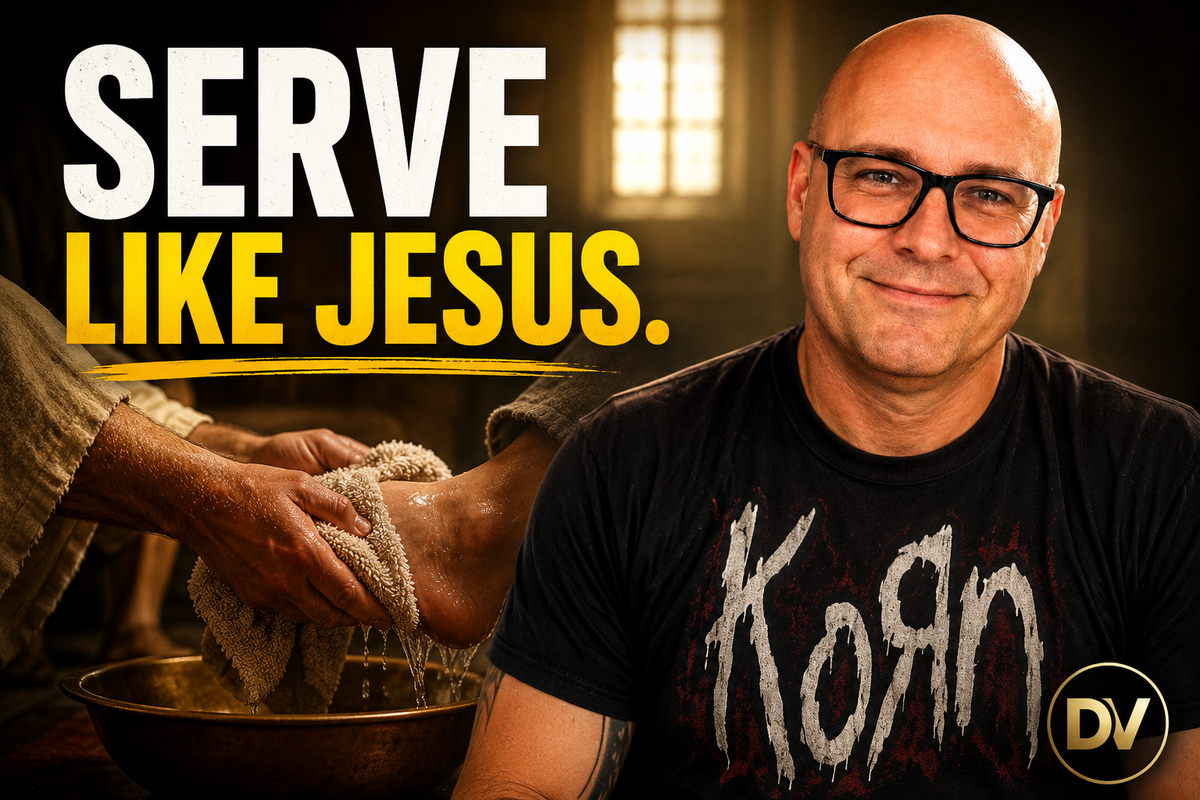
Chapter 1: When the Work Nobody Sees Becomes the Test
You can tell a lot about what is happening inside a person by how they respond when the work is low, messy, unnoticed, and inconvenient. Not the work that gets applause. Not the work that comes with a title. Not the work that makes people say your name with respect. I mean the kind of work that happens when the floor is wet, the trash needs to go out, somebody else left the mess, and your tired body is already trying to bargain its way out of caring. That is why the Day 5 Mercy Creek YouTube story about the towel in the church basement matters beyond the story itself, because it presses on something most of us would rather avoid: we often want God to give us a meaningful calling, but we can miss Him standing beside the ordinary task right in front of us.
A person can pray for purpose while ignoring the dishes in the sink. A person can ask God for influence while walking past someone who needs help carrying a box. A person can want to be used in a powerful way while quietly resenting the small responsibilities that keep showing up at home, at work, at church, in the family, or in the tired corners of daily life. That does not make us evil. It makes us human. We want our lives to matter, and sometimes we confuse mattering with being seen. That is where the deeper Christian reflection on being welcomed before learning to serve becomes so important, because there is a difference between trying to earn love through service and learning to serve because love has already found us.
Most people are not opposed to serving. They are opposed to feeling small. They are opposed to being taken for granted. They are opposed to doing the hidden work while someone else gets the credit. They are opposed to being the dependable one again, the quiet one again, the responsible one again, the person who notices what needs to be done and ends up doing it because everyone else walked away. That kind of weariness can build up inside the heart until even good work starts to feel like punishment. You may still help, but there is a pressure under it. You may still show up, but there is a resentment you do not want to admit. You may still do the right thing, but deep inside, you wonder why God keeps asking you to bend down when you already feel low enough.
This is where Jesus changes the whole picture. In John 13, He did not pick up the towel because He had forgotten who He was. He picked up the towel because He knew exactly who He was. That detail matters. The Gospel tells us that Jesus knew the Father had given all things into His hands, and that He had come from God and was going back to God. Then He rose from supper, laid aside His garments, took a towel, and began to wash His disciples’ feet. He did not serve from insecurity. He served from identity. He did not bend down because He had no authority. He bent down because His authority was not threatened by humility.
That is the perspective shift many of us need. We often think humble service will reduce us. Jesus shows us that humble service reveals us. It reveals whether our identity is resting in God or leaning too hard on being admired. It reveals whether we can love when nobody is keeping score. It reveals whether we are following Jesus Himself or only following the parts of faith that make us feel strong, clean, respected, or spiritually impressive.
Think about the parent who comes home after a long shift and finds the kitchen worse than it was that morning. There are shoes by the door, crumbs on the counter, a backpack half-open on the floor, and a child who needs help with homework at the exact moment the parent wants silence. Nobody claps when that parent takes a breath and chooses patience instead of snapping. Nobody posts a picture of the laundry being folded after everyone else has gone to bed. Nobody sees the private decision not to answer harshness with harsher words. But heaven sees. And more than that, Jesus understands that kind of low, hidden love because He built His Kingdom on it.
This does not mean every burden placed on you is holy. Some people use service as an excuse to avoid boundaries. Some families train one person to carry what everyone should be sharing. Some churches celebrate volunteers while quietly exhausting them. Some workplaces reward the person who always says yes by giving them even more to carry. Christian humility is not the same as becoming invisible to your own needs. Jesus served with love, but He was not controlled by people’s demands. He withdrew to pray. He told the truth. He rested. He said no when the crowd tried to turn His mission into their agenda.
So the towel is not a symbol of being used by everyone. It is a symbol of love that is free enough to serve without needing status. That difference can save a weary soul. When you serve from fear, you become bitter. When you serve from guilt, you become tired in a way sleep cannot fix. When you serve to prove your worth, every unnoticed sacrifice feels like evidence that nobody values you. But when you serve from the settled truth that you belong to God, service becomes something cleaner. It may still be hard. It may still cost you energy. It may still require wisdom and boundaries. But it no longer has to carry the weight of proving you matter.
There is a kind of person who looks strong in public but feels unseen in private. Maybe that is you. Maybe you are the one people call when something breaks, when money is short, when emotions spill over, when plans fall apart, or when somebody needs a ride, a meal, a listening ear, or one more chance. You do not always mind helping. In fact, part of you is grateful to be useful. But there are days when usefulness starts to feel like your whole identity. You wonder if anyone would still love you if you stopped fixing things. You wonder if anyone would notice you if you were not carrying something.
Jesus does not answer that fear by handing you a platform. He answers it first by showing you Himself with a towel. That may not be the answer our pride wants, but it is often the answer our soul needs. Because when Jesus kneels, He destroys the lie that low work means low worth. When Jesus serves, He destroys the lie that hidden love is wasted. When Jesus washes feet, He destroys the lie that humility is for people who have failed to become important. In His hands, the towel becomes a declaration that the Kingdom of God does not measure greatness the way the world measures it.
The world teaches us to climb. Jesus teaches us to descend without losing ourselves. The world tells us to protect our image. Jesus tells us to protect our love. The world says important people should be served first. Jesus kneels before confused disciples, including one who will deny Him and one who will betray Him. That is not weakness. That is strength so rooted in the Father that it does not need the room to understand it.
A man can sit in church for years and still be offended by the towel. A woman can know Scripture and still resent the quiet assignment. A leader can talk about servant leadership and still avoid the actual serving when it becomes inconvenient. That is not a reason for shame. It is a reason for honesty. Most of us have places where we like the idea of humility more than the practice of it. We like the beauty of sacrifice until sacrifice interrupts our schedule. We like the language of compassion until compassion asks us to slow down for someone who cannot give anything back.
A fresh way to look at this is to ask what the towel exposes in us. Not to condemn us, but to tell the truth about us. When we are asked to serve in a way that nobody notices, what rises up? Is it anger? Fear? Pride? Exhaustion? A quiet feeling of being used? A hunger to be thanked? A sadness that no one seems to see how much we already carry? Those reactions are not random. They are windows. They show us where our hearts need care, healing, correction, rest, or a deeper return to Christ.
This is why the hidden work of faith is so important. The towel does not only clean the floor, wash the feet, carry the plate, or wipe the table. The towel also reveals the heart of the one holding it. It shows whether we are still trying to negotiate with God for importance, or whether we are beginning to trust that being near Him is already honor enough. It shows whether we believe the Father sees in secret. It shows whether we can love without turning love into a performance.
There is a quiet freedom in no longer needing every good thing you do to become part of your public identity. You can help someone and not announce it. You can apologize and not turn the apology into a speech. You can serve your family without keeping a private courtroom in your mind where you present evidence of everything you did and everything they failed to notice. You can do the next right thing because it is right, because love is real, because Jesus is Lord, and because your Father sees what no one else sees.
That freedom does not come all at once. It comes slowly, usually through ordinary tests. A tired morning. A difficult person. A task beneath your skill level. A moment when you could make yourself look better but choose instead to make someone else’s burden lighter. A season when God seems to be building your character in places no one applauds. These are not wasted places. These may be the very places where your faith becomes less about being admired and more about becoming like Christ.
The towel comes before the platform because the towel tells the truth about what we would do with the platform if we had it. If attention makes us less loving, then attention is not a blessing yet. If influence makes us harder to reach, then influence is not safe in our hands yet. If being respected makes us less willing to serve, then respect has become too powerful inside us. Jesus does not train His people by first giving them stages. He trains them by teaching them to love in kitchens, basements, break rooms, hospital rooms, garages, church hallways, difficult marriages, strained friendships, and long seasons where the only audience is God.
And maybe that is where this begins for you. Not with a dramatic announcement. Not with a new title. Not with everyone finally understanding your value. Maybe it begins with one ordinary act of love done from a cleaner place. Not to be noticed. Not to be needed. Not to prove you are good. Not to silence guilt. Not to win approval. Just because Jesus has loved you, and now His love is teaching your hands what your heart is still learning.
Chapter 2: The Help We Resist May Be the Mercy We Need
A woman stands in the grocery store with her cart half full and her phone in her hand, pretending to compare prices while really checking the bank app for the third time. She knows what is in the account. She knew before she walked through the doors. Still, she keeps hoping the numbers will somehow look different if she refreshes the screen again. Her child is asking for cereal. The milk is more expensive than it was last month. She has already put one thing back from the cart and is trying to decide whether she can put back one more without anyone noticing the private math happening behind her eyes.
That moment does something to a person. It is not only about money. It is about dignity. It is about the quiet fear of being exposed. It is about not wanting the cashier, the person behind you, your child, your neighbor, or even yourself to see how close you are to the edge. Many people can handle being tired. Many can handle working hard. What breaks them down is needing help and feeling ashamed of the need.
This matters because the towel does not only teach us how to serve. It also teaches us how to receive. Before Jesus told His disciples to follow His example, He washed their feet. That means the first lesson was not, “Go do something impressive for Me.” The first lesson was, “Let Me love you in a place you would rather hide.” Peter struggled with that. He did not want Jesus bending down in front of him. He did not want the Lord near the dust on his feet. His resistance sounded respectful, but under the surface it carried the same struggle many of us know too well: it is easier to admire Jesus from a distance than to let Him touch the part of us that feels unclean, needy, embarrassed, or exposed.
There are people who will serve all day but panic when someone tries to serve them. They will bring meals, send encouraging messages, pray for others, pay attention to everyone else’s pain, and still say, “I’m fine,” when their own voice is barely holding together. They are not trying to lie. They have just learned to survive by staying useful. Usefulness feels safer than vulnerability. If they are helping, they still have some control. If they are receiving help, they have to admit the truth. They are human. They have limits. They cannot carry everything alone.
That is a hard admission in a world that praises independence until people collapse. We are told to be strong, push through, figure it out, keep moving, build the life, protect the image, and not let anyone see the cracks. Even in faith, we can accidentally baptize that pressure and call it maturity. We can start believing that strong Christians should not need much. We can confuse faith with emotional self-sufficiency. We can assume needing help means we are spiritually behind.
But the New Testament does not teach that. The church was born as a shared life. People prayed together, ate together, carried burdens together, confessed weakness, gave to those in need, and learned that the body of Christ is not a room full of isolated people trying to look stable. It is a family of people being formed by grace. Some days you carry the towel. Some days you are the one whose feet must be washed. Both require humility.
Receiving help can feel more humbling than giving it. Giving allows us to remain the capable one. Receiving forces us to stand in the open without our usual defenses. A man who can fix everyone else’s car may not know what to do when his own life breaks down. A mother who can sense everyone else’s needs may not know how to say, “I need someone to sit with me for an hour.” A leader who can speak hope into others may struggle to admit that his own prayers have become tired. A teenager with a hard face and a reputation for trouble may want belonging more than correction, but he may not know how to receive kindness without suspecting a trap.
This is where shame becomes dangerous. Shame tells us that need is proof of failure. Jesus tells us that need is often the doorway where grace enters. Shame says, “Hide this.” Jesus says, “Bring it here.” Shame says, “You are too much.” Jesus says, “Come to Me.” Shame says, “You should have been stronger.” Jesus says, “My strength is made perfect in weakness.” That does not make weakness pleasant, but it makes it less lonely. It means the low place is not automatically a cursed place. It may become the place where we finally stop performing long enough to be loved.
There is a different kind of strength that begins when we stop defending ourselves against mercy. Imagine a man sitting in a hospital waiting room while his wife is behind a door receiving test results. He has answered every text with, “We’re okay.” He has told his children not to worry. He has smiled at the nurse. He has made a list of questions on the back of an envelope. Then an old friend walks in quietly with two coffees and sits down beside him without asking for a report. The man feels his throat tighten because kindness has reached him before he could prepare a stronger face. In that moment, receiving the coffee may require more courage than giving one ever did.
God often sends help in forms that offend our pride because our pride is one of the things He is healing. The help may come through someone younger than us, someone we once helped, someone we do not want to owe, someone who has seen us at our worst, or someone we had quietly judged. That can be uncomfortable. We may prefer help that lets us stay above the situation. God may send help that brings us down into honesty.
There is mercy in that honesty. You are not less loved when you are unable to be the strong one. You are not less useful to God when you need someone else’s hand. You are not disqualified because the burden became heavy enough to show on your face. In fact, sometimes the most faithful thing you can do is stop pretending you are not tired. Not in a dramatic way. Not to make everyone responsible for your life. But in the humble, truthful way that says, “I am not God. I need grace. I need prayer. I need wisdom. I need help with this one.”
That kind of honesty can become a holy turning point in a family. Picture a father standing outside his teenager’s bedroom after an argument. He wants to go in with a lecture because lectures feel like control. He wants to prove his point. He wants to remind the child who pays the bills, who makes the rules, who has been patient enough already. But beneath that anger is fear. Fear that he is losing his child. Fear that he has already failed. Fear that tenderness will be mistaken for weakness. So he stands there with his hand near the doorknob, and instead of opening with authority, he opens with humility. He says, “I handled that wrong. I am still your dad, and we still have to talk about what happened, but I should not have spoken to you that way.”
That is a towel moment too. Not because the father has surrendered his responsibility, but because he has laid down the need to protect his pride. Humility does not erase authority. It cleans it. It makes room for love to breathe inside responsibility. It shows the child that repentance is not just something adults demand from children. It is something everyone who follows Jesus must learn.
This is part of the bigger reframing. The towel is not only about doing humble tasks. It is about becoming the kind of person who no longer treats humility as humiliation. There is a world of difference between the two. Humiliation says, “You have been lowered because you are worth less.” Humility says, “You can go low because your worth is safe with God.” Humiliation crushes. Humility frees. Humiliation is forced upon a person by shame or cruelty. Humility is chosen from a place of trust.
Jesus did not humiliate His disciples when He washed their feet. He loved them. He did not expose their dirt to embarrass them. He touched it to cleanse them. That is how He deals with us. He is not shocked by what we have tracked in from the road. He is not disgusted by the evidence that we are made of dust. He is not standing over us with crossed arms, waiting for us to clean ourselves before He comes close. He comes close because we cannot clean ourselves in the deepest places.
The person who understands this begins to serve differently. Their service becomes less sharp. Less needy. Less secretly angry. They can help without acting superior because they know what it feels like to be helped. They can bend down without despising the person in front of them because they remember Jesus bending down for them. They can see weakness without turning it into gossip because they have stopped pretending they have none of their own.
This is one reason people who have truly received mercy often become safer people. Not perfect people. Not soft in the sense of having no boundaries or no backbone. But safer. They do not need to make every wounded person feel smaller. They do not need to remind people of their failures every time they try to stand. They do not act like someone else’s low moment is entertainment. Mercy has changed the way they see.
A tired nurse driving home after a double shift may understand this better than a person with a shelf full of religious books. She has held hands with strangers, heard fear in waiting rooms, watched families argue under pressure, and seen how quickly life can make strong people tremble. When she pulls into her driveway and sits for a minute before going inside, she does not need a theory about human weakness. She has seen it. She has felt it. And if she has walked with Jesus long enough, she may also know that compassion cannot survive on human willpower alone. It has to be received again and again from the One who never runs out.
That is why hidden time with God matters. Not as a religious performance. Not as another task for already tired people to feel guilty about. But as the place where the soul stops pretending. You may sit with your Bible open and only read a few verses. You may pray in the car because that is the only quiet place you have. You may whisper, “Lord, I need help,” while washing your hands at work. You may not feel anything dramatic. Still, something real can happen when you stop trying to be the source and return to the Source.
A person who never receives will eventually serve from emptiness, and empty service often turns bitter. It starts to count. It starts to compare. It starts to say, “After all I have done, this is what I get?” That sentence may be understandable, but it is also a warning light. It tells us we may have been pouring out without letting Christ pour into us. It tells us we may have turned service into a bargain, hoping people would finally give us the worth only God can secure.
Jesus does not shame us for that. He invites us back. He reminds us that the towel in His hands comes before the towel in ours. We love because He first loved us. We forgive because we have been forgiven. We serve because He served us first. We show mercy because mercy found us when we had nothing impressive to offer.
So maybe the question is not only, “Where do I need to pick up the towel?” Maybe it is also, “Where do I need to stop fighting the grace that is trying to reach me?” Maybe it is the friend offering help. Maybe it is the apology you do not know how to accept. Maybe it is the prayer you keep avoiding because honesty would make you cry. Maybe it is the simple admission that you are tired, scared, lonely, or unsure. Maybe it is letting Jesus meet you without a polished speech, without a spiritual performance, without trying to explain why your feet got dusty on the road.
There is no shame in needing the Savior to be the Savior. There is no shame in being human before God. There is no shame in receiving the mercy that teaches you how to give mercy away. The towel in the church basement, the towel in the upper room, the towel in the quiet places of your own life, all of it points back to the same truth: Jesus does not wait for us to become impressive before He comes close. He comes close, and that is how we begin to change.
Chapter 3: When Mercy Looks Too Soft to Trust
The phone lights up on the kitchen counter before breakfast, and one message has already turned into twelve. Somebody made a mistake. Somebody said the wrong thing, broke trust, failed publicly, got caught, handled pressure badly, or became the name everyone is now discussing before the coffee is even finished. The first message sounds concerned. The second one adds a detail. The third one adds a judgment. By the time the thread has grown, concern has become a little courtroom, and everyone seems to know exactly what should happen to the person who is not in the room to speak.
That is one of the uncomfortable places where faith becomes real. Not when we are singing about grace. Not when we are telling our own story of being forgiven. Not when mercy is a beautiful idea safely attached to our past. Faith becomes real when mercy is needed by someone who has irritated us, disappointed us, embarrassed us, scared us, or created consequences we do not want to help carry. It is easy to love the towel when the towel is cleaning up neutral messes. It is harder when the mess has a name, a face, and a history of making people say, “This time, they need to learn.”
We should be honest about why judgment often feels safer than mercy. Judgment gives us the feeling of control. It lets us stand at a distance and declare what should happen. It allows us to organize the world into clean categories: responsible people and irresponsible people, good choices and bad choices, people who deserve help and people who have used up their chances. There is some truth in the need for responsibility. Actions matter. Sin damages real people. Foolishness has consequences. Mercy does not mean pretending harm did not happen. But the human heart can take a good desire for accountability and mix it with pride until we are no longer seeking restoration. We are seeking the satisfaction of seeing someone brought low.
That satisfaction is dangerous because it can imitate righteousness. We can sound wise while being cold. We can sound principled while secretly enjoying another person’s exposure. We can talk about standards while forgetting that every one of us is standing only by the mercy of God. This is not a call to ignore wrongdoing. It is a call to let Jesus examine the spirit we carry when wrongdoing appears. There is a difference between wanting truth and wanting blood. There is a difference between protecting people and punishing someone because their failure makes us feel superior.
Think about a workplace where one employee drops the ball on a project. Maybe a deadline is missed. Maybe a client is upset. Maybe the whole team has to scramble because one person did not do what they promised. By midmorning, everyone has an opinion. Someone says they saw it coming. Someone says that person has always been careless. Someone else says management needs to finally do something. There may be real issues to address. A leader may need to have a hard conversation. The team may need better systems, clearer expectations, or honest correction. But in the middle of all that, a follower of Jesus has to ask a deeper question: am I helping bring light to this situation, or am I enjoying the heat falling on someone else?
That question can humble us quickly. Most of us have been the person who needed mercy. We have missed something, mishandled something, spoken too fast, judged too harshly, failed to show up, broken a promise, reacted from fear, or made a decision we would give anything to take back. We may not have failed in the same public way another person failed, but we know what it is like to need more than consequences. We know what it is like to need someone to tell the truth without crushing us. We know what it is like to hope one moment does not become the permanent name written over our lives.
Jesus understood this. Again and again, He moved toward people others were ready to reduce. He did not deny sin. He did not call darkness light. He did not flatter people in their brokenness. But He refused to treat people as if their worst moment was the whole story. He saw tax collectors, sinners, outcasts, frightened disciples, proud religious leaders, grieving families, desperate parents, and people caught in shame. He spoke truth, but His truth was never empty of love. He offered mercy, but His mercy was never empty of holiness.
That balance is difficult for us. Some of us lean toward harshness because we are afraid mercy will weaken truth. Some of us lean toward avoidance because we are afraid truth will destroy mercy. Jesus holds them together. He can say, “Go, and sin no more,” without throwing a stone. He can restore Peter after denial without pretending denial was nothing. He can rebuke pride and still weep over the city. He can expose the heart without abandoning the person.
The towel helps us understand this because the towel is not sentimental. It is practical. It touches dirt. It deals with what is actually there. When Jesus washed feet, He did not pretend the road had been clean. He did not offer compliments about dusty sandals. He did not give a speech about how dirt was misunderstood. He washed it. Mercy does not deny the dirt. Mercy gets close enough to help remove it.
That means real mercy may include hard conversations. It may include restitution. It may include boundaries. It may include time. It may include a clear refusal to let someone keep harming others. But even then, mercy refuses to let contempt become the guiding voice. Mercy says, “This cannot continue,” without saying, “You are beyond hope.” Mercy says, “There are consequences,” without saying, “You are nothing but your failure.” Mercy says, “We have to tell the truth,” while still leaving the door open for repentance, healing, and a future that is not chained forever to one chapter of the story.
A parent learns this in painful ways. A teenager lies, sneaks, talks back, fails a class, damages trust, or makes a choice that scares the whole house. The parent feels anger, but under the anger there is fear. Fear can make love sound like prosecution. The parent may want to lecture for forty minutes because the lecture feels like a wall against the chaos. But there comes a moment, usually after the first wave of emotion, when the parent has to decide what kind of authority will fill the room. Will this be authority trying to win, or authority trying to restore? Will the child leave only knowing they were caught, or will they also know there is a way back?
That does not mean the parent removes every consequence. Love without structure can become confusion. But structure without mercy can become distance. A child may obey for a while under fear, but fear alone does not teach the heart how to become whole. There is a way to say, “You cannot do this,” while also saying, “I am not done loving you.” There is a way to say, “Trust has to be rebuilt,” while also saying, “You are still my child.” That kind of love is harder than anger. Anger burns fast. Mercy has to stay and build.
Many adults are still carrying the pain of rooms where nobody made a way back for them. They were corrected, but not restored. They were punished, but not guided. They were named by a mistake, a season, a reputation, a family story, a divorce, an addiction, a failure, or one painful year when they did not know how to be healthy. So when they see someone else fail, something complicated happens inside. Part of them wants to be merciful because they remember needing mercy. Another part wants to be harsh because nobody was gentle with them. The unhealed heart can start demanding that others pay the same emotional price it had to pay.
Jesus interrupts that cycle. He does not only forgive us as a private comfort. He teaches us how to become people who do not keep spreading the cruelty that wounded us. If you were shamed, you do not have to become a person who shames. If you were abandoned, you do not have to become a person who abandons. If nobody made room for your repentance, you can still become someone who makes room for repentance in others. That is not weakness. That is the Kingdom breaking a chain.
One of the hardest parts of mercy is that it can be misunderstood by people who prefer clean punishment. If you are gentle with someone who failed, someone may accuse you of being naive. If you leave room for restoration, someone may say you are letting them get away with it. If you refuse to gossip, someone may think you do not care about justice. This is why mercy must be rooted in Christ, not in the approval of the crowd. Crowd emotions shift quickly. Jesus does not.
It takes courage to stand near a person others have decided to throw away. It takes wisdom too. Not every situation requires the same response. Some people are dangerous and need distance. Some situations require legal action, protection, or outside help. Some patterns cannot be healed by private kindness alone. Christian mercy is not foolishness. It does not ask victims to pretend they were not harmed. It does not require people to stay where they are being destroyed. Mercy must never be used as a tool to silence the wounded.
But once we have said that clearly, we also have to say the other truth clearly: many situations in ordinary life are not about danger. They are about pride, irritation, disappointment, reputation, inconvenience, and the human desire to make someone pay. In those moments, mercy may be the most Christlike thing in the room. Not because the failure does not matter, but because the person still matters too.
There is a quiet test here for anyone who wants to follow Jesus. Can we care about the people affected by sin and still care about the sinner’s restoration? Can we protect what is right without becoming cruel? Can we hold a boundary without hatred? Can we tell the truth without turning truth into a weapon for our ego? Can we remember our own need for grace when someone else’s need for grace is public and messy?
The towel answers by bringing us lower. It does not lower truth. It lowers pride. It brings us close enough to see that the person in front of us is not a headline, not a rumor, not a problem to discuss, not a mistake to enjoy from a distance. They are a soul. They may be wrong. They may need correction. They may have consequences ahead of them. But they are still a soul made by God, still someone Jesus came to seek, still someone whose story may not be finished.
That changes how we speak. It changes the kitchen counter conversation. It changes the group text. It changes the way we talk after church. It changes the way we describe the person who failed at work. It changes the way we respond when a family member is trying to come home slowly and awkwardly. It changes the way we look at the teenager with the reputation, the brother who left, the mother who is exhausted, the leader who is learning, the deputy who is softening, the neighbor who has been hard to love, and the person in the mirror who still needs mercy too.
A town, a family, a church, or a heart can spend years believing judgment is what keeps everything safe. But Jesus shows us that judgment without mercy does not heal the community. It only teaches everyone to hide better. Mercy joined with truth does something deeper. It brings the hidden things into the light without turning the light into a flame thrower. It gives repentance somewhere to stand. It gives the wounded a path toward protection and the guilty a path toward change. It tells the whole room that sin is serious, but grace is serious too.
And maybe that is why the towel comes before the harder test of mercy. If we have not learned to bend down in ordinary service, we will struggle to bend down when someone’s failure has made the room tense. If we have not let Jesus wash our own dusty feet, we will be quick to condemn the dust on someone else’s. If we have not received mercy deeply, we may use truth harshly because we do not yet know how tender truth can be in the hands of Christ.
The next time a name becomes the center of the conversation, pause before adding your sentence. Ask whether your words are carrying the towel or the stone. Ask whether you are helping truth do its healing work or helping shame do its damage. Ask whether the person you are discussing would recognize Jesus in the way you are speaking. That pause may feel small, but it may be the moment where your faith moves from belief into obedience.
Chapter 4: The Day You Stop Needing the Room to Notice
A man stays after the meeting because the chairs still need to be put away. Everyone else has drifted toward the parking lot, still talking, still laughing, still carrying the warm feeling of being part of something good. He is glad they came. He is glad people were encouraged. He is glad the night mattered. But as he folds one chair after another and stacks them against the wall, a small sentence begins to form inside him: nobody even noticed.
He does not say it out loud. He may even feel guilty for thinking it. After all, the work needed to be done. Somebody had to do it. He chose to stay. But the feeling is still there. It is that quiet mix of service and sadness that many faithful people know well. You help because you care, but part of you also wants someone to turn around and see you. You do not need a parade. You are not asking for your name on a plaque. You just want one person to notice that you were tired too, that you stayed too, that you carried something too.
That desire is not automatically wrong. Human beings are not machines. Encouragement matters. Gratitude matters. A family, a church, a workplace, or a friendship becomes healthier when people see and thank one another. It is not spiritual maturity to treat appreciation as if it has no value. Even Paul thanked people by name. Jesus noticed the widow’s offering. The Father sees what is done in secret. Being seen is not the enemy. The danger begins when being seen becomes the fuel that keeps our love alive.
When recognition becomes fuel, service becomes unstable. On the days people notice, we feel warm, useful, and willing. On the days they do not, we feel foolish. We begin to measure the worth of obedience by the response it receives. We replay conversations, wondering why no one thanked us. We compare who got attention and who did not. We tell ourselves we are just tired, and maybe we are, but underneath the tiredness is a deeper question: did this matter if nobody saw it?
Jesus answers that question before we even ask it. Yes, it mattered. Not because people clapped. Not because the room understood. Not because it improved your image. It mattered because love done before God is never wasted. It mattered because hidden faithfulness is still faithfulness. It mattered because the Kingdom of God is built through countless small acts that never become public stories.
There is a freedom that begins when we stop making the room responsible for confirming our obedience. That does not mean we stop caring whether people are kind. It does not mean we become numb. It means we learn to place the deepest confirmation somewhere safer than human attention. People are inconsistent. They miss things. They get distracted. They are carrying their own worries. Sometimes they fail to thank us because they are careless. Sometimes they fail to thank us because they genuinely did not see. Sometimes they fail to thank us because they have never learned how much it costs to be the person who stays behind and folds the chairs.
If our peace depends on their awareness, our peace will always be fragile. But if our obedience rests before the Father, then unnoticed work can become holy ground instead of private evidence that we are invisible. That is not an easy shift. It is not something we learn from a slogan. We learn it slowly, usually while doing the very things we wish someone else would notice.
Picture a woman caring for an aging parent. She manages medication, appointments, insurance calls, grocery lists, laundry, bathing, meals, and the emotional weight of watching someone she loves become more dependent. Other family members may care, but they are not there for the daily grind. They call and ask how things are going, but they do not see the 2:13 a.m. trip down the hallway, the sheet change after an accident, the phone call to the doctor, the quiet crying in the car before walking into the pharmacy. She is not looking for fame. She is looking for enough recognition to not feel alone.
If someone tells her, “Just serve without needing anything,” that can sound cruel. It can sound like faith is asking her to disappear. But Jesus is not asking her to disappear. Jesus sees her. That is the first truth. The second truth is that she still needs human support, rest, and help. Christian service should not become a spiritual excuse for everyone else to abandon responsibility. The towel does not mean one person must always carry what a whole family should share.
But there is another truth, and it is tender because it meets the hidden place: even if people fail to see the full weight, God does. The unseen labor is not unseen to Him. The cup of water, the changed sheet, the patient answer, the restrained anger, the prayer whispered while turning the key in the ignition, the decision to show up again when the body is worn down, all of it is known to the Father. Not vaguely known. Personally known. Held with more care than the people around you may understand.
That does not erase the need for relief, but it reframes the meaning of the work. You are not merely doing tasks that swallowed your life. You are loving in the presence of God. You are being formed in a place where comfort and inconvenience meet. You are learning a kind of Christlikeness that cannot be performed on a stage because it is too real for that. Some of the deepest spiritual growth happens where no one would think to look for it.
The world often trains us to believe that public impact is the highest form of usefulness. We count views, responses, promotions, invitations, followers, compliments, and visible outcomes. We ask whether something is growing, whether people are noticing, whether the work is expanding, whether the numbers prove the value. There is nothing wrong with wanting good work to reach people. It is not wrong to care about fruit. But if visible reach becomes the only form of meaning we trust, we will start undervaluing the work Jesus most often uses to make us like Himself.
Jesus spent years in hiddenness before His public ministry. He knew ordinary labor. He knew family life. He knew small-town assumptions. He knew what it meant for people to look at Him and think they already understood Him. When His public ministry began, He still did not chase attention the way people expected. He healed people and sometimes told them not to broadcast it. He withdrew when crowds wanted to control Him. He spent time with individuals when the masses were waiting. His life was never governed by visibility. It was governed by obedience to the Father.
That is a different center. Visibility asks, “Who is watching?” Obedience asks, “What has love placed in front of me?” Visibility asks, “Will this build my name?” Obedience asks, “Will this honor my Father?” Visibility asks, “Is this worth it if nobody knows?” Obedience says, “The Father knows, and that is not nothing.”
This perspective does not come naturally, especially in a time when almost everything is measured, posted, reviewed, tracked, ranked, and compared. A person can begin to feel as if an act did not matter unless it became content, unless it received a response, unless there is proof other people valued it. But some of the most important things you will ever do cannot be captured well from the outside. The apology at the kitchen table. The decision not to send the harsh reply. The hospital visit. The ride given to someone who could not repay you. The money quietly slipped to someone in need. The faithful prayer no one asked you to pray. The choice to keep loving a difficult person with wisdom instead of bitterness.
There is a kind of maturity that stops needing to turn every act of obedience into a receipt. The immature heart says, “I will do this, but I need proof it counted.” The growing heart says, “I want to know it counted, Lord, and I am bringing You that need, but I will not let the absence of applause decide whether love was worth it.” That is honest. That is not pretending recognition does not matter. It is placing the hunger for recognition under the care of God instead of letting it drive the car.
Sometimes the hunger to be noticed is connected to older wounds. A person who was overlooked as a child may feel panic when their adult sacrifices are missed. A person who was only praised for achievement may struggle to believe they are loved when they are simply present. A person who has been used by others may hear every request for help as a threat. These reactions do not make faith weak. They show where Jesus wants to heal the roots, not just trim the branches.
Maybe you know exactly what that feels like. You are not only upset about the chair you folded, the meal you cooked, the extra shift you covered, the ride you gave, or the message nobody answered. You are carrying years of feeling like people see your usefulness but not your heart. That is a heavy place to live. It can make even love feel dangerous because love keeps giving people opportunities to miss you again.
Jesus does not mock that pain. He meets it. But He also does not leave us ruled by it. He teaches us to serve from a deeper well. He teaches us to receive care from Him and, where possible, from safe people. He teaches us to name our need without letting it become a demand that every room fill the emptiness only God can heal. That is a slow work. It may involve prayer, honest conversations, boundaries, repentance, grief, and the courage to stop calling bitterness discernment.
A practical way this begins is with a simple pause before the hidden resentment hardens. When you feel that sentence rising inside you, nobody noticed, do not shove it down and do not let it take over. Bring it to God plainly. “Lord, I wanted them to see that. I feel foolish. I feel taken for granted. Help me know what is mine to carry and what is not. Help me serve from love, not from a wound. Help me ask for help where I need help. Help me not turn this into contempt.”
That kind of prayer may not feel dramatic, but it can interrupt the old pattern. It can keep a tired heart from building a case against everyone in the room. It can also give you courage to speak honestly when something truly needs to change. Sometimes the faithful response is not silent endurance. Sometimes it is saying, “I am willing to help, but I cannot keep carrying this alone.” Sometimes it is asking the family to make a plan. Sometimes it is telling the church leader that volunteers need rest. Sometimes it is telling a supervisor that the workload is not sustainable. Humility and honesty belong together.
The towel does not require you to become a doormat. It invites you to become free. Free from the pride that refuses low work. Free from the resentment that poisons low work. Free from the fear that your life only matters when people are impressed. Free from the secret bargain that says, “I will serve if everyone sees how much it costs me.” Jesus offers a better way. He sees you fully, loves you deeply, and teaches you to love without handing your identity to the room.
The next time you are left with the quiet task, the unseen burden, or the ordinary act that nobody is likely to praise, take a breath before bitterness gets the first word. Ask whether this is yours to do, and if it is, do it with God instead of for applause. Ask whether you need help, and if you do, be humble enough to ask for it. Ask whether the need to be seen is revealing a place in you that still needs healing. Then remember the Savior with the towel. He was not less glorious because He knelt. You are not less valuable because your love is hidden.
There will still be days when nobody turns around. There will still be evenings when you stack the last chair alone. There will still be moments when gratitude does not arrive, when help is late, when the people who benefited from your sacrifice do not understand its weight. But those moments do not get the final word over your worth. The Father who saw His Son kneel in the upper room sees you in the fellowship hall, the office, the sickroom, the kitchen, the driveway, the break room, and the quiet corner where you are trying not to give up. If He sees it, it is not invisible. If love did it, it is not wasted. If Jesus is forming you through it, it is not small.
Chapter 5: The Calling Hidden Inside the Ordinary Task
A young man sits in his car outside work with one hand on the steering wheel and the other wrapped around a gas station coffee that is already going cold. He is early, but not because he is excited. He is early because the house was loud, his mind was louder, and sitting in the parking lot for seven minutes felt better than walking straight into another day of being underpaid, underused, and spoken to like he is replaceable. He has been praying for direction. He has asked God for a bigger purpose. He has imagined doing something that matters. Then the clock changes, and the purpose in front of him looks like unlocking the back door, turning on the lights, answering emails, sweeping up someone else’s mess, and trying not to carry irritation into every conversation.
That is where many people quietly lose respect for the life God is using to form them. Not because they hate work. Not because they are lazy. Not because they do not want to serve. They lose heart because the ordinary task feels too small to match the longing inside them. They believe they were made for something meaningful, and they are right. But then they assume meaningful must look larger, cleaner, more visible, or more obviously connected to destiny. So they stand in the middle of the assignment they actually have while dreaming about the one they think would finally prove they matter.
The towel challenges that assumption. It tells us that the ordinary task may not be an interruption of calling. It may be part of the calling itself. The low work may be the training ground where God teaches the soul how to carry higher responsibility without becoming proud, harsh, impatient, or hungry for applause. The hidden assignment may be where the Lord finds out whether our love can survive without constant confirmation. The small task may be the mirror that shows whether we are ready to follow Jesus in the way He actually walks, not only in the way we imagined following Him would feel.
This does not mean every frustrating situation is God’s perfect assignment. Some jobs are unhealthy. Some leaders misuse people. Some environments wear down the spirit in ways that require change, wisdom, and courage. There are seasons when obedience means staying faithful where you are, and there are seasons when obedience means leaving what has become destructive. But even when a place is not permanent, the posture you carry inside it still matters. A person can leave a hard season with wisdom, or they can leave with a heart trained by bitterness. The difference is often found in what they allowed God to teach them while the work felt beneath them.
Jesus spent much of His earthly life in ordinary obscurity. Before the crowds, before the miracles people talked about, before the public teaching, before the cross, there were years of normal human life. There was family, labor, patience, hidden faithfulness, and daily obedience in a small place that many people assumed they understood. That should steady us. If the Son of God was not diminished by ordinary years, then ordinary years are not proof that God has forgotten us. They may be proof that God is building something deep enough to last.
We often want calling to arrive as a clear announcement. We want the door to open, the path to light up, the right people to recognize us, the opportunity to match the dream, and the moment to feel unmistakable. Sometimes God does open doors in ways we can clearly see. But much of the time, calling grows quietly inside faithfulness. It forms while you keep your word when no one would know if you cut corners. It forms while you treat a difficult customer with patience. It forms while you care for your children on a morning when you have nothing dramatic to give. It forms while you keep praying for someone who still has not changed. It forms while you do the right thing in a room where doing the wrong thing would be easier and more popular.
A woman working the front desk at a clinic may not think of her job as spiritual. She answers phones, checks insurance, handles impatient voices, prints forms, and watches people walk in scared, sick, annoyed, or tired. Her work can feel repetitive. But one afternoon, an older man comes in confused by the paperwork and embarrassed that he cannot understand what he is supposed to sign. She could rush him. She could point to the line and move on. Instead, she slows her voice, steps around the counter, and helps him without making him feel foolish. That moment may never become a testimony anyone hears. But it is not small. It is a towel in another form.
This is how the Kingdom often moves through ordinary life. Not only through sermons, books, songs, missions, platforms, and public moments, but through the quiet presence of Christ in people who have decided that love is not waiting for a grand stage. The Lord can use a patient voice. He can use a clean table. He can use a ride across town. He can use a repaired sink, a meal delivered, a shift covered, a child listened to, a debt forgiven, a message answered gently, or a task done well when nobody expected excellence.
That kind of faith does not make the world’s headlines, but it changes the atmosphere around a person. There are homes where the whole mood shifts because one person stops treating ordinary service as an insult. There are workplaces where the pressure softens because one person refuses to pass along contempt. There are churches where people begin to feel safe because someone cares more about faithfulness than being important. There are families where healing begins because one person stops waiting for everyone else to become humble first.
The hard part is that ordinary obedience can feel slow. We want evidence. We want momentum. We want to know that the small choices are adding up. But spiritual formation often works more like roots than fireworks. Roots do not impress the eye, but they decide whether the tree can stand when the wind comes. If God is building roots in you, the process may feel unimpressive from the outside. You may be learning patience in a job you did not choose, gentleness in a family that tests you, endurance in a season that keeps asking more than you expected, or trust in a place where the next step is not clear yet.
A person can waste that season by despising it. They can spend every day rehearsing why they deserve better, why others are the problem, why nothing matters until the bigger thing comes. Or they can bring the honest frustration to God and ask Him for eyes to see what this ordinary place is forming in them. The first path often makes the heart smaller. The second path can make the heart steadier.
That does not mean you stop dreaming. Faithfulness in small things is not the enemy of big calling. It is often the road to it. Dreams can be holy. Ambition can be redeemed. A desire to build, lead, create, teach, serve, provide, protect, or reach people can come from God. But the dream has to be purified from the need to be admired. Otherwise, even a good calling can become a place where the ego hides in spiritual language.
The towel helps purify the dream. It asks whether you still want to serve if the first assignment is not impressive. It asks whether you can love the person in front of you before you reach the crowd you imagine. It asks whether you can be faithful with one conversation, one child, one customer, one neighbor, one patient, one coworker, one brother, one quiet act of obedience. It asks whether the dream is truly about love or secretly about being seen as special.
Those questions can sting, but they are not meant to crush us. They are meant to free us from building our lives on the unstable ground of image. God is not against influence. He is against influence becoming an idol. God is not against leadership. He is against leadership that refuses to kneel. God is not against public work. He is against public work that is not rooted in private surrender.
There may be someone reading this who feels trapped in smallness. You have responsibilities that do not look inspiring. You have bills, appointments, errands, repairs, family tension, work demands, and a body that gets tired before the day is done. You see other people moving faster, being noticed, stepping into opportunities, and you wonder whether your life has been placed on a side road. But do not confuse hidden with forgotten. Do not confuse ordinary with empty. Do not confuse slow formation with absence.
If Jesus is with you, the ordinary place can become sacred without becoming easy. The task may still be tiring. The job may still need to change. The family conversation may still be hard. The dream may still require courage, discipline, and planning. But the meaning of today does not have to wait until everything looks impressive. Today can matter because obedience matters. Today can matter because love matters. Today can matter because God is forming the kind of person who can carry tomorrow without being ruined by it.
One of the clearest signs of growth is when a person begins to treat the present assignment with respect while still trusting God for the future. They stop using tomorrow as an excuse to be careless today. They stop saying, “When my real calling comes, then I will be faithful.” They begin to understand that faithfulness is not something you suddenly become when the work becomes exciting. It is something God grows in you through the work that tests your patience now.
This may change how you walk into the next ordinary day. You may still sit in the car before work and feel tired. You may still wish the circumstances were different. You may still pray for open doors. But maybe you will also pray something deeper: “Lord, do not let me miss You here. Do not let me despise the place where You are forming me. Give me wisdom about what needs to change, but give me humility for what needs to be learned. Teach me to carry the towel without losing the dream, and teach me to carry the dream without dropping the towel.”
That prayer can turn the whole day. It can make the back door, the inbox, the customer, the child, the parent, the patient, the coworker, the neighbor, and the unfinished task look different. Not glamorous. Not easy. But different. Because suddenly the question is not only, “Is this big enough for me?” The better question becomes, “Can I meet Jesus here, and can I become more like Him while I do what love requires?”
The calling hidden inside the ordinary task is not always the task itself. Sometimes the task is temporary. Sometimes it is simply one small assignment in a long life. But the formation happening inside the task can be eternal. The patience, humility, courage, honesty, tenderness, discipline, and love God grows there may follow you into every future door He opens. And when that door opens, you may discover that the towel was never holding you back. It was teaching your hands how to carry what comes next.
Chapter 6: When Being Needed Becomes a Hiding Place
A woman sits at the edge of her bed with her shoes still on because if she takes them off, she knows she may not get back up. Her phone is beside her, buzzing with messages from people who need answers. One person needs her opinion. One needs her help. One needs her to fix a problem that should have been handled three days ago. There is a load of laundry in the washer that has already been restarted once because she forgot it. There is a bill on the nightstand she has not opened yet. There is a half-finished cup of water beside the bed, a notebook full of things she meant to do, and a body that is quietly begging for rest.
But she does not rest. She replies to the messages. She makes the call. She updates the list. She tells herself this is what responsibility looks like. And part of that is true. Responsibility often looks like doing what needs to be done even when you are tired. Love often costs energy. Faithfulness is not always convenient. But there is another question underneath the visible work, and it is harder to face: what happens inside us when being needed becomes the main way we know we matter?
That question can slip past us because being needed looks noble. It looks useful. It looks sacrificial. It can even look spiritual. People trust us. People depend on us. People say, “I do not know what I would do without you.” At first, that can feel like encouragement. But over time, if we are not careful, those words can become a quiet trap. We begin to confuse dependence with love. We begin to believe our value is tied to how much we can carry. We begin to fear that if we stop being necessary, we may stop being wanted.
This is one of the hidden dangers of service. Not the service itself, but what the wounded heart may start using service to protect. Some people hide from God by running into obvious sin. Other people hide from God by staying busy with good things. They become too needed to be honest. Too responsible to grieve. Too useful to admit loneliness. Too involved to sit still long enough for Jesus to ask the question beneath all the activity: do you know I love you when you are not producing anything?
That question can feel uncomfortable because many of us are more comfortable with assignment than affection. Give us a job and we know what to do. Give us a crisis and we can move. Give us a person to help and we can become steady. But ask us to simply be loved by God without proving, fixing, carrying, leading, rescuing, explaining, or performing, and suddenly we feel exposed. We do not know where to put our hands. We do not know what to say. We do not know who we are when no one needs us for a moment.
Jesus never treated service as a hiding place. He served from communion with the Father, not as a substitute for it. He healed, taught, fed, listened, touched the untouchable, welcomed the overlooked, and gave Himself completely. But He also withdrew to pray. He slept in a boat while the storm raged. He left towns where people still had needs. He did not let human urgency become the Lord of His schedule. That is not because He lacked compassion. It is because His compassion was rooted in obedience, not panic.
That distinction matters. Some of us call it compassion when it is really fear. Fear of disappointing people. Fear of being criticized. Fear of being replaced. Fear of being ordinary. Fear that someone will be upset if we say no. Fear that if we are not always available, people will finally see we are not as strong as they thought. So we say yes again, but our yes is not free. It is pulled out of us by anxiety. It wears the language of love, but underneath it there is a frightened need to keep everything from falling apart.
A man leading a small team at work may know this pressure. He answers emails late because he wants to be seen as dependable. He takes on extra problems because he does not trust anyone else to handle them correctly. He tells himself he is protecting the team, but he is also protecting his image as the one who can always solve it. Then one day he snaps at someone over a small mistake and wonders where the anger came from. It came from carrying too much for too long, but it also came from the pride of believing everything had to pass through his hands.
Pride does not always sound arrogant. Sometimes pride sounds like, “I am the only one who can do this.” Sometimes it sounds like, “If I do not hold this together, everything will collapse.” Sometimes it sounds like, “No one else cares as much as I do.” There may be a little truth in those sentences. You may be more responsible than the people around you. You may notice what others miss. You may care deeply. But pride can take even true observations and turn them into a lonely throne.
The towel pulls us down from that throne. It teaches us to serve, but it also teaches us that we are not the Savior. That may be one of the most freeing truths a servant-hearted person can learn. You can love people without becoming their Messiah. You can carry responsibility without carrying God’s role. You can be faithful without being unlimited. You can help without believing every outcome rests on you.
There is humility in picking up the towel, and there is humility in putting it down when God has not asked you to keep holding it. Both matter. Some people need to repent of refusing low service. Others need to repent of using endless service to avoid trust. They do not trust God to work through anyone else. They do not trust people to grow unless they manage every detail. They do not trust love to remain if they stop over-functioning. They do not trust rest because rest feels like letting go of control.
The Sabbath principle speaks into this more deeply than many people realize. Rest is not laziness. Rest is a confession. It says, “God is God, and I am not.” It says, “The world can continue for a little while without my hands on every lever.” It says, “My value is not created by my output.” It says, “I am a creature loved by the Creator, not a machine kept around only while I am useful.” That kind of rest can feel threatening to a heart trained by pressure, but it is part of how God heals us.
Imagine someone sitting in a quiet car after dropping off groceries for a family member. They did the loving thing. They helped. But instead of driving straight to the next task, they sit there and finally whisper the truth: “Lord, I am tired of being the dependable one.” That prayer may be the most honest thing they have said all week. It does not mean they hate the people they help. It does not mean they want to stop loving. It means they are inviting Jesus into the place where love and exhaustion have become tangled.
Jesus is gentle in that place. He does not despise the tired servant. He does not shame the one who has been carrying too much. He does not say, “After all I carried, you should never feel weary.” He says, “Come to Me, all who labor and are heavy laden, and I will give you rest.” That invitation is not only for people who have made a mess of their lives in obvious ways. It is also for the faithful ones whose souls are worn thin from doing good while forgetting how to receive goodness.
There is a deep perspective shift here. The goal of Christian service is not to become needed by everyone. The goal is to become faithful to Jesus. Sometimes faithfulness means showing up when it costs you. Sometimes faithfulness means stepping back so someone else can grow. Sometimes faithfulness means doing the unseen work. Sometimes faithfulness means refusing to keep feeding a pattern that keeps everyone else immature and keeps you exhausted. Love is not always doing more. Sometimes love is doing what is actually yours and trusting God with what is not.
That can be hard in family life. A mother may need to stop rescuing an adult child from every consequence. A brother may need to stop becoming the emergency plan for relatives who refuse wisdom. A church volunteer may need to stop covering every gap because no one else will learn responsibility if the same tired hands keep filling every hole. A leader may need to delegate even though the task will not be done exactly the way he prefers. These are not failures of love. They may be love growing wiser.
Wise service asks better questions than guilt does. Guilt asks, “Will people be upset if I do not do this?” Wisdom asks, “Is God actually asking me to carry this?” Guilt asks, “What will they think of me?” Wisdom asks, “What response would love and truth give here?” Guilt asks, “How do I avoid disappointing anyone?” Wisdom asks, “What is faithful, healthy, honest, and obedient?” Those questions may not give an easy answer every time, but they move the heart out of panic and back toward God.
The person who learns this becomes less frantic and more fruitful. They may still work hard. They may still serve deeply. They may still be the first to notice the wet floor and the last to leave the room. But something inside changes. They are no longer serving to keep their identity alive. They are serving because they are already alive in Christ. They are no longer carrying the towel as proof that they deserve love. They are carrying it as an expression of the love they have received.
This also makes them easier to be around. When service is driven by hidden fear, it often comes with pressure attached. People can feel the silent invoice. They may receive help, but they also feel the weight of the helper’s resentment, control, or need to be appreciated. But when service comes from a free heart, it feels different. It does not manipulate. It does not demand worship. It does not make the recipient feel smaller. It gives what love can give and trusts God with the rest.
None of us live there perfectly. We drift. We overdo. We underdo. We say yes when we should say no. We say no when love is asking us to say yes. We help with a clean heart one day and a resentful heart the next. That is why we keep coming back to Jesus. Not to polish an image of ourselves as humble servants, but to be formed by the One who knows how to kneel without losing Himself and how to withdraw without abandoning love.
Maybe the next step is not dramatic. Maybe it is one honest prayer before you reply to the message. Maybe it is admitting you need rest before your body forces the issue. Maybe it is asking someone else to help carry the responsibility. Maybe it is serving quietly today, but without the old bargain in your heart. Maybe it is letting Jesus tell you that you are loved before anyone needs you, after everyone leaves, and in the silence where your usefulness cannot speak for you.
The towel is holy, but it is not a chain. Service is beautiful, but it is not your Savior. Being needed may be part of your life, but it must never become the foundation of your worth. Jesus is strong enough to carry the world, and He has not asked you to replace Him. He has asked you to follow Him. That means you may bend down in love, and you may also rest in trust. You may serve with both hands, and you may also open those hands when the Father says, “That is enough for today.”
Chapter 7: The Quiet Courage of Going Low First
A husband stands at the kitchen sink rinsing a plate that was not his, listening to the silence behind him. The argument ended twenty minutes ago, but the room still feels full of it. His wife is in the living room pretending to look at her phone. He is pretending the dishes matter more than the sentence he knows he needs to say. The house is not loud anymore, but it is not peaceful either. It has that tired, cold quiet that comes after two people have both been hurt and neither one wants to be the first to soften.
He can make a case for himself. He has a whole speech ready. He could explain why he reacted the way he did, why her tone started it, why he has been carrying pressure all week, why he is tired of feeling misunderstood. Some of that may even be true. But there is a moment when the Holy Spirit does not ask him to win the case. He asks him to pick up the towel. Not literally this time. Not a cloth in his hands. Something harder. The towel of the first humble word.
That may be one of the most difficult kinds of service. It is one thing to clean a room after a flood. It is another thing to lower yourself in a relationship where pride has been building a wall brick by brick. The work is not muddy water on a floor. It is ego, defensiveness, fear, old wounds, sharp memories, and the stubborn need to be understood before you are willing to understand. Many people can serve in public and still refuse to go low at home. They can volunteer, give, work hard, help strangers, and still keep a cold war alive in the kitchen because saying, “I was wrong,” feels too expensive.
The towel comes into that room too. It comes into marriage. It comes into parenting. It comes into sibling tension. It comes into friendship. It comes into the strained conversation with the adult child, the old friend, the coworker, the church member, the neighbor, and the person you love but no longer know how to reach without stepping on something painful. Jesus does not limit humility to visible acts of service. He brings humility into the unseen places where we keep defending ourselves.
Going low first does not mean taking blame for everything. It does not mean pretending the other person did nothing wrong. It does not mean returning to a harmful pattern, ignoring abuse, or making peace more important than truth. There are situations where safety, boundaries, distance, counseling, outside help, or legal protection are necessary. Christian humility must never be twisted into a demand that wounded people keep absorbing harm. Jesus is gentle, but He is not confused about evil. Love protects.
But in many ordinary conflicts, the danger is not that we are being asked to enable destruction. The danger is that we are being asked to surrender pride. And pride can make surrender feel like death. Pride says, “If I apologize first, they win.” Pride says, “If I soften, they will think I was the whole problem.” Pride says, “If I reach out, I will look weak.” Pride says, “Wait until they come to you.” Pride can sound like wisdom when the heart is hurt, but it often leaves the room colder than it found it.
Jesus gives us another way. He does not tell us to measure every act of humility by whether the other person deserves it. He calls us to measure our lives by the love we have received from Him. That love does not make us careless. It makes us courageous. A person who knows they are secure in Christ can tell the truth about their own part without collapsing. They can say, “I was harsh,” even if the other person was also unfair. They can say, “I should have listened,” even if there is still more to discuss. They can say, “I do not want this wall between us,” without surrendering every boundary or every conviction.
There is a quiet courage in going low first because it exposes the heart. When you apologize, you cannot control whether the other person receives it well. When you extend mercy, you cannot control whether they become tender or use it as an opportunity to defend themselves more. When you ask to talk, you cannot control whether the conversation goes the way you hoped. Humility always carries risk because love always deals with real people, not imaginary people who respond perfectly.
That risk is why many of us choose distance. Distance feels safer than humility. Sarcasm feels safer than honesty. Silence feels safer than asking for repair. Staying busy feels safer than sitting across from someone and saying what is true without attacking them. But safe is not always healed. Sometimes safe is only a locked room where resentment is allowed to grow without interruption.
A sister knows this when she sees her brother’s name on her phone and lets it ring. They have not had a real conversation in months. Nothing dramatic happened all at once. It was small things, layered over time. A comment at a family meal. A missed birthday. A disagreement about their mother’s care. A text that sounded colder than it may have been intended. Now every interaction has history attached to it. She tells herself she is protecting her peace, and maybe part of her is. But another part knows she is also protecting her pride. She does not want to be the one who reaches out because she has already decided he should understand how much he hurt her.
Then, later that night, she opens a blank message and types, “I do not want us to keep drifting like this. Can we talk this week?” She deletes it twice. She rewrites it. She stares at it. Her stomach tightens before she sends it. That small message may not look dramatic to anyone else, but in heaven it may look like courage. Not because it fixes everything. It may not. But because she refused to let pride make every decision for her.
This is where the towel becomes a way of seeing relationships differently. The towel asks, “What would love do if pride did not get the first vote?” Not what would fear do. Not what would guilt do. Not what would people-pleasing do. Not what would avoidance do. What would love do? Love may speak. Love may wait. Love may apologize. Love may set a boundary. Love may ask a question instead of making an accusation. Love may refuse to gossip. Love may choose a softer tone. Love may stop rehearsing the worst interpretation of what someone meant. Love may say, “I want to understand,” before saying, “I need you to understand me.”
That does not come naturally when we feel wronged. The hurt mind collects evidence. It builds a file. It remembers dates, words, looks, patterns, and all the times we swallowed something instead of speaking. Then, when the moment comes, we do not respond only to what just happened. We respond to the whole file. This is how a small disagreement becomes a doorway into years of stored pain. The tone gets bigger than the moment. The reaction becomes heavier than the issue. The person in front of us gets buried under every person who ever made us feel unheard.
Jesus sees that. He is not confused by why we react strongly. He knows what is tangled in us. But He loves us too much to let old pain keep ruling present obedience. He teaches us to bring the file to Him before we throw it at someone else. That may mean praying before answering. It may mean sleeping before sending the message. It may mean asking, “What am I really responding to?” It may mean recognizing that the person in front of us is responsible for their part, but not responsible for healing every wound we carried into the room.
A father trying to reconnect with his grown son may learn this slowly. He wants the son to call more. He wants respect. He wants proof that the years of sacrifice meant something. But every time they talk, his disappointment leaks into the conversation. A question becomes criticism. Advice becomes control. Concern becomes pressure. The son pulls back, and the father feels rejected again. One day, instead of starting with what the son has failed to do, the father starts with humility. “I think I have made it hard for you to talk to me sometimes. I miss you, but I do not want every conversation to feel like a test.”
That is not weakness. That is a towel. It does not erase the father’s pain. It does not guarantee the son will respond with maturity. But it clears a little space where love can breathe. Sometimes that is the first miracle in a strained relationship: not instant repair, not full understanding, not tears and reconciliation in one scene, but a little space where the old pattern does not get to run the whole conversation.
We need that kind of realistic hope. Some relationships heal quickly. Many do not. Some apologies are received. Some are not. Some people meet humility with humility. Others meet it with suspicion, silence, or more defensiveness. Following Jesus does not give us control over outcomes. It gives us a faithful way to walk through them. The command to love does not mean every relationship will become close. It means we refuse to let hatred, pride, and revenge become our teachers.
This matters deeply because many people are not just waiting for someone else to change. They are becoming someone while they wait. Waiting with bitterness forms one kind of person. Waiting with prayer forms another. Waiting with pride forms one kind of voice. Waiting with humility forms another. The other person may or may not do their part, but your soul is still being shaped by the posture you choose.
Jesus went low first for us. That is the foundation of everything. While we were not impressive, He came. While we were not cleaned up, He came. While we were not able to make ourselves righteous, He came. The cross is the ultimate descent of love, not because sin was small, but because love was greater. He did not wait for humanity to climb up to Him. He came down. He entered the dust. He carried the weight. He opened the way back to the Father.
When that truth moves from doctrine into the bloodstream, it changes how we stand in the kitchen, answer the phone, write the message, sit across the table, and speak after the argument. We begin to understand that going low first is not losing. Sometimes it is the most Christlike strength available to us. Sometimes the strongest person in the room is not the one with the best defense, but the one brave enough to make repair possible.
You may already know the place where this applies. The name may have come to mind before this paragraph. The conversation may be overdue. The apology may be waiting. The boundary may need to be spoken with a cleaner heart. The silence may need to be broken. The resentment may need to be brought into prayer before it becomes part of who you are. Do not rush carelessly. Do not ignore wisdom. Do not put yourself back into a harmful place because a sentence in an article stirred your emotions. But do ask Jesus what obedience looks like without pride holding the pen.
Maybe obedience is one sentence: “I am sorry for how I said that.” Maybe it is one question: “Can we talk when you are ready?” Maybe it is one boundary: “I want peace, but I cannot continue this conversation if we keep speaking to each other this way.” Maybe it is one prayer whispered over a person you are not ready to face yet. Maybe it is one decision to stop telling the story in a way that always makes you innocent and them impossible.
The towel does not make relationships simple. It makes them honest. It brings love into the low place where pride has been standing guard. It teaches us that humility is not the death of dignity. It is often the beginning of healing. And even when the other person does not respond the way we hoped, the act of going low with Jesus can keep our own hearts from becoming hard.
Chapter 8: When the Towel Becomes the Way Home
A person can sit in a quiet room at the end of a long day and feel two things at once. They can feel grateful that they made it through, and they can feel worn down by how much still needs healing. The house is finally still. The lights are low. A plate is in the sink because there was no energy left to wash it. A message remains unanswered because the right words never came. Somewhere in the back of the mind there is a person to forgive, a conversation to face, a habit to surrender, a fear to bring to God, and a small act of obedience that has been waiting all day for attention.
That is often where the real question rises. Not when the room is full. Not when the music is playing. Not when faith feels clear and strong. The question comes in the quiet: is this really the way of Jesus? Not just believing the right things, not just talking about grace, not just wanting a better life, but learning to love low, serve honestly, receive mercy, speak truth without cruelty, set boundaries without hatred, and keep becoming faithful in places no one else may ever fully understand.
The answer is yes, but yes does not mean easy. The way of Jesus is beautiful, but it is not sentimental. It asks more from us than admiration. It asks for surrender. It reaches into the ordinary places where pride hides, where fear makes excuses, where resentment builds its private case, where exhaustion turns service sharp, and where the hunger to be noticed quietly takes control of the heart. Jesus does not come only to comfort us in those places. He comes to form us there.
That formation is slower than most people want. We want one prayer to fix the temper, one apology to repair the marriage, one generous act to heal the selfishness, one honest conversation to restore the family, one moment of mercy to make the whole community safe again. Sometimes God does move quickly, and when He does, we should be grateful. But much of the Christian life grows through repeated surrender. Again and again, we return to the same Lord with the same kind of dust on our feet, and again and again, He teaches us that grace is not only an event we remember. Grace is the life we keep receiving and learning to give.
A man trying to rebuild trust after years of emotional distance may understand that slow work. He cannot repair everything with one weekend of attention. He cannot undo silence with one long talk. He cannot demand that people believe he has changed just because he finally sees what he should have seen years ago. What he can do is tell the truth today. He can listen without defending every sentence. He can keep showing up without making his effort the center of every room. He can accept that humility is not a performance that earns instant results, but a new way of walking.
That is hard because many of us want humility to produce quick rewards. We want the apology to bring tears, the service to bring appreciation, the mercy to bring immediate repentance, the boundary to bring respect, the prayer to bring relief, and the obedience to bring visible proof that God is doing something. When those things do not happen right away, we are tempted to decide humility did not work. But humility is not a trick for controlling outcomes. It is a way of becoming more like Jesus whether or not the room responds the way we hoped.
The towel becomes the way home because it keeps bringing us back to the heart of Christ. When we are proud, it calls us lower. When we are ashamed, it reminds us Jesus is not afraid of our dust. When we are tired, it teaches us that service must flow from receiving, not from proving. When we are angry, it asks whether we are carrying truth with love or using truth to protect our ego. When we feel unseen, it points us toward the Father who sees in secret. When we feel trapped by being needed, it reminds us that we are servants, not saviors.
A caregiver standing in a pharmacy line may need that reminder. She is holding a prescription, checking the time, thinking about dinner, and wondering how long she can keep doing this without becoming someone she does not want to be. She loves the person she is caring for, but love has not made the situation light. She feels guilty for wanting relief. She feels guilty for being irritated. She feels guilty that part of her misses the version of life she had before appointments and pill boxes became normal. In that moment, the towel does not scold her. It invites her to be honest before God. It tells her she can love deeply and still need rest. It tells her she can serve faithfully and still ask for help. It tells her Jesus sees both the sacrifice and the strain.
That kind of honesty matters because false holiness cannot carry real life. A person can only pretend for so long before the heart starts leaking. If we act as if Christian service never hurts, never tires us, never exposes pride, never brings up old wounds, and never requires wisdom, we will either become fake or bitter. Jesus offers something better than pretending. He offers truth with grace. He lets us say, “Lord, I want to love well, but I am tired.” He lets us say, “I want to forgive, but I am still angry.” He lets us say, “I want to serve, but I do not want to be used.” He lets us say, “I believe You see me, but today I feel invisible.”
Prayer like that may feel too plain to be spiritual, but it may be exactly where the Spirit begins to work. God is not helped by our pretending. He is not impressed by religious language that covers the real wound. He meets people in truth. The person who kneels beside the bed and tells God the honest condition of the heart is closer to healing than the person who keeps smiling while resentment hardens underneath.
The towel also changes what we notice in other people. Once we have let Jesus meet us in our own low places, we become slower to mock the low places of others. We still tell the truth. We still care about what is right. We still protect the vulnerable and name harm when harm has been done. But contempt begins to lose its grip. We start seeing beyond the surface. The difficult coworker may be carrying fear. The sharp parent may be worn thin by years of pressure. The guarded teenager may have learned not to trust kindness. The stubborn brother may be hiding regret under pride. The quiet person in the back may be trying not to fall apart.
This does not excuse everything. It humanizes everyone. That distinction is important. Jesus never asked us to call sin harmless. He did command us to love people who are more than their sin. He did not ask us to remove every consequence. He did show us that restoration matters. He did not tell us to be naive. He told us to be merciful. Mercy does not erase wisdom. Mercy gives wisdom the heart of Christ.
Imagine a church basement after everyone has gone home. The tables are wiped down. The chairs are stacked. The trash bags are tied. The floor still has a few damp spots, and the air still carries the evidence of work that had to be done. Nothing about that room looks impressive. But if love was there, if humility was there, if people served while still healing, then something sacred happened in an ordinary place. That is how much of the Kingdom comes near. Not always with spectacle. Often with towels, tired hands, quiet repentance, shared burdens, and small mercies that make a room feel less lonely.
A home can become that kind of place. A workplace can become that kind of place. A friendship can become that kind of place. A church can become that kind of place. A town can become that kind of place. Not because every person suddenly becomes easy, not because every wound disappears, not because every conflict resolves neatly, but because someone decides that the way of Jesus is worth practicing before everyone else understands it.
That someone may be you. Not in a dramatic way. Not as the hero of every situation. Not as the person who fixes everything. Just as a follower of Jesus who begins again. You may begin with the next conversation. You may begin with the chore you resent. You may begin by receiving help you have been resisting. You may begin by refusing to join the gossip. You may begin by telling the truth with a softer voice. You may begin by asking for rest. You may begin by apologizing for the part that is yours. You may begin by doing one hidden act of love without turning it into evidence for a future argument.
Small beginnings count. The Kingdom of God often enters through small doors. A cup of cold water. A mustard seed. A child welcomed. A widow’s offering. A Samaritan who stopped on the road. A Savior with a towel. We keep looking for God only in the large and obvious, and then He keeps meeting us in the small and faithful. That should give hope to anyone whose life feels ordinary. Your kitchen, your car, your office, your hospital room, your classroom, your garage, your church hallway, your quiet table, and your difficult phone call can all become places where the way of Jesus is practiced.
The towel is not the whole of the Christian life, but it is one of the clearest pictures of it. We are loved by the One who came low. We are cleansed by the One who was not afraid of our dirt. We are taught by the One who served without insecurity and suffered without hatred. We are led by the One who carried a cross before He wore a crown. If we follow Him, we should not be surprised when the road asks us to bend, to forgive, to receive, to serve, to rest, to speak truth, and to love in ways that cost us something.
The good news is that we do not walk that road alone. Jesus does not hand us the towel and leave. He stays near. He teaches our tired hands. He corrects our pride. He heals our shame. He steadies our weakness. He reminds us when to serve and when to rest. He helps us see people without losing wisdom. He helps us keep going when the work is slow. He helps us come back when we fail.
And we will fail. We will seek recognition again. We will resent the hidden task again. We will speak too sharply again. We will avoid humility again. We will try to be the savior again. But failure does not have to be the end of formation. In the hands of Jesus, even failure can become a place of return. We can repent. We can receive mercy. We can make repair where repair is possible. We can begin again with cleaner motives and softer hearts.
That may be the final encouragement this article needs to leave in your hands. Do not despise the towel. Do not worship the platform. Do not confuse being unseen with being forgotten. Do not confuse needing help with failing God. Do not confuse mercy with weakness. Do not confuse ordinary obedience with a wasted life. If Jesus is present, the low place can become holy. If love is leading, the hidden task can matter. If the Father sees, you are not invisible.
So tonight, or tomorrow morning, or the next time the floor is wet and the work is not glamorous, pause long enough to remember who you are. You are not proving your worth. You are not earning God’s love. You are not carrying the world. You are following Jesus. The towel in your hands is not beneath you when Christ Himself has made it holy. And the way down, when He is the One leading, may be the way your heart finally comes home.
Your friend,
Douglas Vandergraph
Watch Douglas Vandergraph inspiring faith-based videos on YouTube:
https://www.youtube.com/@douglasvandergraph
Support the Christian encouragement library through GoFundMe:
https://www.gofundme.com/f/help-douglas-vandergraph-build-a-christian-encouragement-lib
Support the daily work by buying Douglas a coffee:
https://www.buymeacoffee.com/douglasvandergraph